





By Boluwatife Oshadiya | August 20, 2026
KEY POINTS
- Fifteen stocks on the Nigerian Exchange have returned more than 100% year-to-date as of August 14, 2026, with a 16th — Fortis Global Insurance — delivering an extraordinary 1,215% gain that requires careful interpretation
- The NGX All-Share Index itself gained 55.91% over the same period, making it one of the best-performing major stock markets in the world in 2026, yet every stock on this list outperformed the benchmark by at least 46 percentage points
- Returns on the list range from 101.94% at the lower end to 365.49% at the top across 10 sectors, but several of the strongest price gains are backed by deteriorating fundamentals — a reminder that share price performance and business performance do not always move in the same direction
MAIN STORY
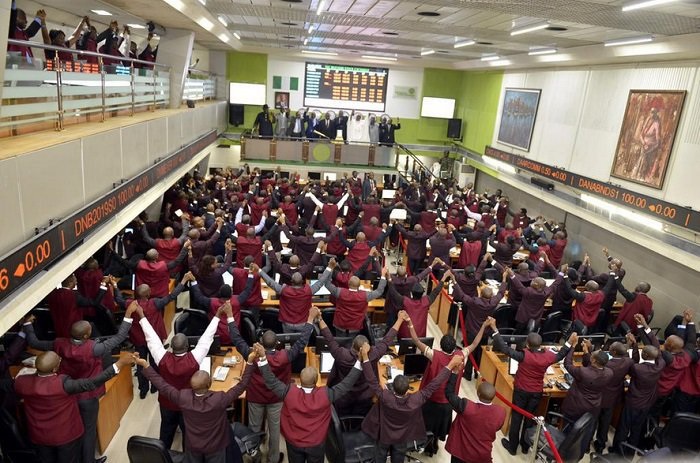
The Nigerian Exchange has had a remarkable year. The NGX All-Share Index posted a 47.43% return as of June 30, 2026, ranking Nigeria as the second best-performing major stock market among six of Africa’s major stock exchanges reviewed — behind only the Ghana Securities Exchange. By August 14, the index’s year-to-date gain had extended to 55.91%, powered by a broad rally in banking, oil and gas, telecommunications, and industrial goods.
Within that already-exceptional market, a group of stocks has done something even more striking. Fifteen companies listed on the NGX have more than doubled in share price since the start of 2026. A 16th, Fortis Global Insurance, has gained 1,215% — a figure that demands context before it demands celebration.
The 15 stocks span 10 sectors and tell a layered story: some gains are underpinned by genuine earnings breakthroughs and strategic transformation; others sit atop revenue growth that has not translated into profit; and a few have rallied despite financial performances that, under different market conditions, would have pushed share prices in the opposite direction. Data compiled by Nairametrics Research covers the period from January 2, 2025, to the August 14, 2026 closing price. Trading activity figures reflect August 14, 2026 only.
BizWatch Nigeria presents the full list — from lowest to highest return — with the financial performance behind each gain, and verified market context from industry reporting and company filings.
THE ISSUES
Nigeria’s equity market rally in 2026 has been driven by a combination of structural and cyclical forces: high interest rates that have fattened bank profit margins, a surge in oil production among indigenous producers following years of divestments by international oil companies, improving naira stability that has boosted the dollar-denominated returns of telecoms companies, and a renewed appetite among both domestic and foreign institutional investors for Nigerian equities at valuations that remain low relative to regional peers. Banking sector earnings have boomed, with Nigerian banks posting record profits driven by high interest rates and foreign exchange gains.
But the rally has also lifted stocks with fundamentally weaker stories. In a rising market with strong liquidity flows, capital can chase price momentum ahead of underlying performance — a dynamic visible in several names on this list where share prices have tripled or quadrupled while profits have fallen or turned negative. Investors and analysts tracking these stocks must separate the signal from the noise.
15. Morison Industries Plc — 101.94%
Morison Industries opens the ranking with a year-to-date return of 101.94%, its share price rising from N5.15 at end of 2025 to N10.40 as of August 14, 2026. The stock hit a 52-week high of N13.27 and a 52-week low of N3.22 during the period.
Revenue for H1 2026 came in at N274 million, up 21.42% from N226 million in H1 2025. But the company recorded a loss after tax of N10.28 million, deepening from a loss of N4.33 million in the prior-year period.
The financial context is significant. Morison carries a trailing EPS of negative N0.03, has lost money in four of the past five years, returned to a small N12.3 million profit in 2025, and then slipped back into a loss in Q1 2026. Its 2025 accounts were delayed, and auditors highlighted material uncertainty over the company’s ability to continue as a going concern, noting accumulated losses of approximately N903.9 million. The stock trades at approximately 10.58 times book value and 25.42 times sales. On August 14, it recorded just 3 trades and a volume of 509 units.
The gain is real, but the business behind it is fragile. This is among the clearest examples on the list of a share price that has outpaced the underlying company by a considerable distance.
14. Julius Berger Nigeria Plc — 103.27%
Julius Berger Nigeria, one of the country’s most established engineering and construction companies, returned 103.27% year-to-date, its share price climbing from N152.90 to N310.80, with a 52-week high of N315.00 and a 52-week low of N122.90.
Revenue for H1 2026 was N424.56 billion, up 23.62% from N343.45 billion in H1 2025, reflecting improved contract activity. Profit after tax of N6.06 billion, however, declined 14.70% from N7.11 billion in the prior-year period — a sign that costs are rising faster than revenue, compressing margins even as the top line grows.
Julius Berger’s position as a preferred contractor for federal government infrastructure projects provides a relatively stable revenue base, though its profitability depends heavily on contract margins and input cost management. On August 14, the stock recorded 35 trades and a volume of 1,978 units.
13. Red Star Express Plc — 106.90%
Red Star Express returned 106.90% year-to-date, its share price rising from N8.70 to N18.00. Notably, the opening price of N8.70 was also the stock’s 52-week low — meaning the stock never traded below its starting price for the year. It hit a 52-week high of N38.25, suggesting that buyers who entered early in the year and held through peak prices would have done even better.
Revenue for H1 2026 was N6.45 billion, up 21.92% from N5.29 billion in H1 2025, while profit after tax of N221 million grew 7.01% from N207 million — a modest but positive improvement in both revenue and profitability. The logistics sector has been a beneficiary of Nigeria’s growing e-commerce and last-mile delivery activity.
On August 14, Red Star recorded 35 trades and a volume of 64,341 units.
12. Vitafoam Nigeria Plc — 110.87%
Vitafoam Nigeria returned 110.87% year-to-date, its share price rising from N92.00 to N194.00, with a 52-week high of N210.00 and a 52-week low of N64.17.
The financial performance is among the more compelling on the list. Revenue for H1 2026 was N91.21 billion, up 7.47% from N84.87 billion in H1 2025, while profit after tax of N13.63 billion grew 45.42% from N9.37 billion — meaningful margin improvement on modest revenue growth. The combination of a contained revenue increase and a sharp profit expansion suggests operational efficiency gains or better cost management rather than simply passing on price increases.
On August 14, Vitafoam recorded 38 trades and a volume of 106,271 units.
11. International Energy Insurance Plc — 112.80%
International Energy Insurance returned 112.80% year-to-date, its share price rising from N2.50 to N5.32, with a 52-week high of N9.64 and a 52-week low of N2.12.
This is among the more conflicted entries on the list. Revenue for H1 2026 was N1.17 billion, down 49.74% from N2.33 billion in H1 2025 — a near-halving of revenue. Profit after tax of N160 million declined 70.53% from N543 million — a collapse in profitability running directly against the direction of the share price.
Despite the deteriorating financial performance, the stock recorded 274 trades and a volume of 1,582,739 units on August 14 — the third highest volume on the day among the 15 stocks — suggesting active retail participation driving price momentum independently of earnings fundamentals.
10. NCR (Nigeria) Plc — 121.73%
NCR (Nigeria) returned 121.73% year-to-date, its share price climbing from N72.70 to N161.20, with a 52-week high of N199.00 and a 52-week low of N9.55 — a range that underlines the degree of volatility in the stock during the period.
The underlying performance here is considerably stronger than the price range might suggest. Revenue for H1 2026 was N1.24 billion, up 37.58% from N900 million in H1 2025, while profit after tax of N144 million grew 221.34% from N45 million in the prior-year period — a genuine earnings recovery. On August 14, the ICT company recorded just 6 trades and a volume of 1,227 units, reflecting the limited daily liquidity in this relatively thinly traded stock.
9. Aradel Holdings Plc — 127.88%
Aradel Holdings returned 127.88% year-to-date, its share price rising from N670.00 to N1,526.80, with a 52-week high of N2,024.00 and a 52-week low of N510.00. The current price sitting well below the 52-week high reflects a mid-year correction after an aggressive run-up through May.
The financial story here is one of genuine, transformative scale. Aradel Holdings Plc posted a pre-tax profit of N752.71 billion for the six months ended June 30, 2026, representing a 293% year-on-year increase from N191.31 billion recorded in the corresponding period of 2025.
Revenue surged nearly seven-fold to N2.49 trillion, from N368.1 billion a year earlier, driven by broad-based growth across the company’s crude oil, gas and refined products segments following last December’s acquisition of an additional 40% stake in ND Western, which brought the company’s books into full consolidation for the first time.
Group oil production rose 523% to an average of 139,500 barrels of oil equivalent per day, while gas production recorded growth of 1,121%, powered by improved pipeline availability and sustained customer offtake.
One analyst commenting on Aradel’s Q1 2026 results wrote: “Aradel’s Q1 2026 results demonstrate the earnings power of its transformed asset portfolio. Revenue and operating profit growth were exceptionally strong, while operating cash flow generation exceeded expectations.” — Qudus Adebara, Research Analyst, SimplyWall St
On August 14, Aradel recorded 707 trades and a volume of 166,867 units — the third highest number of trades among the 15 stocks on the day.
8. HBM Nigeria Plc (formerly Lafarge Africa Plc) — 148.33%
HBM Nigeria Plc — a company that most market participants still knew as Lafarge Africa at the start of 2026 — returned 148.33% year-to-date, its share price rising from N134.50 to N334.00, with a 52-week high of N389.90 and a 52-week low of N103.00.
The stock’s rally is inseparable from its ownership transformation. Lafarge Africa Plc officially became HBM Nigeria Plc in May 2026 after shareholders approved a special resolution at the company’s 67th Annual General Meeting held on April 30, bringing an end to the Lafarge brand that had dominated the company’s identity for more than a decade.
The name change formally marks the handover from Holcim to its new Chinese owner. In December 2024, Swiss group Holcim agreed to sell its 83% stake in Lafarge Africa to Chinese cement maker Huaxin Cement. HBM stands for Huaxin Building Materials.
2025 was an exceptional year for the company: revenue crossed the one trillion naira mark for the first time, and net profit nearly tripled in a single year to N273 billion. The stock, which traded around N58 before the acquisition announcement in December 2024, surged to around N226 nairas.
Revenue for H1 2026 was N678.41 billion, up 31.23% from N516.98 billion in H1 2025, while profit after tax of N208.35 billion grew 57.03% from N132.68 billion — strong margin expansion alongside genuine revenue growth. On August 14, HBM Nigeria recorded 1,108 trades and a volume of 1,309,157 units — the second highest number of trades on the day across the 15 stocks.
7. Airtel Africa Plc — 177.53%
Airtel Africa returned 177.53% year-to-date, its share price climbing from N2,270.00 to N6,300.00 — and closing on August 14 at exactly its 52-week high, meaning investors who entered at year’s start were still riding an unrealised peak on that date.
The company reports in dollars, and the numbers are compelling. Revenue for the quarter ended June 30, 2026 increased 31.0% to $1.85 billion, with data revenue of $750 million up 36.5% and mobile money revenue of $434 million up 38.9%. EBITDA of $928 million grew 36.6% with an EBITDA margin of 50.1%, up from 48.0%, while operating profit of $627 million rose 40.7%.
The clearest signal in these numbers is that the old business and the new business are moving at different speeds. Voice revenue — the traditional heartbeat of any telecoms operator — grew 20%. Data revenue grew faster, at 36.5%. Mobile money grew fastest of all.
Airtel Africa CEO Sunil Taldar said profit after tax rose 27% to $198 million, noting “sustained growth across voice, data and mobile money services” across the company’s 14 African markets.
For the full year ended March 31, 2026, Airtel Africa reported revenue of $6.4 billion, up 29.5%, and profit after tax surging to $813 million from $328 million a year earlier. On August 14, the telecoms company recorded 153 trades and a volume of 19,072 units — a low unit volume that reflects the stock’s high price per share.
6. First HoldCo Plc — 192.28%
First HoldCo returned 192.28% year-to-date, its share price rising from N47.90 to N140.00, with a 52-week high of N150.00 and a 52-week low of N29.25. Revenue for H1 2026 was N1.40 trillion, down 2.74% from N1.44 trillion in H1 2025 — a modest revenue contraction — though profit after tax of N526.26 billion surged 85.45% from N283.77 billion, reflecting stronger profitability from an improved cost structure and cleaned-up balance sheet.
The story behind First HoldCo’s stock is, at its core, a story about one investor’s conviction and one institution’s turnaround. First HoldCo, the banking group chaired by Nigerian billionaire Femi Otedola, posted a pre-tax profit of N654 billion for the first half of 2026 — an 83% increase on the same period last year.
In an interview with Nairametrics, Otedola revealed plans to increase his shareholding to more than 51%, saying: “I am sure that you can see from my antecedents that my investment threshold is always over and above 51 per cent.”
First HoldCo has projected that its profit before tax will exceed N1.2 trillion for the 2026 financial year as the benefits of its recapitalisation programme and the clean-up of legacy non-performing loans continue to strengthen earnings.
First HoldCo also approved a dividend policy committing to distribute at least 60% of profit after tax to shareholders every year — a move that significantly increased the stock’s income appeal.
On August 14, First HoldCo was the most actively traded stock in the entire ranking, recording 1,902 trades and a volume of 19,551,659 units — the highest number of trades and the second highest volume on the day.
5. Premier Paints Plc — 204.00%
Premier Paints returned 204.00% year-to-date — a tripling of share price — with its stock rising from N10.00 to N30.40. The 52-week high was N37.50, the 52-week low N11.00.
Yet beneath the tripling share price lies a company that has moved into loss. Revenue for H1 2026 grew 8.65% year-on-year, but the company recorded a loss after tax of N8.07 million, against a profit of N1.14 million in H1 2025 — a reversal in profitability as the share price was multiplying.
Premier Paints recorded only 12 trades and a volume of 14,569 units on August 14, consistent with a thinly traded stock where price movements can be driven by a relatively small number of transactions. This combination — a tripled share price, shrinking profits, thin liquidity — warrants careful attention from investors assessing whether the market price reflects fundamental value.
4. Berger Paints Plc — 207.50%
Berger Paints returned 207.50% year-to-date, its share price climbing from N48.00 to N147.60, with a 52-week high of N168.95 and a 52-week low of N32.00.
Unlike Premier Paints, the financial performance here moves in alignment with the share price. Revenue for H1 2026 was N10.35 billion, up 13.36% from N9.13 billion in H1 2025, while profit after tax of N1.25 billion grew 33.35% from N934 million — revenue growth and profit growth both moving in the same direction as the stock price.
Berger Paints and Premier Paints are in the same sector and have both more than tripled in share price, but their underlying financial performances describe two different companies. On August 14, Berger recorded 42 trades and a volume of 15,387 units.
3. R T Briscoe Plc — 231.43%
R T Briscoe returned 231.43% year-to-date, its share price rising from N3.50 to N11.60, with a 52-week high of N19.16 and a 52-week low of N2.85.
The financial performance matches the enthusiasm. Revenue for H1 2026 was N24.60 billion, up 50.70% from N16.32 billion in H1 2025, while profit after tax of N801 million grew 140.95% from N332 million — both revenue and profit growing at rates consistent with the stock’s position near the top of this ranking. R T Briscoe, which operates across automotive, equipment, and services segments, appears to be capturing real commercial momentum.
On August 14, the company recorded 37 trades and a volume of 509,892 units — the fourth highest volume on the day.
2. Union Dicon Salt Plc — 244.20%
Union Dicon Salt returned 244.20% year-to-date, its share price rising from N6.90 to N23.75 — and closing on August 14 at its 52-week high, meaning investors were still at the peak of the cycle on that date.
The financial picture here is the most complex and arguably the most troubling on the list. The company had no revenue reported for H1 2025, making year-on-year comparison unavailable. H1 2026 revenue stood at N13.01 million. Profit after tax of negative N8.37 billion represents a significant deterioration from a profit of N35.67 billion in H1 2025.
A stock rising to its highest price on a day when its accounts show a N8.37 billion loss and no comparable prior revenue is a market dynamic that requires explanation beyond the financial statements. On August 14, Union Dicon recorded just 7 trades and a volume of 20,164 units — a thin trading day for a stock claiming the second-place return on this list.
1. SCOA Nigeria Plc — 365.49%
Leading the entire ranking is SCOA Nigeria Plc, with a year-to-date return of 365.49% — a near-fivefold (4.65 times) increase in share price from N7.10 to N33.05. The 52-week high was N38.15, the 52-week low N6.00.
Revenue for H1 2026 was N4.93 billion, up 47.39% from N3.34 billion in H1 2025. Profit after tax of N147.93 million, however, declined 54.67% from N326.34 million in the prior-year period — revenue grew at almost 50%, but profit was nearly halved.
SCOA sits at the top of the returns ranking while simultaneously reporting its worst half-year profit in recent memory relative to H1 2025. The conglomerate recorded only 8 trades and a volume of 6,672 units on August 14 — the second lowest trade count on the day — suggesting that the extraordinary gain was achieved in a stock with very limited daily liquidity.
The Outlier: Fortis Global Insurance Plc — 1,215%
Fortis Global Insurance Plc stands apart from every other name on this list by a considerable margin, with a year-to-date gain of 1,215% — more than three times the return of the next-best performer, SCOA Nigeria.
Its share price rose from N0.20 to N2.63, with a 52-week high of N3.57 and a 52-week low of N0.22. Revenue for H1 2026 was N1.55 billion, up approximately 1,600% from N91 million in H1 2025. Yet the company recorded a loss after tax of N3.17 billion, deepening from a loss of N1.11 billion in the prior-year period.
The 1,215% gain requires context before it can be meaningfully interpreted.
Fortis has a trailing EPS of negative N0.13 and recorded sustained losses from 2021 through Q1 2026. It returned to trading after a six-year suspension. It completed a four-for-one share consolidation, which mechanically increases the price per share by reducing the number of shares in issue — without increasing economic value. This means that a portion of the reported percentage gain is an accounting and structural artefact rather than a market-driven appreciation in the value of the business.
The company also carries a N5.74 billion obligation linked to an old bond that remains to be settled.
On August 14, Fortis recorded 122 trades and a volume of 874,083,112 units — accounting for 97.3% of the combined volume traded across all 16 stocks discussed in this analysis. Its low unit price makes it uniquely accessible to retail participation at scale, and those retail flows appear to have powered a significant portion of the share price movement.
Why Fortis matters: Fortis illustrates the most important distinction this entire analysis is designed to draw — the difference between a share price return and underlying business performance. A stock can record an extraordinary percentage gain from a very low base, following a consolidation, and after a return from suspension, without a corresponding improvement in profitability or intrinsic value. Its 1,215% gain is best interpreted as an exceptional market-price event, not as evidence that Fortis has fundamentally outperformed the other companies on this list.
WHAT’S BEING SAID
“I am sure that you can see from my antecedents that my investment threshold is always over and above 51 per cent.” — Femi Otedola, Chairman, First HoldCo Plc, on his plans to build a majority stake in the banking group, in an exclusive interview with Nairametrics
“Aradel’s Q1 2026 results demonstrate the earnings power of its transformed asset portfolio. Revenue and operating profit growth were exceptionally strong, while operating cash flow generation exceeded expectations.” — Qudus Adebara, Research Analyst
“Profit after tax rose 27 percent to $198 million, reflecting sustained growth across voice, data and mobile money services.” — Sunil Taldar, Chief Executive Officer, Airtel Africa, on Q1 2026/27 results
“Nigerian banking stocks have historically traded below their intrinsic values due to macroeconomic uncertainty, exchange rate volatility and governance concerns rather than weak business fundamentals. First HoldCo’s ongoing turnaround is beginning to change that perception.” — Femi Otedola, Chairman, First HoldCo Plc
“This strategic name change is a pivotal step in our ongoing corporate rebranding exercise. It reflects our evolved business vision, long-term growth objectives, and our renewed commitment to delivering superior value to our stakeholders.” — Adewunmi Alode, Company Secretary and Legal Director, HBM Nigeria Plc (formerly Lafarge Africa Plc)
WHAT’S NEXT
- First HoldCo has projected profit before tax exceeding N1.2 trillion for the full 2026 financial year, with Femi Otedola continuing to accumulate shares toward a target of more than 51% ownership. The next set of quarterly results will be closely watched to confirm whether the H1 profit trajectory holds through H2.
- Aradel Holdings declared a final dividend of N23.00 per share for the 2025 financial year at its most recent AGM. Its H2 2026 performance will test whether the transformative production gains from its ND Western acquisition are sustainable without the one-off consolidation effects that powered H1’s numbers.
- Airtel Africa is preparing a potential initial public offering of its mobile money subsidiary, Airtel Money, which could raise between $1.5 billion and $2 billion according to sources cited by Bloomberg — a development that could significantly affect the stock’s valuation and investor base.
- HBM Nigeria (formerly Lafarge Africa) is entering H2 2026 as a Chinese-owned entity for the first time. Market analysts will watch whether Huaxin uses its controlling position to accelerate capital investment and technology transfers, and whether the new ownership structure affects the company’s competitive positioning against Dangote Cement and BUA Cement.
THE BOTTOM LINE
Sources: Nairametrics Research; NGX Group filings; Airtel Africa Plc quarterly and full-year reports; Aradel Holdings Plc H1 2026 unaudited financial statements; First HoldCo Plc H1 2026 results and Nairametrics interview with Femi Otedola; HBM Nigeria Plc (formerly Lafarge Africa Plc) financial statements and company filings; SimplyWall St analyst commentary; Billionaires Africa; BusinessDay; The Guardian; African Markets; TechMoonshot; Serrari Group; AllAfrica. All data current as of August 20, 2026.