








Key points
- The 79th World Health Assembly has approved the development of a new global tuberculosis strategy beyond 2030.
- WHO says the strategy will align TB response efforts with primary healthcare and universal health coverage.
- Delegates also adopted resolutions on liver disease, haemophilia, and the growing threat of health misinformation.
Main story
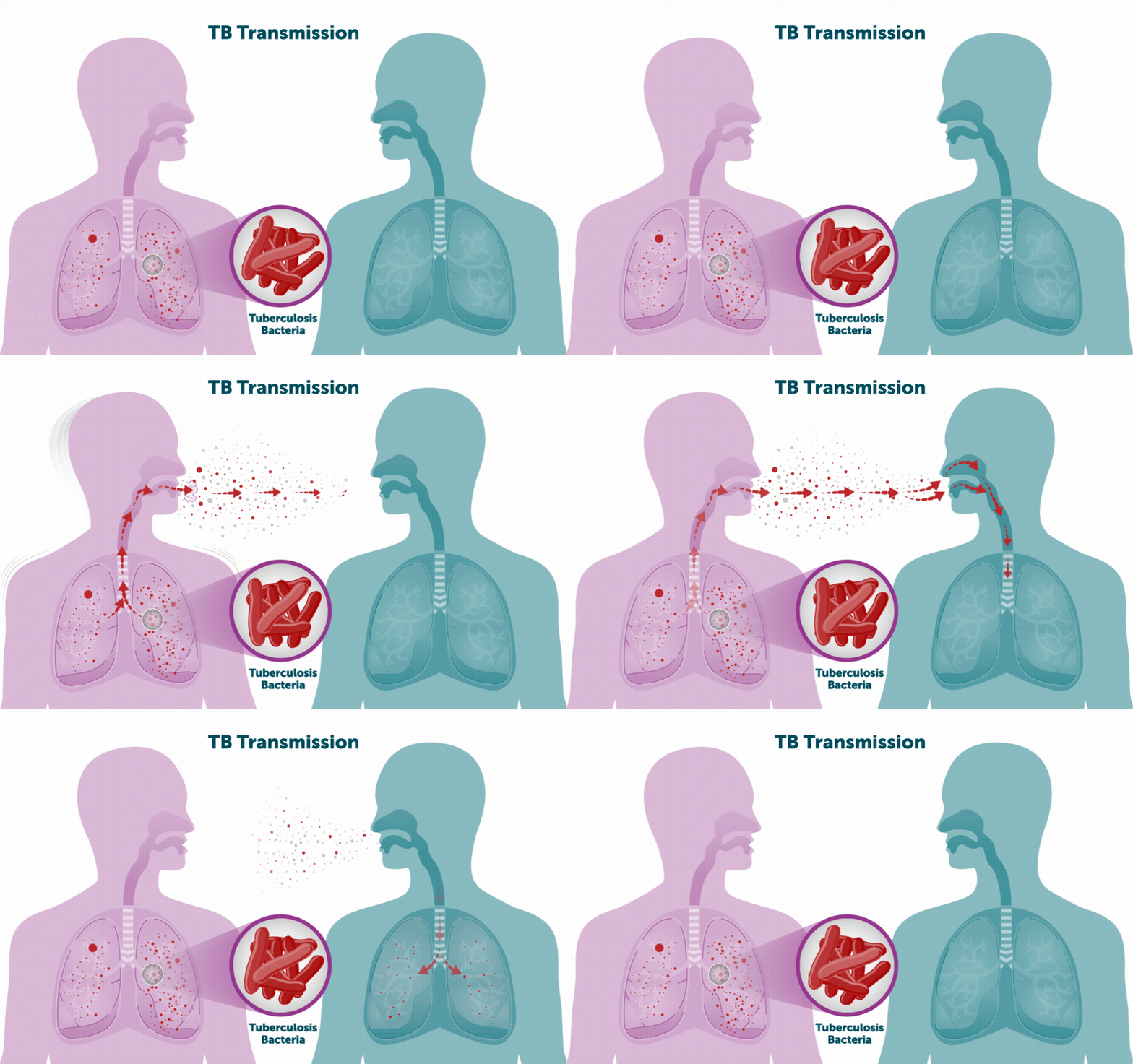
The 79th World Health Assembly (WHA) has approved the development of a new global tuberculosis (TB) strategy beyond 2030, in a move aimed at strengthening international efforts against one of the world’s deadliest infectious diseases.
The resolution mandates the Director-General of the World Health Organisation (WHO), Dr Tedros Ghebreyesus, to coordinate broad consultations and present a draft strategy at the 81st World Health Assembly scheduled for 2028.
WHO disclosed on Thursday that the proposed strategy would guide future global TB response efforts by leveraging emerging scientific advances, evolving epidemiological trends and stronger healthcare integration models.
According to the organisation, the new framework is expected to align tuberculosis programmes with primary healthcare systems, universal health coverage and broader public health priorities.
The strategy will also support preparations for the 2028 United Nations High-Level Meeting on Tuberculosis, helping to sustain political commitment beyond the 2030 Sustainable Development Goals (SDGs) deadline.
WHO noted that global TB response efforts continue to face significant challenges, including inequality, conflict, displacement, climate-related disruptions and inadequate funding.
Despite these setbacks, the organisation said expanded TB treatment programmes had saved an estimated 83 million lives between 2000 and 2024.
The agency further disclosed that 2024 recorded the first post-pandemic decline in tuberculosis infections alongside the highest level of access to TB services globally.
However, WHO warned that tuberculosis remains one of the world’s leading infectious killers, stressing that existing global End TB Strategy targets for 2030 are still far from being achieved.
Beyond tuberculosis, delegates at the Assembly also adopted a separate resolution recognising Steatotic Liver Disease as an emerging global noncommunicable disease burden.
WHO said the condition currently affects approximately 1.7 billion people worldwide and is increasingly linked to obesity, diabetes, cardiovascular diseases and alcohol-related liver complications.
The resolution urged countries to integrate Steatotic Liver Disease into national noncommunicable disease strategies, strengthen primary healthcare systems, improve surveillance and address unhealthy diets and alcohol consumption.
Member states also endorsed another resolution focusing on haemophilia and other bleeding disorders, with WHO revealing that about 70 per cent of affected patients globally remain undiagnosed.
The organisation said countries would work toward improving diagnostic systems, referral pathways, medicine access, data collection and public awareness.
Delegates at the Assembly also expressed concern over the growing spread of health misinformation, warning that false medical information poses significant threats to public safety and healthcare outcomes.
WHO stressed the need for stronger multisectoral collaboration and public engagement to combat misinformation and strengthen trust in health systems.
The issues
The continued burden of tuberculosis highlights persistent global healthcare inequalities, particularly in low- and middle-income countries where access to diagnosis, treatment and funding remains limited.
The failure to fully meet the 2030 End TB targets also reflects broader challenges linked to conflict, displacement, climate emergencies and weakened healthcare systems after the COVID-19 pandemic.
The resolutions adopted by the World Health Assembly further underscore rising concerns over noncommunicable diseases and the growing influence of misinformation on public health responses.
What’s being said
WHO says the new post-2030 TB strategy is necessary to adapt global response efforts to current realities and emerging scientific developments.
Health experts and delegates at the Assembly stressed the importance of sustained political commitment, stronger healthcare systems and increased investment in disease prevention and treatment.
WHO also warned that misinformation continues to undermine public trust and health interventions globally.
What’s next
WHO is expected to begin broad consultations with member states and stakeholders ahead of presenting a draft tuberculosis strategy in 2028.
Countries are also expected to strengthen the implementation of newly adopted resolutions on liver disease, haemophilia and health misinformation.
Preparations for the 2028 United Nations High-Level Meeting on Tuberculosis are likely to intensify in the coming years.
Bottom line
The World Health Assembly’s decision to develop a post-2030 tuberculosis strategy reflects growing global recognition that stronger, more adaptive and better-funded health systems are needed to confront persistent infectious diseases and emerging public health challenges worldwide.




 has approved the development of a new global tuberculosis (TB) strategy beyond 2030, ...)