







Key points
- The House of Representatives Special Committee on Crude Oil Theft called for amendments to outdated oil and gas laws.
- The committee said existing penalties are too weak to deter crude oil thieves and pipeline vandals.
- The Office of the National Security Adviser backed the proposed legal reforms, describing current punishments as inadequate.
- Lawmakers said the proposed amendments would complement, not alter, the Petroleum Industry Act.
Main story
The House of Representatives Special Committee on Crude Oil Theft has called for the amendment of outdated oil and gas laws to strengthen the fight against crude oil theft and pipeline vandalism.
Chairman of the committee, Alhassan Doguwa, made the call at a stakeholders’ meeting in Abuja on Friday.
Doguwa said existing legislations, many of which date back to the military era, no longer reflect the realities of the oil and gas sector and have failed to deter criminal activities.
According to him, the activities of crude oil thieves and other saboteurs continue to undermine Nigeria’s economic development, national security and efforts to increase oil production.
He said the review of existing laws had become necessary to ensure that penalties were commensurate with the gravity of the offences.
“The global oil and gas economy is now in an advanced stage. Virtually all oil-producing countries are making progress because they have provided effective legal instruments to address their challenges and we believe Nigeria should also review some of its laws,” he said.
Doguwa clarified that the proposed amendments would not affect the Petroleum Industry Act (PIA), saying the legislation already provides the framework for conducting business in the sector.
“Some may ask what happens to the Petroleum Industrial Act (PIA). This has got nothing to do with the PIA. The PIA merely addresses the fundamentals and basic principles of doing business within the global oil economy. None of its commitments or provisions will be affected.
“However, we still have old legislations, some dating back to the military era, including military decrees and orders, which are still being applied at various levels. The courts have no option but to rely on those laws.”
He warned that unless obsolete laws were replaced with a new legal framework, courts would continue to rely on outdated provisions in prosecuting serious offences in the sector.
Doguwa added that crude oil theft continued to threaten Nigeria’s ability to achieve its oil production targets contained in the national budget.
He assured stakeholders that the National Assembly would work closely with the Office of the National Security Adviser (ONSA) to combat crude oil theft and other criminal activities in the industry.
Speaking at the meeting, the National Security Adviser, Nuhu Ribadu, said stronger legislation was needed to ensure that offenders received punishments that matched the seriousness of their crimes.
Represented by the Director of Energy Security in ONSA, Goodluck Ilajufi, Ribadu said current penalties imposed by the courts had failed to discourage criminal activities.
“Specifically, we seek your support in strengthening the punishment regime for thieves, vandals and other criminal elements.
“My experience in the field is that after enormous state resources are spent arresting and prosecuting these criminals, the punishment they eventually receive is almost meaningless,” he said.
Ribadu cited instances where offenders were given the option of paying fines or serving short prison terms despite causing significant damage to petroleum infrastructure.
He called for amendments to the Miscellaneous Offences Act, particularly provisions relating to tampering with petroleum infrastructure and the adulteration of petroleum products.
“If these laws are not strengthened, the deterrent effect will remain weak,” he said.
The issues
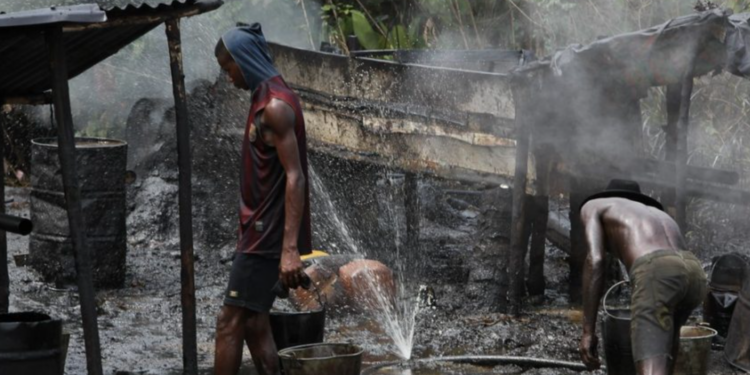
Crude oil theft and pipeline vandalism remain major challenges for Nigeria’s oil industry, reducing production, government revenue and foreign exchange earnings. Lawmakers and security agencies argue that outdated laws and weak penalties have made it easier for offenders to continue operating with little fear of severe punishment.
What’s being said
“Unless we provide new measures, new laws and a new legal framework, the courts will continue to rely on these obsolete legislations.” — Alhassan Doguwa
What’s next
The House committee is expected to work with the National Assembly and the Office of the National Security Adviser on proposed amendments to existing laws aimed at strengthening the legal framework against crude oil theft and related offences.
Bottom line
The House committee and the Office of the National Security Adviser want tougher laws and stiffer penalties to curb crude oil theft, arguing that outdated legislation has weakened Nigeria’s fight against economic sabotage.