








Home Blog Page 78

7 Practical Steps To Saving 20% of Your Income and Building Wealth

Saving money sounds simple—just stash away part of your paycheck and resist the urge to spend. But in real life, especially when bills, unexpected expenses, and the occasional “treat yourself” purchase show up, it’s anything but easy. Still, financial planners often recommend aiming for at least 20% savings from your annual income. Sounds ambitious, right? The truth is, it’s doable if you approach it with structure, patience, and a bit of creativity.

Let’s break it down into practical, human steps—because saving shouldn’t feel like punishment.

1. Start With a “Pay Yourself First” Mindset

Here’s the thing: most people save what’s left after spending. The problem? There’s rarely anything left. Instead, flip the script—make savings the first “bill” you pay every month.

Set up an automatic transfer that sends 20% (or even 10% to start) from your paycheck into a separate savings account before you touch it. It’s not about depriving yourself—it’s about making saving the default choice, not the afterthought.

Think of it like gym workouts: you’re more likely to show up if your class is booked and prepaid. Automating savings works the same way—it removes the decision fatigue and forces consistency.

2. Track Spending Without Being Obsessed

Yes, budgeting apps or even Excel spreadsheets can be lifesavers. But don’t overcomplicate it—tracking every coffee or gum pack can become overwhelming.

Instead, focus on big categories: rent, food, transport, entertainment, and savings. This gives you a clear picture without micromanaging.

And here’s a small digression: ever notice how we justify little daily expenses (“It’s just ₦2,500 for shawarma” or “only $5 for coffee”)? Multiply that by 20 days, and suddenly it’s eating into your savings goals. Tracking helps you catch those leaks without guilt-tripping yourself.

3. Cut “Silent Subscriptions” You Forgot You Had

We’ve all been there—paying for streaming platforms or fitness apps we haven’t touched in months. These are what I like to call “silent spenders.”

Every quarter, run through your bank statements or use apps  that highlight recurring charges. Cancel what you don’t use regularly.

Even cutting ₦15,000 (around $15) monthly subscriptions you don’t need frees up nearly ₦180,000 ($180) a year—money that could go directly into your savings.

4. Adopt the 50/30/20 Rule (But Be Flexible)

The 50/30/20 framework is classic:

  • 50% of income for needs (housing, food, transport, utilities)
  • 30% for wants (shopping, outings, hobbies)
  • 20% for savings/investments

Sounds neat, right? But life isn’t always neat. Rent in Lagos or New York might swallow more than 50%. In that case, don’t throw out the rule—adjust it. Maybe your breakdown is 60/25/15 at first, then slowly push toward the 20% mark as your income grows. The real magic isn’t in the perfect ratio—it’s in having a framework that makes you conscious of where your money flows.

5. Grow Your Income, Don’t Just Cut Expenses

Here’s an unpopular opinion: you can’t budget your way into wealth if your income is stagnant. Yes, cutting costs helps, but there’s a ceiling to how much you can trim. On the other hand, income growth has no cap.

That could mean freelancing on the side, monetizing a skill, or negotiating a raise at work. Even modest increases—say, an extra ₦50,000 ($50–100) a month—when saved consistently, compound massively over years.

Remember, saving 20% becomes far easier when your pie gets bigger.

6. Separate Short-Term Savings From Long-Term Goals

This is where many people trip. They dump everything into one account and then feel tempted to “borrow” from their savings when emergencies pop up.

Here’s a smarter play:

  • Have an emergency fund (3–6 months of living expenses).
  • Keep a short-term savings account (for things like vacations or gadgets).
  • Grow a long-term investment account (for retirement or wealth-building).

By separating the buckets, you give each savings goal a clear purpose. Psychologically, you’re less likely to raid your retirement fund for concert tickets when you know it’s locked away for future you.

7. Make Saving Fun, Not a Chore

Sounds odd, but saving doesn’t have to feel like eating plain oatmeal every day. Gamify it. Challenge yourself to “no-spend weekends” or join friends in a monthly savings challenge.

Some banks and fintech apps now offer reward-based savings—where hitting your savings goal unlocks perks, discounts, or even cash bonuses. Treat yourself too: if you save ₦500,000 in six months, maybe allow 5% of it for a guilt-free splurge.

After all, money is a tool for living, not a prison. Saving is about freedom, not punishment.

A Quick Reality Check

Will you hit 20% savings overnight? Probably not. And that’s okay. Start at 5% or 10% if you must, then increase gradually. The key is consistency. Even if your first few months feel clumsy, the habit builds momentum over time.

Remember—saving money isn’t about being cheap. It’s about buying peace of mind, options, and flexibility for your future. Imagine being able to say “yes” to opportunities without financial stress breathing down your neck. That’s the real payoff.

Final Thoughts

Saving 20% of your income annually isn’t just about numbers—it’s about mindset, habits, and lifestyle choices. It’s about shifting from reactive spending to intentional living. Whether you’re just starting out with an entry-level salary or managing multiple income streams, the principles stay the same: pay yourself first, track consciously, cut the waste, grow your income, and separate your goals.

You know what? The future version of you will be grateful you started today—even if it feels small now. Because small, consistent steps snowball into life-changing results.

CBN May Cut Interest Rate By 50bps To Spur Growth

As Nigeria’s Monetary Policy Committee (MPC) prepares for its next meeting, analysts are predicting that the Central Bank of Nigeria (CBN) will opt for a 50 basis point cut in interest rates to stimulate economic growth.

The decision comes amid easing inflationary pressures, improving naira stability, and a shift toward monetary easing in advanced economies, particularly the U.S. Federal Reserve’s recent 25bps cut.

Currently, the Monetary Policy Rate (MPR) is at 27.50%. Analysts believe lowering it to 27.00% could encourage private sector borrowing, expand industrial capacity, and boost real-sector growth.

Cordros Capital Limited, in a pre-MPC note, highlighted that improved FX liquidity, stronger portfolio inflows, and moderating inflation provide room for easing. However, the firm stressed that the CBN would likely adopt a cautious approach, ensuring interest rates remain attractive to foreign investors while anchoring inflation expectations.

Cowry Asset Management also pointed to risks from FX pass-through, food supply bottlenecks, and oil price volatility as reasons the MPC may avoid aggressive easing.

Nigeria’s headline inflation slowed to 20.12% in August 2025 from 21.88% in July—the lowest since April 2023—driven by stable FX, lower energy costs, and favourable base effects. Month-on-month inflation also eased significantly to 0.74% from 1.99%.

Economists say the downward trend in inflation may provide the MPC with enough confidence to implement a symbolic rate cut, reinforcing optimism in the disinflation trajectory.

Week 14 Pool Fixtures For Sat 4, Oct 2025, UK 2025/2026

Week 14 Pool Fixtures for Sat 8 Oct 2022 – UK 2022/2023

Now you can find the Week 14 pool fixtures 2025: pool fixtures for this week, this week pool fixtures, football pools results and fixtures, pool fixtures this week, classic pool fixtures, Aussie pool fixtures, UK pool fixtures, advance pool fixtures, Australia pool fixtures, pool panel results, pool result today Saturday, pool results and fixtures this week, fortune soccer pool fixtures.

Find all the Week 14 pool fixtures on Bizwatchnigeria.ng as soon as they are released by the FPA (Football Pools Authority).

Pool Fixtures For This Week: 14; SEASON: UK 2025/2026
Advance Pool FixturesStatus
1
2
3
4
5
6
7
8
9
10
11
12
13
14
15
16
17
18
19
20
21
22
23
24
25
26
27
28
29
30
31
32
33
34
35
36
37
38
39
40
41
42
43
44
45
46
47
48
49

Week 12 Pool Result For Sat 20, Sep 2025, UK 2025/2026

Week 12 Pool Fixtures for Sat 24 Sept 2022 – UK 2022/2023

Week 12 pool results 2025: Football pools results, live football pool result today, pool result today saturday matches, pool results for this week, british and aussie pool result, football pools results and fixtures, pools panel results today, pool panel results and live score pool result today. We publish half-time results first of its kind.

Week 12 Pool Results: Football pools results for this week 12 2025 are published on this website immediately after full-time confirmation of live score results. We also publish the outcome of postponed matches by the football pools panel at half-time as decided by the football pools. This week’s Week 12 Pool Results are made available in partnership with Bizwatch Nigeria.

WEEK: 12; SEASON: UK 2025/2026; DATE: 20-September-2025
Football Pools ResultsHTFTStatus
1ArsenalMan City-:--:-Sunday
2BournemouthNewcastle0-:-00-:-0noScoreDraw
3BrightonTottenham2-:-12-:-2ScoreDraw
4BurnleyNott’m For.1-:-11-:-1ScoreDraw
5FulhamBrentford2-:-13-:-1Home
6LiverpoolEverton2-:-02-:-1Home
7Man UnitedChelsea2-:-02-:-1Home
8SunderlandAston Villa0-:-01-:-1ScoreDraw
9West HamCrystal P.0-:-11-:-2Away
10WolvesLeeds1-:-31-:-3Away
11BirminghamSwansea0-:-01-:-0Home
12BlackburnIpswich0-:-01-:-0Home
13Bristol C.Oxford Utd.0-:-2-:-HT
14DerbyPreston0-:-10-:-1Away
15HullSouthampton1-:-03-:-1Home
16LeicesterCoventry0-:-00-:-0noScoreDraw
17NorwichWrexham1-:-02-:-3Away
18PortsmouthSheff Wed.0-:-10-:-2Away
19Q.P.R.Stoke0-:-01-:-0Home
20Sheff Utd.Charlton0-:-00-:-1Away
21BlackpoolBarnsley0-:-01-:-0Home
22BoltonWigan A.3-:-04-:-1Home
23CardiffBradford C.0-:-21-:-3Away
24DoncasterA.Wimbledon0-:-01-:-2Away
25HuddersfieldBurton A.0-:-00-:-0noScoreDraw
26LincolnLuton1-:-03-:-1Home
27PlymouthPeterboro0-:-10-:-1Away
28Port ValeMansfield0-:-02-:-1Home
29ReadingLeyton O.1-:-02-:-1Home
30RotherhamStockport0-:-00-:-1Away
31StevenageExeter1-:-12-:-1Home
32WycombeNorthampton1-:-02-:-0Home
33BarnetGrimsby1-:-03-:-0Home
34BarrowCrewe0-:-01-:-0Home
35BromleyChesterfield1-:-12-:-2ScoreDraw
36Cambridge U.Fleetwood0-:-02-:-1Home
37CheltenhamOldham0-:-10-:-3Away
38ColchesterBristol R.0-:-11-:-1ScoreDraw
39HarrogateShrewsbury0-:-02-:-0Home
40Milton K.D.Accrington0-:-11-:-2Away
41Newport Co.Gillingham1-:-31-:-3Away
42Notts Co.Crawley1-:-04-:-0Home
43Salford C.Swindon2-:-03-:-2Home
44WalsallTranmere2-:-14-:-2Home
45DundeeLivingston1-:-03-:-2Home
46AberdeenMotherwell0-:-00-:-1Away
47RangersHibernian2-:-02-:-0Home
48AirdrieRaith0-:-00-:-0noScoreDraw
49ArbroathMorton0-:-01-:-1ScoreDraw

Nigerian Stock Market Drops As Investors Shed N264bn

The Nigerian stock market closed lower on Friday as renewed profit-taking wiped out N264 billion in value, with selloffs across banking, insurance, and financial service stocks dragging performance.

The Nigerian Exchange (NGX) market capitalisation dropped by 0.29 per cent, from N90.008 trillion to N89.744 trillion. Similarly, the All-Share Index (ASI) shed 417.72 points or 0.29 per cent, closing at 141,845.35 compared with 142,263.07 recorded in the previous session.

Market breadth was negative with 43 decliners against 11 gainers. Livingtrust Mortgage Bank led the losers’ chart with a 10 per cent drop to N4.77 per share, followed by Veritas Kapital Assurance, which fell 9.91 per cent to N2. Secure Electronic Technology declined 8.54 per cent to 75k, while NGX Group slipped 8.32 per cent to N55.10. United Capital also shed 7.56 per cent, closing at N18.95.

On the flip side, Deap Capital Management topped the gainers’ table with a 9.94 per cent rise to N1.88 per share. Sovereign Trust Insurance advanced 7.67 per cent to N3.09, Nigerian Breweries gained 6.37 per cent to N75.95, Guinness Nigeria rose 4.49 per cent to N183.90, while Legend Internet appreciated 3.89 per cent to N5.61.

Despite the downturn, market activity improved, with total turnover rising across volume, value, and deals. Investors traded 435.2 million shares worth N15.13 billion in 24,309 deals, compared to 325.1 million shares valued at N8.4 billion exchanged in 22,779 deals on Thursday.

United Bank for Africa (UBA) led both the volume and value charts, trading 82.05 million shares valued at N3.55 billion. Access Corporation followed with 29.4 million shares worth N765.2 million, while Zenith Bank recorded 27.9 million shares valued at N1.8 billion. CHAMS transacted 19.5 million shares worth N63.7 million, and FirstHoldCo moved 18.02 million shares valued at N575.6 million.

Nigeria’s External Reserves Climb To $42bn, Highest Level Since 2019

Nigeria’s gross external reserves rose to $42 billion this week, the highest level since September 2019, supported by steady inflows and stronger hydrocarbon revenues, according to Central Bank of Nigeria (CBN) data.

In September, inflows into reserves reached $692.28 million, with sustained contributions from oil exports boosting the country’s foreign buffers. Analysts note that the improved reserve position strengthens investor confidence in the CBN’s ability to upstream foreign exchange and stabilise the market.

Higher oil production has also enhanced fiscal performance, providing further support for the naira. Investment banking firm TrustBanc Financial Group Limited observed that the local currency tested new levels in the forex market, breaking the N1,500 per dollar threshold for the first time in months. “It is sentiment, not just supply, that ultimately decides how long the floor holds,” TrustBanc said.

Bullish sentiment dominated the FX market during the week, with the naira gaining across official and parallel windows. At the official market, it appreciated by 0.91% week-on-week to close at N1,487.90 per dollar—its first break below N1,500 since early February 2025. In the parallel market, the naira firmed by 1.05% to an average of N1,521 per dollar.

Analysts say the reserve build-up reinforces the CBN’s capacity to manage supply-demand imbalances and sustain stability in the currency market.

Meanwhile, WTI crude futures retreated to $63.3 per barrel on Friday, marking a third straight session of losses after U.S. President Donald Trump reiterated his preference for lower oil prices, easing fears of supply disruptions from the Russia-Ukraine conflict.

Market watchers expect the naira’s stability to hold in the near term, with supportive liquidity conditions and global dollar weakness underpinning sentiment.

Manufacturing Imports Push Trade Deficit To N14tn

Nigeria’s manufacturing sector recorded a sharp trade imbalance in the first half of 2025, as imports of manufactured goods exceeded exports by more than N14 trillion. Fresh data from the National Bureau of Statistics (NBS) highlight the scale of the country’s industrial challenges and reinforce calls for urgent measures to strengthen local production.

According to the NBS, manufactured imports between January and June were valued at N15.39 trillion, compared to exports of just N1.09 trillion. This left the sector with a deficit of N14.3 trillion in six months, underscoring Nigeria’s heavy reliance on foreign products.

Exports saw some recovery in the second quarter, rising to N803.81 billion—an increase of 173 per cent over the first quarter and 67.17 per cent year-on-year. However, analysts say the rebound is too small to offset the flood of imports.

The Director-General of the Manufacturers Association of Nigeria (MAN), Segun Ajayi-Kadir, described the figures as a troubling confirmation of industry concerns. “This deficit is a clear indication that domestic manufacturing is still struggling, and more needs to be done to close the gap,” he said.

Similarly, the President of the Lagos Chamber of Commerce and Industry (LCCI), Gabriel Idahosa, linked the widening deficit to Nigeria’s weak production base. “The N14 trillion deficit reflects the imbalance in raw materials. Manufacturers are forced to import inputs because local supplies are inadequate,” he explained.

Stakeholders warn that the growing gap adds pressure to the foreign exchange market, weakens the naira, and undermines the manufacturing sector’s role in driving economic growth. They point to longstanding challenges such as high energy costs, insufficient raw materials, weak infrastructure, and inconsistent policies.

Ajayi-Kadir noted that the problem is worsened by government procurement patterns that favour imports. He called for stricter implementation of the Nigeria First initiative, which requires ministries, departments, and agencies to prioritise local products. “If government contracts shift toward domestic industries, the deficit could narrow significantly,” he said. He also urged higher tariffs on imported products where local alternatives exist.

Energy costs remain another major burden, with some manufacturers spending up to 40 per cent of operating expenses on power due to unreliable grid supply. Idahosa highlighted examples of industrial estates in Lagos, Imo, Abia, and Edo States that now rely on independent power projects. “Some estates are signing agreements with private producers for steady electricity. That is where progress is being made,” he said, urging government to fast-track licences for independent producers.

Beyond government intervention, industry leaders stressed that manufacturers must take the lead. “Policy by itself will not solve the problem,” Idahosa said. “Manufacturers must leverage policy, pool resources, and invest in solutions such as renewable energy, raw materials, and logistics to become competitive.”

Both MAN and LCCI agree that reversing the deficit will require a multi-pronged approach: reviving raw material industries such as cotton, palm oil, and petrochemicals; reducing energy costs through private power generation; improving export intelligence; and raising product standards to meet global requirements.

Ajayi-Kadir concluded that while the deficit highlights structural weaknesses, it also signals an opportunity. “With the right policies and decisive action from both government and the private sector, we can begin to close the gap and revive manufacturing,” he said.

World Bank Launches $510m Initiative To Spur Investments

World Bank Predicts $17.6bn Diaspora Remittance to Nigeria In 2021

The World Bank Group, through its private sector arm, the International Finance Corporation (IFC), has completed its first securitisation transaction, a $510 million collateralised loan obligation aimed at channeling more private institutional capital into developing economies.

The transaction repackages IFC’s loan portfolio into rated securities, creating a new asset class that aligns with the risk and return needs of global institutional investors such as pension funds, insurers, and asset managers. According to IFC, the initiative is expected to unlock access to some of the world’s largest pools of capital while freeing up its balance sheet to support additional projects in developing countries.

World Bank Group President, Ajay Banga, said the deal marks a milestone in the institution’s effort to mobilise private investment at scale.
“Mobilising private investment at scale is essential to creating the jobs that give people a ladder out of poverty and begin the journey of changing a family’s trajectory for generations,” Banga said. “This is step one in an originate-to-distribute strategy that holds significant potential to attract private capital at scale. It also frees up our balance sheet so we can support more countries and more private-sector players.”

The $510 million structure comprises a $320 million senior tranche purchased by private investors, a $130 million mezzanine tranche insured by a consortium of credit insurers, and a $60 million equity tranche. The issuance has already attracted strong investor interest and was listed on the London Stock Exchange, with Goldman Sachs acting as the arranger.

The World Bank Group described the transaction as a scalable and replicable model for future issuances, reinforcing its commitment to building a sustainable pipeline for private-sector participation in development finance.

The initiative is designed to address two challenges: providing institutional investors with exposure to emerging-market credit opportunities that are often inaccessible, and enabling IFC to recycle capital for lending to high-impact projects in countries most in need.

The originate-to-distribute strategy was among the key recommendations of the Private Sector Investment Lab, an advisory body established in 2023 to identify barriers to private-sector investment in emerging markets. By securitising its portfolio, IFC is demonstrating how innovative financial instruments can bridge the gap between global investors’ appetite for yield and the financing needs of developing nations.

Analysts say the success of this transaction could encourage other development finance institutions to adopt similar models, accelerating the flow of private capital into underserved regions. For the World Bank Group, it signals a shift in role—from being primarily a lender to becoming a catalyst for large-scale investment flows that drive economic transformation in emerging markets.

Trump Slaps $100,000 Yearly Fee On Skilled Worker Visa Applicants

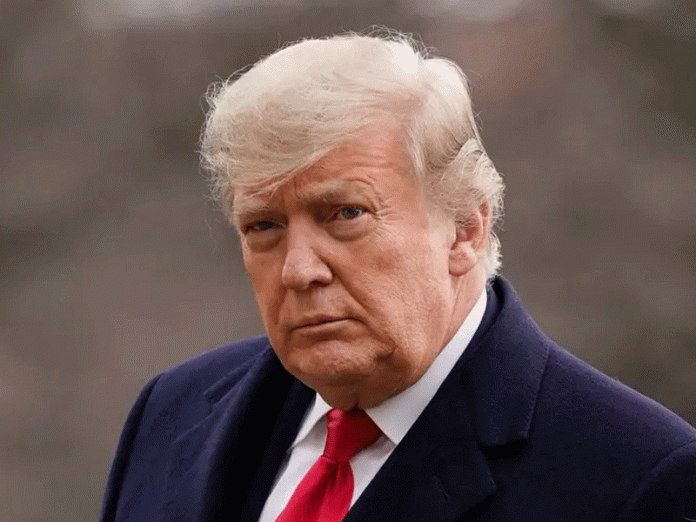
United States President Donald Trump has signed a sweeping executive order introducing a $100,000 annual fee for companies seeking H-1B visas to hire skilled foreign workers, the BBC reported on Saturday.

The policy, set to take effect on September 21, 2025, will apply to all new H-1B applications and must be paid each year for up to six years. The programme, capped at 85,000 visas annually, has long been vital to U.S. tech firms and startups looking to attract highly educated foreign talent. Until now, application fees averaged about $1,500.

“Companies need to decide — is the person valuable enough to have a $100,000-a-year payment to the government, or should they head home and go hire an American?” said U.S. Commerce Secretary Howard Lutnick. “All of the big companies are on board.”

Critics warn the steep fee could cripple America’s global competitiveness, particularly in the technology sector. “This $100,000 as an entry point is going to have a devastating impact,” said Seattle-based immigration attorney Tahmina Watson. “Almost everyone’s going to be priced out. Many small or medium-sized companies simply can’t find qualified Americans to do the job.”

The order also introduces a new “gold card” fast-track immigration system for high-net-worth individuals, with fees starting at £1 million.

It follows a series of restrictive immigration measures by the Trump administration, including a pilot programme last month requiring bonds of up to $15,000 for certain tourist and business visas, and a June travel ban targeting 12 countries.

6 Years Strong: PalmPay Launches Anniversary Campaign To Celebrate Its Journey

Africa’s leading neobank and foremost fintech platform, PalmPay, is celebrating six years of delivering value, impact, and reliable banking services to millions of users across Nigeria. With more than 35 million people now choosing PalmPay for their everyday financial needs, the company marks this milestone by reflecting on a journey shaped by its users.

Since its launch in 2019, PalmPay has transformed from facilitating its very first transaction into powering millions daily. Along the way, PalmPay has helped small and medium businesses scale, supported families in reaching their goals, and made everyday money management simpler, safer, and more rewarding. Its users’ trust has fueled PalmPay’s journey and continues to inspire the company’s commitment to making financial services smarter, simpler, and more inclusive.

“PalmPay was built on the belief that banking should be accessible to everyone, safe, easy, and rewarding,” said Chika Nwosu, Managing Director at PalmPay. “Over the last six years, we’ve earned the trust of our users, and their impact stories remind us that our solutions are not just about technology, but enabling smarter banking habits tailored to individual needs.”

To celebrate this milestone, PalmPay is launching the Lucky Wish Campaign, running from September 12 – 29th, 2025. The campaign will spotlight user stories, reward loyal customers with Apple AirPods, iPhone 17 Pro, Samsung A16, and highlight impact data, to showcase the trajectory of the brand’s impact since its launch in 2019.

In addition, the ongoing Hustle Grant Campaign continues to spotlight ambitious entrepreneurs leveraging PalmPay’s solutions. As part of the celebrations, 9 final winners will be announced in phases with the final announcement scheduled for September 26th. Each of these winners are set to receive N500,000 to support and grow their businesses, further amplifying the celebrations and reinforcing PalmPay’s user-centric approach to marking this milestone.

As PalmPay looks ahead, the company remains focused on powering the future of smarter banking and driving impact across its diverse user base.

PalmPay Champions Trust, Simplicity, And Local Partnerships At GITEX Nigeria 2025

PalmPay, Africa’s leading neobank, reaffirmed its commitment to building trusted financial ecosystems at GITEX 2025, the continent’s premier technology and AI summit  held at Landmark Centre, Lagos, on September 3 – 4, 2025.

On Day 2 of the expo, Chibuzor Melah, Vice President of Partnerships at PalmPay, joined a high-level panel discussion “From Idea to Infrastructure – The African Tech Executive & Founders’ Playbook.” The session brought together industry leaders to explore how bold ideas are being transformed into scalable systems across Africa’s fast-growing digital economy.

Speaking on the panel, Melah outlined the key challenges facing financial inclusion on the continent, including heavy reliance on cash and low levels of financial literacy. He stressed that addressing these requires more than just innovation, it requires tailoring technology to local realities, building local talent, and always putting customers first.

“As a financial company, our greatest responsibility is to earn trust. Security and compliance must come first, because customers deserve to feel protected. But beyond that, we must make financial tools simple, accessible, and truly accessible for every Nigerian, no matter their background.”  Melah noted.

He emphasized that simplicity is central to adoption, particularly in regions where financial literacy remains low. For PalmPay, this means designing an intuitive platform that allows its 40 million customers to navigate with ease.

Melah explained that PalmPay’s path from idea to infrastructure is built on three pillars: launching with a hero product that delivers immediate value and trust before expanding services, forming strong local partnerships to ensure solutions meet real community needs, and maintaining agility through decentralized decision making to adapt quickly to Africa’s diverse markets.

He concluded by urging African innovators to stay agile, adapt branding and solutions to unique market conditions, and never lose sight of the customer experience.

PalmPay’s presence at GITEX 2025 reflects its role in building trust and financial inclusion, using technology and local insight to empower millions of Africans.

Benue Stakeholders Call for Jobs, Infrastructure to Tackle Insecurity

Stakeholders in Benue State have identified job creation and infrastructural development as urgent remedies to the state’s worsening insecurity, warning that neglecting these areas will continue to fuel violence and underdevelopment.

They made the call in Abuja at the official unveiling of the Benue State 2027 Roadmap, a civic initiative designed to chart a new course for security, youth employment, industrial growth, and political leadership in the state.

The event was organised by Markolima Consultancy Academy (MACA) in partnership with the Nigerian Good Governance Initiative (NGGI) and chaired by Chief Terlumun Akputu, Executive Director of FHA Mortgage Bank of Nigeria.

In his opening remarks, Dr Timothy Aikyor, Chairman of the Roadmap’s Central Planning Committee, described the blueprint as “innovative and timely.” He said the initiative was conceived to entrench democratic values, foster dialogue, and enhance citizen engagement.

According to him, the Roadmap will run in three phases: the current unveiling; a dedicated dialogue on the controversial gubernatorial zoning debate (November 2025–March 2026); and a governorship debate in 2026 once parties have nominated their candidates.

Dr Simon Ater, a technology expert and governance advocate, drew strong applause with his candid warning that insecurity in Benue has roots in neglect of the youth and insider complicity.
“We need to know who the insiders are inviting criminals to destroy our state,” he said. “No society can be plagued by this level of insecurity without internal sabotage.”

Ater argued that sustainable jobs and functioning infrastructure were essential to reversing the trend.
“We have to build industries to keep young people engaged. Farmers cannot move their produce from the villages to the cities because of poor roads. The economy is stagnant, and when nothing works, insecurity thrives,” he noted.

Prof Zachary Gundu, in a hard-hitting lecture on Insecurity and Political Leadership in Benue State, linked the state’s persistent crises to weak leadership and internal divisions. His presentation, backed by data and illustrations, sparked a lively exchange among panelists, including Dr Jeffrey Kuraun, Surveyor Godwin Tyoachimin, Prof Dennis Ityavyar, and Dr Tersoo Loko.

The unveiling also featured endorsement clips from key figures such as former Attorney-General Michael Kaase Aondoakaa (SAN), Hon. Terseer Ugbor, and Engr. Nick Wende, all pledging support for the initiative.

But it was Ater’s forceful call for youth-centred leadership, industrial expansion, and security reform that resonated most strongly, positioning him as a leading voice in the push for a more secure and prosperous Benue.

As the forum closed, participants agreed that the Benue 2027 Roadmap had not only created a rare platform for candid debate but also signalled clear priorities for building a united, economically vibrant, and safer Benue ahead of the 2027 elections.

Real Madrid Seek To Maintain Perfect Start Against Resilient Espanyol

Real Madrid will look to preserve their flawless start to the La Liga season when they welcome Espanyol to the Santiago Bernabéu on Saturday, with both sides arriving in fine form.

Xabi Alonso’s reign in Madrid has begun with momentum and purpose. Los Blancos are the only side to have won all four of their league fixtures so far, and they extended that run into Europe with a hard-fought Champions League victory over Marseille in midweek.

Espanyol, however, have emerged as one of the division’s early surprises. The Catalan club remain unbeaten after four matches and sit third in the table with 10 points—level with Barcelona and just two behind Madrid. Yet history does not favour them: they have not won at the Bernabéu since 1996.

Alonso, who has spoken repeatedly about the team’s growth under his stewardship, insists the project is still in its infancy.

“We’re growing, and the players are getting a sense of purpose,” the Spaniard said. “We’re on the right track. And how we’ll be in three months’ time will be better than what we are now.”

Madrid have had to dig deep in recent matches, playing with 10 men for over an hour against Real Sociedad and again against Marseille after Dani Carvajal was dismissed. Even so, resilience and depth have carried them through.

The coach is expected to rotate his squad this weekend, emphasising his intention to keep all players engaged. Vinícius Júnior, who started on the bench in midweek, could return to the XI, while Kylian Mbappé—already with four league goals and 50 in total for Madrid since his 2024 arrival—remains central to the attack.

Injury concerns persist, with Trent Alexander-Arnold ruled out through a hamstring problem. But there is optimism that Jude Bellingham and Eduardo Camavinga, both on the bench against Marseille, may be fit enough for minutes.

Espanyol forward Javi Puado believes his side can rise to the challenge despite Madrid’s form and pedigree.

“Madrid are a very difficult team, especially at their stadium, but last season we beat them in ours,” Puado said. “We’re not getting carried away—it’s early—but if we’ve done well so far, it means we can continue doing well.”

Elsewhere, Barcelona will aim to keep the pressure on their rivals when they face Getafe on Sunday night at their temporary Johan Cruyff Stadium, as renovations continue at the Camp Nou.

Player to Watch

Rafa Mir (Elche): The promoted side’s striker has three goals this season and will look to add more against fellow newcomers Oviedo.

Key Stats

0 – Barcelona have never lost at home to Getafe in 23 league meetings.

63 – Alavés have committed the most fouls in La Liga so far.

345 – Barcelona’s Pedri leads the division in completed passes.

Fixtures (all times GMT)

Friday

Real Betis v Real Sociedad (1900)

Saturday

Girona v Levante (1200)

Real Madrid v Espanyol (1415)

Villarreal v Osasuna, Alavés v Sevilla (both 1630)

Valencia v Athletic Bilbao (1900)

Sunday

Rayo Vallecano v Celta Vigo (1200)

Mallorca v Atlético Madrid (1415)

Elche v Oviedo (1630)

Barcelona v Getafe (1900)

Joshua Set For Historic Nigeria Fight In 2026

Anthony Joshua is poised to realise a long-cherished ambition of fighting on Nigerian soil, with plans underway to stage a blockbuster bout in early 2026.

The development was confirmed by Dr Ezekiel Adamu, Chief Executive of Balmoral Group, who revealed that discussions with Joshua’s camp have been positive and advanced. The British-Nigerian heavyweight has often spoken of his desire to fight in his ancestral homeland before retirement, a dream promoters now hope to turn into reality.

Adamu, who is also spearheading Nigeria’s “Chaos in the Ring” boxing showcase scheduled for October 1 in Lagos, told The Ring magazine that Abuja’s 50,000-capacity stadium has been earmarked for the homecoming contest.

“Joshua has always said that before he ends his career, he wants to fight in Nigeria, and we are going to make that fight happen,” Adamu said. “I spoke with him, I spoke with his team, and they already said to me, ‘If we had an offer from Nigeria, it’s a match made in heaven.’”

The promoter added that the 2026 spectacle would be framed as an all-African affair, with potential opponents including France’s Tony Yoka, Congo’s Martin Bakole, and Deontay Wilder, who also has Nigerian heritage.

Adamu dismissed speculation that Ghana could host the fight. “I heard rumours about Joshua fighting in Ghana, and I laughed it off because, for me, where is the story in there? Joshua is Nigerian. Nigeria is the biggest market—it’s a no-brainer,” he declared.

Joshua, who was born in Watford but spent part of his childhood in Nigeria, has never hidden his affection for his roots. He carries a tattoo of Nigeria’s map on his right shoulder and often references his heritage.

Adamu believes Nigeria not only has the capacity to stage the fight but could emerge as a global boxing hub. “We’ve got the population, we’ve got the infrastructure, and we’ve got the technical know-how. October 1 is just a sneak peek. This is really just a showcase of what Nigeria is about and what we can make happen,” he said.

Joshua’s promoter, Eddie Hearn, has previously floated the idea of the two-time heavyweight champion fighting in Africa, but this marks the most concrete step toward turning that vision into reality.

If finalised, the 2026 bout will be a historic milestone for Nigerian sport and a defining moment for African boxing, with the potential to open doors for more high-profile contests on the continent.

CORAN Urges Dangote Refinery, DAPPMAN To Set Aside Rivalry For National Interest

The Crude Oil Refinery Owners Association of Nigeria (CORAN) has called for restraint and dialogue in the ongoing dispute between Dangote Petroleum Refinery and the Depot and Petroleum Products Marketers Association of Nigeria (DAPPMAN), warning that the rift could undermine Nigeria’s refining breakthrough.

In a statement issued in Lagos on Thursday and signed by its chairman, Momoh Oyarekhua, the association urged both parties to place national interest above corporate rivalry.

“The Crude Oil Refinery Owners Association of Nigeria (CORAN) notes with concern the ongoing bickering between the Dangote Refinery and DAPPMAN. While disagreements are expected in a competitive market, the current rift risks distracting the nation from a more urgent reality: Nigeria is on the cusp of a refining revolution that must not be stifled by primordial sentiments or vested interests,” the statement read in part.

The standoff between Dangote Refinery and DAPPMAN has centred on pricing, supply arrangements, and market structure. While marketers have raised concerns over fair competition and logistics costs, the refinery has insisted that domestic refining operations must be allowed to stabilise without undue interference.

CORAN warned that the escalating exchanges risk polarising the downstream oil sector, stressing that synergy—not rivalry—was essential to sustain Nigeria’s refining future.

Highlighting the country’s decades-long dependence on imported fuel despite being a leading crude producer, the group described the coming onstream of Dangote Refinery and several modular refineries as a “turning point” for Nigeria’s energy security.

“This moment represents the foundation of a new economic windfall for Nigeria. It is important for stakeholders, especially DAPPMAN members and tank farm operators, to recognise the fundamental changes in the energy value chain. CORAN urges marketers to embrace collaboration with domestic refineries to ensure their continued relevance in this new era,” the association stated.

Acknowledging DAPPMAN’s role in sustaining fuel supply during years of heavy import reliance, CORAN emphasised that indigenous refiners and the Dangote plant now represent a strategic shift towards self-sufficiency, reduced foreign exchange pressure, job creation, and affordable energy for Nigerians.

“What Nigeria cannot afford is for either side’s vested interest to derail the refining renaissance now unfolding. The path forward is clear: collaboration, not confrontation,” it added.

The association underscored that marketers remain indispensable to refining success, given their roles in product evacuation, storage, and retail distribution. It further stressed that synergy between refineries and marketers would drive efficiency, stabilise prices, and guarantee wider energy access.

Oyarekhua, in his remarks, reinforced the call for restraint, saying: “This is not the time for rivalry but for reinvention and collaboration. Refineries need marketers, and marketers need domestic supply. If we work together, Nigeria will stabilise prices, reduce forex dependence, create jobs, and deliver affordable energy. But if we allow conflict to fester, we risk suffocating this opportunity before it blossoms.”

Meanwhile, Dangote Petroleum Refinery on Thursday reaffirmed its stance in the dispute, maintaining that it would not absorb logistics costs that marketers are seeking to transfer as subsidies.

Stanbic IBTC Bank Collaborate With Chinese General Chamber Of Commerce- Nigeria To Host Badminton Competition

In a remarkable display of sportsmanship and community spirit, Stanbic IBTC Bank has proudly sponsored the recent Stanbic IBTC Badminton Competition of the Chinese General Chamber of Commerce-NIG (CGC-NIG). This initiative aligns with the bank’s commitment to fostering athletic excellence and promoting community engagement.

The two-day tournament, recently held in Abuja, attracted badminton enthusiasts from the Chinese community, eager to showcase their skills in both team and individual categories. Participants engaged in exciting singles, doubles and group matches, providing spectators with an exhilarating atmosphere full of commendable performances and nail-biting moments.

Eric Fajemisin, Executive Director of Corporate and Transaction Banking, Stanbic IBTC Bank, expressed pride in the event outcome. “By sponsoring this tournament, we aim to inspire teamwork, promote a healthy lifestyle, and enhance community engagement among young people,” he shared. “Our commitment extends beyond financial services; we believe in supporting initiatives that empower and uplift.”

This year’s tournament featured distinct categories for team competitions and individual pursuits. Participants displayed exceptional skill and determination in their quest for the prestigious championship title and valuable prizes awarded to top performers.

The event concluded with a prize presentation ceremony that celebrated the top performers, presenting them with trophies and accolades, which created an atmosphere of excitement. The Huawei team was crowned the champion of the group category, showcasing their exceptional skills and dedication.

Stanbic IBTC Bank remains dedicated to advancing sports initiatives that inspire and empower athletes across, eagerly anticipating future collaborations to uplift the sporting community.

15 Airlines That Have Banned Or Restricted Power Banks—And Why It Matters More Than You Think

UAE Lifts Nigeria to Dubai Travel Restrictions

Flying has always had its quirks. Sometimes it’s turbulence, other times it’s the mystery of why airplane food tastes so bland. But lately, there’s a new travel headache making the rounds: power banks.

Once considered a lifeline for binge-watching Netflix at 30,000 feet, these pocket-sized chargers are now under the microscope. Airlines around the globe are rolling out strict rules, even outright bans, on power banks. And the reason isn’t about convenience—it’s about safety.

Lithium-ion batteries, the guts of every power bank, can overheat and cause what experts call “thermal runaway.” It sounds technical, but imagine a fire that starts small, builds fast, and is nearly impossible to stop inside a pressurized cabin. Not exactly the kind of in-flight entertainment anyone wants.

According to the U.S. Federal Aviation Administration (FAA), there were 50 verified incidents involving lithium batteries reported by August 2025 alone. That’s enough to make airlines nervous, and understandably so.

So, who’s clamping down? Here’s a closer look at 15 airlines that now restrict or ban power banks—and what their policies mean for your next trip.

1. Vietnam Airlines: Strict but Consistent

Vietnam’s flag carrier keeps it simple—yes, you can bring your power bank, but only in hand luggage. Don’t even think about slipping it into checked baggage. And while onboard, it must stay visible and unused. For long-haul travelers on routes like London to Hanoi, this rule may feel inconvenient, but it’s consistent with global safety standards.

2. Vietjet Air: Same Rules, Budget Twist

Vietjet mirrors Vietnam Airlines’ approach. Passengers may carry power banks but can’t use them mid-flight. Considering the airline’s popularity with budget-conscious travelers hopping across Asia, this restriction often catches first-time fliers off guard.

3. Emirates: Zero-Tolerance Policy

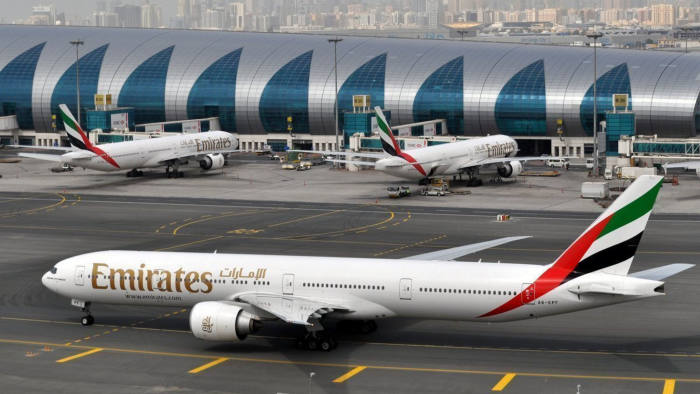
Dubai-based Emirates takes the toughest stance of all—no power banks allowed. Period. Business, economy, doesn’t matter. For an airline that prides itself on luxury, this policy highlights just how seriously they treat cabin safety. Long-haul flyers used to charging devices may find this frustrating, but Emirates prefers safety over risk.

4. Singapore Airlines: No Mid-Air Charging

One of Asia’s most respected carriers allows power banks onboard but bans charging during the flight. The reasoning is straightforward: minimize the chance of overheating. For tech-savvy passengers heading from Singapore to Europe or the U.S., it’s a reminder to charge up before boarding.

5. Scoot: Power Banks Are Decorative Only

Scoot, Singapore Airlines’ low-cost cousin, follows a similar line—bring your power bank, but it stays in your bag. No charging phones, no sneaky top-ups. It’s essentially treated like a travel accessory rather than a gadget.

6. EVA Air: Limited and Controlled

Taiwan’s EVA Air is cautious. While passengers can carry power banks, their use in-flight is restricted. Given the airline’s reputation for orderliness, this fits with its broader focus on safety and regulation.

7. Thai Airways: Full Ban for Peace of Mind

Thailand’s national airline goes further than most with a complete ban on power banks during flights. After rising global concern about lithium battery fires, Thai Airways decided not to take chances. Passengers might grumble, but the airline markets it as prioritizing peace of mind.

8. AirAsia: Practical but Firm

As one of Asia’s busiest budget carriers, AirAsia allows power banks in cabin baggage but forbids using them in-flight. It’s practical—passengers still get to carry them—but firm enough to reduce risks. With AirAsia’s short-haul routes, most travelers can survive without recharging mid-air.

9. Tigerair: Carry but Don’t Use

Tigerair passengers can only keep power banks in hand luggage, not in checked bags. Using them on board? Off-limits. The airline keeps the message simple: safe storage, no charging.

10. Starlux Airlines: Expanding With Restrictions

Starlux Airlines, a rising star in Taiwan’s aviation industry, has banned power bank use altogether. With new long-haul flights connecting Asia to Europe and North America, the policy reflects their intent to maintain strict international safety standards.

11. China Airlines: Cabin Only, Strictly Unused

Taiwan’s largest carrier insists on cabin-only power banks. They must stay unused and unplugged for the entire journey. It’s a straightforward measure that aligns with most regional carriers in East Asia.

12. Air Busan: Safety Above All Else

South Korea’s Air Busan prohibits using or charging power banks on flights. Devices must be carried in the cabin but remain idle. For a budget airline juggling efficiency and safety, the rule is clear and easy to enforce.

13. Malaysia Airlines: Under the Seat, Never in Use

Starting April 1, 2025, Malaysia Airlines introduced a firm guideline: power banks must be in carry-on bags under the seat—not in overhead bins. Using them during flights is forbidden. The timing of the rule change reflects rising pressure on carriers to respond to FAA and ICAO safety warnings.

14. Firefly: Regional Carrier, Same Approach

Firefly, a subsidiary of Malaysia Airlines, applies identical restrictions. Power banks go under seats or in seat pockets, but never in overhead bins and never in use. Even though Firefly operates short hops, the airline isn’t taking chances.

15. MASwings: East Malaysia Joins In

MASwings, another Malaysia Airlines subsidiary, rolled out the same rule on April 1, 2025. For passengers flying in East Malaysia’s regional network, the policy may feel restrictive, but it aligns with its parent company’s safety-first stance.

Why the Big Fuss Over a Small Device?

On the surface, banning power banks feels like overkill. After all, most people use them daily without issues. But inside a pressurized cabin thousands of feet in the air, even a small fire can escalate into a major emergency. Cabin crews are trained for these scenarios, but prevention is always easier than firefighting mid-air.

Here’s the tricky part: airlines don’t all agree on how strict to be. Some allow power banks but limit usage, while others ban them outright. This inconsistency can confuse passengers, especially frequent fliers hopping between different carriers.

So, what’s the takeaway? If you’re traveling internationally, always check your airline’s specific rules before packing. And maybe—just maybe—charge your devices fully before heading to the airport.

Final Thoughts

Airlines are betting on caution, and rightly so. Lithium-ion batteries aren’t inherently dangerous, but they can misbehave in rare circumstances. For carriers responsible for hundreds of lives per flight, even “rare” isn’t good enough.

As more incidents make headlines, don’t be surprised if additional airlines adopt stricter policies in the coming years. For now, the safest bet is to carry your power bank in your hand luggage, keep it visible, and expect to leave it untouched until you land. Because let’s be honest—no one wants to be the passenger whose charger sparks a mid-air emergency.

Stanbic IBTC Holdings Partners Lagos Business School To Host Sustainable Finance Summit 2.0 For Climate-Smart Finance

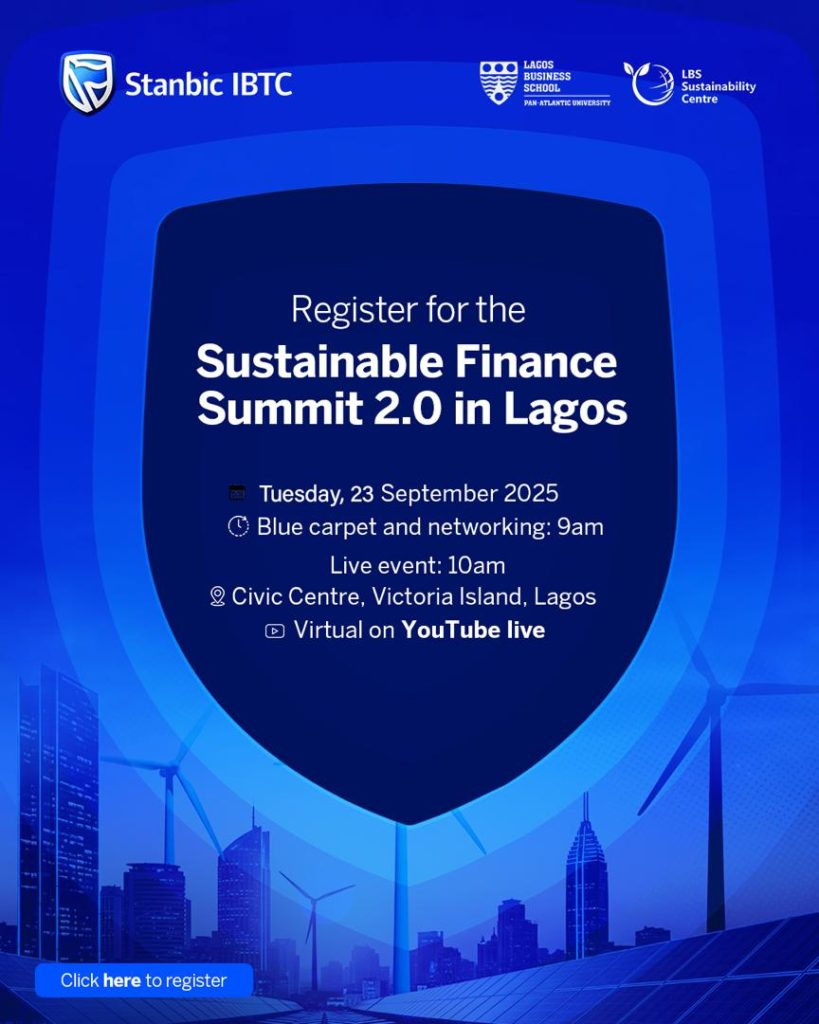
Stanbic IBTC Holdings, in collaboration with the Lagos Business School Sustainability Centre (LBSSC), has announced the highly anticipated Sustainable Finance Summit 2.0. Scheduled for Tuesday, 23 September 2025, this year’s event is themed “Financing Resilience: Digital innovation and AI for climate-smart communities.” The hybrid summit will be held at the prestigious Civic Centre, Victoria Island, Lagos, ensuring global accessibility and participation from international stakeholders.

The Sustainable Finance Summit 2.0 represents the definitive platform for understanding and shaping the future of finance and climate resilience in the digital age. As a comprehensive engagement, the summit targets a diverse ecosystem of participants, including financial sector professionals, C-suite executives seeking to understand emerging sustainable finance opportunities, technology and AI innovators, policymakers and regulators, corporate leaders, academic community including researchers and students advancing knowledge in sustainable finance, media and civil society, journalists and NGO representatives amplifying sustainable finance awareness.

 For Investors: Discovery of new sustainable investment opportunities, understanding of climate risk assessment tools, and connection with innovative fintech startups and for Regulators: Platform for policy dialogue, exposure to international best practices, and collaboration opportunities with private sector leaders.

The Sustainable Finance Summit 2.0 emphasises meaningful dialogue and active participation, through interactive panel discussions with industry thought leaders; Live Q&A sessions fostering direct engagement between speakers and attendees; Networking sessions designed to facilitate strategic partnerships; and Case study presentations showcasing successful sustainable finance implementations and demonstrations of AI-powered climate solutions.

While anchored in Lagos, Nigeria’s commercial capital, the summit’s hybrid format enables international participation, reflecting the global nature of climate finance challenges and solutions. The event positions Nigeria as a leading voice in sustainable finance across Africa and internationally.

Registration link: https://events.lbs.edu.ng/SUSTAINABLEFINANCESUMMIT2025

Stanbic IBTC Insurance Brokers Educated Logistics And Supply Chain Business Owners On Tailored Insurance Solutions

Business leaders, SMEs, and entrepreneurs gained fresh insights into risk management and supply chain protection at a Stanbic IBTC Insurance Brokers webinar recently, themed “Smart Insurance for Savvy Businesses: Marine and Goods-in-Transit Insurance Explained.”

The virtual session shed light on how insurance solutions can serve as practical tools for safeguarding businesses against risks linked to transporting goods locally and internationally. Discussions centered on the role of Marine Insurance and Goods-in-Transit Insurance in reducing financial exposure, protecting goods in motion, and ensuring operational continuity across Nigeria’s increasingly dynamic business landscape.

Delivering her opening remarks, Temitope Popoola, Executive Director, Stanbic IBTC Insurance Brokers, stressed the urgent need for stronger insurance adoption in Nigeria. “Businesses face risks that can arise without warning. Yet, insurance sector penetration in Nigeria remains at just about one per cent, far too low to guarantee economic stability. At Stanbic IBTC Insurance Brokers, we are committed to making insurance more accessible, fostering a culture of risk management, and ensuring prompt and fair claim settlement,” she said.

Temitope added, “Recently, we successfully paid a $1.2 million claim to a client and extended an offer of over ₦1.3 billion to another. Beyond that, we have launched a mobile app to enable clients to conveniently purchase and monitor their insurance policies in real time. These steps demonstrate our dedication to building trust and ensuring that businesses can operate with confidence.”

The session also featured Abiodun Salami, Head, Claims, Stanbic IBTC Insurance Brokers, who provided technical insights on available coverage. “Under marine insurance, we offer three levels of covers — each designed to protect businesses from specific risks up to comprehensive risk coverage. For Goods-in-Transit, we provide two types of coverage: restricted and all risk cover. However, it is always important for business owners to engage with an insurance broker to identify which coverage best suits their operations,” he explained.

The initiative reinforces Stanbic IBTC Insurance Brokers’ broader role as a thought leader in corporate risk management. By creating platforms for dialogue and education, the organisation continues to bridge knowledge gaps in the Nigerian market and promote insurance adoption as a cornerstone of business resilience.

For more information on corporate insurance solutions and tailored advisory services, the public is encouraged to contact: insurancesolution@stanbicibtc.com or call +234 (201) 2770 394.

Dollar To Naira Exchange Rate For 19th September 2025

Dollar To Naira Exchange Rate For 8th Dec 2023

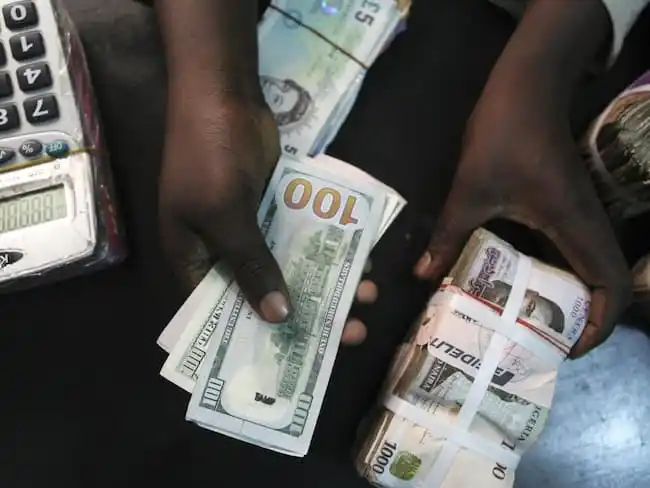
The exchange rate between the Naira and the US dollar, according to the data released on the FMDQ Security Exchange, the official forex trading portal, showed that the naira closed at 1530.00 per $1 on Friday, September 19th , 2025. The naira traded as high as 1487.00 to the dollar at the investors and exporters (I&E) window on Thursday.

How much is a dollar to naira today in the black market?

Dollar to naira exchange rate today black market (Aboki dollar rate):

The exchange rate for a dollar to naira at Lagos Parallel Market (Black Market) players buy a dollar for ₦1535 and sell at ₦1530 on Thursday 18th September, 2025, according to sources at Bureau De Change (BDC).

Please note that the Central Bank of Nigeria (CBN) does not recognize the parallel market (black market), as it has directed individuals who want to engage in Forex to approach their respective banks.

Dollar to Naira Black Market Rate Today

Dollar to Naira (USD to NGN)Black Market Exchange Rate Today
Buying Rate₦1535
Selling Rate₦1530

Dollar to Naira CBN Rate Today

Dollar to Naira (USD to NGN)CBN Rate Today
Highest Rate₦1510
Lowest Rate₦1487

Please note that the rates you buy or sell forex may be different from what is captured in this article because prices vary.

BizWatchNigeria.Ng
Privacy Overview

This website uses cookies so that we can provide you with the best user experience possible. Cookie information is stored in your browser and performs functions such as recognising you when you return to our website and helping our team to understand which sections of the website you find most interesting and useful.