





The Senate Committee on the Niger Delta has promised to treat the 2016 budget of the Niger Delta Development Commission, NDDC, with speed and urgency.
The Chairman of the Committee, Senator Peter Nwaoboshi, said in an interview with newsmen on Saturday that the financial appropriations for the commission would be ready within one month after the passage of the Federal Government’s budget.
Senator Nwaoboshi was speaking at the end of a two-day inspection tour of NDDC projects in Akwa Ibom State by the Senate committee and directors of the interventionist agency. He said: “I can assure you that as soon as we get the budget, we will work on it expeditiously. We are already collating facts. In fact, with what we have seen on the ground, we are set to go. As soon as the Federal Government’s budget is passed, within one month, you can be sure that we will get the NDDC budget out.”
The committee chairman explained that one of the reasons for the late approval of NDDC budgets in the past was because it had to wait for the passage of the Federal Government’s budget to know what had been allocated to it.
Senator Nwaoboshi said: “We will not allow what happened in the general budget to happen to the NDDC budget. This time, we are going to go through the budget line by line to determine the relevance of the projects to the people of the Niger Delta. We will see whether that is what they deserve and what they demand before allocating funds for the projects. It is not going to be a budget for projects to be scattered everywhere and nothing is achieved at the end of the day.”
“People should understand that we are in the 8th Senate. We are not just going to allocate money for no particular purpose. We are going to look at the projects for which the money is being allocated. This time, if we identify a project and we think that it is relevant to the people, we will make budgetary provision for it.”
The committee chairman said further: “One of the things we have gained from our visits to the project sites is that it has exposed us to certain facts that were unknown to us previously. We are going to look at these projects and make sure that they are funded, especially those that are of great importance to the people of the Niger Delta. It is not going to be business as usual.”
“The NDDC has asked state governments to make inputs into its 2016 budget. It is not going to be just any kind of contribution. We won’t allow special interests from government officials to use that as an opportunity to feather their own nests. We are going to make sure that the proposed projects are relevant to the people of the Niger Delta.”
The committee had earlier inspected the 30-kilometre Nsasak Junction-Okon Road, in Essien Udim Local Government Area of Akwa Ibom State. Senator Nwaoboshi commended the contractor for the quality of work on the road. “I am very impressed that a Nigerian contractor did this good job. When you see this type of performance, you will be encouraged. We will recommend this company for more quality jobs. We assure the contractor that money will be appropriated for the project in the 2016 budget.”
The Managing Director of Seyang Construction, the company handling the project, Engr. Sam Inyang, said that the road would be the shortest route from Akwa Ibom to Rivers state through Aba. He also described the road as having huge potentials for economic benefits to the people of several communities and local governments in the area.
Nasarawa State Governor, Umaru Tanko Al – Makura has revealed that solid mineral resources in the state can sustain the country if harnessed.
Makura said with the effort by the federal government to diversify the economy, Nasarawa state has large deposit of over 27 solid mineral resources that can earn the country foreign income.
He commented that with the dwindling fortune in the oil industry, the deposit in Nasarawa is a window of opportunity to sustain the economy especially with the present effort of President Muhammadu Buhari to diversify the economy, adding that his administration has made a lot of opportunities for investors to come over and make a fortune.
The governor stated that a lot of amenities have been provided that will make it easier for investors to invest in the state ranging from roads and investor friendly policies.
He said aside from lands that can be utilized for federal government mass housing estate which has been earmarked around Mararaba, gate way to Abuja there are other opportunities such as tourism potentials.
The CBN has called for the enlargement of sources of foreign exchange inflow into the country, blaming the current slide of the naira on the scarcity of the dollar.
A source at the apex bank who spoke to the News Agency of Nigeria over the weekend, said that the CBN had not underestimated the value of naira, but scarcity of foreign currencies was responsible for the depreciation of the naira at the parallel market.
According to him, the CBN has always supported for diversification of sources of foreign exchange into the country rather than depending solely on sale of crude oil, and that the CBN has also been championing schemes to promote local production of goods.
According to him, one of such initiatives was the introduction of the Anchor Borrowers Programme (ABP) to boost local production of rice and wheat regarded as two of the four products that dominated the food import bill, while another is a policy called Produce, Add Value and Export to earn Forex (PAVE).
The rationale behind the two initiatives was to improve and deepen the foreign exchange market by improving supply of foreign exchange into the market, he said.
A report by the Energy Information Administration, an arm of the US Energy Department, has disclosed that Nigeria was the second-largest importer of kerosene from the United States last year.
The country, which is Africa’s biggest crude oil producer, also took in the third-largest volume of the US jet fuel in 2015.
The report said Nigeria imported 1.25 million barrels of the US kerosene from January to December, while other products imported from the US by Nigeria include Liquefied Petroleum Gas, lubricants, petroleum coke, fuel ethanol and finished motor gasoline.
The report also revealed that the country imported 1.72 million barrels of the LPG; 290,000 barrels of lubricants; 121,000 barrels of petroleum coke, 161,000 barrels of fuel ethanol and 616,000 barrels of finished motor gasoline, the EIA data showed.
Nigeria bought a total of 1.427 million barrels of the US kerosene in 2014. In 2013, 1.040 million barrels were imported; 272,000 barrels in 2012; 1,000 barrels in 2009; 4,000 barrels in 2008, and 1,000 barrels in 1995.
Dangote Sugar Refinery (DSR) has secured the Global Food Safety Systems (FSSC 22000) Certification.
According to a statement released by the company, the certification is fully recognised by the Global Food Safety Initiative (GFSI), the certification came in recognition of the standards the company has already achieved through the refinery such as the ISO 9001:2008, ISO 22000:2005 and ISO OHSAS 18001:2007.
It also stated that recommendation for DSR’s FSSC 22000 certification was given in November 2015, after series of processes, followed by internal and surveillance audits.
Mr Abdullahi Sule, Dangote Sugar Refinery acting Group Managing Director, also stated that the feat was part of strategic plan to meet its customer’s needs using good manufacturing practices, enhanced food safety culture and management systems. It added that the certification would boost consumer confidence in the brand and eliminate production loss time in its refinery.
The statement also said that the company was actively pursuing a backward integration master plan with a target of producing a total of 1.5 million tonnes of sugar per annum. The target was to enable the firm meet the national sugar master plan.
“The firm is also planning an additional investment of N180 billion in four factories in Sokoto and Kebbi States and has 150,000 hectares of land allocated for the project in Kogi, Kwara, Jigawa, Sokoto, Taraba and Kebbi States,” it said.
The foreign exchange crunch and declining value of the naira has caused many Nigerian importers to shift their focus to the export trade, mainly timber and solid minerals.
The President of the Shippers Association of Lagos State, Mr. Jonathan Nicol, speaking in an interview with the Punch Newspapers, said the development arose due to the current unprofitable nature of importation business.
According to him, what many import entrepreneurs are currently doing is going into some aspects of export, to cover for the period of lull in imports.
Nicol added that the solid mineral sector was another area of interest for importers, some of whom had already applied for prospecting licences.
He described the development as a positive one for Nigeria, adding that there was the likelihood that some members might not return to the importation business any more.
Kaduna State governor, Nasir El-Rufai, revealed that the state is set to acquire majority shares of the comatose Peugeot Automobile of Nigeria. He added that plans for the acquisition have already been concluded.
El-Rufai said the state had already submitted its interest to the Assets Management Company of Nigeria (AMCON) which manages the liabilities of the company.
“our hope is that when we acquire the majority share of the company, we will restructure it to operate to full capacity of assembling between 90,000 and 100,000 cars yearly. We have the support of PAN as well as the government of France in this drive.”
He described PAN as a critical partner in Kaduna state’s industrial history, and lamented that it had now gone down from assembling 90,000 cars per annum to merely 200 a year.
“We are determined to bring back all industries related to Peugeot established in Kaduna as part of plans to ensure that every youth in Kaduna State has something doing,” he said.
The governor also commended the Kaduna Chambers of Commerce, Mines, Industries and Agriculture (KADCCIMA), for bringing captains of commerce and industries to the state for the event.
As part of efforts to encourage economics activities by empowering the small and medium enterprises across the country, the Bank of Industry (BOI) has commissioned a 24 kilowatts micro-grid solar solution in Kolwa, Kaltungo Local Government Area of Gombe State.
This came as the state government also concluded plans with the development finance institution to replicate the power project in other nine local government areas of the state.
Prior to the installation of the solar power system, the over 250 households in the rustic and largely agrarian village had relied on self-power generation.
However, the Kolwa eletrification project is a 24KW capacity installation that covers a 6 km distribution network, and is also capable providing commercial ventures with electricity.
While the BoI/UNDP solar power pilot project is to be installed in six rural communities in the six geo-political zones of the country, the Kolwa project makes it three, having previously been installed in Bisanti, in Katcha Local Government Area of Niger State, and in Onibambu, Ife-North LGA in Osun State.
The three others, namely: Ogbekpen, Ikpoba in Okha LGA, Edo State, Onono, Anambra West LGA, in Anambra State and Carwa/Cakum, Markarfi LGA, in Kano State are awaiting commissioning.
Investors in the Nigerian equities market smiled home last week as the market responded positively to the earnings and dividends declared by some companies. Besides, investors are expecting more earnings and dividends in the days ahead.
The positive run recorded last week was also boosted by the impressive full year, 2015, earnings and dividend declaration of Dangote Cement Plc. While Dangote Cement declared a dividend of N8 per share, Greif Nigeria Plc and African Prudential Registrars Plc recommended 60 kobo and 43 kobo respectively.
The improved result announced by Dangote Cement excited investors leading to strong appreciation of 24 per cent in the company’s share price.
At the close of trades for the week, the NSE All-Share Index (ASI) and market capitalisation appreciated by 6.57 per cent and 6.55 per cent to close the week at 25,820.10 and N8.882 trillion respectively. This is the highest weekly growth the ASI has recorded this year. The gain reduced the year-to-date decline to 9.85 per cent.
Apart from the NSE-Main Board Index, NSE Consumer Goods Index and NSE Oil/Gas Index that depreciated by 0.54 per cent, 1.36 per cent and 6.10 per cent respectively other indices closed higher. But the NSE ASeM Index closed flat
Skye Bank Plc has pushed for the improved investments in the manufacturing, agriculture and extractive industries for the success of the diversification programme of the government.
According to the Group Managing Director/Chief Executive Officer of Skye Bank Plc, Timothy Oguntayo, the three identified sectors are critical for the success of the economic diversification agenda of the current government in view of the dwindling oil prices, low GDP growth, and rising unemployment in the country.
“The manufacturing sector contributed 10 per cent of GDP before the oil boom of 1970s but lamented Nigeria’s overdependence on oil export and earnings from the 1990s to date,” he said.
He lamented that over-dependence on oil has resulted in the neglect of the manufacturing sector; just as low investment in public goods and infrastructure led to the decline in manufacturing activities. He recommended the expansion of public infrastructure like road, electricity, among others to promote manufacturing.
Oguntayo advised manufacturers to access the earmarked N200 billion Central Bank of Nigeria and N200 billion Bank of Industry’s intervention funds to boost their operations. He added that the Bank of Industry and NEXIM Bank should be strengthened to provide long-term funding for manufacturers.
Following the pressing need to diversify the economy occasioned by the declining revenue generated from crude oil exports, Sterling Bank has taken a practical step to champion the use of locally manufactured goods and services by going into partnership with Innoson Motors to finance the purchase of locally made vehicles produced by the company.
Stated in the agreement is that Sterling Bank will provide Auto Finance to prospective customers willing to acquire any brand of Innoson Motor Vehicles.
The Bank’s Executive Director, Finance & Strategy, Abubakar Suleiman said; “The country’s dependence on oil exports for foreign exchange and the global oil sector downturn driven by the falling oil price has led to near economic recession in the country and has negatively impacted other sectors with prices of imported products rising significantly.
“For the country to navigate the current headwinds, there is an urgent need to diversify the economy and empower the manufacturing sector of the country. But local manufacturers will not thrive if they are not patronized by Nigerians. This is why we have entered this partnership with Innoson.”
Innoson Vehicle Manufacturing Company (IVM) is the premiere private vehicle manufacturing company in Nigeria. The indigenous company, headquartered in Nnewi, Anambra state, was commissioned in 2014 and has since gone on to produce several range of vehicles from Trucks, SUVs to mini-buses.
Two Nigerian students have done the country proud after they emerged as the best graduating students in their respective fields of study.
Mr. Peter Hunnoho Moses, who graduated with a First Class Honours Bachelor of Science Degree in Information Technology was judged the overall best student of the graduation class with a cumulative GPA of 3.99, while the overall best student in the Female category went to Ms. Odinaka Abel Favour who graduated with a First Class Bachelor of Science Degree in Business Administration with a cumulative GPA of 3.90.
The two Nigerians won the top prize at the 9th Graduation Congregation of the Accra Institute of Technology (AIT), a leading technology-focus private university in Ghana. The event held at the Ghanaian capital city over the weekend.
CODUB in conjunction with UK Trade and Investment (UKTI) will be hosting the 5th Asset Summit Africa. The event is a cross sector one that aims to attract up to 400 senior professionals from different parts of the world in both public and private sectors. Both local and international expert speakers will deliver presentations covering real business case studies that outlines the ways in which Asset Management can be well implemented and make a real difference to the society
Nigerian Banks are facing a serious threat to their international reputation as they are finding it difficult to access forex to pay their off their financial obligations to foreign lenders, Reuters has reported.
According to the report, banks looking for dollars to repay letters of credit (LC’s) to their foreign lenders have been delayed for as much as a week compared to just a day or two in the past, with the delay attributed to the Central Bank’s dollar rationing and strict capital controls which have restricted to flow of forex in and out banking system.
The implication of this is that commercial banks may soon start to experience significant defaults if this continues. According to the report outstanding LC’s could be as much as $500m. The CBN sells about $250 weekly compared to about $500m weekly before it imposed controls.
Shares of Nigerian banks have been on a decline in the past year with the Banking Index down by as much as 10% this year alone. Most Nigerian banks took to foreign currency lending in 2014 as they rushed to shore up their capital base with medium term lending. The impact of not being able to pay these loans could posse negative consequences for the financial sector.
The minister of Agriculture, Chief Audu Ogbeh, has advised that Nigeria must develop agriculture because the transition from oil to agriculture as the country’s major foreign exchange earner is vital to the country’s survival.
Ogbeh noted that Rivers State remains critical in the development of agriculture in the country, considering the fact that it hosts the two biggest fertiliser plants in Nigeria, Notore Limited and Indorama Petrochemical Company Limited.
Rivers State Governor, Chief Ezebunwo Nyesom Wike, stated that agriculture should be developed as the country’s next foreign exchange earner in view of plunging oil prices, pointing out that developing agriculture would generate employment and strengthen the economy.
He further stated that the state government has instituted school farming to encourage youths to be involved in agriculture, said his administration has also extended loans to farmers for greater agricultural production. He approved the hosting of the 2017 agricultural conference in Rivers State as requested by the Minister of Agriculture.
The Senate Committee on Communications has summoned the Attorney General of the Federation (AGF) and Minister of Justice, Abubakar Malami, and Minister of Communications Technology, Adebayo Shittu, to appear before over claims that MTN Nigeria Limited had paid N50 billion of the N780 billion fine to the federal government.
The committee also summoned the Executive Vice-Chairman of Nigerian Communications Commission (NCC), Professor Umar Danbatta, the Accountant-General of the Federation, Ahmed Idris and Chief Executive Officer of MTN to appear before it on March 10, to explain all they know about the payment and other connected matters.
According to the letter of invitation dated March 3, 2016, addressed to them, Chairman of the committee, Senator Gilbert Nnaji, the committee said it discovered during one of its recent oversight functions that NCC could not provide any proof of the payment by MTN.
The committee further said it learnt that MTN had been misguided to lodge the said N50 billion into the Central Bank of Nigeria (CBN) Recovery Account, the account it said was specially designated for recovered funds.
Therefore, the committee said it suspected foul play over the manner of the payment as well as the hasty manner that MTN withdrew its suit against NCC from the court, arguing that if there was no ulterior motive behind the moves, the payment ought to have been made to NCC.
The uproar surrounding the 2016 budget do not seem to be going away anytime soon as it was discovered yesterday that the federal government earmarked a staggering sum of N39.41 billion only for the purchase of cars in this fiscal year.
The development is contrary to the stance of the President Muhammadu Buhari administration that it is looking to cut costs in the running of the government.
According to a THISDAY report, of the N39.41 billion budgeted for vehicles in 2016 budget, N29.41 billion of them is meant for the purchase of vehicles by ministries, departments and agencies (MDAs).
It was also learnt that N24.38 billion of the N29.41 billion has been allocated for the purchase of cars; N1.67 billion allocated for the purchase of buses while another N362.65 million is earmarked for the purchase of vans.
The report also disclosed that some agencies such as the Nigerian National Petroleum Corporation (NNPC), Nigeria Ports Authority (NPA), Central Bank of Nigeria (CBN), Federal Inland Revenue Service (FIRS) have the combined budget of N10 billion for the purchase of vehicles.
The N39.41 billion budget is besides the budget for the planned purchase of vehicles by the judiciary which is not clearly stated in judiciary’s budget.
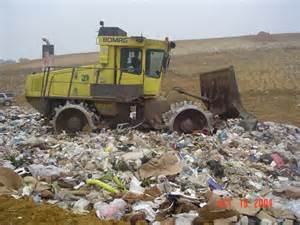
The Ogun State Government has announced that it has concluded plans to facilitate private sector participation in waste management across the state.
The state’s Commissioner for the Environment, Mr. Bolaji Oyeleye, has said, disclosed that the move was to put an end to the indiscriminate dumping of refuse across the state.
He said, “We are trying to carry out our mandate, which has to do with the protection, management, and development of the environment. We are working on waste management and also watching companies in terms of the emission levels as well as the level of noise pollution.
“Importantly, the issue of waste management is also a serious concern for us at the ministry; that is why we are trying to introduce the PSP scheme in waste management, because we have been solely responsible, as it were, for waste management in the state. We are aware that it is not sustainable on the long run; we have less to spend now as against what it used to be.”
The commissioner said the scheme would begin in the major cities such as Ado-Odo Ota, Abeokuta, Mowe/Ibafo, Ijebu Ode and Sagamu, and that cart-pushers will be banned so that people can key into the scheme, especially along the corridor of Mowe and Ibafo, where law and order have broken down and people are dumping wastes indiscriminately.
Oil workers under the umbrella of the Nigeria Union of Petroleum and Natural Gas Workers have expressed their displeasure about the plan to unbundle the Nigerian National Petroleum Corporation into 30 companies without following due process.
In a statement released on Sunday, the union stated that the move was an attempt to provoke workers in the oil and gas sector and cause industrial unrest in the country
The union stated that the unilateral action of the Minister of State for Petroleum Resources, Dr. Ibe Kachikwu, was not in consonance with the laws establishing the NNPC, and that the restructuring in the oil and gas industry, especially at the NNPC, to achieve optimal performance could not be achieved without due consultation with the unions and other stakeholders in the sector.
The statement signed by the acting General Secretary, NUPENG, Joseph Ogbebor, stressed that the unbundling and rebranding of the NNPC as announced by the minister was another public policy change, which was not consistent with the laws establishing the corporation.
He warned that the plan would be resisted by oil and gas workers in the country.
The latest figures from the financial and operations report of the Nigerian National Petroleum Corporation has shown that Nigeria’s three refineries were able to make profit at the close of business in January this year. This is the first time the refineries will be declaring a profit in 12 months.
According to the report, the refineries recorded losses consecutively from February last year up till December; but in January 2016, they made an operating profit of N5.67bn.
The plants are the Warri Refining and Petrochemical Company, Kaduna Refining and Petrochemical Company and Port Harcourt Refining Company.
Although the consolidated revenue of the three refineries indicated an operating profit of N5.67bn, an analysis of the report showed that of the three, only two actually made profits at the close of activities in January.
The two of them, according to the report, are the WRPC and PHRC, while the KRPC recorded a loss.
For specifics, the WRPC and PHRC recorded operating profits of N4.391bn and N3.397bn, respectively, while the KRPC had a loss of N2.118bn.
Key points
NUPRC says the $300 Helicopter Levy for Air Navigational Services remains payable to NAMA.
The commission says Terminal Navigational Charge does not apply to...