The United Nations Resident Coordinator in Nigeria,Fatima Samoura, on Monday, March 8 said Africa’s population has been projected to be two billion.
Samoura added that out of this figure one billion would be below 25 years in the next 34 years.
The official disclosed this at opening of Regional Leadership Summit on the African Demographic Dividend in Abuja. The three-day summit is organised by the United Nations Population Fund (UNFPA).
Samoura said the idea of the regional summit is to transform the huge population into an opportunity for economic and scientific development. She said the summit would also ensure that the outcome of the discussions and other documents did not stop on the economy but also goes to education and other disciplines.
She said some universities in Africa do not adjust their curricular to the needs of science, technology and economy but remain very traditional and vertical in the way they are approaching demographic dividends.
“The concept of demographic dividend, which is integral to inclusive growth and poverty reduction; is not new, but dates back to Reverend Thomas Malthus (1798).
“Issues of the demographic dividend have gained prominence in international development arena due to the increasing and obvious relationship between population dynamics and sustainable development.”
“This has also resulted in many international affirmations on population and development including the `Transforming our world: the 2030 Agenda for Sustainable Development”.
She said the Agenda 2030 underlines the importance of integrating population dynamics into development interventions. She stressed the need to take population projections and trends into consideration in development policies planning and implementation.
The Federal Government has said it will terminate the funding of a $7.39 billion, about N1.478 trillion per annum Joint Venture, JV cash call obligation before 2016.
The Minister of State for Petroleum Resources, Ibe Kachikwu, made this known at the Oloibiri Lecture Series and Energy Forum organised by the Society of Petroleum Engineers, SPE Nigeria Council, last week in Abuja.
He said the discontinuation of the cash call obligation, will give the oil majors a free hand to source for funding from financial institutions or other sources to execute their projects.
NCS Raises Alarm over Arrival of Six Containers of Poisonous Iranian Tomato Paste
The Manufacturers Association of Nigeria, MAN, has stated that Nigeria spends N11.7billion annually on the importation of tomato paste.
MAN President, Frank Jacobs said Nigeria is the second largest producer of tomato in Africa and 13th in the world. It still spends N11.7billion yearly on the importation of tomato paste.
Jacobs said: “Sadly, about 750,000 of the tomatoes harvested in Nigeria go to waste as a result of poor Food Supply Chain (FSC) management, price instability, and the supply preference of farmers and middlemen for urban markets than processors due to low farm gate prices.”
The country’s Purchasing Managers’ Index, PMI, has plunged to a record low of 45.5 in the month of February from the 47.2 in January for manufacturing sector, and equally slowed to 44.3 in February, down from 46.9 in January for the non-manufacturing sector.
Analysts attributed the reason to the fact that manufacturers now have little access to power and dollar to import raw materials.
“The Central Bank of Nigeria (CBN), last week, released its Purchasing Managers’ Index (PMI) Report for February 2016, which captures the PMI for both the manufacturing and non-manufacturing sectors.
“Both sectors’ PMIs dropped sharply to 45.5 (previously 47.2) and 44.3 (previously 46.9) respectively for the second consecutive month,” analysts at Cordros Capital said.
They also said that it is worthy of note that the below 50 PMI results recorded year-to-date suggest that economic activities have generally slowed down since December 2015 (where 51.2 and 53.4 manufacturing and non-manufacturing PMIs were recorded).
“This, in our view, is a pointer to a slower gross domestic product (GDP) growth in the first quarter of this year. It is also in line with the view already hinted by the Monetary Policy Committee (MPC) at the January 2016 meeting that “growth in the first quarter of 2016 is expected to be less robust than in the corresponding period of 2015 (first quarter GDP of 3.96 per cent) and therefore adds to pressure on the committee to provide further decisive policy support at this month’s meeting,” they said.
The 45.5 manufacturing PMI in February is at a record low level (since the CBN commenced the survey in January 2015). All the sector’s five diffusion indices, save the supplier delivery time index which improved, declined.
Uninterrupted rally on the Nigerian stock market continued as trading for the week opens positively with market capitalization opening at N8.882 trillion and gaining N24 billion to close at N8.906 trillion.
Market analyst said that the sustained optimism in the bourse was on account of positive sentiments toward banking stocks.
Reviewing sectoral indices showed that the Insurance Index went up 0.9 per cent to top sector performance while the oil & gas and banking indices trailed up by 0.5 per cent each, while Consumer Goods Index ended trading flat.
Also, market breadth closed positive with 20 gainers and 12 laggards.
Tiger Brand recorded the highest price gain of 9.88 per cent to close at N1.89 per share. Sterling Bank gained 7.36 per cent to close at N1.75 while International Breweries appreciated by 4.96 per cent to close at N19.05 per share. Mansard Insurance went up by 4.90 per cent to close at N2.14 while Oando appreciated by 4.87 per cent to close at N3.66 per share.
On the other hand, Union Dicon led the losers’ chart by 4.98 per cent to close at N11.25 per share. Vitafoam shed 4.82 per cent to close at N4.15 while Ikeja Hotel declined by 4.76 per cent to close at N2.60 per share. Learn Africa depreciated by 4.65 per cent to close at 82 kobo while Dangote Sugar went down by 3.55 per cent to close at N5.70 per share.
President of Dangote Group, Aliko Dangote, has made a projection that his conglomerate would be selling foreign exchange to the Central Bank of Nigeria (CBN) by year 2020.
Dangote, also said the problem with Nigeria should not be blamed on oil, noting that oil traded at $9 per barrel in 1998.
The business mogul, who spoke at The Nigeria Summit hosted by The Economist, said his company is expected to generate 12,000 megawatts of electricity for Nigeria by 2018.
“We are looking at a situation that by 2020 we are the one selling foreign exchange to CBN. Our projects are mainly import substitution. We are working to be self-sufficient to grow about a million tonnes of rice over the next five years,” he said.
“Our gas project would have our gas pipelines on the sea bed. The output should be able to provide about 12,000MW power. We see a lot of transformation when we are done with most of our projects by 2018.
“We have 15 countries in the ECOWAS community that is duty-free. Export market is big and profitable if you have capacity. Players in the manufacturing should be encouraged to export if they have the capacity. We must also meet local consumption.”
He called on the leaders of the economy not to forget diversification of the economy even when oil bounces back to the $80 region.
Africa Prudential Registrars Plc has proposed N1.2 billion for ordinary shareholders of the company if the proposed final dividend of 43 Kobo per share is ratified at the coming Annual General Meeting.
The company’s audited results for 2015 was released to the Nigerian Stock Exchange (NSE) last week.
It showed that this final dividend rounds up to 60Kobo total dividend for 2015 financial year, having paid an interim dividend of 17 Kobo on August 31 last year after releasing its half year financial results.
According to a survey on financial literacy released by the Central Bank of Nigeria on Monday, March 8, more than 70 per cent of Nigerians have not heard of mobile money.
The survey which took a sample of 13,286 respondents across the country showed that more Nigerians are still not financially literate.
The survey which was to illustrate current levels of awareness and understanding of various financial and economic terms and levels of knowledge of financial processes also showed that very few people, 7.6 per cent have heard of Point-of-Sale, and of terms like bonds, stocks and mortgages.
Also more than a third of Nigerians (35.9 million) have not heard of pensions or a current account, while a third (32.8 million) have not heard the terms interest or current account.
Stating that one out of four people have not heard of a savings account, the survey report said “if people have not even heard of these terms, they are a long way from understanding these terms and ultimately using these products.”
With 50.7 per cent of the adult population having no formal educational qualifications or has only completed primary education, the survey report says “this calls for the use of simple language in financial documents and financial education initiatives.”
It also noted that the youths that drop out of school or never enroll will not benefit from financial education interventions embedded in school curricula, and will have to be reached through other means.
Three Nigerian oil and gas firms have tendered bids in the final round of Uganda’s first oil licensing.
The government received seven bids for the six exploration blocks on offer, Ugandan newspaper, the Daily Monitor reported.
A statement by the country’s Ministry of Energy gave the three Nigerian companies as, WalterSmith Petroman Oil Limited, Oranto Petroleum International Ltd and Niger Delta Petroleum Resources Ltd.
The other four are, Armour Energy Limited of Australia, Rift Energy Corporation of Canada, Glint Energy LLC of USA and Swala Energy Ltd of Australia.
The winners of the blocks are expected to be announced before the end of June. The six blocks they are competing for include the Ngassa, Tai Tai and Karuka, Mvule, Turaco, Kanywantaba, and the Ngaji.
In October, 2015, the government announced that it had qualified 16 firms to submit bids for the blocks in the Albertine Graben.
“The attraction of seven bidders is significant taking into consideration the current low global oil and gas prices,” the statement said according to the Daily Monitor.
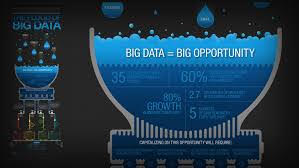
Data has always been a silent, almost indiscreet part of our lives. In the very near future, it is going to define how we live, and the quality of the decisions that we take.
As much as 80% of all the data in the world has been created in past three years. I also read an article recently which said as much as 500 million DVDs worth of data is currently being generated daily. The present challenge for today’s data and information professionals is how to extract value from the humungous and growing reservoir of data around the world.
Ongoing investments in technology assets, bank records and customer data need to be protected. These are some of the enterprise-level issues companies and consumers are grappling with. IBM’s way of responding to these ‘business information management’ challenges in commerce and industry is to keep making organic investments in cloud, analytics and mobile technologies, in addition to strategic alliances and acquisitions in these areas.
Analytics will be key to the future growth of the African business environment. Having data and not being able to properly use and mine it to help you operate more efficiently will be dangerous because analytics will soon become the soul of every business. Collating and consistently analyzing the traffic to a firm’s website, for instance, will be an instructive exercise. Analyzing this sort of data for trends and insights on customer behavior and preferences will always be useful information for any company keen on retaining and growing its market share.
Big Data is no longer a reference for a growing pool of useless techno-junk – it’s fast becoming the single most effective way to drive your business forward.
Not a day goes by, in my job at least, when someone isn’t talking about Big Data. And whether or not that stands true for you, too, it’s certainly a trend that impacts everyone today.
Big Data has therefore become an extremely under-utilized phenomenon. I believe there are several reasons for this; one is that Big Data isn’t a technology we can pinpoint in the physical sense. We can’t point to a single product and say, “that’s Big Data”. And in the same sense, we can’t listen to a customer’s issue and say, “why don’t you just have some Big Data”.
What Big Data really represents is equal measure of trouble and opportunity. The trouble is that we are producing an exponential amount of data – files, file copies, images, videos, admin, details, emails, etc. – and all of it needs housing. Moreover, the pace of technology evolution means that we’re constantly looking to upgrade systems and devices, leaving us with a bunch of data that needs rehoming.
But on the other hand, while we’ve got this data lying around, we might as well use it. This surge of information is hiding endless insights that can benefit your business.
Let me give you an example: Many of us should by now be used to receiving cold calls and spam mail offering us several types of services weekly – sometimes daily. You might get a call or email from your bank about a credit or debit card that you’re fully aware you don’t want. You might tell them you’re not interested. At the same time, a different type of credit or debit card might be offered through a letter in the post, for those who still receive snail mail. At the same time someone else might call you to offer you a loan. And at the same time, you might be searching the internet for the best mortgage, or for the best place to get a new or used car. The constant barrage of unrelated and inconsistent information is enough to drive you away from your bank and seek new services.
However, imagine that your bank could analyze all the data gathered from your information, needs and concerns and consolidate that into a valuable chunk of insight. That information could be used to personally serve you more directly. In fact, your bank would have the ability to see your mortgage concerns, your lack of interest in a debit or credit card and the fact that you had received countless letters regarding loans and cards that you’re not interested in. It could tailor-make a call or email designed just for you. It could approach you with the sole purpose of offering you the ideal mortgage package, possibly gaining business, as opposed to frustrating you with wasted time and offers you’re not interested in.
This consolidation of information and data is exactly where Big Data services come in useful. And many companies are taking advantage of these by taking the necessary steps to crunch their unstructured data into tangible business insights. This trend will most certainly push the economy forward, but only if it’s managed and used quickly and accordingly.
Unstructured data is building up at a scary rate, and it’s essentially inexplicable text. Letting that get the better of you and your company is going to cause a strain on your storage, management and effectiveness of business. However, breaking it down and using it for business insights will offer up opportunities previously unheard of.
Operators in the banking and insurance sector are looking to improve insurance penetration by using bancassurance network
According to the Director General/Chief Executive Officer of West Africa Business School, Mr. Obasi Ngwuta, said the successes recorded by various bancassurance operations had attracted the attention of the financial services sector, with new operations being set up.
He stated that, “As bancassurance is becoming important throughout Africa and globally, the first Africa Bancassurance Academy has been opened by the West Africa Business School to enhance the efforts of regulators in nurturing sustainable bancassurance solutions in financial market in Africa,”
He also explained that the objective of the Africa Bancassurance Academy was to provide quality training for employees and managers of banks and insurance companies either actively involved or considering being involved in bancassurance.
He also added that Participants at the inaugural programme this month, would acquire new knowledge, insights and the encouragement to implement the best practice bancassurance business model.
Mr. Obasi Ngwuta included that there are advantages for banks and insurers to jointly drive insurance penetration and financial inclusion to increase their revenue, build sustainable relationships with current and prospective customers, and provide professional development for managers.
He globally added that, one of the most significant changes in the financial services sector over the past few years had been the appearance and development of bancassurance.
He said banking institutions and insurance companies had found bancassurance to be an attractive and often profitable complement to their existing activities.
Although bancassurance had been growing rapidly in Africa in recent years, he said the shortage of professional talent was a challenge to the development of the new distribution channel.
He concluded that, “Both employees of cooperating banks and insurers will benefit from the West Africa Business School’s five plus years of consistent international bancassurance training experience by attending the academy.”
Business by definition is an economic system where goods and services are exchanged for one another (trade by barter), or for money. It entails the ability to produce desired goods and render requested services respectively with the aim of satisfying a customer. By this definition, it’s possible to say that it is easy to handle a business. However, with a deeper understanding comes the realization that running a business and successfully managing it effectively are two ways apart.
The problems of managing a business in Nigeria are complex and highly demanding. The more attempts you make to keep those problems to the minimum, the more other problems crop up. Business comprises of both the human and non-human resources that could possibly turn out to be basic issues affecting the growth of a business. It places a pressing burden on your management skills to keep them at bay, and still make desirable profit.
The first goal of any business setup is to make a profit while incurring minimum cost. It is imperative to recognize that a large percentage of businesses crumble along the way because they have taken with levity the necessary instruments to keep growing. Therefore, we have to think beyond having enough capital, time, structure and skills, and start extending our focus towards the inevitable in business.
Hopefully these crucial aspects of business would help you attain your envisaged global height, for both existing and newly established firms.
EMPLOYEE MOTIVATION
The question of what propels a worker to put in his utmost best in the achievement of an organization’s goals and objective has become a dominant theme in management circles. It is recognized that just as an organization has its pre-determined goals, so does an individual has his personal goals. As an organization, you must take note of the effect motivation has on your employees. Motivation is that thing that gives the worker the urge or driving force to work for the organization, what would make them want to see to the greater achievement of its goals and objective. As a business owner, you must with all essentiality affect the driving force of your workers. You must consistently put the human resources of your firm above your non-human resources as they are responsible for putting those internal resources into external values. We would advise you try out Abraham Maslow’s Theory of Motivation and John Stacey’s Equity Theory to give you an insight on what motivation is about.
MARKETING STRATEGY
Marketing is a solid backing for every growing business. Every organization must be able to sell themselves beyond the existing circles. Marketing information is a vital resource in business for marketing decision, if an organization is equipped with latest market information, risk of loss can be reduced. Apparently, any business aiming for total market control and customer submission must be able to get their products out there with an unbeatable marketing strategy to ensure a long lasting existence.
COMPETITIVE ENVIRONMENT
This is a collection of firms with similar resources capabilities, goals and services that satisfy common consumer needs and that have relationships that can restrain the growth and profitability of one another. This is a critical segment in the operation of any organization and has to be strategically handled; it can either hinder business growth or be used as a tool for business growth. As a (prospective) business owner, you must assess your environment and identify your competitors or rivals. Penetrate the market with eye-catching products and ideas and constantly improve in your domain.
Also, make advertising and rebranding a lifestyle. Consumers always want to be thrilled by new products idea, so you can’t let your competitors have that.
ECONOMIC ENVIRONMENT
This can either affect business operation favorably or adversely. In view of this, business concerns should be aware of them and prepare sufficiently for their impact. Owing to the present state of Nigeria’s economy, business owners have to keep abreast to every detail of its plummet or increase. This is the more reason why economic environment has to be momentarily considered, you have to be current on every upward and downward movement in the graphical representation of the country’s financial state in order to help you plan ahead of uncertainties.
You can’t predict or avoid the shocking disasters that might affect the economy of a nation, but you can prevent it from totally crushing your business.
Daar Communications Plc recorded a loss of N3.4 billion in 2013, despite modest improvement in earnings of N5.6 billion and 6.9 billion in 2013 and 2014. The deficit, which was however reduced to N107 million in 2014, was largely blamed on increasing cost of operation which was not matched with corresponding growth in earnings due to dwindling advertising budget.
Speaking at the joint Annual General Meetings (AGM) for the two-year period, Chairman, Daar Communications Group, Chief Raymond Dokpesi, Jnr. said nevertheless, the company recorded growth earnings of 33 per cent and 23 per cent respectively for the periods in review.
He said: ” I want to assure you that the new Board of your company under my chairmanship has taken a holistic review of operations of the company with a view to ensuring total restructuring of the company for efficiency and economy in its operations.
“It is also expected that the restructured company will be able to create greater dominance in the advertising revenue in the industry and consequently better financial performance in the coming years. I irrevocably promise you that all necessary measures have been taken to return your company to sustainable profitability which will ultimately translate to better returns on your investment in the company.”
He further noted that the company had cleared all its tax obligations and resolved the lingering debt commitment between Daar Communications and Fidelity Bank Plc in respect of a loan for the hosting of the 2009 U-17 World Cup.
Just nine months into his term, Nigerian president Muhammadu Buhari is under pressure. Under his leadership, the currency has reached record lows and inflation has reached the highest level since 2012, while Nigeria currently has a budget deficit of over $10bn.
With almost 90 percent of Nigeria’s export earnings tied to oil, the low oil price has had a devastating impact on his country, the world’s eighth-largest oil exporter and Africa’s largest oil producer.
In an interview with Martine Dennis on Talk To Al Jazeera, Buhari questions the current policy of the Organisation of the Petroleum Exporting Countries (OPEC) to prioritise market share over the price of a barrel of oil.
“OPEC has to work together to save the situation. If you can produce less and earn more, why produce more and earn less? I have never been able to understand it but the market forces are influenced by a lot of political decisions, both regional and global, and we have to live by it.
He calls on OPEC to be mindful of the diverse economic conditions in its member countries. “In Nigeria, we were unable to diversify our economy, so we are much more disavantaged by the lower oil prices. OPEC may try to help us, but basically it is our own fault.”
He dismisses the idea of Nigeria withdrawing from OPEC. “Under my leadership, Nigeria will not withdaw from OPEC. Between 1976 and 1979, I served as petroleum minister, so I value the institution of OPEC. Nigeria will make the necessary sacrifices to remain in OPEC.”
With a chorus of voices, including from the International Monetary Fund (IMF), calling for the Nigerian government to devalue the naira, Buhari says he will not reconsider his insistence on freezing the currency. Buhari says as Nigeria “virtually imports everything, from rice to toothpicks,” it cannot afford to devalue its currency.
“If it is against our national interest, why can’t we go against the IMF advice?” Buhari asks.
Buhari dismisses criticism of his foreign exchange policies, which have placed pressure on everyone from traders to parents who can no longer afford to send their children to study overseas. “Nigeria can only afford to live within its means,” he says.
Similary, he dismisses the current unrest in Biafra. “For the last 16 years, [oil] cost from over $140 a barrel, now to sometimes under $30. So the system of allocation has to correspondingly affect them. Why shouldn’t it affect them when it’s affecting the whole of Nigeria?”
Eko Electricity Distribution Company Plc (EKEDC) is set to commence a large roll out of smart prepaid meters to its customers in partnership with Mojec International Limited, Nigeria’s leading indigenous Smart Meters manufacturing company.
This was made know recently by the management of Eko Electricity Distribution Company Plc (EKEDC) during a tour of its Central Store located at Ijora Olapa Area of Lagos State to inspect the thousands of Mojec smart prepaid meters in stock and ready for immediate deployment to yearning customers.
According to the Managing Director, Electricity Distribution Company Plc (EKEDC), Engineer Oladele Amoda, the DISCO is ready under the new meter roll out plan to ensure that all customers within its network are provided with smart prepaid meters in line with the objective to ensure that both old and unmetered customers within its network are adequately metered.
“This new prepaid meters roll out plan is a massive one, as you can see, we have several thousands of smart meters in our store and our engineers have already commenced installation to the customers. We want to assure all our customers that we would not relent in our effort to ensure all customers are provided with prepaid meters with a few month” he said.
Amoda assured the customers of the company’s commitment to completely eradicate estimated billings which he noted, is one of the major issues in customers dissatisfaction and distrust of the DISCO’s under the old PHCN. He also restated the DISCOs resolve to constantly improve the reliability of the distribution network and enhance consumer’s satisfaction.
He further commended Mojec International Limited for its resolve and commitment as a trusted partner to the utility as well as its provision of world-class quality meters, which are now being deployed to customers.
Also speaking at the event, the Managing Director, Mojec International Limited, Ms. Chantelle Abdul, explained that Mojec International prepaid meters are of international standard and are tropicalized for the Nigeria environment to withstand the weather condition such as temperature, humidity, meter tampering and energy theft.
Ms. Abdul stated that the meters manufactured in Nigeria by Indigenous companies have been specifically designed and crafted to withstand the extreme weather of time and humidity condition as well as theft situation peculiar to the Nigerian environment.
“Whereas meters produced locally are stronger and better suited for the Nigerian utilities than most of the imported meters. To build most of the meters being imported into Nigeria, Nigerian companies had to give feedback to foreign manufacturers to produce meters suitable for the Nigerian environment while meters deployed in Nigeria are made specifically for the Nigerian market.
Fielding question from the media on the quality Assurance measures put in place by Mojec to ensure that meters meets requisite standards, She explained that the quality process of Mojec ensures that products are put through different stages of random testing and calibration during the production process and are later sent to the Meter Testing Stations under EMSL for further testing.
“Mojec range of smart prepaid meters are pretested and confirmed to be of the best quality before they are deployed into the field across Nigeria. This is why all our meters are certified for optimal performance and we provide a 10-year warranty on all meters made by Mojec. At Mojec, we deliberately set a very higher quality standard for ourselves with about 25 per cent above the industry standard” She said.
Ms. Abdul commended Eko Electricity Distribution Company Plc (EKEDC)for the confidence it repose in Mojec International Limited on the quality of its meters and for the bold step taking in the industry to eliminate estimated billing and ensure that all its customers are metered. She the pledged her company’s support and commitment to the EKEDC in its quest to ensure that Eko Disco rolls out over 100,000 meters to customers by the close of 2016.
The temporary suspension on the operation of the Bristow Helicopter Sirkorsky S-76 aircraft in the country has been lifted by the Nigerian Civil Aviation Authority (NCAA)
Julie King, who is the External Communications Manager, said the return of the Sikorsky S-76 aircraft to flight operations followed completion of the NCAA’s comprehensive operational audit.
Bristow Helicopter’s aircraft type Sikorsky s-76C was temporary given supension by NCAA had on Feb. 4, due to the successive mishaps of the aircraft type in the country.
King said the company, in addition, carried out an extensive return to service safety activities.
Mr Mike Imalachi, who is the Bristow Group Vice President, Global Operations, thanked the NCAA for conducting thorough review of its operations.
It was mentioned that there was a detailed safety inspection of our S-76 series helicopters and test flights for all (16) S-76 aircraft in compliance with the NCAA.
Julie King in her statement noted that Bristow had concluded a number of return to service safety activities with flight crews, engineers and other service employees, clients and key stakeholders.
The discontentments trailing the 2016 budget re-emerged yesterday as it was discovered that the federal government budgeted a whopping N39.41 billion for the purchase of cars in this fiscal year.
The 2016 budget contains escalated figures which many had said implied that the government had no clear-cut roadmap to re-direct the economy of the country while others dismiss the claim of change as nothing but a ruse.
According to reports, the N39.41 billion budgeted for vehicles in 2016 budget, N29.41 billion of them is meant for the purchase of vehicles by ministries, departments and agencies (MDAs).
It was also gathered that N24.38 billion of the N29.41 billion has been allocated for the purchase of cars; N1.67 billion allocated for the purchase of buses while another N362.65 million is earmarked for the purchase of vans.
Also some agencies such as the Nigerian National Petroleum Corporation (NNPC), Nigeria Ports Authority (NPA), Central Bank of Nigeria (CBN), Federal Inland Revenue Service (FIRS) have the combined budget of N10 billion for the purchase of vehicles. The N39.41 billion budget is besides the budget for the planned purchase of vehicles by the judiciary which is not clearly stated in judiciary’s budget.
Minister of Labour and Employment, Dr Chris Ngige has said that the President Muhammadu Buhari- led administration has resolved to boost export activities in the non-oil sectors.
The Labour minister said the Buhari government in its quest to realise the set goals in its economic diversification drive, has made adequate planning in the development of critical sectors of the Nigerian economy.
“The abundant solid mineral and agricultural potentials in Nigeria are enviable resources that we must creatively deploy to the benefit of all Nigerians and our children yet unborn.
“The National Directorate of Employment will no doubt play a significant role in the actualization of these noble objectives that are designed to turn around the fortunes of our great country.
“The agricultural skills training centres and agricultural parks operated by the Directorate across Nigeria will be deployed to further develop a pool of agriculture based businessmen and women who will take agriculture in Nigeria from substantial level to a vibrant industry.”
As part of efforts to reduce the level of youth unemployment, the Federal Government has unveiled plans to empower 740,000 young agricultural producers in rural areas under its Youth Employment in Agriculture Programme.
This was disclosed by the Permanent Secretary at the Federal Ministry of Agriculture and Rural Development, Dr. Shehu Ahmed, while delivering a keynote address at a one – day stakeholders’ workshop on YEAP in Abuja.
The permanent secretary who was represented by the Director, Animal Production and Husbandry Services, Dr. Egejuru Eze, was quoted as saying that the programme would cover 36 states of the federation as well as the Federal Capital Territory.
According to him, the programme has commenced with six pilot states selected from the six geopolitical zones including Bauchi, Imo, Katsina, Lagos, Niger, and Rivers, adding that beneficiaries would comprise 20,000 school leavers and rural youth leaders from each state of the federation.
The statement signed by the Director of Information, FMARD, Tony Ohaeri, further disclosed that the programme was aimed at training 18,500, university graduates to become agribusiness entrepreneurs who would be involved in farming, storage, processing, value addition, marketing services and logistics.
Key points
NUPRC says the $300 Helicopter Levy for Air Navigational Services remains payable to NAMA.
The commission says Terminal Navigational Charge does not apply to...