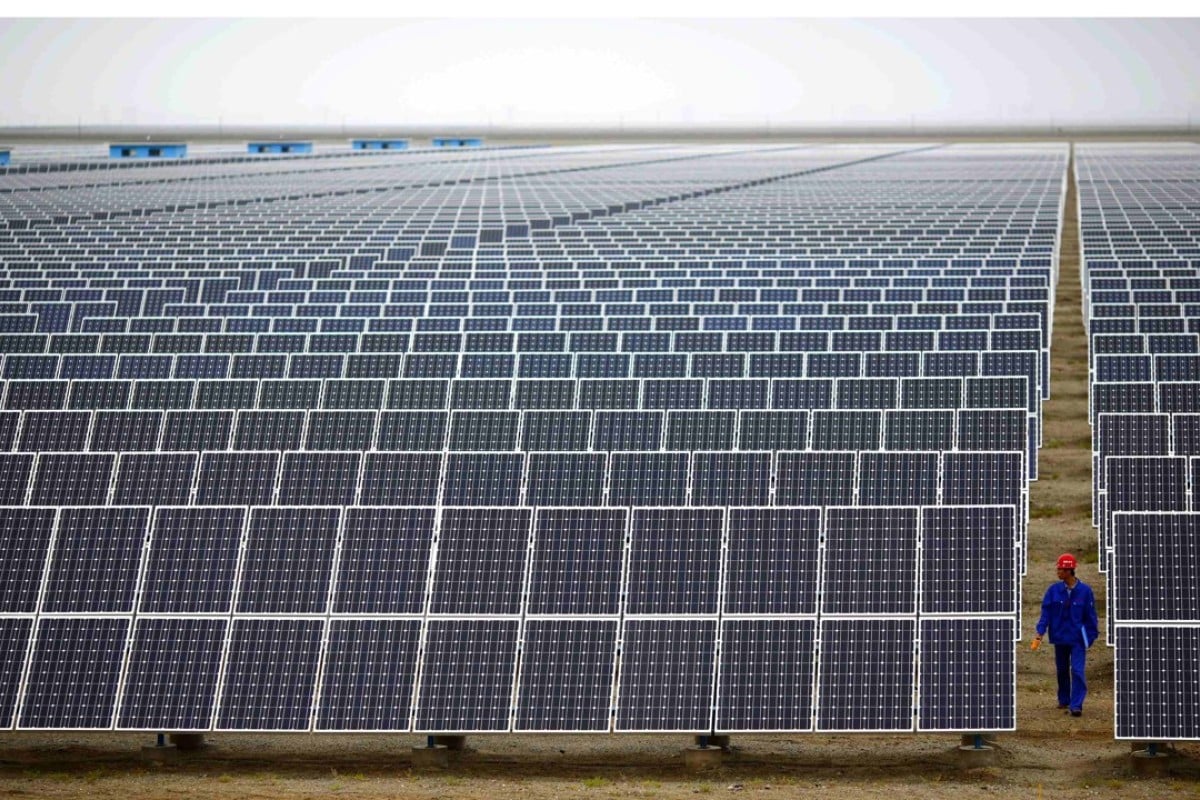
At first glance, the headline sounds surprising. Nigeria is not widely regarded as a major solar manufacturing nation, yet it has appeared among the top ten source countries for solar module imports into the United States in the first quarter of 2026.
The immediate question this raises is whether Nigeria has suddenly developed a large-scale solar manufacturing industry capable of competing with established producers in Asia. The evidence suggests that this is not what is happening. Instead, Nigeria’s emergence reflects a much larger shift taking place in global trade as manufacturers adjust to new American policies aimed at reducing dependence on Chinese-linked supply chains.
The backdrop to this development is a significant slowdown in overall US solar imports. According to the S&P Global report, the United States imported 4.5 gigawatts of solar modules during the first quarter of 2026, a sharp decline from previous periods and the lowest quarterly volume recorded since 2019. This decline was largely driven by the implementation of Foreign Entity of Concern (FEOC) restrictions, which came into effect at the start of the year. These rules are designed to prevent products connected to certain foreign entities, particularly those linked to China, from qualifying for key incentives under US clean-energy programmes.
The restrictions have fundamentally altered how solar products reach the US market. For years, China dominated the global solar manufacturing ecosystem, producing the overwhelming majority of solar cells, wafers and modules used around the world. However, as Washington intensified efforts to reduce reliance on Chinese manufacturing, companies began searching for alternative production and export locations that would allow them to maintain access to the American market.
This search has led to the rise of countries that previously played only a minor role in global solar trade. Indonesia, the Philippines, Ethiopia, Kenya and Nigeria have all become increasingly visible in US import data. Their growing prominence is not necessarily evidence that they have suddenly become major producers of solar technology. Rather, it reflects the way global manufacturers are reorganising supply chains in response to trade restrictions.
Nigeria’s appearance on the list becomes easier to understand when viewed alongside another finding highlighted in the report: imports of solar cells from China into Nigeria have risen sharply. Solar cells are the most important component of a solar module. They are the devices that convert sunlight into electricity, and they account for a significant portion of the value of the finished product.
The implication is that Nigeria may be serving as a processing or assembly location within a broader international supply chain. Instead of shipping finished solar products directly from China to the United States, manufacturers may be sending components to countries such as Nigeria, where additional assembly or manufacturing activities take place before the products are exported onward. This does not automatically mean that any trade rules are being violated, but it does illustrate how companies are adapting to a changing regulatory environment.
This pattern is familiar to US trade authorities. Over the past several years, Washington has repeatedly investigated allegations that Chinese manufacturers were circumventing tariffs and restrictions by moving parts of their production process to third countries. Earlier waves of investigations focused on countries such as Vietnam, Malaysia, Thailand and Cambodia. As scrutiny increased in those locations, supply chains appeared to shift again, bringing countries such as Indonesia, Ethiopia, Kenya and now Nigeria into greater prominence.
For the United States, the concern is that products may still be substantially linked to Chinese manufacturing even when they are exported from another country. This is why American authorities continue to conduct anti-circumvention investigations and monitor changes in global trade patterns. The outcome of these investigations could have important implications for countries that have recently emerged as solar exporters.
For Nigeria, however, the development presents both an opportunity and a challenge.
On the positive side, inclusion among the leading source countries for US solar imports signals that Nigeria is becoming visible within an industry that is central to the global energy transition. As governments and companies invest heavily in renewable energy, demand for solar equipment is expected to remain strong for many years. If Nigeria can attract investment into genuine manufacturing and assembly operations, it could benefit from new industrial activity, job creation and technology transfer.
The opportunity is particularly significant because Nigeria has long sought to diversify its economy away from excessive reliance on crude oil exports. Participation in global clean-energy supply chains could provide an alternative source of export earnings while helping the country build expertise in a rapidly growing sector. In a world increasingly focused on renewable energy, establishing a foothold in solar manufacturing could become strategically valuable.
However, the scale of the economic benefits will depend on how much value is actually being created within Nigeria. There is a major difference between acting as a transit point for imported components and developing a robust domestic manufacturing industry. If most of the production process still occurs elsewhere and only limited assembly takes place locally, the gains for the Nigerian economy may be modest. Greater benefits would come from deeper participation in the value chain, including local manufacturing, workforce development and investment in supporting industries.
There are also risks. If US authorities conclude that products exported from Nigeria are primarily being used to circumvent trade restrictions on Chinese goods, future investigations could lead to additional scrutiny, tariffs or other barriers. Such actions could reduce the attractiveness of Nigeria as an export platform and discourage future investment.
Another challenge is that Nigeria still faces structural obstacles that make large-scale manufacturing difficult. Reliable electricity, efficient transport networks, access to finance and industrial infrastructure remain ongoing concerns. Addressing these constraints will be essential if the country hopes to transform temporary trade opportunities into lasting industrial growth.
The report also highlights an interesting feature of the current market. Solar module prices in the United States remain significantly higher than those in Europe and China. While similar products in Europe and China are available at much lower prices, US-delivered solar modules are selling at around 34 cents per watt. These elevated prices are partly the result of trade restrictions, tariffs and domestic manufacturing policies. The higher prices create strong incentives for manufacturers worldwide to find ways of serving the American market, even as regulatory requirements become more demanding.
Ultimately, Nigeria’s emergence as a source of solar module imports for the United States should be viewed less as evidence of a sudden manufacturing revolution and more as a reflection of shifting global trade dynamics. The story is fundamentally about geopolitics, industrial policy and the restructuring of supply chains in response to US efforts to reduce dependence on China. Nigeria has found itself positioned within that transformation.
The bigger question is whether the country can leverage this moment to build a genuine solar manufacturing ecosystem. If it can attract investment, deepen local value addition and develop the necessary industrial capacity, Nigeria could emerge as a meaningful participant in the global clean-energy economy. If not, its role may remain limited to serving as one stop in an evolving network of international trade routes.