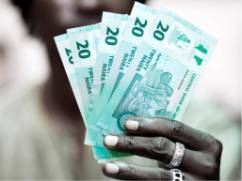
Lagos State government yesterday began the process of raising new entrepreneurs and artisans by inauguarting the N25 billion Employment Trust Fund (ETF).
Lagos State governor, Mr. Akinwunmi Ambode at the inauguration ceremony said the feat is a realisation of his campaign promise to establish an Employment Trust Fund. He said the initiative was a paradigm shift in positively and productively engaging the teeming youths of the state.
The governor stated that the establishment of the fund marked a turning point in the responsiveness of government to the yearnings of the youth and unemployed people.
Ambode described the ETF as an instrument designed to galvanise the creative and innovative energies of all Lagosians, adding that the fund would only be available to Lagosians and residents of the state.
He added that members of the ETF board were carefully selected based on their track records of professional integrity and selflessness, and therefore charged them to make transparency and accountability their watchwords.
The House of Representatives has asked the Central Bank of Nigeria to make a special provision for Nigerian students studying overseas to have access to foreign currencies at the official rates for the payment of their fees. It said this is imperative because parents and guardians of such students had been experiencing difficulties in accessing FOREX.
The House suggested that the CBN could address the needs of the students by creating a desk office charged with the responsibility of collating data on Nigerian students studying abroad.
In a resolution in Abuja, it said the FOREX could be released to the students on a monthly basis to cater for their fees and other allowances. It followed a motion moved by Mr. Musa Sarkin-Adar and 76 other lawmakers.
Leading the debate, Sarkin-Adar stated, “The insufficiency of foreign currencies has made it difficult for Nigerians to freely conduct foreign transactions, especially the payment of school fees and medical bills, as well as exchange of foreign goods and services.”
It enjoined the CBN to appoint some commercial banks for the project and ensure that the list of the beneficiaries was made public periodically.
Gov. Nasir El-Rufai of Kaduna State on Thursday said the Federal Government’s transportation policy was geared towards the growth of the industry and job creation. He made the assertion when he paid a courtesy visit to the corporate office of Arik Air in Lagos.
“Transportation is important. The Federal Government is aware of that and we need to all advocate for the creation of appropriate policy environment for the growth of the transportation industry. Aviation is a key part of that inter-modal system of transportation. The government is aware and it will do the right thing,’’ he said.
El-Rufia revealed that the purpose of the visit is to find out how the Kaduna State Government can partner with Arik Air, which is the largest indigenous airline operator in Nigeria.
He also called for the resumption of Arik Air’s overnight flight to Kaduna which was stopped in September 2015 and also increased frequency in its flight operations to the state.
The Deputy Managing Director, Arik Air, Capt. Ado Sanusi, responded saying, aviation was the catalyst for economic growth of any state, adding that it was a key factor in transportation.
He assured the governor that Arik Air would soon resume its overnight flight and also increase its flight frequency to the state.
The Nigeria Export Promotion Council (NEPC), said it has developed a ‘zero oil’ plan that would increase Nigeria’s total value of world export in strategic sector in 10 years time by 5 per cent.It says earning from the country’s non-oil export revenue will increase from the present $2.7 billion to $25 billion by 2025, reviving the nation’s dwindling economic misfortunes and reducing its dependent on oil.
Olusegun Awolowo who is the Executive Director of NEPC, who disclosed this on Thursday in Benin, Edo state, at a one-day workshop tagged “Export Contract, the Legal Perspective,” said the fall in oil in world economy has decreased Nigeria’s economic fortunes and rendered foreign exchange almost useless.He was represented by Barr. Ezra Yakusak, stated that the council has developed a ‘zero oil’ plan that would increase Nigeria’s total value of world export in strategic sector in 10 years time by 5 per cent. “The zero plan is a coherent agenda to mobilize the public and private resources towards replacing oil as our number one resources of foreign exchange.
“Under this plan, Nigeria will position itself to gain at least a 5 per cent share of total value over the next 10 years to ensure sufficient scale of production and prevent sudden market distortions.“At the end of the ten years, it is hoped that our Non-oil export Revenue would increase from $27.7 billion to $25 billion in 2015,” he said.
Earlier in her speech, the Benin Zonal Coordinator of the NEPC, Mrs. Uduak Etokowoh, noted that the challenges currently facing Nigeria’s economy is a resultant effect of the total neglect witnessed in non oil export businesses. Etokowoh said the only way out of the Economic woes is through “imbibing the non-export culture” as the most viable option and efficient road map to the nation’s economic recovery. She therefore urged exporters and other stakeholders to embrace non oil export as an alternative to oil.
On his part, the Special Adviser to the Edo state government on Small and Medium Scale Enterprises, Mr. Daniel Akherenle, said the training will remind participants and broaden their horizon of legal perspective in the export industry.
The Nigerian Labour Congress has urged the Federal Government to overhaul the petroleum sector and ease the hardship the citizens are facing due to recurring fuel scarcity.
The President, NLC, Ayuba Wabba, stated that the failure of the government to carry out the turnaround maintenance of the refineries had left the country open to manipulation by oil companies, adding that it was possible to revamp the refineries within one year as was done in the Republic of Niger. He also urged the government to intervene and enforce the sale of petroleum products as some marketers were hoarding the products.
“We restate our call for the speedy reactivation of local production of petroleum products as the country will continue to be held hostage by global economic manipulations if we remain tied to the importation of petroleum products, even when we have the resources to produce for local consumption and export.
“While it is regrettable that bad governance, misplaced priorities and corruption have almost killed the petroleum industry; we believe a serious government can revamp the industry within one year. There are examples of countries, especially the neighbouring Republic of Niger, where one of the best refineries was built within a year. Nothing stops this government from doing same,” he said.
“We will not accept a situation where major oil companies operating in Nigeria will have refineries in other countries where they ship our crude for refining and sell what they refined from our crude through importers of petroleum products to our country. Why have they not built their own refineries in Nigeria?” he asked.
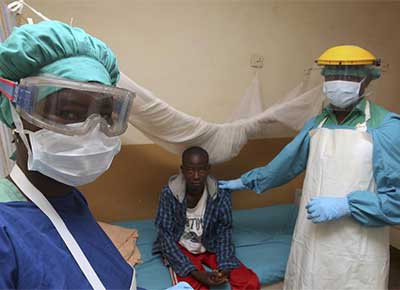
The National Youth Service Corps has confirmed the death of a corp member, Dr. Kelechi Ogboji, a medical doctor who passed away after treating a patient suspected of having Lassa fever in Kaduna State.
Ogboji, a native of Igweledoha Amagu in Ikwo Local Government Area of Ebonyi State, was serving at St. Louis Hospital Zonkwa in Zango Kataf Local Government Area of Kaduna State.
The Director-General of the corps Brig. General Johnson Olawumi, represented by the Director of Corps Welfare and Inspectorate, Mr. Michael Ahile, extolled the virtues of the deceased during a formal condolence visit to his family.
He described the late doctor as “an exceptional corps member who was fully dedicated to his duties and in the process paid the supreme sacrifice”.
The NYSC DG called on corps members serving in health institutions to always apply standard precautionary measures while discharging their duties to protect themselves.
The minister of agriculture and rural development, Chief Audu Ogbeh, has said that the country could put the growing population into good use by increasing local production of food crops.
He said, “In four years time our population will be 200 million people and we can put that population into good use if we have the capacity and become more organised like the Chinese or Indians.”
The minister maintained that there is an urgent need for the country to grow more food crops in order to meet the demands of its growing population and seek for more support from the international community towards the sustainable development of the agriculture sector. He said the sector would require international support in its programmes and initiatives, such as the cattle breeding improvement, climate change, standardisation and certification of food products, seed development and improvement, capacity building, among others.
Ogbeh further sought the assistance of The Netherland Government on area of machineries that could convert shafts from rice mills in the country to briquettes for household uses, adding that the present administration was poised to take life back to the rural areas, mostly for women and the youths.
The Netherlands’ Ambassador to Nigeria, Mr John Groffen who led the delegation said that the purpose of their visit was to explore areas of collaboration with the ministry, describing the challenges facing the nation’s agricultural sector as enormous. He assured the ministry of the continued support of The Netherlands Government in up-scaling the growth of Nigeria’s agricultural sector.
The fall in the value of the naira and the restriction placed on importation has made certain products more expensive or outrightly inaccessible. Some of the most hit have been the ladies who love fancy accessories. So what’s a lady got to do to find a not-to-expensive accessory while still staying trendy?
That’s why we have selected these amazing clutches and bags at very affordable prices to help you remain stunning and elegant. You will be wowed not just by the price but also their sophistication.
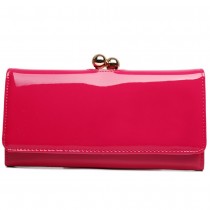
This red patent leather purse from Beza Boutique will be ideal for a glamorous dinner date. N4,000
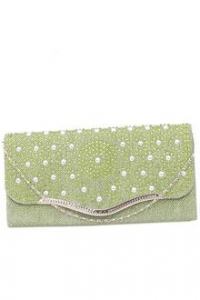
This green leather ladies studded clutch from Coliseum is well suited on a lovely gown for a wedding occasion. N3,000
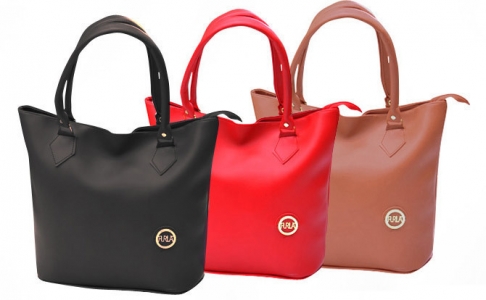
This ladies faux leather handbag from Deal Day is most convenient during a casual outing with lots of friends.N2,300
This ball head clutch from jiji is very handy and suitable for that priceless date.
.N4,000
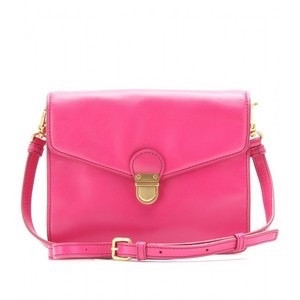
This structured leatherette handbag from Shopaholic is perfect for the cinemas or the beach.
A new report Ericsson has revealed that 53% of Nigeria’s population is in the banking system.
The report titled: “Financial services for everyone,” was released on Thursday and presented insights from a national sample of 6,215 respondents aged 17-59 years old, representing 150 million people across five countries: Angola, Democratic Republic of Congo (DRC), Ghana, Nigeria and Uganda.
The data was collected in July and October 2015 and compiled from face-to-face interviews each lasting 40 minutes. Ericsson Consumer Lab report also revealed that interviews were also conducted with experts from the World Bank’s Consultative Group to Assist the Poorest (CGAP) and the Gates Foundation.
According to the World Bank, the 10 countries with the highest proportion of residents living in extreme poverty are located in Sub-Saharan Africa. It noted that as mobile phone usage is more widespread than having a bank account, mobile financial services could be a stepping stone for people to become financially included. It could also mean a more manageable financial situation for the consumers, as they see the services offering convenience and security.
It pointed out that there are lots of barriers to adoption of mobile money services for personal use on mobile phones, adding that almost half of the respondents had not heard about the possibility to use mobile money on their own mobile phone.
“In this study, it was identified that 63 per cent of the consumers interviewed were unbanked, i.e. don’t use a savings or current bank account. The percentage of unbanked is higher among lower socioeconomic groups – up to 72 per cent in rural areas. In DRC alone, 82 per cent of the population is unbanked.
” In contrast, Nigeria records the highest proportion of banked people. In all countries, except Angola, the uptake of financial services has mainly been for savings accounts – Angolan consumers have adopted a broad range of financial services such as credit and debit cards and even internet banking for bank account management.
“A high number of inhabitants, particularly those in rural areas, note that accessibility is the key hindrance to having a bank account – both in terms of location and opening hours. Many also believe that they do not have enough money or savings to open a bank account, or do not wish to incur potential associated banking fees,” it added.
The report also stated that the convenience and wide acceptability of cash makes it the dominant mode of transaction, adding that it found that eight out of 10 consumers saw ease of use as the main reason for using cash.
However, cash transactions are considered risky and come with a set of liabilities, including possibility of robbery or loss. The risk of being robbed while carrying cash is a key concern in Ghana, DRC, Uganda and Nigeria, while many Angolans cite the fear of losing cash while carrying it around as the major concern.
Former Director General of the Nigerian Institute for International Affairs (NIIA), Prof. Bola Akinterinwa, on Thursday said Nigeria loses approximately $7 billion annually as a result of poor bilateral relations with the Israeli government.
Akinterinwa, who spoke at a one-day symposium geared towards promoting partnership on Small and Medium Scale Enterprises (SMEs) between the two nations., explained that Nigeria’s relation with the Jewish nation was categorised into political, economy and religion and it has suffered severely due to the non-committal posturing of Nigeria.
While arguing that Nigeria-Israeli diplomatic relations remained lopsided, with only the religious angle flourishing, Akinterinwa added that a more robust diplomatic relations could have yielded more positive results in both the political and economic fronts, such as grants, low interest loans and knowledge exchange to support Nigeria.
The symposium was organised by the Citizens Centre for International Relations Research (RICC) and the Israeli Embassy with the theme: ‘Nigeria-Israeli Relations: Focus on SMEs, Agriculture and Solid Minerals.’
Akinterinwa harped on the need for Nigeria to review her relationship with Israel, saying that, “we have not been taking good advantage of many opportunities taking place in Israel,” he stated.
Minister of State for Industry Trade and Investment, Hajia Aisha Abubakar, in her submission at the event, stated the federal government will continue to put in place initiatives to promote Mirco, Small and Medium Enterprises (MSME) especially among unemployed youths.
The Minister of State for Petroleum Resources and Group Managing Director of the NNPC, Dr. Ibe Kachikwu, has disclosed that the Federal Government will next week announce a major overhaul of the Nigerian National Petroleum Corporation as well as the firm’s unbundling into 30 different companies.
According to him, the government has started resolving the governance issues in the oil and gas sector, adding that an overhaul had not happened at the corporation in the past 20 years.
Kachikwu, who disclosed this at the Society of Petroleum Engineers’ Oloibiri Lecture Series in Abuja on Thursday, also stated that the latest financial report of the NNPC for the month of January showed that the corporation’s losses had reduced from the over N160bn of some six months ago to about N3bn.
Explaining the restructuring by the Federal Government in the oil sector, the minister said, “We are starting first with simple governance issues; those that are not contentious, that are very rapid and that deal a lot with the transformation of the national oil company.
“For the national oil company, a lot of work is going on; I am sure some of you have seen the effects; but within the next one week, we are going to be announcing some real major overhaul of the system, one that hasn’t been done in over 20 years.”
Kachikwu added, “The effect of that will be to quite frankly unbundle the huge company into four to five main operational zones – the upstream, downstream, midstream, refining, and of course, every other company that is trending to the venture group.”
“But what is more important is that at the same time, we are also unbundling the subsets of these companies to close to about 30 independent companies with their own managing directors; and so, titles like the group executive directors, which you have been used to in the last 30 years, will disappear; and in place of those, you are going to have chief executive officers.”
This, he said, would make people take responsibility for their titles, as the positions must mean something and not administrative roles.
On the slump in global crude oil prices, Kachikwu said the government had been meeting with other oil exporting countries, and expressed the hope that the price of the commodity would soon rise to around $50 per barrel.
The minister further stated that focusing on gas policies was a key element for him, adding, “The target that I am setting for myself is a 12-month type agenda to try and arrive at some of these conclusions: some working with the (National) Assembly, and some working with policymakers and the industry.”
Kachikwu said he had been involved in so many conversations with oil companies and that the essence was to define stipulated contractual terms in the industry.
He noted that production sharing contract terms had not been revised for quite a while, adding that the government was focusing more on how it could bring PSC-type contracts into joint venture structures.
The Lagos State Governor, Akinwunmi Ambode has ordered that the popular Mile 12 Market be shut and has imposed curfew on four streets in the area.
The governor’s order was as a result the mayhem that engulfed the Mile 12 area on Thursday.
Members of the Hausa and Yoruba community in the area had clashed, leading to the burning of houses and churches on Thursday.
Ambode, who spoke at the State House, Ikeja, said the closure of the Mile 12 Market and the curfew would help security agents to restore peace.
He added that the curfew would only affect four streets — Oniyanrin, Maidan, Agiliti 1 and Agiliti 2.
He said, “In order to further restore peace to the community, I have ordered that the Mile 12 Market be temporarily shut. I advise traders and other stakeholders to eschew violence and be law abiding. Furthermore, I have ordered temporary restriction of movement in four streets, namely Oniyanrin, Maidan, Agiliti 1 and 2.”
The governor said the police and other security officials were managing the situation, adding that some hoodlums had exploited a minor clash to cause a breakdown of law and order in the area.
“After the intervention of security agencies, the dispute appeared to have subsided. This type of clash does occur from time to time in a multi-ethnic city like Lagos. And the government has always responded appropriately.
“The public is thereby assured that we will not shy away from our responsibilities to protect life and property in the state. Ee will deal decisively with those criminal elements involve in the clash. I have been assured by the Commissioner of Police and other security agencies at the scene that the situation has been brought under control.
“I want to assure residents of Lagos State that the state is home to every ethnic group. No one should give this clash any ethnic colouration. Every law abiding citizens should go about their businesses.”
The CP, Fatai Owoseni, said policemen had already been deployed in the area to enforce the order of the governor, adding that nobody died in the clash.
Oil giant ExxonMobil is looking to take advantage of the oil price crash to acquire other petroleum companies, but will wait for the right opportunity, chief executive Rex Tillerson has disclosed.
Tillerson alluded to the company’s history of big takeovers during oil busts, as when Exxon acquired Mobil in 1999, a deal which saw an expansion of Exxon’s presence in key oil producers such as Kazakstan and Nigeria. A 2009 acquisition of XTO Energy significantly boosted its holdings in US shale.
Analysts at an ExxonMobil investor day expressed surprise that, given the current market conditions, the company had not made a big acquisition to boost its portfolio of oil and gas plays.
As US prices have fallen from more than $100 a barrel in July 2014 to the current $34 a barrel, many smaller oil producers have seen profits dry up and face problems paying debts.
Minister of Finance, Mrs. Kemi Adeosun, h disclosed that the amount in the Treasury Single Account had risen to N2.9 trillion.
She made this known during a meeting of the Joint Appropriation Committees of the National Assembly with government officials on the 2016 budget.
However, she explained that contrary to popular impression that the money in the TSA was meant to fund the budget, the money belonged to different agencies of government, which had the right to access the funds.
Her explanation was against suggestions by the legislators that the Federal Government should use the TSA to fund the 2016 budget amidst liquidity problem arising from the slump in global crude oil prices.
Adeosun said all the Ministries, Departments and Agencies of the government had their monies transferred into the TSA and should have access to them.
She also disclosed that the government had commenced the training of its personnel on the operation of the TSA such that any agency of government that needed its share of the funds in the account would not find it difficult accessing it.
The Central Bank of Nigeria on Thursday expressed concern over about $20 billion (N3.94 trillion) was lying dormant in different domiciliary accounts of Nigerian citizens in various banks across the country.
Deputy Governor, Financial System Surveillance, CBN, Dr. Joseph Nnana, stated this during a meeting of the Joint Appropriation Committees of the National Assembly with government officials on the 2016 budget.
He alleged that some privileged Nigerians were behind the consistent slide in the value of the naira by embarking on dollar speculation to the detriment of the local currency.
The CBN deputy governor, however, expressed the hope that the passage of the 2016 budget would put a stop to the unrestrained drop in the value of the naira.
He said, “The CBN will embark on aggressive liquidity mop-up to enable the naira regain confidence. The CBN will not sit down and watch the consistent fall of the naira. After the passage of the 2016 budget, the naira will begin to bounce back.
“Those who speculate on dollars will have their fingers burnt.”
Parent company of MTN Nigeria, MTN Group, has expressed confidence that the N780bn fine imposed on its Nigerian subsidiary by the Federal Government will be reduced and has set aside $600m (N118.2bn at the official exchange rate of N197 to a dollar) for the total settlement of the fine.
The firm had last week paid N50 billion to the government and on Thursday expressed the hope of paying up the anticipated balance of N68.2bn before the end of this month.
While announcing the group’s results in South Africa on Thursday, MTN said that it might also reduce its 2016 dividend should more funds be needed to pay the fine.
The total provision accounts for only about 15 per cent of the total fine, which was imposed by the NCC after the telecoms company failed to cut off Subscriber Identification Module cards that were not properly registered.
Its Nigerian subsidiary said the provision was set aside in the group financial results, and was in accordance with the Principle of Prudence in generally accepted accounting standards.
The Corporate Executive, MTN Nigeria, Amina Oyagbola, said, “MTN’s auditors have required that the company make a provision in line with the International Financial Reporting Standards.”
The Executive Chairman, MTN Group, Mr. Phutuma Nhleko, also told Reuters on Thursday that the firm might list its Nigerian unit on the Nigerian Stock Exchange once it had resolved the fine issue with the Federal Government.
Nhleko said that the company was continuing settlement talks “in an attempt to ensure an amicable resolution in the interest of MTN Nigeria, its stakeholders and the Nigerian authorities.”
Commenting on the company’s financial statement in the country for 2015, the Chief Executive Officer, MTN Nigeria, Mr. Ferdi Moolman, said while weak economic conditions and heightened regulatory pressure impacted performance, “MTN continues to invest in Nigeria for the long term.”
Uber and United Bank for Africa on Thursday announced a partnership, which would see the bank’s cardholders getting up to N6,000 worth of free Uber ride from now till the end of this month.
UBA cardholders, who sign up for Uber, according to a statement by the bank, will get up to N3,000 off each of their first two rides.
The statement said, “Uber gets you a ride at the push of a button; there’s no waiting on the street or walking through unfamiliar neighbourhoods to find reliable transport. It’s the most convenient way to get a safe, reliable and affordable ride.
“The app detects your location, tells you about your driver in advance, and means you can pay without using cash; so, it is easier and safer for both riders and drivers. It’s why more than one million people use the app globally every day.”
Speaking on the partnership, UBA’s Divisional Head, Digital Banking, Yinka Adedeji, said, “It’s our pleasure to partner Uber on this initiative. We encourage all UBA cardholders to take advantage of this offer and share their UBARIDES experience.”
The General Manager, Uber Lagos, Ebi Atawodi, added, “This is extremely exciting for us; UBA is one of the largest banks in Nigeria and we are thrilled to be able to offer their customers free first two rides. We look forward to further growing this partnership with UBA across Nigeria.”
The Ogun State Government has pledged its support for manufacturers within its domain. The state’s Commissioner for Commerce and Industry, Mr. Bimbo Ashiru, who made the pledge on behalf of the state government recently while on a tour of some manufacturing firms in the state, disclosed the plans of the state government to take the manufacturers’ case to the federal ministries of finance, industry, trade and investment.
According to him, the state government is also working on the roads and infrastructure to make the state more conducive to investment.
He said, “We have started work on the Shagamu Road and some of the Federal Government roads as well. Most of the roads we are doing in Ogun State are Federal Government roads but there are no Federal Government people.
“Our government is committed to creating the enabling environment through good road network because if they are producing all these goods and we don’t have good road network, the goods are dead on arrival. We are also building bridges in order to reduce the traffic.”
Ashiru, who also visited the Sonia factory in Shagamu, expressed satisfaction at the level of manufacturing and employment provided by the firm.
The commissioner stressed the need for synergy between manufacturers along the value chain adding that manufacturers should patronise their counterparts across sectors in order to cut down on importation and high cost of production.
He stated, “We are allocating lands to industries in the same line of raw materials and production so that they can take advantage of forward and backward integration and business can be easy for all our investors in Ogun State.”
The Central Bank of Nigeria has granted an approval-in-principle to Innovectives to operate as a super-agent in the country’s financial services system.
With the approval, Innovectives, a provider of secure and affordable transaction channels for the unbanked and under-banked members of the public, says it will leverage on the Nigerian Inter-Bank Settlement System switching infrastructure to enable inter-scheme Cash-In-Cash-Out at all its agent locations.
Managing Director and Chief Executive Officer of Innovectives, Emmanuel Agha, said the CBN expected the company and its partners to “deploy, operate and manage a robust, efficient and interoperable agency banking and mobile financial payment network with selected retail outlets operating as agents under the framework as approved by the CBN.”
According to the CBN’s Regulatory Framework for licensing Super-Agents in Nigeria, the super-agents shall be responsible for monitoring and supervising the activities of the agents; and have information on the volume and value of transactions carried out for each type of service by each agent.
The central bank stated in the framework that the volume and value of transactions should be made available to the principal; monitor effective compliance with set limits and establish other prudential measures in each case, and take all other measures such as onsite visits and ensure that agents operate strictly within the requirements of the law, guidelines and the contract.
Agha said the company’s financial inclusion strategy was to ensure that all categories of informal workers in Nigeria have access to affordable financial services through its agent network.
He said the proposed suite of services would address critical social challenges of informal workers such as savings culture, access to credit, wage payment, health insurance, and informal pension.
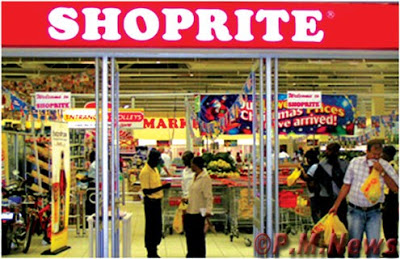
South African retail chain, Shoprite, has offered 10,000 gift vouchers to consumers to mark its 10th year anniversary in Nigeria.
According to a statement from the firm, customers visiting Shoprite between February and April stand to benefit from gift vouchers valued at over N100, 000.
The statement quoted the Executive Director, Shoprite Nigeria, Mr. Adeola Kagho, as saying that the points-of-sale at Shoprite would randomly select winners during this period.
He said, “Consumers will automatically be entered into the competition when shopping at Shoprite, with vouchers to the value of N1,000, N10,000 or N100,000 up for grabs.
“We are very excited to celebrate ten years in Nigeria with our loyal customers who have been with us over the years. That’s why we are giving away lots of vouchers in all our stores across the country.”
By Boluwatife Oshadiya | August 31, 2026, 5:12 PM
Key Points
Lionel Messi ends his 21-year international career with Argentina after 207 appearances and 125 goals
The...










 N4,000
 N3,000
 N2,300
 N4,000
 N2,500