The Lagos State Government on Tuesday met with retirees of its public service to address concerns about healthcare access, pension administration, and overall post-service welfare. The interactive session, held at the Adeyemi Bero Auditorium, Alausa, was led by the Head of Service, Olabode Agoro, represented by the Permanent Secretary, Sunkanmi Oyegbola.
Oyegbola said the meeting was part of the state’s ongoing efforts to receive direct feedback from retirees and improve support systems built around their needs. She noted that Lagos considers its senior citizens “invaluable contributors” to the state’s progress and remains committed to timely pension payments and better communication channels.
“This engagement is one of the ways the Lagos State Government listens and responds to issues affecting our esteemed retirees,” she said.
Retirees at the forum described the initiative as a welcome opportunity to interact directly with government officials. They raised questions bordering on pension processing timelines, access to healthcare services, and opportunities for continued participation in community programmes.
The Head of Service assured them that the government would continue to strengthen systems that safeguard retiree welfare. She added that such sessions would become a regular feature to ensure sustained inclusion of senior citizens in the state’s developmental plans.
The event is part of Lagos State’s broader effort to enhance pension administration and improve the retiree experience across its public service.
Retirees of First Bank on Wednesday staged a protest at the bank’s headquarters in Marina, Lagos, demanding an immediate review of their pensions and medical allowances. They accused the bank of neglecting their welfare for more than 20 years.
The protesters carried placards and alleged that their monthly pension remains at N15,000, while medical allowance has stayed at N30,000 annually. They said several appeals to the bank had been ignored despite worsening inflation and rising living costs.
This is not the first time the retirees have raised concerns. In September 2024, the National Union of Pensioners FBN Unit accused the bank of refusing to comply with court rulings, pension reforms and previously signed agreements.
Vice Chairman of the group, Sunny Aluko, said many members had died while waiting for an adjustment. He said the retirees had visited the bank several times without results and accused the management of inaction.
General Secretary of the union, Paul Imhoagene, said the current payments leave pensioners unable to meet basic responsibilities. He said the number of retirees had dropped from more than 4,000 last year to fewer than 2,900, adding that many had died due to inadequate support.
He said the pensioners are proposing a new annual medical allowance of N500,000 and a monthly pension of N350,000. He also claimed that a consultant hired by the bank suggested a one-time payout of N1 million, which the retirees rejected.
One of the protesters, Adetokunbo Onibudu, said the bank had failed to act with compassion. She said the current allowance could no longer cover basic medical needs and accused management of ignoring those who served the bank for decades.
National Trustee (1) of the union, Adekunle Ajibola, said the bank had previously created a pensioners trust fund for situations like this. He said retirees had been denied access to the fund despite a court judgement in their favour.
Another retiree, Kaosarat Thani, said she earns N18,000 monthly, which makes her one of the highest paid among them. She said many others have received only N15,000 for more than two decades and accused the bank of prioritising new projects over staff who built the institution.
Union leaders said they are not out to damage the bank’s reputation but to demand fairness. They vowed to extend the protest nationwide and internationally if necessary.
As of press time, First Bank management had not issued a public response to the latest protest.
Welcome back to another Thursday, my people. Gather round, pull up a chair, adjust your wig, sip your zobo, and let’s talk like family. Today’s topic is one we all know too well; in fact, whether you invited it or not, Nigeria has introduced you to it personally. Yes, we are talking about insecurity, that unwanted guest that keeps entering the country without a visa, without invitation, and without shame.
Let’s be honest: living in Nigeria sometimes feels like living in a group chat where anything can happen at any time. You can be laughing with your neighbor this minute, and the next minute, you’re hearing, “Did you hear what happened on that road yesterday?” And suddenly everybody goes quiet, adjusts themselves, and begins to pray silently. Because truly, you don’t know what to expect anymore. Nigeria has become that movie where the suspense is too much, and the director did not allow us to read the script before acting the role of “concerned citizen.”
From kidnappings to robberies to banditry, nobody is spared; rich, poor, tall, short, man, woman, even goats and cows are not safe anymore. You hear stories and start wondering if some people are doing extra lessons in wickedness. And the annoying part? Nigerians have now adapted in ways you would think insecurity is a school subject we are preparing for WAEC. The way we observe our surroundings before entering a taxi now, it’s like we’re FBI trainees. Even the way we check the number plate, face of the driver, and interior of the car before entering, you’d think we are doing border control.
There’s a kind of alertness that insecurity has given Nigerians that even caffeine cannot match. You could be walking down the street and someone shouts “HEY!” behind you; before you even ask questions, you’ve jumped three steps forward. It’s not fear, it’s experience. The survival instinct is now an integral part of our character development.
But beneath the humour and our ability to make jokes out of pain (because Nigerians will joke about anything), insecurity has become a daily reality affecting everyone. It affects businesses because people are scared to travel. It affects food prices because farmers are not safe on farmlands. It affects education because some students can’t even confidently go to school. It affects mental health because fear has turned into a quiet roommate living in many minds.
And then there is the way Nigerians now share safety tips like broadcast messages. “Don’t pass that road by 7pm o.” “Avoid this route for now.” “If you see a roadblock that is not looking like police, turn back immediately.” “If the driver is acting somehow, tell him your stomach is paining you so he can stop you.” You see, we have turned safety strategies into daily lifestyle.
But insecurity is not just about fear; it also shapes how we behave. We’ve become more united in some ways; Nigerians look out for each other more than ever. When someone enters a bus and announces, “Please help me note my location,” everybody nods like a committee member. And if anything looks suspicious, Nigerians will whisper to each other like secret agents until someone boldly says, “Driver, stop o! Something is not right.”
Despite everything, Nigerians are resilient. That spirit is unmatched. We find ways to laugh through pain, to push through fear, to keep hoping that tomorrow will be better. And that’s the funny thing about us: even in insecurity, we still find joy. We still hustle. We still pray. We still dream. Because we believe that one day, this country will get it right, or at least behave small.
Insecurity may be trending, but so is our strength. So is our courage. So is our ability to adapt, survive, and still be soft-hearted people who help strangers on the road. Deep down, we want peace. We want to live normally. We want to drive at night without sending our location to ten different people. We want to travel interstate without checking news for road updates. We want a country where parents don’t sleep with one eye open.
And truly, it’s not too much to ask. Safety is not a luxury; it’s a right. Every Nigerian deserves to feel secure, whether in Lagos, Abuja, Kano, Kaduna, Kwara, Jos, Benin, Osun, or anywhere else. And while we pray, complain, and hope, we also keep pushing, reporting, protecting, observing, and staying prepared, because your instinct in this country must be sharper than a tailor’s needle.
As you go about your day, remember to stay aware, stay smart, and stay connected. Check on your people. Update someone when you move. Trust your gut. And most importantly, don’t let fear swallow your joy. Nigeria is tough, but so are you.
Another Thursday, another truth. See you next week, my people — same time, same gist, same chronicles.
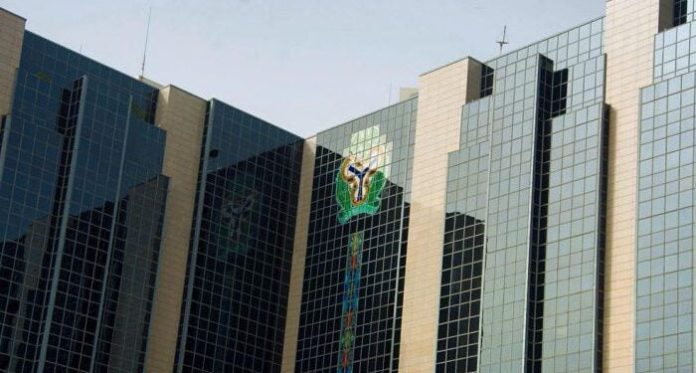
The Central Bank of Nigeria (CBN) has returned to the foreign exchange market with a $50 million intervention aimed at improving dollar supply and easing renewed pressure on the naira.
The currency has come under strain as foreign inflows slowed while demands for FX to settle offshore obligations surged. With the naira having enjoyed a period of appreciation earlier in the quarter, the CBN had reduced its frequency of dollar injections.
However, the regulator re-entered the market this week as depreciation intensified across trading windows.
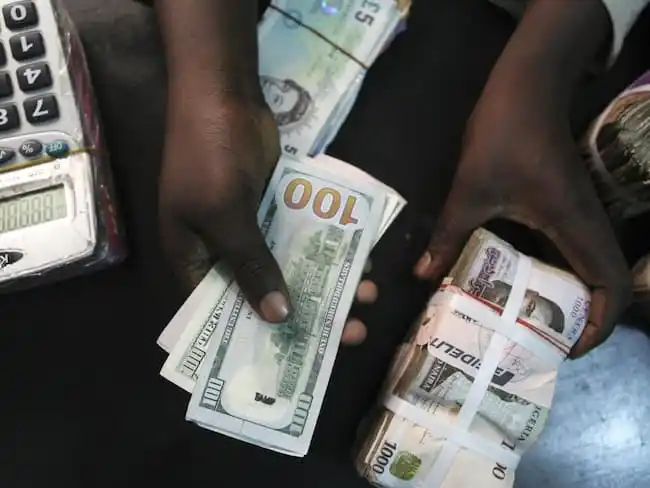
Fresh CBN data showed that the naira weakened by ₦6.76 to close at ₦1,454.18 per dollar at the official market on Wednesday. During intraday trading, the rate briefly approached ₦1,460 despite the FX intervention.
Similarly, the parallel market reported a loss of ₦5, placing the closing rate at ₦1,460 per dollar. As a result, the premium between both markets narrowed to 0.40%.
Meanwhile, new figures from the CBN indicate that external reserves have increased to $44.045 billion, while CBN Governor Yemi Cardoso disclosed at a forum that reserves had reached $46.7 billion — the highest in seven years.
Analysts attribute the stronger reserves to renewed investor confidence and enhanced oil-related earnings.
Investment analysts at TrustBanc Financial Group noted that Nigeria’s reserve levels now provide 10.3 months of import cover, an improvement that has contributed to reducing FX market distortions and narrowing the premium to below 2%.
The Central Bank of Nigeria (CBN) intensified its liquidity management efforts on Wednesday with the issuance of ₦600 billion worth of Open Market Operation (OMO) bills, targeted at reducing surplus cash within the banking system.
With system liquidity exceeding ₦5 trillion, analysts had projected that both the midweek OMO and Treasury Bill auctions would attract substantial market participation. The latest auction validated these expectations.
The intervention aligns with the Apex Bank’s plan to curtail excess liquidity that could heighten inflationary pressures or weaken monetary policy transmission.
OMO bills were made available exclusively to eligible investors, including foreign portfolio participants and deposit banks, in two different maturities—174 days and 188 days. Both instruments were heavily oversubscribed.
At the end of the exercise, the CBN allotted ₦903.4 billion across the two maturities at stop rates of 20.45% and 20.54%, respectively. Despite the uptick in rates, the average yield across OMO bills settled at 16.95%.
Following the auction, Nigerian interbank rates surged across all tenors. The overnight lending rate climbed by six basis points to 24.88%, reflecting tighter liquidity conditions after the CBN absorbed excess funds through the OMO sale.
A report by MarketForces Africa indicated that system liquidity had rebounded strongly the previous day, rising by 40.26% to ₦5.47 trillion from ₦3.90 trillion, driven primarily by a ₦1.36 trillion OMO repayment.
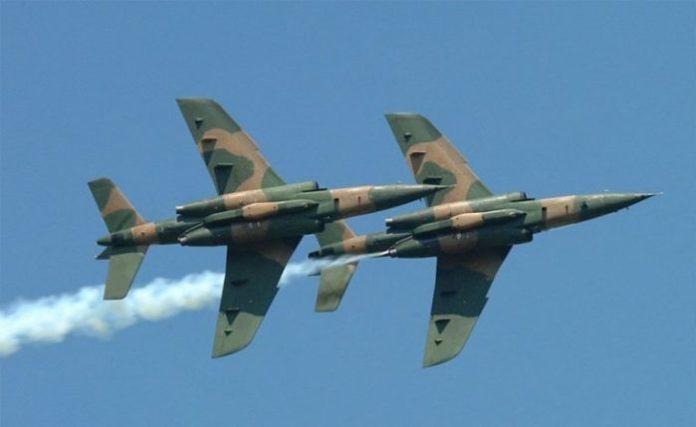
The Nigerian Air Force (NAF) has carried out precision airstrikes on Arra, a well-known insurgents’ enclave within the Sambisa Forest, killing several terrorists and dismantling critical elements of their command and logistics infrastructure.
In a statement on Thursday, NAF spokesperson, Air Commodore Ehimen Ejodame, said the strikes were executed by the Air Component of Operation Hadin Kai following a series of intelligence, surveillance, and reconnaissance (ISR) missions that tracked terrorist movements linked to the 17 October ambush on troops at Kashomri.
“The strike achieved its intended effect with the destruction of all identified targets, significantly degrading the terrorists’ operational capabilities and disrupting their command and logistics networks,” Ejodame said.
He noted that persistent ISR coverage over Kashomri and the wider Sambisa area had revealed suspicious activity and active terrorist structures at Arra, prompting an intelligence-driven engagement. NAF aircraft, he added, successfully acquired and engaged designated targets through coordinated successive attack runs.
Ejodame said the operation underscored the Air Force’s commitment to supporting ground troops and maintaining sustained pressure on terrorist groups across all theatres. He reaffirmed that the service remains resolute in neutralising threats and defending the nation’s territorial integrity.
Army Chief Reaffirms Importance of Training, Leadership
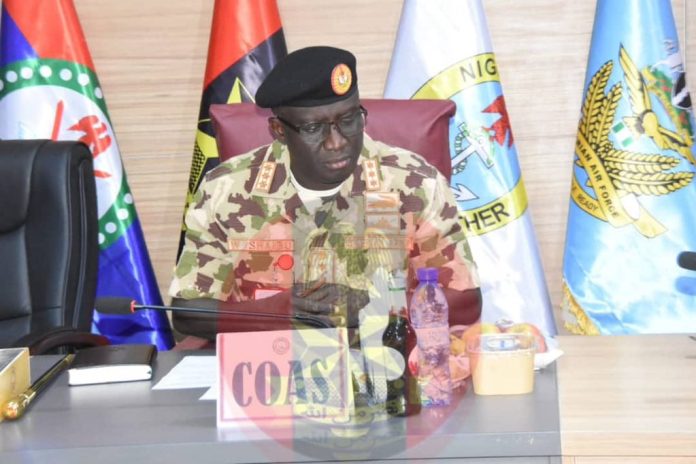
Meanwhile, the Chief of Army Staff, Lieutenant General Waidi Shaibu, has emphasised that strong leadership and continuous training remain essential to tackling Nigeria’s evolving security challenges.
Speaking during an operational tour of the 1 Division Area of Responsibility in Kaduna on Wednesday, Shaibu described training as the “best gift” the Army can offer its personnel. He urged soldiers to maximise the opportunities provided by Army training schools and divisional institutions to improve their competence and professional development.
He stressed that leadership at all levels is crucial to safeguarding lives and property, adding that officers must remain exemplary figures trusted by the troops they lead.
“Leading troops in battle is a core responsibility of every officer,” the COAS said, calling for unwavering dedication, loyalty and purposeful leadership both on and off the battlefield.
Shaibu also encouraged soldiers to maintain discipline, trust their commanders and demonstrate commitment to their constitutional duties, while assuring them that personnel welfare would remain a priority.
The Nigeria Centre for Disease Control and Prevention (NCDC) says 177 people have died from Lassa fever in 2025, as the country continues to battle a persistent rise in infections.
According to the agency’s latest epidemiological update released on Thursday, Nigeria has recorded 966 confirmed cases as of epidemiological Week 44 (ending 2 November). The Case Fatality Rate has climbed to 18.3 per cent, higher than the 16.5 per cent reported during the same period in 2024.
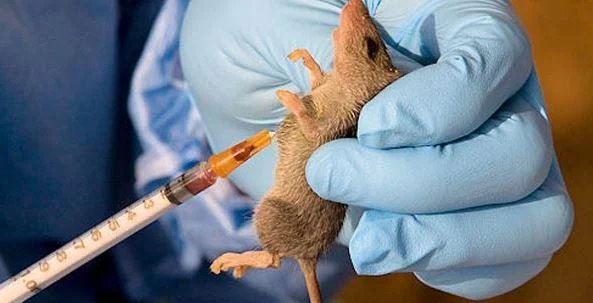
Lassa fever is an acute viral haemorrhagic disease caused by the Lassa virus, which the World Health Organisation describes as endemic to West Africa. The virus is primarily transmitted to humans through contact with food or household items contaminated by the urine or faeces of infected Mastomys rats.
The WHO notes that the disease is known to be endemic in Nigeria, Benin, Ghana, Guinea, Liberia, Mali, Sierra Leone and Togo, and may exist in other West African countries.
Cases Spread Across 21 States
The NCDC report shows that 21 states have recorded at least one confirmed case across 102 Local Government Areas since the start of 2025.
In Week 44 alone, 12 new confirmed cases were detected—up from 11 the previous week—with infections reported in Ondo, Edo and Benue states.
The agency noted that 87 per cent of all confirmed cases originated from four states: Ondo (36 per cent), Bauchi (21 per cent), Edo (17 per cent) and Taraba (13 per cent). The remaining 13 per cent of cases were recorded across 17 other states.
The predominant age group affected this year is 21–30 years, with cases ranging from one to 96 years of age and a median age of 30. The male-to-female ratio stands at 1:0.8.
Fewer Suspected Cases Than Last Year
The NCDC reported that the number of suspected and confirmed cases recorded so far in 2025 is lower than the figure for the same period in 2024. It also confirmed that no new healthcare worker infections were recorded in Week 44.
The agency added that the National Lassa Fever Multi-Partner, Multi-Sectoral Technical Working Group continues to coordinate response efforts across all levels.
The Central Bank of Nigeria (CBN) has maintained existing yields on Nigerian Treasury Bills, even as inflation shows signs of easing and real returns on government securities continue to widen.
During Wednesday’s primary market auction (PMA), the financial regulator placed ₦700 billion worth of Treasury Bills on the table for investor subscription.
Buoyed by the abundant liquidity circulating in the banking system and the growing confidence in naira-denominated investments, total bids at the auction surged to ₦1.292 trillion across the 91-day, 182-day, and 364-day maturities.
Market interest remained heaviest on the long-dated instruments as investors continued piling into the one-year papers.
According to auction breakdowns, the 364-day tenor received a remarkable ₦1.230 trillion in total bids, sharply outstripping the ₦450 billion the CBN originally offered.
On the short end, the 91-day Treasury Bill recorded subscriptions valued at ₦34.55 billion, falling short of the ₦100 billion offered for that maturity.
Demand for the medium-term 182-day bill was also weak, attracting bids worth only ₦26.71 billion compared with the ₦150 billion that had been floated for sale.
Overall, the CBN allotted ₦1.029 trillion across all maturities while retaining previous spot rates. Thus, the 91-day bill remained priced at 15.30%, the 182-day paper stayed at 15.50%, and the 364-day tenor held at 16.04%.
Air Peace says it has incurred losses exceeding $15 million after its wet-lease partner, SmartLynx Airlines, allegedly withdrew three aircraft from service without notice, triggering major disruptions in the carrier’s domestic operations.
Speaking in Lagos, the airline’s Chief Commercial Officer, Nowel Ngala, told reporters that the withdrawal violated contractual terms and led to delays, cancellations and reputational damage. He explained that Air Peace signed the wet-lease deal because 13 of its aircraft were undergoing scheduled maintenance overseas.
Ngala said SmartLynx collected upfront payments, including more than $1 million in security deposits, before abruptly removing the aircraft. He added that over $5 million belonging to Air Peace remains with the lessor.
He stated that the situation created operational gaps because the aircraft had already been rostered for scheduled flights. One of the four aircraft leased remains with SmartLynx as Air Peace continues to pursue refunds.
Ngala also recalled a previous incident in which another lessor disappeared with more than $2 million while taking a leased aircraft for purported maintenance that never happened. He said such cases highlight systemic challenges Nigerian airlines face in international leasing arrangements.
Despite the setback, Air Peace said its maintenance programme has been completed, with two aircraft already back in service and more expected to return. The airline projects a full restoration of domestic route operations next week. Ngala assured passengers that London flights were not affected and pledged improved safeguards to prevent future disruptions.
Nigeria’s three tiers of government distributed a total of N2.094tn in October 2025, slightly below the N2.103tn shared in September, marking a marginal decline of N9bn or 0.43% month-on-month.
The figures emerged after the Federation Account Allocation Committee (FAAC) convened in Abuja on Wednesday.
In a statement issued by Bawa Mokwa, Director of Press and Public Relations at the Office of the Accountant-General of the Federation, details of the disbursement were outlined across federal, state and local government structures.
According to the statement, “A total of N2.094tn from the October 2025 Federation Account has been allocated to the Federal Government, states, and local government councils.”
The distribution consisted of N1.376tn in statutory revenue, N670.303bn from Value Added Tax (VAT), and N47.870bn from the Electronic Money Transfer Levy (EMTL).
FAAC reported that gross revenue for October stood at N2.934tn, from which N115.278bn was deducted as collection cost, while N724.603bn was allocated to transfers, interventions, refunds, and savings.
Although statutory revenue improved, rising to N2.164tn from N2.128tn in September, VAT collections fell significantly, dropping to N719.827bn, a steep decline of N152.803bn from the N872.630bn recorded the previous month.
From the N2.094tn available for distribution, the Federal Government received N758.405bn, state governments collected N689.120bn, and local government councils got N505.803bn. Oil-producing states shared N141.359bn representing the 13% derivation component.
Out of the N1.376tn statutory revenue, the Federal Government received N650.680bn, states obtained N330.033bn, while local governments took N254.442bn. The 13% derivation fund also came from this statutory component.
From the VAT pool of N670.303bn, the Federal Government collected N100.545bn, states took N335.152bn, and LGs received N234.606bn.
Regarding EMTL revenue, the Federal Government got N7.180bn, states earned N23.935bn, and local governments received N16.755bn.
FAAC noted revenue increases in petroleum profit tax, hydrocarbon tax, companies income tax on upstream operations, capital gains tax, stamp duties, oil and gas royalties, import duty, excise duty, and common external tariff levies. However, VAT, EMTL and certain fees declined during the month.
Despite maintaining monthly allocations above N2tn — buoyed by high oil earnings, improved tax performance and stronger remittances — the lower VAT and EMTL inflow reflected ongoing sensitivity to consumer activity and electronic transaction volume.
A recent BudgIT State of States report highlighted Nigeria’s deepening fiscal reliance on federal allocations, revealing that at least 31 states depend on FAAC for 80% or more of their revenue, intensifying budgetary pressure at the sub-national level.
The report also observed that 29 states derive at least half of their revenue from FAAC, while 21 states rely on it for more than 70% of total receipts.
BudgIT analysts warned that higher FAAC inflows appear to discourage states from aggressively boosting internally generated revenue (IGR), even though some states show progress. Enugu recorded the strongest IGR growth, while Kebbi posted one of the few negative IGR performances.
One example cited was Lagos State, which saw its FAAC allocation jump from N4.24bn to N11.38bn within a year, illustrating how significant federal transfers have become despite Lagos being Nigeria’s most economically productive state.
The Federal Government is projecting almost $1bn (about N1.49tn) in annual revenue from electricity exports to 15 West African countries by June 2026, as Nigeria accelerates plans to fully integrate into the regional power market under the West African Power Pool (WAPP).
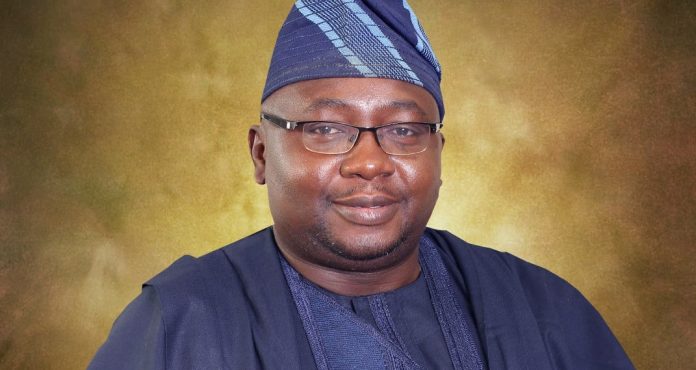
Minister of Power, Chief Adebayo Adelabu, disclosed this on Wednesday at a press briefing in Abuja, where he confirmed that Nigeria successfully executed a landmark four-hour grid synchronisation test with the West African regional network on 8 November 2025.
The synchronisation exercise marked the first time Nigeria’s national grid operated seamlessly and at a unified frequency with the interconnected systems of Ghana, Côte d’Ivoire, Liberia, Sierra Leone, Burkina Faso, Guinea, Senegal, The Gambia, Guinea-Bissau, Mali and, via bilateral links, Niger, Benin and Togo.
Adelabu said the historic test demonstrated the technical readiness of the sub-region to function as a harmonised electricity market. He added that Nigeria is working towards achieving permanent synchronisation by June 2026, with discussions ongoing ahead of a planned 48-hour stability test.
Revenue Potential and Export Capacity
The Nigerian Independent System Operator (NISO) indicated that the country currently allocates 600 megawatts to bilateral electricity trade agreements each day. With the regional tariff averaging $0.19/kWh—significantly higher than Nigeria’s domestic tariff of $0.07/kWh—official estimates show that exporting the full capacity could yield approximately $114,000 per hour, $2.73m daily and close to $1bn annually.
Figures from the Nigerian Electricity Regulatory Commission show that Nigeria retains the lowest end-user tariff in West Africa, charging just over a third of the regional average. Officials argue that exporting surplus power at commercial tariffs would help ease sector liquidity challenges, provide fresh revenue for infrastructure upgrades and deepen regional energy integration.
Domestic Supply Will Not Suffer, FG Assures
Addressing concerns over possible supply shortages, Adelabu stressed that electricity exports would not affect domestic availability. He noted that the nation’s transmission wheeling capacity has expanded to 8,500MW, yet actual generation remains around 5,000MW due to inadequate offtake by distribution companies.
“We have the capacity to generate and transmit more than we currently do,” he said. “As long as the domestic grid remains underutilised, Nigeria can export to other countries without compromising local supply.”
Strengthening Grid Stability Through Modernisation
Speaking at the NISO Maiden Stakeholders’ Engagement in Abuja, officials highlighted significant progress in adopting free-governor control—an automated stabilisation mechanism critical for regional grid reliability.
NISO’s Executive Director for System Operations, Nafisatu Ali, revealed that compliance among generating companies has risen from 20 per cent to 60 per cent since the Nigerian Electricity Regulatory Commission mandated the practice. She said this advancement played a key role in maintaining grid stability during the synchronisation test, citing an incident in Côte d’Ivoire where Nigerian generators automatically compensated for a sudden drop in supply.
“The target is full compliance,” she said. “This system enhances resilience and boosts investor confidence as Nigeria prepares for expanded cross-border electricity trade.”
Adelabu added that ongoing and completed transmission projects—such as the North-Core line, the Ajegunle 330kV substation, the Kaduna–Kano upgrade and the Gwagwalada–Gurara connection—will provide the structural backbone for improved power delivery nationwide.
The exchange rate between the Naira and the US dollar, according to the data released on the FMDQ Security Exchange, the official forex trading portal, showed that the naira closed at 1455.00 per $1 on Thursday, November 20th , 2025. The naira traded as high as 1440.00 to the dollar at the investors and exporters (I&E) window on Wednesday.
Dollar to naira exchange rate today black market (Aboki dollar rate):
The exchange rate for a dollar to naira at Lagos Parallel Market (Black Market) players sell a dollar for ₦1465 and buy at ₦1455 on Tuesday 18th November, 2025, according to sources at Bureau De Change (BDC).
Please note that the Central Bank of Nigeria (CBN) does not recognize the parallel market (black market), as it has directed individuals who want to engage in Forex to approach their respective banks.
Dollar to Naira Black Market Rate Today
Dollar to Naira (USD to NGN)
Black Market Exchange Rate Today
Selling Rate
₦1465
Buying Rate
₦1455
Dollar to Naira CBN Rate Today
Dollar to Naira (USD to NGN)
CBN Rate Today
Highest Rate
₦1459
Lowest Rate
₦1440
Please note that the rates you buy or sell forex may be different from what is captured in this article because prices vary.
The Chief of Army Staff (COAS), Lieutenant General Waidi Shaibu, has charged troops of Operation HADIN KAI (OPHK) to maintain heightened vigilance and an aggressive operational posture as the military intensifies counter-terrorism efforts in the North-East.
This was contained in a statement issued on Thursday by the Media Information Officer of the Joint Task Force, OPHK, Lieutenant Colonel Sani Uba.
According to the statement, the Army chief delivered the directive during an operational assessment visit to the headquarters of the Joint Task Force North-East in Maiduguri, Borno State. The visit formed part of ongoing efforts to evaluate the security landscape, review operational effectiveness, and strengthen inter-agency collaboration across the theatre.
Addressing the troops, Lieutenant General Shaibu commended their resilience and reiterated the need to remain alert and uncompromising in the face of evolving threats. “The COAS has charged troops to sustain vigilance, avoid complacency, and maintain an aggressive posture in ongoing operations against terrorists in the North-East,” the statement noted.
The Army chief also engaged senior commanders on enhancing coordination, intelligence gathering, and joint operational planning to deny insurgents freedom of action. “He emphasised the need for continued operational aggressiveness to further degrade terrorist capabilities across the theatre,” the statement added.
During the visit, the Theatre Commander, Major General Abdulsalam Abubakar, briefed the COAS on current operations, emerging challenges, and support requirements.
Borno State Governor, Professor Babagana Zulum, who received the Army chief, congratulated him on his appointment as the 25th Chief of Army Staff, describing it as well deserved. He expressed confidence in the Nigerian Army’s counter-insurgency operations and urged troops to remain steadfast despite isolated attacks.
The statement quoted the governor as saying that General Shaibu’s long-standing operational experience in the theatre has contributed significantly to the marked reduction of insurgency in the region. He reaffirmed the state government’s unwavering support for the military and other security agencies.
Responding, Lieutenant General Shaibu appreciated the governor’s cooperation and assured him of the Nigerian Army’s commitment to restoring lasting peace and stability in Borno and the wider North-East.
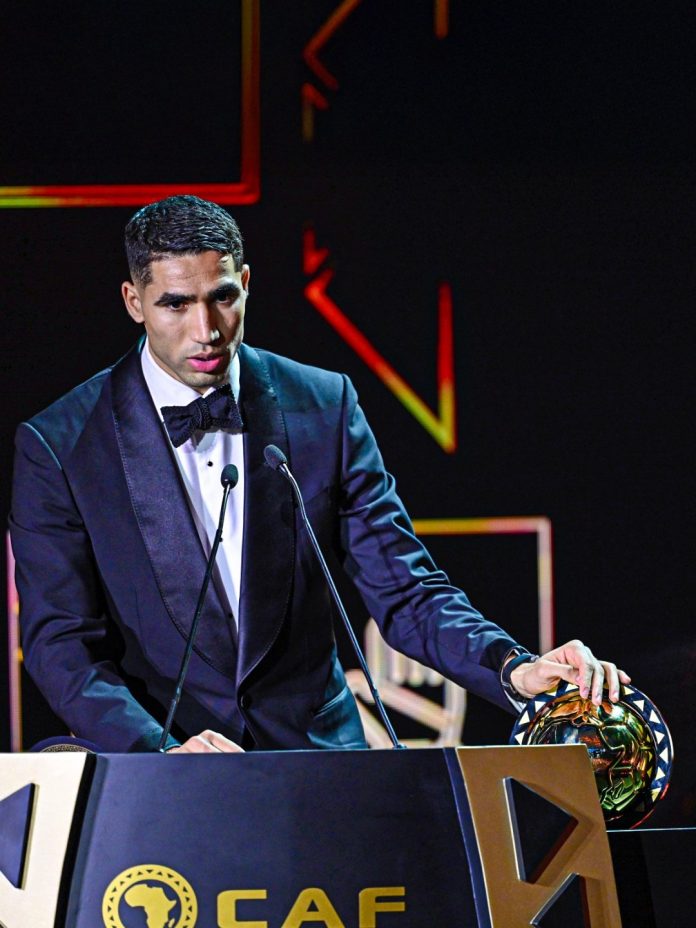
Achraf Hakimi has finally secured African football’s highest individual honour, emerging as the winner of the 2025 Confederation of African Football Men’s Player of the Year Award. The announcement was made during a glamorous ceremony held in Rabat, Morocco, where the Paris Saint-Germain defender stood out among the finalists.
Hakimi edged out fellow contenders Mohamed Salah of Egypt and Liverpool, as well as Nigeria’s Victor Osimhen, who now plays for Galatasaray. As the only finalist physically present at the ceremony, Hakimi’s appearance helped electrify the atmosphere, drawing roaring applause from a crowd eager to witness a new chapter in African football history.
For the 27-year-old Moroccan, this victory marks a defining moment following two consecutive years of near-misses. In 2023, he finished behind Osimhen, and in 2024, behind Ademola Lookman. His 2025 win finally ends the streak of narrow defeats and cements his place among Africa’s elite football icons.
Hakimi’s recognition also breaks a long-standing record: he becomes the first Moroccan to claim the award since Mustapha Hadji’s triumph in 1998. In addition, he joins a very short list of defenders who have captured the honour in the award’s modern format, underscoring the rarity and significance of his achievement.
The milestone not only reinforces Hakimi’s influence at PSG but also highlights Morocco’s continuing rise in continental football.
Local airfares have risen by more than 100 percent ahead of the Christmas season as passenger demand intensifies and aircraft shortages worsen. Many travellers are now struggling to secure seats on key domestic routes, with several airlines already fully booked.
The combination of high demand and limited aircraft capacity is expected to trigger fresh rounds of delays and cancellations during the festive period, aviation analysts say.
Industry stakeholders fear that diaspora travellers may be the hardest hit, as many will return to Nigeria only to face difficulty connecting to cities such as Enugu, Owerri, Asaba and Port Harcourt.
Checks on airline booking platforms show that most flights to these high-traffic destinations are fully booked from December 20 to early January. Tickets still available are priced between N350,000 and N500,000, depending on the airline. Some last seats are listed at up to N600,000.
One-way fares on the Lagos–Enugu route range between N350,000 and N400,000. Lagos–Abuja flights are slightly cheaper at N150,000 to N350,000 for the same period.
“Most of the airlines operating on the busy Christmas routes are already full. For the few with seats, the fares are very high. Some tickets now cost up to N500,000, which many Nigerians cannot afford,” Ndukwe Ginika Ogechi, CEO of Geena Travels and Tours Limited, told BusinessDay.
Ogechi said that unless more aircraft are deployed before the holiday period, fares will rise further and many passengers may be unable to travel.
Passenger Glut And Fewer Aircraft
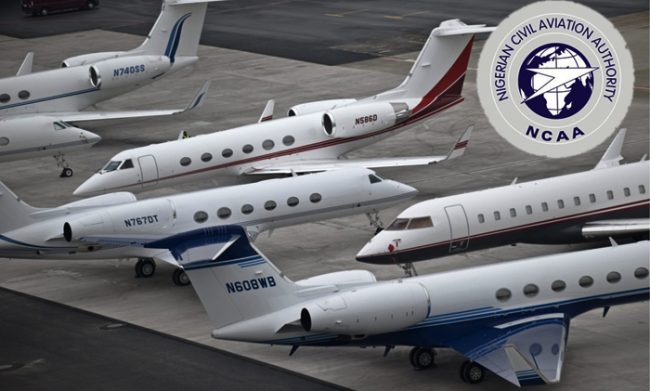
The industry has recorded a steady passenger glut over the past two years, largely due to a shrinking fleet. Several airlines have been unable to return aircraft from maintenance as a result of high costs driven by foreign exchange scarcity. Others were grounded by the Nigeria Civil Aviation Authority for failing to meet maintenance requirements.
Six years ago, Nigeria had 10 domestic airlines operating more than 120 aircraft. NCAA data obtained last year shows the number has fallen to 91, including aircraft still on maintenance.
In a recent paper, Aero Contractors’ Chief Financial Officer, Charles Grant, said the declining number of serviceable aircraft is one of the clearest signs that the aviation sector requires urgent intervention.
The naira depreciated further against the US dollar on Wednesday as tightening foreign exchange liquidity continued to pressure the official market. New FX data released by the Central Bank indicated that the exchange rate reached an intraday high of N1,460.50/$, reflecting intensified scarcity as demand far outstripped available supply.
Some transactions were concluded at an intraday low of N1,449.96/$, around N10 weaker than the previous day’s low, highlighting persistent volatility.
Over the last 10 days, the naira has lost N18 per dollar, affecting companies settling foreign obligations or seeking to acquire FX for asset purchases.
At the close of trading, the local currency slipped 0.46% to N1,454.18/$ at the Nigerian Autonomous Foreign Exchange Market (NAFEM). In the parallel market, the naira traded at N1,474/$, down 0.27%, indicating a subdued appetite for the domestic currency.
Analysts noted that the FX market continues to grapple with significant supply constraints, resulting in declining transaction values and rising pressure on businesses dependent on foreign currency.
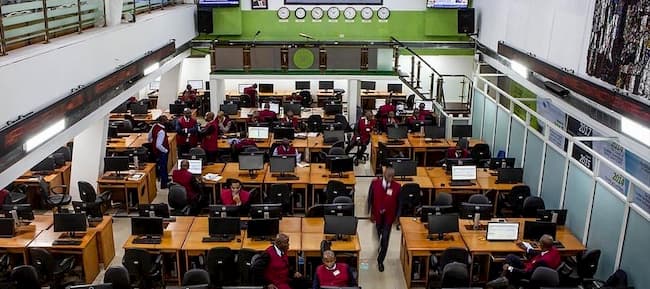
The Nigerian equities market continued its downward slide on Wednesday, with investors shedding an additional N217bn in market value amid intensified selling activity across major counters.
Trading data from the Nigerian Exchange (NGX) showed that bearish momentum drove a further 23 basis point decline in key performance indicators, dragging the year-to-date return to a new low in November.
The All-Share Index dipped by 340.50 points to close at 144,646.01, while market capitalisation fell by ₦216.57bn, ending the session at ₦92.00tn.
Stockbrokers attributed the downturn to persistent sell-offs in several medium- and large-cap stocks, including DANGSUGAR, CHAMS, ZENITHBANK, and ELLAHLAKES, which recorded notable price declines.
The cumulative value wiped off the market since the start of the week has risen to ₦1.5tn, underscoring heightened investor caution.
Despite the negative sentiment, overall market activity surged, with total trading volume climbing 134.12%, while the total value of transactions increased by 40.83%.
Atlass Portfolio Limited reported that 892.52 million shares, valued at ₦23.54bn, were traded across 20,225 deals.
ACCESSCORP dominated trading both in volume and value, accounting for 54.81% of total shares traded and 44.98% of total transaction value. Other actively traded stocks included TANTALIZER, JAPAULGOLD, ZENITHBANK, and CONHALLPLC.
On the gainers’ chart, NCR led with a 9.85% appreciation, followed by CAVERTON (+9.71%), UACN (+8.33%), MBENEFIT (+7.69%), LINKASSURE (+7.57%), and TANTALIZER (+7.36%), alongside ten other rising stocks.
However, 39 stocks closed lower. UNIVINSURE topped the losers’ list with a -10% depreciation, trailed by ABCTRANS (-9.95%), LIVINGTRUST (-9.92%), CHELLARAM (-9.85%), ROYALEX (-9.76%), and TRANSCORP (-8.44%).
Market breadth remained deeply negative, with only 16 gainers against 39 losers.
Sectoral performance also mirrored the broader downturn, as three of the five major indices closed in the red:
Insurance: -1.35%
Banking: -1.22%
Oil & Gas: -0.18%
Consumer goods rose slightly by 0.09%, while the industrial goods index closed flat.
Bitcoin slid to $88,000 on Wednesday, losing 4.8% of its value within 24 hours, as global crypto markets endured a heavy wave of sell pressure driven by heightened investor fear and macroeconomic uncertainty.
With no major catalysts to spark a rebound, BTC trading volume rose to $73.7bn, while sentiment deteriorated further amid uncertainty over Federal Reserve policy direction.
A combination of ETF outflows, leveraged position unwinding, and broader market caution accelerated the decline. Investors reacted to conflicting signals from US policymakers, with Federal Reserve Governor Christopher Waller suggesting potential support for a 25bps rate cut in December, while other FOMC members maintained more conservative stances.
The broader crypto market also turned sharply negative. Total digital asset market capitalisation fell 5.12% to $3.03tn.
During the downturn, liquidation volumes surged above $1bn across the crypto ecosystem. A major BTC liquidation worth $96.51m occurred on HyperLiquid, though the total BTC-only liquidation figure for the day is yet to be fully confirmed.
Fear dominated investor behaviour, with retail and institutional participants avoiding bargain opportunities due to uncertain market direction. However, some crypto whales re-entered the market at lower levels, betting on a possible rebound.
Bitcoin’s overall market valuation stood at $1.77tn, with the token losing more than 12% over the past week.
Ethereum also suffered significant losses, trading at $2,887, down 9% in 24 hours, with a market cap of $347bn and trading volume of $35.68bn.
U.S. Bitcoin ETFs recorded $373m in outflows, with BlackRock’s iShares Bitcoin Trust experiencing its largest single-day redemption since its January 2024 debut. Ethereum ETFs saw $74m in outflows, while Solana-based ETFs attracted $30m in fresh inflows.
Morocco delivered one of its strongest statements yet on the African football stage as the nation swept multiple major honours at the CAF Awards 2025 held in Rabat. The highlight of the night was Achraf Hakimi’s groundbreaking victory as African Player of the Year — a historic feat that made him the first defender in over five decades to claim the continent’s most prestigious individual football prize.
Hakimi’s long-awaited triumph represented the culmination of an outstanding run for the Moroccan star. After narrowly missing out on the award in both 2023 and 2024 — where Victor Osimhen and Ademola Lookman edged him — the 27-year-old finally ascended to African football’s peak. His victory ends Morocco’s decades-long wait since Mustapha Hadji last brought the honour home in 1998, placing Hakimi among the very few defenders to achieve the accolade in the award’s modern era.
The ceremony, hosted at Mohammed VI Polytechnic University, showcased Morocco’s rising football pedigree across both men’s and women’s categories. Ghizlane Chebbak earned the Women’s Player of the Year title, while Yassine Bounou was distinguished as Men’s Goalkeeper of the Year, reinforcing Morocco’s dominance.
Emerging Moroccan talent also took centre stage as Othmane Maamma clinched the Young Player of the Year award. On the women’s side, Doha El Madani secured the Women’s Young Player accolade, affirming the nation’s depth of future stars.
In the coaching category, Cape Verde’s Bubista was recognised as Coach of the Year, while Egypt’s Pyramids FC earned their first-ever Club of the Year award. Nigeria enjoyed its share of the spotlight as well — the Super Falcons emerged as Women’s Team of the Year, adding another continental honour to their record.
Nigeria’s Chiamaka Nnadozie, who currently plays for Brighton, extended her dominance by winning the Women’s Goalkeeper of the Year title for the third consecutive year, solidifying her reputation as one of Africa’s most consistent talents.
Full List of Winners – CAF Awards 2025
Player of the Year (Men): Achraf Hakimi
Player of the Year (Women): Ghizlane Chebbak
Goalkeeper of the Year (Men): Yassine Bounou
Goalkeeper of the Year (Women): Chiamaka Nnadozie
Youth Player of the Year (Men): Othmane Maamma
Women’s Youth Player of the Year: Doha El Madani
Interclub Player of the Year: Ibrahim Mayele
Women’s Interclub Player of the Year: Shamirah Nabbadda
Coach of the Year (Men): Bubista
Club of the Year (Men): Pyramids FC
Team of the Year (Men): Morocco U-20 National Team
Team of the Year (Women): Nigeria Women’s National Team (Super Falcons)
Goal of the Year: Clement Mizize
Referee of the Year (Men): Omar Abdulkadir Artan
Referee of the Year (Women): Liban Abdulrazack
Women’s Referee of the Year: Shamirah Nabbadda
CAF Women’s Assistant Referee of the Year: Tabara Moodji
CAF Assistant Referee of the Year (Men): Liban Abdulrazack
The National Social Security Fund (NSSF) Uganda has announced a partnership with Interswitch Group, one of Africa’s leading digital payment and e-commerce companies, to extend social security services to more Ugandans through Quickteller, one of Interswitch’s flagship consumer financial and agency banking service platforms.
The National Social Security Fund (NSSF) Uganda is a multi-trillion Fund mandated by the Government through the NSSF Act, as amended, to provide social security services to all eligible employees in Uganda and regulated by the Uganda Retirement Benefits Regulatory Authority, while the Minister of Gender, Labour & Social Development, and the Minister of Finance, Planning & Economic Development are responsible for policy oversight.
The Fund manages assets worth over UGX 25 trillion, invested in Fixed Income, Equities, and Real Estate assets within the East Africa region. The partnership launched in Kampala aims to onboard over 100,000 new voluntary savers onto the Fund’s SmartLife Flexi product through Interswitch’s countrywide Quickteller Agent Network, which comprises 20,000 teller agents.
The NSSF SmartLife Flexi is a flexible, goal-driven savings plan designed to help Ugandans achieve their financial goals with the freedom to choose savings period and frequency while earning a competitive monthly return, accrued daily.
Speaking at the unveiling ceremony, NSSF Managing Director, Patrick Ayota, said the partnership will accelerate the Fund’s drive to expand social security coverage in both the formal and informal sectors, in line with the Fund’s expanded mandate.
“One of the key pillars of our new 10-year strategic direction, informed by our mandate to provide social security services to all eligible Ugandans, is to increase national social security coverage to 50% of Uganda’s workforce by 2035, representing over 15 million people,” Ayota said.
He added that, “We have in the past partnered with telecoms and commercial banks, which enabled us to avail all our services on USSD, mobile and online, and provided convenience for remittances of contributions. However, there remains a large number of people who prefer a human interface, yet our 21 branches might not be within their proximity. Quickteller agents are the bridge to the informal economy.”
He noted that the partnership responds to the continued need to simplify savings and payments amid the country’s growing cash economy.
According to the Bank of Uganda’s June 2025 report, the value of cash currency in circulation increased from Shs8.21 trillion in FY2023/24 to Shs8.98 trillion by June 2025, a 9% rise, even as digital transactions continued to rise.
“This partnership will ease how our members and new savers onboard onto SmartLife Flexi and make contributions to their accounts using digital payment channels they already trust, such as Quickteller. It’s about meeting Ugandans where they are, digitally and physically,” Ayota explained.
He revealed that customers can now enroll and register for SmartLife Flexi free of charge at any nearby Quickteller agent. The minimum initial deposit is Shs10,000, and members can make subsequent contributions conveniently at affordable Quickteller transaction rates.
In addition, employers can also remit their mandatory contributions through the same network of Quickteller agents, making the process faster and more accessible.
Interswitch Country General Manager, Moris Seguya, said the collaboration reinforces the company’s mission to simplify and deepen financial inclusion.
“This partnership is pivotal to our primary objectives at Interswitch Group. We are driven by the need to see every Ugandan access financial services easily and affordably. With over 20,000 agents spread across the country, Quickteller is strategically placed to serve everyone, especially Ugandans in the informal sector,” Seguya said.
“Today, about 80% of our population is employed in the informal sector, where benefits to do with savings are limited. Partnering with NSSF allows us to ensure that Smartlife customers, especially those in the informal sector, can deposit their savings at the Quickteller agents within their neighbourhood, making saving easy and convenient. In addition, our systems, which are reviewed by the regulator, Bank of Uganda, regularly, are secure and robust to ensure the safety of our customers’ transactions,” he added.
Flavia Namutamba, a Quickteller agent located in Kampala, said that the partnership will provide a solution to some of their customers who do not have easy access to formal banking services, bringing them into the fold of a modern financial services system.
“Some people always inquire whether they can register or send money to their NSSF accounts through Quickteller since we are located nearer to them. This solution helps us bridge this gap in the market,” she said.
In June 2025, the company officially launched Interswitch PensionRemit, a fully automated platform designed to help employers comply with the recently introduced Pension Contribution Remittance System in Nigeria. The new system, mandated by the National Pension Commission and the Pension Fund Operators Association of Nigeria, took effect on June 1, 2025.
With this latest milestone in East Africa, Interswitch continues to consolidate its integral role as a driver of social sector value-creation in Africa, and as a trusted transaction solutions partner across multiple countries, combining innovation, scale, continental reach, security, and deep market expertise, to enable governments, communities, businesses and individuals to unlock value across different spheres of endeavour, in line with its mission to facilitate transactions solutions that drive prosperity across the continent.
Interswitch is a leading technology-driven company focused on the digitization of payments and commerce across Africa. Founded in Nigeria in 2002, Interswitch disrupted the traditional cash-based payments value chain in Nigeria by supporting the introduction of electronic payments processing and switching services, also launching Verve, Africa’s premier and leading domestic EMV-standard chip and pin payments card scheme.
Today, Interswitch is a leading player with critical mass across Africa’s developing financial ecosystem and is active across the payments value chain, providing a full suite of omni-channel payment solutions. Interswitch’s vision is to make payments a seamless part of everyday life in Africa, and its mission is to create transaction solutions that enable individuals and communities to prosper across Africa. Interswitch’s broad network and robust payments platform have been instrumental to the development of the Nigerian payments ecosystem and provide Interswitch with the infrastructure to expand across Africa.