









Home Blog Page 165

PSG Topple Bayern Munich To Seal Semi-Final Berth In Club World Cup

Paris Saint-Germain took a giant step toward international glory after overcoming Bayern Munich 2-0 to earn a place in the FIFA Club World Cup semi-finals. The French champions brought an end to their four-match losing streak against the German giants, showcasing resilience and flair in a drama-filled fixture.

The match in Atlanta began tentatively, with both teams slow to find rhythm. It wasn’t until the 20th minute that the first real chance emerged — a slick PSG buildup ended with Désiré Doué teeing up Fabián Ruiz, who fired just over the bar.

Bayern responded through Michael Olise, who forced Gianluigi Donnarumma into a sharp save, but the pendulum quickly swung back in PSG’s favour. Khvicha Kvaratskhelia nearly lit up the game with a dazzling solo run, but Manuel Neuer’s outstretched legs denied him what would have been a stunning opener.

Bayern briefly thought they’d found the breakthrough just before halftime when Dayot Upamecano nodded in from Olise’s free-kick. However, celebrations were short-lived as the assistant’s flag chalked off the goal for offside. Moments later, Bayern’s woes deepened as Jamal Musiala hobbled off with an apparent injury.

PSG wasted no time imposing themselves after the restart. Bradley Barcola burst through one-on-one with Neuer, but the veteran keeper once again came to Bayern’s rescue. A moment of madness followed, as Neuer’s risky attempt to dribble out of danger saw him lose possession, gifting Ousmane Dembélé a golden chance. But with an open goal, the Frenchman inexplicably rolled his shot wide.

Doué eventually made the breakthrough with a clever finish at the near post in the 78th minute, catching Neuer flat-footed. But PSG nearly unraveled soon after. Willian Pacho received a red card for a dangerous tackle on Leon Goretzka, and Bayern briefly believed they’d equalized through Harry Kane — only for another offside flag to intervene.

In a frantic finale, PSG went down to nine men as Lucas Hernández was dismissed for elbowing Raphaël Guerreiro. Yet, against all odds, they doubled their lead in stoppage time as Dembélé redeemed himself with a cool finish following a swift counterattack.

Referee Anthony Taylor added another twist by awarding Bayern a late penalty, but the decision was overturned after a pitchside review. PSG now head into the semi-finals with renewed confidence and eyes set on another major title in their pursuit of global supremacy.


Chelsea Outclass Palmeiras To Advance In Club World Cup Thriller

Chelsea have progressed to the semi-finals of the FIFA Club World Cup after dispatching Brazilian giants Palmeiras 2-1 in a high-octane encounter held in Philadelphia. The result not only ended Verdão’s four-match unbeaten run in the tournament but also underscored the Premier League side’s intent to make a statement on the global stage.

Keen to avoid another upset against Brazilian opposition, Chelsea started aggressively. Inside just four minutes, Cole Palmer tested Weverton with a curling effort from outside the box. Though the Brazilian keeper responded well, he could do little to prevent Palmer from scoring moments later. The young forward received the ball just inside the area and calmly slotted home to hand Chelsea the lead in the 16th minute.

With the Blues dictating proceedings, Palmeiras found themselves under constant pressure. One of the first-half’s standout moments came when Palmer delivered an inch-perfect ball to Christopher Nkunku, only for the Frenchman to blaze his shot over the bar despite finding himself in acres of space.

Just before halftime, Palmeiras nearly equalized through Vanderlan, whose header was brilliantly parried away by Robert Sánchez, maintaining Chelsea’s advantage.

The Brazilians returned from the break revitalized and were soon rewarded. Ironically, it was Chelsea-bound prodigy Estêvão who pulled them level with a thunderous strike that cannoned in off the crossbar — leaving Sánchez rooted to the spot.

Palmeiras gained confidence from the goal and nearly turned the game around when Allan’s shot drifted narrowly past the post. But the turning point came in the 83rd minute when Malo Gusto’s cross, unintentionally redirected by Bruno Fuchs, deceived Weverton and bounced over the goal line for what proved to be the winner.

Weverton did manage to tip a Noni Madueke effort onto the post in the dying moments, but it wasn’t enough to salvage a result for Palmeiras. Chelsea now gear up for a showdown with Fluminense in what promises to be a thrilling all-or-nothing semi-final.

Fluminense Strikes Late To Secure FIFA Club World Cup Semi-Final Spot

Fluminense have marched into the semi-finals of the FIFA Club World Cup after a tightly contested 2-1 triumph over Al-Hilal, in a clash featuring the two most recent tournament runners-up. The Brazilian side clinched victory through a decisive second-half strike from Hercules, ensuring their place in the next round and extending their unbeaten streak to 11 matches.

Both sides showcased their technical abilities in the opening exchanges, though genuine goal threats were scarce. Jhon Arias managed to slip Nonito through the Al-Hilal defense, but the forward couldn’t find the target. At the opposite end, Ignácio was alert to block Nasser Al-Dawsari’s attempt. The game’s early intensity came at a disciplinary cost, with Renan Lodi and Juan Freytes both earning cautions prior to the first-half cooling break — suspensions that now threaten their participation in the semi-finals.

The breakthrough came five minutes before halftime when Matheus Martinelli seized on a loose ball, having snatched it from Facundo Bernal, and rifled a sensational shot into the top corner. Although the Uruguayan protested the interception, Martinelli’s moment of brilliance ignited celebrations. However, he quickly joined the growing list of players set to miss the next round after being booked moments later.

Fábio preserved Fluminense’s lead just before the break, denying Kalidou Koulibaly with a reflex save. A subsequent VAR check also overturned a contentious penalty call against Samuel Xavier, ensuring the Brazilian side maintained their slim lead into halftime.

Al-Hilal came out swinging after the interval and found their reward in the 51st minute. Marcos Leonardo latched onto Koulibaly’s knockdown from a Rúben Neves corner and rifled the equalizer past Fábio from close range. A misstep by Lodi nearly handed Fluminense’s lead back, but Yassine Bounou bailed him out by blocking Germán Cano’s effort.

The momentum shifted again when Moteb Al-Harbi squandered a chance from another Neves delivery, blasting high above the crossbar. Just minutes later, Hercules turned the tide in Fluminense’s favour with a composed finish after his initial shot was blocked and Xavier’s follow-up header landed perfectly for him.

Despite Xavier later being forced off with an injury, Fluminense held firm. Fábio courageously smothered a late attack at Koulibaly’s feet, sealing the win and inflicting Al-Hilal’s first defeat in 10 matches. Fluminense now await their semi-final clash against either Palmeiras or Chelsea, armed with belief and momentum.

Federal High Court Overturns Suspension, Senator Natasha Akpoti-Uduaghan To Rejoin Senate

Senator Natasha Akpoti-Uduaghan is set to officially resume her legislative responsibilities at the National Assembly following a decisive ruling from the Federal High Court in Abuja. Justice Binta Nyako, presiding over the case, determined that the Senate’s six-month suspension of the Kogi Central senator was both excessive and unconstitutional, citing its impact on democratic representation for her constituents.

In a video statement shared with her supporters, Akpoti-Uduaghan confirmed her return to plenary on Tuesday and extended gratitude to her constituents for their unwavering support. Nonetheless, the Senate has outlined specific conditions for her reinstatement, including the payment of a ₦5 million fine for contempt of court and public apologies in two prominent national newspapers and on her verified Facebook page.

While acknowledging the Senate’s authority to discipline its members, the court emphasized that such actions must not hinder citizens’ right to representation in a democratic framework. The lawmaker’s suspension had originated from a tense dispute over Senate seat allocations, which later escalated to include serious allegations of sexual misconduct leveled against Senate President Godswill Akpabio—accusations that he has firmly denied.

Despite the court’s judgment in her favor, the upper chamber insists that Akpoti-Uduaghan must first fulfill all stipulated penalties before her full reinstatement. Her legal counsel has expressed readiness to comply with the court’s directives, even as they continue to denounce the suspension as a politically charged move.

Elon Musk Launches ‘America Party’ After Public Split with Donald Trump

Elon Musk To Step Down As Twitter CEO, Here's Why

Tech magnate Elon Musk has officially introduced a new political entity, the “America Party,” marking a significant departure from his previous support of former U.S. President Donald Trump. The announcement, made on July 5, 2025, comes on the heels of a contentious policy disagreement between the two influential figures, culminating in Musk’s decision to challenge what he calls a “dysfunctional two-party monopoly.”

The billionaire entrepreneur revealed the formation of the America Party via his social platform X (formerly Twitter), following an online poll that received over 1.2 million responses. According to Musk, approximately 65% of participants endorsed the need for a third political force in the country. The America Party’s core mission, he noted, is to “return freedom to the American people,” with initial political aspirations aimed at securing a handful of Senate and House seats.

The rift between Musk and Trump widened after the passage of a controversial domestic policy package that raised the national debt ceiling by $5 trillion. Musk, who was a major donor during Trump’s 2024 campaign, criticized the legislation for promoting reckless government spending.

In a move that could redefine U.S. political dynamics, Musk’s America Party positions itself as an independent alternative to the traditional Democratic and Republican structures. The party’s emergence has sparked wide public discourse, with analysts and citizens alike speculating on its viability and long-term influence.

New Tecno Spark 40 Phones Might Make You Rethink Paying ₦1 Million For OtherFlagship In 2025

Let’s be honest—most of us like the prestige of holding an iPhone or a Galaxy. It’s part status symbol, part ecosystem loyalty, and part “I don’t want to think too hard about phone specs.” But every now and then, something unexpected comes along and quietly questions all of that. That “something” is the Tecno Spark 40 series—and it’s making premium phones sweat, quietly but firmly.

Whether you’re a Lagos-based techie, a Port Harcourt exec on a budget, or just someone who wants solid performance without emptying your wallet, these three models are worth a second (or third) look. Let me walk you through the reasons why.

1. Spark 40 Pro+

Here’s the kicker: the Spark 40 Pro+ costs roughly ₦310,000 ($214), and somehow manages to check boxes that premium phones from Apple and Samsung still treat like luxury features. Let’s break this down. You’re getting:

  • A 6.78-inch curved AMOLED display
  • 144Hz refresh rate (faster than many flagships!)
  • Under-display fingerprint scanner
  • MediaTek Helio G200 chipset (making its global debut here)
  • 8GB RAM with up to 256GB storage
  • 50MP rear camera + 13MP selfie cam
  • 5,200mAh battery with triple-mode charging: 45W wired, 30W wireless, and 5W reverse wireless
  • IP64 rating (rain splash protection + dust resistance)
  • Android 15 with HiOS 15.1

And honestly, it’s not just about the specs—it’s how they all come together. The AMOLED panel is vibrant and sharp, the refresh rate makes everyday swiping feel buttery, and the battery holds up like a champ. You charge it in under an hour and go all day. Imagine that.

And yes—it comes in colors like Moon Titanium and Aurora White, which sound fancy enough to sit beside Apple’s “Midnight” or Samsung’s “Phantom Black.”

2. Spark 40 Pro

Now, if curved displays aren’t your thing (and I get it—some folks still miss the classic flat glass), the Spark 40 Pro might be your sweet spot. Here’s what you’re looking at:

  • Same 6.78″ AMOLED, 1220p+ resolution, and 144Hz refresh rate as the Pro+
  • A flat display—clean, elegant, and easy to handle
  • Helio G100 chipset (a step below the G200, but still no slouch)
  • 8GB RAM, 128/256GB storage
  • 50MP rear + 13MP front camera
  • 5,200mAh battery, same triple-charge options
  • IP64 protection + Android 15

At around ₦275,000 ($189), you’re getting 90% of the Pro+ experience. It’s like skipping business class and still getting complimentary wine in economy. So if you’re someone who wants performance but doesn’t care much about subtle design extras like display curves or titanium shimmer, this is a powerful pick.

3. Spark 40

Every family has that one member who keeps things humble—and that’s the Spark 40. But don’t dismiss it just yet. With a retail price hovering around ₦195,000 ($133), this is probably the most well-rounded budget smartphone we’ve seen all year.

Here’s what it’s packing:

  • 6.67-inch IPS LCD, HD+ resolution, 120Hz refresh rate
  • Helio G81 chipset (think of it as the workhorse engine—reliable, not flashy)
  • Up to 8GB RAM, 128/256GB storage
  • 50MP rear shooter + 8MP selfie cam
  • Same 5,200mAh battery + 45W wired charging
  • Android 15, HiOS 15.1

Is it meant to compete with flagships? No. But does it outperform some mid-range phones from five times its price point? Absolutely. It’s the kind of phone you gift your intern—or grab for work errands, Zoom meetings, or even as a backup device.

4.Why Should a Business Professional Care?

Good question. If you’re running meetings, managing documents on the go, handling dozens of WhatsApp business groups, and still squeezing in calls to your driver or checking security camera feeds at home—you need reliability. You don’t always need an ₦800k phone. These Tecno models give you:

  • Long-lasting battery life (we’re talking easily over a full day)
  • Great multitasking performance (thanks to newer chipsets and better RAM management)
  • Sleek looks that don’t scream “cheap phone”
  • Android 15—so you’re up-to-date with features, compatibility, and privacy settings

And let’s not overlook the cost-benefit factor. If you run a small business and need to equip staff with decent devices—or you just don’t want to risk taking your flagship into hectic Lagos traffic—Tecno’s pricing starts to make a lot of sense.

5. What’s the Catch?

Alright, I won’t sugarcoat it—there are tradeoffs.

  • Software updates: Tecno usually promises about 2 years of support. That’s good, not great. Don’t expect 5 years like you’d get on a Pixel or iPhone.
  • Brand perception: Let’s be real, in Nigeria, some folks still associate Tecno with entry-level “student phones.” But that’s changing fast.
  • Camera quality: It’s decent, but not “portrait mode on iPhone 15 Pro Max” level. Then again, how often do you really print your photos?

Honestly, it all comes down to what you prioritize. Do you want to spend ₦1 million on a phone that makes you feel like a baller—or ₦300k on one that quietly does 85% of the job just as well?

6. The Bigger Conversation: Are Specs Finally Catching Up to Value?

It’s not just Tecno. Brands like Infinix, Xiaomi, and even Lava are pushing boundaries at lower price points. We’re seeing specs like 144Hz displays, AMOLED panels, and wireless charging trickle down into phones that used to be labeled “budget.” It’s a shift worth watching—and honestly, a challenge to bigger brands who’ve gotten comfortable.

Why should a ₦1 million phone have a 60Hz screen when a ₦250k device offers 144Hz? Why should basic features like fast charging or under-display sensors still feel like upsells? These aren’t just rhetorical questions—they’re market wake-up calls.

Would I Buy One?

If I were buying a second phone for business use or travel? 100% yes. If I were shopping for an affordable but capable phone for a family member? Definitely. Would I switch from my iPhone 15 Pro? Hmm… maybe not. But I would start asking why my ₦1.2 million phone doesn’t charge faster than a Tecno Spark. And that, my friend, is where the Spark series wins—not in the prestige game, but in the spec-for-spec tug-of-war.

So, next time you’re tempted to drop a fortune on a flagship, just pause for a second… and consider whether you’re really getting more—or just paying for the brand.

Foreign Transactions Jump To N118.9bn On NGX

NGX Records N60bn Trading

Foreign portfolio transactions on the Nigerian Exchange Limited (NGX) surged to N118.9 billion in May 2025, marking an 88.54% increase from N63.07 billion recorded in April.

The rise in foreign inflows, equivalent to around $74.97 million at the prevailing exchange rate, boosted overall market activity, with total transactions on the NGX climbing 45.32% from N482.04 billion in April to N700.50 billion in May.

Year-to-date, foreign transactions have reached N996.03 billion, representing 29.17% of total market transactions so far in 2025. Domestic investors continue to dominate the equities market, accounting for 70.83% of total transactions.

Domestic transactions also rose in May, increasing by 38.81% to N581.59 billion, driven largely by retail investors who outperformed institutional investors by 16%. Retail transactions surged by 86.12%, rising from N181.31 billion in April to N337.46 billion in May.

When compared to the same period last year, total transactions in May 2025 more than doubled, rising by 97.11% from N355.38 billion in May 2024, reflecting growing investor confidence in the Nigerian capital market.

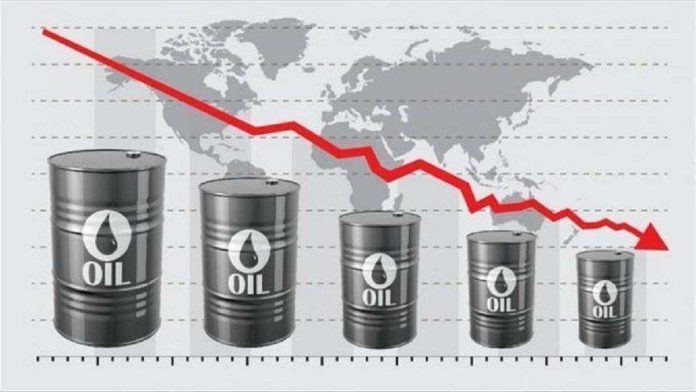
Oil Prices Fall As OPEC+ Signals Potential Output Increase

Oil prices slipped in the global market as signals of renewed nuclear diplomacy between the United States and Iran, expectations of increased OPEC+ output, and concerns over US trade policy combined to ease supply fears.

Brent crude, the international benchmark, edged down 0.21% to $68.41 per barrel from the previous close of $68.56. US benchmark West Texas Intermediate (WTI) also dipped 0.12%, trading at $66.24 per barrel compared to $66.32 in the prior session.

Investor sentiment was tempered by news of potential direct nuclear discussions between Washington and Tehran in Norway next week, reducing fears of further Middle East escalation. Iran reaffirmed its commitment to the Nuclear Non-Proliferation Treaty while announcing changes in its cooperation framework with the International Atomic Energy Agency, following recent tensions over alleged attacks on its nuclear facilities.

The diplomatic developments align with a report that senior US and Iranian officials could meet soon in Oslo, potentially opening a new channel for de-escalation in the region.

Meanwhile, expectations that OPEC+ will further increase output in August are weighing on prices. The alliance, which has gradually eased voluntary production cuts since April, is set to discuss its next output adjustments at a meeting on Sunday, with Saudi Arabia, Russia, and other key members considering a fifth consecutive monthly hike to stabilise supply amid recovering demand.

Adding to the cautious mood in oil markets is the uncertainty surrounding US trade policy. As the July 9 tariff deadline approaches, President Trump indicated that letters will be sent to various countries specifying tariff rates of 20%, 25%, or 30%, heightening concerns over potential impacts on global trade flows and energy demand.

The combination of easing geopolitical tensions, anticipated increases in supply, and trade policy uncertainties is keeping oil markets on edge, with traders closely monitoring developments in the coming days.

Five Errors To Avoid When Making Land Investments

Land banking remains one of the most effective paths to building long-term wealth, but only if approached with strategy and patience. While many are drawn to stories of modest plots turning into millions years later, the reality is that many investors fall into traps that could have been easily avoided.

Here are five common mistakes to sidestep when investing in land:

1. Thinking Land Investment Is for Quick Gains

Land banking is a long-term play, not a get-rich-quick scheme. Many investors mistakenly expect rapid returns, only to face disappointment when value appreciation takes time. The typical holding period for land banking is at least three to five years, depending on location and market conditions. Those willing to wait often see the best returns as urban development eventually catches up with their investment.

2. Ignoring Location and Title Verification

The promise of low prices can tempt investors into buying land without due diligence on location and title documents. However, a plot in a wrong location or with unresolved title issues can quickly become a financial trap. A wise investor pays attention to areas with strong growth potential, upcoming infrastructure, and clear, verifiable land titles. These factors can significantly influence the appreciation rate of your investment.

3. Waiting Until an Area Fully Develops Before Buying

Many investors delay purchase decisions, waiting for roads to be tarred, streetlights installed, or supermarkets to open in the area. By the time these developments are in place, prices have often surged beyond reach. The essence of land banking is spotting potential before development arrives, allowing you to buy at a lower price and enjoy the benefits of appreciation when growth eventually comes.

4. Paying Premium Prices

The goal of land banking is to buy low and sell high. Purchasing plots that already command premium prices in fully developed areas defeats this purpose, unless you plan to build immediately for rental or resale purposes. Investors should focus on acquiring land at fair or below-market prices to maximise future returns. Buying wholesale or through reputable platforms can offer opportunities for significant gains.

5. Buying Only One Plot

Purchasing a single plot limits your flexibility when the land appreciates in value. If you sell, you exit the market entirely; if you hold, you cannot realise gains immediately. By acquiring multiple plots, you gain the option to sell one to cash in on appreciation while retaining a stake in the area’s continued growth. This approach not only spreads your risk but also allows you to leverage your investment for future needs without sacrificing all your long-term benefits.

Land banking remains a reliable strategy for wealth creation when approached with the right mindset and knowledge. By avoiding these five mistakes, investors can position themselves to benefit from the steady, long-term rewards that land investments can offer.

Global Air Cargo Demand Rises In May Despite Trade Disruptions – IATA

IATA Issues Guidelines
IATA Issues Guidelines to Airlines For COVID-19 Testing

The International Air Transport Association (IATA) has reported a 2.2% year-on-year increase in global air cargo demand for May 2025, measured in cargo tonne-kilometres (CTK). International operations saw a stronger 3.0% rise during the same period.

Capacity, measured in available cargo tonne-kilometres (ACTK), also grew by 2.0% year-on-year, with international capacity rising 2.6%.

“Air cargo demand globally grew 2.2% in May. That is encouraging news, as a 10.7% drop in traffic on the Asia-North America trade lane illustrated the dampening effect of shifting US trade policies,” said Willie Walsh, IATA’s Director General. “Even as these policies evolve, the air cargo sector’s well-tested resilience is helping shippers flexibly manage supply chain needs.”

Despite global manufacturing contracting in May, with the Purchasing Managers’ Index (PMI) falling to 49.1, air cargo volumes outpaced broader economic indicators. Global industrial production rose 2.6% year-on-year in April, while air cargo volumes surged 6.8%, exceeding global goods trade growth of 3.8%.

Jet fuel prices in May were 18.8% lower year-on-year and down 4.3% from April, providing further cost relief for operators.

Regional Performance:

  • Asia-Pacific airlines recorded the strongest growth, with demand up 8.3% year-on-year and capacity increasing by 5.7%.
  • North American carriers saw the sharpest decline, with demand down 5.8% and capacity falling 3.2% year-on-year, reflecting trade lane adjustments due to U.S. policy changes and the fading impact of front-loading ahead of tariffs.
  • European carriers posted a 1.6% year-on-year rise in demand, with capacity up 1.5%.
  • Middle Eastern airlines recorded a 3.6% increase in demand and a 4.2% rise in capacity year-on-year.
  • Latin American carriers saw demand grow by 3.1%, with a 3.5% increase in capacity.
  • African airlines experienced a 2.1% decline in demand, although capacity rose by 2.7% year-on-year.

Trade Lane Adjustments:
The significant decline in the Asia-North America trade lane was anticipated as the effect of front-loading shipments ahead of tariff changes faded and the enforcement of changes to de minimis exemptions on small package shipments impacted flows. However, other trade routes recorded stronger-than-expected growth as shippers adjusted supply chains to manage evolving global trade conditions.

Despite challenges, IATA highlighted that air cargo continues to demonstrate resilience, supporting global trade flows amid policy shifts and macroeconomic uncertainties.

Nigeria, Saint Lucia Forge Partnership To Boost Tourism And Creative Industries

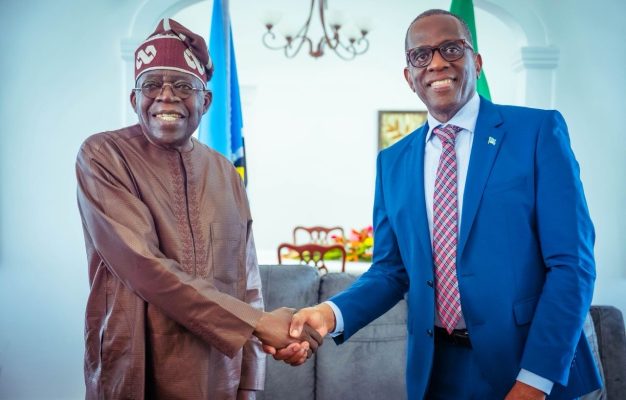
Nigeria and Saint Lucia have signed a historic Memorandum of Understanding (MoU) to strengthen ties in tourism, the Orange Economy, and the creative industries, marking a significant step toward deepening cultural, economic, and strategic cooperation between the two nations.

The agreement was signed on Tuesday evening at the Windjammer Landing Villa Beach Resort during Nigeria’s presidential visit to Saint Lucia, symbolising a new chapter in the evolving relationship between the West African nation and the Caribbean island.

Describing the moment as the dawn of a new era, Nigeria’s Minister for Tourism praised the partnership as both timely and visionary, noting the warmth of Saint Lucia’s hospitality.

“From the minute I got off that aeroplane, it was as if I was looking into a mirror. Saint Lucia is a reflection of Nigeria; Nigeria is a reflection of Saint Lucia,” she said.

She highlighted the strategic nature of the MoU, which will allow both countries to leverage their strengths—Nigeria’s globally recognised creative industries, including Nollywood and music, and Saint Lucia’s expertise in tourism.

“This collaboration allows us to exchange expertise and co-develop our capacities in both sectors,” she said, adding that the agreement will encourage participation in cultural events like Saint Lucia’s Jazz Festival while fostering collaboration in fashion, arts, and museum development.

“We want you to come to Lagos for our ‘Detty December,’ wear our clothes, take our leather and our fabrics. We are part of each other, and this is the beginning of a new dawn,” she added, emphasising the potential of the partnership to inspire the global Black community.

Saint Lucia’s Minister for Tourism, Culture, and the Creative Industries, Dr. Ernest Hilaire, described the agreement as a formal reconnection of people separated by history but united by heritage.

“Colonialism expanded the boundaries of Africa beyond the continent to include islands like ours. This agreement is about formally re-establishing those ancestral links,” he said.

Dr. Hilaire praised Nigeria’s dynamic cultural exports, noting that Saint Lucia has hosted Nigerian talent at its Jazz Festival and looks forward to deepening these ties under the MoU. He also highlighted Saint Lucia’s internationally recognised community-based tourism model and expressed readiness to share insights as Nigeria develops its tourism sector.

Despite Saint Lucia’s small size—just 238 square miles with a population under 200,000—Dr. Hilaire said the country has valuable lessons to share in building a successful tourism industry.

The collaboration is also expected to address practical challenges in Saint Lucia’s creative industries, including sourcing raw materials for fashion and traditional crafts, further reinforcing the benefits of this strategic partnership for both nations.

Enugu Air Set To Launch July 7

Enugu Air, the Enugu State-owned commercial airline, will officially launch on Monday, July 7, 2025, according to a statement from the state government. The airline is part of Governor Peter Mbah’s vision to position Enugu as a major aviation hub within a modern, multimodal transport system.

In a statement signed by the Commissioner for Transportation, Obi Ozor, the government announced that the launch will take place at Akanu Ibiam International Airport, with the Minister of Aviation and Aerospace Development, Festus Keyamo, expected as the Special Guest of Honour alongside other dignitaries.

Enugu Air will commence operations with a fleet of three Embraer E170 and E190 series aircraft, chosen for their efficiency and comfort in the regional market.

The airline’s initial routes will form a “golden triangle” with Enugu at the centre, connecting to Abuja and Lagos, with plans to expand to Port Harcourt, Owerri, Benin, Kano, and other strategic cities across Nigeria and beyond.

“With a strong foundation of innovation and sustainability, we are ready to redefine air travel, instil pride, and elevate Enugu’s prominence on the national and global stage,” Ozor said.

“Let the countdown begin—Enugu Air is ready for takeoff.”

Keyamo Unveils New Access Road At Sokoto Airport

Minister of Aviation and Aerospace Development, Festus Keyamo, has commissioned the newly constructed access road to the Sadiq Abubakar III International Airport, Sokoto, as part of efforts to modernise aviation infrastructure nationwide.

During his working visit to Sokoto State, Keyamo also laid the foundation for a new protocol lounge at the airport, which is designed to enhance passenger comfort and operational efficiency.

The Minister was received by the Executive Governor of Sokoto State, Ahmed Aliyu Sokoto, as the visit coincided with the governor’s second anniversary in office, highlighting collaboration between the federal and state governments in delivering critical infrastructure projects.

Keyamo, accompanied by the Managing Director of the Federal Airports Authority of Nigeria, Olubunmi Kuku, and top FAAN directors, noted that the Sadiq Abubakar III International Airport serves as a gateway not only to Sokoto but also to the entire North-West region.

“These infrastructure upgrades are crucial for enhancing passenger experience and facilitating regional development,” the Minister said.

Traditional rulers, state officials, aviation stakeholders, and members of the press attended the commissioning ceremony, reflecting broad support for improved aviation infrastructure as a driver of economic growth and national development.

Oil Producers Withheld Crude Supply To Dangote, Others – NUPRC

The Nigerian Upstream Petroleum Regulatory Commission (NUPRC) has revealed that efforts to enforce domestic crude supply to local refineries, including the Dangote Petroleum Refinery, faced resistance from several upstream oil producers last year.

In its latest report, the commission disclosed that oil companies pushed back against the Domestic Crude Supply Obligation (DCSO), submitting formal letters requesting waivers or explaining why they could not meet the monthly crude allocations under the policy.

“Several pushbacks from the Independent Petroleum Producers Group (IPPG), Oil Producers Trade Section (OPTS), some producers and their equity partners were received via formal letters, either requesting waivers on the allocated monthly obligations or giving detailed explanations why they might not be able to meet the volumes,” the report stated.

The resistance came despite multiple stakeholder engagements and the gazetting of the Production Curtailment and Domestic Crude Supply Obligation Regulations in September 2023 under the Petroleum Industry Act.

To implement the DCSO, the NUPRC facilitated crude supply to Dangote refinery and other domestic plants using the monthly production curtailment platform from February 2024, requesting all exploration and production companies to submit details of crude sales agreements that could impact domestic supply.

In March 2024, the commission set up a working committee with representatives from industry groups, refinery owners, and the NNPC Upstream Investment Management Services to develop a framework for enforcing the DCSO policy. It also designed allocation metrics based on each producer’s operational capacity before issuing bi-annual daily obligations.

These guidelines, approved by NUPRC Chief Executive Gbenga Komolafe on July 11, 2024, led to the issuance of domestic crude obligations for the rest of the year to companies producing above 3,000 barrels per day by July 31, 2024.

However, by August, the NUPRC reported continued pushbacks from producers and their partners seeking exemptions or citing challenges in meeting the obligations.

Additionally, oil producers objected to the participation of refiners in production curtailment meetings, prompting the NUPRC to suspend refiners’ attendance at these meetings from September 2024.

Despite these challenges, the commission maintained that it continued to facilitate crude supply to local refineries, including Dangote, to support domestic refining and reduce dependence on fuel imports.

Trade Experts Push For Global Market Access For African SMEs

SME

Trade experts are urging governments, investors, and stakeholders to strengthen market connectivity for African small businesses by supporting strategic retail linkages and cross-border cooperation to boost exports and economic growth.

Speaking at the launch of the MABA Wholesale and Retail Store and the MABA Saturday Market in Lagos, stakeholders identified limited funding and weak business structures as major barriers hindering the growth of value-added exports from Nigeria and across Africa.

Flora Mbeledeogu, Founder and CEO of Made-in-Africa Brands Ambassador (MABA), highlighted the challenge of visibility for African products in global retail outlets, noting that collaboration among African SMEs could transform this narrative. She explained that the new MABA store serves as an aggregation point for over 10,000 products from more than 1,000 small-scale manufacturers across 30 African countries.

“African SMEs face challenges with visibility, accessibility, and market reach, particularly in fast-moving consumer goods. Unlike foreign brands, their products are rarely seen in major outlets worldwide,” she said.

To address these challenges, Mbeledeogu explained that MABA aggregates and distributes SME products to major retail chains, including Shoprite, Ebeano, and Jendol, with plans to expand distribution across Africa and into international markets. She added that the store exclusively sells locally produced goods, including agricultural commodities, FMCGs, skincare, and natural food items.

“We aim to boost intra-African trade and increase exports while reducing imports by building globally competitive products that meet NAFDAC, ISO, HACCP, and US FDA standards,” she said, adding that the goal is to attract foreign buyers and promote authentic African products globally.

Professor Uchenna Uzo, Director of the Africa Retail Academy at Lagos Business School, called on African governments and financial institutions to develop improved systems for funding SMEs, stressing that many small businesses produce quality goods but lack access to markets.

“What MABA is doing demonstrates that market access can be created. Our financial institutions need to do a better job supporting SMEs with creative funding models to transform businesses,” he said.

SME operators praised MABA’s cooperative approach to addressing market access challenges through partnerships, visibility, and regional networking. Rita Akpanette, CEO of Rimallis Apparels in Uyo, noted that MABA enabled her garment factory to partner directly with cotton producers within the MABA network, enhancing her ability to source materials locally and export finished designs.

“Without MABA, I wouldn’t have had access to these opportunities and networks. Now, we can send our goods to the MABA store for sales and distribution,” she said.

Amina Izuagbe, CEO of Amineru Nigeria Enterprises Ltd in Benin City, described the store as a groundbreaking platform designed for wholesale buyers and international exports, rather than small-scale retail.

“This kind of store has never existed here. The goal is to secure large orders from supermarket chains and global buyers,” she said, urging the government to support efforts to connect African businesses with international markets.

Funmilayo Agbontaen, CEO of Famaad Foods Ltd, described the store as a stepping stone for global visibility, emphasising that MABA’s quality checks and aggregation model ensure only premium, natural products reach consumers worldwide.

“MABA is helping us gain traction and visibility beyond sales,” she said.

Similarly, Amina Sani-Muhammed, CEO of Minbibs Multi Trade and producer of Zobolicious drinks in Lagos, described the store as a shift from retail to wholesale-level trading.

“We are expecting large orders from within Nigeria and from countries like Ghana to the US. MABA is positioning us for that,” she said.

The MABA community now connects small-scale manufacturers across 30 African countries, providing a structured path for value-added goods to enter intra-African trade channels and global markets.

Federal Government Schedules Petrol Pricing Summit For July

Marketers Express Concerns Petrol May Sell Above N340/litre

The Federal Government has scheduled July 23 and 24, 2025, for a national stakeholders’ forum aimed at addressing rising concerns over petrol pricing and supply in Nigeria’s deregulated downstream sector.

Organised by the Nigerian Midstream and Downstream Petroleum Regulatory Authority (NMDPRA), the summit will gather industry operators, marketers, refiners, and government officials to deliberate on pricing standards, feedstock supply, and strategies for stabilising the market.

Confirming the dates at the just-concluded Nigeria Oil and Gas Energy Week in Abuja, the Executive Director of Hydrocarbon Processing Plants, Installation and Transportation Infrastructure at NMDPRA, Francis Ogaree, said the forum would help develop a resilient pricing system in the post-subsidy era.

Petrol marketers have repeatedly raised concerns over price volatility, especially regarding sudden price changes by the Dangote refinery without prior notice. The President of the Petroleum Products Retail Outlets Owners Association of Nigeria, Billy Gillis-Harry, has called for transparency and fair pricing to prevent losses for retailers and ensure energy security.

Last month, the Petroleum and Natural Gas Senior Staff Association of Nigeria also raised concerns over inflated pump prices, arguing that petrol should be sold between N700 and N750 per litre.

Responding, Ogaree noted that the NMDPRA was aware of the operational uncertainties confronting market players and had begun steps to standardise pricing while encouraging investments in local refining.

“At the latter part of this month, on July 23 and 24, we will be hosting a two-day event to address petrol pricing issues and put standards in place. Pricing is sensitive and differs across countries, but the authority is working to address these concerns,” Ogaree said during a panel session titled, “Building a Resilient and Competitive Refining Sector.”

On the refining outlook, Ogaree disclosed that Nigeria currently has 10 operational and near-operational refineries, including the three NNPC refineries, the 650,000 barrels-per-day Dangote refinery, and six modular refineries, with some new plants expected to begin operations by 2026.

He noted that while Nigeria’s refining capacity is expanding, the success of the downstream market will depend on the availability of crude oil feedstock to meet rising demand from licensed refiners.

“We have issued 47 licenses, and as these refineries come on stream, we must ensure adequate crude supply to meet their needs,” Ogaree stated.

Lagos Kicks Off Distribution Of 8 Million Clean Cookstoves To Promote Environmental Sustainability

The Lagos State Government has officially flagged off the distribution of eight million improved cookstoves to residents, beginning with a pilot rollout in Makoko community, as part of a broader effort to combat energy poverty and advance environmental sustainability across the state.

The initiative, which is part of the national Clean Cookstove Programme registered under the United Nations Framework Convention on Climate Change (UNFCCC), aims to distribute 80 million free improved cookstoves nationwide. Lagos received an allocation of eight million units , a reflection of both its large population and its leadership in sustainable development efforts.

At the flag-off ceremony held recently in Lagos, the Commissioner for Economic Planning and Budget, Mr. Ope George, described the launch as “the first spark of a transformative movement.” He highlighted that the initiative aligns with the state’s goals of promoting public health, environmental protection, and economic inclusion, particularly among vulnerable communities.

“Energy poverty remains a major barrier to equitable growth. Traditional cooking methods using firewood and charcoal contribute significantly to deforestation, indoor air pollution, and greenhouse gas emissions, while also posing serious health risks—especially to women and children,” George stated.

He noted that the pilot distribution, focused on the underserved riverine Makoko community, was a deliberate choice to ensure the intervention begins where the need is greatest.

“This pilot affirms our strategy to start where the impact is most needed—where communities face the greatest burden of energy poverty and climate vulnerability,” he said, adding that the full-scale distribution of the eight million units will follow in the coming months.

George also acknowledged the collaborative efforts of the Office of Climate Change and Circular Economy, led by Mrs. Titilayo Oshodi, and the technical partner, GreenPlinth Africa Ltd., in translating the initiative from policy to practical impact.

“To our beneficiaries: you are not just recipients of a cooking device—you are the first ambassadors of environmental change. Your feedback and experience will shape the future of this programme as it expands across Lagos,” he said.

He called on investors, donor agencies, and private sector players to support the initiative, describing clean energy investment as critical to health, climate resilience, and the future of generations to come.

Echoing his remarks, the Special Adviser to the Governor on Climate Change and Circular Economy, Mrs. Titilayo Oshodi, described the launch as a milestone in the journey towards practical, community-based climate solutions.

“This is not just the first stage of rolling out cookstoves—it’s the culmination of a journey that began in 2023 to identify the real needs in communities and transform those needs into scalable solutions,” Oshodi said.

She noted that the Makoko beneficiaries were selected from an initial data pool of 100, and that the pilot programme marks the beginning of a comprehensive distribution plan that will eventually reach thousands of households across Lagos.

“This is the first official distribution under the national 80 million Clean Cookstove Initiative, and I’m proud that Lagos is leading the way,” she added.

The initiative aligns with Governor Babajide Sanwo-Olu’s THEMES+ Agenda, which includes commitments to build a smart, green, inclusive, and economically resilient Lagos.

FUZE By Stanbic IBTC Returns With ₦90 Million In Prizes And A Bold New Vision For Youth Talent

Another wave of innovation, creativity, and youth expression is set to unfold, as Stanbic IBTC Holdings, a member of Standard Bank Group, officially returns with the highly anticipated FUZE, its flagship youth empowerment platform built to spotlight the future of Nigerian talent.

Now in its fourth season, FUZE returns under a bold new theme: The Ultimate Show. The 2025 edition promises a bigger stage, broader impact, and even more thrilling opportunities for emerging stars across four creative categories: music, dance, fashion, and tech.

In the last edition, winners collectively shared a ₦50 million prize pool. This year’s edition comes with a significant increase in reward, a total prize pool of ₦90 million, designed to accelerate winners’ dreams into tangible growth and long-term success.

With over 18,000 entries received since inception, FUZE has grown into one of the most dynamic youth platforms in Nigeria, serving not only as a showcase for talent but also as a launchpad for creative careers. This year, the experience expands even further, blending competition with cultural storytelling, collaborative performance, and immersive digital engagement.

Audiences and participants can expect to compete in a viral remix challenge, a story challenge that redefines audience participation, and a show format inspired by global entertainment standards but deeply rooted in Nigeria’s vibrant youth expression.

Speaking on the initiative, Olumide Oyetan, Chief Executive, Stanbic IBTC Pension Managers, reaffirmed the organisation’s long-standing commitment to supporting youth advancement in Nigeria.

Olumide said, “At Stanbic IBTC, we remain steadfast in our commitment to initiatives that contribute meaningfully to Nigeria’s socio-economic development, especially through the empowerment of young people. We believe strongly in the transformative power of youth. This platform brings that belief to life by creating an environment where talent is discovered, nurtured, and elevated into opportunity. FUZE Season 4 is a continuation of that purpose, and this edition promises to be our most impactful yet.”

Kunle Adedeji, Acting Chief Executive, Stanbic IBTC Holdings PLC, expressed excitement about the platform’s evolution:

Kunle noted, “FUZE has always been more than just performance, it is about giving young people across Nigeria a credible, visible and powerful space to showcase who they are and what they can become. This season, we are doubling down on that promise by expanding the format, the prize pool and the reach.”

To enter for this year’s talent show, participants are encouraged to visit events.stanbicibtc.com, fill out the application form, upload a 1-minute video showcasing their talent in either music, fashion, dance or tech and submit to receive a unique ID via email.

For ongoing updates and key announcements, participants and fans can visit the official FUZE landing page. The dedicated Events App also offers real-time updates, exclusive content, and schedules. For a glimpse into the energy of previous seasons, the Season 3 YouTube playlist offers a compelling showcase of FUZE’s journey so far.

Stanbic IBTC Holdings PLC’s N148 Billion Rights Issue Oversubscribed By 21.9%, Injects N140 Billion Into Stanbic IBTC Bank

Commenting on the just concluded rights issue programme, the Acting Chief Executive of Stanbic IBTC Holdings PLC, Dr. Kunle Adedeji stated that after the completion of the verification exercise by the Central Bank of Nigeria and final clearance by the Securities and Exchange Commission, Stanbic IBTC Holdings PLC is announcing the successful close of the N148.7 billion Rights Issue subscription exercise. The turnout and participation of existing shareholders taking up their rights was impressive such that the rights issue was oversubscribed by 21.9% to the tune of N181.4 billion. Our shareholders’ interest shows the confidence they continue to have in the brand.

“We appreciate the support of the Central Bank of Nigeria, The Securities and Exchange Commission, the Lead Issuing house, Joint Issuing houses and other stakeholders in the successful completion of the recapitalisation exercise.

“We are optimistic about future opportunities, as the injection of new capital will position us to take advantage of them to enable us to deliver to our shareholders.

“To all shareholders, we are grateful for your unwavering belief and support for the Stanbic IBTC Brand and your willingness to continue this journey with us.”

Having received an injection of N140 billion from the parent company, the Chief Executive of the Banking subsidiary, Mr. Wole Adeniyi, remarked that ‘the injection of the new capital into the banking subsidiary is a positive development. This will enable the Bank to seize additional opportunities within the industry and enhance our Single Obligor Limit (SOL). We deeply appreciate the dedication and hard work of our regulators, issuing houses, and all other stakeholders. We extend our sincere gratitude for your continued support.’

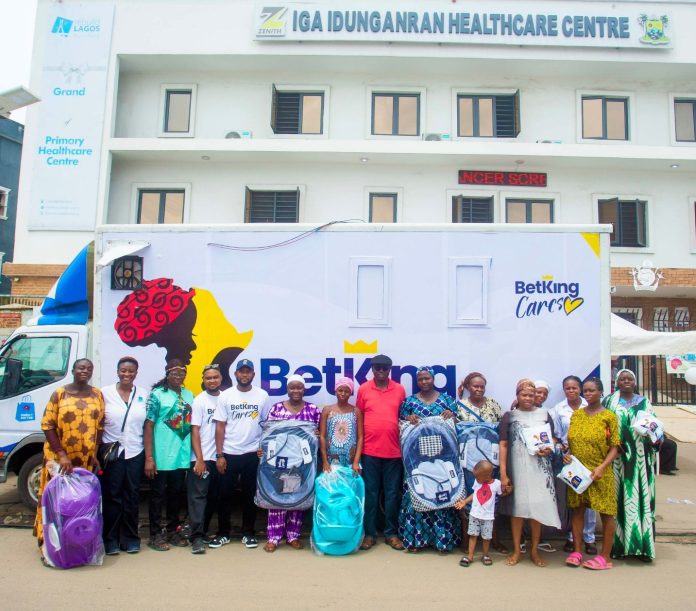
BetKing Cares Brings Hope To Mothers And Families Across Lagos, Osun, Abia, And Bayelsa

In the busy corners of Lagos Island, deep within Osun’s rural heartlands, in Abia’s underserved communities, and across the waters of Bayelsa, a silent cry for help had echoed for too long. A cry from mothers—expectant, anxious, and often unseen—navigating the journey of pregnancy without access to even the most basic care.

This year, that cry was heard.

Through its annual BetKing Cares CSR initiative, themed “Month of Good,” BetKing brought light and compassion to where it was needed most. From May 17 to June 17, 2025, the campaign moved beyond aid—it became a lifeline.

One of the campaign’s most powerful interventions was in maternal healthcare. In communities like Iga Idungaran Primary Health Centre in Adeniji, Lagos Island, BetKing delivered more than just supplies. They delivered safety, reassurance, and dignity. Over 500 pregnant women—some visiting a health center for the very first time—received prenatal consultations, essential medication, nutrition packs, and hygiene kits.

In areas where hospitals are distant dreams and midwives are few, BetKing deployed mobile clinics—moving units of healing—offering consultations, screenings, and treatment right at the doorsteps of these communities. The mobile clinics became more than vehicles; they became symbols of care showing up, uninvited but needed.

Alongside medical care, food packs were shared with thousands of families, and pre-loved clothing—carefully sorted and donated by BetKing staff—found new homes with people whose only ask was to be remembered.

Speaking from one of the outreach locations, Gossy Ukanwoke, Managing Director of KingMakers and CEO of BetKing, said:

“Every mother deserves to feel safe. Every family deserves dignity. That’s what the ‘Month of Good’ means to us—being present where we’re needed, not just where business takes us. This is who we are.”

And truly, this is who BetKing is becoming. Beyond entertainment, beyond the odds, is a heart committed to real impact—to stepping into gaps the world too often overlooks.

Since its inception, BetKing Cares has reached over 40 communities across Nigeria’s six geopolitical zones. But the real measure isn’t in numbers. It’s in the smiles of relieved mothers, the tears of gratitude, the thank-you whispered between breaths, and the hope that maybe—just maybe—someone cares.

BetKing continues to shape the future of sports entertainment in Africa—but with every campaign, it proves that true leadership starts with showing up for people when they need it the most.

BizWatchNigeria.Ng
Privacy Overview

This website uses cookies so that we can provide you with the best user experience possible. Cookie information is stored in your browser and performs functions such as recognising you when you return to our website and helping our team to understand which sections of the website you find most interesting and useful.