








Home Blog Page 158

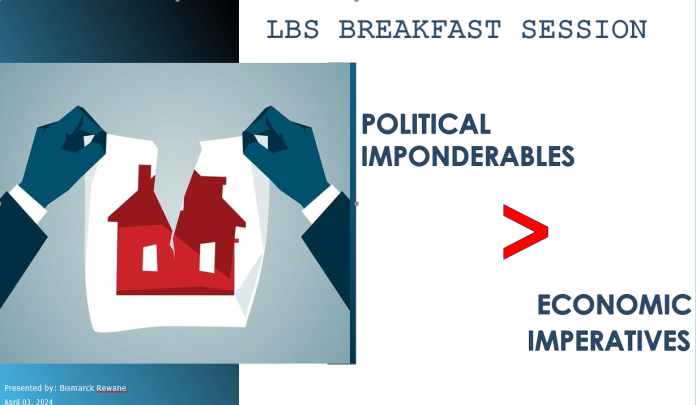
LBS July 2025 Breakfast Session: Economic Pressure Persists Despite Averting Crisis

The Lagos Business School’s July 2025 Breakfast Session, led by renowned economist Bismarck Rewane, provided an incisive review of Nigeria’s economic landscape, painting a picture of modest progress amid lingering volatility. While a full-blown crisis appears to have been averted, Rewane’s presentation warned that Nigeria remains under sustained economic pressure.

A Narrow Escape: Projections vs. Outcomes

Rewane began by comparing macroeconomic projections from June with actual outcomes in July. Inflation was forecasted to decline marginally and did — falling to 22.97%, close to the 23.15% forecast. The naira also showed signs of resilience, gaining 1.5% to trade within ₦1,565/$–₦1,600/$. However, Nigerian oil production lagged behind expectations, dipping to 1.45mbpd against the projected 1.5mbpd.

Global Volatility, Local Vulnerability

On the global front, the S&P 500 surged 13.6% YTD to an all-time high, while the U.S. dollar weakened, hitting a 10-year low. Gold prices soared, reflecting investors’ flight to safety. Meanwhile, the oil market saw dramatic swings — rising to $81pb before retreating to $67pb by July 2.

Nigeria, like many developing economies, remains sensitive to such shifts. The naira’s apparent stability against a falling dollar offers only a “mirage of appreciation.” Nonetheless, reduced external debt exposure and improved trade ties with China are expected to bolster local industries sourcing raw materials from Asia.

Domestic Landscape: A Mixed Bag

Nigeria’s Q1 2025 GDP growth slowed to 3.4% from 3.84% in Q4 2024. Inflation fell slightly, and FAAC allocations remained relatively flat at ₦1.66trn. The monetary policy rate (MPR) remained unchanged at 27.5%, but questions about its effectiveness persisted, especially since NTB rates remain significantly lower.

Other key highlights:

  • Diesel rose to ₦1,050/litre, while PMS dropped to ₦840/litre at ex-depot.
  • Corporate profitability increased in Q2, buoyed by reduced FX losses.
  • Money supply growth declined from 23.9% in March to 19.92% in May, indicating tighter monetary conditions.

Dangote Refinery & Fertilizer Plant: Nigeria’s Twin Game Changers

One of the standout themes was the impact of the Dangote Refinery. By launching a ₦720bn logistics operation with 4,000 CNG trucks and offering credit facilities for bulk buyers, the refinery has helped reduce fuel scarcity and stabilize PMS prices nationwide. It’s also expected to eliminate bridging costs and promote uniform pricing.

In the same vein, the Dangote Fertilizer Plant — the largest in Africa — is projected to generate over $2.5bn annually in forex. The company also plans to list on the Nigerian Stock Exchange by year-end, potentially opening up investor access to this strategic sector.

Investor Sentiment & Market Outlook

The NGX recorded a 16.6% YTD gain, outperforming global peers like the S&P 500 and SSE. Despite regulatory pressure on banks, investors are expected to flock to equities as fixed-income yields decline. Companies in telecoms, FMCG, and aviation stand to benefit the most.

Key Policy Shifts

  • The CBN suspended bank dividends and foreign investments for lenders under regulatory forbearance.
  • New tax reforms introduced development levies, crypto taxes, and digital service taxes.
  • Excise duties on “sin goods” were increased, and VAT reforms maintained exemptions to encourage consumer spending.

Projections for July 2025

  • Inflation to hover between 22.4% and 22.8%
  • Naira to trade between ₦1,550/$–₦1,600/$
  • Oil prices expected to stay between $62–$65pb
  • NGX to rally further as Q2 results are published
  • Airline load factors to rise due to stable forex and discounted international fares
  • PMS pump prices could fall to ₦880/litre

Conclusion

Despite avoiding an economic breakdown, Nigeria’s road to recovery is paved with uncertainty. Fiscal discipline, structural reforms, and a proactive monetary strategy will be essential in transforming stability into sustainable growth. With global headwinds and domestic complexities converging, Rewane’s message was clear: The fog has lifted, but the runway remains slick.

📎 Click here to download the full LBS July 2025 PDF Presentation
NAHCON Begins Preparations For 2026 Hajj

NAHCON

The National Hajj Commission of Nigeria (NAHCON) has commenced preparations for the 2026 Hajj following the successful completion of this year’s pilgrimage. Speaking to journalists in Kano on Thursday after returning from Saudi Arabia, NAHCON Chairman, Alhaji Abdullahi Pakistan, emphasised the need for early planning, noting that Saudi authorities have directed countries to finalise their logistics well ahead of the exercise.

“We have received clear instructions from the Saudi authorities that they will not wait for any country to finalise arrangements late. They want all logistics concluded early,” Pakistan said.

He disclosed that NAHCON is seeking approval to announce the 2026 Hajj fare soon and appealed to Nigerians intending to perform the pilgrimage to begin early registration.

Pakistan expressed gratitude to Almighty Allah for the successful 2025 Hajj, noting that the safe return of pilgrims was a blessing. He also appreciated the Federal Government, particularly President Bola Tinubu and Vice President Kashim Shettima, for their unwavering support throughout the exercise.

“The Vice President, under whose office we work directly, followed our progress step by step. Their guidance and support gave us the strength to work as one team, speak with one voice, and achieve the results we are celebrating today,” he said.

He noted that feedback from pilgrims and members of the National Assembly’s Committees on Foreign Affairs and Hajj Affairs attested to the success of the 2025 operation.

Pakistan also commended the Nigerian media for effectively communicating NAHCON’s messages to the public, acknowledging their consistent support throughout the exercise.

He emphasised that the success of the 2025 Hajj was a result of divine blessing and collective effort, adding that NAHCON had learned valuable lessons that would guide preparations for the 2026 exercise.

“Insha Allah, we intend to deliver a better and more efficient operation in 2026,” he assured.

Pakistan urged intending pilgrims to begin registration promptly, noting that Saudi authorities plan to conclude all preparations for next year’s Hajj within the next two to three months to ensure a seamless and well-organised pilgrimage.

Dollar To Naira Exchange Rate For 11th July 2025

Dollar To Naira Exchange Rate Today (Thur. July. 20, 2023)

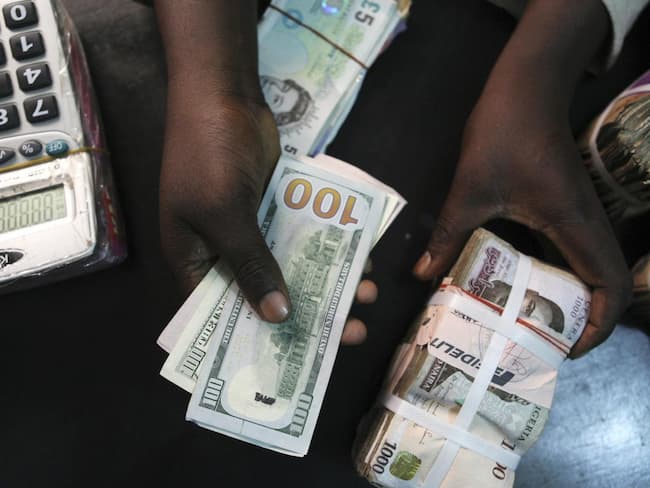
The exchange rate between the Naira and the US dollar, according to the data released on the FMDQ Security Exchange, the official forex trading portal, showed that the naira closed at 1555.00 per $1 on Friday, July 11th, 2025. The naira traded as high as 1520.00 to the dollar at the investors and exporters (I&E) window on Thursday.

How much is a dollar to naira today in the black market?

Dollar to naira exchange rate today black market (Aboki dollar rate):

The exchange rate for a dollar to naira at Lagos Parallel Market (Black Market) players buy a dollar for ₦1540 and sell at ₦1555 on Friday, 11th July, 2025, according to sources at Bureau De Change (BDC).

Please note that the Central Bank of Nigeria (CBN) does not recognize the parallel market (black market), as it has directed individuals who want to engage in Forex to approach their respective banks.

Dollar to Naira Black Market Rate Today

Dollar to Naira (USD to NGN)Black Market Exchange Rate Today
Buying Rate₦1540
Selling Rate₦1555

Dollar to Naira CBN Rate Today

Dollar to Naira (USD to NGN)CBN Rate Today
Highest Rate₦1531
Lowest Rate₦1520

Please note that the rates you buy or sell forex may be different from what is captured in this article because prices vary.

NELFUND Resumes Students’ Upkeep Disbursements

The Nigerian Education Loan Fund (NELFUND) has resumed the disbursement of upkeep allowances to student beneficiaries who have updated their bank account details from digital wallet platforms to conventional commercial bank accounts.

In a statement on Friday, the Director of Corporate Communications, Oseyemi Oluwatuyi, described the development as a major step in resolving earlier disbursement delays.

“Over 3,600 students who previously registered with digital-only banking platforms have now successfully received their backlog of upkeep payments after updating their details on the NELFUND portal,” Oluwatuyi said.

He thanked students for their patience during the delay, noting that their cooperation made the resolution possible.

For students still awaiting payment while using digital wallet accounts, NELFUND advised raising a support ticket on the official portal to request access for updating bank details. Alternatively, students can report through their institution’s IT office, which will compile and forward the cases to NELFUND for resolution.

The fund reiterated its commitment to ensuring that no eligible student is left behind and noted that the update process is part of broader efforts to improve efficiency, transparency, and student-focused service delivery.

“We urge all students to engage only through official NELFUND channels and to support peers who may need assistance with the update process,” the statement added.

NELFUND assured students of its continued commitment to providing a reliable and inclusive student loan system to support their academic journeys.

WAPCo, Government Agencies Strengthen Partnership For Cross-Border Gas Distribution

WAPCo

The West African Gas Pipeline Company Limited (WAPCo) has deepened its collaboration with federal and state government agencies to enhance cross-border gas distribution across West Africa.

During a recent stakeholder meeting in Abuja, agencies within Nigeria’s oil and gas sector reaffirmed their commitment to improving WAPCo’s operational capacity for distributing gas across Nigeria, Benin, Togo, and Ghana.

In a statement on Thursday, WAPCo noted that representatives from the Nigerian Midstream and Downstream Petroleum Regulatory Authority (NMDPRA), the Federal Ministries of Petroleum Resources and Environment, the Federal Inland Revenue Service (FIRS), the Nigeria Customs Service, the Nigeria Immigration Service, the National Inland Waterways Authority, environmental agencies from Lagos and Ogun States, the Nigerian Navy, and others convened to discuss digital transformation, regulatory reforms, and legislative alignment to strengthen WAPCo’s 691-kilometre pipeline operations.

WAPCo’s General Counsel, Simon Adamade, highlighted the company’s legal framework and its commitment to host communities, tracing WAPCo’s origins to a 1982 ECOWAS initiative that led to the 2003 treaty establishing the West African Gas Pipeline Project.

“The WAGP system is one of Africa’s most ambitious cross-border energy projects, comprising 691km of pipeline infrastructure stretching from Nigeria to Ghana,” Adamade stated.

He described the forum as a comprehensive engagement involving ministries, private sector stakeholders, traditional authorities, and security agencies, reflecting a shared vision for synergy and regional energy integration.

WAPCo emphasised its commitment to mutual development with host communities, noting that this partnership underpins its corporate social responsibility efforts aimed at promoting sustainable growth and improving living standards.

The company explained that its pipeline system, which includes a 569-kilometre offshore segment, has evolved from a unidirectional flow to a dynamic, bi-directional network meeting commercial and community needs across the region. Key infrastructure supporting this system includes the Lagos Beach Compressor Station, the Tema Regulation and Metering Station in Ghana, and the Itoki Regulation and Metering Station in Nigeria.

Adamade also provided updates on ongoing legislative amendments to the West African Gas Pipeline Act across member states, aimed at enhancing operational efficiency and long-term viability. The proposed amendments address critical fiscal issues, including licensing by the West African Gas Pipeline Authority, with engagements ongoing across relevant ministries and parliaments.

Representing the Executive Chairman of FIRS, Zach Adedeji, the Deputy Director and Head of Oil and Gas Audit, Lebi Victoria, noted that revenue collection processes have been fully digitised to benefit operators like WAPCo, while also pledging to streamline fiscal procedures to support the company’s operations.

Similarly, Steve Ayuba, Senior Technical Adviser to the Chief Executive of NMDPRA, announced that licensing processes have been automated, with the agency now managing all enquiries through digital platforms to enhance responsiveness and efficiency.

WAPCo concluded that the outcomes of the forum align with ECOWAS’s broader agenda for regional energy integration and economic cooperation, positioning the company as a key driver of sustainable energy development across West Africa.

Top 7 Things Business-Class Drivers Will Love About the All-New 2025 Mazda CX-5

If you’ve ever sat behind the wheel of a Mazda CX-5, you know it’s more than just a car—it’s a statement. And for professionals who live their lives on tight schedules, in high-stakes meetings, and with a taste for subtle luxury, the latest 2025 edition brings some serious upgrades that go far beyond the badge.

Now freshly debuted for the European market, and rolling into showrooms later this year, the third-generation CX-5 doesn’t shout for attention. It glides into the conversation with quiet confidence—like that seasoned exec who knows his worth without needing to say much.

Here’s what business-class drivers will find impossible to ignore about the new CX-5.

Pictures Of The New Mazda CX-5 2025

1. First Impressions Matter—And This One’s Got Presence

The moment you see it, you get that feeling. Mazda hasn’t messed around with the DNA of the Soul of Motion design philosophy. It still carries that clean, athletic posture that turns heads in city traffic, but now it looks just a bit more self-assured.

Sleek body lines, redesigned LED lighting, and the sort of refined detailing that make it perfectly at home parked in front of a five-star hotel or the headquarters of a Fortune 500 company. It’s not trying to be flashy—it just is.

Think of it as the car version of a tailored navy suit. Understated, powerful, timeless.

2. Cabin Goals: Where Comfort Meets Clever Engineering

Step inside and it becomes immediately clear—Mazda built this for people who think about the experience of driving, not just the logistics.

They’re calling it “New Generation Emotional Daily Comfort”—a fancy phrase, sure, but you feel it. There’s a tactile pleasure in the materials, an intentionality in the layout. From buttery-soft upholstery to smart tech placement, it’s less cockpit, more luxury workspace.

And let’s be honest: between Lagos traffic or your next Abuja client meeting, you’re going to spend a fair amount of time in here. Might as well enjoy it.

3. That Jinba-Ittai Magic—Still Intact, Still Thrilling

Mazda’s famous “Jinba-Ittai” concept—that sense of horse and rider moving as one—makes a full return here. But now, it’s got an updated suit of armor.

Under the hood, the e-SKYACTIV G 2.5-liter engine paired with Mazda’s mild hybrid system brings smooth acceleration with sharper fuel efficiency. The six-speed automatic SKYACTIV-DRIVE transmission plays nicely with traffic-heavy cities or open highways alike. It’s responsive, not jittery.

Handling? Tight. Steering? Crisp. Ride comfort? Quiet enough to take a client call via Bluetooth without shouting over engine noise.

4. Smart Enough to Know What You Need (Before You Do)

This is where things get interesting.

Mazda’s newly enhanced Human Machine Interface (HMI)—yes, it’s a mouthful—is all about intuitive interaction. Translation? You don’t have to fumble around or take your eyes off the road to adjust settings, use navigation, or manage calls.

Add in advanced driver-assistance systems (ADAS), and it becomes less of a question of if you’re safe, and more a question of how seamlessly it ensures that. Lane-keeping, smart braking, adaptive cruise—yes, they’re all here, and they work without overstepping.

If you’ve ever had tech interrupt your flow while trying to beat rush hour to a meeting, you’ll appreciate how unintrusive this setup is.

5. Room to Move, Space to Think

Professionals need room. Whether it’s legroom for that post-meeting stretch, trunk space for your briefcase and travel bag, or comfortable seating for colleagues or family—it matters.

Mazda’s given this model a subtle but noticeable increase in interior spaciousness. That includes a quiet cabin that keeps the outside world… well, outside.

No rattles, no wind hiss at high speed, no awkward middle-seat compromises. Just a smooth, serene space for everything from quiet reflection to on-the-go voice memos.

6. Connected Like You Mean Business

Here’s the thing: connectivity isn’t a luxury anymore. It’s a requirement.

The 2025 CX-5 comes loaded with enhanced connectivity features, including integration with updated mobile apps that work hand-in-hand with your schedule. From scheduling reminders to real-time traffic alerts, it’s like having a digital assistant stitched right into your dashboard.

And for those with long commutes or intercity trips, real-time infotainment matters. The upgraded touchscreen, seamless smartphone sync, and voice-command features work the way they should—without frustrating lags or clunky interfaces.

7. Reliable Performance That Won’t Let You Down (Even If Others Do)

Look, life can throw curveballs. Missed flights, last-minute reschedules, clients who ghost. But your car? That shouldn’t be part of the chaos.

The CX-5 has earned its stripes globally—over 4.5 million units sold, remember?—and the 2025 model builds on that legacy with even greater reliability and drive predictability. It’s engineered to handle the grind, whether you’re navigating unpredictable roads or taking that weekend getaway to recharge.

With the SKYACTIV chassis and suspension system (MacPherson struts in front, multi-link rear), you’re looking at stability even when the roads don’t cooperate. And let’s be real: in many Nigerian cities, they don’t.

So, Is the New CX-5 Worth It?

Let’s not mince words. For professionals looking for a stylish, intelligent, and deeply comfortable crossover SUV that doesn’t require compromise, the new Mazda CX-5 checks all the right boxes.

It’s not just about getting from A to B anymore. It’s about how you get there—and how you feel along the way. Whether you’re a young executive making your mark or a seasoned professional who values performance with personality, this ride deserves a spot on your radar. You work hard. Your car should, too.

Mazda Unveils Next-Generation CX-5 Crossover SUV For European Market Launch In 2025

Mazda Motor Corporation has officially revealed the next-generation CX-5 crossover SUV through its European division, Mazda Motor Europe. The long-anticipated unveiling took place on July 10, 2025, with the new model slated for retail availability across Europe by the end of the year.

The CX-5, a vital component of Mazda’s global lineup, originally made its debut in 2012 as the first vehicle fully designed under the brand’s acclaimed “KODO – Soul of Motion” design language. This philosophy, combined with SKYACTIV Technology, revolutionized Mazda’s vehicle design and performance standards, emphasizing both spirited driving and environmental efficiency.

Over the years, the CX-5 has become a flagship model for the company, earning widespread customer acclaim and surpassing global cumulative sales of 4.5 million units across more than 100 countries. Its widespread appeal lies in its refined styling, a drive dynamic that embodies “Jinba-Ittai”—the seamless unity between car and driver—and a meticulously crafted interior that elevates everyday usability.

The all-new 2025 Mazda CX-5 ushers in the model’s third generation, introducing a refined concept dubbed “New Generation Emotional Daily Comfort.” This vision is aimed at deepening the emotional bond between driver and vehicle, while enhancing the comfort and versatility required for modern-day urban and suburban life.

Mazda’s designers and engineers have carried forward the essence of the “Soul of Motion” and the immersive Jinba-Ittai driving experience, while integrating a suite of updates to interior space, ride quality, and cabin noise reduction. The vehicle is specifically engineered to deliver comfort and convenience in various driving scenarios—from daily commutes and school runs to weekend getaways and shopping trips.

Among the technological highlights of the next-gen CX-5 is its all-new Human Machine Interface (HMI), designed to create an intuitive and seamless interaction between driver and vehicle. This is complemented by enhanced connectivity options, including new app integrations, and significant upgrades to its Advanced Driver-Assistance Systems (ADAS). These enhancements aim to elevate driving safety, convenience, and enjoyment for all occupants.

Set to hit dealerships across Europe by the end of 2025, the updated CX-5 will gradually be introduced into other international markets throughout 2026.

European-Spec Highlights of the 2025 Mazda CX-5:

  • Dimensions: 4,690mm (length) x 1,860mm (width) x 1,695mm (height)
  • Powertrain: e-SKYACTIV G 2.5-liter direct-injection petrol engine with Mazda M Hybrid mild-hybrid system
  • Transmission: 6-speed SKYACTIV-DRIVE automatic gearbox
  • Suspension: MacPherson strut (front) and multi-link (rear) setup
  • Seating: Capacity for five passengers

The 2.5-liter gasoline engine offered for the European version is paired with Mazda’s M Hybrid system, promoting a smoother, more fuel-efficient ride. This hybrid technology is also planned for deployment in key markets such as Japan and others. Looking ahead, Mazda has announced plans to introduce its proprietary “SKYACTIV-Z” combustion system paired with an all-new hybrid setup by 2027.

Mazda affirms its continued commitment to delivering the “Joy of Driving” as a core principle under its “Radically Human” brand value. With the introduction of the 2025 CX-5, the automaker aims to bring “Joy of Living” to customers’ everyday journeys through emotionally resonant, innovative, and human-centered mobility solutions.

Nigeria, UAE Forge Strategic Digital Alliance To Empower Youth With Global Tech Skills

BREAKING: UAE Lifts Visa Ban On Nigeria

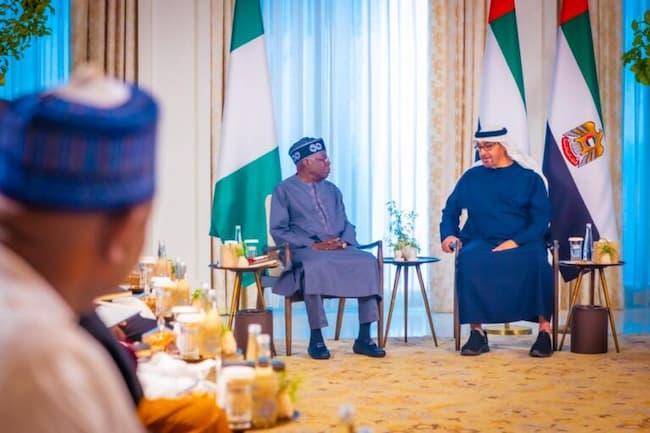
In a landmark bilateral initiative, the Nigerian government has entered into a strategic partnership with the United Arab Emirates (UAE) aimed at equipping millions of Nigerian youth with transformative digital capabilities, entrepreneurial education, and access to global innovation platforms.

The collaboration, led by Nigeria’s Minister of Youth Development, Mr. Ayodele Olawande, is poised to fast-track the country’s digital economy objectives and aligns with President Bola Tinubu’s broader vision to digitally empower the next generation.

During a diplomatic visit to the UAE, Olawande engaged with the Sharjah Entrepreneurship Center (Sheraa) to initiate a collaborative framework under the auspices of the Nigerian Youth Academy (NiYA), a flagship youth development programme.

According to a statement issued in Abuja by the Director of Information and Public Relations, Mrs. Omolara Esan, the NiYA initiative aims to upskill over seven million Nigerian youths in digital literacy, civic leadership, and entrepreneurship, transforming them into global contributors in the knowledge economy.

Highlighting the synergy between both nations, Olawande stated, “Sheraa shares a vision aligned with our goal of unlocking the innovative and entrepreneurial spirit of Nigerian youth. This partnership will enable Nigerian talent to thrive in the global tech landscape.”

As part of the agreement, Nigeria will host a GITEX-powered National Digital Innovation Showcase from September 1 to 4, 2025. The event will spotlight 300 high-potential Nigerian startups and is being organised in collaboration with the National Information Technology Development Agency (NITDA) and its Director-General, Dr. Inuwa Abdullahi.

This landmark showcase will offer Nigerian startups unprecedented access to international investors, global markets, and technological mentorship.

On the domestic front, Olawande revealed that NiYA had already enrolled over 210,000 youth participants. The programme is currently establishing Greenhouse Centres in each of Nigeria’s 774 local government areas, serving as digital empowerment hubs for entrepreneurship, tech training, and access to innovation infrastructure.

The UAE visit also included high-level discussions with H.E. Omar Sultan Al Olama, the UAE Minister of State for Artificial Intelligence, Digital Economy, and Remote Work Applications. Key topics explored included joint initiatives in AI education, business process outsourcing (BPO), startup acceleration, and remote work development—all vital to Nigeria’s youth employment strategy.

“Our aim is to turn Nigeria’s youth into producers of technology and innovation, not just consumers,” Olawande affirmed, emphasizing the administration’s commitment to building sustainable international partnerships that accelerate inclusive digital growth.

UBA Market Capitalisation Hits ₦1.625 Trillion Amid Investor Confidence Surge

FG Probes UBA, Consulting Firm Over Data Breach

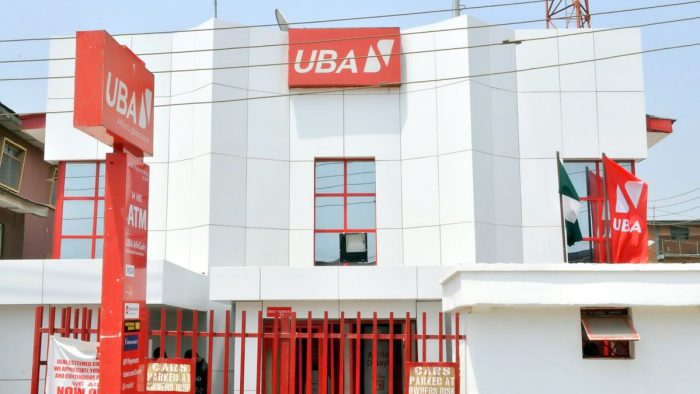
United Bank for Africa (UBA) Plc witnessed a significant boost in its market valuation on the Nigerian Exchange, climbing by 10% to reach a new high of ₦1.625 trillion. This surge followed a robust rally driven by renewed investor appetite for the bank’s shares.

UBA’s stock price soared to ₦39.60, up from ₦36 at the previous trading session, highlighting a growing optimism among market participants.

According to equity analysts, the sharp rally was influenced by heightened investor interest following a strategic engagement at UBA’s headquarters in Lagos. The meeting, which brought together CEOs from the bank’s African subsidiaries, reportedly reinforced investor confidence in the group’s Pan-African expansion strategy.

Trading data from the Nigerian Exchange (NGX) revealed that over 64.5 million units of UBA shares were exchanged on the floor of the market, amounting to a transaction value of ₦2.52 billion. Market insiders attribute the buying momentum to anticipatory positioning ahead of the bank’s second-quarter earnings report.

UBA’s management, in its half-year corporate briefings, reaffirmed its commitment to expanding its retail banking footprint across key African markets, with strategic investments aimed at scaling operations and customer engagement.

The ongoing accumulation of banking stocks by investors reflects bullish sentiments across the sector, as stakeholders look to capitalise on potential interim dividends and stable financial results.

While some market watchers predict that Nigeria’s interest rates may ease in the coming months, they note that UBA’s broad presence in economically significant African markets could offset any margin pressures arising from a lower interest rate regime.

As expectations build ahead of the Q2 earnings season, UBA remains one of the standout banking stocks to watch in 2025.

FG Opens New FGN Savings Bonds With Up To 16.762% Interest Rate

FGN Bond For Jan. 2021 Oversubscribed

The Debt Management Office (DMO) has announced the launch of two new Federal Government of Nigeria (FGN) Savings Bonds, now available for public subscription at ₦1,000 per unit. This latest issuance presents Nigerians with an opportunity to invest in government-backed securities with competitive interest rates and flexible tenure.

According to a statement released by the DMO in Abuja on Wednesday, the bond offerings include a two-year FGN Savings Bond maturing on July 16, 2027, which carries an annual interest rate of 15.762%. A second offering, maturing on July 16, 2028, offers a three-year tenure with a higher annual interest rate of 16.762%.

The subscription window for both bonds opens on July 7, with a closing date set for July 11. Settlement will occur on July 16, 2025. Interest (coupon) payments are scheduled quarterly—on October 16, January 16, April 16, and July 16—throughout the bond period.

The DMO further disclosed that the bonds are priced at ₦1,000 per unit, with a minimum subscription of ₦5,000 and in multiples of ₦1,000 thereafter. The upper limit for individual subscriptions is set at ₦50 million. Interest payments will be made semi-annually, while the principal amount will be repaid in full at maturity.

“These FGN Savings Bonds are fully backed by the creditworthiness of the Federal Government of Nigeria,” the statement reads. “They are secured against the government’s general assets and qualify as approved investment instruments under the Trustee Investment Act.”

The bonds also qualify as government securities for tax exemption purposes under both the Company Income Tax Act and the Personal Income Tax Act. This status makes them particularly attractive to pension fund administrators and institutional investors. Additionally, they are listed on the Nigerian Exchange Limited (NGX), enabling ease of trade and liquidity.

The DMO emphasized that the bonds are recognized as liquid assets when calculating liquidity ratios for financial institutions, thus enhancing their value for banks and other financial entities looking to meet regulatory requirements.

NGX Market Capitalisation Soars To ₦78.73 Trillion As Investors Gain ₦1.76 Trillion

Stock Exchange Closes Trading Week With N30bn Gain

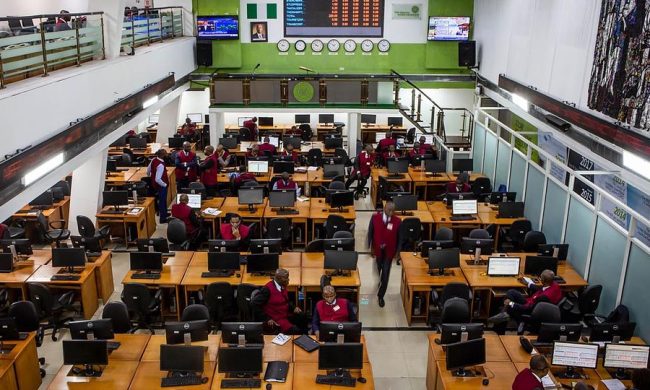
The Nigerian Exchange (NGX) continued its bullish streak on Thursday, reaching a historic milestone as market capitalisation surged to ₦78.73 trillion. This growth, driven by investor confidence and strategic listings, resulted in a remarkable ₦1.76 trillion increase in market value.

Despite a mix of positive and negative movements in performance indicators, the overall sentiment remained upbeat, with the All-Share Index (ASI) jumping by 2.01%, or 2,457.13 points, to close at a record high of 124,446.80.

The rally was significantly influenced by the fresh listing of Guaranty Trust Holding Company (GTCO) Plc’s public offer—comprising 2,288,250,000 ordinary shares priced at ₦70.00 per share. While this listing pushed market capitalisation higher, it also introduced a temporary divergence between the ASI and market value.

Market analysts and stockbrokers noted that investor enthusiasm remains elevated, marking the seventh straight day of positive performance at the local bourse. Strong buying pressure was observed across key sectors including banking, insurance, consumer goods, oil & gas, and industrials.

According to market data, trading activity rose sharply, with the total trade volume and value increasing by 44.05% and 77.62% respectively. A report from Atlass Portfolio Limited noted that approximately 1.28 billion shares worth ₦27.73 billion were exchanged in 27,875 transactions.

In terms of trade volume, ACCESSCORP led the market with 13.62% of all shares traded, followed by AIICO (6.41%), JAPAULGOLD (5.79%), UBA (5.04%), and FCMB (4.95%). ACCESSCORP also emerged as the top stock by trade value, accounting for 14.38% of the total.

Several equities saw impressive price gains, with FTNCOCOA, HMCALL, UBA, UPDC, CAVERTON, and CONHALLPLC each rising by 10.00%. Other top gainers included REDSTAREX (+9.99%), ABCTRANS (+9.97%), CAP (+9.96%), ELLAHLAKES (+9.95%), and AIICO (+9.95%).

However, ten equities ended the day in the red. NEIMETH topped the losers’ chart, shedding 9.91% in value. Other decliners were LEGENDINT (-9.88%), CADBURY (-6.22%), LIVESTOCK (-5.67%), VFDGROUP (-2.86%), and DANGSUGAR (-0.19%).

The market closed with strong breadth, recording 70 advancing stocks compared to just 10 decliners. Sector performance also ended on a high, with all five major sectors covered by Atlass Portfolio Limited posting gains.

The insurance sector led the rally with a 3.96% increase, followed by the banking sector which gained 3.86%. The consumer goods sector rose by 1.15%, while the industrial and oil & gas sectors appreciated by 0.25% and 0.04% respectively.

Dangote: NNPC Refineries May Never Work Again

Aliko Dangote has expressed doubt over the possibility of Nigeria’s government-owned refineries ever returning to full operations, despite years of costly rehabilitation efforts. Speaking while hosting members of the Global CEO Africa from the Lagos Business School after a tour of the Dangote Petroleum Refinery in Lekki, Lagos, Dangote said the state-owned Port Harcourt, Warri, and Kaduna refineries, under the management of the Nigerian National Petroleum Company Limited (NNPC), have consumed up to $18 billion without results.

He recalled that in 2007, his consortium acquired the refineries shortly before the end of President Olusegun Obasanjo’s administration but had to return them after President Umar Yar’Adua’s government reversed the sale following pressure from NNPC management, who claimed the facilities were sold cheaply and would be revived.

“The refineries we bought before were doing about 22 per cent of PMS. We had to return them to the government because there was a change of government. The managing director at that time convinced President Yar’Adua that the refineries would work. They said they were given to us as a parting gift or so,” Dangote said.

“As of today, they have spent about $18 billion on those refineries, and they are still not working. I don’t think, and I doubt very much, if they will ever work,” he added.

Dangote likened the continuous turnaround maintenance efforts to attempting to modernise a 40-year-old car with new technology while its body remains unable to handle the upgrades.

His comments echo earlier concerns raised by former President Obasanjo, who noted that international oil companies, including Shell, once declined to operate the refineries when approached, acknowledging their unviable state. Obasanjo had warned that the refineries would end up as scrap due to decades of mismanagement and corruption within the system.

In recent months, calls for the privatisation of government-owned refineries have intensified, particularly after the shutdown of the old Port Harcourt refinery six months after it was declared operational, and the Warri refinery, which was shut down a month after reopening.

Industry groups, including the Manufacturers Association of Nigeria and modular crude refiners, have described the facilities as a financial drain on the economy, urging the government to sell them off and redirect resources toward supporting modular refinery projects to enhance local refining capacity.

Despite significant funds spent over the years on maintaining and rehabilitating the refineries, including $1.4 billion approved for the Port Harcourt refinery in 2021, and hundreds of millions earmarked for Warri and Kaduna refineries, the facilities remain unproductive.

The Dangote Refinery, with a 650,000 barrels-per-day capacity, has begun operations with over 50 per cent of its output dedicated to petrol production, a figure far higher than the government refineries, which only allocated 22 per cent of their capacity to petrol.

Industry analysts note that the operationalisation of the Dangote Refinery could significantly reduce Nigeria’s fuel import dependence, while the government-owned refineries continue to drain resources with little to show in terms of output.

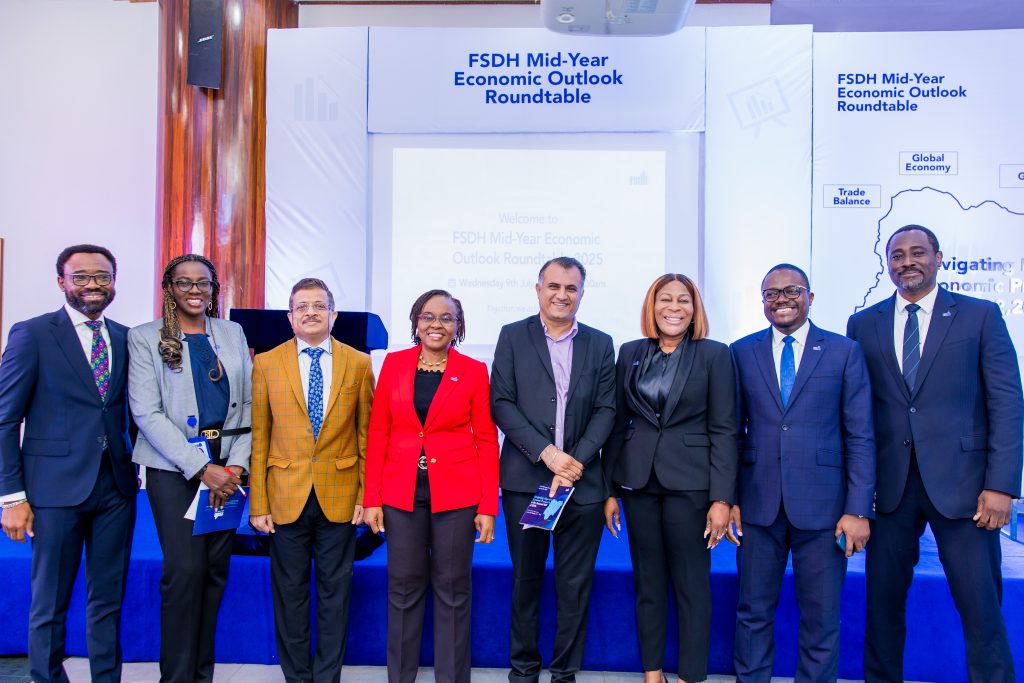
FSDH Releases Nigeria’s 2025 H1 Macroeconomic Report: Nigeria Navigates A Fragile Global Landscape With Signs Of Stability And Reform Momentum

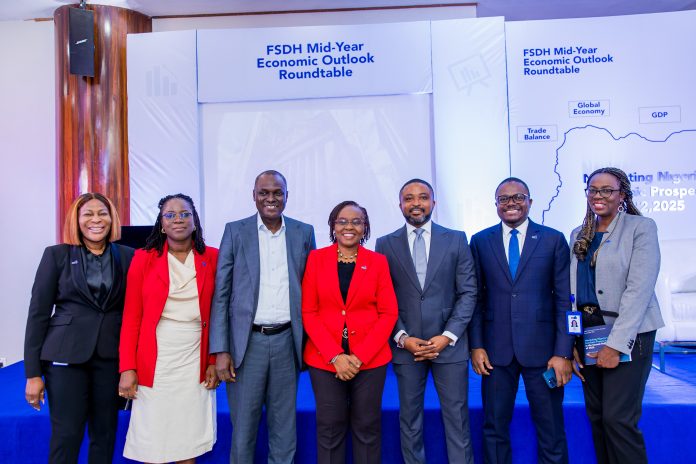
FSDH Merchant Bank has released its Nigeria Macroeconomic Report for the First Half of 2025, offering critical insights into the global and domestic economic environment at its Mid-Year Economic Outlook Roundtable held on Wednesday, July 9, 2025. Titled “Balancing on the Edge in a Fragile World,” the report dissects the complex interplay of global disruptions and Nigeria’s economic performance, while providing a forward-looking projection for H2 2025.

The report identifies global trade tensions, geopolitical unrest in the Middle East, and fragile capital flows as the dominant forces shaping economic outcomes in the first half of the year. Despite these headwinds, Nigeria showed signs of resilience, underpinned by expanding non-oil exports, moderating inflation, and improving investor sentiment.

Speaking at the event, Bukola Smith, Managing Director and CEO of FSDH Merchant Bank, emphasized the importance of resilience and reforms. “Nigeria has demonstrated encouraging signs of macroeconomic stability in the face of global headwinds. Our PMI data suggests an expanding economy, inflation is decelerating, and exchange rate reforms are strengthening market confidence. However, sustaining this progress requires deep structural reforms, especially in energy, trade, and fiscal management.”

Key Highlights from the H1 2025 Report:

Global Risks, Local Impact: The Israel-Iran conflict and a renewed tariff war under US President Donald Trump have triggered global uncertainty, with the IMF cutting global growth projections. Oil price volatility and trade disruptions are shaping Nigeria’s external outlook.

Inflation Moderates: Following a revision in the Consumer Price Index methodology, inflation dropped from 24.5% in January to 23% in May 2025.

Exchange Rate Reforms Working: The Naira showed relative stability, trading within a narrower band. FX reforms and CBN’s transparency have restored investor confidence.

Positive Growth Indicators: Though official GDP data is pending, the Purchasing Managers’ Index (PMI) stayed above the 50-point threshold throughout H1, reflecting economic expansion across agriculture, industry, and services.

Oil Revenue Pressures: Despite a decline in oil’s share of exports to 62.9% (from 81% in 2024Q1), crude oil production remains below budget benchmarks. This shortfall may affect fiscal performance unless addressed.

Capital Market Strength: The NGX All Share Index (NGX-ASI) returned 16.6% YTD, outperforming many global peers, while foreign portfolio investments surged to US$5.03 billion in Q1.

Tax Reforms Introduced: Nigeria passed four major tax laws in June, aiming to harmonize tax administration, increase compliance, and improve equity. These are expected to raise the tax-to-GDP ratio from 10% to 18% in three years.

According to Hakeem Muhammed, Executive Director, Global Markets and Institutional Banking, “Investor sentiment has begun to turn positive. Nigeria’s bond and T-bill markets are attracting renewed interest, and equity markets are gaining momentum. At FSDH, we understand that in times like this, clarity and partnership matter more than ever. While we can’t control global events or predict every market move, we remain committed to helping you navigate the complexity with perspective, precision, and purpose”

The report also noted cautious optimism in the bond and NT-Bills market, as yields softened in response to improved macro indicators, while oil sector stocks on the NGX continued to underperform due to global crude price pressures.

“With the MPR at 27.5%, prime lending rates currently exceed 30%, but projected downward trends in H2 2025 offer a more favourable outlook for debt-funded expansion and capital investments.” added Stella-Marie Omogbai, Executive Director, Corporate Banking and Branches, FSDH Merchant Bank. “Interest rates are expected to ease due to projections on MPC rates dropping to at least 27%, supported by fresh capital inflows in banking industry and reduced inflation concerns. FSDH, in partnership with DFIs, will continue to provide funding at competitive rates to help businesses grow”

Outlook for H2 2025:

The report projects that if oil production improves and inflation continues its downward trend, Nigeria may achieve GDP growth of 4.4%, inflation at 17.1%, and external reserves of US$44.3 billion, provided oil output and reforms align in a best-case scenario.

However, Nigeria must leverage current momentum to deepen economic diversification, accelerate reforms in the power and petroleum sectors, and maintain coordination between fiscal and monetary policy.

Skills Over Degrees: How New Employers Are Redefining Hiring

REVEALED: Here's How To Apply For UK Teaching Jobs

In Nigeria today, the classroom is no longer the only path to success. As degrees lose their dominance in hiring decisions, a new generation of young professionals is rising—not with certificates, but with skillsets sharpened by necessity, creativity, and resilience.

The Shifting Landscape of Employment in Nigeria

The change is clear that Nigeria’s evolving job market’s age-old emphasis on university degrees is giving way to a more practical criterion: skills. This shift is reshaping how young Nigerians prepare for employment and how forward-thinking employers now source talent, but  the question lingers: why are educational qualifications becoming less significant than the mastery of skills?

The Rise of Skill-Driven Youths

Nigeria is home to over 600,000 young creatives, many of whom are products of a broken educational system and a government that has failed to provide them with sustainable opportunities. In response, these young people have turned to skills like graphic design, video editing, ghostwriting, and more, not just to make ends meet, but to build livelihoods that are meaningful, profitable, and future-oriented.

As a result, employers are no longer focused on where applicants went to school, but rather on what they can do. “We now hire based on what applicants can do, not where they went to school,” has become a shared sentiment among today’s hiring managers.

A Return to Indigenous Learning Models

As Nigeria’s formal education system continues to struggle under the weight of outdated models and inconsistencies, young people are returning to a more intuitive and culturally resonant mode of learning: communal and hands-on. Unlike the rigid, Western-style education system, which often isolates learners and ignores local realities, Nigeria’s traditional learning approach is rooted in storytelling, oral knowledge-sharing, and collaboration. This resurgence in skills-based learning reflects a deeper ideological shift, one where young Nigerians are slowly shedding the imposed belief that success must be certified on paper.

Notable Example

Chibuzor Obiora left his job as a television news anchor in Lagos, he had no prior background in computer science, just a budding interest in tech. Through a talent accelerator, he learned to code and began building projects. Within months, he was working remotely for U.S.-based clients and earning in dollars, all without ever presenting a university degree.“All that mattered was what I could build,” he told Wired. “Not where I went to school.” Chibuzor’s journey is one of many that highlight the growing priority placed on what a person can do, not just what credentials they possess.

The Death of the Degree-Only Mindset

For years, Nigerian graduates were told that a university degree was a golden ticket to success. Today, that narrative is being dismantled. Employers now ask, “Can you do the job?” rather than “What’s your CGPA?” There is a quiet rebellion against the systems that once filtered applicants based solely on certificates and transcripts.

As Prof. Idris Bugaje puts it, “If you have a skill without even a degree, you can find a very good job. But if you have a Bachelor of Science or any other type of degree without skills, you will go nowhere.” The success of creatives like Kolawole Olanrewaju, Kelechi Amadi-Obi, and Steve Babeko reinforces this shift. Portfolios have become the new résumé; skillsets, the new qualifications.

The Future of Degrees

So, is there hope for paper qualifications? The answer is a cautious yes. Degrees are still relevant particularly in specialized professions like law, medicine, banking, engineering, and pharmacy. But for many other industries, particularly in the creative and digital space, practical ability outweighs academic pedigree.

The more pressing question is whether Nigeria is ready to reimagine its educational frameworks. Our ancestors learned through oral traditions, apprenticeship, and mentorship. If we fail to align our systems with our cultural strengths, we risk creating a generation of young people lost between the pull of purpose and the pressure of paper.

Call for Change: A System that Validates Creatives

It’s time to build a system that recognizes and validates Nigeria’s creative class:one that does not treat them as rebels for rejecting outdated molds. We must create space for creatives to thrive, to be seen as professionals, and to be respected for their contributions.

Success should no longer be defined by a degree alone, but by innovation, vision, and impact. The future belongs not just to doctors and engineers, but also to storytellers, coders, animators, and digital builders.

NCDMB Approves Over 440 Expatriate Positions In Nigeria’s Oil Sector

NCDMB

The Nigerian Content Development and Monitoring Board (NCDMB) has approved 448 expatriate quota slots for foreigners to work in Nigeria’s oil and gas industry in the first half of 2025, as the Federal Government intensifies efforts to achieve 70 per cent local content participation in the sector.

The approvals, covering January to June 2025, allow foreign experts to fill specialised roles where local capacity is unavailable, reflecting the industry’s continued dependence on foreign expertise despite ongoing local content reforms.

A breakdown shows that 246 expatriate quota (EQ) requests were approved in the first quarter, with 202 approvals in the second quarter, totalling 448 within six months. This represents an 18 per cent decline compared to 549 approvals issued by the board in the first three quarters of 2024. Additionally, 158 temporary work permits were granted within the period, while 319 EQ requests were rejected, indicating a stricter approach to protecting local jobs.

The approvals come amid concerns by stakeholders over the misuse of expatriate quotas, with allegations that multiple government agencies independently grant approvals. In March, the Petroleum and Natural Gas Senior Staff Association of Nigeria (PENGASSAN) clashed with Sterling Oil, accusing the company of breaching local content regulations by employing foreign nationals without due process—a dispute later resolved with a commitment to hire more Nigerians.

NCDMB Executive Secretary, Felix Ogbe, noted that before the Nigerian Oil and Gas Industry Content Development (NOGICD) Act, local content in the sector was below five per cent, with the country losing an estimated $380 billion in capital flight over 50 years and missing out on millions of potential jobs. However, through collaborative efforts since 2010, local content has grown to 56 per cent as of February 2025, with over 50,000 jobs created and major projects like the $5 billion NLNG Train 7 achieving 50 per cent in-country execution.

Meanwhile, the Special Adviser to the President on Energy, Olu Verheijen, clarified that recent presidential directives on oil and gas projects are intended to strengthen, not weaken, the Nigerian Content Act by prioritising genuine capacity building and discouraging practices that inflate project costs without adding value.

“What the directives have done is clarify the intent of the Nigerian Content Act to ensure we truly focus on building genuine capacity,” she stated, adding that companies making tangible investments in infrastructure, local employment, and human capital development will be prioritised.

The push for increased local participation aligns with President Bola Tinubu’s agenda to deepen value retention within the economy while gradually reducing reliance on expatriate labour in the oil and gas sector, particularly in specialised technical fields such as offshore engineering, subsea operations, and digital geoscience.

The NCDMB has reaffirmed its commitment to enforcing guidelines on expatriate quotas and skill transfer programmes to drive sustainable growth and capacity within Nigeria’s oil and gas industry.

Lagos, China Partner On Low-Carbon Drive To Cut Emissions

The Lagos State Government has announced its readiness to partner with China on the Lekki Low-Carbon Demonstration Zone Project under the China-Nigeria Low-Carbon Demonstration Initiative (Nextier) to tackle carbon emissions in the state.

In a statement on Thursday, the Commissioner for Environment and Water Resources, Tokunbo Wahab, shared this during a strategic meeting with the Nextier team at the ministry’s office in Alausa, Ikeja.

Wahab noted that the partnership aligns with Lagos State’s climate goals and policy frameworks, adding that the initiative would support the state’s ongoing efforts to drive climate-positive growth. He highlighted existing initiatives, including the Lagos Climate Adaptation Resilience Action Plan launched during the 2023 Lagos International Climate Change Summit, which aims to lower the state’s climate risk index, reduce air pollution, and decrease airborne diseases to improve public health.

He further noted the project’s potential to expand access to clean energy, generate employment, and strengthen Nigeria’s competitiveness in the global market.

Director of the National Council on Climate Change, Michael Ivenso, explained that the visit of the Chinese delegation was to strengthen China-Nigeria cooperation and encourage private sector involvement in the project, leveraging Lagos’ enabling environment for investments.

Wahab assured the partners that the ministry would provide the required data, manpower, and funding to support the project’s successful implementation.

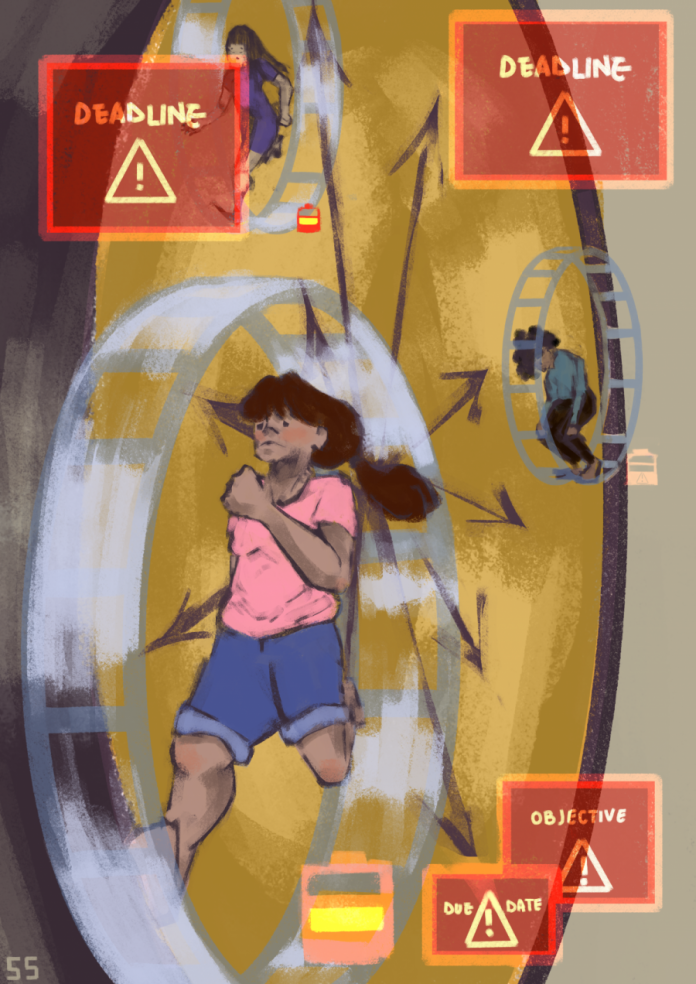
Thursday Chronicles: Why Is Rest Now A Luxury?

Welcome again to Thursday Chronicles, the official stress-relief column for every tired Nigerian soul trying to find meaning between debit alerts and career growth. If you’re currently holding your back like a grandparent at age 24, or if you’ve said “I just want to sleep” more than you’ve said “I love you” this year, this one is specially cooked for you.

Once upon a time, rest used to be normal. Something you did naturally. You came back from school, dropped your bag, and slept like a baby. No guilt, no planning, no alarms. You would wake up, eat rice, watch Super Story, and sleep again. Life was soft. Rest was free.

Now? Rest is luxury. You have to “schedule” it. Book it like a flight. Announce it like an achievement. You sleep for six hours and wake up feeling like you just committed a crime. You try to nap and your brain starts listing all your to-dos in alphabetical order. You lie down and suddenly remember you haven’t replied that email, you haven’t finished that proposal, and you forgot to call your cousin whose mother’s goat died.

Even weekends aren’t safe anymore. You tell yourself, “Saturday, I will rest.” But Saturday arrives with events, weddings, laundry, catch-up tasks, group meetings, and unexpected “Are you home?” visitors. Sunday becomes your only hope, and before you blink, it’s Sunday evening and the anxiety of Monday has already packed its bags and moved into your chest.

Why is it that in this generation, sleeping feels like a guilty pleasure? If you rest too much, people start looking at you like you’re unserious. If you dare say, “I’m taking the weekend off,” someone will remind you, “You’re resting while your mates are grinding?” Please, why must we suffer to prove ambition?

Work-life balance in Nigeria is now a fairytale. Many of us are working two jobs, managing side hustles, helping our families, looking for new opportunities, and still trying to be emotionally available in our relationships. You close from work at 5pm, but somehow you’re still replying work messages at 10:37pm, whispering into your phone like you’re hiding from EFCC.

And even when you finally try to rest, your environment doesn’t agree. NEPA takes light. Your neighbour plays Fuji at full volume. Someone knocks at your door to borrow pepper. You try to sleep again, and boom, mosquitoes organize a conference around your ear.

Then there’s the internet. Ah. Social media is the biggest enemy of rest. You say, “Let me check Twitter before I sleep,” and suddenly it’s 2am and you’re reading about why Pluto is no longer a planet. You want to sleep, but the fear of missing out keeps your eyes open. Meanwhile, your phone battery is dying and so is your will to live.

And let’s not forget the mental pressure. Rest isn’t just about sleeping, it’s about peace of mind. But how can you rest when your head is full of deadlines, heartbreak, expectations, and future plans that are not future-ing? You lie in bed and replay every embarrassing thing you’ve done since 2013. You think about your age, your income, your goals, your weight, your account balance, and boom, you’re more exhausted than before you lay down.

But here’s the thing: rest is not laziness. Rest is survival. You can’t “hustle” your way into good health. You can’t “grind” your way into sanity. Even machines break down — you, a full human being with emotions and problems, deserve to pause. If you don’t rest, your body will rest for you —forcefully, with ambulance drama.

It’s okay to say no. To shut down. To put your phone on “Do Not Disturb.” To sleep without feeling unproductive. To log out. To take a walk with no destination. To eat food and lie down for two hours. You’re not wasting time, you’re charging your battery.

Nobody gets a medal for burning out. Nobody claps for the most exhausted person. And no, the world won’t collapse if you take a nap. Nigeria will still be Nigeria when you wake up.

Thanks for staying awake long enough to enjoy another episode of Thursday Chronicles.
If your to-do list is longer than your hairline, and you’re tired but pretending to be fine, I see you. I salute you. And I beg you, go and sleep this weekend. We need you alive, not trending on Twitter as “Gone too soon.”

Catch you next Thursday, same gist table, same tired laugh, same honest cruise. Until then, may rest locate you like a surprise credit alert.

Bitcoin Pulls After Breakout As Ethereum Nears $2,800

Bitcoin briefly broke above the $112,000 mark in the past 24 hours with a 3% price increase before pulling back to around $111,200, a level it previously struggled to surpass.

The brief rally in the world’s largest cryptocurrency came amid a wider market upswing, but the momentum was short-lived. It is unclear what triggered the pullback, but analysts suggest some traders may have taken the opportunity to lock in profits after the surge. “Bitcoin’s dip after breaking $112,000 could simply be profit-taking. The market tends to see small corrections after significant resistance levels are breached,” a Lagos-based crypto analyst said.

Meanwhile, Ethereum is gaining strong upward momentum. According to data from CoinMarketCap.com, the second-largest cryptocurrency has appreciated by about 7% in the last 24 hours. This comes as Nasdaq-listed GameSquare placed a $100 million bet on ETHUSD, fueling optimism in the asset.

At the time of writing, Ethereum is trading at $2,780, after briefly testing the $2,800 level earlier in the day. A 25 basis point pullback has since trimmed some of the gains, but investor sentiment remains upbeat. “Ethereum’s strength is backed by both institutional confidence and market sentiment. A move to $3,000 in the near term is not out of the question,” said a cryptocurrency trader at a digital asset exchange in Abuja. The broader market is also benefiting from investor appetite for risk, as U.S. tech stocks, including Nvidia, rallied. Digital assets like Bitcoin and Ethereum often move in tandem with high-growth equities, reflecting broader risk-on sentiment.

Looking ahead, Bitcoin’s price outlook for 2025 is becoming increasingly bullish. Analysts point to historic inflows into spot Bitcoin ETFs, rising institutional participation, and growing political support particularly former President Donald Trump’s proposed Strategic Bitcoin Reserves key drivers of long-term confidence. Traders are now watching the $115,000 psychological resistance level, with some projecting Bitcoin could reach $120,000 before the end of summer if macroeconomic conditions remain stable.

UK Launches Digital Visas For Nigerian Students And Workers

UK Raises Visa Fees For Students, Tourists

Beginning July 15, 2025, most Nigerian nationals applying for study or work visas to the United Kingdom will begin receiving digital eVisas instead of physical visa stickers, the British High Commission in Abuja has announced.

This transition to digital visas marks a significant shift in the UK’s immigration system, aiming to improve speed, security, and efficiency for travelers. The announcement was made in a statement signed by Onyinye Madu and made available to newsmen on Wednesday. “Starting from July 15, 2025, most study and work visa applicants will receive a digital eVisa instead of receiving a visa ‘vignette’ or sticker in their passport,” the statement read. “This marks a significant step in the UK Government’s transition to a modern, digital immigration system.”

Under the new system, successful applicants will receive secure online access to their visa status via a UKVI account. They will still need to visit a Visa Application Centre to provide biometric information, but if a vignette is not required, their passports will be returned the same day as applicants applying as dependents (e.g., spouse or child), and applicants for other visa types (e.g., standard visitor visas), will still receive a visa sticker in their passport,” the statement added, clarifying that not all categories are affected by the change.

The British High Commission explained that individuals who applied before July 15 would continue with the current process, which includes leaving their passports at the application centre and receiving a vignette upon approval. Once a decision is made, applicants will receive an email from UK Visas and Immigration (UKVI) with the outcome and instructions to create a UKVI account where they can access their digital visa.

“We’re making it easier and faster for Nigerians to travel to the UK,” said Gill Lever, the UK Chargé d’Affaires. “From 15 July 2025, most people applying for study or work visas will get a digital eVisa instead of a visa sticker in their passport.” Lever described the rollout as “a further big step to a fully digital UK immigration system,” which she said would make the process “more secure, more efficient, and more convenient for students, professionals, and families.”

According to the High Commission, eVisas have already replaced Biometric Residence Permits (BRPs) for individuals granted leave to remain in the UK for over six months. The next phase extends this change to study and work visa applicants from Nigeria. The statement also noted that customers with a UKVI account will be able to use the “View and Prove” service to securely share their immigration status with third parties such as employers or landlords in England.

“However, if you’re applying as a dependant, like a spouse or child, of someone who is studying or working in the UK, or if you are applying for a visitor visa, you’ll still receive a visa vignette sticker in your passport for the time being,” it clarified.

How Modern Apps Are Powering 24/7 Trading For Nigerians—Even When Markets Are “Sleeping”

Once upon a time, trading used to follow strict hours. The market opened, the market closed, and if you missed the window—well, better luck tomorrow. But for many savvy Nigerians today, that timeline is obsolete.

Thanks to modern apps, trading has become a 24-hour sport. Whether you’re stuck in Third Mainland Bridge traffic or prepping PowerPoint slides at 2 a.m., you can buy, sell, monitor, and adjust your portfolio—like clockwork.

So how did this shift happen? And what does it mean for business-class professionals juggling meetings, family, and now—trades? Let’s break it down.

1. Trading isn’t just for stockbrokers anymore—apps made it personal

Remember when you needed a middleman in a crisp suit to buy shares? That’s long gone. Today’s trading apps put power in your palm—literally.

Platforms like Bamboo, Meritrade and Invest Africa have turned smartphones into mini stock exchanges. They offer global market access—think NYSE, NASDAQ, and even Chinese tech stocks—right from your phone. No gatekeeping. No minimum million-naira deposit.

And yes, while the New York Stock Exchange might sleep, crypto doesn’t. Forex doesn’t. Even some ETFs stay active after hours. So your portfolio? It keeps moving.

2. Global markets, local time zones—trading across continents while eating amala

Here’s the thing: the market may sleep in New York, but it’s already awake in Tokyo. With apps integrating multi-market data feeds, Nigerian users can seamlessly switch from American equities in the afternoon to Asian markets by dawn.

It’s like being in three boardrooms at once—without leaving your living room in Lekki or your hotel room in London. For professionals who already live in multiple time zones mentally—conference calls with the UK at 10 a.m., emails from California by midnight—this model fits perfectly.

3. Crypto never clocks out—and Nigerians know it

Let’s be honest: crypto changed the tempo of trading for good. Bitcoin doesn’t care if it’s Sunday. Ethereum doesn’t pause for public holidays. And apps like Binance have made it easier than ever for Nigerians to play in this round-the-clock arena.

Even better? Some apps offer automated bots or scheduled trades, so even if you’re deep in REM sleep, your money isn’t idle. It’s earning—or at least, trying to. And sure, the market can be brutal. But as any trader will tell you, volatility is just another word for opportunity—if you know how to ride the wave.

4. Naira’s unpredictable mood swings? Apps help you hedge the drama

The naira is… let’s just say, emotionally complex. Between official rates, parallel markets, and sudden CBN announcements, many Nigerians are rightfully wary of keeping their savings in just one currency.

Modern apps offer a cushion—multi-currency wallets, dollar-denominated assets, and even stablecoins like USDT. It’s like financial mood insurance. Whether the naira wakes up cheerful or cranky, you’ve got options.

This is especially crucial for professionals managing salaries, school fees, or remote work payments across borders. You don’t want your child’s tuition fee wiped out by a 6% devaluation overnight.

5. Micro-investing: because not everyone has ₦10 million to “spare”

This part’s important. One of the smartest things modern apps did? They erased the entry barrier. You can now buy fractions of Tesla or Google stocks for less than a plate of jollof rice at a VI restaurant.

And no, that’s not an exaggeration. Apps like Bamboo and Passfolio let users invest as little as $1. That’s empowering—especially for young professionals or side-hustlers trying to build wealth in bite-sized chunks. There’s something powerful about looking at your phone and seeing a portion of your salary working for you. It’s subtle, but deeply motivating.

6. AI, bots, and notifications—your trading assistant never sleeps

These apps aren’t just platforms—they’re personal finance assistants. You get push alerts about price drops. AI-generated insights. Curated market news. Even voice-activated commands in some apps (yes, seriously).

Some tools let you mirror the moves of successful investors—kind of like a financial version of Instagram stalking, but productive. Others let you set price triggers or automate dollar-cost averaging, so you don’t panic-sell every time Elon tweets something bizarre. The goal? Steady hands, smarter decisions.

7. One phone, many markets—Nigeria’s digital literacy is winning

Let’s not forget the cultural shift here. Nigeria has some of the highest mobile penetration and internet-savvy youth on the continent. Combine that with an appetite for hustle, and you’ve got a perfect storm.

Trading groups on Telegram? Check.

YouTube breakdowns of candlestick patterns? Check. X (formerly Twitter) threads analyzing global macro events from a Lagos lens? Absolutely. Apps have become more than tools—they’re gateways to conversations, ideas, even mentorship. In a way, 24/7 trading isn’t just about money—it’s about learning, evolving, and being part of something bigger.

So… should you jump in too?

Honestly? That’s up to you. Trading 24/7 sounds exciting, but it also requires discipline. You can’t be glued to your screen chasing every tick—it’s not sustainable.

But if you’re a business-minded Nigerian professional—juggling work, side projects, kids, and the occasional Asake concert—these apps are worth exploring. Not just to grow your money, but to understand how money moves. Because these days, the market never really closes. And neither should your options.

BizWatchNigeria.Ng
Privacy Overview

This website uses cookies so that we can provide you with the best user experience possible. Cookie information is stored in your browser and performs functions such as recognising you when you return to our website and helping our team to understand which sections of the website you find most interesting and useful.