






Home Blog Page 127

OpenAI Unveils GPT-5 In Push To Redefine AI Performance And Stay Ahead Of Global Competition

In a strategic move to solidify its leadership in the artificial intelligence industry, OpenAI has introduced its latest flagship model, GPT-5, marking a significant leap forward in the evolution of its ChatGPT platform.

Announced on Thursday, GPT-5 has already been rolled out to millions of users engaging with ChatGPT, the company’s widely popular AI chatbot. During a press briefing, OpenAI executives described the new model as a major improvement over its predecessors, particularly in terms of speed, accuracy, and reasoning capabilities.

“This is the first time it genuinely feels like you’re talking to a subject matter expert with a Ph.D. in any field,” said OpenAI CEO Sam Altman. “The system is noticeably better — both in obvious ways and subtle nuances.”

Since launching the AI revolution in late 2022 with the debut of ChatGPT, OpenAI has made consistent strides in enhancing its technology. The journey progressed from GPT-4 in early 2023 to more advanced versions that integrated multi-modal capabilities — including visual recognition, voice interaction, and more advanced reasoning models.

This latest development with GPT-5 represents a turning point. Unlike earlier models, GPT-5 is built on a “reasoning” framework, enabling it to deliberate on complex questions before generating answers — a function that elevates its response quality and reduces AI hallucinations, where the model fabricates information.

“For many users, GPT-5 is their first encounter with genuine machine reasoning,” said Nick Turley, OpenAI’s Vice President overseeing ChatGPT. “It knows when to pause and think before answering.”

OpenAI also claims that GPT-5 offers a more natural and human-like interaction experience. Demonstrations have shown the system’s capacity to perform tasks like creating fully functional applications based on simple prompts. One engineer reportedly asked GPT-5 to build an app for learning French, and it delivered a usable prototype within minutes.

While GPT-5 represents a milestone on the road to Artificial General Intelligence (AGI) — a system with the cognitive capacity to perform any intellectual task a human can do — Altman acknowledged that it still lacks many of the critical components necessary to achieve that goal.

Experts within the AI research community agree that the path to AGI remains uncertain, despite rapid advancements.

Earlier this week, OpenAI also announced that it would be open-sourcing two other AI models, making them freely available to researchers and developers around the globe. This marks a departure from the company’s previous strategy of maintaining tight control over its proprietary models. OpenAI hopes the move will foster broader adoption while attracting more users to its premium offerings.

OpenAI currently operates on a freemium model. It provides free access to ChatGPT online while offering a premium version for $20 per month. Additionally, the company markets its AI tools to businesses and independent software developers.

Despite its market dominance, OpenAI is not yet profitable. The company has ambitious plans to raise $40 billion in funding this year, with projected revenues expected to reach $20 billion by year-end.

Notably, OpenAI is also engaged in a legal battle with The New York Times, which has filed a lawsuit against OpenAI and its partner Microsoft, alleging copyright violations related to news content. Both companies have denied any wrongdoing.

With GPT-5, OpenAI aims to not only enhance the capabilities of ChatGPT but also reaffirm its place at the forefront of the rapidly evolving AI landscape.
Presidency Dismisses Editorial, Insists Criticism Should Be Fact-Based

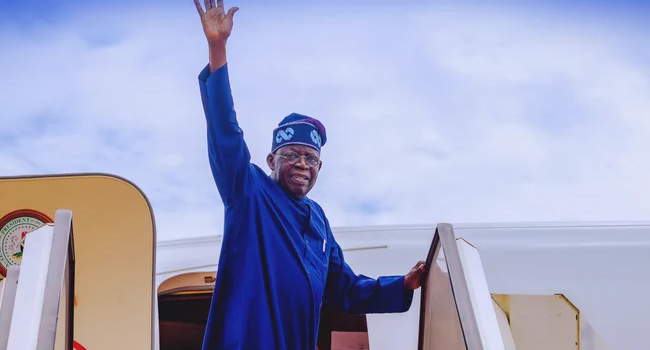
The Presidency has pushed back against a recent editorial by a national newspaper, criticising the publication for what it called exaggerated and unbalanced portrayals of the current state of the nation.

In a statement released on Friday, Special Adviser to President Bola Tinubu on Media and Public Communications, Sunday Dare, said while the administration welcomes constructive feedback, such criticism must be grounded in fact and not driven by what he described as “selective pessimism.”

Dare acknowledged that the country is facing economic challenges but rejected what he termed “exaggerated generalisations” that distort progress being made. “The irony is that what is often criticised today are, in fact, the policies that will ensure that Nigerians have a more secure, stable, and prosperous future,” he said.

Responding to projections cited in the editorial, including a warning by UNICEF about rising hunger, Dare explained that the forecast was based on a worst-case scenario analysis for the June to August 2025 lean season. He pointed to several government interventions already underway to avert that outcome, including the release of 42,000 metric tons of grain from strategic reserves, the procurement of an additional 117,000 metric tons, and emergency nutrition programmes in northern states.

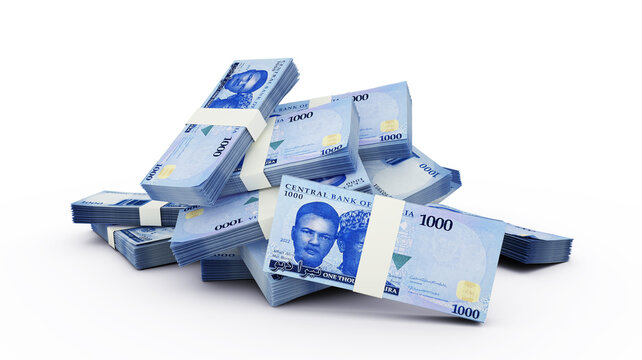
On the issue of currency devaluation, Dare rejected the newspaper’s claim that the naira had become “worthless,” noting that the exchange rate had improved from ₦1,800 to the dollar in March 2024 to about ₦1,525 as of August 1, 2025. He attributed the naira’s recovery to increased oil revenues, FX unification, and a reduction in the foreign exchange backlog by over $4 billion.

Addressing concerns about the school feeding initiative, Dare insisted the programme remains active, with over 9.8 million children in 53,000 schools receiving meals, supported by more than 200,000 cooks and local farmers.

He also pointed to recent social protection efforts, including cash transfers of ₦75,000 each to three million vulnerable households, with a target to reach 15 million, and over 396,000 students currently receiving tuition loans and stipends under the NELFUND scheme.

Highlighting broader development plans, Dare said the Renewed Hope Ward Development Programme, recently approved by the President, will deliver targeted interventions across all 8,809 political wards, focusing on food security, infrastructure, energy, and job creation.

“This administration does not ask for silence in the face of hardship,” he said. “It asks only for fairness and a shared commitment to rebuilding this country—not just exaggerating its pain.”

Naira Strengthens As External Reserves Approach $40 Billion Following FX Inflows

The Nigerian naira posted modest gains against the US dollar at the official foreign exchange window, buoyed by improving liquidity conditions and a lack of significant pressure on dollar demand.

According to the Central Bank of Nigeria (CBN), the spot exchange rate improved slightly to ₦1533.73 per dollar on Thursday, marking a minor increase from the previous day’s rate of ₦1534.43.

Throughout the day, the local currency traded within a tight band, reaching a high of ₦1535.99 and a low of ₦1531.99, before closing at ₦1535. This trend reflects sustained stability in the official market, driven by increased foreign exchange inflows and steady interventions from the central bank.

Contributing to the liquidity boost were continued inflows from exporters, foreign portfolio investors, and remittances from international oil companies. These factors have provided support to the naira and have helped maintain investor confidence in the FX market.

In contrast, the parallel market told a different story. The naira depreciated slightly, settling at ₦1560 per dollar due to a spike in demand for foreign currency for unofficial purposes. Bureau de Change operators reported limited access to dollar supply from banks, with peer-to-peer trades stepping in to bridge the supply gap—though at rates exceeding the CBN’s targeted band.

This divergence between the official and unofficial market rates has widened the exchange rate gap, raising concerns among investors and analysts alike.

Meanwhile, data from the CBN confirmed that Nigeria’s external reserves climbed to $39.994 billion this week, following 21 new inflows from undisclosed sources. The accumulation of reserves signals improving balance of payments and foreign investor confidence.

On the global commodities front, oil prices fell after initial gains, prompted by reports of an upcoming meeting between Russian President Vladimir Putin and U.S. President Donald Trump—sparking hopes for diplomatic progress in the Ukraine conflict.

Brent crude dropped 48 cents to trade at $66.41 per barrel, while U.S. West Texas Intermediate declined by 54 cents to $63.81 per barrel.

Gold prices, however, rallied to a two-week high amid rising demand for safe-haven assets. Spot gold rose by 0.60% to $3,389.40 per ounce, while U.S. gold futures added $16.03 to close at $3,452.25. Investors continued to hedge against uncertainty triggered by U.S. tariff measures and mixed employment data.

Analysts expect commodity markets to tread cautiously in the coming sessions as market participants await the potential announcement of additional trade tariffs targeting China.

Full List: 2025 Ballon d’Or Nominees Announced As Football Stars Compete For Global Honour

The countdown to the most prestigious individual award in football has officially begun as the Ballon d’Or organizers on Thursday unveiled the 30-man shortlist for the 2025 Men’s Ballon d’Or Award. The lineup features a mix of familiar legends, current superstars, and a new generation of rising talents who have all made their mark on the global stage.

Topping the list of elite contenders are football phenoms Jude Bellingham, Kylian Mbappé, Erling Haaland, Vinicius Jr., and Harry Kane—each recognized for their standout seasons both at the club level and in international competitions.

Veterans such as Mohamed Salah, Robert Lewandowski, and Virgil van Dijk have once again earned their place among the finalists, underlining their consistent brilliance over the years.

Emerging sensations like Lamine Yamal, Joao Neves, and Cole Palmer have also been nominated, signalling a new era of talent making waves across Europe’s top leagues.

Other nominees on the 2025 shortlist include midfielders and forwards who have dazzled fans with their technical mastery and goal-scoring prowess, such as Alexis Mac Allister, Désiré Doué, Scott McTominay, Raphinha, and Florian Wirtz. Defenders and goalkeepers have also made the cut, including Achraf Hakimi, Gianluigi Donnarumma, and Denzel Dumfries.

The Ballon d’Or continues to stand as the ultimate symbol of individual excellence in football, honouring players who have exhibited world-class talent, consistency, and influence on the pitch.

The award winner will be announced at the annual Ballon d’Or gala ceremony, a star-studded event expected to take place later in the year.

Here is the complete list of 2025 Ballon d’Or nominees:

  • Jude Bellingham
  • Ousmane Dembélé
  • Gianluigi Donnarumma
  • Désiré Doué
  • Denzel Dumfries
  • Serhou Guirassy
  • Viktor Gyökeres
  • Erling Haaland
  • Achraf Hakimi
  • Harry Kane
  • Khvicha Kvaratskhelia
  • Robert Lewandowski
  • Alexis Mac Allister
  • Lautaro Martinez
  • Kylian Mbappé
  • Scott McTominay
  • Nuno Mendes
  • Joao Neves
  • Michael Olise
  • Cole Palmer
  • Pedri
  • Raphinha
  • Declan Rice
  • Fabian Ruiz
  • Mohamed Salah
  • Virgil van Dijk
  • Vinicius Jr.
  • Vitinha
  • Florian Wirtz
  • Lamine Yamal

Fans and analysts alike will be closely watching how the rest of the year unfolds as these players battle not only for club glory but also for the ultimate individual honour in world football.

NCAA Petitions AGF And IGP To Investigate K1 De Ultimate Over Disruptive Incident On ValueJet Flight

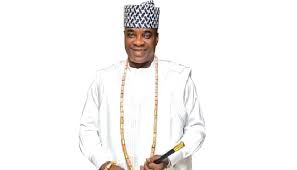
The Nigerian Civil Aviation Authority (NCAA) has formally submitted a petition to the Attorney-General of the Federation and the Inspector-General of Police, seeking an official investigation and subsequent prosecution of legendary Fuji musician, King Wasiu Ayinde Marshal, popularly known as K1 De Ultimate.

This action stems from an incident that reportedly took place on a ValueJet domestic flight on Tuesday, during which the veteran artist was allegedly involved in behaviour that violated civil aviation regulations and disrupted normal flight procedures.

According to a statement released by the NCAA on Thursday, the Authority has requested a comprehensive probe into the matter. The petition urges both the AGF and the IGP to begin legal proceedings against the artist in accordance with the Nigerian Civil Aviation Regulations (NCAR) 2023 and any other relevant statutory frameworks.

The regulatory body claims that K1 De Ultimate’s conduct aboard ValueJet flight VK201 constituted a direct breach of aviation safety standards, prompting urgent action to uphold the integrity of the country’s airspace and flight operations.

As part of its initial response, NCAA Director General, Capt. Chris Najomo, has issued an advisory to the Airline Operators of Nigeria (AON), recommending the temporary placement of K1 De Ultimate on a national No-Fly List. This measure, the Authority says, is to remain effective pending the conclusion of the investigation into the incident.

The advisory is aligned with international best practices in aviation safety management, which emphasize the protection of crew, passengers, and aircraft operations from any form of interference or threat.

The statement reads in part: “In a letter addressed to both the Attorney-General and the Inspector-General of Police, the NCAA called for a comprehensive criminal investigation and the initiation of appropriate prosecution in accordance with the provisions of the Nigeria Civil Aviation Regulations 2023 and all other applicable laws.”

Further emphasizing the seriousness of the issue, the NCAA reiterated that it expects full compliance with established aviation safety protocols from all passengers, regardless of social status, celebrity influence, or public image.

“In light of growing public concern, the Director General of Civil Aviation, Capt. Chris Najomo, has also issued an advisory to the Airline Operators of Nigeria, urging the immediate institution of a No-Fly List for K1 De Ultimate on all commercial flights, pending the outcome of official investigations,” the statement added.

The NCAA concluded by reaffirming its zero-tolerance stance toward misconduct within Nigeria’s aviation space. “We are committed to ensuring that the integrity and discipline of the aviation industry are preserved. No individual, no matter how prominent, will be allowed to endanger the lives of others or compromise flight operations.”

Interbank Rates Ease As Liquidity Surge Restores Stability In Nigeria’s Financial System

Nigeria’s interbank lending rates have adjusted downward as liquidity conditions in the financial system improve, following a rebound triggered by the settlement of Open Market Operation (OMO) bills and renewed activity in Treasury bill auctions.

The banking sector’s short-term funding pressure, which intensified after the N2.12 trillion OMO bill settlement earlier this week, eased after the system opened with a liquidity surplus of ₦229.4 billion, despite the ₦173.25 billion Treasury bill settlement at midweek.

Although there were no major external inflows, the uptick in deposit money banks’ transactions helped restore liquidity across the market.

Data from the FMDQ Securities Exchange shows that short-term benchmark interest rates have remained broadly stable, reflecting the absence of acute liquidity strain in the money market. Analysts say interbank lending rates are likely to maintain this trajectory unless disrupted by significant funding calls.

The Nigerian Interbank Offered Rate (NIBOR) declined across key tenors, mirroring the liquidity boost. According to a market report by Cowry Asset Management Limited, overnight rates fell by 13 basis points, the one-month tenor dropped by 42 basis points, the three-month tenor declined by 53 basis points, and the six-month tenor eased by 57 basis points.

In the money market, the Open Repo Rate (OPR) was unchanged at 26.60%, while the overnight lending rate edged slightly higher by 2 basis points to 27.02%.

Meanwhile, the Nigerian Interbank Treasury Bills True Yield Curve recorded yield increases across all maturities, driven by a broad bearish sentiment among investors. Consequently, the average yield on Treasury bills climbed by 7 basis points to 17.85%, as sell-offs dominated secondary market activity.

14 High-Paying Part-Time Jobs Nigerian Students In The U.S. Can Take In 2025

A recent listing by job search platform Indeed has highlighted lucrative part-time opportunities for international students in the United States — with annual earnings ranging from $34,000 to over $71,000. The findings are particularly relevant to Nigerian students navigating financial pressures while studying abroad.

Visa regulations typically limit international students to specific work categories and a set number of hours per week during academic sessions. However, many of the roles identified by Indeed are on-campus or offer flexible schedules, enabling students to balance work commitments with academic responsibilities.

Beyond income generation, these jobs provide valuable U.S. work experience, help develop soft skills such as communication and teamwork, and create networking opportunities that can enhance career prospects after graduation.

Here are the 14 part-time jobs and their average annual salaries as of July 2025:

14. Library Assistant — $34,057/year
Library assistants manage shelving, cataloging, student inquiries, and event assistance. The role suits students who prefer structured and quiet environments. Average pay: $18.51/hour.

13. Usher — $34,594/year
Ushers guide attendees at events like sports matches, concerts, lectures, and theatre productions. They handle ticketing, programs, and guest assistance. Average pay: $14.86/hour.

12. Barista — $36,440/year
Baristas prepare coffee-based beverages, handle orders, clean equipment, and occasionally prepare snacks. Campus cafés and nearby coffee shops often hire students.

11. Dining Room Server — $37,716/year
Servers in campus dining halls or local restaurants take orders, deliver meals, and ensure customer satisfaction. Average pay: $16.18/hour.

10. Teaching Assistant — $38,764/year
TAs support professors with class supervision, coursework assistance, grading, and sometimes teaching. Mostly available to senior undergraduates and postgraduate students.

9. Call Center Representative — $39,394/year
Call center roles involve answering queries, updating records, and promoting services either on-campus or remotely.

8. Food Runner — $43,190/year
Food runners transport meals from the kitchen to diners, liaising between servers and kitchen staff. Many campus restaurants offer such positions.

7. Peer Mentor — $45,250/year
Peer mentors provide academic and emotional support to fellow students, helping them adapt to life in the U.S.

6. Research Assistant — $46,895/year
Research assistants aid faculty members with data collection, literature reviews, lab maintenance, and report preparation.

5. Department Assistant — $47,574/year
Department assistants manage office operations, appointments, and departmental events. They also guide prospective students.

4. Receptionist — $53,048/year
Receptionists handle calls, visitor reception, document organization, and scheduling within campus offices.

3. Tutor — $56,281/year
Tutors offer academic guidance and study support, often in subjects they excel in. Many universities have peer tutoring programs.

2. Sales Associate — $59,437/year
Sales associates assist customers in campus or nearby retail stores, handle transactions, and recommend products.

1. Student Ambassador — $71,701/year
Student ambassadors represent universities at events, campus tours, and outreach programs. This high-paying role suits outgoing, public-speaking-oriented students.

For Nigerian students in the U.S., these opportunities not only provide income but also help bridge the gap between academic and professional life.

Kaduna PDP Launches Grassroots Election Campaign

2023: PDP Cancels All Primaries In Ebonyi State

The Peoples Democratic Party has launched its campaign for the Chikun/Kajuru Federal Constituency by-election with a strong vow to unseat the ruling All Progressives Congress, describing the contest as a people-powered movement for change.

Thousands of supporters gathered on Wednesday at the flag-off rally held in the heart of the constituency, where party leaders described the turnout as a clear indication that the PDP remains a dominant political force in Kaduna State.

Kaduna State PDP Deputy Chairman, Nuhu Kayarda, declared the party’s readiness to reclaim the seat with Barrister Esther Ashivelli Dawaki as its flagbearer. He dismissed the strength of the APC’s incumbency, stating it was “no match for the will of the people.”

“This is our moment,” Kayarda said. “Our candidate is not only popular but deeply connected to the grassroots. She understands the pain of our people and is ready to fight for them. This election is about the people, not power—and the people are with us.”

Esther Dawaki, a lawyer and youth advocate, delivered a charged address that focused on inclusive leadership and responsive governance. She promised to prioritise education, youth development, and women’s empowerment if elected.

“As a woman and a youth, I represent millions who have been forgotten. I will be a voice for the people in Abuja—not a silent one,” Dawaki said.

She criticised the APC for failing to address insecurity, poverty, and underdevelopment in the constituency, accusing the ruling party of abandoning families in Chikun and Kajuru.

“Our people are tired of empty promises. The insecurity, the bad roads, the joblessness—it must end. We are bringing fresh ideas and people-first representation to Abuja,” she added.

The PDP campaign team outlined a legislative agenda focused on improving security, boosting access to quality education, and securing federal projects long overdue in the constituency.

Also speaking at the rally, former House of Representatives member and party chieftain Mark Jacob warned against electoral malpractice.

“This time, we are ready. The votes must count. Esther stands for competence and compassion. The APC should prepare for a tough political battle,” Jacob said.

The by-election, scheduled by the Independent National Electoral Commission, is expected to be a closely fought contest as both the PDP and APC battle for control of the strategic federal seat ahead of the 2027 general elections.

NSCDC Declares Flood Crisis A National Emergency, Places Personnel On Red Alert

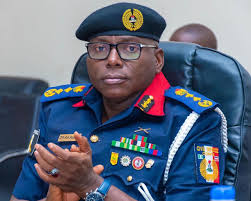
The Bauchi State Command of the Nigeria Security and Civil Defence Corps (NSCDC) has issued a warning that the escalating flood incidents in the state and across Nigeria constitute a national emergency, requiring urgent and coordinated action.

The command said it had placed its personnel on red alert and equipped them for rapid response to flood-related emergencies.

Speaking to journalists in Bauchi, NSCDC spokesperson Saminu Yusuf said the move aligns with nationwide flood warnings issued under the corps’ mandate to manage both natural and man-made disasters.

According to Yusuf, the Federal Government, citing forecasts by the Nigerian Meteorological Agency (NiMet), has identified 38 locations in 11 states—including Bauchi—as high-risk flood zones this year. In Bauchi State, Azare, Itas, Kari, Jama’are, and Misau are expected to be severely affected between 25 July and 5 August 2025.

The alert was issued by the National Flood Early Warning Centre, under the Federal Ministry of Environment’s Erosion, Flood and Coastal Zone Management Department.

Yusuf stressed the need for a shift from reactive measures to proactive, sustainable flood risk management, highlighting the National Flood Insurance Programme as key to building long-term resilience.

“All emergency management stakeholders must activate response protocols. Communities at risk should establish evacuation plans and monitor weekly flood updates from the Nigeria Hydrological Services Agency,” the statement read.

Top 20 Largest Companies By Market Capitalisation On NGX 2025: A Business Analyst’s Guide

The Top 20 Largest Companies by Market Capitalisation on NGX 2025 represent the beating heart of Nigeria’s stock market performance. Together, they account for over ₦69.98 trillion in market value, driving liquidity, investor sentiment, and sectoral growth on the Nigerian Exchange (NGX).

For business analysts, institutional investors, and corporate strategists, these rankings are more than just numbers—they’re indicators of economic trends, policy impacts, and sectoral opportunities in Africa’s largest economy.

Why the Top 20 Largest Companies by Market Capitalisation on NGX 2025 Matter

The NGX has evolved into a high‐value frontier market, offering both growth stocks and dividend‐paying blue chips. The Top 20 Largest Companies by Market Capitalisation on NGX 2025 not only dominate index weightings but also influence portfolio allocation strategies, M&A activity, and foreign portfolio inflows.

Top 20 Largest Companies by Market Capitalisation on NGX 2025 – Full Ranking

RankCompany NameMarket Cap (₦ Trillion)Sector
1MTN Nigeria10.077Telecommunications
2Dangote Cement8.914Industrial Goods (Cement)
3BUA Foods8.701Consumer Goods (Food & Beverages)
4Airtel Africa8.683Telecommunications
5BUA Cement5.010Industrial Goods (Cement)
6GTCO (Guaranty Trust Holding Company)3.624Banking/Financial Services
7Zenith Bank3.141Banking/Financial Services
8Geregu Power2.853Utilities (Power/Energy)
9Lafarge Africa2.400Industrial Goods (Cement)
10Transcorp Power2.400Utilities (Power/Energy)
11International Breweries2.320Consumer Goods (Breweries)
12Aradel Holdings2.260Oil & Gas
13UBA (United Bank for Africa)2.020Banking/Financial Services
14Stanbic IBTC Holdings1.610Banking/Financial Services
15Presco1.550Agriculture (Palm Oil)
16Transcorp Hotels1.530Services (Hospitality)
17Nestlé Nigeria1.498Consumer Goods (Food & Beverages)
18Access Holdings (Access Bank)1.492Banking/Financial Services
19FBN Holdings (First Bank)1.398Banking/Financial Services
20Fidelity Bank1.060Banking/Financial Services

Sectoral Insights from the Top 20 Largest Companies by Market Capitalisation on NGX 2025

Telecommunications

Two telecom titans—Airtel Africa and MTN Nigeria—together account for over ₦13.73 trillion. Their dominance in the Top 20 Largest Companies by Market Capitalisation on NGX 2025 is powered by data consumption growth, mobile penetration expansion, and digital financial services adoption.

Cement & Construction

Dangote Cement, BUA Cement, and Lafarge Africa represent over ₦14 trillion combined. In the Top 20 Largest Companies by Market Capitalisation on NGX 2025, this sector benefits from housing demand, infrastructure expansion, and AfCFTA export opportunities.

Energy & Power

Seplat Energy, Geregu Power, Transcorp Power, and Aradel Holdings are climbing steadily in valuation. Power generation companies have gained strong positions in the Top 20 Largest Companies by Market Capitalisation on NGX 2025 thanks to reforms in the energy market and rising electricity demand.

Banking & Financial Services

Five banks—GTCO, Zenith Bank, UBA, Stanbic IBTC, and FBN Holdings—secure strong positions in the Top 20 Largest Companies by Market Capitalisation on NGX 2025. They offer consistent dividend yields and benefit from expanding retail banking across Africa.

Consumer Goods & FMCG

BUA Foods, Nestlé Nigeria, and leading breweries remain critical players. Their presence in the Top 20 Largest Companies by Market Capitalisation on NGX 2025 reflects pricing power and demand stability in essential goods.

Agriculture

Presco Plc stands out as the agricultural representative in the Top 20 Largest Companies by Market Capitalisation on NGX 2025, demonstrating that palm oil exports and vertical integration can push agribusiness into the big leagues.

Strategic Takeaways for Business Leaders and Analysts

  • Concentration of Wealth – The top five companies hold nearly 50% of NGX’s total market value.
  • Growth vs Income Play – Telecoms and cement for growth; banks and FMCG for steady income.
  • Policy-Driven Opportunities – FX reforms, energy deregulation, and infrastructure policies will directly impact valuations.
  • Sectoral Rotation Potential – With rising power and agribusiness demand, future reshuffling in the Top 20 Largest Companies by Market Capitalisation on NGX is likely.

NGX’s Growth Story

The Nigerian Exchange’s market cap now exceeds ₦70 trillion, marking a 347% increase since the pre‐2008 peak. The Top 20 Largest Companies by Market Capitalisation on NGX 2025 embody this transformation, showcasing the strength of well‐positioned corporates in a reform‐driven economy.

Final Word:
For the business‐minded investor, the Top 20 Largest Companies by Market Capitalisation on NGX 2025 serve as a blueprint for portfolio allocation, sector prioritisation, and long‐term capital growth strategies in Africa’s most dynamic equity market.

Tinubu’s Executive Order Cuts Pharma Production Costs By 12% – FG

The Federal Government says Nigeria’s local pharmaceutical manufacturers have recorded a 12 per cent drop in production costs following the implementation of President Bola Tinubu’s executive order on the industry.

Minister of State for Health, Dr Iziaq Salako, disclosed this at the BusinessDay Health Conference in Abuja on Thursday, noting that the reduction is expected to translate into lower prices for locally produced medicines and medical supplies.

President Tinubu, in June 2024, signed an executive order removing tariffs, excise duties, and value-added tax (VAT) on specialised machinery, equipment, and raw materials used in pharmaceutical manufacturing. The policy aims to boost domestic production of essential healthcare products such as syringes, biologicals, medical textiles, and rapid diagnostic tests, thereby improving access and affordability.

Salako said 87 local manufacturers are currently benefitting from the incentives, which cover nearly 1,000 harmonised system codes.

“Feedback from our local manufacturers suggests that the presidential order has resulted in about 12 per cent reduction in production costs,” he stated.

According to the minister, the order—part of the broader Presidential Initiative for Unlocking the Healthcare Value Chain (PVAC)—is revitalising local manufacturing and driving the emergence of pharmaceutical and diagnostic hubs in Nigeria.

He revealed that, within the past year, two Nigerian-made products have secured World Health Organisation (WHO) qualification, marking the first such milestone in West and Central Africa. Additionally, a rapid diagnostic test (RDT) manufacturing facility was recently commissioned in Ogun State—the second of its kind in sub-Saharan Africa—while another local manufacturer is set to open Africa’s first contextual active pharmaceutical ingredient (API) factory.

Salako described PVAC as a catalyst for health security, economic growth, and job creation, achieved through cross-institutional coordination and value chain transformation.

“The presidential order works in tandem with PVAC by directly incentivising local manufacturing of medicines and other commodities, such as syringes and rapid diagnostic tests,” he added.

Banditry: Sokoto Communities Demand Military Action to Reclaim Ancestral Land

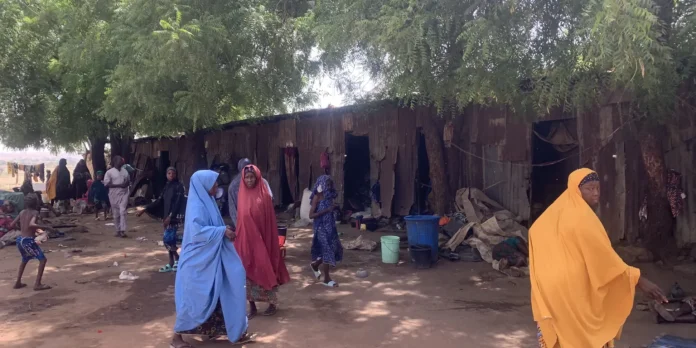
Tureta and Dange/Shuni Local Government Areas of Sokoto State are facing a deepening humanitarian and security crisis, as relentless bandit attacks force thousands of residents, mostly women and children, into displacement, leaving entire villages deserted and schools shut.

Once-thriving farming communities have been reduced to ghost towns, abandoned after repeated raids marked by killings, abductions, and mass livestock theft.

“I haven’t entered my house in three months,” said Halima Denge, a displaced mother of four from Tureta. “Every night, we sleep outside, not because we want to, but because we are safer in the bush than in our homes.”

Local sources report that more than a dozen communities across the two LGAs have been attacked multiple times, with residents losing their farms, animals, and livelihoods. In Dange/Shuni, community elder Malam Musa lamented: “Our farms are abandoned, our animals are gone, and we live in constant fear.”

The displaced population is enduring severe hardship—lacking food, clean water, shelter, and medical care. Many live under trees or in makeshift camps, with only scraps of cloth for cover. Education has ground to a halt, and children are suffering from growing psychological trauma.

A youth leader accused authorities of a slow and inadequate response: “These attacks happen almost daily. The bandits operate even during the day. People are losing faith in the government’s ability to protect them.”

While a resident of Lambar Tureta acknowledged ongoing security operations, he called for stronger measures: “The terrain is tough, yes. But this situation is beyond routine patrols. We need a full-scale military intervention.”

Community leaders, civil society groups, and humanitarian organisations are urging President Bola Tinubu and security agencies to declare the situation an emergency and deploy permanent military personnel to the affected areas.

“We need action, not just promises,” a traditional ruler in Dange/Shuni warned. “Our people are being hunted daily.”

Responding to the concerns, Sokoto State’s Special Adviser on Security, Col Ahmed Usman (retd.), said the government remains committed to restoring peace.

“Thanks to the tireless efforts of our security forces and community guards, we have recorded some progress. Governor Ahmad Aliyu is fully committed to ending the crisis. We urge residents to support ongoing operations and continue praying for peace,” he said.

Diesel Scarcity Threatens Network Stability, Telecom Operators Warn

Is Airtel Nigeria’s Fastest Network?

Nigeria’s telecommunications operators have raised the alarm over a growing threat to network services across the country due to a blockade on diesel supply to critical infrastructure sites. In a statement issued on Thursday in Lagos, Mr Gbenga Adebayo, Chairman of the Association of Licensed Telecommunications Operators of Nigeria (ALTON), warned that the disruption could soon result in widespread service outages affecting mobile, internet, banking, and emergency services.

According to Adebayo, workers affiliated with two major oil sector unions — the Nigerian Union of Petroleum and Natural Gas Workers (NUPENG) and the Natural Oil and Gas Suppliers Association of Nigeria (NOGASA) — have halted the movement of diesel trucks from key depots in Kaduna, Lagos, and Koko in Delta State.

He explained that the action followed a dispute involving two NOGASA-linked companies and IHS Towers, a leading network infrastructure provider in Nigeria. The conflict reportedly stems from allegations of fuel theft, which are currently under investigation.

“The blockade is already impacting some of the 16,000 telecom sites that keep Nigeria’s communication networks running. These sites support mobile connectivity, internet services, financial transactions, hospitals, emergency response, and national security operations,” Adebayo said.

He described the situation as a serious threat to public safety and national infrastructure, noting that preventing diesel from reaching telecom sites is both unlawful and dangerous.

Adebayo called on the unions to immediately lift the blockade and pursue any grievances through legal and regulatory channels.

He also urged the intervention of relevant government agencies, including the Office of the National Security Adviser and the Nigerian Communications Commission, to prevent what he described as an avoidable national crisis.

“Without diesel, we cannot power the base stations. Millions of Nigerians could lose access to essential services if this is not resolved quickly,” Adebayo warned.

Trump Unlocks $9 Trillion U.S. Retirement Market For Crypto Investments

International Students May Need to Leave US
International Students May Need to Leave US or Risk Deportation

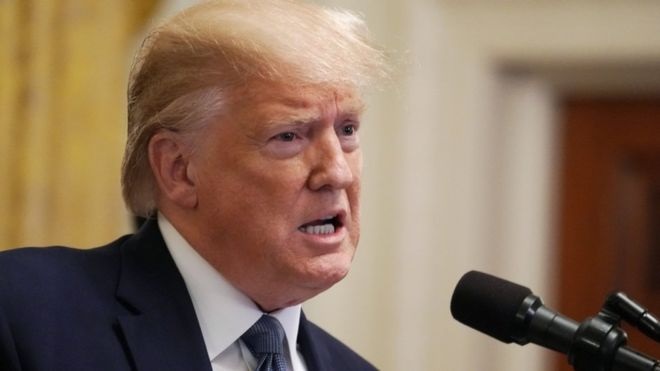
In a landmark move poised to reshape the global financial landscape, former U.S. President Donald Trump has signed an executive order allowing cryptocurrencies, private equity, and other alternative assets to be included in 401(k) retirement plans for the first time.

The order opens access to America’s $9 trillion retirement market, historically dominated by equities and bonds, to digital assets such as Bitcoin. It directs financial regulators to update long-standing restrictions that have excluded alternative investments from professionally managed retirement accounts.

“This is a defining moment not just for crypto, but for the entire future of finance,” said Nigel Green, CEO of deVere Group. “The world’s largest economy is signalling that digital assets now have a place in long-term wealth strategies. This will have global ramifications.”

Over 90 million Americans contribute to 401(k) plans, making them the largest individual investment pool in the world. Analysts believe even a modest allocation to cryptocurrencies could drive hundreds of billions of dollars in new demand—further integrating digital assets into traditional financial systems.

Green described the decision as a breakthrough for institutional adoption: “Retail retirement capital was the final frontier. Once it begins to flow into crypto, the shift becomes irreversible.”

The move comes at a pivotal time. Cryptocurrencies have rallied strongly in 2025, with Bitcoin hitting new record highs, driven by increasing corporate adoption and favorable regulatory sentiment. The order is also expected to influence global pension markets, with regulators in Europe and Asia already under pressure to modernize outdated frameworks.

“Retirement accounts represent some of the most conservative capital in the world. If crypto earns a place there, it can earn a place anywhere,” Green added. “This breaks the psychological and regulatory barriers that have kept crypto in the sandbox.”

Trump’s executive action also reflects growing political momentum behind digital assets. After years of lobbying by private market players, it was the inclusion of crypto, according to senior officials, that ultimately pushed the policy forward.

While the move opens new opportunities, it also brings new responsibilities. Experts warn that cryptocurrencies remain volatile, and retirement savers must approach them with caution, diversification, and professional guidance.

“This allows Americans to build exposure to the future within their most important financial vehicles,” Green said. “It’s not just a U.S. development—it’s a signal to global markets that digital assets are becoming part of modern financial infrastructure.”

As nations reevaluate investment policies, crypto is shedding its image as a speculative fringe asset and solidifying its role in the broader economic narrative.

“Crypto is no longer just for day traders or hedge funds,” Green concluded. “It’s becoming part of the financial DNA of the modern world.”

Stock Market Now Contributes 25% To Nigeria’s GDP

At a market capitalisation of ₦92.25 trillion, the Nigerian Exchange (NGX) now represents over 25% of the country’s Gross Domestic Product (GDP), according to MarketForces Africa Research in a recent investor note.

This milestone comes as Nigeria grapples with economic headwinds, including a weakening naira, surging inflation, and a slowdown in private sector activity—factors that have caused the nation to lose its status as Africa’s largest economy.

Following the National Bureau of Statistics’ rebasing exercise, Nigeria’s GDP for 2024 was revised upward to ₦372.82 trillion, equivalent to approximately $243.7 billion. This marks a notable drop from earlier estimates. The World Bank reported Nigeria’s GDP at $472.62 billion in 2022, while 2023 saw a decline to $363.85 billion.

Despite the economic downturn, the Nigerian equities market has shown remarkable performance, with year-to-date returns nearing 42%. Analysts say this growth highlights a widening gap between the financial markets and the broader economy.

“The stock market has become a dividing line between the rich and the poor,” one analyst noted. “If you haven’t made at least 40% returns this year, you probably invested in the wrong asset. The NGX is returning nearly 42% year-to-date. This is a big rich town.”

They added that the disconnect between Wall Street and ‘Main Street’ is becoming more evident in Nigeria’s context.

“Too often, people miss out on wealth creation because they are uninformed or unwilling to follow where capital is flowing. But the reality is clear: the NGX is no longer just about ‘kobo kobo’ gains. It has become a serious wealth-building platform, even as the broader economy struggles.”

Tinubu Nominates New Leadership Team For NERC

NERC Unveils App To Improve Electricity

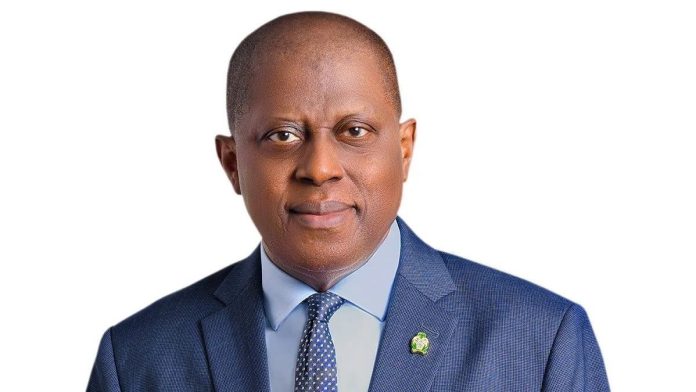
President Bola Tinubu has nominated Engr. Abdullahi Garba Ramat as Chairman and Chief Executive Officer of the Nigerian Electricity Regulatory Commission (NERC).

In a statement issued Thursday by his Special Adviser on Information and Strategy, Bayo Onanuga, the President also put forward Mr. Abubakar Yusuf as Commissioner for Consumer Affairs and Dr. Fouad Olayinka Animashun as Commissioner for Finance and Management Services.

The nominations are subject to confirmation by the Senate.

Ramat, 39, is an electrical engineer with a PhD in Strategic Management and a background in public administration.

To prevent a leadership vacuum at the commission, the President directed that Ramat immediately assume office in an acting capacity, pending Senate confirmation in accordance with legal provisions.

President Tinubu urged the nominees to apply their expertise in advancing his administration’s reforms in the power sector.

NCAA Grounds K1 De Ultimate For Six Months Over Security Breach

The Nigerian Civil Aviation Authority (NCAA) has announced a six-month flying ban on renowned Fuji musician, Wasiu Ayinde, popularly known as K1 De Ultimate, over an alleged security breach at the Nnamdi Azikiwe International Airport, Abuja.

Michael Achimugu, Director of Public Affairs and Consumer Protection at the NCAA, disclosed this during a press briefing on Thursday. He stated that K1’s conduct at the airport violated aviation safety protocols and would not go unpunished.

“As we speak, the passenger is going to be blacklisted for the next six months from flying in Nigeria,” Achimugu said. “Everyone involved in this incident will be held accountable. Aviation safety rules are global, and no one is exempt.”

He further revealed that the NCAA would write to the Attorney General of the Federation and the Inspector General of Police to initiate legal action against the musician.

When asked whether Ayinde’s relationship with President Bola Tinubu could influence the proceedings, Achimugu stressed that both President Tinubu and the Minister of Aviation and Aerospace Development, Festus Keyamo, were committed to the rule of law.

Meanwhile, Minister Keyamo, in a statement posted to his official X (formerly Twitter) account, confirmed that K1 had been placed on a no-fly list pending further investigation. He noted that both the musician and members of the flight crew had acted in ways that breached established safety procedures.

“I have reviewed reports and video footage from the relevant aviation agencies regarding the incident involving K1 and ValueJet staff on August 7,” Keyamo said. “The preliminary findings show a clear breakdown of control on both sides, which could have led to tragic consequences.”

He described the incident as “akin to a hostage situation,” alleging that K1 physically blocked an aircraft from taxiing to the runway — a violation he called “totally unacceptable.”

“Contrary to what his representatives claim, he moved repeatedly on the tarmac, obstructing the aircraft’s movement. Whether he was carrying water or alcohol is secondary. The issue is the obstruction, which is serious,” Keyamo added.

He also questioned the selective punishment of only the pilot and captain, stating, “What applies to the goose must also apply to the gander.”

Keyamo directed the NCAA to inform all domestic and international airlines of the no-fly order, warning that any carrier that disregards it could face license withdrawal.

The Federal Airports Authority of Nigeria (FAAN) had earlier confirmed that it was investigating K1 over the incident, which took place on Monday, August 5, during boarding for a ValueJet Airlines flight (VK 201) to Lagos.

According to FAAN, the musician was found with a liquid-filled flask exceeding the 100ml limit permitted under international aviation security rules. Despite repeated warnings from airport security personnel and the flight captain, K1 allegedly refused to comply and spilled the contents — later confirmed to be alcohol — on a security officer.

However, K1 denied any wrongdoing. In a statement issued by his media aide, Kunle Rasheed, he insisted the flask contained plain drinking water provided at the airport lounge.

The statement described the reports as exaggerated and misleading, stating that K1 remained calm throughout the encounter and did not endanger safety.

It also claimed that senior airport officials and airline executives had since reached out with apologies and even offered him a private jet to continue his journey to Lagos.

“We urge the public and the media to avoid sensationalism. K1 remains a law-abiding citizen and is cooperating fully with authorities to resolve this matter responsibly,” the statement read.

Nigeria’s Eurobonds Rally As Short-Term Maturities Near Expiry

DMO Set To Auction N150bn Bond On FG's Behalf

Nigeria’s sovereign Eurobonds rallied in the global market, with yields slipping by two basis points as foreign portfolio investors increased their exposure amid growing confidence in the country’s short-term credit outlook.

The sustained decline in yields reflects improved investor sentiment, driven by expectations that Nigeria will comfortably meet upcoming debt obligations—particularly the Eurobond set to mature in November. Market optimism has been buoyed by ongoing domestic economic reforms and recent upgrades to Nigeria’s credit rating by international agencies including S&P Global, Moody’s, and Fitch Ratings.

The positive momentum also follows Nigeria’s successful removal from the International Monetary Fund’s debt list, a development interpreted by investors as a sign of enhanced fiscal discipline and sovereign creditworthiness.

According to Cowry Asset Management, strong demand for the NOV-2027 bond contributed significantly to the day’s performance, pulling the average Eurobond yield down to 8.20%. The firm noted broad-based interest across Nigeria’s dollar-denominated debt instruments.

Across the broader African Eurobond space, prices strengthened as geopolitical tensions—particularly the prospect of new U.S. sanctions on Russia—boosted appetite for emerging market assets. Nigeria’s sovereign bonds benefited from the shift, registering a mild but steady rally along the curve.

Analysts say the trend suggests reduced external borrowing costs for Nigeria, potentially easing the burden of future capital market engagement.

Crude Oil Prices Climb Amid Renewed Demand Optimism

OPEC+ Maintains Monthly Crude Oil Output Increase At 400,000bpd

Crude oil prices climbed on Wednesday, driven by a sharper-than-expected decline in U.S. crude inventories and growing expectations of a Federal Reserve interest rate cut—factors that signaled improving demand prospects in the world’s largest economy.

Brent crude rose 0.6% to $67.02 per barrel, up from $66.57 in the previous session, while U.S. West Texas Intermediate (WTI) crude also gained 0.6%, trading at $64.04 per barrel compared to $63.63 previously.

The U.S. Energy Information Administration (EIA) reported a 3 million-barrel drop in commercial crude stocks last week, bringing total inventories to 423.7 million barrels. The decline, which exceeded market expectations of a 200,000-barrel increase, suggests strong demand momentum. Meanwhile, U.S. daily oil output slipped by 30,000 barrels to 13.284 million barrels.

Adding further support to oil prices were renewed hopes of a Fed rate cut. Money market indicators now overwhelmingly point to a possible reduction in September. Lower interest rates tend to weaken the U.S. dollar, making dollar-denominated commodities like crude oil more attractive to foreign buyers.

The dollar index slipped in recent sessions, enhancing oil’s appeal amid a backdrop of strengthening global risk sentiment.

Geopolitical developments also stirred markets. U.S. President Donald Trump signed an executive order imposing a 25% tariff on Indian imports, citing India’s continued oil purchases from Russia. The tariff, set to take effect in 21 days, includes certain exemptions during a transitional period.

Trump warned that other nations continuing crude trade with Moscow may face similar penalties. The move raised concerns about possible disruptions to global oil supply, given Russia’s position as the world’s second-largest producer.

In a separate policy shift, Trump announced plans for nearly 100% tariffs on imported chips and semiconductors, exempting U.S.-based manufacturers. Analysts say the trade tensions—while potentially disruptive—could still support domestic economic activity and, by extension, oil consumption.

Despite lingering concerns over the impact of protectionist measures, analysts believe a combination of falling inventories, potential Fed policy easing, and geopolitical supply risks are likely to keep oil prices buoyant in the near term.

NIIRA 2025: Tinubu Ushers In Major Overhaul Of Nigeria’s Insurance Industry

President Bola Ahmed Tinubu has signed into law the Nigerian Insurance Industry Reform Act (NIIRA) 2025—an ambitious legislation set to transform the country’s underperforming insurance sector through sweeping regulatory and operational reforms.

The new law aligns with the government’s broader agenda of financial inclusion, economic resilience, and institutional reform. It introduces key provisions aimed at deepening insurance penetration, restoring consumer trust, and repositioning the sector as a cornerstone of Nigeria’s financial system.

Key Provisions and Impact Areas

NIIRA 2025 raises minimum capital requirements for insurers, a move expected to spark a wave of mergers and acquisitions among undercapitalised firms. Only financially sound and professionally managed companies will be licensed to underwrite risk, bolstering confidence in the industry’s stability.

The Act also expands the scope of compulsory insurance beyond existing categories such as motor and group life, adding new mandatory coverages for sectors including agriculture, SMEs, public infrastructure, and cyber liability. This is intended to drive broader adoption and relevance across the economy.

In a major digital push, NIIRA mandates full digitalisation across the insurance value chain—from underwriting and customer onboarding to claims processing and policy management. The objective is to improve efficiency, reduce fraud, and expand consumer access through technology.

To address long-standing issues with claims, the law enforces strict timelines for assessment and payment, with penalties and potential license suspension for delays. A Policyholder Protection Fund is also being established to provide compensation in cases where an insurer becomes insolvent.

Implications for the Market

For the over 25 insurance firms listed on the Nigerian Exchange, the reforms present both challenges and opportunities. While the capital requirements are steep, the Act provides a framework for long-term sustainability and profitability.

Industry analysts expect consolidation activity to intensify over the next 12 to 18 months, with at least a dozen firms likely to merge or be acquired.

Observers say the most transformative aspect of NIIRA 2025 is its consumer-centric focus. The law puts policyholders first, demands operational transparency, rewards innovation, and enforces accountability.

Looking Ahead

With insurance penetration in Nigeria currently hovering below 1% of GDP, stakeholders hope the reforms will push that figure to between 3% and 5% over the next decade.

NIIRA 2025 is more than a legislative update—it is a strategic reset. As insurers adjust to the new rules, government agencies, investors, and industry players will need to work together to ensure the Act delivers on its promise of building a stronger, more inclusive insurance ecosystem for Nigeria.

BizWatchNigeria.Ng
Privacy Overview

This website uses cookies so that we can provide you with the best user experience possible. Cookie information is stored in your browser and performs functions such as recognising you when you return to our website and helping our team to understand which sections of the website you find most interesting and useful.