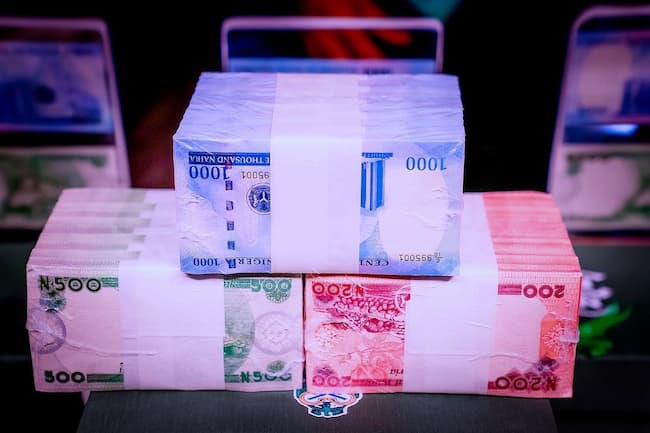
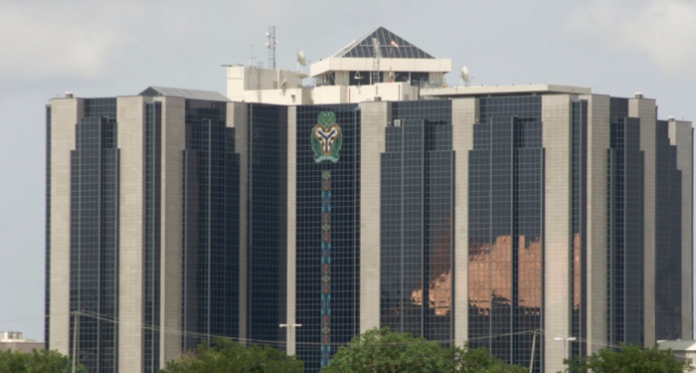
The naira slipped against the U.S. dollar at the Nigerian Foreign Exchange Market (NFEM) last week as data revealed a continued shortfall in foreign currency supply, forcing monetary authorities to intervene twice to stabilise the market.
Central Bank of Nigeria (CBN) data showed the official spot rate closed at N1,535.92 per dollar, down slightly from N1,533.56 at the week’s open. The apex bank sold $150 million to authorised dealer banks during the week to ease liquidity pressures, but inflows have yet to recover.
According to research by Coronation Merchant Bank, aggregate FX inflows fell for the third consecutive week to $732.8 million — a 7.4% drop from $791.1 million recorded the week before. Non-bank corporates were the largest contributors, bringing in $295 million, ahead of foreign portfolio investors (FPIs) with $267.9 million. Exporters accounted for 19.45% of inflows, while individuals contributed only 0.45%. Other international sources made up 3.19%.
Despite the inflow decline, Nigeria’s gross external reserves climbed by $800.51 million week-on-week to close at $40.16 billion — the first time reserves have crossed the $40 billion mark since January. Analysts attribute the increase to sustained FPI participation and rising non-bank corporate inflows.
Market experts expect the naira to remain relatively stable this week, trading between N1,500/$1 and N1,600/$1, in line with CBN’s policy guidance. However, they warn that unforeseen external shocks could trigger volatility.
The Nigerian insurance market is having its moment in 2025, with the NGX Insurance Index delivering a year-to-date gain of 74.18% — one of the strongest performances on the Nigerian Exchange. From Mutual Benefits Assurance’s staggering 378% rally to NEM Insurance’s 201% surge, investors are witnessing a rare wave of bullish momentum in a sector often seen as slow-moving. This guide breaks down the top-performing insurance stocks in Nigeria for 2025 so far, complete with performance stats, market insights, and why these companies are capturing investor attention.
For context, the index kicked off the year at 719.9 points, endured a modest slump in Q1, and then… well, let’s just say it’s been fireworks ever since. By August, we’d crossed the 1,100-point mark and landed solidly at 1,250.6. And here’s the kicker — August alone delivered more than 40% growth, briefly making insurance the market’s single hottest performer.
So, what’s driving this surge? It’s part fundamentals, part momentum, and part sheer investor appetite for value plays in a market that’s been more volatile than a Lagos traffic jam. But numbers tell their own story, and here are the top 10 insurance stocks that have been rewriting portfolios this year.
10. Regency Alliance (Up 69.33%)
Regency Alliance Plc isn’t the flashiest name on the board, but it’s proving that patience pays. The stock stumbled early in the year, dropping from ₦0.75 in January to ₦0.59 by April. Then came Q3 — July saw a 25% lift, and August added another 58.8%. The company is eyeing a Q3 pretax profit of ₦1.06 billion on projected revenue of ₦5.8 billion, which could keep the bullish momentum alive.
9. Cornerstone Insurance (Up 77.78%)
After a rocky start that saw shares slip from ₦3.60 to ₦3.07 by April, Cornerstone Insurance caught a second wind mid-year. By June, it was breaking through the ₦4.00 barrier. August alone has brought a 39% rally — fueled by an H1 2025 report showing insurance revenue up 44.37% to ₦24.4 billion, premiums climbing 25.86% to ₦30 billion, and claims swelling as the company met more obligations.
8. AXA Mansard (Up 78.66%)
AXA Mansard has been a quiet achiever, starting 2025 at ₦8.20 and inching upward in Q1 and Q2 before going full throttle in Q3. Trading volumes spiked in July, pushing the stock past ₦11 and then up to ₦14 in early August. Strong H1 results — insurance revenue up to ₦81.1 billion and premiums at ₦98.2 billion — have made this one hard for investors to ignore.
7. International Energy Insurance (Up 85.53%)
This one’s a comeback story. International Energy Insurance dipped to ₦1.45 in April before staging a sharp recovery. By August, it had pushed past ₦3, riding a 32% jump in just a few weeks. With a Q3 target of ₦7.6 billion in gross premiums and ₦1.5 billion pretax profit, the stock is sitting pretty for continued growth.
6. Linkage Assurance (Up 109.49%)
Linkage Assurance’s chart looks like a steady climb that suddenly turned into a rocket launch. Aside from a mild dip in February, it’s been mostly green candles all year, with Q3 adding over 60%. July’s H1 report — showing insurance revenue at ₦12.5 billion and claims costs down sharply — has clearly stoked investor enthusiasm.
5. Custodian Investment (Up 136.55%)
Custodian Investment is one of those stocks that hasn’t taken a break. Every single month has closed higher than the last, starting from ₦17.10 in January and touching ₦36 by midyear. H1 results showed insurance revenue surging from ₦60.9 billion to ₦89.3 billion, alongside rising profits — a combination that’s kept buyers coming back.
4. Sovereign Trust Insurance (Up 142.86%)
Sovereign Trust spent the first half of the year mostly in the red, trading under ₦1.00. Then came May, and the momentum never really stopped. Q3 has been the golden stretch, adding more than 100% in just two months. H1 results — revenue up 45% and pretax profit up 36% — provided the catalyst.
3. AIICO Insurance (Up 144.76%)
AIICO’s rally is proof that you don’t have to start strong to finish strong. It was barely moving for the first six months, stuck around ₦1.50. But Q3 flipped the switch, with August pushing the price to ₦3.50. Its H1 report revealed insurance revenue up 34% to ₦65.4 billion, plus solid growth in premiums and claims — all of which caught the market’s attention.
2. NEM Insurance (Up 201.37%)
If you’re looking for a chart that just keeps climbing, NEM Insurance is it. From ₦10.95 in January to ₦33 in August, the gains have been relentless. The company’s H1 report — premiums up to ₦96.8 billion, claims more than doubling, and revenue up nearly 66% — shows exactly why investors are treating it like a safe bet in a bullish market.
1. Mutual Benefits Assurance (Up 378.69%)
Mutual Benefits Assurance is the runaway winner, turning heads with a staggering 378.69% gain. Starting the year at ₦0.61, it’s now hovering around ₦2.92, with ₦3.00 in sight. Its explosive July-August run was fueled by a stellar H1 report: insurance revenue up 44.58%, premiums up 38.09%, and claims almost doubling. It’s the kind of stock story traders love to tell — and wish they’d bought earlier.
Why This Matters for Business-Class Investors
Here’s the thing: insurance stocks aren’t usually the headliners. They’re more often seen as steady, income-generating plays rather than moonshots. But 2025’s run is showing a different side of the sector — one that’s dynamic, reactive, and capable of producing outsized gains when the right mix of fundamentals and sentiment aligns.
For investors who typically lean toward blue chips or consumer staples, ignoring the insurance sector right now might mean missing out on a rare performance window. Of course, as any seasoned investor knows, momentum can be fickle. But with several companies showing genuine earnings strength — not just speculative hype — this could be more than a short-lived rally.
If you’re in the business-class bracket, this is the moment to think beyond traditional portfolio allocations. Sure, diversification is still the golden rule, but so is knowing when a sector’s energy is too strong to dismiss.
The Petroleum Products Retail Outlets Owners Association of Nigeria (PETROAN) has accused the Group Chief Executive Officer of the Nigerian National Petroleum Company Limited (NNPCL), Bayo Ojulari, of neglecting the stalled revival of the Port Harcourt refinery.
This came as two northern groups, the Arewa Community for Empowerment and Development and the Arewa Consultative Youth Movement, sued NNPCL’s Chief Financial Officer, Dapo Segun, at the Federal High Court in Kaduna over his alleged “direct and supervisory role” in the failed rehabilitation of Nigeria’s refineries and the controversial acquisition of OVH Energy.
In a statement on Monday, PETROAN’s Zonal Chairman for System 2E (Eastern Zone), Sunny Nkpe, expressed alarm at the “slow pace of activity” at the Old Port Harcourt Refinery (Area 5), which was shut on May 24, 2025, for scheduled 30-day repairs.
Nkpe, who visited the facility over the weekend, said he was shocked to find that Ojulari had not visited the site since assuming office four months ago. He alleged that contractors on site complained of being owed for over a year, despite nearing completion of repairs on Units 12 and 14 of the cracking and blending plants before the leadership change.
“The lack of commitment from the current GCEO suggests a deliberate push to give private refineries a monopoly to exploit Nigerians with outrageous petroleum prices,” Nkpe alleged, warning that thousands of tanker drivers and marketers remain out of work due to the shutdown.
He urged Ojulari to prioritise the refinery’s revival, saying its operation would help stabilise fuel prices across Aba, Enugu, Makurdi, and other major cities, and reduce the dominance of private operators. Nkpe also appealed to President Bola Tinubu to intervene, describing the delay as “orchestrated” by vested interests.
Efforts to obtain NNPCL’s response were unsuccessful, as the company has no spokesperson and listed phone numbers were unreachable.
Meanwhile, in Kaduna, the two northern groups filed suit FHC/KD/CS/101/2025, seeking an Order of Mandamus to compel the Economic and Financial Crimes Commission (EFCC) to investigate, arrest, and prosecute Segun. The plaintiffs accused the EFCC, the Department of State Services, and the Tinubu administration of shielding Segun, despite detaining former northern executives of NNPCL over similar issues.
The groups argue that Segun, as former Executive Vice President (Downstream), presided over both the refinery projects and the OVH Energy acquisition, with billions spent but no results to reduce the nation’s dependence on imported petroleum products.
They are also seeking interim orders for Segun to step aside as CFO, refrain from official duties, and avoid tampering with documents relevant to the investigation.
Nigeria’s three state-owned refineries — in Port Harcourt, Warri, and Kaduna — have been largely comatose for years despite multi-billion-dollar rehabilitation contracts. The $1.5 billion Port Harcourt overhaul announced in 2021 has yet to deliver results, keeping the country reliant on imported petrol, diesel, and aviation fuel.
The OVH Energy acquisition in 2022 expanded NNPCL Retail’s network, but critics say it has done little to improve domestic supply security.
Interswitch Group, one of Africa’s leading integrated payments and digital commerce companies, has emphasized the imperative for strategic regulatory engagement and partnership for African technology players who desire to scale their operations effectively across the continent.
Africa’s burgeoning Fintech ecosystem presents a unique opportunity to deepen financial inclusion, foster economic integration, and drive digital innovation. However, the current licensing and regulatory landscape, marked by a variety of approaches in regulating fintechs with often high barriers to entry and fragmented oversight, poses significant barriers to growth and cross-border scalability. In response, the Africa Fintech Network (AFN) has consistently championed a harmonized fintech licensing initiative aimed at fostering a more coordinated and enabling regulatory environment across the continent.
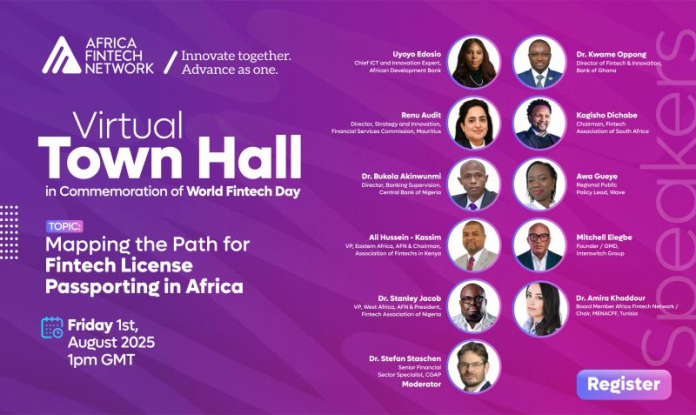
Speaking at an AFN Webinar to commemorate World Fintech Day on 1st August, themed ‘Mapping the Path for Fintech License Passporting in Africa’, Interswitch Group CEO, Mitchell Elegbe shared extensive insights and learnings from Interswitch’s journey from nascent player to pan-African fintech and payments champion operating across multiple regions of the continent.
The core premise of this initiative by the AFN is that a mutually recognized licensing framework will accelerate innovation, streamline compliance, and enhance regional collaboration, contributing to boosting intra-African trade and financial inclusion. It is believed, as evidenced in other jurisdictions, that reducing regulatory friction and duplicative licensing burdens, fintech and digital finance firms can scale faster, improve operational efficiency, and focus on delivering inclusive, market-driven solutions across borders.
As Africa’s foremost fintech unicorn, Elegbe was tasked to share his perspective based on experiences with licensing and regulations given Interswitch’s operations in multiple countries. According to him, Interswitch Group operates with multiple distinct licenses from regulators across jurisdictions like Nigeria, Kenya, Uganda, Gambia and Mauritius with each respective license application accompanied by distinct licensing procedures, application processes and expiration dates.
He asserts that “We are therefore often tasked with managing the expectations of our partners during the period between the expiration date and the renewal date about our status to operate. Also, there is the challenge of overlapping regulations as fintechs in many countries in Africa are regulated by multiple bodies such as Central Banks and Telecom Regulators, which leads to duplicated licensing processes, conflicting compliance requirements and delays in approvals.
He also acknowledged that Regulatory frameworks are not static and while fintechs must remain agile to adapt to existing frameworks, these constantly changing frameworks affect the renewal of license applications as the expectation is that implementation of the requirements are tied to license renewals.
Elegbe underscored specific initiatives Interswitch has undertaken to invest in proactive and effective regulatory relationship management to include hiring experienced local compliance officers on ground in the countries the companies operates/invests in, participating in policy dialogues such as the AFN’s and actively engaging and sharing feedback on regulatory drafts, among others. He emphasized the need for operators to collaborate with regulators on areas of concern and seek clarity where necessary.
Elegbe also essentially spoke to the importance of embracing maturity modelling by African businesses; emphasizing that Maturity modeling, across respective critical functions and disciplines is crucial for organizations because it provides a framework for assessing and improving performance, identifying weaknesses, and fostering continuous improvement. He asserted that in Interswitch’s case, has it has grown and scaled operations across markets, maturity modelling has helped the business understand current capabilities, benchmark industry best practices, and develop strategies for growth and optimization. According to him “By highlighting areas needing attention, maturity models enable organizations to make informed decisions, allocate resources effectively, and ultimately achieve their goals.”
To mark World Fintech Day on 1st August, The Africa Fintech Network hosted the Virtual Town Hall, which also featured other speakers including Ali Hussein Kassim, Chairman of Association of Fintechs in Kenya, Dr Bukola Akinwunmi, Director of Banking Supervision at Central Bank of Nigeria (CBN), Adedoyin Odunfa, MD/CEO at Digital Jewels and Dr. Patrick Conteh, CEO at Africa Fintech Network, as the first public forum, to address the growing need for a harmonized fintech licensing framework across Africa. This event brought together key players, regulators, innovators, policymakers, and investors, to explore how fintech license passporting can address regulatory barriers, support cross-border growth, and expand access to financial services.
The town hall reflects AFN’s commitment to work with stakeholders in building practical solutions that support a more connected and thriving fintech ecosystem across the continent. The Town Hall dialogue is aimed at gaining a high-level understanding of the current fintech licenses’ environment and how to potentially position a licenses passporting scheme amid the related challenges. Insights from international experience and from the Ghana/Rwanda initiative would be useful in this regard.
Interswitch remains a leading technology-driven company focused on the digitization of payments and commerce across Africa. Founded in Nigeria in 2002, Interswitch disrupted the traditional cash-based payments value chain in Nigeria by supporting the introduction of electronic payments processing and switching services, and launched Verve, Africa’s premier and leading domestic EMV-standard chip and pin payments card scheme.
Today, Interswitch is a leading player with critical mass across Africa’s developing financial ecosystem and is active across the payments value chain, providing a full suite of omni-channel payment solutions. Interswitch’s vision is to make payments a seamless part of everyday life in Africa, and its mission is to create transaction solutions that enable individuals and communities to prosper across Africa. Interswitch’s broad network and robust payments platform have been instrumental to the development of the Nigerian payments ecosystem and provide Interswitch with the infrastructure to expand across Africa.
Johnson Adenola has officially taken over as the Assistant Inspector-General of Police (AIG) for Zone 16, which covers Rivers and Bayelsa states. The appointment was confirmed in a statement on Monday by SP Gunn Emonena, spokesperson for the zone.
Adenola succeeds AIG Tolani Alausa, who recently retired. The Zone 16 Police Command is headquartered in Yenagoa, Bayelsa State.
A native of Ipari-nla in Ijebu North-East Local Government Area of Ogun State, Adenola was commissioned into the Nigeria Police Force as a cadet Assistant Superintendent of Police in May 1992, as part of Cadet ASP Course 17.
He holds a Bachelor of Arts degree in History from Ogun State University and a Master of Public Administration from the University of Ilorin.
After graduating from the Police Academy, Adenola began his career with a mandatory one-year attachment at Owerri Urban Divisional Police Headquarters in Imo State. In March 1995, he was appointed spokesperson for the Imo State Police Command, serving until January 1997. He later transferred to Lagos State Police Command, where he held several key roles.
Prior to his new role, Adenola served as Commissioner of Police in Oyo State.
The Zone 16 Police Command appealed for the cooperation and support of residents in Rivers and Bayelsa states to enable Adenola to deliver effective policing aligned with the vision of the Inspector-General of Police.
Ibom Airlines Limited has imposed a lifetime travel ban on a passenger identified as Ms. Comfort Emmanson following a violent altercation onboard one of its flights. The incident, which occurred on Sunday, quickly went viral after footage surfaced online showing the passenger assaulting an airline crew member.
According to an official statement released by Ibom Air on Monday, the altercation began shortly before take-off on a flight from Uyo to Lagos. Ms. Emmanson allegedly refused to switch off her mobile phone despite repeated instructions from the Purser, in line with aviation safety regulations. It took an intervention from a fellow passenger to power down the device.
The airline reported that the situation escalated upon arrival in Lagos. After all passengers had disembarked, Ms. Emmanson approached the Purser who had instructed her earlier, stepping on her, forcibly removing her wig and glasses, and striking her multiple times with her footwear. Another cabin crew member who tried to intervene was also slapped.
Ibom Air further alleged that Ms. Emmanson attempted to remove a fire extinguisher from the aircraft, an action the airline interpreted as a potential threat to damage and ground the plane.
The Pilot-in-Command alerted airport security, but before their arrival, the Purser physically prevented Ms. Emmanson from leaving the aircraft. Upon the arrival of Ibom Air security personnel, the passenger allegedly continued her violent outburst, attacking them and later slapping the airline’s ground supervisor.
The disruptive passenger was eventually restrained, removed from the aircraft, and handed over to the Federal Airports Authority of Nigeria (FAAN) security team, who transferred her into police custody for further investigation.
Ibom Air stated that it has officially reported the matter to the Nigerian Civil Aviation Authority (NCAA) and reaffirmed its zero-tolerance policy towards unruly and violent passenger behaviour. The airline commended its crew members and security personnel for maintaining professionalism during the incident.
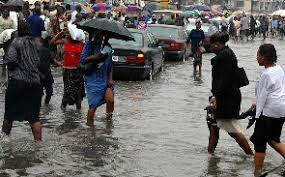
The rainy season in Lagos is like that uninvited guest who arrives early, stays too long, and messes up your living room—except this time, the living room is your perfectly planned morning routine. Whether you’re rolling in a sleek SUV or navigating danfo chaos, the mission is the same: arrive at work looking like a million bucks, not like a soggy biscuit.
Here’s your ultimate guide to keeping it chic from door to desk.
1. Weather Apps Are Your New Best Friend
Before you even brush your teeth, check your weather app like it’s your bank account on salary day. The Lagos skies have no respect for your outfit planning—one minute it’s sunshine, the next you’re auditioning for Titanic.
Pro tip for public transport commuters: Leave home earlier than usual to avoid wading through knee-deep water with a bus conductor shouting “Enter with your change o!”
Pro tip for car owners: Even if you drive, flooding can turn your shortcut into a makeshift lagoon. Knowing the route conditions early will save you from a “park-and-trek” situation.
2. Waterproof Footwear: Your Steeze’s Secret Weapon
Let’s be honest—designer shoes and Lagos puddles are a toxic relationship. Swap your Louboutins or Ferragamos for rubber sandals, waterproof slippers, or crocs until you’re safely indoors.
Public transport crew: Keep a pair of emergency flip-flops or jelly sandals in your bag. Slip them on for the flooded parts of your trip, then switch back to your corporate shoes in the office bathroom.
Car owners: You’re not immune—those car park puddles are ankle-deep and not part of your gym’s leg day. Stash a pair of waterproof slides in your boot for those “oops” moments.
3. Invest in Rain Gear That Means Business
Umbrellas are great—until the wind turns them inside out and you’re holding what looks like a broken satellite dish.
Long raincoats keep your outfit dry from neck to knee.
Oversized umbrellas double as personal shelters (bonus points if you can fit a colleague under it—they’ll owe you coffee).
Waterproof garment bags for those wearing suits can save your blazer from looking like it went through a spin cycle.
4. The Commuter’s Survival Kit
Even with all the planning, accidents happen—splashes from speeding okadas, unexpected rain bursts, or that puddle you thought was shallow but was, in fact, a small Atlantic Ocean. Pack a discreet “rescue kit” in your work bag:
A travel-size fabric freshener (rainwater smells cute on plants, not people).
A lint roller.
A spare shirt or blouse.
Compact hairbrush or comb.
For makeup wearers, a mini retouch kit—because panda eyes are for wildlife documentaries, not Monday meetings.
5. For the Drivers: Rain Etiquette Exists Too
If you’re driving, remember that the rainy season isn’t an excuse to turn into a rally driver. Slow down when passing pedestrians unless you enjoy giving strangers a free mud mask. Keep an extra pair of shoes in your car—you never know when you might have to step into a flooded gutter to rescue a stuck bumper (Lagos roads are full of surprises).
6. For the No-Car Crew: The Flood-Route Cheat Code
Know your streets. Some Lagos roads have PhD-level flooding patterns. That backstreet shortcut might look appealing until you find yourself on a waterlogged island, praying your phone doesn’t slip into the abyss. Ask okada riders, street vendors, or even security guards—they often know the driest (or least wet) path to the main road.
7. Keep the Humour Handy
The rainy season will test you—your patience, your wardrobe, your will to live. But nothing ruins your steeze faster than a bad mood. Laugh at the situation when you can—at least it gives you a funny story for your colleagues when you finally arrive at the office, hair slightly frizzed but dignity intact.
The Lagos rainy season is a fashion hazard, but with the right planning, you can step into the office looking like a style icon instead of a wet mop. Pack smart, dress smart, and walk like you own the puddles (just… don’t actually fall in one).
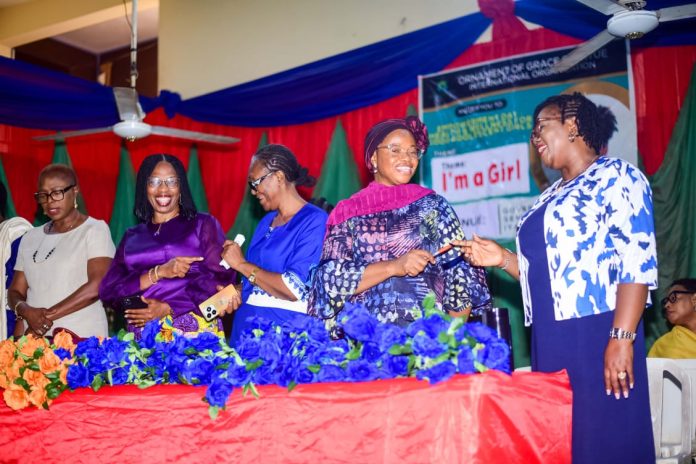
From left: Mrs. Olubukola Kolade, Founder of OGAV; Mrs. Anuoluwapo Ajayi, Special Guest Speaker; Ms. Kolade Abiola, representing Dr. (Mrs.) Idowu Olufunke Oyetola, Supervisory Tutor-General/Permanent Secretary, Educational District 1, Agege; Mrs. Mujidat Oladipo, Director of School Social Work Services, representing the Permanent Secretary, Ministry of Youth and Social Development, Lagos State; and Mrs. Helen Egbe, Executive Director of Cakasa Ebenezer Foundation.
On Thursday, August 7, 2025, Cakasa Ebenezer Foundation (CEF), in strategic partnership with Ornaments of Grace and Virtue Foundation (OGAV), celebrated the conclusion of the 2025 edition of the GLAM Summer Camp with renewed commitment to empowering the next generation of Nigerian girls.
Held at the Government Senior College, Agege, this year’s camp also marked the eleventh anniversary of OGAV’s flagship initiative, which continues to provide mentorship, leadership development, and educational opportunities for girls across Lagos.
With the theme “I AM A GIRL,” the two-week summer camp brought together 1,000 girls from public schools within Lagos Education District 1. Through a carefully curated programme, the girls were immersed in sessions focused on self-discovery, digital inclusion, health and wellness, financial literacy, and long-term career exploration.
From self-assessment workshops to a dynamic career fair and personalized career pathway passports, the camp was designed to help the girls understand their strengths, set goals, and build the confidence needed to pursue their dreams. At the closing ceremony, Mrs. Helen Egbe, Executive Director, CEF, delivered an inspiring remark highlighting the importance of supporting girls in underserved communities. She emphasized that the foundation’s contributions were more than just gifts, they were investments in future leaders.
“Over the years, we have supported with learning materials, facilitation, and mentorship. But more than that, and this I say with quiet joy, 19 girls who once sat where you sit now are currently on scholarship, through secondary school and up to university level, because of our shared commitment with OGAV,” she revealed.
“Nineteen stories. Nineteen rising stars. Nineteen daughters who will never forget that someone believed in them when it mattered most” she said, as she highlighted further donations from CEF including two branded laptops awarded to outstanding girls for academic excellence, 24 branded school bags, over 1,000 branded jotters and pens, and lunch support for 200 girls throughout the camp.
Mrs. Egbe’s powerful words resonated with the audience: “To be a girl is not just about appearance, it’s about power, purpose, and possibility. At CEF, we are proud to stand behind these girls as they rise and lead.
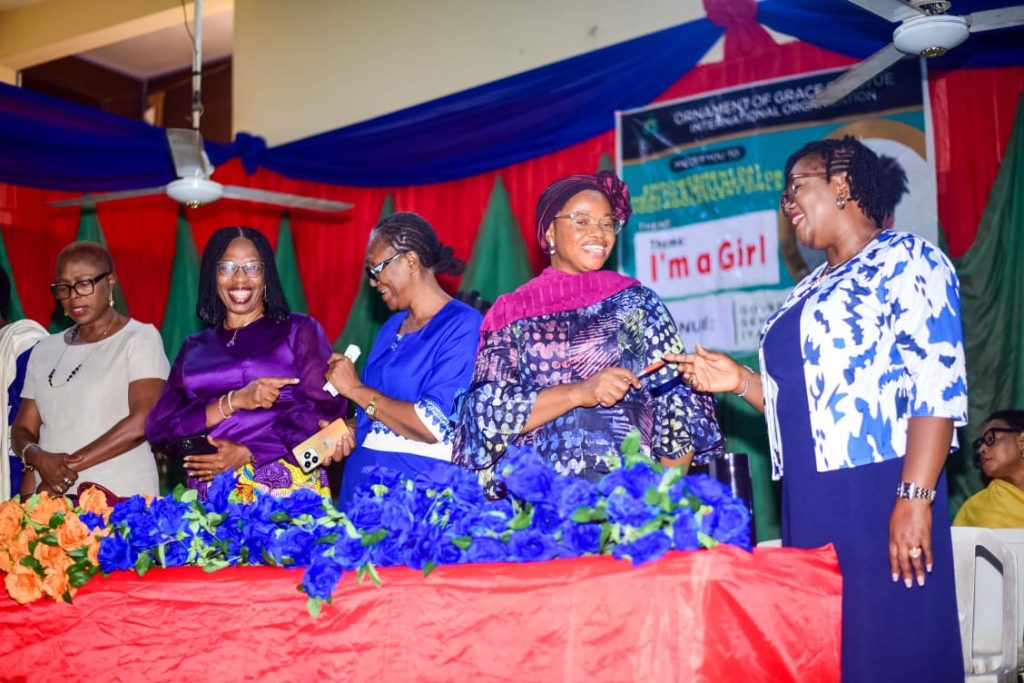
From left: Mrs. Olubukola Kolade, Founder of OGAV; Mrs. Anuoluwapo Ajayi, Special Guest Speaker; Ms. Kolade Abiola, representing Dr. (Mrs.) Idowu Olufunke Oyetola, Supervisory Tutor-General/Permanent Secretary, Educational District 1, Agege; Mrs. Mujidat Oladipo, Director of School Social Work Services, representing the Permanent Secretary, Ministry of Youth and Social Development, Lagos State; and Mrs. Helen Egbe, Executive Director of Cakasa Ebenezer Foundation.
In her keynote address, Dr. (Mrs.) Idowu Olufunke Oyetola, the Tutor-General/Permanent Secretary, Educational District I, (TG/PS EDD1, AGEGE), represented by Ms. Kolade Abiola, reflected on the ethos behind the GLAM Camp, helping girls make informed career choices while developing character, integrity, and ambition.
On her part, Mrs. Anuoluwapo Ajayi, the Special Guest Speaker, challenged the girls to take ownership of their futures saying “No one owes you anything. It’s up to you to set goals and work hard. With the foundation you’ve gained here, there is no excuse not to soar” while founder of OGAV, Mrs. Olubukola Kolade, offered heartfelt encouragement to the girls urging them to make good use of the training while appreciating CEF for its partnership and commitment to the foundation.
One of the most inspiring moments of the ceremony came from Adeola Bakare, a 2019 GLAM alumna and current Philosophy student at Lagos State University, who shared how OGAV and CEF’s support shaped her journey. “OGAV made me believe that being a girl child is not a mistake, it’s a gift,” she said, recalling how her scholarship opened doors that once seemed closed.
The event was graced by facilitators, educators, and representatives from partner organizations including the Lagos State Social Work Department, Tutor General Office of Education District 1, Rely Supply Ltd, Lotus Bank, UAC Foods, and the Parent Forum of Education District 1.
It ended on a high note with achievement awards and academic bursaries presented to six students for the upcoming 2025/2026 academic year, followed by a spirited student led “Show and Tell” session.
Now in its 11th year, OGAV’s GLAM Summer Camp has remained a beacon of mentorship, character building, and educational support for girls in Lagos State. As both CEF and OGAV look to the future, their partnership continues to serve as a powerful model for how collaborative, sustained investment in girls can shape a stronger, more inclusive society.
Amaechi Expresses Shock Over Truck-Free Apapa Road
Former Minister of Transportation and Rivers State Governor, Chibuike Rotimi Amaechi, has officially declared his intention to run for president in the 2027 elections under the African Democratic Congress (ADC) banner.
Speaking during a live session on X Spaces, Amaechi expressed confidence in his ability to defeat incumbent President Bola Tinubu, citing his deep knowledge of Tinubu’s strengths and weaknesses.
Amaechi highlighted his unblemished record, challenging anyone to prove his involvement in election rigging. He revealed that he consistently declined participation in the All Progressives Congress (APC) election planning committees, due to ethical concerns and awareness of electoral manipulations orchestrated by state governors and government agencies.
He pledged to eradicate electoral malpractice if elected and vowed to redirect funds currently spent on fuel subsidies directly to Nigerians rather than elites.
Amaechi’s announcement has sparked diverse reactions, with questions about his capacity to rally widespread support and how the ADC will respond to his candidacy.
In his remarks, Amaechi also acknowledged Labour Party’s Peter Obi’s victory in Rivers State during the 2023 elections, criticizing INEC Chairman Professor Mahmood Yakubu as the worst in the commission’s history for failing to reflect the true results.
Paris FC forward Moses Simon expressed heartfelt appreciation to his former club, FC Nantes, after receiving a special tribute during their friendly match on Saturday at the Stade de la Beaujoire.
Simon, who enjoyed a successful six-season stint with Nantes before his summer transfer to Paris FC for a reported fee of €7 million, was welcomed back with a guard of honour and presented with a commemorative plaque by the club and its passionate supporters. The match ended in a thrilling 3-2 victory for Paris FC.
This marked Simon’s first return to Nantes since his departure, and the 29-year-old was met with loud applause and cheers from fans and former teammates. The warm reception reflected the strong bond he built during his time at the club.
Sharing his gratitude on social media platform X, Simon wrote, “Thank you for the warm welcome at FC Nantes. Honoured by the tribute and grateful to play again in front of the amazing Nantes fans. It was also special to reunite with my former teammates.”
The emotional homecoming highlighted the respect and admiration Simon earned throughout his tenure at Nantes, where he made significant contributions on the pitch. Now representing newly promoted Paris FC, Simon is looking forward to the new challenges ahead while cherishing the memories and support from his former club.
The Osun State government under Governor Ademola Adeleke has demolished more than 30 buildings constructed on waterways and swampy areas as part of intensified efforts to prevent flooding across the state.
According to Naija News, the demolition targeted illegal structures along riverbanks and flood-prone swampy zones following recent flood warnings issued by the Nigerian Meteorological Agency (NiMET). This operation is a key component of the state’s broader flood mitigation plan.
Confirming the action on Sunday, Commissioner for Environment and Sanitation, Mayowa Adejoorin, said the exercise covered several towns, including Osogbo, Ile-Ife, and Ilesa.
“In Osogbo, about 15 illegal structures were removed. In Ile-Ife and Ilesa, six each were demolished. Similar actions were taken in other towns to safeguard residents,” Adejoorin stated.
He explained that property owners were given prior warnings and deadlines to dismantle the illegal buildings before the government intervened.
“We issue notices for removal of illegal structures. When these are ignored, we proceed with demolition,” he added.
Adejoorin further highlighted that since December, the government had been dredging waterways and clearing refuse from drainage channels to prevent blockages that could exacerbate flooding.
“We have taken proactive measures in response to NiMET’s flood predictions,” he said.
The commissioner urged residents to desist from dumping waste into waterways and to comply with environmental laws to avoid penalties.
Expressing optimism, Adejoorin said the government’s interventions would prevent severe flooding and displacement of residents in Osun this year.
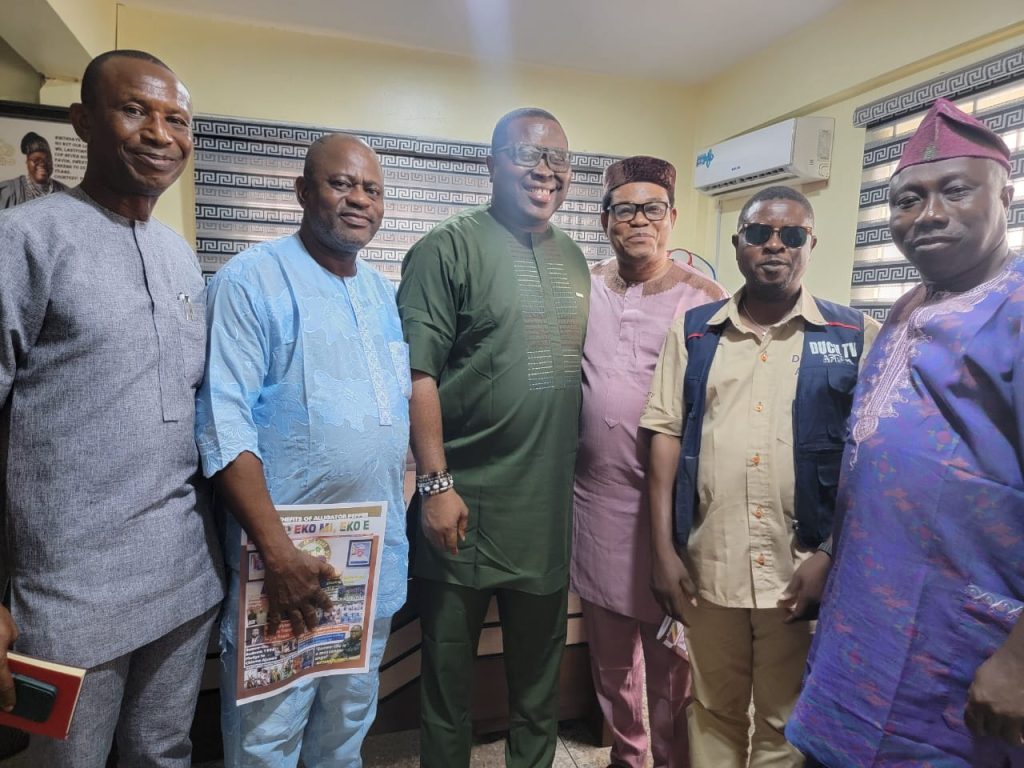
On Friday, August 8, 2025, BestMan Nze Jumbo, widely known as Irumole, sat down with members of the Congress of Nigerian Maritime Media Practitioners (CONMEP) for an exclusive, wide-ranging conversation. Jumbo, the President of Team Nigeria for Change, publisher of Eko Mi Eko e, and Managing Director/CEO of Image Expressions Limited, spoke candidly on issues spanning security, unity, ethnicity, community policing, and inclusive governance, with a strong focus on the continued development of Lagos and Nigeria at large. Miss Ibe Wada, Senior Correspondent with Bizwatchnigeria.ng, was among the association’s journalists present at the session, where Jumbo drew on his political, corporate, and grassroots experience to share both frank assessments and practical recommendations for sustainable progress.
What are the most significant security challenges facing Lagos State, and how are you addressing these issues?
Security challenge, well, if it’s about Lagos particularly, I think it is the influx of people from every part of Africa. Because most times it’s easy to say “from every part of Nigeria,” but you’ll be amazed at the number of people coming into Lagos from Niger, from Chad, from Ghana, Togo, Benin. And because a whole lot of them are largely unchecked, they pose a lot of security threats — some that even pit us against one another.
There have been times when people from all these West African countries will commit some infractions, and we will say, “Ah, it’s the Fulani herdsmen,” whereas it’s not them — it’s not our brothers here. Sometimes people do things and disguise as if they are Igbos. Sometimes people do things, and somehow it has become a major challenge.
Thank God for the government which has put some measures in place to check that. I can also tell you that, by and large, security is much better in Lagos. I can’t remember the last time I heard that “area boys” collected a car. I can’t remember the last time I heard there was a bank robbery. Whether we like it or not, security has really improved in Lagos, and Lagosians are better for it.
Alright. Since it seems like crime in Lagos has drastically reduced under the leadership of Governor Sanwo-Olu, we still have room for improvement when it comes to security because, yes, even if it’s not happening in Lagos, Nigeria is still Nigeria, and if it’s happening in Kano, definitely there’s a relative in Lagos who is affected. How can Lagos security be improved to protect citizens better and more effectively?
Well, let’s be factual and real. Lagos cannot protect other states. The number one job of Babajide Sanwo-Olu as Governor of Lagos State is the protection of life and property in Lagos. Now, by extension, how can the security of Lagos impact other states in Nigeria?
I’ve always recommended: just like Lagos partnered with Kebbi on rice production, Lagos is opening up a food process now whereby Lagos will collect the harvest from every state. Any farmer anywhere that has harvest can bring it to Lagos to buy. That’s collaboration.
So, in the area of security also, other states can come and say, “What are you doing in Lagos that we can copy?” And Lagos will be magnanimous enough to say, “Okay, we are doing this, we have put this in place, these are the things we are doing.” That’s the best way Lagos can help other states — especially those willing to learn.
Again, security cannot be the way we want it to be if there is still massive unemployment. For as long as the young ones don’t have jobs, are not empowered, and are not trained to be productive, they will be very good recruitment grounds for crime. While talking of the security architecture and processes, we should not forget unemployment and illiteracy. A population that is not enlightened will be ready prey for corruption in the form of terrorism, banditry, kidnapping, and other vices.
So, when it comes to community policing, aside from the structured security agencies that we have in the country, what role do you see Community Policing playing in enhancing security in Lagos, and how can it be implemented effectively?
Community policing has become something I don’t run away from. I might not support state police — that’s a personal opinion — because I’ve seen that most governors, when they are in power, support state police. The moment they leave power, they no longer support it. Why? Because they know what they can do with the state police against whoever is identified as an enemy or opponent.
Community policing is something that could be very effective, especially in Lagos style. Lagos is doing something we call alternative security. It has employed alternative security — and that’s where people like us come in within the security architecture of Lagos State.
A lot of people who were previously regarded as useless — some call them “Illeya boys,” some even go as far as calling them hooligans — have all been put into teams, into cells, into groups. They secure their communities. They are the ones we relate to for information gathering. They are the ones that supply us with intelligence, which goes to the police and to the regular security agencies.
In different areas, these guys handle cases like road hijacking, where someone smashes your window while you’re in traffic. Now, they are the ones manning the roads in their areas, and that has drastically reduced such crimes. These are things we don’t make public, but I can tell you authoritatively that it is working. That’s why people like us are involved with Governor Babajide Sanwo-Olu in security matters.
Thank you very much. Away from security and community policing, we are here to talk about the promotion of inclusivity and diversity. What initiatives do you think the Lagos State Government has implemented to promote inclusivity and diversity in government, and what impact have they made so far?
It depends on what you mean by inclusivity and diversity. In some contexts, inclusivity might mean injecting women into government. In others, it might mean bringing Igbos, Hausas, or other tribes into government. Inclusivity might also mean bringing members of other political parties into the APC-led government.
If you want me to take it in a broad view, I can tell you there is still no state in Nigeria that has the inclusivity of Lagos. Since Asiwaju Bola Ahmed Tinubu went to the Lagos public service, you will see directors who are from other states outside of Lagos, not just Yoruba states. Igbos, Hausas — people from other states have become directors in Lagos. Many have become commissioners.
Presently, the Deputy Chief of Staff to the Governor is from Delta. I work directly in a support capacity with the Governor, and I’m not Yoruba. Mrs. Sanwo-Olu is doing so much in empowering women. Lagos is one place where you see PDP, ADC, Labour Party members cooperating with the APC government. They play what I call mature opposition; it’s not about destruction, because they’ve seen performance.
The inclusive nature of government in Lagos is something every other state in Nigeria should copy. Even by religion, we don’t know who is Muslim or Christian when it comes to governance. It’s an all-inclusive approach.
Question: And at the end of the day, are you saying there is also sustainability when it comes to gender inclusiveness?
Sustainability? Yes. I can’t predict the next government, but by insight, Fashola did it, Ambode did it, Sanwo-Olu is doing it. Lagos works on a template. Whoever comes after Sanwo-Olu will have to follow it. You just can’t change it. So, it’s sustainable.
How do you think the government can foster greater unity among different ethnic and cultural groups in Lagos?
I hold a strong opinion on tribe and ethnicity. I am the Otumba of Aguda Land, the Otumba of Igbogbo, and Obasogun Town. Yyet I’m not Yoruba. I’m married to an Ijebu woman. All my life has been in Lagos. I’ve lived in South Africa, and now between the UK and Lagos. I’m from Bonny; my mother is from Owerri. Where will tribalism come from for me?
Tribalism and ethnic considerations are products of illiteracy and lack of exposure. Someone once asked me if Lagos is “no man’s land.” My answer: There is no land not owned by a people. The fact that a land prospers does not mean it is not owned. Lagos’s success comes from collaboration and creating a platform where Igbos, Hausas, and others can succeed.
Moving on, when it comes to land grabbing in Lagos, it seems like Lagos and land grabbing are five and six. How do you collaborate with other government agencies and security forces to prevent land grabbing?
Unfortunately, many see it as a Lagos problem, but it’s worse in other places like Abuja and parts of the East. Lagos has a land-grabbing agency and is about to inaugurate a new one, where I’m supposed to head enforcement when inaugurated. Lagos has put measures in place so people don’t fall prey.
If you want to buy land, go to Alausa and check its status before paying. People fall victim because they chase cheap offers. You cannot eradicate crime 100%, but you can checkmate it. Lagos’s land-grabbing agency has done a fantastic job, but citizens must also verify documents before buying.
What’s your message to victims of land grabbers?
Go to court. Report to the Lagos State Anti-Land Grabbing Agency. They’ve recovered land for many victims, although you might not get your money in full because the criminal might have ended up spending the money. The criminals may go to jail without funds to repay you. But Lagos is awake to the problem.
You have a robust portfolio. How do you combine your role as a publisher with your political involvement?
I’m not in Team Lagos now, I’m in Team Nigeria for Change. I used to be in Team Lagos years back. I’m versatile; sometimes I even act. I’m a publisher with enough staff to handle operations. I also run an advertising and marketing events company. My NGO activates my political interest — for example, on Sanwo-Olu’s 60th birthday, we visited 19 schools, donating exercise books and school bags.
I also support good governance across parties. I’ve worked in Abia with Governor Otti (Labour Party) and in Ogun State under Gbenga Daniel (PDP). I enjoy what I do; that’s how I cope. And when it comes to rest, I rest on the job.
You seem to have worked in several states. Can you tell us about your time in Kogi?
At one point, I was almost the third person in Yahaya Bello’s government. I worked directly with him when he became governor to help stabilise Kogi’s streets and mobilise youths. I was in Kogi until he won his second term before leaving. I was also the APC Congress Chairman for Kogi State at one point.
As the discussion drew to a close, BestMan Nze Jumbo’s words highlight a recurring theme, that security, unity, and inclusivity are inseparable from economic empowerment and active civic engagement. From championing grassroots intelligence networks to advocating collaborative governance beyond political divides, his insights reflected not only his deep involvement in Lagos’s development but also his broader vision for a stable and prosperous Nigeria.
In the end, his message was clear: progress is sustained when every citizen, community, and leader play a role in safeguarding and building the society they call home.
FirstBank was a key sponsor of the Canada-Africa Fintech Summit (CAFS 2025), held from August 5 to 8 at the Sheraton Centre in Toronto, according to an official statement. Organized by Dr. Segun Aina, President of the African Fintech Network, the summit brought together fintech leaders, regulators, startups, and investors from Africa and Canada.
The event focused on scalable digital solutions, boosting investment, and advancing inclusive economic growth across both regions. With over 131 years in financial services, FirstBank’s sponsorship underscores its dedication to promoting cross-border fintech collaboration, financial inclusion, and innovation worldwide.
Olayinka Ijabiyi, Acting Group Head of Marketing and Corporate Communications at FirstBank, said, “Our support for CAFS 2025 reflects our belief that collaboration between African and Canadian fintech ecosystems can drive transformative innovation. FirstBank is proud to help shape that future.”
During a panel with Mississauga–Lakeshore MPP Rudy Cuzzeto and UN World Food Programme Nigeria Country Director David Stevenson, FirstBank’s Group Executive for E-Business & Retail Products, Chuma Ezirim, emphasized the importance of digital collaboration in Africa’s financial sector.
“We are developing APIs that respect regulatory differences, access rights, and security. The technology is the easy part; the real challenge is ensuring security, consent, and performance,” he explained. Ezirim added that fintech in Nigeria is evolving toward convergence—uniting banks, fintechs, and regulators in a responsive ecosystem. Regulatory clarity is key to building trust and attracting investment, he noted.
In another panel, FirstBank’s Chief Technology Officer, Rachel Adeshina, discussed how AI is enhancing credit access for the underbanked.
“We address data poverty by using AI to analyze alternative data, enabling loans to individuals invisible to traditional credit systems,” she said. FirstBank has disbursed over ₦1 trillion in digital loans through this AI-driven approach with a repayment rate exceeding 99%.
Adeshina stressed that this success is supported by favorable regulations, including API banking and data privacy laws, as well as the shift from account-based to wallet-based banking. She noted, “Digital scale in Africa will come through interoperability. Connecting the continent’s 54 markets is the next big challenge, and fintechs are best positioned to lead.”
The summit is part of Canada’s broader Africa Strategy, focused on strengthening economic ties, digital cooperation, and innovation exchange.
As Africa’s digital finance sector expands and Canada develops its open banking framework, CAFS 2025 provided a timely platform to align strategies and ignite new partnerships.
Ali Larijani, newly appointed head of Iran’s Supreme National Security Council, is set to visit Iraq and Lebanon this week as regional tensions rise over plans to disarm Hezbollah, Iran’s key ally in Lebanon.
According to state media, Larijani will first travel to Iraq on Monday to sign a bilateral security agreement before proceeding to Lebanon for high-level meetings with government officials and influential figures. This marks Larijani’s first foreign trip since assuming office last week.
The visit comes against the backdrop of a Lebanese government initiative to disarm Hezbollah, a move strongly opposed by Tehran. Iranian officials have condemned the disarmament plan, accusing it of succumbing to pressure from the United States and Israel. Beirut, however, views Tehran’s response as unacceptable interference in its internal affairs.
Larijani emphasized the importance of Lebanon’s national unity and independence, stating that Iran remains committed to supporting Lebanon in all circumstances. A senior advisor to Iran’s supreme leader, Ali Akbar Velayati, recently described the disarmament effort as aligned with U.S. and Israeli interests.
This diplomatic activity follows a conflict last year between Israel and Hezbollah, which weakened the group politically and militarily. The disarmament push is also fueled by fears that ongoing Hezbollah armament could escalate Israeli military actions.
Larijani’s appointment comes shortly after a 12-day conflict initiated by Israel with strikes targeting Iranian military and nuclear sites, highlighting the continued volatility in the region and Iran’s strategic focus on security and defense.
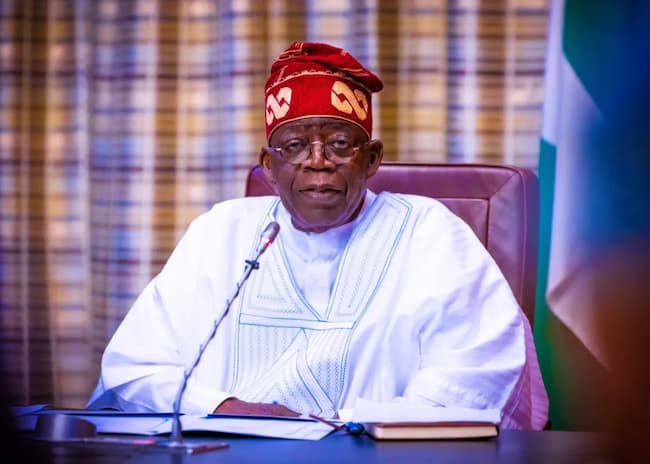
Abubakar Yusuf Dingyadi, former media aide to the Acting Chairman of the Peoples Democratic Party (PDP), Senator Iliya Damagum, has dismissed the chances of the African Democratic Congress (ADC), former presidential candidate Peter Obi, and ex-President Goodluck Jonathan in challenging President Bola Tinubu in the 2027 presidential election.
Speaking to reporters, Dingyadi stated that Tinubu remains the strongest contender for the presidency, noting that many politicians have long supported him and will continue to do so.
He remarked, “Those leaving their parties now are the same ones who never fought for or built their former parties. If they believe they can unite to defeat Tinubu, they are mistaken.”
Dingyadi questioned the unity and commitment of opposition figures, adding, “If Jonathan, Obi, or anyone else believes they can win over the North by promising security, they are wrong. They were divided in 2023 and remain so today.”
He accused some opposition politicians, particularly within the ADC, of prioritizing personal ambition over genuine political progress, suggesting many might defect if they do not secure the party’s endorsement.
“These politicians frequently hold press conferences and media events to criticize Tinubu, but when given leadership opportunities, they failed to deliver tangible results for the people,” he said.
Addressing claims of representation for the North, Dingyadi said, “No Northerner loves the region more than its own people. This is not about ethnicity; that era is over. Anyone aspiring to rule Nigeria must demonstrate what they have done for the North and how they intend to ensure its survival.”
The African Democratic Congress (ADC) is rapidly growing its presence in Rivers State, with over 800,000 registered members, party spokesperson Luckyman Egila announced during a press briefing in Port Harcourt on Friday.
Describing the ADC as a rising political force, Egila highlighted recent high-profile defections to the party, including former governors Rotimi Amaechi and Celestine Omehia, and ex-PDP national chairman Prince Uche Secondus. Senators Lee Maeba and Andrew Uchendu, who serves as ADC’s Vice Chairman for the South-South region, have also officially joined the party.
“These leahttps://bizwatchnigeria.ng/crude-oil-prices-slip-as-tariff-tensions-and-diplomatic-developments-weigh-on-market/ders have formally registered and received their membership cards, becoming full members of the ADC,” Egila said.
Other prominent figures include former Deputy Speaker Chief Austin Okpara and ex-Minister of Transport Dr. Abiye Sekibo.
Egila expressed confidence that more politicians from other parties would join the ADC soon, noting the party’s strong grassroots structures across Rivers State’s local governments and communities.
“Our membership has steadily grown and now exceeds 800,000, with numbers still rising,” he stated.
He also reassured the public that the party remains united despite rumours of internal strife. “The ADC stands strong and does not tolerate actions that could harm its integrity,” Egila affirmed.
These developments underscore the ADC’s rising influence in Rivers State politics, positioning it as a key contender in forthcoming elections.
Zenith Bank Plc closed last week with a market valuation of ₦3.065 trillion, solidifying its position as the second most valuable bank stock on the Nigerian Exchange (NGX) as investors prepared for its second-quarter earnings report.
The stock traded at ₦74.65 per share on Friday, mirroring the strong rally across the local bourse but also showing price fluctuations as traders engaged in profit-taking ahead of the company’s results and dividend announcements.
Market data revealed heightened activity in Zenith Bank shares, with substantial trading volumes impacting valuation trends. Despite this, analysts remain optimistic that earnings growth will continue, supported by the bank’s technology-driven investments and operational resilience.
At the NGX close, the bank’s 41.069 billion outstanding shares were valued at ₦3.065 trillion, approximately 5% below its recent 52-week peak. Equity strategists say investor positioning is now focused on how well the bank will navigate margin pressures facing Nigeria’s banking sector.
Ethereum (ETH), Dogecoin (DOGE), and Ripple’s XRP recorded standout performances in the cryptocurrency market over the past week, posting double-digit percentage gains as investor sentiment turned bullish.
According to CoinMarketCap data, Ethereum is trading at $4,238 — up 21.53% in seven days — breaking key resistance levels and signaling the potential for further upward momentum. XRP gained 10.27% to hit $3.19, with analysts forecasting a possible rally toward $4 following its latest breakout.
Dogecoin jumped 17.64% to $0.2342, supported by retail enthusiasm and speculative buying. Bitcoin, while lagging behind, still managed a 4.15% weekly gain to trade at $118,712. Cardano (ADA) rose 10.91% to $0.8046, while Solana (SOL) climbed 12.50% to $182.08.
BNB remains steady at $801 after a marginal 0.12% 24-hour gain, marking a 6.53% increase on the weekly chart. The total cryptocurrency market capitalization now stands at $3.97 trillion, with $166.26 billion in trading volume over the past 24 hours.
Ethereum’s rally has been a major contributor to the market’s overall momentum, significantly boosting investor portfolios over the last seven days.
Nigeria exported goods totalling 663 million metric tonnes to 11 ECOWAS countries in the first half of 2025, according to the Nigerian Export Promotion Council (NEPC).
Speaking in Abuja, NEPC Director-General Nonye Ayeni said the figure represented a year-on-year increase compared to H1 2024. She added that 488 million metric tonnes worth $83.538 million were exported to 21 African countries outside ECOWAS, up from 1.96% to 2.59% of total export value.
Ayeni stressed that Nigeria’s engagement with the African Continental Free Trade Area (AfCFTA) continues to drive intra-African trade growth, offering significant opportunities for exporters and SMEs.
Indorama Eleme Fertiliser and Chemical Ltd and Starlink Global and Ideal Ltd retained their positions as Nigeria’s top non-oil exporters, accounting for 11.92% and 8.82% of total export value, respectively.
During the review period, 29 banks processed export transactions, with Zenith Bank Plc leading in non-oil export documentation, holding 31.98% of all Nigeria Export Proceed Forms (NXPs). First Bank Nigeria Plc and GTBank Plc followed with 12.44% and 11.47%, respectively.
The exports were routed through 18 exit points, including 8 seaports, 3 airports, and 7 land borders, with 94.15% passing through seaports. The NEPC also conducted 252 capacity-building sessions for 27,352 participants, covering export readiness, agricultural best practices, warehousing, manufacturing standards, and product labelling.
The Central Bank of Nigeria (CBN) has successfully raised approximately N2.3 trillion from a combination of Open Market Operations (OMO) and Nigerian Treasury Bills auctions conducted this week.
Investors, including Deposit Money Banks, Foreign Portfolio Investors, Pension Fund Administrators, and wealth managers, committed a total of N2.566 trillion across the two auctions.
On Tuesday, the CBN offered N600 billion worth of OMO bills—split evenly between 105-day and 245-day maturities—to eligible market participants. Demand was strong, with total subscriptions hitting N2.28 trillion, a 3.8x oversubscription rate. Ultimately, the bank allotted N2.12 trillion for the 245-day bills at a stop rate of 23.7%, effectively absorbing excess market liquidity.
The following day, the apex bank conducted a Treasury bills auction worth N220 billion across 91-day, 182-day, and 364-day maturities. While subscriptions reached N366.55 billion, down from the previous N675.66 billion, the CBN allotted N173.83 billion. Stop rates remained stable for the shorter tenors, but the 364-day bill rate rose by 62 basis points to 16.50%.
Strong appetite for longer-duration instruments was evident, with the one-year bill achieving a bid-to-cover ratio of 2.31x.
The combined outcome of the week’s auctions underscores investor interest in high-yield fixed-income instruments and the CBN’s continued efforts to tighten liquidity in the financial system.