The Nigeria Customs Service (NCS) has appealed to residents of border communities to provide credible intelligence that will aid its ongoing fight against smuggling.
Area Comptroller of Ogun I Command, Mr. Godwin Otunla, made the call on Monday in Idiroko, Ogun State, during an interview with the News Agency of Nigeria (NAN).
Otunla emphasised that tackling smuggling remained a shared responsibility, noting that the command was committed to strengthening collaboration, intelligence sharing, and operational innovation.
“I want to sound a clear warning to smugglers and their collaborators to refrain from all illegal businesses because the command will not relent in the fight against smuggling,” he said.
According to him, the service will remain vigilant and resolute, adding that no matter the level of sophistication employed by smugglers, the command’s personnel would continue to foil their efforts and ensure prosecution in line with the law.
The comptroller also commended the support of sister security agencies in the region, which he described as critical to sustaining the momentum against smuggling activities.
The National Commission for Colleges of Education (NCCE) has uncovered and shut down 22 illegal Colleges of Education operating across the country. The move came as part of a nationwide crackdown on unaccredited institutions, highlighted in the commission’s recent performance report obtained by our correspondent.
According to the NCCE, the exercise also included a personnel audit and financial monitoring across all 21 federal colleges of education.
The action follows President Bola Tinubu’s directive to regulatory agencies to clamp down on “certificate millers” undermining the integrity of Nigeria’s higher education system.
Speaking at the 14th convocation of the National Open University of Nigeria (NOUN) in Abuja, Tinubu—represented by the Director of University Education, Federal Ministry of Education, Rakiya Ilyasu—charged the National Universities Commission (NUC), the National Board for Technical Education (NBTE), and the NCCE to intensify efforts against illegal tertiary institutions.
He stressed that his administration remains committed to strengthening collaboration among education agencies to safeguard standards.
“The National Youth Service Corps, the Joint Admissions and Matriculation Board, the NUC, the NBTE, and the NCCE are working in alignment to ensure that cases of forgery and unrecognised institutions have no place in our education ecosystem,” the President said.
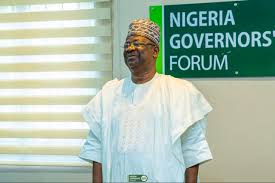
The Nigerian Governors’ Forum (NGF) has appointed Dr. Abdulateef Shittu as its new Director-General, in a major shake-up of its secretariat aimed at reforming operations and aligning with international best practices.
The announcement was contained in a statement issued on Sunday by Yunusa Abdullahi, who also assumes the role of Director of Media and Strategic Communications at the Forum.
According to Abdullahi, the leadership changes followed a comprehensive review conducted by Deloitte, engaged to re-engineer NGF processes and reinforce its position as a leading subnational policy hub. He described the appointments as more than routine, noting that they mark “a deliberate shift towards a more agile and results-driven institution.”
Other key appointments include:
Mr. Edmund Nnaji – Executive Director, Finance and Administration.
Prof. Dauda Yinusa – Executive Director, Policy, Strategy and Research.
Dr. Ahmad Abdulwahab – Executive Director, Programmes and Partnerships.
Chijioke Chuku – General Counsel and Head of Energy.
Dr. Ibrahim Ahmad Katsina – Senior Security Adviser.
Abdullahi stressed that the new leadership team reflects NGF’s commitment to multidisciplinary governance, bringing together expertise in economics, law, health, energy, gender affairs, and security.
“With these appointments, the Forum is better positioned to address Nigeria’s pressing challenges, from economic transformation and security to human capital development,” he added.
A female corps member, Jennifer Edema Elohor, was brutally assaulted by operatives of a local vigilante group in Oba, Idemili South Local Government Area of Anambra State, sparking nationwide outrage and calls for reform.
The incident occurred on July 23, 2025, when operatives of the Agunechemba Vigilante Group, also known as Operation Udo Ga-Achi, stormed an NYSC lodge and accused corps members of engaging in internet fraud. Despite Elohor’s NYSC identification, she was beaten, stripped, and humiliated. A viral video released on August 19 by the Haven 360 Foundation showed her bloodied and pleading for mercy while the vigilantes fired shots in the air.
Following public uproar, the Anambra State Government on August 20 dismissed eight vigilante operatives allegedly involved in the attack. Special Adviser to Governor Chukwuma Soludo on Community Security, Ken Emeakayi, described them as “bad eggs” acting outside their mandate. He said the state had taken responsibility for Elohor’s medical treatment, replaced her damaged belongings, and issued a formal apology to her family and the NYSC.
Police spokesperson SP Tochukwu Ikenga confirmed the operatives had been detained and would face prosecution, though investigations had been slowed by Elohor’s temporary absence from the state.
The NYSC condemned the assault as “outrageous” and said its preliminary findings showed no evidence of illegal activity at the lodge. “We are working with security agencies to ensure the perpetrators are brought to justice,” the scheme stated.
Anambra First Lady, Dr. Nonye Soludo, also reached out to Elohor, pledging support. However, human rights lawyer Ifeanyi Ejiofor called the attack a “national shame,” urging the establishment of an independent oversight body to regulate vigilante groups.
Public reactions on social media have been intense, with hashtags #JusticeForElohor and #NYSCSafety trending. Politicians, student groups, and rights organizations, including the Nigerian Bar Association and NANS, demanded prosecution, compensation, and stronger protections for corps members.
As of August 21, the Haven 360 Foundation confirmed it was working with Elohor and other victims to seek justice and comprehensive reparation. Rights groups have warned that unless the case is pursued to conclusion, it risks being “swept under the carpet.”
The assault has reignited debate over the safety of corps members nationwide and the unregulated activities of state-backed vigilante groups.
The Nigeria Customs Service (NCS) has reaffirmed its commitment to deepen collaboration with the Nigerian Association of Chambers of Commerce, Industry, Mines, and Agriculture (NACCIMA) to boost trade facilitation, revenue generation, and border management.
Comptroller-General of Customs, Adewale Adeniyi, gave the assurance when he hosted NACCIMA’s newly elected National President, Jani Ibrahim, and his team at the Customs Headquarters in Abuja.
Adeniyi said collaboration remains central to his administration’s reform agenda. “Revenue and security are important, but to succeed in both, we must also strengthen trade facilitation. In that spirit, we will dedicate special desks for your members to resolve issues regarding the implementation of our processes,” he stated.
In response, Ibrahim congratulated Adeniyi on his election as Chairperson of the World Customs Organisation Council and praised President Bola Tinubu for extending his tenure, describing both developments as recognition of his transformational reforms.
He commended initiatives such as the Authorised Economic Operator programme, deployment of the indigenous digital platform B’odogwu, Time-Release Studies, and enhancements to the Pre-Arrival Assessment Report, which he said are already reducing bureaucratic bottlenecks and cargo dwell time.
Ibrahim further proposed the creation of a Joint Technical Facilitation Committee comprising NCS and NACCIMA representatives to enable regular consultations and track measurable progress.
According to him, such cooperation would lower the cost of doing business and strengthen Nigeria’s competitiveness under the African Continental Free Trade Area (AfCFTA).
Manufacturers in Kano State have expressed readiness to bypass electricity distribution companies and purchase power directly from the Niger Delta Power Holding Company (NDPHC), citing worsening supply challenges that continue to cripple industrial operations in the state.
The Managing Director and Chief Executive Officer of NDPHC, Jennifer Adighije, pledged the company’s willingness to support the manufacturers under Nigeria’s eligible customer framework, which allows large consumers to buy electricity directly from generation companies.
Adighije gave the assurance while receiving a 20-member delegation from the Manufacturers Association of Nigeria (MAN), Kano Branch, at the company’s headquarters.
“We are committed to partnering with the manufacturing sector to drive industrial growth, create jobs, and enhance socio-economic development. Within the provisions of the eligible customer framework, we are ready to work with MAN in Kano to make this happen,” she said in a statement issued on Sunday.
NDPHC noted that the arrangement would help unlock industrial growth in Kano by providing more reliable electricity supply to manufacturers while easing dependence on distribution companies.
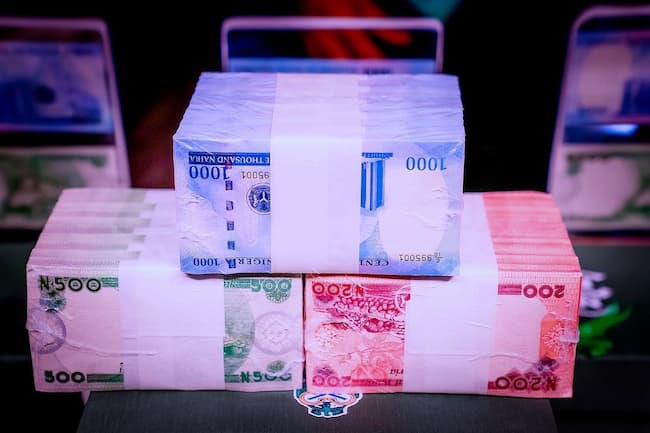
The Central Bank of Nigeria (CBN) has successfully mobilized a total of N1.2 trillion from its recent Open Market Operations (OMO) and Nigerian Treasury Bills (NTB) auctions, executed last week as part of measures to control excess system liquidity.
The auctions, conducted at the primary market level, were aimed at absorbing surplus cash flow arising from matured OMO and Treasury bills that had earlier injected significant liquidity into the economy.
Market data revealed that the auctions recorded overwhelming demand from participants including local commercial banks, asset managers, foreign portfolio investors, and other institutional stakeholders. On Wednesday, the apex bank offered Nigerian Treasury bills valued at N230 billion, while the following day saw the floatation of OMO bills.
OMO Auction Oversubscription
At the OMO auction, the CBN issued N600 billion worth of short-dated instruments, split between 89-day and 124-day maturities. Subscriptions surged to N1.02 trillion, producing a strong bid-to-offer ratio of 1.69 times.
Investment analysts at Cowry Asset Management observed that more than N1 trillion of the bids targeted the 124-day tenor, underscoring investors’ appetite for slightly longer-dated papers to take advantage of higher yields.
The auction closed with a total allotment of N897.2 billion, with stop rates set at 25.50% for the 89-day bills and 25.99% for the 124-day papers.
Treasury Bills Auction Performance
The CBN also conducted its last NTB auction for August, floating N230 billion across the standard tenors of 91-day, 182-day, and 364-day.
According to the breakdown, N50 billion worth of 91-day bills, N30 billion of 182-day bills, and N150 billion of 364-day bills were put on offer. Demand remained robust, reaching N396 billion, with nearly 90% of the interest directed towards the one-year (364-day) maturity. This trend highlights investors’ strategy of locking in yields for longer periods to mitigate reinvestment risks.
The final allotment for the auction stood at N303.78 billion, with stop rates adjusting upwards to 15.35% for the 91-day tenor and 17.44% for the 364-day bills, while the 182-day maturity remained unchanged at 15.50%.
However, analysts noted that the bid-to-cover ratio dipped to 1.30 times, a decline from 2.12 times in the preceding auction, signaling a slight moderation in demand despite prevailing liquidity in the market.
Outlook
Looking ahead, the financial markets are bracing for another N350 billion in OMO maturities expected to hit the system this week. Analysts believe this development will sustain liquidity levels and continue to shape investor appetite in the fixed income market.
The Nigerian Electricity Regulatory Commission (NERC) has transferred regulatory oversight of the electricity market in Bayelsa State to the Bayelsa Electricity Regulatory Agency (BYERA). In a notice issued Monday via its social media platforms, the commission said the move was in line with the amended 1999 Constitution and the Electricity Act 2023.
“In compliance with the amended Constitution of the Federal Republic of Nigeria and the Electricity Act 2023 (Amended), the Nigerian Electricity Regulatory Commission has issued an order to transfer regulatory oversight of the electricity market in Bayelsa State from the Commission to the Bayelsa State Electricity Regulatory Agency,” NERC stated.
Under the Electricity Act 2023, NERC remains the central regulator for interstate and international generation, transmission, supply, trading, and system operations. However, states that establish intrastate electricity markets can formally request a transfer of regulatory authority from NERC to their state agencies.
As part of the transfer, NERC directed the Port Harcourt Electricity Distribution Company (PHED) to set up a subsidiary to manage intrastate supply and distribution in Bayelsa. The company is required to complete the incorporation of PHED SubCo within 60 days from August 21, 2025, and obtain a distribution licence from BYERA. All transfers are expected to be finalized by February 20, 2026.
With this development, Bayelsa joins Lagos, Imo, Ogun, Ondo, Ekiti, Enugu, Niger, Edo, Oyo, and Plateau as states that now have authority to regulate their electricity markets. The state can now generate, transmit, distribute electricity, and issue licences to investors across the value chain.
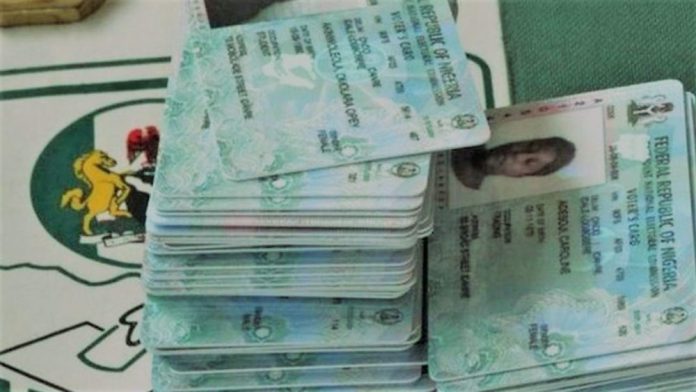
You’ve probably seen the news floating around social media: the Independent National Electoral Commission (INEC) has kicked off physical voter registration across Nigeria. Yes, the online pre-registration ended on August 18, and now the in-person phase is live. For a lot of Nigerians—whether you’re still at home, thinking of japa, or already navigating your travel blogger lifestyle abroad—this process matters more than you think.
Why? Because your Permanent Voter Card (PVC) is more than a piece of plastic. It’s your ticket to shaping the future you often complain about in WhatsApp groups and airport lounges. And here’s the kicker: if you don’t complete this phase, that online form you filled means nothing.
So, let’s break it down. Here are seven things you absolutely need to know about the 2025 Continuous Voter Registration exercise.
1. Registration Is Now Physical—No More Sitting Behind Your Screen
INEC started things easy with online pre-registration, but now it’s time to show up in person. From Monday to Friday, 9:00 am to 3:00 pm, you’ll need to head over to your INEC State office or your Local Government office.
Think of it like picking up your boarding pass—you might have booked the ticket online, but until you physically check in, you’re not flying anywhere. Same logic here: no physical appearance, no PVC.
And for Nigerians abroad who are constantly refreshing flight deals to Lagos or Abuja—if you plan to vote in the near future, factor this registration into your travel calendar.
2. First-Timers, This One’s for You
If you’ve just turned 18 (or you’ve been 18 for a while but never got around to it), now’s your chance. This is your official entry into Nigeria’s democratic process. You’ll need some form of identification—national ID, driver’s license, or even your birth certificate—to confirm your eligibility.
Let’s be honest, many young Nigerians are skeptical about whether their votes matter. But here’s a reality check: 70% of Nigeria’s population is under 30. If you guys actually showed up, the numbers would flip the political script overnight.
3. Lost Your PVC? Don’t Panic
We all know how Lagos traffic, house moves, or even a little absent-mindedness can swallow up important documents. If your Permanent Voter Card has gone missing—or maybe it got bent in your wallet or chewed by your little cousin—INEC’s got you covered.
Physical registration also includes card replacement. It’s free, it’s straightforward, and it’s way less stressful than replacing a passport (ask anyone who’s been through that process at Ikoyi).
4. Moving to a New City? Transfer Your Registration
The japa dream doesn’t always mean Canada or the UK—sometimes it’s just relocating from Jos to Lagos for work or moving from Enugu to Abuja for school. And let’s face it: voting in your old neighborhood when you no longer live there is unrealistic.
That’s why INEC allows you to transfer your voter registration. It ensures you cast your ballot where you actually reside. It’s basically the electoral version of forwarding your mail, except this one decides who gets to govern your local reality.
5. Correcting Your Details Matters More Than You Think
Typos happen. Maybe your name was misspelled. Maybe you’ve changed your surname after marriage. Or maybe you moved and your address needs an update. This physical phase is your shot at fixing those details.
Why does it matter? Because even a small error can get you turned away on election day. Imagine standing under the hot sun at a polling unit, only to be told your details don’t match. Frustrating, right? Better to fix it now.
6. Online Pre-Registration Isn’t Enough—Finish What You Started
A lot of Nigerians jumped on INEC’s online portal in August, thinking they were done. But here’s the thing: that was just the first half of the journey. The physical registration is where the process gets sealed.
It’s like applying for a Schengen visa—you can fill the form online, but until you show up at the embassy with your documents and fingerprints, you’re not going anywhere. Same principle. If you don’t complete the second step, your application is as good as abandoned.
7. Find Your Registration Centre Before You Head Out
Nothing is more annoying than trekking across town only to hear, “Sorry, this isn’t the right centre.” INEC has published a full list of registration centres on its official portal, and it’s worth checking before you make the trip.
Some state headquarters handle bulk traffic, while others delegate to LGAs. Save yourself the frustration—look it up, confirm, and plan your route. Think of it as plotting your travel itinerary: no one books a hotel without knowing the address, right?
Why This Matters Beyond Voting
Here’s the part most people miss: your PVC is not just about elections. Increasingly, it doubles as a form of identification in Nigeria. Banks sometimes ask for it, government offices recognize it, and in certain cases, landlords even request it. So even if you’re not the most politically active person, that small card could save you headaches in everyday transactions.
And for those constantly plotting their japa journey, there’s another angle. Whether you plan to return in five years or ten, your voice in Nigeria still counts. The country you leave behind is the country you’ll meet when you visit for Christmas or when you eventually bring your kids “back home.” Voting isn’t just about the now—it’s an investment in the Nigeria you want to come back to.
A Quick Recap (Because Lists Make Life Easier)
Here’s what you need to remember about INEC’s physical voter registration:
Show up physically, Monday to Friday, 9:00 am – 3:00 pm.
First-time voters (18+) can register.
Lost or damaged PVCs can be replaced.
You can transfer your registration if you’ve relocated.
You can update your name, address, or other personal info.
Online pre-registration doesn’t count until you show up physically.
Check the INEC portal for the nearest registration centre.
Final Word
Honestly, registering to vote isn’t the most glamorous thing to do. It won’t give you Instagram-worthy photos like Santorini sunsets or a safari in Kenya. But it’s one of those mundane, grown-up responsibilities that has ripple effects bigger than we often admit.
Whether you’re a travel blogger weaving Nigerian stories into your global adventures, a tourist curious about how democracy looks here, or a young Nigerian still debating the japa question—this process is your touchpoint with Nigeria’s future.
Because here’s the thing: change doesn’t just happen. It’s registered, step by step, person by person, card by card. And this week, that step starts with you showing up at your local INEC office.
Cambodia’s parliament on Monday approved legislation enabling authorities to revoke citizenship from nationals accused of “colluding” with foreign powers, a move rights groups warn could be used to silence dissent.
The bill, unanimously passed by 120 lawmakers in the National Assembly including Prime Minister Hun Manet, empowers the government to strip nationality from citizens for acts deemed to threaten “sovereignty, territorial integrity and national security.” A committee, chaired at the request of Interior Minister Sar Sokha, will oversee revocations.
Sar Sokha defended the law, claiming Cambodia faces threats from “a small handful” of citizens allegedly working with neighboring Thailand. The measure follows deadly border clashes last month that killed at least 43 people, though plans to amend citizenship rules predate the fighting.
Rights groups have strongly condemned the legislation. A coalition of 50 organizations said it would have a “disastrously chilling effect” on free expression and warned of “abuse” against activists, political opponents, and ethnic minorities. Amnesty International described the law as a “heinous violation of international law,” citing Cambodia’s lack of judicial independence.
The law still requires approval from the Senate and the head of state—both expected to be procedural steps. Critics note the legislation rolls back a constitutional guarantee of unconditional citizenship, removed in an amendment last month.
Cambodia’s record on dissent has drawn international concern. Dozens of opposition figures remain imprisoned or entangled in legal cases. Opposition leader Kem Sokha, convicted of treason in 2023 and sentenced to 27 years under house arrest, has long rejected the charges as politically motivated.
US health authorities have suspended the license for the Ixchiq vaccine against the chikungunya virus following reports of “serious adverse events,” the vaccine’s French manufacturer Valneva announced on Monday.
Ixchiq, one of only two vaccines approved by the US Food and Drug Administration (FDA) for the mosquito-borne virus, was granted approval in 2023. However, safety concerns—particularly among older patients—have triggered reviews by regulators, including the European Medicines Agency earlier this year.
“The suspension of the license is effective immediately,” Valneva’s chief executive Thomas Lingelbach said in a statement. “As we determine potential next steps, and as the clear threat of chikungunya continues to escalate globally, Valneva remains fully committed to maintaining access to our vaccine as a global health tool.”
Chikungunya, spread by Aedes mosquitoes, causes symptoms similar to dengue fever and Zika virus, including high fever and severe joint pain that can be debilitating and long-lasting. While rarely fatal, the disease poses higher risks to infants and the elderly.
Public health experts warn that climate change is driving the spread of mosquito populations, raising the likelihood of chikungunya reaching new regions. In July, the World Health Organization (WHO) cautioned of a possible major epidemic, pointing to early warning signs reminiscent of an outbreak two decades ago that affected nearly half a million people worldwide.
Europe has recorded 27 chikungunya outbreaks so far this year—a record high—according to the European Centre for Disease Prevention and Control.
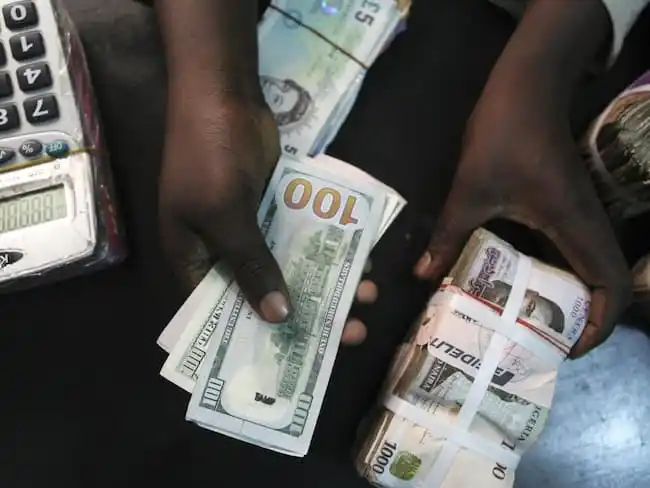
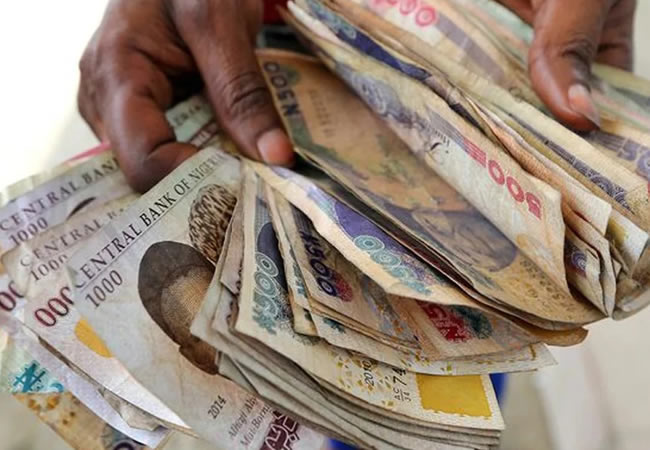
The exchange rate between the Naira and the US dollar, according to the data released on the FMDQ Security Exchange, the official forex trading portal, showed that the naira closed at 1560.00 per $1 on Monday, August 25th , 2025. The naira traded as high as 1532.00 to the dollar at the investors and exporters (I&E) window onSunday.
Dollar to naira exchange rate today black market (Aboki dollar rate):
The exchange rate for a dollar to naira at Lagos Parallel Market (Black Market) players buy a dollar for ₦1550 and sell at ₦1540 on Sunday 24th August, 2025, according to sources at Bureau De Change (BDC).
Please note that theCentral Bank of Nigeria (CBN) does not recognize the parallel market (black market), as it has directed individuals who want to engage in Forex to approach their respective banks.
Dollar to Naira Black Market Rate Today
Dollar to Naira (USD to NGN)
Black Market Exchange Rate Today
Buying Rate
₦1550
Selling Rate
₦1540
Dollar to Naira CBN Rate Today
Dollar to Naira (USD to NGN)
CBN Rate Today
Highest Rate
₦1536
Lowest Rate
₦1534
Please note that the rates you buy or sell forex may be different from what is captured in this article because prices vary.
The Nigerian capital market has continued to demonstrate resilience, buoyed by strong local investor participation despite global headwinds. Recent data from the Nigerian Exchange (NGX) revealed that Foreign Portfolio Investment (FPI) transactions rose by 4.8% month-on-month in July 2025, reaching N145.95 billion (US$95.17 million), compared to N139.31 billion (US$91.07 million) in June.
Despite the increase, foreign inflows represented only 8.04% of total market turnover, which stood at N1.82 trillion. Analysts note that while foreign activity remains modest, its presence reinforces investor confidence and adds credibility to the Nigerian equities market.
The highlight of July’s trading activity, however, was the surge in domestic participation. Local transactions soared by 161.1% to N1.67 trillion from N639.34 billion in June, accounting for nearly 92% of total turnover. Institutional investors played a key role, executing block trades that strengthened market stability.
The breakdown of FPI activity showed inflows declined sharply to N50.48 billion from N72.82 billion in June, while outflows rose to N95.47 billion from N66.49 billion, signalling growing caution among offshore investors amid currency and macroeconomic concerns.
On the domestic side, institutional investors dominated with N1.15 trillion worth of trades compared to N364.71 billion in June. Retail activity also climbed to N516.50 billion from N274.63 billion, though net outflows outweighed inflows, reflecting cautious optimism.
Year-to-date figures showed a total NGX transaction value of N6.01 trillion as of July 2025, a 94.1% increase from N3.10 trillion recorded in the same period of 2024. Domestic investors accounted for 78.67% of this, while foreign participation improved slightly to 21.33% from 19.32% last year.
Market analysts attributed the positive trend to strong corporate earnings, stable exchange rates, moderating inflation, and supportive regulatory reforms. Declining domestic debt yields and corporate actions in sectors such as telecoms, financial services, and energy also boosted equities.
However, risks persist. Rising stock valuations have led to intermittent profit-taking, while elevated fixed-income yields remain a strong alternative for risk-averse institutional investors.
Although foreign participation remains modest, analysts believe its stabilizing role is critical. They maintain that continued macroeconomic reforms, currency stability, and investor confidence will be essential to sustaining market momentum.
The Nigerian Exchange (NGX) recorded a significant decline in the past week as bearish sentiment wiped out approximately N2.3 trillion from the market’s capitalization. The downturn extended the negative performance observed in the preceding week, signalling continued pressure across key equities.
Market data showed that widespread sell-offs across banking, insurance, oil and gas, and industrial goods sectors dragged performance indicators lower. Analysts attributed the slump to prevailing bearish sentiment and weak investor confidence, which has limited buying interest.
However, the Consumer Goods Index managed to buck the negative trend, advancing by 0.83% week-on-week. According to Cowry Asset Limited, renewed optimism in stocks such as International Breweries Plc and Champion Breweries boosted resilience in the consumer sector.
The All-Share Index (ASI) closed at 144,628.20 points, down 0.77% from 145,754.91 points in the previous week. Correspondingly, market capitalization fell by N2.29 trillion to settle at N89.21 trillion, reducing year-to-date gains to 37.00%.
Market breadth weakened, with 43 gainers against 54 losers, reflecting cautious sentiment among traders. Activity levels also dipped as total deals fell by 14.21% to 152,634, while trade volume declined 36.65% to 5.43 billion units. Despite this slowdown, trade value increased by 8.47% to N89 trillion due to higher-value transactions.
Sectoral performance was broadly negative, with four out of six tracked indices ending in the red. The Industrial Goods Index led the decline with an 8.42% loss, while banking, insurance, and oil and gas sectors also closed weaker. Meanwhile, consumer goods stood out as the only gainer.
Among top-performing stocks were AUSTINLAZ (+20.8%), NCR (+20.7%), ENAMELWA (+19.4%), GUINEAINS (+18.8%), and MBENEFIT (+14.3%). On the downside, THOMASWY (-18.9%), NEM (-18.2%), STANBIC (-15.4%), LASACO (-14.6%), and RTBRISCOE (-13.9%) ranked as the week’s worst performers.
Looking ahead, analysts at Cowry Asset Management Limited expect mixed trading sentiment to dominate in the coming week. They warned that pressure on banking and industrial stocks could persist due to macroeconomic concerns and tight liquidity, although bargain-hunting in oversold counters might spur mild recoveries.
The Central Bank of Nigeria (CBN) intervened in the foreign exchange market last week with a $50 million injection into authorized dealer banks to ease volatility and stabilize liquidity.
The move came amid rising dollar demand in the official market, which had put pressure on the naira. The local currency closed the week at N1,535.03 per dollar, down from N1,532.51, marking a week-on-week depreciation of N2.52.
The CBN’s intervention was complemented by higher inflows from foreign portfolio investors following the OMO auction, boosting liquidity and market confidence. Data also showed that Nigeria’s gross external reserves rose to $41.08 billion, the highest since December 2021, after a weekly increase of $353.47 million.
Despite these interventions, pressure remained evident in the forward market. According to Cordros Capital Limited, forward FX contracts depreciated across the curve: the one-month rate slipped to N1,577.40 per dollar, three-month fell to N1,653.75, six-month declined to N1,763.94, and the one-year rate eased to N1,975.62.
Analysts believe the naira will remain relatively stable in the near term, supported by robust liquidity and consistent CBN interventions. They also expect sustained inflows from foreign investors due to attractive carry trade opportunities and improving confidence in Nigeria’s FX market.
In addition, growing non-oil export receipts and reduced speculative activities are expected to reinforce steady dollar inflows from domestic sources, ensuring stability in the official market.
According to market data, the local currency closed at N1,535.03 per dollar, slipping by N2.52 from the previous week. Trading activity fluctuated as demand and supply dynamics shaped the FX market.
In early sessions, weak dollar demand pushed the naira to N1,529, but stronger buying interest quickly lifted trades back to the N1,535 level. Midweek, sustained demand pressure drove the rate as high as N1,538.50 before the CBN’s $50 million intervention and inflows from oil firms eased liquidity concerns.
By the end of the week, trades stabilized between N1,534.50 and N1,536.00, with the naira closing weaker by 16 basis points week-on-week. Analysts at AIICO Capital Limited noted that while interventions provided relief, liquidity constraints persisted.
Meanwhile, Nigeria’s external reserves rose by $242 million to $41.07 billion, strengthening the country’s ability to support the currency.
On the global scene, oil prices showed slight gains, with Brent crude settling at $67.73 per barrel and U.S. West Texas Intermediate closing at $63.66. Both benchmarks ended the week with positive returns after three weeks of losses.
Gold also gained momentum, climbing 1.1% to $3,373.89 per ounce, buoyed by expectations of a September interest rate cut by the U.S. Federal Reserve.
Looking ahead, analysts forecast that oil price volatility and geopolitical uncertainty will continue to influence Nigeria’s FX market, though strong reserves and interventions may help stabilize the naira.
Global oil prices ended last week on a positive note, driven by renewed fears of supply disruptions from the Russia-Ukraine war and fresh U.S. sanctions on Iran’s energy exports.
Brent crude closed at $67.04 per barrel, up 1.9% from $65.77 in the previous week, while West Texas Intermediate (WTI) rose 1.6% to $63.31 per barrel.
The rally came after Ukraine’s military reported one of its largest air assaults of the year, which left one dead and 15 injured. President Volodymyr Zelensky accused Moscow of showing little interest in peace negotiations and renewed his call for tougher international sanctions.
Meanwhile, Washington imposed sanctions on two China-based oil storage and terminal operators accused of facilitating Iranian crude shipments. This marks the fourth round of penalties targeting Chinese firms linked to Tehran’s oil trade, which the U.S. claims funds terrorism and regional instability.
The tighter restrictions reinforced market expectations of constrained supply, supporting crude prices amid heightened geopolitical uncertainty.
Investors are also keeping a close watch on U.S. Federal Reserve Chair Jerome Powell’s upcoming remarks at the Jackson Hole Symposium, which could provide signals on interest rate cuts. Analysts say any policy shift aimed at stimulating growth may further lift demand for crude in the months ahead.
Short-term benchmark rates in Nigeria’s money market declined sharply last week following significant liquidity inflows that reversed earlier tight conditions.
Interbank rates had climbed above 32% at the start of the week due to funding pressures, pushing deposit money banks to rely heavily on the Central Bank of Nigeria’s (CBN) Standing Lending Facility. Average weekly borrowing surged to N360.19 billion compared with N294.60 billion in the prior week, according to Cordros Capital Limited.
Liquidity pressures initially worsened following the CBN’s open market operation (OMO) auctions and foreign exchange interventions, but conditions eased midweek as N854 billion in OMO maturities and N392.74 billion in FGN bond coupon payments hit the system.
These inflows supported a steep decline in interbank borrowing rates. By Friday, the open repo rate had dropped to 28.90% while the overnight rate settled at 29.15%, reversing the early-week highs.
However, the CBN later issued a N600 billion OMO offer, which absorbed excess liquidity and temporarily drove funding costs back toward 32.5%. Despite this, system liquidity closed the week with a positive balance of N287.76 billion, ensuring relatively lower borrowing costs.
Analysts at AIICO Capital expect further inflows of nearly N1.7 trillion from statutory revenue allocation, OMO maturities, and bond coupons to maintain downward pressure on short-term rates, barring unforeseen liquidity shocks.
Nigeria’s Bonny Light crude oil grade slid below the $70 per barrel mark, reflecting rising domestic output that exceeded the Organisation of Petroleum Exporting Countries and allies’ (OPEC+) quota. The grade, which had traded as high as $75 in August, ended last week at $69.32 per barrel, representing a 1.23% weekly decline.
Global market data showed that the dip in Bonny Light contrasted with modest recoveries in other benchmarks. Brent crude rose 0.30% to $67.90 per barrel, while West Texas Intermediate (WTI) advanced 0.08% to $63.48. Analysts linked the mixed market performance to renewed supply-side risks triggered by geopolitical tensions, positive inventory reports, and fresh demand optimism.
Cowry Asset Limited noted that sentiment turned cautiously bullish despite earlier selling pressure, with oil prices swinging amid peace talks and global security concerns.
Meanwhile, Nigeria’s external reserves climbed 0.56% week-on-week to $41.07 billion – the highest since December 2021 – strengthening the country’s buffer against external shocks and easing near-term pressure on the naira.
Nigeria’s oil output continued to outpace its OPEC+ allocation for the second month, averaging 1.50 million barrels per day in July. Analysts attributed the rebound to improved security in the Niger Delta and renewed investment by indigenous operators who acquired divested assets from international oil firms.
Cordros Capital projected that production could remain slightly above quota through year-end, supported by stronger security measures and gradual sector recovery. However, risks related to pipeline security and infrastructure bottlenecks could still weigh on future gains.
The insurance sector emerged as the most active segment on the Nigerian Exchange Limited (NGX) last week, recording 2.1 billion shares worth N6.2 billion in transactions across 17 listed companies.
AIICO Insurance topped activity with 236.96 million shares valued at N995.88 million exchanged in 4,691 deals. It was closely followed by Mutual Benefits Assurance, which traded 204.7 million shares worth N879.2 million.
Other major performers included Universal Insurance with 434.2 million shares worth N559.1 million, AXA Mansard Insurance with 33.2 million shares worth N554.2 million, and Lasaco Assurance, which recorded N457.4 million in 1,197 deals. Linkage Assurance, Veritas Kapital Assurance, Sovereign Trust Insurance, and Prestige Assurance also featured prominently among the top traded stocks.
Mr. David Adonri, Vice President of Highcap Securities, observed that the sector had not enjoyed such momentum since before the global financial crisis. He credited the resurgence to the Nigerian Insurance Industry Reform Act (NIIRA) 2025, which was signed into law by President Bola Tinubu.
Adonri explained that investors now see NIIRA 2025 as a potential game changer capable of transforming the sector’s outlook. However, he cautioned that insurance operators must address long-standing trust concerns, enhance governance, and adopt strategies to attract investors ahead of new recapitalisation requirements.
He added that insurance plays a vital role in savings mobilisation and economic development, urging stakeholders to leverage the current rally to rebuild confidence in the industry.