









Key points
- Vice President Kashim Shettima says MSMEs account for 90 per cent of Nigerian businesses and employ more than 60 million people.
- The Federal Government says it is shifting from direct handouts to building an ecosystem that supports enterprise growth.
- Government interventions include a N75 billion MSME fund, a N50 billion grant scheme and N874 billion in financing through the Development Bank of Nigeria.
- Shared infrastructure hubs established across the country have reportedly supported the creation of 650,000 jobs.
- The remarks were made at the 8th National MSME Awards in Abuja.
Main story
Vice President Kashim Shettima says micro, small and medium enterprises (MSMEs) remain the backbone of Nigeria’s economy, accounting for 90 per cent of businesses nationwide and providing employment for more than 60 million Nigerians.
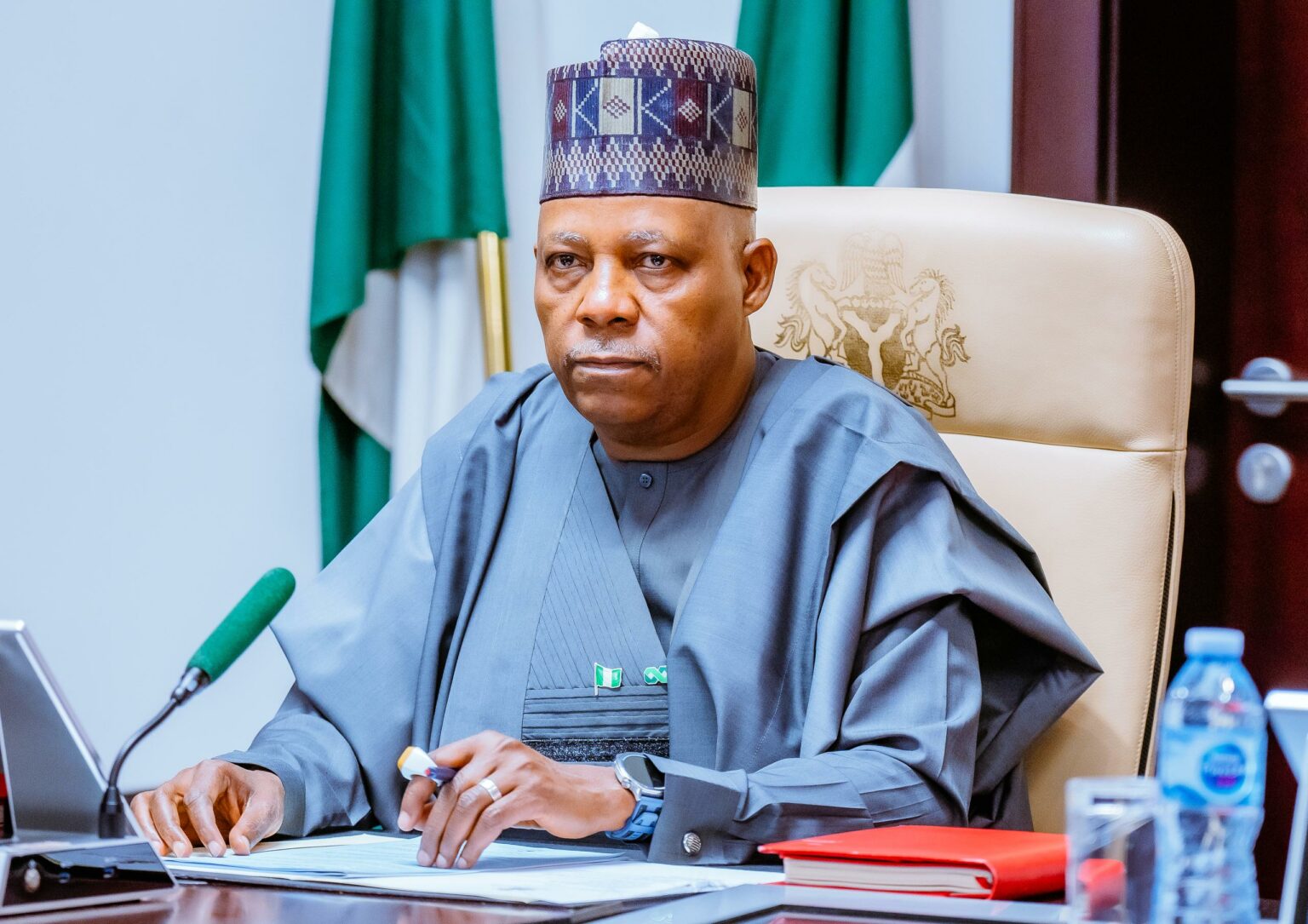
Speaking at the 8th National MSME Awards in Abuja, Shettima said small businesses play a critical role in driving economic activity, creating jobs and improving livelihoods across the country.
Represented by Sen. Ibrahim Hadejia, the Deputy Chief of Staff to the President, the vice president said the administration of President Bola Tinubu is focused on building an enterprise-led economy where opportunities are spread more evenly across the country.
According to him, government policy is increasingly centred on creating an enabling environment for businesses to thrive rather than relying solely on grants and loans.
He highlighted a number of interventions aimed at supporting entrepreneurs, including the Expanded National MSME Clinics, which bring business owners together with regulators, financial institutions and support agencies to resolve operational challenges.
Shettima said the government has also established 21 shared infrastructure facilities across the country, providing entrepreneurs with access to digital infrastructure, production equipment and collaborative workspaces. The facilities, he said, have contributed to the creation of about 650,000 jobs.
On access to finance, the vice president said the Federal Government has introduced a N75 billion MSME Intervention Fund and a N50 billion Presidential Conditional Grant Scheme to improve capital availability for small businesses.
He added that the Development Bank of Nigeria has disbursed N874 billion to about 751,000 women- and youth-led MSMEs, while the Nigerian Export-Import Bank has provided more than N394.88 billion in financing to export-focused businesses.
The administration has also invested in skills development through programmes such as Skill-Up Artisans, which has reportedly trained more than 165,000 artisans nationwide.
The event also featured the launch of a book, Building Nigeria, Empowering MSMEs: A Compendium of the Federal Government’s Initiatives and Interventions for Nigerian MSME Growth, written by Temitola Adekunle-Johnson, Special Adviser to the President on Job Creation and MSMEs.
The issues
Despite their importance to the economy, Nigerian MSMEs continue to face challenges including limited access to affordable financing, infrastructure deficits, regulatory bottlenecks and high operating costs.
The government’s approach increasingly focuses on creating business support systems, improving access to capital and reducing barriers that limit the growth of small enterprises.
The success of these interventions will be closely watched as policymakers seek to diversify the economy, reduce unemployment and expand opportunities for young entrepreneurs.
What’s being said
“90 per cent of all Nigerian businesses are MSMEs. They are the largest employers of labour in this country, providing jobs for over 60 million of our people.” — Kashim Shettima
“One of the central pillars of Tinubu’s Renewed Hope Agenda is creating an enabling environment for MSMEs to thrive and prosper.” — Kashim Shettima
“The awards are a clear indication of President Bola Ahmed Tinubu’s commitment to repositioning MSMEs as the foundation of Nigeria’s economic prosperity.” — Mohammed Idris
What’s next
The government says it will continue expanding access to finance, skills development and infrastructure support for small businesses, while encouraging stronger collaboration between entrepreneurs, regulators and financial institutions.
Attention will also turn to the impact of existing interventions and whether they translate into higher business survival rates, increased productivity and job creation.
Bottom line
The Federal Government says MSMEs remain the engine of Nigeria’s economy, and its current strategy is focused on building the infrastructure, financing and support systems needed to help small businesses scale and create more jobs.





 remain the backbone of Nigeria's economy, ...)