



Key Points
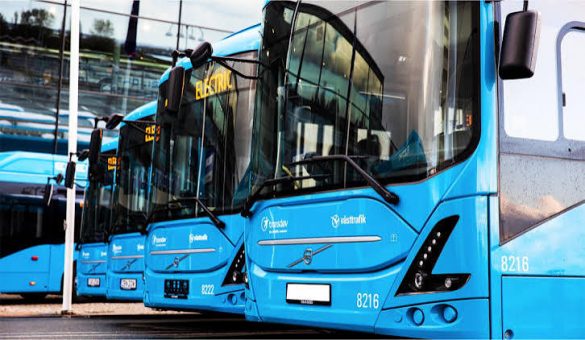
- Federal Government has inaugurated 100 electric buses under the Renewed Hope Mass Transit initiative.
- The first 37 buses have been delivered for use by federal civil servants.
- Government says the scheme will reduce commuting costs and improve workers’ safety, punctuality and productivity.
Main Story
The Federal Government has introduced 100 electric buses as part of efforts to ease transportation challenges faced by federal civil servants across the country.
The Head of the Civil Service of the Federation (HCSF), Mrs Didi Walson-Jack, disclosed this on Wednesday during the inauguration of the Renewed Hope Mass Transit buses in Abuja.
Walson-Jack said 37 of the 100 buses had been delivered as the first batch under the initiative, which she described as a direct investment in the welfare of government employees.
She said the project was particularly significant for her as it marked the end of her tenure as HCSF, which concludes on Thursday.
According to her, the initiative would help address the financial and safety pressures associated with daily commuting while improving punctuality and productivity among civil servants.
She said transportation should be viewed as more than simply moving workers between their homes and offices because commuting costs and risks directly affect employees’ welfare and performance.
The HCSF said the acquisition of the buses was funded through the Renewed Hope Infrastructure Development Fund.
She also credited President Bola Tinubu for supporting the initiative and commended the Minister of State for Industry, Sen. John Enoh, for his involvement in the project.
Walson-Jack acknowledged the National Automotive Design and Development Council (NADDC), led by its Director-General, Mr Joseph Osanipin, for working with the project team to align the buses with the objectives of Nigeria’s national automotive policy.
The Issues
Daily transportation remains an important welfare concern for civil servants because of its effect on household finances, personal safety and the ability of workers to arrive at their duty posts on time.
The Federal Government is presenting the electric bus scheme as both a staff welfare intervention and part of its wider effort to translate the Renewed Hope Agenda into practical benefits.
The use of electric buses also links the initiative to the government’s broader sustainability objectives and efforts to develop Nigeria’s automotive industry.
However, the initial deployment represents only part of the planned fleet, with 37 buses delivered from the 100 approved for the project.
What’s Being Said
“An intervention that makes transportation safer, more reliable and more affordable is therefore not a peripheral welfare gesture; it is an investment in a more productive civil service.” — Didi Walson-Jack, Head of the Civil Service of the Federation
“For me, it is a dream come true. This inauguration is providentially my parting gift to my dearly beloved federal civil servants.” — Didi Walson-Jack, Head of the Civil Service of the Federation
“My dearly beloved civil servants, treat these buses as your own personal assets. They are assets that have been provided for you all.” — Didi Walson-Jack, Head of the Civil Service of the Federation
What’s Next
The first 37 buses will form the initial deployment under the 100-bus project, while the remaining buses are expected to be delivered and deployed as planned.
The Federal Government will also rely on civil servants to maintain and properly use the buses to ensure that the intervention provides sustained benefits.
The initiative is expected to contribute to lower commuting costs for workers while supporting safer and more reliable transportation.
Bottom Line
The 100-bus electric transport scheme is designed to address a practical pressure facing federal civil servants by reducing commuting costs and risks. With 37 buses already delivered, the government is beginning deployment while linking the project to staff welfare, productivity, sustainability and development of Nigeria’s automotive sector.