








Key points
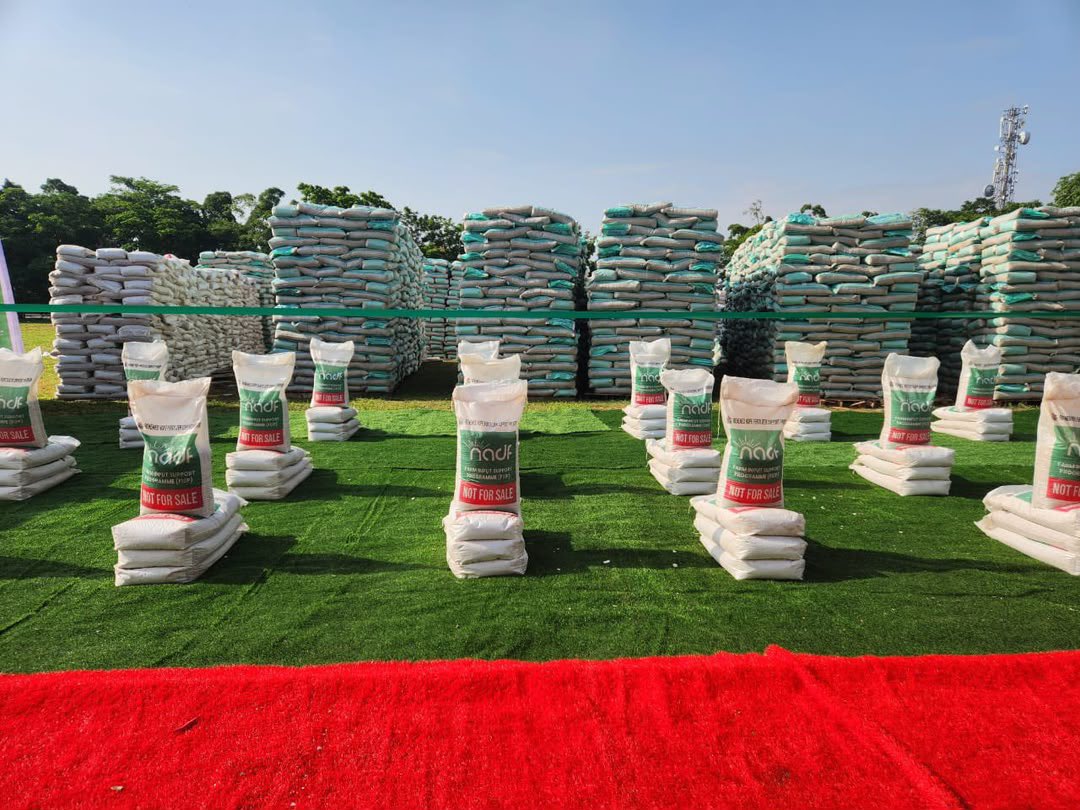
- The National Agricultural Development Fund (NADF) has commenced the distribution of free fertilisers and agrochemicals to smallholder farmers across 25 states.
- About 128,930 farmers are expected to benefit from the Renewed Hope Farm Inputs Support Programme (FISP).
- More than 80,000 bags of fertiliser have already been distributed to over 20,000 farmers in the South-West zone.
Main story
The National Agricultural Development Fund (NADF) has commenced the nationwide distribution of free fertilisers and agrochemicals to smallholder farmers under the Federal Government’s Renewed Hope Farm Inputs Support Programme (FISP), as part of efforts to boost food production and enhance agricultural productivity across the country.
The programme targets approximately 128,930 farmers in 25 states, providing critical farm inputs ahead of the cultivation season to support increased crop yields and strengthen national food security.
According to NADF, the distribution exercise has already commenced across designated zones, with significant progress recorded in the South-West geopolitical zone, where 20,160 farmers have received 80,640 bags of fertiliser.
The intervention is expected to expand to other regions in phases, with thousands of farmers in the Federal Capital Territory (FCT) scheduled to receive fertilisers and agrochemicals as the programme continues its rollout.
NADF stated that the initiative forms part of the Federal Government’s broader agricultural support strategy aimed at reducing farmers’ production costs and increasing access to quality agricultural inputs.
The issues
Nigeria’s agricultural sector continues to grapple with rising input costs, limited access to fertilisers, climate-related challenges and low productivity among smallholder farmers who account for a significant portion of the country’s food production.
In recent years, increasing fertiliser prices have placed enormous pressure on farmers, contributing to higher production costs and concerns over food inflation.
Stakeholders have consistently called for targeted interventions to improve farmers’ access to affordable inputs, modern farming techniques and financing support to boost local food production and reduce dependence on imports.
Experts note that timely access to fertilisers remains critical to improving crop yields and ensuring food security, particularly as the country seeks to address inflationary pressures in the food sector.
What’s being said
The NADF said the fertilisers being distributed under the programme are locally produced, supporting both domestic manufacturing and agricultural value chains.
To prevent diversion and illegal resale, the agency disclosed that all fertiliser bags have been clearly marked “Not For Sale.”
According to the Fund, the initiative is designed to ensure that government support reaches the intended beneficiaries directly and contributes meaningfully to agricultural productivity.
Officials also noted that the programme aligns with the Federal Government’s commitment to strengthening food systems, empowering smallholder farmers and improving rural livelihoods under the Renewed Hope Agenda.
What’s next
The distribution exercise is expected to continue across the remaining beneficiary states in the coming weeks, with monitoring mechanisms put in place to ensure transparency and accountability.
Agricultural stakeholders will be closely watching the implementation process to assess its impact on crop production, food availability and market prices.
Government agencies are also expected to monitor compliance to prevent diversion of inputs and ensure that the fertilisers are utilised for agricultural purposes.
If effectively implemented, the programme could contribute to increased agricultural output during the current farming season and help cushion the impact of rising food prices.
Bottom line
The commencement of free fertiliser distribution to nearly 129,000 farmers represents a significant intervention aimed at supporting smallholder agriculture and strengthening food security in Nigeria. While the initiative offers much-needed relief to farmers facing rising production costs, its ultimate success will depend on transparent distribution, effective monitoring and the timely delivery of inputs to intended beneficiaries across the country.










 has commenced the nationwide distribution of free fertilisers and agrochemicals ...)