







KEY POINTS
- China’s Ministry of Industry and Information Technology, alongside five other departments, released new guidelines Tuesday to boost the recycling of end-of-life photovoltaic (PV) modules.
- The policy mandates that the cumulative comprehensive utilisation of retired solar modules must reach 250,000 tonnes by 2027.
- The government is calling for breakthroughs in automated dismantling, material separation, and high-purity component extraction.
- By 2030, China aims to have a fully coordinated supply chain capable of managing large-scale solar retirements with upgraded industrial innovation.
MAIN STORY
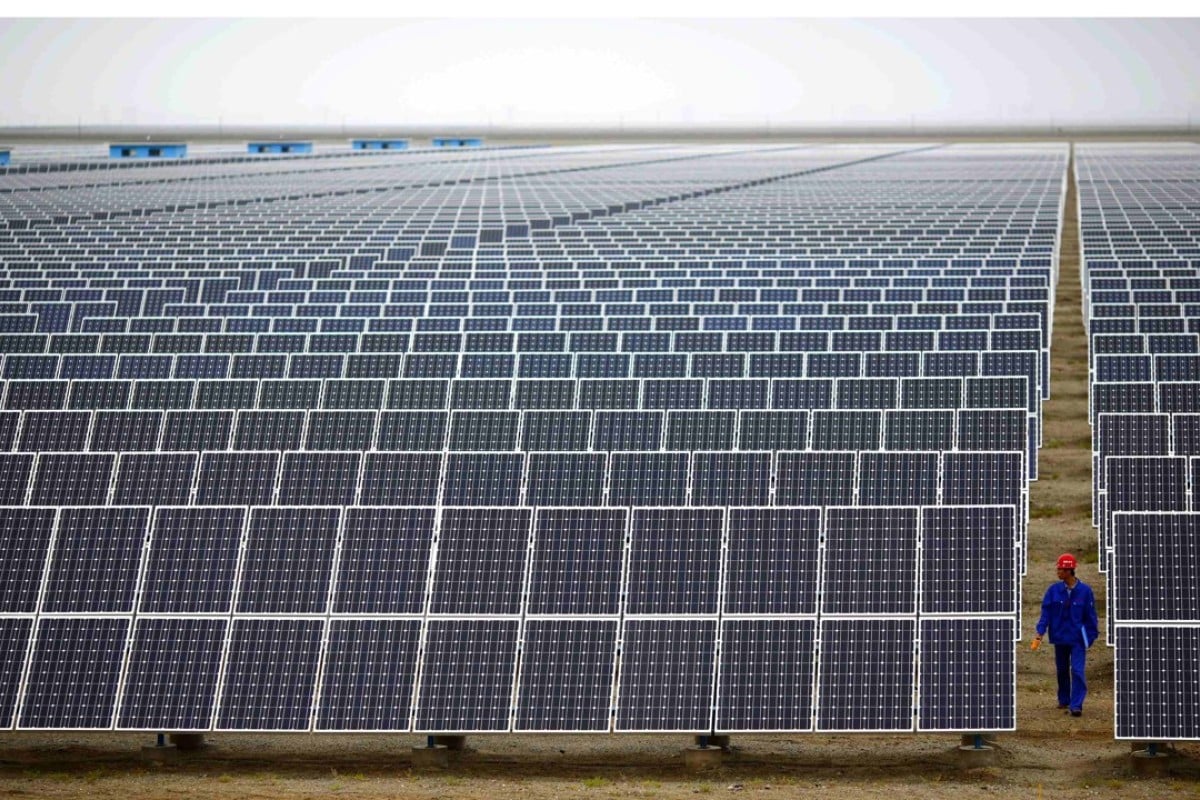
China is taking decisive steps to manage the environmental impact of its massive solar energy infrastructure. On Tuesday, the Ministry of Industry and Information Technology (MIIT) and five other government agencies issued a comprehensive set of guidelines focused on the “circular economy” for the solar sector. The move is designed to prepare the nation for a looming wave of retired solar panels as early installations reach the end of their 20-to-25-year lifespans.
The new policy sets a clear short-term goal: by 2027, China expects to have processed 250,000 tonnes of retired PV modules. To reach this, the guidelines emphasize the need for “technological breakthroughs.” Specifically, the government wants to move beyond basic recycling to advanced processes that can extract valuable materials like silver, silicon, and copper with higher efficiency and lower environmental cost.
Looking further ahead to 2030, the vision is to establish a sophisticated, large-scale industrial ecosystem. This includes creating a coordinated supply chain where manufacturers, power plant operators, and recyclers work together seamlessly. By upgrading recycling technologies and fostering broader industrial applications for recovered materials, China intends to turn the challenge of solar waste into a sustainable resource stream.
WHAT’S BEING SAID
- The guidelines call for: “technological breakthrough in dismantling, material separation and component extraction, as well as broader industrial applications for recycled materials.”
- Regarding the future, the policy aims to: “establish a more coordinated supply chain capable of managing large-scale retirements of solar modules” by 2030.
- Analysts note that the 250,000-tonne target for 2027 is a significant baseline for the world’s largest producer and installer of solar panels.
WHAT’S NEXT
- Expect new government-backed recycling hubs to emerge across China to meet the 250,000-tonne quota.
- Increased investment is likely to flow into automated dismantling technologies to reduce the labor costs associated with manual panel breakdown.
- The government is expected to follow up with specific industry standards for “recycled material” quality to ensure they can be used in new manufacturing.
BOTTOM LINE
The Bottom Line is that China is shifting from a focus on solar production to a “cradle-to-cradle” approach. By setting hard targets for 2027 and 2030, the government is forcing the industry to solve the waste problem now, ensuring that the green energy revolution remains truly sustainable for decades to come.










 and five other government agencies issued a comprehensive set of guidelines focused on the "circular economy" for the solar sector. The move is designed to prepare the nation for a looming wave of retired solar panels as early installations reach the end of their 20-to-25-year lifespans.)