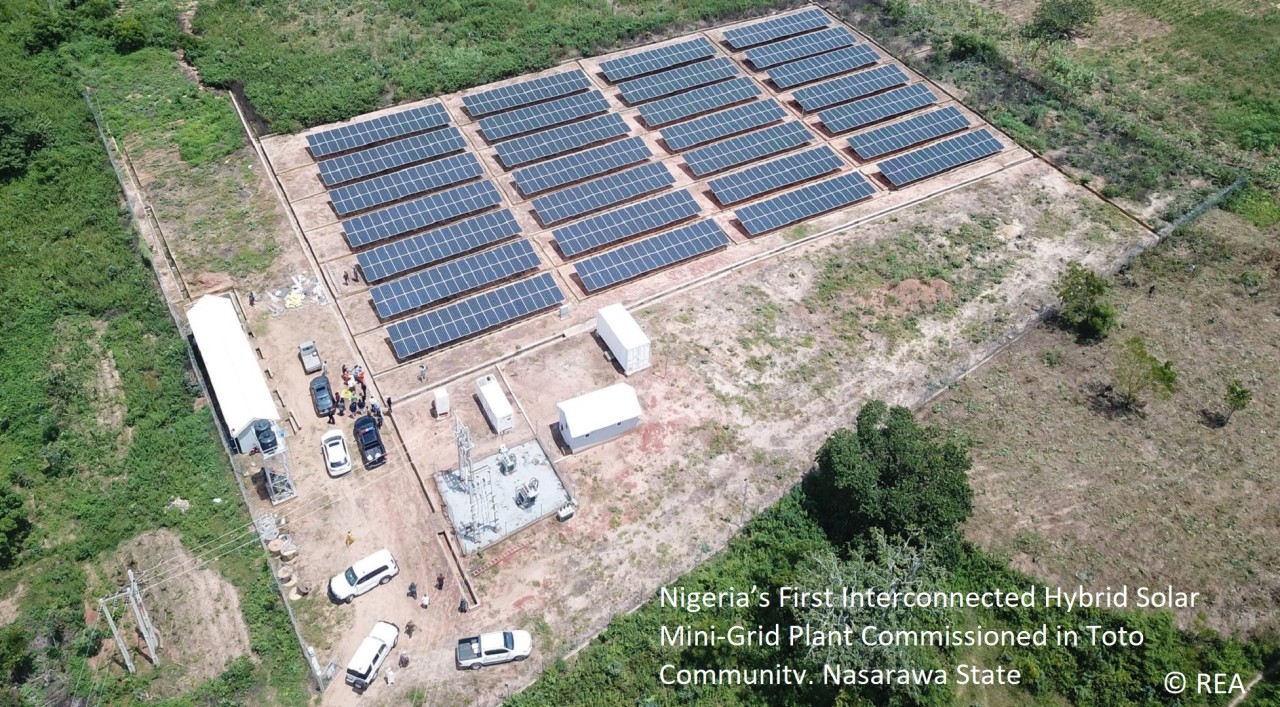
For years, Nigeria’s mini-grid sector existed in an uncomfortable space between promise and paralysis. The country had the solar radiation. It had the unserved communities – hundreds of them, spread across thirty-six states. What it lacked, critically, was a regulatory architecture bold enough to match the scale of the problem. That deficit is now, at last, being addressed.
The Nigerian Electricity Regulatory Commission’s release of its new mini-grid regulatory framework, designated NERC-R-001-2026, represents the most significant recalibration of off-grid power governance since the 2016 regulations first attempted to formalise the sector. But to understand why it matters, you have to understand how badly the previous frameworks constrained an industry that Nigeria desperately needed to thrive.
The 2016 Mini-Grid Regulations required developers of mini-grids within certain capacity ranges to obtain written confirmation from Distribution Companies before NERC could grant a permit, confirmation that was difficult to obtain because DisCos’ expansion plans were not publicly available. In practice, this gave DisCos an informal veto over mini-grid development in areas they had neither the capital nor the inclination to serve.
Developers who spent months building community relationships and completing feasibility assessments could find their projects stalled indefinitely by the commercial inertia of a DisCo sitting on a franchise territory it could not electrify. It was a regulatory architecture that protected incumbents at the expense of access.
The revised 2023 Mini-Grid Regulations, released on 29th December 2023, incorporated NERC’s proposed amendments alongside stakeholder recommendations and represented a genuine step forward. It addressed the DisCo confirmation bottleneck, introduced clearer timelines, and opened the door to interconnected mini-grid permitting. The 15-day DisCo response deadline and deemed consent regime fostered predictability and accelerated project timelines. The sector cautiously welcomed it. Yet even analysts acknowledged at the time that the 2023 rules, while necessary, were insufficient. Despite amendments to the compensation structure when a DisCo intends to interconnect with isolated mini-grid areas, the 2023 regulations had yet to sufficiently address the underlying challenges to mini-grid financing such as cash flow and customers’ inability to pay.
What the sector needed was not merely clearer rules, but a commercial framework capable of sustaining investment at scale. That clarity began arriving in December 2025.
The Guidelines on Commercial Framework for Interconnected Mini-Grids, which took effect on December 1, 2025, introduced a two-part pricing structure designed to clarify financial relationships between mini-grid developers and distribution licensees. NG While acknowledging that the 2023 Mini-Grid Regulations had facilitated broader electricity access in previously neglected and underserved communities, NERC stated that the full potential of interconnected mini-grids to address Nigeria’s significant electricity access deficit remained underexploited. The December guidelines were designed to resolve that gap – establishing payment obligations, cost pass-through structures, and settlement mechanisms that gave both DisCos and developers a credible basis for commercial engagement.
This matters because the absence of such clarity had long suppressed the interconnected mini-grid market. Developers could build isolated systems in unserved areas with relative confidence. But the larger opportunity – deploying mini-grids to serve underserved customers already within DisCo franchise zones, required a commercial relationship with those DisCos that the regulatory environment had failed to define. The December framework changed that.
Then, in April 2026, NERC took the most decisive step yet. The new regulatory document, numbered NERC-R-001-2026, provides a comprehensive framework for the deployment and management of mini-grids in Nigeria. Its most consequential provision is structural: isolated mini-grids can now generate up to 5 megawatts per site, up from the previous 1MW cap, while interconnected systems can operate at up to 10MW, allowing developers to build more robust systems without being subjected to the more complex regulatory requirements designed for large-scale utility plants.
That is not a marginal adjustment. Moving the ceiling from 1MW to 5MW for isolated systems fundamentally changes the economics of mini-grid development. It unlocks the ability to serve small towns, not just villages. It makes the unit economics of infrastructure investment more defensible. It reduces the per-kilowatt overhead of regulatory compliance. And it means that flagship programmes like the Distributed Access through Renewable Energy Scale-up (DARES), the Nigeria Electrification Programme (NEP), and the Energising Education Programme (EEP) can now execute at a pace and scope previously impossible under the old capacity ceiling.
REA Managing Director Abba Aliyu described the reforms as reflecting a transition from a limited, restrictive framework to one that supports scale, innovation, and faster implementation, noting that previous bottlenecks had delayed critical projects and constrained the pace of electrification in underserved communities.
Before we get carried away, let’s be mindful that regulatory reforms are not the same as outcomes. Nigeria has seen good frameworks produce poor results before, and the mini-grid sector is not exempt from that history.
As of the end of 2023, the number of off-grid customers stood at less than one million, a figure that reveals the scale of the access gap, but also how thin the sector’s commercial footprint remains despite years of reform rhetoric. A large portion of the population does not have access to the national grid, with rural areas being particularly underserved – a gap that hinders economic development and exacerbates inequalities between urban and rural areas.
Meanwhile, investor confidence in the mini-grid segment will depend not just on the attractiveness of the regulations on paper, but on whether developers believe the commercial and policy environment can support sustainable returns. Several investors in Nigeria’s 11 distribution companies ran into severe difficulty, with about six going under as debt burdens mounted under high-interest financing conditions. The mini-grid sector, which depends on many of the same distribution relationships and tariff structures, cannot ignore that inheritance.
The question now is whether NERC’s sequenced reform approach – 2023 regulations, 2025 commercial guidelines, 2026 capacity expansion, represents a coherent long-term architecture or another well-intentioned adjustment that falls short in execution. Transmissions losses, still measuring 7.24% in 2025 against NERC’s approved 7% benchmark, serve as a reminder that technical reform has to accompany regulatory reform for the system to actually function.
The Editorial Position
BizwatchNigeria believes NERC deserves credit for what is, in structural terms, a meaningful evolution of Nigeria’s mini-grid regulatory environment. The shift from 1MW to 5MW isolated capacity limits, the clarification of DisCo-developer commercial arrangements, and the introduction of standardised permitting timelines are substantive improvements – not cosmetic ones. The two-year engagement between the REA and NERC that produced the 2026 framework suggests a more collaborative policy process than Nigeria’s energy sector has historically managed.
But the work ahead is harder than the work behind. Regulations create conditions; they do not guarantee outcomes. What the sector now needs is consistent enforcement, transparent DisCo compliance, bankable project pipelines that can attract patient capital, and frankly, a conversation about tariff structures that honestly reflects the cost of serving rural Nigerians while remaining affordable to them. Nigeria’s energy access problem is not primarily a regulatory problem any more. It is a financing problem, an infrastructure problem, and increasingly, a governance problem about who enforces what is already on paper. NERC has done its part. The harder accountability now falls on DisCos, state governments, and the institutions positioned to channel capital into the communities that these regulations are designed to serve.