








KEY POINTS
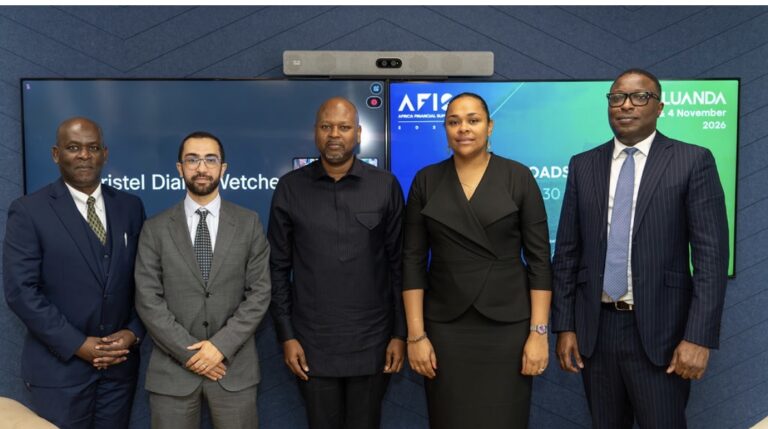
- The Africa Financial Summit will hold its upcoming edition in Luanda, Angola, from November 3 to November 4, marking its first gathering in a Lusophone country.
- Organizers and institutional partners state the event will focus on deal-making, converting local savings into domestic investments, and bridging the continent’s infrastructure funding gap.
- International Finance Corporation officials highlight that sub-Saharan Africa requires over $400 billion for small and medium enterprises and infrastructure financing.
MAIN STORY
This year’s Africa Financial Summit (AFIS) aims to deepen financial integration and accelerate capital mobilization across the continent, according to Summit Director Hicham Al Marabet.
Co-hosted by the World Bank and Jeune Afrique, the high-level event is scheduled to take place in Luanda, Angola, from November 3 to November 4, bringing together key financial sector leaders to enhance financing mechanisms for the real economy.

Al Marabet noted that AFIS is transitioning from a conventional dialogue forum into a practical platform for partnerships and catalytic deal-making. He emphasized that the upcoming sessions will prioritize aligning regulatory frameworks with private sector needs, advancing technology tailored to African markets, and identifying strategies to channel indigenous African savings into productive domestic investments.
Highlighting the economic context, Dafe Oraka, Principal Investment Officer at the International Finance Corporation (IFC), pointed out that Africa faces a substantial financing deficit despite the presence of significant capital pools. Oraka stated that small and medium-sized enterprises and infrastructure projects across sub-Saharan Africa require upwards of $400 billion. He added that hosting the summit in Angola will foster stronger regional connectivity and provide a platform for Nigerian financial institutions to demonstrate continental leadership in resource mobilization and cross-border investment.
THE ISSUES
- Mobilizing domestic capital to bridge a multi-billion-dollar infrastructure and enterprise financing deficit remains a critical hurdle for sustainable economic development across sub-Saharan Africa.
- Aligning regulatory frameworks with private sector requirements is essential to transforming regional financial dialogues into actionable, high-impact investments.
WHAT’S BEING SAID
“The second aspect is the deal-making and partnership-making parts, because we believe that full dialogue is extremely important. We also need to have catalytic deals that demonstrate these regulations could work for the private sector players.” – Hicham Al Marabet, Director, Africa Financial Summit (AFIS)
“This creates opportunities for stronger regional integration, deeper financial markets, and greater cross-border investment and connectivity across Africa.” – Dafe Oraka, Principal Investment Officer, International Finance Corporation (IFC)
WHAT’S NEXT
Delegates, regulators, and financial institution executives will finalize preparations for the Luanda summit, focusing on frameworks to unlock private capital and expand intra-African trade financing.
BOTTOM LINE
The upcoming Africa Financial Summit in Angola will center on practical deal-making, regional integration, and strategies to bridge the continent’s $400 billion infrastructure and enterprise financing gap.







 aims to deepen financial integration and accelerate capital mobilization ...)