






KEY POINTS
• African leaders have renewed calls for permanent representation on the UN Security Council at the 81st General Assembly.
• Nigeria is demanding at least two permanent seats for Africa, with veto powers for as long as the veto remains part of the Council’s structure.

• UN officials say Africa’s continued exclusion from permanent membership has become a major issue in ongoing efforts to reform the Council.
MAIN STORY
Africa’s demand for permanent representation on the United Nations Security Council has gained renewed attention at the 81st UN General Assembly in New York, with Nigeria and other African leaders pressing for changes to the Council’s structure.
The development was contained in a report by Cecilia Ologunagba of the News Agency of Nigeria (NAN), which examined the continent’s renewed campaign for a permanent place in the body responsible for maintaining international peace and security.
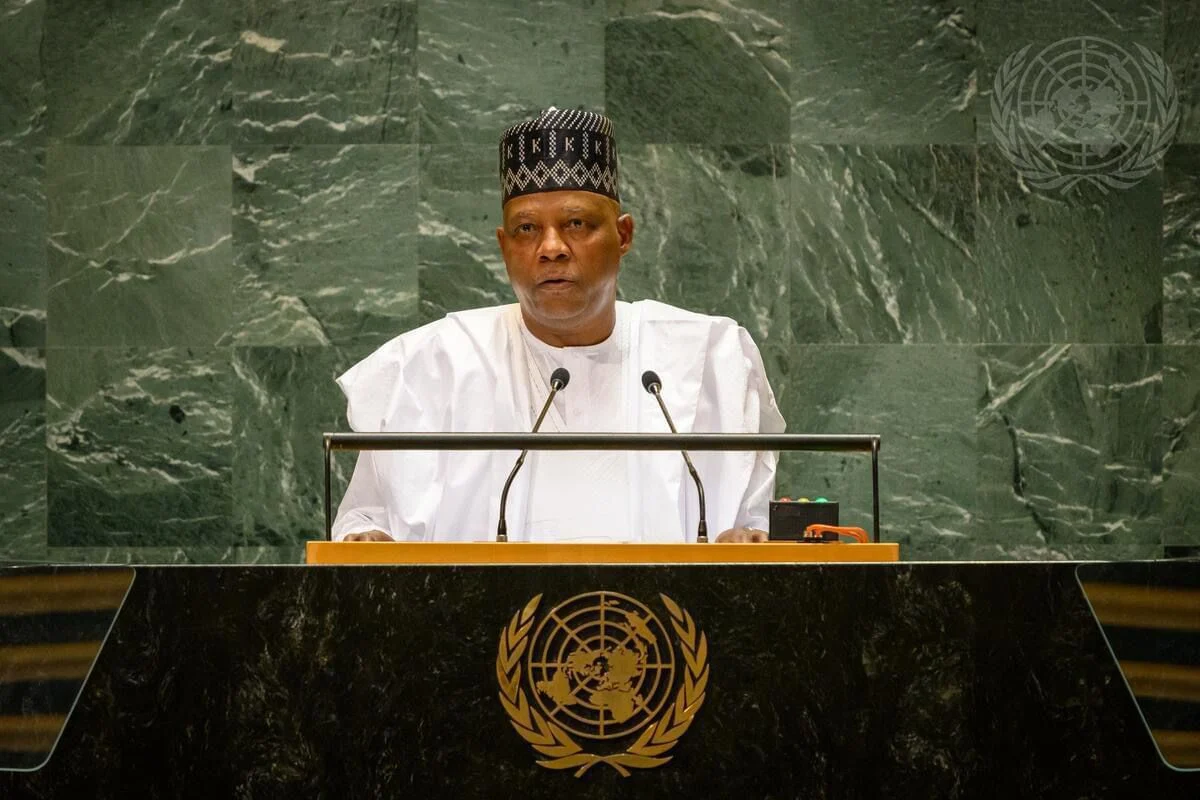
Nigeria, through Vice President Kashim Shettima, who represented President Bola Tinubu at the General Assembly, called for at least two permanent seats for Africa, alongside five non-permanent seats.
The Nigerian position also seeks full rights for any permanent African members, including veto powers for as long as the veto remains part of the Council’s system.
The demand reflects the African Union’s longstanding position under the Ezulwini Consensus and the Sirte Declaration on reform of the Security Council.
Africa currently has no permanent seat on the 15-member Security Council, which has five permanent members and 10 non-permanent members elected for two-year terms.
The five permanent members are China, France, Russia, the United Kingdom and the United States, all of which possess veto powers.
Speaking at the opening of the 81st General Assembly, UN Secretary-General António Guterres also renewed his call for Security Council reform, saying the Council must become more representative of contemporary geopolitical realities.
Khalilur Rahman, President of the 81st General Assembly, said fair representation for underrepresented regions should remain a priority, specifically highlighting Africa’s position in the Council.
Nigeria argued that the Council’s current configuration reflects the distribution of power at the time the UN was established rather than present global realities.
Shettima said Nigeria was prepared to assume greater responsibility within the international system, pointing to its contributions to peace and security efforts in Africa, including operations and interventions involving Liberia, Sierra Leone, Darfur, Mali and The Gambia.
The Nigerian government also linked the Security Council reform question to broader concerns about Africa’s role in global decision-making, saying the continent should have greater influence over decisions affecting international peace, security and development.
However, securing permanent African representation would require agreement among UN member states and amendments to the UN Charter. The question of which African countries would eventually occupy any new permanent seats also remains unresolved.
The African Union’s common position is for at least two permanent African seats and five non-permanent seats, with the AU responsible for determining which countries would represent the continent.
THE ISSUES
- Africa’s absence from the permanent membership of the Security Council remains a central issue in the continent’s campaign for institutional reform. African countries participate extensively in UN peace and security activities, yet the continent has no permanent representative in the body’s decision-making structure.
- Nigeria’s proposal goes beyond the creation of seats. It calls for new African permanent members to receive the same rights and responsibilities as existing permanent members, including veto powers for as long as the veto remains in existence. This makes the veto question an important part of the reform negotiations.
- Even if member states agree that Africa should receive permanent representation, the continent still has to determine which countries would occupy the proposed seats. The African Union has maintained a collective position without selecting specific countries to fill the proposed permanent positions.
WHAT’S BEING SAID
“The reform of this institution must begin with the reconstitution of the Security Council, for the world of 2026 cannot remain captive to the distribution of power in 1945.” — President Bola Tinubu, represented by Vice President Kashim Shettima, Nigeria’s national statement at UNGA 81.
“Nigeria demands, in accordance with the Ezulwini Consensus and the Sirte Declaration, at least two permanent seats for Africa, with all the rights and responsibilities of permanent membership, including the veto for as long as it exists, and five non-permanent seats in total.” — President Bola Tinubu, represented by Vice President Kashim Shettima, Nigeria’s national statement at UNGA 81.
“Africa needs to be at the table, not on the menu.” — Khalilur Rahman, President of the 81st UN General Assembly.
“Africa cannot be asked to wait indefinitely for its rightful place on the Council.” — Khalilur Rahman, President of the 81st UN General Assembly.
WHAT’S NEXT
The campaign for Security Council reform will continue through the UN’s intergovernmental negotiations process, where member states are considering the Council’s size, membership categories, regional representation and the veto.
Any change to permanent membership will ultimately require broad agreement among UN member states and the formal amendment process for the UN Charter.
For Africa, the continent will also have to maintain a common position on the proposed seats and determine which countries should represent it if the reform process produces new permanent positions.
BOTTOM LINE
Africa’s demand for permanent Security Council representation has again moved to the centre of discussions at the 81st UN General Assembly. Nigeria is seeking at least two permanent African seats with full membership rights, while the UN leadership has also acknowledged the continent’s underrepresentation as part of the wider debate over reforming the Council.