



KEY POINTS
• Nigeria demands at least two permanent African seats on the UN Security Council with veto powers.
• Shettima also calls for five non permanent seats for Africa.
• Nigeria says the Council’s current structure no longer reflects contemporary geopolitical realities.
• Africa currently has no permanent representation on the Security Council.
MAIN STORY
Nigeria has called for at least two permanent African seats on the United Nations Security Council, including veto powers for as long as existing permanent members retain the privilege.
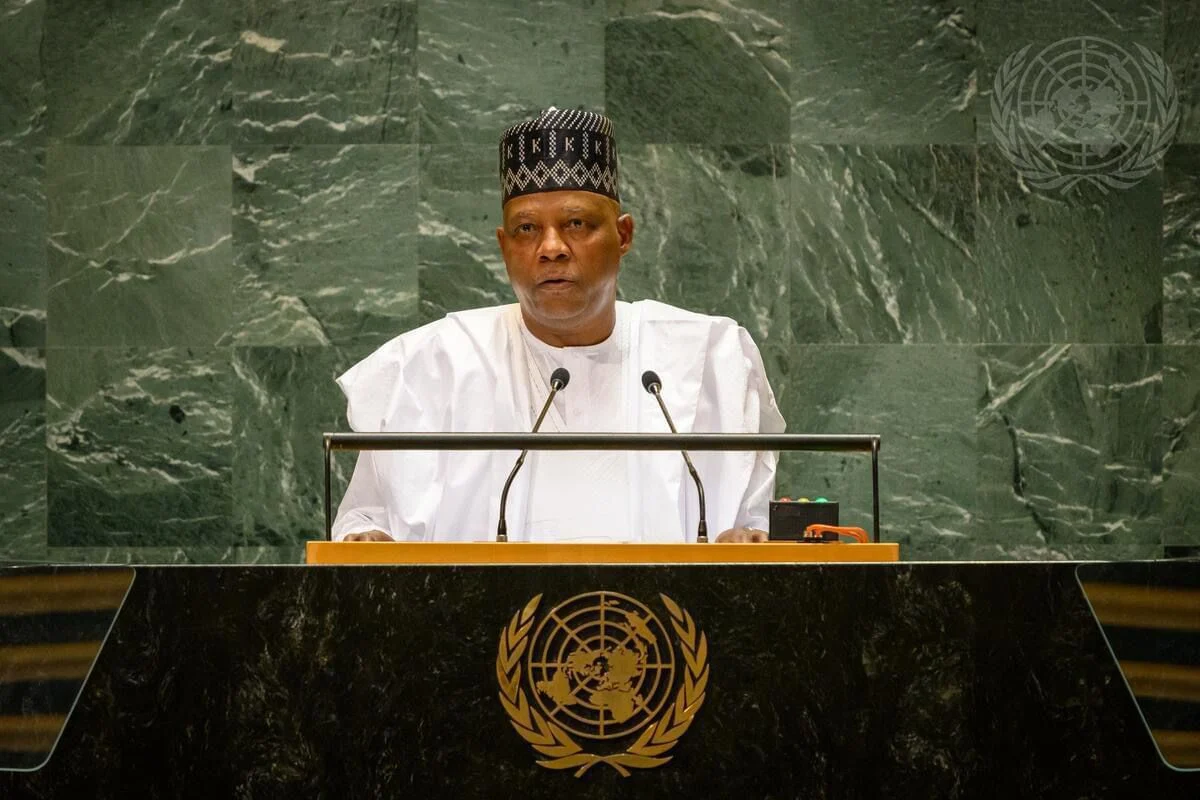
Vice President Kashim Shettima made the demand while delivering President Bola Tinubu’s national statement at the 81st UN General Assembly in New York.
He also called for five non permanent seats for Africa, restating the continent’s longstanding position on reform of the Security Council.
Shettima said the Council’s current structure no longer reflected contemporary geopolitical realities and had weakened the legitimacy of decisions taken at the global level.
“The world of 2026 cannot remain captive to the distribution of power in 1945,” he said.
He argued that Africa should not continue to be excluded from permanent membership of an institution where issues affecting the continent receive substantial attention.
Nigeria’s position is based on the Ezulwini Consensus and the Sirte Declaration, which together constitute the Common African Position on Security Council reform.
Under the African position, the continent seeks at least two permanent seats with the same privileges enjoyed by existing permanent members, including veto powers for as long as the veto remains in existence. It also seeks five non permanent seats.
Shettima said reform was necessary to make international institutions more representative of the people and countries affected by their decisions.
He linked the issue to efforts to restore confidence in multilateralism as geopolitical divisions widen, while reaffirming Nigeria’s commitment to the UN Charter and international cooperation.
Nigeria also supports an international system in which diplomacy takes precedence over coercion and international law guides relations between states.
Shettima cited Nigeria’s participation in peace operations and regional security efforts in Liberia, Sierra Leone, Darfur, Mali and The Gambia.
He said the country continues to work through ECOWAS, the African Union and Gulf of Guinea mechanisms on mediation, counter terrorism, democratic governance and maritime security.
The Vice President said continuing conflicts in different regions demonstrated the need for dialogue, collective responsibility and peaceful settlement of disputes.
He specifically identified the conflict in Sudan and other conflict theatres as requiring urgent diplomatic attention because of their humanitarian, economic and geopolitical consequences.
Shettima also criticised the effect of propaganda on international accountability, saying it could blur distinctions between victims and aggressors.
He maintained that an inclusive and effective United Nations remained necessary for maintaining global peace and supporting sustainable development.
The demand comes as African countries continue to seek changes to the composition of the Security Council, whose five permanent members are China, France, Russia, the United Kingdom and the United States.
Africa currently has no permanent seat on the Council.
The African Union’s preferred reform model provides for at least two permanent African seats with veto privileges while existing permanent members retain the veto, alongside five non permanent seats for the continent.
Shettima said Nigeria remained committed to a multilateral system capable of responding to contemporary global challenges and maintaining peace.
THE ISSUES
- Africa’s demand centres on permanent representation on the Security Council, where the continent currently has no permanent seat despite the Council regularly considering conflicts and security issues affecting African countries.
- The proposed African model goes beyond representation by seeking veto powers for its permanent members for as long as the veto remains available to existing permanent members.
- Nigeria is also seeking five non permanent African seats as part of the Common African Position on Security Council reform.
- Nigeria links reform to the credibility of multilateral institutions, arguing that global decision making should better reflect contemporary geopolitical realities and the countries affected by international decisions.
- The demand also forms part of Nigeria’s broader position on international cooperation, including diplomacy, international law and peaceful settlement of disputes.
WHAT’S BEING SAID
“The world of 2026 cannot remain captive to the distribution of power in 1945.” – Kashim Shettima, Vice President of Nigeria
WHAT’S NEXT
Nigeria will continue to press for Security Council reform based on the African Common Position, including permanent and non permanent representation for the continent.
The proposed reform would require changes to the current composition of the Council, which has remained centred on its five permanent members.
BOTTOM LINE
Nigeria is seeking at least two permanent African seats on the UN Security Council, with veto powers, alongside five non permanent seats. The demand reflects the African Union’s Common African Position on reforming the Council.