






KEY POINTS
• UN Secretary-General António Guterres says the world is facing its most dangerous nuclear moment since the end of the Cold War.
• He warns that expanding arsenals, new technologies and the weakening of arms control arrangements are increasing the risks of accident, miscalculation and escalation.
• Guterres calls for renewed dialogue, stronger safeguards and the eventual elimination of nuclear weapons.
MAIN STORY
UN Secretary-General António Guterres has warned world leaders that the international nuclear security framework is weakening at a time when the risks surrounding nuclear weapons are increasing.
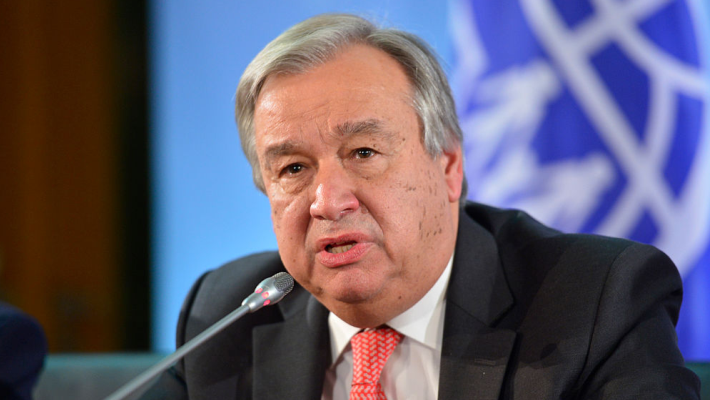
Guterres gave the warning on Tuesday at a UN General Assembly plenary meeting in New York marking the International Day for the Total Elimination of Nuclear Weapons.
He described the current period as the most dangerous nuclear moment since the end of the Cold War, pointing to the expansion and modernisation of nuclear arsenals and growing reliance on nuclear deterrence.
The Secretary-General also raised concerns about technological developments that could reduce the time available for governments to make decisions during a nuclear crisis, increasing the possibility of misunderstanding, accident or miscalculation.
He cited the expiration of the New START Treaty between the United States and Russia as a major setback for nuclear arms control. The treaty, which placed limits on the two countries’ strategic nuclear arsenals, expired on Feb. 5 without a successor agreement.
Guterres also pointed to difficulties within the broader nuclear disarmament and non-proliferation system, including the failure of the latest review process under the Nuclear Non-Proliferation Treaty to produce a consensus outcome.
He said these developments were weakening safeguards built over decades to reduce nuclear risks, making renewed international cooperation necessary.
“The lights are flashing red,” Guterres said, urging countries to reverse the deterioration in arms control and avoid actions that could trigger a new nuclear arms race.
He called on nuclear-armed states to maintain existing moratoriums on nuclear testing and take measures to reduce the possibility of accidental or unintended use of nuclear weapons.
Guterres said the international community should not rely indefinitely on the threat of mutual destruction as the foundation of global security.
He maintained that the complete elimination of nuclear weapons remained the only certain way to remove the catastrophic humanitarian risks associated with their use.
“Our goal must be clear: the total elimination of nuclear weapons,” he said.
The UN General Assembly established the International Day for the Total Elimination of Nuclear Weapons to raise awareness of the dangers posed by nuclear weapons and strengthen international efforts towards their elimination. The observance is marked annually on Sept. 26, although the General Assembly’s high-level meeting was held on Sept. 29 this year.
THE ISSUES
- The expiration of New START has removed binding limits on the strategic nuclear arsenals of the United States and Russia, while the UN says the broader arms control framework is facing additional pressure.
- Guterres highlighted technological advances as an additional risk because faster decision-making environments can leave governments with less time to assess information during a crisis.
- The UN’s position combines immediate risk reduction with longer-term disarmament, with Guterres arguing that safeguards and dialogue are necessary while the international community works towards eliminating nuclear weapons.
WHAT’S BEING SAID
“We meet at the most dangerous nuclear moment since the end of the Cold War.” — António Guterres, UN Secretary-General.
“And that shadow is darkening. Nuclear arsenals are being expanded and modernized.” — António Guterres, UN Secretary-General.
“The lights are flashing red.” — António Guterres, UN Secretary-General.
“Our goal must be clear: the total elimination of nuclear weapons.” — António Guterres, UN Secretary-General.
WHAT’S NEXT
Guterres is urging nuclear-armed states to preserve testing moratoriums, strengthen dialogue and restore arms control safeguards while the UN continues efforts towards nuclear disarmament.
BOTTOM LINE
The UN chief says the weakening of nuclear arms control, expanding arsenals and emerging technologies have increased the risks surrounding nuclear weapons, making renewed international efforts to reduce those risks more urgent.