





KEY POINTS
• Experts say West Africa’s security threats are becoming more complex and interconnected, requiring stronger regional cooperation and preventive action.
• They identify disinformation, drug trafficking, illicit economies, violent extremism, terrorism, organised crime and political tensions among emerging threats.
• Stakeholders call for locally driven solutions, inclusive governance and a shift from dialogue to practical measures that address insecurity.
MAIN STORY
Security experts and regional stakeholders have called for stronger cooperation and more practical responses as West Africa confronts increasingly complex and interconnected security threats.
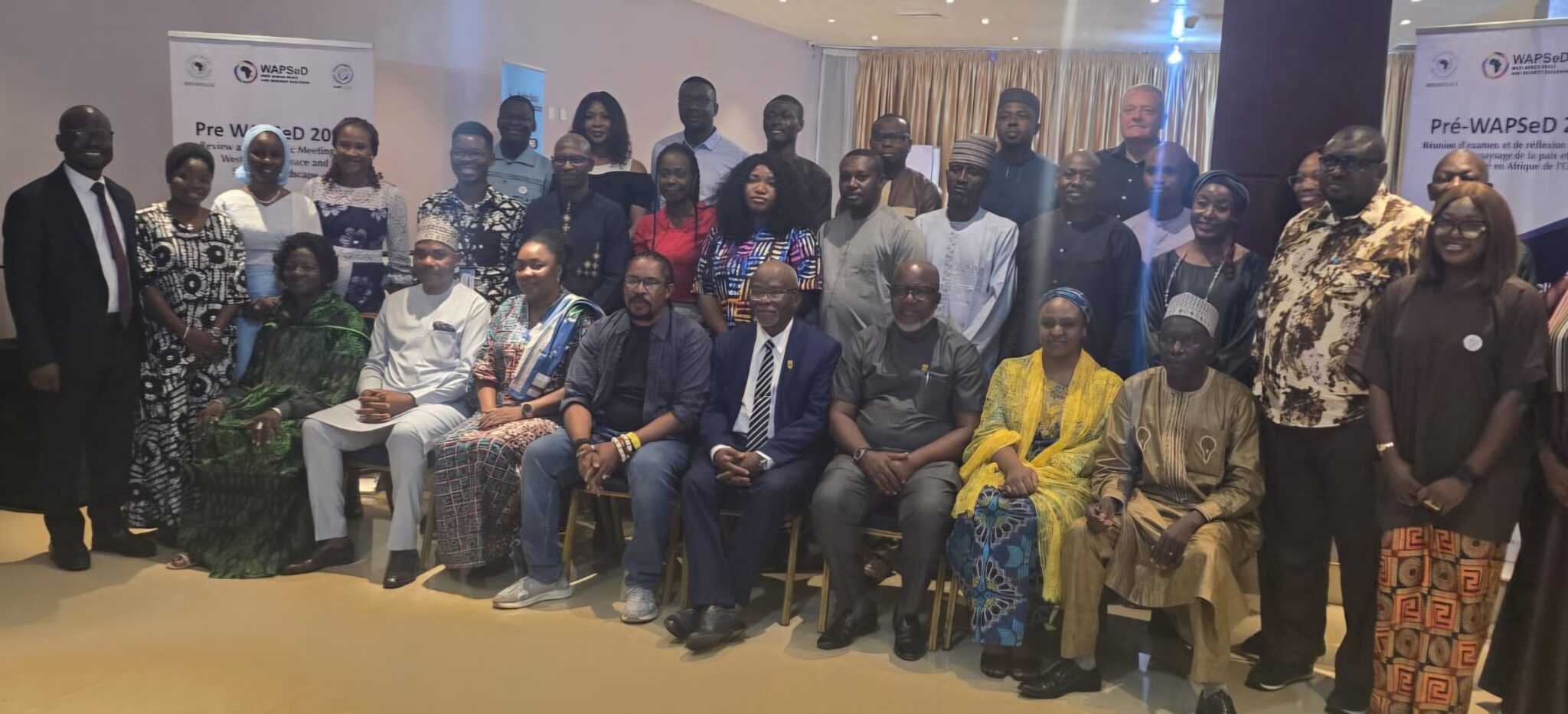
The call was made at a pre-West African Peace and Security Dialogue (WAPSeD) 2027 strategy and review meeting held in Abuja on Tuesday.
The meeting, organised by the Building Blocks for Peace Foundation (BBFORPEACE), was themed, “From Dialogue to Action: Reflecting on WAPSeD 2025 Commitments and Setting the Agenda for WAPSeD 2027.”
Prof. Charles Ukeje, Board Chairman of BBFORPEACE and Professor of International Relations at Obafemi Awolowo University, said the region needed a more flexible and complementary security architecture capable of responding to differences in the nature of security challenges across communities.
Ukeje said solutions should be driven by local realities, urging stakeholders to identify and mobilise resources and capacities within affected communities rather than relying mainly on external actors.
He also called for greater participation by women and young people in peace and security processes, arguing that communities directly affected by insecurity and poor governance should have a meaningful voice in decisions concerning them.
For the Executive Director of BBFORPEACE, Mr Rafiu Lawal, the threat landscape is expanding beyond conventional security concerns.
He identified disinformation, information manipulation, drug trafficking and illicit economies as emerging challenges, noting that changes in the geography, nature and actors involved in insecurity required new approaches to prevention and response.
Lawal said WAPSeD, established in 2024, was created as an inclusive platform for examining West Africa’s changing peace and security environment.
He said the 2027 strategy meeting would allow stakeholders to assess recommendations from WAPSeD 2025, examine their influence on peacebuilding, governance and security practices, and develop an action-oriented roadmap for the next edition.
The ECOWAS Commission also called for greater regional coordination, with Dr Babatunde Afolabi, Director of Political Affairs, represented by Dr Constant Gnacadja, Programme Officer, Conflict Prevention.
Afolabi said violent extremism, terrorism, political tensions, organised crime and humanitarian pressures were increasingly crossing national boundaries, making isolated national responses inadequate.
He urged stakeholders to put prevention, people and partnership at the centre of regional peace and security efforts, stressing that sustainable peace could not be achieved by a single institution, government or sector.
The Director-General of the Institute for Peace and Conflict Resolution, Dr Joseph Ochogwu, represented by his Personal Assistant, Mr Olaniran Olusola, described the meeting as timely.
Ochogwu said insecurity continued to threaten stability, livelihoods and socio-economic development across West Africa, while also worsening humanitarian pressures.
He called for the recommendations emerging from dialogue platforms to be translated into practical measures against violent conflict, insecurity and criminality.
Mr John Tsuwa, Secretary-General, Society for Peace Studies and Practice, advocated deeper research and collaboration involving communities, governments and lawmakers to develop concrete responses to emerging threats.
Similarly, Dr Prince Charles Dickson, Team Lead, Tattaaunawa Roundtable Initiative, urged stakeholders to evaluate the impact of existing peace and security interventions and use the lessons to develop more effective approaches.
THE ISSUES
- Security threats in West Africa are increasingly interconnected, with terrorism, violent extremism, organised crime, drug trafficking, political tensions and humanitarian pressures extending beyond individual national borders. This creates a need for responses that can operate across countries and institutions.
- The emphasis on locally driven solutions reflects concerns that communities directly affected by insecurity may not be adequately represented in peace and security processes. Stakeholders at the meeting linked stronger community participation with better understanding of local security conditions and more relevant responses.
- The meeting also highlighted the gap between discussions and implementation. Reviewing previous WAPSeD recommendations and measuring the results of existing interventions could help identify which approaches have produced practical outcomes and where new strategies are required.
WHAT’S BEING SAID
“If civil society claims to represent communities, then communities must actually have a voice in the processes that affect them.” — Prof. Charles Ukeje, Board Chairman, BBFORPEACE.
“Sustainable peace cannot be achieved by one institution, government or sector alone.” — Dr Babatunde Afolabi, Director of Political Affairs, ECOWAS Commission.
WHAT’S NEXT
Stakeholders are expected to review the recommendations from WAPSeD 2025 and assess their impact on peacebuilding, governance and security practices across West Africa.
The review will feed into an action-oriented roadmap for WAPSeD 2027, including priority themes, participating stakeholders, partnerships and expected outcomes.
BOTTOM LINE
The strategy meeting is shifting attention from discussing West Africa’s security challenges to identifying practical, coordinated and locally grounded responses, with prevention, inclusion and regional cooperation emerging as key areas for WAPSeD 2027.