



Key points
- The House committee investigating the alleged fake Presidential Foreign Investment Promotion Council is facing calls to summon Chief of Staff Femi Gbajabiamila.
- Lawmakers have directed the Inspector-General of Police to produce the alleged promoter, Adeniyi Adeyemi, before the committee.
- Adeyemi is expected to appear before the committee to answer questions arising from previous testimonies.
- Police confirmed they have already filed criminal charges against the suspect.
Main Story
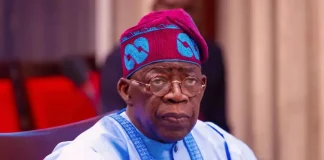
The House of Representatives Ad-Hoc Committee investigating the controversial Presidential Foreign Investment Promotion Council has come under increasing pressure to widen its probe by inviting the Chief of Staff to the President, Femi Gbajabiamila, to testify over allegations linked to the attempted establishment of the non-existent agency.
The renewed calls came as the committee directed the Inspector-General of Police to produce the alleged promoter of the council, Adeniyi Adeyemi, before lawmakers on Wednesday for questioning over testimonies received from senior government officials.
The committee’s investigation has already featured appearances by the Head of the Civil Service of the Federation, Didi Walson-Jack; Director-General of the Budget Office, Tanimu Yakubu; Director of Banking Services at the Central Bank of Nigeria, Hamisu Abdullahi; Accountant-General of the Federation, Shamseldeen Ogunjimi; and Assistant Commissioner of Police Bashir Abdullahi, who represented the Inspector-General of Police.
Concerns over the scope of the investigation intensified after sources questioned why Gbajabiamila had not been invited despite allegations that Adeyemi made statements linking him to the attempted establishment of the council.
A political analyst, Jackson Ojo, argued that inviting the Chief of Staff would help clear any doubts surrounding the allegations and strengthen public confidence in the committee’s work. Meanwhile, the Human and Environmental Development Agenda (HEDA) called for greater accountability and urged the committee to invite the Secretary to the Government of the Federation, George Akume, to explain his office’s role in the matter.
During Monday’s hearing, the police confirmed receiving petitions from the Office of the Chief of Staff alleging that Adeyemi fraudulently presented himself as the Director-General of both the Presidential Economic Advisory Council and the Presidential Foreign Investment Promotion Council.
Investigators told lawmakers that the suspect allegedly used the fictitious office to obtain accommodation within the Federal Secretariat, sought approval to recruit about 300 personnel, attempted to secure a N1.32 billion budget allocation in the 2026 Appropriation Act and planned to organise a World Investment Summit under the platform of the non-existent agency.
Police also informed the committee that criminal proceedings had already commenced against Adeyemi before a Federal High Court and cautioned lawmakers against demanding disclosures that could prejudice the ongoing investigation or court proceedings.
Committee Chairman Yusuf Gagdi, however, insisted that Adeyemi’s appearance had become necessary because of the seriousness of the allegations and the reputational implications for several public institutions.
The committee subsequently resolved that the Inspector-General of Police should ensure Adeyemi’s appearance before lawmakers by noon on Wednesday.
During the hearing, lawmakers also examined disputed State House documents alongside authentic government correspondence. Police investigators confirmed that signatures on the disputed documents did not match genuine official records.
Gagdi disclosed that the committee had identified about 29 allegedly forged documents, including fake presidential approvals, counterfeit Acts of the National Assembly and forged correspondence purportedly issued by several government institutions.
The Accountant-General of the Federation, Shamseldeen Ogunjimi, also told lawmakers that while administrative requests from the purported council were initially processed based on what appeared to be authentic State House correspondence, investigations later established that the documents were forged.
He maintained that no public funds were released to the council, adding that a request for a N27.4 billion establishment grant was rejected because there was no budgetary provision for it.
The Issues
The investigation raises concerns about document forgery and attempts to create unauthorised government institutions.
Calls for wider investigations reflect growing public interest in ensuring accountability and transparency.
The alleged use of forged presidential documents exposes weaknesses in administrative verification processes.
Ongoing criminal proceedings require investigators to balance legislative oversight with judicial processes.
Strengthening internal controls across government institutions may be necessary to prevent similar incidents.
What’s Being Said
House Committee Chairman Yusuf Gagdi said Adeyemi’s appearance before the committee had become necessary because the allegations involve the integrity of individuals and public institutions.
The Nigeria Police Force confirmed that criminal charges have already been filed against the suspect and warned against disclosures that could prejudice ongoing investigations or court proceedings.
Accountant-General of the Federation Shamseldeen Ogunjimi told lawmakers that although administrative requests from the purported council were initially processed, no public funds were released after investigations established that the State House correspondence used was forged.
What’s Next
The House committee is expected to continue its investigation with Adeyemi’s appearance before lawmakers. Following the hearings, the committee is expected to submit its report and recommend appropriate administrative, legislative and possible criminal actions against individuals found culpable.
Bottom Line
The House investigation into the alleged fake government agency has entered a critical stage, with lawmakers seeking testimony from the alleged promoter while facing growing calls to broaden the probe. The outcome of the investigation could have significant implications for accountability, document verification and institutional oversight within government.