





Keypoints
- The World Health Organization (WHO) revealed that vaccines prevent approximately 1.8 million deaths in Africa every year.
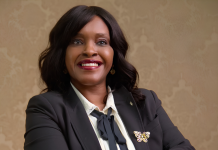
- Marking African Vaccination Week 2026 (April 24–30), Regional Director Dr. Mohamed Yakub Janabi emphasized that immunization is a lifelong investment.
- Since 2000, routine vaccination programs have protected an estimated 500 million children across the continent.
- In a historic milestone, Cabo Verde, Mauritius, and Seychelles were verified in late 2025 as the first countries in the WHO African Region to eliminate measles and rubella.
- Despite progress, 6.7 million children in Africa remain “zero-dose,” having never received a single routine vaccine.
Main Story
Vaccines remain the most powerful shield for public health in Africa, preventing millions of deaths and keeping families whole.
During the commemoration of African Vaccination Week 2026, themed “For Every Generation, Vaccines Work,” the WHO Regional Director for Africa, Dr. Mohamed Yakub Janabi, highlighted the transition of immunization from a childhood-only focus to a lifelong health strategy.
From HPV vaccines shielding adolescent girls to boosters for adults, the 2026 campaign underscores that protection must continue at every stage of life.
The continent has seen remarkable shifts in recent months. The successful rollout of malaria vaccines in 25 countries and the elimination of measles and rubella in three island nations: Cabo Verde, Mauritius, and Seychelles demonstrate what is possible with political will.
Through the “Big Catch-Up” initiative, which concluded in March 2026, millions of children who missed doses during the pandemic have been reached.
However, Dr. Janabi warned that reaching children in conflict zones and remote areas remains the final, most difficult frontier in achieving universal health coverage.
The Issues
The primary challenge is the equity-access gap; while urban centers see rebounding coverage, 6.7 million “zero-dose” children are concentrated in remote or conflict-ridden areas where health infrastructure is non-existent. Authorities must solve the problem of vaccine-preventable disease outbreaks, such as the recent surges in meningitis and measles in areas with low routine coverage.
Also, there is a funding-sustainability risk; for every $1 invested in vaccines, there is a $44 economic return, yet many countries still rely heavily on dwindling donor funding rather than domestic health budgets. To succeed, African nations must scale up innovations like solar-powered cold storage and digital tracking to ensure that no community is left behind due to geography or lack of electricity.
What’s Being Said
- Vaccines prevent around 1.8 million deaths in the continent yearly. A saved life is more than a number; it is families kept whole, stated Dr. Mohamed Yakub Janabi.
- Janabi noted that since 2000, roughly 500 million African children have been protected through routine vaccination.
What’s Next
- African health ministries are expected to integrate the lessons from the “Big Catch-Up” into their permanent routine immunization schedules.
- The WHO is anticipated to support more countries in adopting digital tracking systems to monitor vaccine uptake in real-time.
- 2026 will likely see an expansion of malaria vaccine deployment to reach more of the 25 targeted countries with high transmission rates.
- Stakeholders are expected to push for increased domestic financing during upcoming regional health summits to reduce the continent’s reliance on international aid.
Bottom Line
Immunization is the bedrock of Africa’s health security. While 1.8 million lives are saved every year, the mission for 2026 and beyond is to ensure that the 6.7 million children currently invisible to the health system are finally brought under the umbrella of protection.