Key points
- The World Health Organization has approved an additional $3.4 million to strengthen Ebola response efforts in the Democratic Republic of Congo and Uganda.
- The outbreak has been classified as a Public Health Emergency of International Concern due to fears of wider regional spread.
- Suspected Ebola deaths have risen to 139, while insecurity and displacement in eastern DRC continue to complicate containment efforts.
Main story
The World Health Organization has approved an additional $3.4 million in emergency funding to support efforts aimed at containing the escalating Ebola outbreak in the Democratic Republic of the Congo and Uganda.
The new allocation brings the organisation’s total emergency funding for the outbreak response to $3.9 million as global health authorities intensify measures to prevent further spread of the deadly virus.
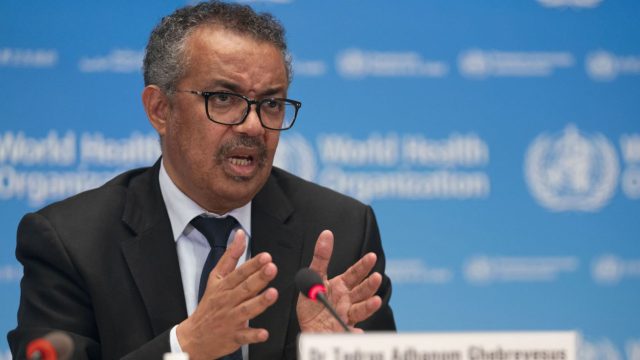
Speaking during a media briefing in Geneva on Wednesday, WHO Director-General, Tedros Adhanom Ghebreyesus, said the outbreak had officially been classified as a Public Health Emergency of International Concern (PHEIC).
According to him, the declaration followed consultations with authorities in both affected countries under the framework of the International Health Regulations to facilitate rapid international coordination and mobilisation.
Tedros said the decision was necessitated by growing concerns over the possibility of wider regional transmission, particularly as the outbreak continues to spread across multiple locations.
WHO data showed that 51 Ebola infections have so far been officially confirmed in the DRC, mainly in Ituri and North Kivu provinces, including Bunia and Goma.
Uganda has also recorded two confirmed infections in Kampala, one of which resulted in death.
The WHO chief, however, warned that the actual scale of the outbreak could be significantly higher, with nearly 600 suspected cases and 139 suspected deaths already identified.
He added that infections among healthcare workers indicated continued transmission within medical facilities.
The issues
Health authorities say the outbreak is being worsened by insecurity, mass displacement and increased population movement linked to mining activities in eastern DRC.
According to WHO, renewed violence in Ituri Province since late 2025 has displaced more than 100,000 people, making disease surveillance and containment increasingly difficult.
The organisation also expressed concern over the Bundibugyo strain responsible for the outbreak, noting that there are currently no approved vaccines or specific treatments available for the variant.
The spread of infections into urban centres has further heightened fears of cross-border transmission and broader international exposure.
WHO also disclosed that a United States citizen infected while working in the DRC had been evacuated to Germany for treatment.
What’s being said
Tedros said WHO moved swiftly because delays in response could lead to more fatalities and wider international spread of the virus.
He commended the governments of the DRC and Uganda for cooperating with ongoing containment efforts.
The WHO Director-General particularly praised Uganda’s decision to suspend the annual Martyrs’ Day gathering as part of measures to reduce the risk of transmission.
WHO stated that the latest funding, drawn from its Contingency Fund for Emergencies, would support surveillance operations, treatment efforts and deployment of emergency personnel and medical supplies to affected areas.
What’s next
Global health authorities are expected to intensify cross-border surveillance, contact tracing and emergency response coordination in the coming weeks.
WHO and partner agencies are also likely to scale up public health sensitisation campaigns and strengthen healthcare systems in affected communities to prevent further transmission.
Efforts are ongoing to improve access to treatment facilities and contain infections in urban and conflict-prone areas.
Bottom line
The worsening Ebola outbreak in the DRC and Uganda underscores the persistent threat posed by infectious diseases in fragile and conflict-affected regions. WHO’s emergency funding and global health alert signal growing concern over the potential for wider regional spread if urgent containment measures are not sustained.