




Keypoints
- UN Secretary-General António Guterres has demanded increased investment to achieve sustainable water and sanitation services across African nations.
- Structural pronouncements were issued on Monday within an official message commemorating the 2026 Africa Day.
- Policy guidelines link the expansion of universal water facilities directly to massive investments in electrification and renewable energy transitions.
- Demographic assessments highlighted that millions of citizens, particularly women and youth, remain without access due to infrastructure deficits.
- Multilateral recommendations called for greater global solidarity to help African states navigate debt relief mechanisms and public-private partnerships.
Main Story
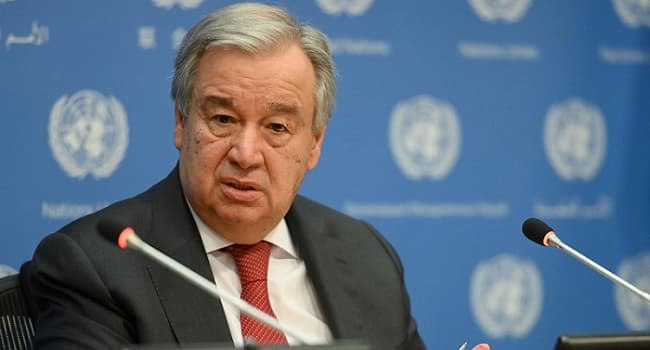
UN Secretary-General António Guterres has called for increased investment to achieving the Sustainable Development goal of water and sanitation for all people in African countries.
The UN chief said building and maintaining safe, resilient and accessible water and sanitation requires stronger domestic resource mobilisation and sustained investment in the sector’s governance.
Guterres made the call on Monday in his message to mark the 2026 Africa Day. Africa Day is celebrated every year on May 25 to mark the founding of the Organisation of African Unity (now the African Union) in 1963.
It’s a day that honors the continent’s diversity, history, and the ongoing work toward unity and self-determination across its 54 nations.
To evaluate intermediate structural dependencies, the United Nations has tied the physical operation of clean utility systems to wider energy grid modernizations.
Guterres said achieving the goal required far more global solidarity to help African countries access funds and debt relief mechanisms and harness public-private partnerships.
He explained that a massive transition toward renewable power networks is required to consistently run water treatment plants, which simultaneously shields sub-national territories from volatile international oil supply lines.
Furthermore, international administrative boards have acknowledged the historical resilience of regional populations in overcoming deep systemic adversity to build modern trade networks.
Guterres said the UN celebrate the continent’s abundant strengths, resilience, potential, and growing influence on the world stage.
He noted that common objectives are currently driving innovation, unlocking the promise of continental free trade, and laying the foundations for lasting peace, stability, and prosperity across the region, reiterating the ongoing commitment of the United Nations to collaborate with African states.
The Issues
- Securing sufficient domestic resource mobilization to construct and govern resilient water supply lines.
- Overcoming weak or absent local infrastructure that isolates rural women and youth from basic public health utilities.
- Transitioning the continent’s power infrastructure to renewable energy to drive automated sanitation systems sustainably.
What’s Being Said
- Connecting the expansion of basic human utilities directly to the development of alternative power grids, UN Secretary-General António Guterres stated: “And it demands massive investment in Africa’s electrification and transition to renewable energy – to power universal water and sanitation, reduce Africa’s exposure to the frequent volatility of global oil supplies, and help break the world’s addiction to fossil fuels.”
- Reaffirming the institutional commitment of the international body toward sub-national development, he noted: “Today and every day, the United Nations is proud to work with African countries to build the peaceful, prosperous and sustainable future all Africans – and our world – deserve,’’”
- Detailing the precise focus of the current annual regional milestone, Guterres observed that “2026 theme focuses on another shared priority: water and sanitation.”
- Outlining the foundational microeconomic importance of maintaining functional municipal utility networks, he explained: “These services are the bedrock of public health, human dignity and economic opportunity.”
- Highlighting the current infrastructural deficit impacting vulnerable populations due to environmental degradation, he added: ”Yet millions across the continent – particularly women and youth – still lack access to these essential services due to limited investment, weak or absent infrastructure, and the intensifying impacts of climate change.”
- Reviewing the historical trajectory of the continent’s population in dismantling oppressive external systems, Guterres stated: “For generations, the people of Africa have confronted and overcome the destructive consequences of slavery and colonialism and forged unity and purpose out of adversity.”
- Summarizing the shared values propelling modern regional development programs, he concluded: “Today, that shared determination is fueling common objectives: unlocking the promise of continental free trade and renewable energy, driving innovation, spurring sustainable development and laying the foundations for lasting peace, stability and prosperity,’’”
What’s Next
- UN agencies will collaborate with African finance ministries to structure localized frameworks for stronger domestic resource mobilization.
- International financial institutions will review existing debt relief mechanisms to help sub-national governments free up capital for sanitation works.
- Energy and water engineers will draft joint deployment plans to integrate solar and wind power installations directly into regional water pumping stations.
Bottom Line
Using his 2026 Africa Day message to emphasize that water and sanitation are the bedrocks of public health, UN Secretary-General António Guterres has called for massive global investment in Africa’s electrification and renewable energy transition to power universal water services and overcome infrastructure gaps worsened by climate change.