




Analysis
In a tactical miscalculation with global consequences, Iran seeded the Strait of Hormuz with naval mines and failed to track their positions — leaving the waterway effectively sealed and peace talks in Islamabad complicated before they begin.
Key figures
20% of world oil supply flows through the strait
2,000–6,000 estimated mines in Iran’s total arsenal
Feb 28, 2026 date US–Israel airstrikes on Iran began
The Situation
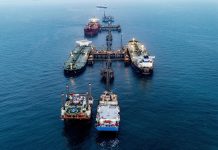
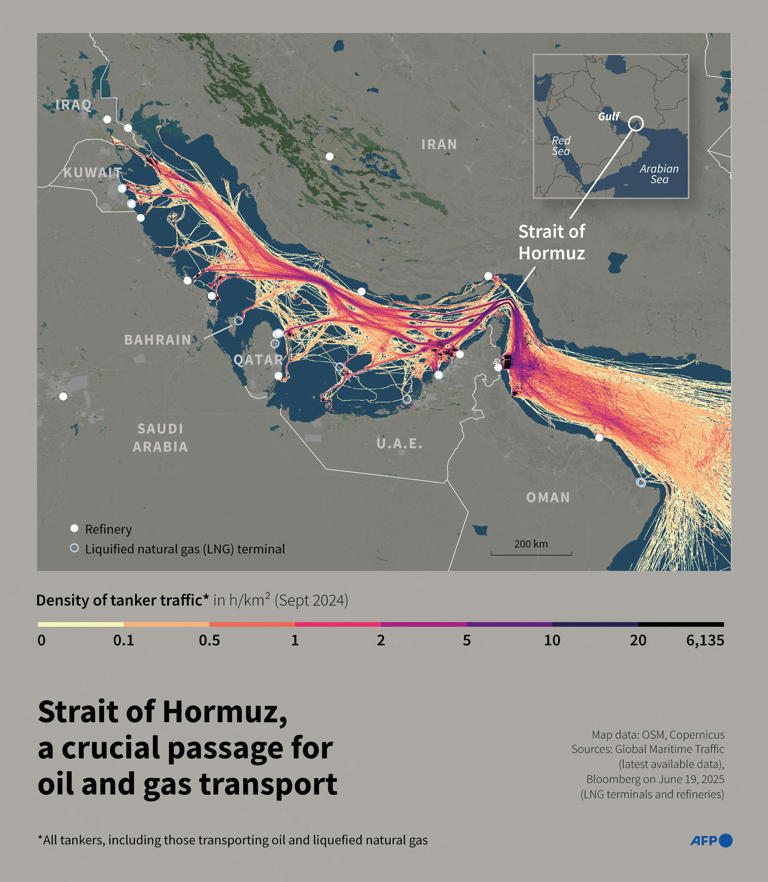
The Strait of Hormuz is a narrow sliver of water separating Iran from the Arabian Peninsula and is also the jugular vein of the global energy system. Roughly one-fifth of all the world’s oil and liquefied natural gas passes through it. Right now, it is literally a minefield.
Since the United States and Israel launched airstrikes on Iran on February 28, 2026, the Islamic Revolutionary Guard Corps (IRGC) has mined the waterway, threatened commercial vessels with drones and missiles, and imposed an informal toll system on ships it permits to pass. The result: oil tankers have slowed to a trickle, energy prices have surged, and the International Energy Agency’s executive director Fatih Birol has compared the disruption to the two major oil crises of the 1970s and the 2022 gas crisis combined.
The Miscalculation
Iran does not know the precise location of all the naval mines it deployed and reportedly lacks the technical capability to remove them even when found.
U.S. officials, speaking to The New York Times, have revealed that Iran’s mine-laying operation was, in their assessment, haphazard. Mines were deployed in March from small boats, and in some cases were not systematically recorded as they were placed. Others may have drifted from their original positions, carried by the strong currents of the Gulf of Oman.
The consequence: Tehran cannot now reliably map, locate, or recover all of the weapons it deployed. Even if Iran were willing to fully reopen the strait tomorrow, it may not be able to do so safely.
What kind of mines?
At least a dozen Iranian-manufactured Maham 3 and Maham 7 limpet mines have been confirmed in the strait. A declassified CIA report from 1984 notes that some Iranian naval mines carry warheads exceeding 500 kilograms, large enough to disable or sink a commercial supertanker. The IRGC is estimated to hold between 2,000 and 6,000 naval mines in total.
Key timeline
Feb 28, 2026 US and Israel launch coordinated airstrikes on Iran. The IRGC begins tightening control over the Strait of Hormuz.
March 2026 Iran begins laying mines in the strait from small boats. Dozens confirmed by US intelligence. Shipping slows dramatically; energy prices spike globally.
March 22 Trump gives Iran 48 hours to fully reopen the strait or face strikes on Iranian power plants. Deadline is later extended.
Early April IRGC publishes a navigational map showing limited “safe corridors” – an implicit acknowledgment that much of the strait remains dangerous. Iran begins charging transit fees.
April 8 Iranian Foreign Minister Araghchi says Tehran will reopen the waterway but that “technical limitations must be taken into account.” US officials interpret this as an admission about the mine problem.
April 11 (today) US–Iran delegations meet in Islamabad, Pakistan. Trump suspends planned strikes for two weeks, contingent on progress. The strait remains largely closed.
The diplomatic tangle
The mine problem has become a quiet but critical knot in the Islamabad peace talks. The Trump administration has demanded a “full, immediate, and safe” reopening of the strait as a precondition for a lasting ceasefire. But Iran’s negotiators are reportedly unable to offer a timeline, because mine clearance is genuinely beyond their current operational capacity.
Adding further complexity: Iran has also demanded that any agreement include a cessation of Israeli strikes on Lebanon – a condition the US initially agreed to, before Trump reversed course following a call with Israeli Prime Minister Benjamin Netanyahu. The talks are therefore entangled across at least three separate conflict tracks: the US–Iran war, the Israeli campaign in Lebanon, and the question of who clears the mines, and how.
Removing naval mines is exponentially harder than placing them. It requires specialized vessels, sonar equipment, trained divers, and time. Iran, according to US officials, possesses limited capability for this kind of operation at scale and it destroyed much of the capacity it had during the early phase of the conflict, when US Central Command targeted and eliminated 16 Iranian minelaying vessels.
What happens next
The most likely scenario in the short term is a partial, controlled opening. Iran has already published navigational corridors and is escorting select ships, those willing to pay transit fees and adhere to IRGC-designated routes through the waterway. But this is far from free passage, and the risk of a vessel striking an uncharted mine remains real.
A full reopening would almost certainly require international mine-clearance assistance from the US Navy, NATO allies, or Gulf states which carries its own political complications. The Bahrain-backed UN Security Council resolution calling for member states to use “all necessary means” to protect commercial shipping is still on the table.
For now, the world’s most important energy corridor remains a high-stakes game of geography, geopolitics, and somewhere under the surface, unexploded ordnance whose exact locations are known to no one.
Nigeria in the crossfire: What the Hormuz Crisis means at home
For Nigeria, the crisis in the Strait of Hormuz cuts both ways and neither way is comfortable. As Africa’s largest oil producer, Nigeria might appear to be a passive beneficiary of the global supply squeeze: when nearly 20% of world oil is bottlenecked, crude prices surge, and Nigeria’s export revenues rise with them. But the gain is largely illusory. The same global price shock that inflates export earnings at the wellhead is simultaneously driving up the cost of living for tens of millions of Nigerians who have barely recovered from the fuel subsidy removal of 2023.
Petrol prices: volatile and climbing
The numbers tell the stark story. When the Hormuz crisis intensified in early April, the Dangote Refinery – Africa’s largest – raised its ex-gantry price for Premium Motor Spirit (PMS) to ₦1,275 per litre, up from ₦1,200 the previous month. Retail prices at NNPC pumps stood around ₦1,261 per litre, while independent filling stations in cities like Lagos, Abuja, Kano, and Port Harcourt pushed prices to between ₦1,335 and ₦1,400 per litre, depending on location and supply conditions. Diesel climbed to ₦1,950 per litre – approaching the psychologically significant ₦2,000 mark. By April 8, a partial ceasefire between the US and Iran eased crude benchmarks enough for Dangote to reverse course, cutting the ex-gantry price back to ₦1,200 per litre, but the episode exposed just how thinly insulated Nigerian consumers are from events unfolding 5,000 kilometres away in the Persian Gulf.
Transport and households: bearing the weight
The fuel price surge has moved swiftly from filling stations into every corner of daily economic life. Commercial drivers – the backbone of urban mobility in Lagos, Abuja, Kano and beyond, have passed higher fuel costs directly onto passengers, with transport fares rising sharply across major routes. In the Federal Capital Territory and Lagos, residents report spending nearly double on daily commuting compared to earlier months. Some commercial vehicle operators, unable to turn a profit at current fuel prices, have parked their buses entirely, further reducing supply and pushing fares even higher. Ride-hailing drivers on platforms like Bolt and Uber have hiked surge pricing or scaled back their operating hours.
The ripple effects extend well beyond transportation. Higher diesel costs are squeezing businesses and manufacturers who rely on generators – still the default power source for most Nigerian enterprises. Logistics costs for moving food from farms to urban markets have risen, feeding directly into food inflation at a time when Nigerian households were already allocating record proportions of their income to food. Cooking gas (LPG), which is also influenced by international hydrocarbon prices, has remained elevated, squeezing low-income households that switched from kerosene during the subsidy era. Economists warn that each naira increase at the pump translates into a multiplier effect on inflation across the economy – from bakeries to schools to healthcare providers that run their facilities on diesel generators.
Outlook: fragile relief, unresolved vulnerability
The short-term picture offers a measure of cautious relief. The conditional two-week ceasefire between the US and Iran, announced on April 8, has taken some pressure off crude benchmarks – Brent futures fell from above $104 per barrel to around $95 and triggered the Dangote Refinery’s prompt price reversal. But the ceasefire is fragile, dependent on diplomatic talks in Islamabad whose outcome remains deeply uncertain, and conditioned on Iran reopening a strait it may be physically unable to fully clear of mines in the near term.
For Nigeria, the deeper lesson of this crisis is structural. Despite the Dangote Refinery coming online and promising to reduce dependence on imported refined products, Nigeria’s fuel pricing remains tightly coupled to international crude benchmarks. A deregulated downstream market means global shocks transmit rapidly and fully to the pump, with no subsidy buffer and a naira that remains fragile against the dollar. If the Islamabad talks collapse, if Iran’s mines remain unlocated, or if hostilities resume, Nigeria could face another sharp fuel price spike with little policy headroom to respond. The government’s ability to shield households through targeted intervention – cash transfers, transport subsidies, or emergency reserves – will be tested in the weeks ahead. In the meantime, ordinary Nigerians are absorbing a geopolitical crisis they had no hand in creating.
Sources: NYT, CNN, Reuters, CBS News