








Key points
- SPE Nigeria Council has commended the Federal Government for conducting a transparent 2025 oil licensing round.
- The council says the exercise strengthens investor confidence under the Petroleum Industry Act.
- NAICE 2026 will examine strategies for developing newly awarded oil and gas assets.
- The conference will also focus on energy transition, indigenous participation and technology-driven growth.
Main story
The Society of Petroleum Engineers (SPE) Nigeria Council has commended the Federal Government for conducting what it described as a transparent, automated and market-driven 2025 oil licensing round under the Petroleum Industry Act (PIA).
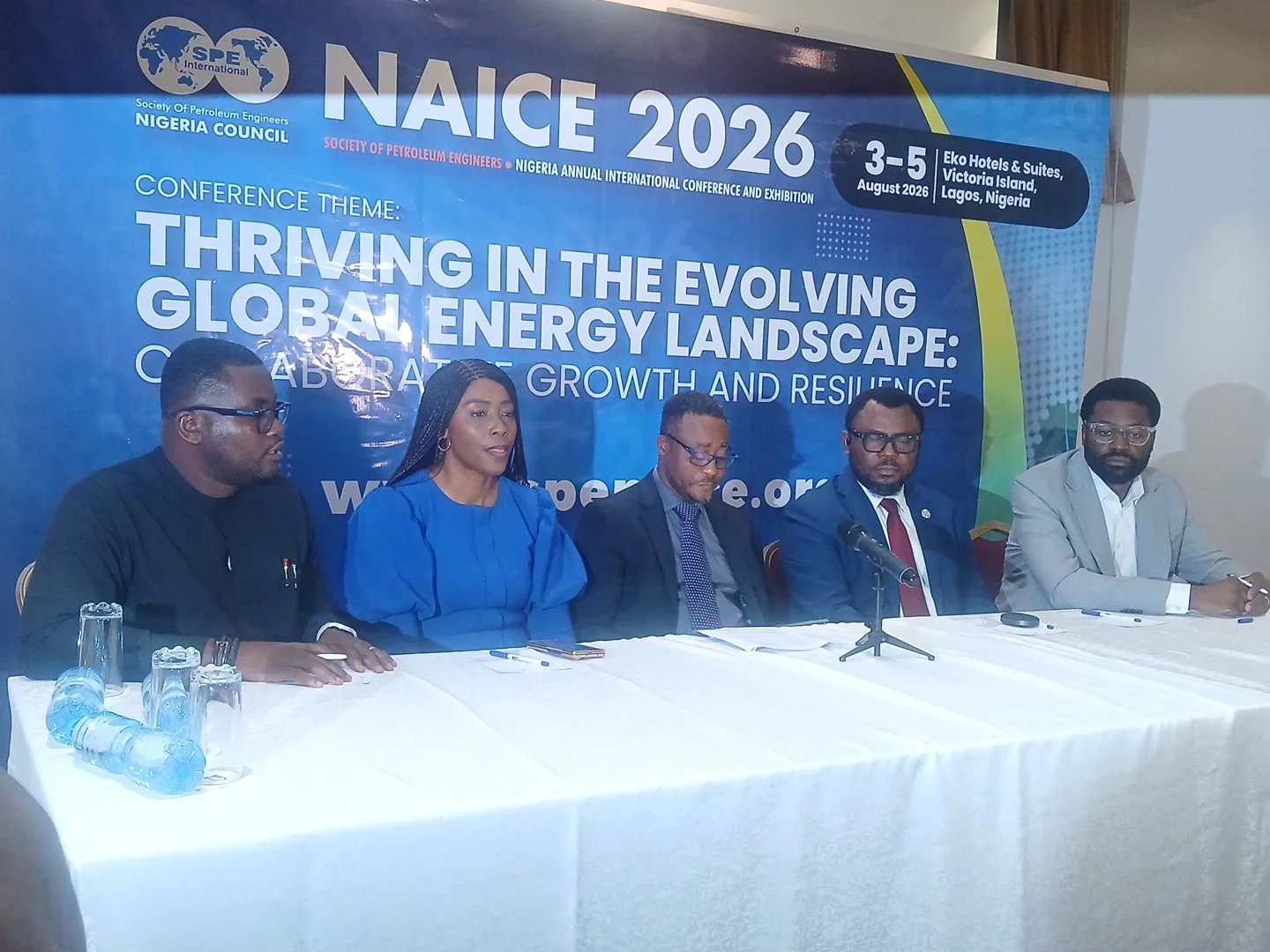
Chairman of the SPE Nigeria Council, Francis Nwaochei, made the remarks in Lagos during a pre-event press conference ahead of the 49th Nigeria Annual International Conference and Exhibition (NAICE 2026).
Nwaochei praised the Federal Government, the Ministry of Petroleum Resources and the Nigerian Upstream Petroleum Regulatory Commission (NUPRC) for implementing licensing reforms that he said had strengthened investor confidence in Nigeria’s upstream petroleum sector.
He said the conference, themed “Thriving in the Evolving Global Energy Landscape: Collaborative Growth and Resilience,” would examine how the industry can respond to changing global investment patterns, technological advancements, geopolitical developments and decarbonisation efforts.
According to him, the award of 37 oil and gas blocks to 31 preferred bidders presents fresh opportunities to expand Nigeria’s upstream industry and attract new investments.
He, however, noted that the focus should now shift to developing the assets into commercially viable production through technology, efficient reservoir management and sustained investment.
Nwaochei said the conference would provide stakeholders with an opportunity to discuss strategies for supporting Nigeria’s target of producing three million barrels of oil per day by 2030.
He added that the divestment of onshore assets by international oil companies had accelerated indigenous participation, with local operators now accounting for about 60 per cent of the country’s oil production.
The SPE chairman also highlighted the need to strengthen technical capacity, improve financing, expand gas commercialisation, protect critical infrastructure through digital technologies and adopt a balanced energy transition that supports both economic growth and emissions reduction.
He said recommendations from the conference would be compiled into a communiqué to support evidence-based policymaking across the energy sector.
The issues
Nigeria’s latest oil licensing round is expected to attract new investment into the upstream sector, but translating awarded assets into production will depend on financing, technology adoption, regulatory stability and effective project execution.
What’s being said
“NAICE 2026 will provide the first major platform for stakeholders to discuss how these assets can be developed to support Nigeria’s target of producing three million barrels of oil per day by 2030.” — Francis Nwaochei, Chairman, SPE Nigeria Council.
Bottom line
The SPE says transparent licensing reforms have improved investor confidence, but sustained investment, technological innovation and collaboration will be critical to converting newly awarded assets into increased oil and gas production.



 Nigeria Council has commended the Federal Government for conducting what it described as ...)