









Key points
- The Sahrawi Arab Democratic Republic (SADR) has called on Nigeria and the African Union (AU) to intensify efforts to resolve the Western Sahara conflict.
- SADR Foreign Minister Mohamed Beissat urged stronger diplomatic intervention to secure the Sahrawi people’s right to self-determination.
- Beissat delivered a message to President Bola Tinubu during his visit to Abuja and praised Nigeria’s longstanding support for the Sahrawi cause.
- He alleged that renewed hostilities since 2020 and human rights violations continue to undermine the UN-led peace process.
- The minister also appealed for the release of Sahrawi political prisoners and renewed calls for a referendum on Western Sahara’s future.
Main Story
The Sahrawi Arab Democratic Republic (SADR) has appealed to the Nigerian government and the African Union (AU) to play a more active role in resolving the decades-long Western Sahara dispute, describing the current security and humanitarian situation as increasingly fragile.
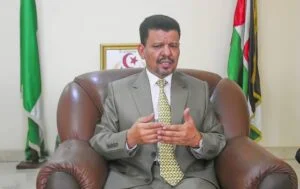
Speaking in an interview with the News Agency of Nigeria (NAN) in Abuja, the SADR Minister of Foreign and African Affairs, Mohamed Beissat, said Nigeria’s influence within Africa makes it well-positioned to champion renewed diplomatic efforts toward achieving self-determination for the Sahrawi people.
During his visit to Nigeria, Beissat said he delivered a written message to President Bola Tinubu through the Minister of State for Foreign Affairs, Ambassador Sola Enikanolaiye, expressing appreciation for Nigeria’s longstanding support for the Sahrawi cause.
He described Nigeria as a pillar of African unity and praised its historic commitment to justice, international law and African-led solutions to continental challenges.
According to Beissat, despite political goodwill between both countries, economic and commercial relations remain below potential. He said both governments share the determination to deepen bilateral cooperation across political, economic and other strategic areas.
On the Western Sahara conflict, the minister said the Polisario Front had participated in three rounds of direct negotiations facilitated by the United Nations and the United States in line with UN Resolution 2797, which seeks a mutually acceptable political solution based on self-determination.
However, he argued that the peace process has stalled following renewed fighting since Morocco’s 2020 military offensive, alleging that hostilities continue almost daily between both sides.
Beissat also raised concerns over alleged human rights violations, appealing for the release of Sahrawi political prisoners held in Moroccan prisons, including activist Naama Asfari, whom he said had embarked on a prolonged hunger strike.
He further urged the African Union to exert greater pressure on Morocco to embrace the bloc’s mediation efforts, noting that previous AU resolutions had called for an immediate ceasefire, renewed dialogue and preparations for a referendum.
The minister added that Western Sahara possesses significant deposits of phosphate, iron ore, copper, gold, fisheries and renewable energy resources, which he said could contribute to regional development if the conflict is resolved.
The Issues
The renewed appeal highlights several unresolved policy and diplomatic concerns:
Protracted territorial dispute: Western Sahara remains one of Africa’s longest-running territorial conflicts, with competing claims by Morocco and the Polisario Front.
Stalled peace process: Continued hostilities have slowed progress toward implementing UN-backed proposals for a political settlement and referendum.
Humanitarian concerns: Allegations of human rights violations and the detention of political prisoners continue to attract international attention.
Regional stability: The unresolved conflict continues to pose challenges for security cooperation, economic integration and regional development across North and West Africa.
What’s Being Said
Mohamed Beissat, SADR Minister of Foreign and African Affairs
“Nigeria remains the backbone of African unity.”
“Nigeria has always played a role in the defence of justice, international law, peace and African solutions for African problems.”
“We have the political will and the political determination to keep strengthening the bilateral relations on all levels.”
“Since the Moroccan aggression of 2020, the war is going on, and the two armies are engaged almost in daily acts of war.”
“I urge all peace-loving and justice-loving people in the world to do whatever they can to save the life of Asfari.”
What’s Next
The SADR is expected to continue engaging Nigeria, the African Union and the United Nations in pursuit of renewed diplomatic efforts aimed at reviving negotiations over Western Sahara.
Attention will also remain on the AU’s response to calls for greater mediation, as well as developments surrounding the humanitarian situation and the implementation of international resolutions on the conflict.
Bottom Line
The Sahrawi Arab Democratic Republic is seeking stronger diplomatic backing from Nigeria and the African Union to revive stalled efforts toward self-determination in Western Sahara, arguing that renewed conflict and unresolved humanitarian concerns demand urgent regional and international action.


 has appealed to the Nigerian government and the African Union (AU) to play a more active ...)