









By Boluwatife Oshadiya
Key Points
- Peter Obi resigns from African Democratic Congress (ADC)
- Cites internal crisis, external interference, and political hostility
- Says decision not linked to personal grievances with party leaders
- Warns of growing toxicity in Nigeria’s political environment
- Reaffirms commitment to national development
Main Story
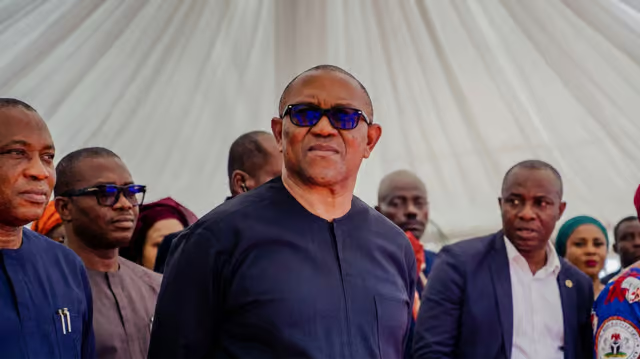
Former Governor of Anambra State, Peter Obi, has formally resigned from the African Democratic Congress (ADC), citing deepening internal divisions, external interference, and a hostile political environment. The announcement was made in a statement issued by his media aide, Valentine Obienyem, in Abuja.
Obi described Nigeria’s political climate as increasingly toxic, marked by intimidation, insecurity, and persistent scrutiny of individuals committed to genuine public service.
He expressed concern that institutions designed to safeguard citizens are increasingly being used in ways that undermine democratic values, while reform-minded leaders face mounting pressure.
The former Labour Party presidential candidate in the 2023 general election had joined the ADC earlier this year after exiting the Labour Party on February 14.
What’s Being Said
Obi clarified that his decision to leave the ADC was not driven by personal conflicts with party leadership.
“Let me state clearly: my decision to leave the ADC is not because of our highly respected Chairman, Senator David Mark… nor because of my leader and elder brother, Alhaji Atiku Abubakar.”
“It is not that any respected leaders did anything personally wrong to me. I will continue to respect them.”
He, however, pointed to internal divisions, legal disputes, and infiltration by destabilising elements as key factors behind his departure.
Obi noted that the challenges within the ADC mirrored those he previously encountered in the Labour Party, making meaningful political engagement increasingly difficult.
He also criticised a broader societal trend where integrity, humility, and adherence to due process are often misinterpreted as weakness.
“Sincere efforts toward nation-building are being undermined by suspicion, exclusion, and political manoeuvres driven more by control.”
What’s Next
Obi reaffirmed his commitment to Nigeria’s development, emphasising that his political ambition is rooted in advancing citizens’ welfare rather than holding office.
He highlighted insecurity, poverty, and displacement as urgent national challenges, signaling continued engagement in public discourse and reform advocacy despite his exit from formal party structures.
His next political alignment remains uncertain, but analysts suggest his move could reshape opposition dynamics ahead of future electoral cycles.




, citing deepening internal...)