The Dangote Refinery has achieved another milestone with the export of its first gasoline cargo to the United States. According to energy market intelligence firm Argus, a vessel named Gemini Pearl loaded about 300,000 barrels of gasoline from the refinery’s terminal on August 26, bound for discharge at either New York or New Jersey.
The transaction, reportedly facilitated by trading firm Vitol, has yet to be officially confirmed by the refinery’s management.
This development marks the first Nigerian gasoline cargo to head to the U.S., adding to Dangote’s growing global footprint. Earlier in June and July, the refinery exported three cargoes of refined products to the Middle East Gulf and Singapore.
Traders attributed the latest shipment to favourable arbitrage opportunities, as rising U.S. Atlantic Coast gasoline prices coincide with declining inventories.
Despite this progress, the refinery continues to face operational challenges. Market reports suggest its Residue Fluid Catalytic Cracker (RFCC) is running at about 45–50 per cent capacity. The unit was briefly shut down in August for maintenance but has since restarted, though issues such as high metals content in feedstock persist.
Meanwhile, Africa’s richest man and owner of the refinery, Aliko Dangote, has reiterated that his wealth was not inherited but built through personal effort and enterprise.
In an interview originally published by Bloomberg, which resurfaced online this week, Dangote reflected on his family’s affluent history. He acknowledged that his late great-grandfather, Alhaji Alhassan Dantata, was once the richest man in West Africa, and his father was also wealthy. However, he insisted that he chose not to rely on inherited fortune.
“One thing I’m very proud of is that I did not inherit any money from my father. I built everything from scratch,” Dangote said. “Whatever I inherited from him in assets, I gave to charity.”
He recounted starting out in Lagos as a cement trader after working briefly with his uncle, stressing that his success was rooted in identifying infrastructure needs.
“Cement builds infrastructure, and we need a lot of infrastructure,” he noted.
With its first U.S.-bound gasoline cargo, the $20 billion refinery continues to position itself as a key player in the global energy market, while its founder maintains his narrative as a self-made billionaire.
Yields on Federal Government of Nigeria (FGN) bonds dropped by an average of 5 basis points as investors ramped up demand for local bonds in the secondary market. Asset managers and portfolio investors actively optimized their holdings, spurred by expectations of yield repricing following the Debt Management Office’s (DMO) unexpected rate adjustments at the August primary market auction, despite improving macroeconomic conditions.
In August, the DMO increased bond supply and raised spot rates, defying market expectations for lower rates amid sustained disinflation, which has pushed the real interest rate to 5.62%. At the auction, the DMO offered ₦200 billion across the AUG 2030 (5-year) and JUN 2032 (7-year) bonds, attracting ₦268.16 billion in subscriptions, a ₦32.51 billion decrease from the prior auction but still oversubscribed by ₦68.16 billion. Allotments totaled ₦136.16 billion, down ₦49.77 billion, with stop rates climbing significantly to 17.95% for the 5-year bond (up 225.3 bps) and 18.00% for the 7-year bond (up 210 bps).
In Tuesday’s secondary market, bonds maturing in 2031, May 2033, and June 2053 saw moderate interest, though deal closures were limited. Bullish sentiment drove the average yield down to 16.8%, a 5 bps contraction. Yield declines were observed across the benchmark curve: short-term bonds fell by 5 bps, mid-term by 10 bps, and long-term by 1 bp, propelled by demand for the AUG-2030 (-17 bps), FEB-2031 (-24 bps), and JUN-2053 (-6 bps) bonds.
The rally in Nigerian bonds aligns with broader global trends, where investors are navigating monetary policy shifts. While the Central Bank of Nigeria (CBN) maintains tight liquidity to curb inflation, global central banks, including the U.S. Federal Reserve, are signaling potential rate cuts in 2025, influencing capital flows into emerging markets like Nigeria. Analysts anticipate sustained investor interest in FGN bonds, though rising stop rates and global yield dynamics could temper future gains.
The Federal Government has declared Friday, September 5, 2025, a public holiday to mark this year’s Eid-ul-Mawlid, the commemoration of the birth of Prophet Muhammad (Peace Be Upon Him).
The announcement was contained in a statement issued on Wednesday by the Permanent Secretary of the Ministry of Interior, Dr. Magdalene Ajani, on behalf of the Minister of Interior, Dr. Olubunmi Tunji-Ojo.
Extending warm greetings to Muslims in Nigeria and the diaspora, the government urged the faithful to emulate the Prophet’s virtues of peace, love, humility, tolerance, and compassion.
“The Minister of Interior wishes Muslims a joyous and peaceful Eid-ul-Mawlid celebration,” the statement read in part. “The celebration offers us yet another opportunity to strengthen the bonds of brotherhood, promote peaceful coexistence, and imbibe the Prophet’s teachings of mutual respect and selfless service to humanity.”
The Federal Government further called on Nigerians of all faiths to use the occasion to pray for peace, security, and stability, while supporting ongoing efforts to foster unity and national development. It also appealed to citizens to remain law-abiding and vigilant in the collective quest to strengthen the country’s democracy and progress.
Eid-ul-Mawlid, observed in the third month of the Islamic calendar (Rabi’ al-Awwal), is traditionally marked with prayers, lectures, processions, and acts of charity. In Nigeria, it is recognised as a national holiday, reflecting the country’s large Muslim population and its longstanding tradition of honouring major Islamic festivals.
Money market rates surged as the Central Bank of Nigeria (CBN) intensified liquidity controls in preparation for a Nigerian Treasury Bills auction on Wednesday. The CBN’s actions followed significant liquidity inflows of ₦459 billion from maturing Open Market Operation (OMO) bills, pushing the financial system’s liquidity to a robust ₦1.470 trillion by Wednesday’s close.
To curb excess liquidity, the CBN conducted a short-dated OMO auction, offering ₦600 billion. The auction drew strong demand, with subscriptions totaling ₦1.179 trillion, and ₦620.65 billion in OMO bills allotted to foreign portfolio investors and local banks. Despite the liquidity mop-up, interbank rates remained elevated at 26.5%. According to AIICO Capital Limited, the Open Repo Rate (OPR) and Overnight lending rate edged up by 7 basis points to 26.50% and 26.96%, respectively.
The Nigerian Interbank Offered Rate (NIBOR) rose across all maturities, with the Overnight rate increasing by 15 basis points to 26.93%, and the 1-month, 3-month, and 6-month rates climbing by 17, 18, and 42 basis points, respectively, reflecting heightened liquidity demand among financial institutions. However, money market rates showed mixed trends, with the OPR dipping by 8 basis points to 26.42% and the Overnight rate falling by 7 basis points to 26.88%.
In the Nigerian Treasury Bills market, yields displayed varied performance. The 1-month, 3-month, and 6-month tenors saw yield declines of 18, 21, and 4 basis points, respectively, while the 12-month tenor surged by 63 basis points. The average yield on Nigerian Treasury Bills dropped by 18 basis points to 18.85%, signaling strong investor confidence in the secondary market ahead of the ₦480 billion auction.
Analysts expect short-term benchmark interest rates to stabilize around 26.5% midweek, barring significant funding pressures. The CBN’s ongoing liquidity management and global monetary policy tightening, including rate hikes by major central banks like the U.S. Federal Reserve, continue to influence Nigeria’s financial markets, with implications for borrowing costs and investment flows.
Oil prices declined on Wednesday, driven by persistent concerns over weakening U.S. demand, even as geopolitical tensions and trade uncertainties kept investors cautious ahead of an OPEC+ meeting. Brent Crude fell 0.5% to $68.63 per barrel from $68.97, while West Texas Intermediate (WTI) dropped 0.5% to $64.98 from $65.34.
U.S. manufacturing activity contracted for the sixth consecutive month in August, with the ISM manufacturing PMI edging up to 48.7% from July but falling short of the anticipated 49%, underscoring ongoing economic softness in the world’s largest oil consumer.
A U.S. appeals court ruled on Friday that most of President Donald Trump’s tariffs were unlawful, casting doubt on his trade policies. The court postponed enforcement of its decision until October 14, pending a potential Supreme Court appeal. Trump vowed to seek a swift reversal. Analysts cautioned that overturning the tariffs could force the U.S. to refund billions, potentially widening the budget deficit.
On the supply front, the U.S. Treasury imposed sanctions on a network of companies and vessels, led by an Iraqi-Kittian businessman, for masking Iranian oil as Iraqi crude. These measures, following stalled nuclear talks, have bolstered oil futures by signaling tighter global supplies. Markets are also monitoring U.S.-India trade talks after Washington escalated tariffs on Indian imports from 25% to 50% due to India’s purchases of Russian oil. Additionally, Saudi Arabia and Iraq reportedly suspended crude deliveries to a major Russian-backed Indian refinery after EU sanctions in July, raising concerns about supply disruptions.
Attention is now focused on the September 7 meeting of eight OPEC+ members, where analysts expect production levels to remain steady after recent increases. However, fears of oversupply linger if the group opts for further output hikes.
Syria Resumes Oil Exports
Syria has restarted heavy crude oil exports from its Tartus terminal for the first time in over a decade, according to the Syrian Energy Ministry. On Monday, 600,000 barrels were shipped aboard the tanker Nissos Christiana to B Serve Energy Company. The ministry framed the export as a step toward strengthening Syria’s role in global oil markets, with plans for additional shipments. In June, Syria also resumed exporting non-crude petroleum products from its Baniyas refinery, shipping 30,000 metric tons to international markets.
Located 35 km north of Tartus, Baniyas hosts Syria’s largest refinery and a key oil port. Before the civil war in 2011, oil contributed 20% to Syria’s GDP, half of its exports, and over 50% of state revenues, with production at 390,000 barrels per day (bpd) in 2010. By 2023, output had plummeted to 40,000 bpd. During the conflict, Syria leaned on Iranian oil for power generation, but supplies halted after Bashar al-Assad’s ouster in December 2024. Assad, who led Syria for nearly 25 years, sought refuge in Russia, ending the Ba’ath Party’s rule since 1963. A transitional government under President Ahmad al-Sharaa took over in January.
The Nigeria Customs Service Board has approved the appointment of four Deputy Comptroller-Generals, twelve Assistant Comptroller-Generals, and the promotion of 3,312 senior officers across various ranks, in a sweeping move to strengthen leadership capacity and deepen equity within the Service.
In a statement issued to newsmen on Tuesday 2 September, 2025, and signed by the National Public Relations Officer of the Service, Assistant Comptroller of Customs Abdullahi Maiwada, the decision was taken at the 63rd regular meeting of the Board held on Tuesday, 2nd September 2025, and chaired by the Minister of Finance and Coordinating Minister of the Economy, Mr. Wale Edun.
The Board, according to the statement, explained that the appointments followed vacancies created by recent retirements and were made in strict compliance with the Federal Character Policy as provided in Section 14(4) of the Nigeria Customs Service Act, 2023.
The newly decorated officers who were elevated to the rank of DCG are: AB Mohammed (North-West), GO Omale (North-Central), OC Orbih (South-South), and D Nnadi (South-East). The new ACGs include MP Binga (North-East), CA Awo (South-East), AB Shuaibu (North-Central), AT Abe (North-West), K Mohammed (North-West), B Mohammed (North-West), TM Daniyan (North-Central), B Oramalugo (South-East), OP Olaniyan (South-West), B Olomu (South-West), IK Oladeji (South-West), and CC Dim (South-East).
In the same vein, 3,312 officers were promoted across various senior ranks. In comparison, 202 junior officers were also elevated from Assistant Inspector (AIC) to Customs Assistant I (CAI) at the Service’s 6th Management Meeting held on 29th August 2025. The Board stated that the exercise underscores its commitment to merit-based career progression and the recognition of outstanding performance.
He also reaffirmed the Service’s commitment to innovation, inclusivity, transparency, and excellence, while appreciating the guidance of the Minister of Finance.
The Customs Area Controller (CAC), Murtala Muhammad Airport Command (MMAC), Comptroller Michael Awe, has credited the Command’s recent successes to close collaboration with sister security agencies, describing synergy as critical to safeguarding Nigeria’s national interest.
He remarked on Tuesday, 2 September 2025, during a courtesy visit to the Assistant Inspector General of Police, Zone 2 Headquarters, Lagos, AIG Adegoke Fayoade.
According to him, “No agency can do it alone, so we must collaborate for efficiency and to serve Nigeria better. Before now, we already had an existing relationship, so what we are doing is building on that foundation to achieve a unified purpose.”
The Customs boss noted that strategic reforms implemented at MMAC under his leadership have yielded remarkable results, including interceptions of drugs, arms and ammunition, and military accoutrements.
“The rejigging of our system has led to the interception of illicit items, while our revenue figures have grown from ₦7 billion to over ₦21 billion within a short time. These results are only possible with the support of sister agencies”, he stated.
In his response, AIG Fayoade reaffirmed the Police’s readiness to deepen cooperation with Customs and other security partners.
“We have always worked together, and today’s visit only strengthens what we have been doing. As security agencies, we must continue to leverage our collaboration to tackle the challenges confronting our nation”, the AIG stated.
The visit concluded with an interactive session between senior officers of both agencies, underscoring their shared commitment to protecting national interests.
The adoption of a single foreign exchange rate for public and private sector transactions by the Central Bank of Nigeria (CBN), FMDQ and banks has boosted monthly turnover by 94 per cent.
You know what’s wild about forex trading? The market never sleeps. It’s a 24/7 whirlwind of opportunity, but let’s be real—not every hour is created equal. For Nigerian traders working in West Africa Time (WAT), picking the right moments to jump in can make or break your day.
Timing isn’t just about catching a wave; it’s about riding the right wave. So, let’s break down the best times to trade forex in Nigeria, why they matter, and how you can sync them with your life.
The Global Forex Dance
Forex trading is like a global relay race, with four major sessions passing the baton: Sydney, Tokyo, London, and New York. Each has its own vibe, driven by when the world’s financial hubs are awake and buzzing. For Nigerians, the London and New York sessions are the ones to watch. Why? Because these are the heavy hitters, where the market pulses with energy, liquidity, and price swings that can either be your best friend or your worst enemy.
The London session kicks off at 8:00 AM WAT, and it’s like the market’s morning coffee—everything wakes up. Then, around 2:00 PM WAT, New York joins the party, overlapping with London until about 5:00 PM. This overlap? It’s the sweet spot. Volatility spikes, spreads tighten, and opportunities come knocking. But before we get too excited, let’s zoom in on why these sessions are gold for Nigerian traders.
Why London’s the Place to Be
Picture the London session as the heart of the forex world, pumping out high-volume trades and tight spreads. It’s where the big players—banks, hedge funds, you name it—make their moves. Major currency pairs like EUR/USD, GBP/USD, or USD/CHF? They’re practically dancing during these hours, with price swings that can make a scalper’s heart race. For Nigerian traders, especially day traders or those who love quick, in-and-out trades, the London session starting at 8:00 AM WAT is prime time.
Why does this matter? High liquidity means you’re not stuck waiting for a buyer or seller, and smaller spreads mean you keep more of your profits. Ever tried trading when the market’s flat? It’s like trying to surf in a kiddie pool. London’s morning buzz gives you the waves you need to ride.
The London–New York Overlap: Where Magic Happens
Now, let’s talk about the real fireworks—the London–New York overlap from 2:00 PM to 5:00 PM WAT. This three-hour window is like the grand finale of a concert. Both markets are open, news releases from Europe and the U.S. hit the wires, and prices can swing like nobody’s business. Ever wonder why some traders seem to make a killing in the afternoon? This is their playground.
Economic reports, like U.S. non-farm payrolls or European Central Bank announcements, often drop during this window, sending ripples through the market. If you’ve got a solid strategy and nerves of steel, this is where you can catch big moves. But here’s the catch—it’s not for the faint-hearted. Volatility can be a double-edged sword, so risk management is your lifeline. A stop-loss order? Non-negotiable. Trust me, you don’t want to learn that lesson the hard way.
Early Mornings and Asian Sessions: Worth a Look?
Okay, let’s take a quick detour. What about the Sydney and Tokyo sessions? They’re quieter for Nigerian traders, running through the night and early morning WAT. If you’re trading pairs like AUD/USD or USD/JPY, these sessions might catch your eye. The catch? They’re less liquid, and the price action can feel like a slow-motion movie. For most Nigerians, staying up at 3:00 AM to trade the yen isn’t exactly appealing. But here’s a thought—some traders use these quieter hours to set up positions for the London session or play low-volatility strategies. It’s like prepping your fishing net before the big catch.
Still, unless you’re a night owl or obsessed with the Aussie dollar, you might want to save your energy for the main event. Speaking of energy, let’s talk about fitting trading into your life.
Making Trading Work with Your Nigerian Hustle
Here’s the thing—trading isn’t just about the market’s schedule; it’s about your schedule. Are you a morning person who’s sharp at 8:00 AM, ready to tackle the London session? Or do you come alive in the afternoon, thriving on the chaos of the London–New York overlap? The beauty of forex is that you can make it fit your vibe. But consistency is key. Jumping in and out all day and night might sound exciting, but it’s a fast track to burnout.
Take Sarah, a Lagos-based trader I heard about. She’s a mom of two and works a 9-to-5. She carves out an hour each morning for the London session, catching the EUR/USD’s early moves before heading to her office. On good days, she’s back for the overlap, but she’s strict about her limits. That discipline? It’s what separates the pros from the dreamers.
Think about your own rhythm. Maybe you’re a student in Abuja, sneaking in trades between classes. Or a night-shift worker in Port Harcourt who catches the tail end of New York’s session. The market’s always there, but your focus and energy aren’t. Pick your hours and stick to them.
Tools and Tips to Stay Ahead
Before we wrap up, a quick word on tools. Platforms like MetaTrader 4 or TradingView are lifesavers for Nigerian traders. They let you track sessions, set alerts for news releases, and analyze charts without breaking a sweat. And here’s a pro tip: keep an eye on the economic calendar. Sites like Forexfactory.com list major events that could shake the market. Knowing when the U.S. Federal Reserve is dropping a rate decision can save you from a surprise wipeout.
Oh, and one more thing—don’t sleep on demo accounts. Platforms like OANDA or FXTM let you practice without risking your hard-earned naira. It’s like learning to drive in a simulator before hitting Lagos traffic.
Wrapping It Up
So, what’s the takeaway? For Nigerian forex traders, timing isn’t just a detail—it’s a superpower. The London session at 8:00 AM WAT and the London–New York overlap from 2:00 PM to 5:00 PM are your golden windows. They’re packed with liquidity, volatility, and chances to make smart moves. Sure, the Asian sessions have their moments, but for most Nigerians, the European and U.S. markets are where the action’s at.
Combine that timing with a solid strategy, a cool head, and a dash of discipline, and you’re not just trading—you’re thriving. So, what are you waiting for? Grab your charts, pick your hours, and let the forex market work its magic for you.
You know what? September always feels like Christmas for tech enthusiasts, and 2025 is no exception. This month is bursting with shiny new gadgets and games that’ll have gadget analysts, phone fanatics, and reviewers buzzing.
From Apple’s iPhone 17 series to Samsung’s budget-friendly Galaxy S25 FE, Huawei’s sleek Watch GT 6, and—hold your breath—the long-awaited Hollow Knight: Silksong, there’s something for everyone. Let’s break down why this month is a game-changer for tech lovers, especially in Nigeria, where these devices hit close to home.
Apple’s iPhone 17: Setting the Bar (Again)
Every September, Apple struts onto the stage like it owns the month, and 2025 is no different. The iPhone 17 lineup—featuring the iPhone 17, 17 Plus, 17 Pro, and 17 Pro Max—is stealing the spotlight. Word on the street is the Pro models will sport slimmer bezels, next-level cameras, and AI so smart it might just edit your videos better than you can. Can you imagine pointing your phone at a Lagos sunset and getting a cinematic masterpiece with zero effort?
Then there’s iOS 26, dropping alongside the new iPhones. It’s promising buttery-smooth performance, deeper customization (finally!), and privacy controls that’ll make you feel like Fort Knox. For Nigerians, where phones are lifelines for work, socializing, and everything in between, this update could redefine how we use our devices. Sure, older iPhones will get some iOS 26 love, but the real magic? That’s reserved for the 17 series. Pricing, though—ugh, with the naira’s ups and downs, that’s the question on everyone’s mind. Will it be worth the upgrade?
Samsung’s not sitting this one out. The Galaxy S25 FE is their answer to “I want flagship swagger without selling my kidney.” Unlike its pricier sibling, the S25 Ultra, this Fan Edition is rumored to rock Samsung’s Exynos 2400 chip in most markets, not Qualcomm’s Snapdragon 8 Gen 4. Now, I know what you’re thinking—Exynos? Really? But hear me out: Samsung’s been fine-tuning its chips, and early leaks suggest this one’s a beast for gaming, streaming, and multitasking.
Picture this: a vibrant AMOLED display, a triple-camera setup that captures every detail of your jollof rice masterpiece, and a battery that keeps up with your hustle. For Nigerians who want high-end without the high-end price tag, the S25 FE could be a sweet spot. It’s the kind of phone that makes you wonder, “Why pay more?”
Galaxy Tab S11 Ultra: Your Laptop’s New Rival
If phones aren’t your thing, Samsung’s got something bigger—literally. The Galaxy Tab S11 Ultra is coming with a massive 14.6-inch AMOLED display, S Pen support, and up to 16GB of RAM. This isn’t just a tablet; it’s a productivity powerhouse for creatives, students, and professionals. Imagine sketching designs, taking notes in a lecture, or running a presentation for your small business in Abuja—all on one sleek device.
Tablets are catching on fast in Nigeria, where portability meets practicality. The Tab S11 Ultra is gunning for Apple’s iPad Pro, and with Android tablets stepping up their game, this could spark heated debates. Is Samsung’s ecosystem finally ready to take on Apple’s? Grab some popcorn—this rivalry’s about to get spicy.
Huawei’s Watch GT 6 and Mate XTs: Style Meets Substance
Huawei’s not missing the September party either. The Watch GT 6 is aimed at fitness buffs and style mavens alike, with upgraded health tracking, a battery that laughs at daily charging, and software that’s smoother than ever. For Nigerians who jog along Lekki Bridge or just want a smartwatch that doesn’t die mid-day, this could be a winner.
Then there’s the Mate XTs, Huawei’s latest foldable phone. Foldables are still that cool, futuristic tech that makes you feel like you’re living in a sci-fi movie. Huawei’s Mate series has always impressed with durable designs and screens that flex without breaking a sweat. Will it outshine Samsung’s foldables? That’s the million-naira question. For now, it’s another option for those who want cutting-edge tech with a Huawei twist.
Qualcomm’s Snapdragon: The Unsung Hero
Okay, let’s talk about something less flashy but just as crucial: Qualcomm’s Snapdragon announcement. These chips are the engines powering most Android phones Nigerians use daily. While the details are hush-hush, expect upgrades that make your next phone faster, more power-efficient, and a beast at gaming. Ever wondered why your phone doesn’t lag during a heated Call of Duty Mobile session? Thank Qualcomm. This announcement will quietly shape the phones hitting shelves in 2026, so keep an eye out.
Hollow Knight: Silksong—The Wait Is Over!
Now, for something completely different. Gamers, brace yourselves: Hollow Knight: Silksong is finally dropping this September. After years of anticipation, Team Cherry’s sequel to the beloved Hollow Knight is here with bigger worlds, tougher challenges, and new characters that’ll steal your heart (and probably your sanity). At $29.99 and launching globally, Nigerian gamers won’t be left waiting—an absolute win, considering how gaming’s blowing up here thanks to better internet and affordable consoles.
You know what’s cool? This isn’t just a game; it’s a cultural moment. Whether you’re in Lagos or Port Harcourt, you’ll be exploring Silksong’s hauntingly beautiful world alongside players worldwide. Who’s ready to lose sleep over those brutal boss fights?
Why This Month Feels Like a Tech Revolution
So, why should you care about this September’s tech bonanza? For Nigerians, these launches aren’t just headlines—they’re tools that shape how we work, play, and connect. The iPhone 17 and iOS 26 will set the pace for mobile trends, while the Galaxy S25 FE offers flagship vibes for less. The Tab S11 Ultra could redefine productivity for students and entrepreneurs, and Huawei’s Watch GT 6 and Mate XTs add flair to the smartwatch and foldable scenes.
Then there’s Silksong, proving Nigerian gamers are part of the global stage, playing day-one releases like everyone else. And Qualcomm’s chip upgrades? They’re the silent force making our phones snappier and more efficient.
As September 2025 unfolds, these launches will spark conversations, comparisons, and maybe a few friendly arguments over which device reigns supreme. Whether you’re a gadget analyst dissecting specs, a phone enthusiast chasing the latest features, or a gamer counting down to Silksong, this month has something to get your heart racing. So, what’s on your must-have list?
The naira traded steadied against the US dollar as data showed that Nigeria’s gross balance in the nation’s external reserves reached $41.422 billion on September 1, updated FX data from the Central Bank (CBN) revealed.
At the Nigerian foreign exchange market (NFEM), the official spot FX rate held steady, with the naira trading between ₦1,523.0/$ and ₦1,528.50/$ during the day.
The local currency appreciated, closing at ₦1,526.0565/$ from N1526.0940 the previous day. The naira is expected to continue to trade within CBN acceptable range as the authority continues to make FX intervention in case of any market dislocation.
Updated recorded showed that the CBN’s gross reserves rose to $41.42 billion as of 1 September 2025, up $154.39 million from the previous day. Oil prices climbed more than 1% on Tuesday after the U.S. imposed new sanctions aimed at curbing Iran’s oil revenues, with traders also looking ahead to Sunday’s OPEC+ meeting, where output cuts are expected to remain in place.
Brent crude gained 99 cents, or 1.45%, to settle at $69.14 per barrel, while U.S. West Texas Intermediate jumped $1.58, or 2.47%, to $65.59, after skipping settlement on Monday due to the Labor Day holiday.
Meanwhile, gold surged past $3,500 per ounce to a record high, fueled by expectations of a Fed rate cut and ongoing geopolitical risks. Spot gold rose 1.5% to $3,529.01, while December futures settled 2.2% higher at $3,592.20.
Investors are focused on the September 7 OPEC+ meeting, where eight members including Saudi Arabia and Russia, are expected to maintain their voluntary production cuts. These measures have helped stabilize oil prices near $60 per barrel, and we do not anticipate an unwind of the current supply constraints.
The Nigerian Exchange has been a bit of a rollercoaster lately. August 2025 saw some serious ups and downs, with bargain hunters taking a breather after a hot streak. Price corrections have made stocks look cheaper, and that’s got investors eyeing some juicy upside opportunities.
But here’s the thing: picking stocks blindly is like throwing darts in a storm. CSL Stockbrokers’ latest picks are a roadmap for navigating this terrain, blending hard data with strategic foresight. Ready to see what’s on their radar?
Their latest report for September 2025 is out, and it’s packed with insights for business analysts, stock traders, and financial folks looking to make smart moves. Let’s unpack their top 10 stock picks, dive into why they’re buzzing, and see what’s driving the Nigerian Exchange (NGX) right now.
Access Holdings: A Financial Powerhouse
First up, Access Holdings Plc. This isn’t just any financial stock—it’s Nigeria’s largest financial services group by assets, and it’s flexing some serious muscle. With a target price of ₦43.88 against Tuesday’s ₦25.85, CSL sees a big upside. Why? Access boasts a capital adequacy ratio of 20.46% and a stellar Q1 2025 return on average equity (RoAE) of 29.6%. That’s the kind of performance that makes analysts sit up straight.
But it’s not just numbers. Access is playing a long game, staying compliant with the Central Bank of Nigeria’s rules while keeping dividend payments steady. Their price-to-book value (PBV) of 0.39x screams undervaluation. Could this be the moment to jump in before the market catches up?
GTCO: Diversified and Resilient
Next, GTCO’s got analysts buzzing. With a target price of ₦115.43 (way above its ₦91.50 market price), this financial services group is a standout. Its shift to a holding company structure means it’s not just a bank anymore—it’s got fingers in payments, pensions, and fund management. That diversification? It’s like having multiple nets in a fishing expedition; if one stream slows, others keep the haul coming.
GTCO’s capital adequacy ratio is a robust 39.3%, and its Q1 2025 cost-to-income ratio of 28.1% shows they’re running a tight ship. Plus, their recent listing on the London Stock Exchange adds a global sheen. Who doesn’t love a stock that’s both prudent and ambitious?
NAHCO: Riding the Air Travel Wave
Here’s a curveball: NAHCO, the Nigerian Aviation Handling Company, isn’t rated but still made the list. Why? Air travel’s bouncing back, cargo volumes are climbing, and NAHCO’s operational efficiency is paying off. In H1 2025, they posted a jaw-dropping 111.41% revenue growth to ₦32.33 billion and a 96.07% jump in pre-tax profit to ₦11.79 billion. That’s not just growth; it’s a full-on sprint.
With strategic partnerships and service expansions at key airports, NAHCO’s poised to keep soaring. Ever wonder what happens when a company aligns perfectly with a recovering sector? NAHCO might just be the answer.
Cement Giants: Dangote and Lafarge
Let’s talk cement—because Nigeria’s building boom isn’t slowing down. Dangote Cement (DANGCEM) and Lafarge Africa (WAPCO) are both CSL favorites, and for good reason. Dangote’s H1 2025 pre-tax profit skyrocketed 149.2% to ₦730.03 billion, fueled by strong Nigerian and Pan-African sales. Its target price of ₦681.71 versus ₦520.20 suggests there’s room to grow. Trading at an EV/EBITDA of 6.76x (below the EMEA average), it’s a value play in a high-demand sector.
Lafarge’s no slouch either, with a target price of ₦199.14 against ₦110.85 and a 328.3% pre-tax profit surge to ₦199.74 billion in H1 2025. Both companies are riding government infrastructure spending and private-sector projects. It’s like betting on the foundation of Nigeria’s growth—literally.
Consumer Goods: Cadbury and Nestlé
Consumer goods are always a safe bet in a bustling market like Nigeria’s, and CSL’s got two heavyweights: Cadbury Nigeria and Nestlé Nigeria. Cadbury’s churning out fast-moving consumer goods like nobody’s business, with H1 2025 revenue up 50.2% to ₦77.25 billion and pre-tax profit soaring 204.7% to ₦14.54 billion. Its target price of ₦83.08 (versus ₦55) and an EV/EBITDA of 7.87x make it a sweet deal.
Nestlé’s not far behind, with a target price of ₦2,327.22 against ₦1,870. H1 2025 saw revenue climb 42.8% to ₦581.12 billion and pre-tax profit jump 135% to ₦88.40 billion. With an EV/EBITDA of 7.44x, it’s undervalued compared to peers. These companies are like the comfort food of stocks—reliable and always in demand.
UACN: A Diversified Gem
UAC of Nigeria Plc (UACN) is a bit of a dark horse, but don’t sleep on it. With a target price of ₦103.44 versus ₦73, this conglomerate spans animal feeds, paints, packaged foods, and more. Their recent acquisition of CHI Limited (think Chivita and Hollandia) is a power move, strengthening their grip on Nigeria’s FMCG market. H1 2025 revenue grew 33% to ₦110.41 billion, and underlying pre-tax profit hit ₦10.7 billion—91% higher than last year.
Trading at an EV/EBITDA of 7.32x, UACN’s got room to run. It’s like finding a Swiss Army knife in a toolbox full of single-use gadgets—versatile and valuable.
Telecom Titans: Airtel Africa and MTN Nigeria
No Nigerian stock list is complete without telecoms, and Airtel Africa and MTN Nigeria are stealing the show. Airtel’s Q1 2026 revenue surged 22.4% to $1.42 billion, with pre-tax profit up 268.9% to $273 million. Their target price of ₦3,230.33 (versus Tuesday’s market price) reflects confidence in tariff hikes and cost-cutting. Plus, their debt localization strategy is shielding them from FX volatility. Smart, right?
MTN’s no slouch either, with H1 2025 revenue up 54.5% to ₦2.38 trillion and pre-tax profit at ₦622.26 billion, a stunning turnaround from last year’s loss. With a target price of ₦555.33, CSL sees dividend payments resuming soon. These telecoms are like the backbone of Nigeria’s digital economy—essential and growing.
What’s Next for the NGX?
The Nigerian stock market’s got momentum, but it’s not without risks. Currency volatility and rising energy costs are real hurdles, yet CSL’s picks show companies that are adapting and thriving. From financials to cement to consumer goods, these stocks offer a mix of stability and growth potential. So, what’s your move?
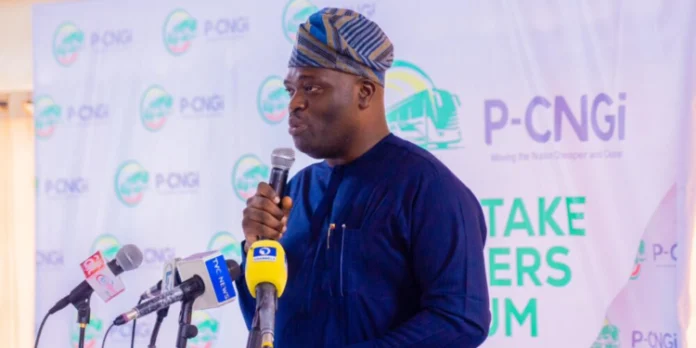
Chief Executive Officer and Programme Director of the Presidential Compressed Natural Gas Initiative, Michael Oluwagbemi
The price of Compressed Natural Gas (CNG) has surged from N230 to N450 per Standard Cubic Metre (SCM) following the Federal Government’s recent decision to reduce subsidies, exacerbating challenges posed by long queues and limited refilling stations across Nigeria.
According to retailers, the Nigerian National Petroleum Company (NNPC) Gas Marketing Limited reviewed the price upward, with trucks now paying N450/SCM, while commercial and private car drivers benefit from partial subsidies, paying N380/SCM. An anonymous official from the Presidential Compressed Natural Gas Initiative (PCNGI) confirmed the price adjustment, noting that the lower rate for commercial vehicles aims to stabilize transportation costs. “The price is subsidized for commercial vehicles to keep transport fares affordable. Trucks pay more, while buses and private cars get a reduced rate,” the official explained.
A major CNG retailer, speaking anonymously, revealed that the government had capped CNG prices below cost since the 2023 petrol subsidy removal to encourage adoption. However, the retailer warned that prices could soon rise to N500 or N600/SCM to attract investors. “The government sold CNG to marketers at a subsidized rate to promote its use, but the new pricing reflects a shift to make the sector more sustainable,” the retailer said.
The price hike, coupled with insufficient refilling stations, has raised concerns among vehicle owners. Adeyemi Paul, a ride-hailing driver, highlighted the frustration: “Some spent N1.5m to convert their vehicles to CNG, expecting a cheaper alternative. Now, with long queues stretching up to 1.5km and rising prices, many may revert to petrol.” He questioned the government’s promotion of CNG as a cost-effective fuel, noting that the price difference with petrol is shrinking.
The PCNGI official emphasized efforts to address the shortage of refilling stations. “Our priority is increasing CNG availability by building more stations. We want to ensure no converted vehicle owner struggles to find fuel,” the official said, acknowledging that limited access forces some drivers to rely on petrol.
In June 2025, the Federal Government reported significant progress in its CNG initiative, with over 100,000 vehicles converted from petrol to CNG within a year. Michael Oluwagbemi, Programme Director of PCNGI, noted that the number of CNG-powered vehicles grew from under 4,000 to nearly 100,000, with conversion centres expanding from seven to 265 nationwide. Operational refilling stations increased from 20 in late 2023 to 60, with 175 more under construction. “Over the next three months, we plan to commission an additional 100 stations,” Oluwagbemi said, defending the pace of implementation: “Those who led Nigeria into the fuel subsidy crisis cannot fairly criticize our efforts to address it.”
Despite these efforts, the rising CNG prices and persistent queues threaten to undermine the initiative’s gains. Louis Ibah, spokesman for the Minister of Petroleum Resources (Gas), Ekperikpe Ekpo, was unavailable for comment, and the NNPC’s new spokesperson could not be reached. With the government’s push for CNG as a cheaper alternative to petrol following the 2023 subsidy removal, stakeholders worry that further price hikes could discourage adoption and erode public confidence in the initiative.
The Central Bank of Nigeria (CBN) has issued 84-day Open Market Operation (OMO) bills at a spot rate of 26.44%, according to results from Tuesday’s auction.
The offering comes as a set of maturing bills approach expiration this week, a move expected to address rising liquidity levels within the banking sector.
To curb excess liquidity and stimulate dollar inflows from foreign portfolio investors, the apex bank offered ₦600 billion in the auction. Market appetite was strong, with bids amounting to ₦1.2 trillion, but only ₦620.7 billion was eventually allotted at a stop rate of 26.44%.
This comes shortly after the CBN floated ₦700 billion worth of OMO bills in two primary market auctions, raising about ₦1.19 trillion across short-term tenors at comparatively higher interest rates.
The Nigerian Civil Aviation Authority (NCAA), led by Director General Captain Chris Najomo, visited the Economic and Financial Crimes Commission (EFCC) Chairman, Mr. Ola Olukoyede, in Abuja on Tuesday, to urge intensified action against fraud and economic crimes in the aviation industry, according to a statement on the EFCC’s official X handle.
Najomo highlighted fraudulent practices threatening safety oversight and transparency, particularly in high-value transactions like aircraft purchases, leasing, foreign maintenance contracts, and safety infrastructure procurement. He accused some operators of under-reporting revenues, manipulating ticketing systems, and diverting funds, which hampers the NCAA’s regulatory capacity. He also flagged illegal charter operations disguised as private flights, involving unregulated financial flows.
To address these issues, Najomo proposed joint initiatives, including training NCAA staff to detect financial irregularities, conducting sensitisation workshops, and sharing intelligence to enhance oversight. He stressed the need for EFCC’s intervention to investigate suspected cases of deliberate fund withholding, diversion, or misappropriation.
Olukoyede welcomed the collaboration, pledging that senior EFCC officers would work with the NCAA to finalize a Memorandum of Understanding for joint investigations, intelligence sharing, and compliance monitoring. He noted the EFCC’s focus on money laundering in aviation, particularly through chartered services, and affirmed their commitment to achieving results.
Investors are bracing for a possible hike in spot rates as the Central Bank of Nigeria (CBN) prepares to conduct its midweek primary market auction of Nigerian Treasury Bills.
The auction, scheduled for Wednesday, will cover the usual 91-day, 182-day, and 364-day tenors. The Debt Management Office (DMO) will coordinate the exercise, with market watchers expecting rates to reprice in line with the attractive yields already being offered to offshore investors through CBN’s OMO instruments.
In total, ₦480 billion worth of Treasury Bills will be offered across maturities, with ₦50 billion allocated to 91-day notes, ₦80 billion to 182-day notes, and ₦350 billion to 364-day notes.
AAG Capital Limited, in its commentary, projected higher cut-off rates due to the volume on offer, suggesting that the DMO could allot as much as ₦450 billion on the one-year paper alone. Analysts also noted that yields on the shorter end of the curve have shifted upward by 150 basis points in the past month, following renewed OMO issuance from the CBN.
With the policy rate still fixed at 27.50% and inflationary pressures persisting, analysts maintain that Treasury Bills remain less attractive to domestic investors.
The Nigerian Exchange (NGX) recorded another bearish session on Tuesday, as market capitalisation shed ₦623 billion to settle at ₦87.783 trillion, compared to ₦88.406 trillion on Monday.
Similarly, the All-Share Index (ASI) fell by 984.55 points or 0.71%, closing at 138,737.64, against the previous day’s 139,722.19. The decline was largely driven by persistent selloffs in AIICO Insurance, Prestige Assurance, Wema Bank, Consolidated Hallmark Holdings, Ellah Lakes, and 44 other equities.
The market breadth closed deeply negative with 49 losers against only 11 gainers. AIICO Insurance, Prestige Assurance, Wema Bank, and Consolidated Hallmark Holdings all plunged by 10% each, ending at ₦3.42, ₦1.62, ₦20.70, and ₦3.87 per share, respectively. Ellah Lakes also dipped 9.93% to settle at ₦11.43.
On the gainers’ chart, NCR Nigeria led with a 9.96% rise to ₦12.70 per share, followed by Austin Laz, which climbed 9.66% to ₦3.18. Tantalizer gained 6.09% to close at ₦2.44, while Multiverse Mining appreciated 5.50% to ₦11.50. Deap Capital also advanced 4.68% to ₦1.79.
A total of 407.6 million shares valued at ₦39.9 billion were traded across 31,406 deals, compared to Monday’s 407.9 million shares worth ₦14.78 billion exchanged in 33,859 deals. GTCO led trading activity with 32.6 million shares valued at ₦3.02 billion, followed by Access Holdings with 29.8 million shares worth ₦775.2 million.
AIICO Insurance exchanged 21.8 million shares worth ₦76.6 million, while Ellah Lakes recorded 20.5 million units valued at ₦235.9 million. Sovereign Trust Insurance also saw 20.4 million shares worth ₦56.5 million traded.
The banking sector index slipped further on Tuesday amid sustained sell pressure on Tier-1 banks, compounded by profit-taking in Wema Bank. Data from the Nigerian Exchange (NGX) showed that banking equities were the primary drivers of the day’s market decline, alongside weakness in the insurance sector.
Guaranty Trust Holding Company (GTCO) led the activity chart, trading 32.61 million units valued at ₦3.0 billion. Overall, market sentiment remained weak as 48 losers outweighed just 11 gainers, resulting in a market breadth of 0.23x.
Wema Bank shed 10% of its value, while investors also exited positions in First Holdco, GTCO, United Bank for Africa (UBA), and Access Holdings. Zenith Bank was the lone gainer, managing to buck the recent downward trend.
The banking index fell by 82 basis points, with market participants anticipating Tier-1 earnings reports to potentially spark a re-rating in coming sessions.
First Holdco slipped 0.62% to close at ₦32.1, leaving its market capitalisation at ₦1.344 trillion. UBA lost 1.16% to ₦1.916 trillion in market value, while GTCO declined by 0.5% to ₦3.332 trillion. Access Holdings also fell, closing with a market value of ₦1.378 trillion, ranking as the weakest performer among its peers.
Beyond the banking sector, AIICO Insurance, Consolidated Hallmark Holdings, Wema Bank, and Prestige Assurance all dropped by 10%, leading the list of laggards.
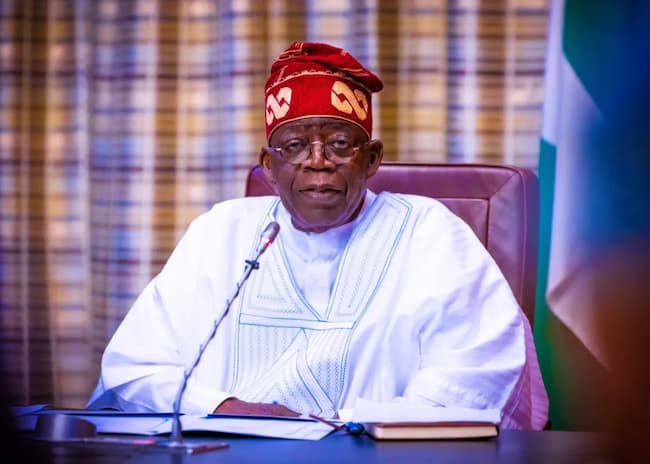
President Bola Tinubu has revealed that Nigeria has met and surpassed its 2025 revenue target earlier than expected, attributing the achievement to robust growth in the non-oil sector.
Speaking at the Presidential Villa during a meeting with founding members of the defunct Congress for Progressive Change (CPC) and The Buhari Organisation, Tinubu stated, “Nigeria is not borrowing. We have achieved our revenue target for the year as of August.”
The President pointed out that non-oil earnings accounted for the bulk of the revenue, underscoring the importance of diversifying the economy away from oil dependence. He also highlighted improvements in the exchange rate, which has appreciated from ₦1,900 per dollar at the time he took office to ₦1,450 per dollar presently.
According to Tinubu, Nigeria’s economy is now stable and predictable, with businesses no longer requiring political connections to access foreign exchange or facilitate imports. He stressed the need to expand the country’s export capacity and create jobs, while assuring citizens of his administration’s dedication to economic reforms.
Tinubu also unveiled a nationwide mechanisation programme designed to boost food production, enhance agricultural output, and reduce poverty. The plan includes establishing farm centres across regions to drive food security and sovereignty under his Renewed Hope Agenda.
Additionally, Tinubu pledged to honour the legacy of former President Muhammadu Buhari by building a Buhari House and ensuring that members of the CPC family are integrated into his administration.
Week 10 pool results 2025: Football pools results, live football pool result today, pool result today saturday matches, pool results for this week, british and aussie pool result, football pools results and fixtures, pools panel results today, pool panel results and live score pool result today. We publish half-time results first of its kind.
Week 10 Pool Results: Football pools results for this week 10 2025 are published on this website immediately after full-time confirmation of live score results. We also publish the outcome of postponed matches by the football pools panel at half-time as decided by the football pools. This week’s Week 10 Pool Results are made available in partnership with Bizwatch Nigeria. Stay tuned for reliable and accurate updates throughout the week.
WEEK: 10; SEASON: UK 2025/2026; DATE: 06-September-2025
Now you can find the Week 12 pool fixtures 2025: pool fixtures for this week, this week pool fixtures, football pools results and fixtures, pool fixtures this week, classic pool fixtures, Aussie pool fixtures, UK pool fixtures, advance pool fixtures, Australia pool fixtures, pool panel results, pool result today Saturday, pool results and fixtures this week, fortune soccer pool fixtures.
Find all the Week 12 pool fixtures on Bizwatchnigeria.ng as soon as they are released by the FPA (Football Pools Authority).