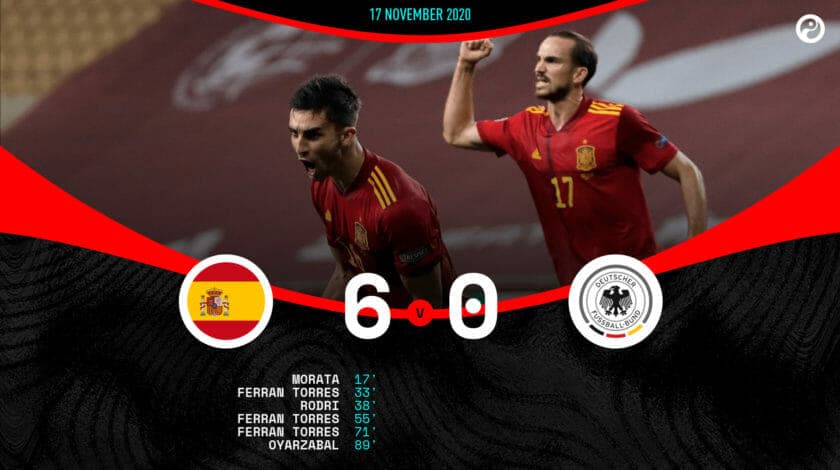
Spain has climbed back to the top of the FIFA World Rankings for the first time since 2014, overtaking Argentina after a strong run in the 2026 FIFA World Cup qualifiers.
The updated rankings, announced on FIFA’s official X account on Thursday, marked a significant reshuffle at the summit of world football. Argentina, which had enjoyed the No. 1 spot since April 2023, dropped to third, while France moved into second place.
Elsewhere in the rankings, Portugal rose to fifth, Croatia advanced to ninth, and Italy secured 10th position. Brazil slipped to sixth following a disappointing qualification campaign, while Germany tumbled to 12th after their shock defeat to Slovakia.
Slovakia was among the standout climbers, surging 10 places to 42nd after back-to-back qualifying wins, including the upset against Germany. Morocco maintained its position just outside the top 10, winning eight of its last nine fixtures.
Other notable risers included The Gambia, Madagascar, Paraguay, Uganda, Libya, Suriname, and the Faroe Islands, all improving by at least five places.
Co-hosts of the 2026 World Cup, Canada, moved two places higher to 26th, while Kosovo achieved a historic climb to 91st after rising four places.
The rankings highlight the shifting balance in world football as nations prepare for the remaining qualifiers and international tournaments ahead of the World Cup.
Barcelona secured a 2-1 away victory over Newcastle United in their UEFA Champions League opener on Thursday, with Marcus Rashford netting twice to give the Spanish champions a winning start.
Rashford, who joined Barcelona on loan from Manchester United in July, scored his first goals for the club. He broke the deadlock just before the hour mark with a header from Jules Kounde’s cross, before doubling the lead midway through the second half with a powerful strike from distance.
Anthony Gordon pulled one back for Newcastle, but Xavi’s side held firm to collect all three points, bouncing back from last season’s semi-final exit.
At the Etihad Stadium, Manchester City marked their title defence with a 2-0 win against Napoli. Erling Haaland scored his 50th Champions League goal from a Phil Foden assist shortly after Napoli captain Giovanni Di Lorenzo was sent off for fouling the Norwegian. Jeremy Doku added a second, sealing City’s victory and leaving Napoli winless in 13 visits to England.
Pep Guardiola hailed Haaland’s milestone, placing him in the same breath as Lionel Messi and Cristiano Ronaldo. “The numbers speak for themselves. Alongside Messi and Ronaldo, Erling is a phenomenon,” Guardiola said.
Elsewhere, Eintracht Frankfurt thrashed Galatasaray 5-1, while Bayer Leverkusen were held to a 2-2 draw at FC Copenhagen. Club Brugge stunned Monaco 4-1 in Belgium, and Sporting Lisbon swept past Kairat Almaty with a 4-1 home win.
Nigeria’s Super Eagles have slipped one spot in the September 2025 FIFA World Ranking, now positioned 45th globally. According to the latest figures published on FIFA’s official website, the national team accumulated 1,483 points, slightly down from the 1,484 points recorded in July’s edition of the ranking.
Within the review period, the Super Eagles managed mixed results — drawing against South Africa, securing victories over Rwanda (1-0) and Congo (2-0), but falling to heavy defeats against Sudan (4-0) and Senegal (1-0).
On the African continent, Nigeria sits in 6th place behind Morocco, Senegal, Egypt, Algeria, and Côte d’Ivoire.
Globally, Spain dethroned Argentina, ending the Albiceleste’s reign at the top since April 2023. This marks Spain’s first return to number one since 2014. Slovakia emerged as the most improved side, climbing ten places to 42nd after a strong run of results.
Over 200 international fixtures influenced the new ranking, underscoring the dynamic shifts in world football standings.
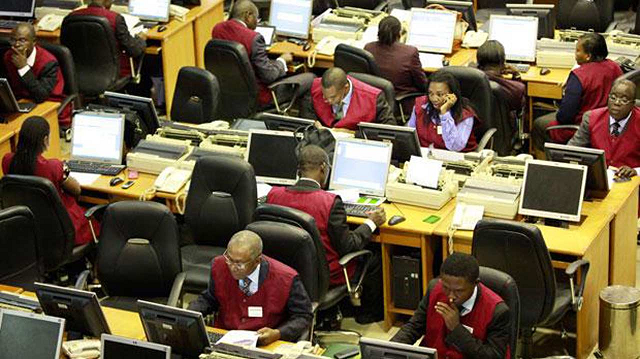
The Nigerian Exchange (NGX) once again crossed the N90 trillion mark in market capitalisation on Thursday, as equities investors recorded impressive gains of about N144 billion.
The local bourse sustained its bullish run, with the market closing positive and extending the momentum of previous sessions. Data from the trading floor revealed that the All-Share Index climbed by 228.25 basis points, representing a 0.16% rise, to settle at 142,263.12 points. Year-to-date returns also strengthened, advancing to 38.22%.
The rally was largely supported by renewed buying interest in stocks viewed to have strong upside potential. Consequently, equities market capitalisation grew by ₦143.54 billion, closing at ₦90.01 trillion.
Despite the surge, market activity levels declined sharply. The volume of shares traded fell by -67.64%, while the value of transactions dipped -65.86%. Brokers reported that investors exchanged roughly 325.11 million units of equities valued at ₦8.42 billion across 22,770 deals.
ACCESSCORP dominated the activity chart by volume, accounting for 11.47% of all trades. It was followed by FIDELITYBK (6.32%), NSLTECH (6.10%), VERTASKAP (4.59%), and OMATEK (4.56%). In terms of value, ZENITHBANK led the pack, contributing 19.10% of the total transaction value on the exchange.
On the gainers’ list, GUINNESS topped with a 10% price increase, trailed by EUNISELL (+9.89%), REGALINS (+9.82%), THOMASWY (+9.80%), MCNICHOLS (+9.58%), and GUINEAINS (+9.40%). In total, 30 stocks appreciated during the session.
However, 20 equities closed in the red. CONHALLPLC shed -7.59%, making it the day’s worst performer, followed by TIP (-7.48%), NEIMETH (-2.71%), ELLAHLAKES (-2.61%), ZENITHBANK (-1.42%), and OANDO (-0.51%).
Sector performance ended mixed. While the Banking (-0.23%) and Insurance (-1.07%) sectors recorded declines, Consumer Goods (+0.75%), Oil & Gas (+0.28%), Industrial (+0.01%), and Commodity (+0.16%) sectors closed higher, leaving the market breadth in positive territory.
The Nigerian naira came under pressure in the official foreign exchange (FX) market on Thursday as demand for the US dollar surged beyond available supply, weakening the local unit.
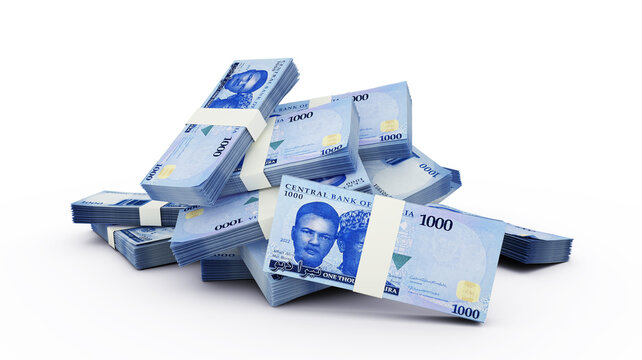
Market data showed that the naira depreciated to N1,510 per dollar at the intraday spot level, with the lowest exchange rate trading at N1,487. Analysts linked the decline to reduced FX inflows and limited interventions from the Central Bank of Nigeria (CBN), which had recently injected over $38 million into the market.
FX traders explained that the lack of fresh intervention and lower participation from offshore investors increased demand pressure. Despite the pullback, analysts remain optimistic about the naira’s outlook, expecting future dollar sales by the CBN as well as inflows from foreign portfolio investors at the next OMO auction.
In the parallel market, the naira also weakened, closing at an average of N1,520 per dollar. Analysts suggested that while the currency faces intermittent volatility, the apex bank is expected to act if the exchange rate crosses critical levels.
Meanwhile, Nigeria’s external reserves inched closer to the $42 billion mark. Figures released by the CBN indicated that gross reserves rose to $41.954 billion on Wednesday, up from $41.899 billion the day before, despite uncertainty in the global commodity market.
United Bank for Africa (UBA) Plc posted a 6.1% rise in profit after tax for the first half of 2025, despite a challenging operating environment. The bank’s net income climbed to ₦335.53 billion, up from ₦316.36 billion recorded in the first half of 2024.
The increase, however, did not translate to higher earnings per share, as EPS marginally declined to ₦8.86 from ₦8.90 due to dilution from new share issuances.
The Board recommended an interim dividend of ₦0.25 per share — significantly lower than the ₦2.00 declared in the same period last year. Based on the bank’s closing price of ₦47.00 per share, this represents a dividend yield of just 0.5%.
UBA’s performance was driven by a 32.9% year-on-year growth in interest income, which reached ₦1.33 trillion. This was supported by higher earnings from loans, investment securities, and interbank activities. However, interest expense surged 70.4% year-on-year to ₦560.61 billion due to rising funding costs.
Net interest income grew by 14.6% year-on-year to ₦773.03 billion, while non-interest income fell sharply by 37% to ₦162.34 billion, following a significant reduction in FX revaluation gains.
Operating expenses rose 9.5% year-on-year to ₦514.99 billion, though the impact was partially cushioned by lower costs for fuel, repairs, and maintenance. Pretax profit stood at ₦388.41 billion, down 3.3% year-on-year, but a reduced tax burden allowed net income to grow modestly.
Zenith Bank Plc has reported a net profit of ₦532.18 billion for the first half of 2025, representing a 7.9% year-on-year decline from ₦578 billion recorded in the same period last year.
The bank’s audited half-year financial statement submitted to the Nigerian Exchange shows that earnings per share fell to ₦12.95 compared to ₦18.40 in 2024. Analysts attribute the dip in profitability to weaker trading income and increased credit impairment charges, as well as dilution from new share issuances tied to recapitalisation.
Despite the decline, Zenith’s Board of Directors proposed an interim dividend of ₦1.25 per share — a 25% increase compared to ₦1.00 declared in H1 2024. This equates to a dividend yield of 1.9% based on the bank’s closing price of ₦66.95 per share.
The bank’s interest income surged 60% year-on-year to ₦1.84 trillion, buoyed by higher earnings from customer loans, interbank placements, and fixed income securities. Net interest income nearly doubled to ₦1.35 trillion. However, non-interest income dropped 31.8% year-on-year to ₦613.15 billion, largely due to reduced gains on investment securities.
Operating expenses also increased by 23.2% year-on-year, pushing the cost-to-income ratio to 48.2% from 39.4%. Consequently, pretax profit slipped by 13.9% to ₦625.63 billion, with profit after tax closing at ₦532.18 billion.
Africa’s richest man and President of Dangote Group, Alhaji Aliko Dangote, has revealed that the conglomerate is preparing to import electric trucks as part of its transition to sustainable fuel distribution.
Dangote disclosed this while commissioning a fleet of compressed natural gas (CNG) trucks designed for the company’s refinery operations. According to him, about 4,000 CNG trucks are expected to be deployed nationwide before the end of next month to ensure direct and cost-free fuel delivery to filling stations.
However, the business mogul noted that from January 2026, the company’s focus will shift towards adopting electric vehicles.
“For the next phase of this project, we are looking at bringing in electric vehicles,” Dangote stated, stressing that reliance on old trucks was no longer safe or sustainable.
He added that continued use of outdated trucks posed significant safety and investment risks. “You can’t tell me to keep using these old trucks. If there’s an accident, you’ll only come to say sorry, but we must safeguard our investments,” he explained.
On concerns about charging facilities, Dangote recalled an encounter with a Tesla Uber driver abroad, who said a full charge cost only €20 and powered up to 500 kilometres.
Dangote emphasised that businesses must adapt to global energy shifts. “Things have changed, and we must keep changing as well. Otherwise, we risk becoming obsolete,” he said.
Nigeria’s Eurobond market ended on a soft note, with the average yield rising slightly by three basis points to 7.77%, underscoring weaker investor sentiment against a backdrop of evolving market dynamics.
Nigeria’s disinflation that shifted the real interest rate to 7.38% had fuelled increased demand for Nigeria’s US dollar-denominated bonds in the international market. The country’s borrowing cost is anticipated to decline in reaction to economic reforms and rising investor confidence. Markets anticipate some portfolio adjustments by offshore investors as the U.S. slashed rates on Wednesday.
African Eurobonds traded mixed to bearish after the Federal Reserve delivered its first rate cut of 2025, reducing rates by 25 bps as widely expected, fixed income market analysts said in a note.
The Fed downplayed inflation risks to boost employment. Fed Chair Powell described the move as a “risk management cut,” citing labor market deterioration amid persistent inflation. Policymakers signalled two additional cuts this year, prioritizing economic slowdown concerns over inflation risks.
The decision unfolded amid heightened scrutiny over Fed independence. President Trump’s newly confirmed appointee, Stephen Miran, dissented in favour of a 50 bps cut, while Lisa Cook participated after a court blocked her removal.
Nigerian Eurobond yields rose 3 bps to 7.77% on average. The market is likely to be mixed with some profit-taking, as investors had priced in the 25 bps rate cut.
Yields on U.S. Treasury edge lower after the Fed cut interest rates. The two-year Treasury yield eases 0.7 basis point to 3.537%, the 10-year yield declines 1.2 basis points to 4.063%, while the 30-year yield falls 1.6 basis points to 4.657%, according to Tradeweb data
Oil prices slipped on Wednesday as rising U.S. diesel stockpiles raised demand concerns, while markets awaited the Federal Reserve’s rate decision. Brent crude fell 25 cents, or 0.37%, to $68.22 a barrel, and U.S. WTI dipped 21 cents, or 0.33%, to $64.31.
Gold, meanwhile, surged to a fresh record after the Fed cut rates by 25 basis points and signaled more easing ahead. Spot gold hit $3,707.40 before settling 0.2% lower at $3,681.39.
U.S. gold futures for December delivery also eased 0.2% to $3,717.80, though sentiment stayed upbeat with bullion holding near all-time highs.
The rate cut, along with projections for two additional 25 bps reductions this year, signals that Fed officials are increasingly downplaying the inflation risks from Trump’s trade policies and shifting focus toward weakening growth and rising unemployment concerns.
When President Bola Ahmed Tinubu signed four sweeping tax reform laws into effect on June 26, 2025, it wasn’t just another policy announcement. It marked the most ambitious shake-up of Nigeria’s tax and revenue framework in decades. For workers, students, entrepreneurs, and even public servants, these changes will ripple through daily life in one way or another.
1. A Stronger Joint Revenue Board to End the Tug-of-War
For years, Nigerians have watched federal, state, and local governments squabble over who gets what tax. Sometimes, businesses paid twice for the same obligation because agencies overlapped.
The Joint Revenue Board (JRB) is now positioned as the referee. It’s tasked with making sure tax policies align across different levels of government, avoiding duplication and confusion. From managing a national taxpayer database to issuing reports on tax incentives, the JRB will act as the hub that holds the spokes of Nigeria’s tax wheel together. Why does this matter to you? Fewer overlaps could mean fewer letters of “urgent” tax demands showing up in your inbox or on your office desk. And if you’re a small business owner, that’s a sigh of relief.
2. Tax Appeals Without the Drama
Disputes over taxes are as old as taxes themselves. But in Nigeria, these disputes often dragged on for years, frustrating both taxpayers and government agencies.
Enter the Tax Appeal Tribunal. Each region now has a division made up of professionals—including lawyers with at least 10 years’ experience—who can quickly hear and decide disputes. Their rulings aren’t the end of the road (you can still appeal to the Federal High Court), but they’re meant to unclog the system. It’s a bit like introducing traffic wardens to an intersection where everyone once just honked and squeezed through. Less chaos, more order.
3. A Watchdog for Taxpayer Complaints
Nobody enjoys dealing with revenue agencies. Long queues, lost files, unexplained penalties—it can feel like an endurance test. The Office of the Tax Ombud aims to change that dynamic.
Think of the Ombud as a watchdog that listens to complaints of unfair treatment or unnecessary delays. While it can’t rewrite tax laws, it can call out malpractice, push for corrective action, and even escalate issues to the National Assembly if needed. For everyday taxpayers—workers, freelancers, small shop owners—this offers a measure of protection. If you feel you’ve been wronged, there’s now a door to knock on.
Small businesses win big: If your company makes less than ₦50 million annually, you pay zero companies income tax.
Global alignment: Big players with turnover above ₦50 billion face a minimum effective tax rate of 15%, echoing global corporate tax reforms.
Digital economy taxed: Cryptocurrency sales, online services, and digital platforms are now firmly within the tax net.
Personal reliefs: Individuals earning ₦800,000 or less per year pay nothing, and there’s a new 20% rent deduction (up to ₦500,000) to ease housing costs.
This consolidation may not make taxes fun—but it does make them easier to understand and harder to dodge.
5. VAT Gets Smarter, Not Just Bigger
Nigeria’s Value Added Tax (VAT) rate stays at 7.5%, but the way it works is changing in important ways. E-commerce sellers abroad who profit from Nigerian customers must now register and remit VAT. That Netflix subscription? That Amazon digital purchase? They’re now officially part of the tax radar.
At the same time, the list of VAT-exempt and zero-rated goods has been updated. Baby food, medical products, school books, electricity, and even electric vehicles make the list. This signals not just revenue collection but also social and environmental priorities.
6. Digital IDs and Crackdowns on Dodging
A recurring complaint in Nigeria’s tax system has been: “Who’s really paying?” The Nigeria Tax Administration Act (NTAA) tries to answer that with tighter rules. Every taxable person must now have a Taxpayer Identification Number (TIN) linked to financial activities. Banks must report transactions above certain thresholds, and cryptocurrency exchanges are required to disclose significant deals.
In plain terms, the era of flying under the radar is closing fast. For students who freelance online, or SMEs using foreign payment gateways, this change is particularly relevant. The upside? With better data, the government can expand the tax net rather than squeezing the same set of compliant taxpayers.
7. A Revamped Nigeria Revenue Service with More Bite
To keep the system fair, the NRS can also issue advance rulings to clarify complex transactions before disputes arise. And to fund its operations, it gets 4% of the non-petroleum taxes it collects, giving it a direct incentive to be efficient. If implemented well, this could finally professionalize tax administration in Nigeria, making it more predictable and less adversarial.
The Bottom Line: Will This Really Work?
On paper, these reforms look promising—streamlined processes, better oversight, taxpayer protections, and modern digital rules. But Nigerians have seen laws passed before that never fully took off. The real test lies in implementation. Will revenue officers respect the Ombud’s authority? Will small businesses actually feel the relief? Will digital enforcement avoid becoming a new excuse for harassment?
If government agencies can put collaboration ahead of competition and focus on building public trust, these laws could genuinely reshape Nigeria’s fiscal landscape. For workers, students, and business owners, that might mean a future where paying tax feels less like a punishment and more like a fair contribution to the country’s growth.
Dangote Petroleum Refinery has revealed that the Depot and Petroleum Products Marketers Association of Nigeria (DAPPMAN) is seeking an annual subsidy of ₦1.505 trillion to match the refinery’s gantry prices at their depots.
The refinery disclosed that although it offers petroleum products to marketers at its gantry price, DAPPMAN insists on taking delivery via coastal logistics, an option that would add N75 per litre in extra costs. Based on daily consumption volumes of 40 million litres of Premium Motor Spirit (PMS) and 15 million litres of Automotive Gas Oil (AGO), this amounts to an additional annual cost of N1.505 trillion (N1,505,625,000,000), which they effectively asked the refinery to absorb or pass on to Nigerians.
“Specifically, the marketers are demanding that we discount N70/litre in coastal freight, NIMASA, NPA and other associated costs as well as N5/litre for the cost of pumping into vessels to enable them to transport products from our refinery to their depots in Apapa and sell at the same price as our gantry.
“We wish to make it clear that we have no intention of increasing our gantry price to accommodate such demands, nor are we willing to pay a subsidy of over N1.5 trillion, a practice that historically defrauded the Federal Government for many years. DAPPMAN and other marketers are welcome to lift products directly from our gantry and benefit from our logistics-free initiative”
The refinery alleged that its refusal to comply with DAPPMAN’s subsidy request is the core reason behind recent public criticisms and attacks. It reiterated that the refinery has sufficient capacity to meet domestic demand and support exports as it consistently maintains a closing stock of 500 million litres of refined products in its tanks each month.
“Between June and September, the refinery exported a combined total of 3,229,881 metric tonnes of PMS, AGO, and aviation fuel, while marketers imported 3,687,828 metric tonnes over the same period, an action that amounts to dumping, which is detrimental to the Nigerian economy and the well-being of its citizens,” it said.
Reaffirming its commitment to supporting the reform agenda of President Bola Ahmed Tinubu, the refinery stated that through various strategic interventions, it has helped stabilise the Naira, cushion the effects of fuel subsidy removal, position Nigeria as a refining hub, boost foreign exchange earnings, and create employment opportunities across multiple sectors.
“We enjoy strong working relationships with government agencies and remain committed to supporting their efforts, while not hesitating to hold institutions accountable where necessary.
“Dangote Petroleum Refinery remains firmly committed to the progress and well-being of Nigeria, and is open to partnerships with patriotic and responsible stakeholders in pursuit of national development,” it noted.
The Refinery also reaffirmed its position regarding its recent statement on the DAPPMAN, which was published on Monday, 15 September, in several national dailies and reputable online platforms.
The refinery stressed that any party aggrieved by the content of the publication is free to seek redress through appropriate legal channels.
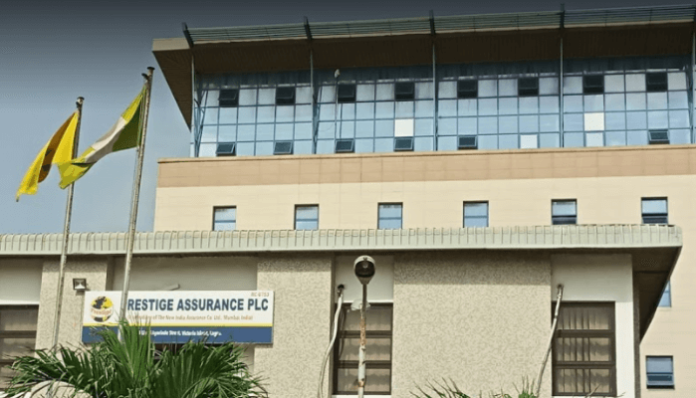
Prestige Assurance Plc has announced strong audited results for the year ended December 31, 2024, driven by resilience, operational efficiency, and a rebound in its investment portfolio. The performance reflects sustained topline growth, improved earnings, and a stronger balance sheet, making the stock an attractive pick within Nigeria’s non-life insurance sector.
In FY 2024, Gross Premium Written (GPW) soared by 50.5%, jumping from N14.93 billion in 2023 to N22.47 billion. This performance marks a significant stride in Prestige’s underwriting capacity and market penetration, especially in an increasingly competitive general insurance environment. Insurance revenue, which represents earned premiums, also grew robustly by 44.6% to N19.59 billion, up from N13.55 billion in the prior year.
Such expansion is reflective of a focused marketing push, product diversification, and better policyholder retention.
However, the growth story was partially offset by a steep rise in Insurance Service Expenses, which surged by over 62%, climbing from N12.33 billion to N20.04 billion. This significant cost escalation dragged down the Insurance Service Result (before reinsurance) to a loss of N458.4 million, compared to a profit of N1.22 billion in FY 2023.
While this initially appears discouraging, it is essential to contextualise it within the broader insurance dynamics where rising claims, inflationary pressure on settlements, and increased actuarial liabilities can weigh on service margins.
Crucially, Net Income from Reinsurance Contracts Held reversed from a loss of N598.3 million in 2023 to a gain of N586.1 million, representing a net positive swing of over N1.18 billion. This improved reinsurance outcome helped cushion the underwriting strain and reflects better alignment of risk portfolios with ceded treaties.
Furthermore, Net Investment Income more than doubled to N4.58 billion from N1.96 billion, bolstered by higher interest rates, strategic allocation to fixed-income securities, and overall improved returns on financial assets.
These dynamics culminated in a Profit After Tax of N3.24 billion, representing an increase of 147.3% over N1.31 billion in FY 2023. Earnings per share (EPS) grew significantly from 9.89 kobo to 24.42 kobo, reinforcing shareholder value creation and earnings quality.
On the balance sheet front, Total Assets expanded by 36.5% from N27.85 billion to N38.00 billion, while Net Assets rose from N15.95 billion to N19.37 billion, providing a solid foundation for future growth and risk underwriting.
Building on the momentum of 2024, Prestige posted a strong start to 2025 in terms of premium generation:
Q1 2025 Gross Premium Written rose to N8.03 billion, nearly doubling from the prior year’s level.
Insurance Revenue followed suit, increasing to N7.04 billion from N4.04 billion.
Net Insurance Financial Result edged up to N344 million from N307.7 million, indicating better cost containment and risk assessment.
However, Profit Before Tax for Q1 dipped to N649.37 million, down from N2.13 billion in the previous period. This is attributed to front-loaded operating and claims expenses and reduced fair value gains in Q1 compared to the bumper Q1 2024, which had a higher investment revaluation.
Still, the company continued to grow its capital base with Net Assets increasing to N19.95 billion and Total Assets rising to N38.51 billion, showing ongoing reinvestment and operational scale.
At a market price of N1.89 per share, Prestige trades at a Price-to-Earnings (P/E) ratio of just 7.74x, based on the FY 2024 EPS of 24.42 kobo. This valuation appears modest when benchmarked against the insurance sector average and Prestige’s historical earnings trajectory.
…Prestige has created a strong base for long-term value accretion. If current earnings momentum is sustained, particularly if underwriting profitability is restored by mid-2025, then a rerating of the stock is likely.
Investor Recommendation: “BUY”
From a market analyst’s lens, Prestige Assurance Plc represents a “BUY” at current levels. The counter is due to underlining parameters
Undervalued on a P/E basis,
Exhibiting strong earnings growth,
Reinforcing its financial base for scale,
And aligning positively with macro tailwinds (such as rising insurance awareness, new capital raise, and a favourable interest rate environment).
Prestige Assurance Plc is no longer a quiet performer in the insurance space. With its aggressive premium growth, recovering bottom line, and sturdy asset base, the company is well-positioned for continued momentum in 2025 and beyond. For value-oriented investors seeking medium to long-term exposure in Nigeria’s insurance sector, Prestige offers an attractive entry point at current market levels with a price target (12-Month) of N2.50 – N2.80 per share on a buy Recommendation and medium risk rating.
The Federal Government, through NASSCO, has disbursed ₦330 billion in cash transfers to support poor and vulnerable Nigerians.
The Minister of Finance and Coordinating Minister of the Economy, Mr Wale Edun, disclosed this on Wednesday in Abuja at a meeting of the Special Presidential Panel on Social Investment Programme.
He said that the intervention was part of President Bola Tinubu’s programmes to help the poorest and the vulnerable through the difficulties caused by the increase in the price level as a result of the necessary reforms put in place.
“We are pleased to report that the social protection programme put in place as a safety net to help people to cope with the rising price level, is now firmly back on track.
“About 19.7 million poor and vulnerable households representing more than 70 million individuals are captured in the National Social Register.
“The cash transfers, funded from the 800 million dollars World Bank facility, were disbursed to 15 million households.
“So far, 8.5 million households have received at least one tranche of N25,000, while some have received two or three payments. “The remaining seven million households will be paid before the end of the year,” he said.
The minister said that the programme is anchored on a robust and sustainable system with beneficiaries verified through their National Identity Numbers (NIN) and payments made digitally via bank accounts or mobile wallets.
Edun said that, going forward, the programme would be provisioned in the annual federal budget to ensure sustainability.
“We now have the basis for a modern social protection system that can provide targeted assistance to the poorest and most vulnerable on a long-term basis,” he said.
The National Coordinator of NASSCO, Funmi Olotu, said the staggered payments were due to President Insistence on linking disbursements through NIN to ensure transparency.
“No more traditional cash payments. All transfers are direct debit to bank accounts. “That is why some households have received one, two, or three tranches already,” she said.
Olotu said that the previous administration planned to pay N5,000 monthly for six months, but the new administration redesigned the scheme to give N25,000 monthly for three months.
The national coordinator said that the national social register, was developed in collaboration with the World Bank, built on over 40 socioeconomic variables and it has no political interference.
CBN reduced spot interest rates on Nigerian Treasury bills across key maturities during Wednesday’s primary market auction.
The Apex Bank opened N290 billion worth of treasury bills for investors’ subscription across 91-day, 182-day, and 364-day maturities.
Investors responded to the auction strongly, with about N1.6 trillion in total bids staked across the standard tenors at the midweek auction. The market response was influenced by excess liquidity in the financial system, and disinflation played a strong role in spot rates repricing.
The CBN results revealed that the auction attracted ₦1.591 trillion in total subscriptions, with approximately ₦345.10 billion allotted.
Demand skewed toward duration as one-year treasury bills settled at a 7.40x bid-to-cover ratio. Investors placed N1.479 trillion on Nigerian Treasury bills with 364-day maturity versus N200 billion offered by the authority.
AAG Capital Limited said the lower inflation print for August set the tone for bullish auction ahead of anticipated September policy rate cut by the CBN.
In addition, the investment firm explained that the influx of liquidity in the financial system without CBN mopping activity lent credence to strong demand recorded at the auction.
The spot rate for Nigerian Treasury bills with 91 days maturity settled lower at 15%, a 32 basis point decline from its previous rate.
The CBN priced down the rate on 182-day bills to 15.30%, down by 2 basis points, while the rate on one-year bills closed at 16.78%, down by 91 basis points from 17.69% previously offered
It’s that time again, ladies, gents, and silent screenshotters — another Thursday Chronicles, where we leave no topic untouched, no table unshaken, and definitely no ego unbruised (but with love, of course). Grab a chilled drink, settle in, and let’s gist. You know the vibe, if it’s trending, relatable, and a little chaotic, we’re talking about it!
So, everywhere you turn these days, someone is “hustling.” It’s on their WhatsApp bio. It’s in their captions. It’s even in their prayers: “God, bless the works of my hands — the 7 side gigs and 1fake crypto investment I’m juggling with prayer and vibes.”
We now live in an economy where not hustling is a red flag. Rest is for the unserious. And if you’re not tweeting “Just closed a deal ” by 9am, are you even a real adult?
Don’t get me wrong, hustle is good. It teaches resilience, opens doors, and feeds our soft-life dreams. But can we be honest for once? Half the time, people are just LOUDLY busy, but not PRODUCTIVELY building.
There’s a big difference between movement and progress. Some of us are running faster than ever… in circles. We post flyers for 5 businesses but can’t show one receipt. We’re on every online course, but no one has actually implemented anything. We claim “tech bro” in bios but can’t debug a login screen.
And it’s not even about dragging anyone, we’ve ALL been there. That moment where you feel like you’re doing so much but have nothing tangible to show for it. That’s because our hustle culture has turned into performance art. It’s no longer about building something meaningful, it’s about looking busy enough to be respected.
Worst part? Burnout is now a badge of honor. You say “I’ve not slept in 2 days” and everyone claps like you won a Nobel Prize. Meanwhile, your body is plotting revenge. Can we rest in peace while alive too, abeg?
Let’s pause and ask real questions:
Is your hustle leading somewhere or just giving aesthetics? Are you building with intention or just trying to prove a point online? Do you even have a plan… or just 17 Canva flyers and vibes? Because the truth is, true hustle isn’t always loud. It’s often silent, strategic, and deeply boring behind the scenes. No clout, no captions — just consistency, discipline, and sometimes crying into your pillow at 2am but still showing up.
Don’t be busy for the gram, be productive for your goals. Don’t lose your health trying to chase a version of success that doesn’t even align with your purpose. And please, rest without guilt. A tired hustler is a confused brand ambassador.
And that’s it for this week’s Thursday Chronicles — your favorite mix of gist, facts, and gentle dragging. If this hit a nerve, good. That means we’re growing. Same time next week? Yes? Fabulous.
In the meantime, may your hustle be fruitful, your data be steady, and your sleep be uninterrupted. Because honestly? That’s the real soft life.
The Nigeria Customs Service (NCS), Apapa Area Command, on Thursday, 18 September 2025, decorated newly promoted officers with a charge to uphold professionalism, integrity, and dedication in the discharge of their duties.
Speaking at the ceremony in Lagos, the Area Controller, Comptroller Emmanuel Oshoba, congratulated the officers, describing their elevation as a testament to their performance, commitment, and innovation.
He urged them to view their promotion as a call to greater responsibility, particularly in driving revenue generation, asset management, and trade facilitation.
“You are required to play significant roles in ensuring the command achieves its purpose, particularly in maximising revenue, promoting economic growth, enhancing financial security, and ensuring compliance with trade regulations,” Oshoba said.
He commended the Comptroller General of Customs, Bashir Adewale Adeniyi (MFR), and the management team for promoting merit-based advancement, while reminding the officers that their new ranks carried higher expectations.
“Your promotion is a call to improve performance and justify the confidence reposed in you. I expect you to make a positive impact in your new roles and contribute to the growth of the Service and the nation,” he added.
Oshoba also encouraged officers who were not promoted to remain dedicated and hopeful, assuring them that their time would come.
The event was attended by senior representatives of the Nigerian Army, Immigration Service, and the National Drug Law Enforcement Agency (NDLEA), who commended the Customs Service for its role in national economic security and urged the officers to remain loyal to the country.
Speaking on behalf of the beneficiaries, Chief Supritendentof Customs, Bello Abdullahi expressed gratitude to President Bola Ahmed Tinubu, the Comptroller General, of Customs and the NCS management for the recognition. He dedicated the promotion to the collective effort of the Service and thanked their families for their support.
The Nigerian government bond market witnessed persistent selling pressure as portfolio managers engaged in portfolio reshuffling activities across the secondary market.
Analysts noted that the development came in response to reduced spot rates offered to investors in the latest Treasury bills auction conducted by the Central Bank of Nigeria (CBN).
The apex bank trimmed spot rates across various tenors, with the one-year bills closing below the 17% mark. Investors interpreted the downward adjustment as a possible indicator that the Monetary Policy Committee (MPC) could begin easing its policy stance. This speculation follows the recent moderation in inflation, which pushed the real interest rate to 7.38% in August.
Market participants expect headline inflation to continue its downward trajectory into the fourth quarter, supported by the naira’s relative stability, subdued fuel prices, and moderation in food inflation.
Despite this backdrop, the Federal Government bond market traded with a cautious, bearish undertone. New FGN bonds due in 2029, 2031, and 2033 were quoted around 16.30%, 16.25%, and 16.15%, respectively, according to AIICO Capital Limited.
Trading activities, however, remained constrained by wide bid-ask spreads, limiting volumes executed and reinforcing the subdued sentiment observed midweek.
AIICO Capital further reported that the benchmark yield curve slipped by 16 basis points to settle at 16.27%. Market outlook suggests investor sentiment could turn bullish in the near term as participants react to the lower stop rate on the one-year Treasury bill. Abundant liquidity conditions in the system are also expected to lend further support.
Across the yield curve, average returns contracted marginally at the short end (-5 bps), largely due to strong demand for the JAN 2026 bond, which recorded a significant 37 bps decline. However, yields at the mid- and long-term segments held steady.
The prolonged delay in the release of half-year financial statements and interim dividend declarations by Nigerian banks has sparked anxiety among investors and shareholders, particularly in the 2025 financial year.
Traditionally, Tier-1 Nigerian banks publish their H1 financial results by late July or mid-August, followed by interim dividend announcements in September. Many income-focused investors, including retirees and pensioners, rely on this predictable cycle for financial planning and portfolio stability.
However, this year has witnessed a notable deviation from that pattern. Reports indicate that the suspension or delay of interim dividends is not the result of a directive from the Securities and Exchange Commission (SEC). Instead, the move appears linked to the Central Bank of Nigeria (CBN), which is implementing sweeping regulatory reforms.
While no official circular has been issued, market intelligence suggests that the apex bank has informally advised commercial lenders to withhold dividend distributions until after ongoing regulatory assessments are completed.
Key Drivers Behind the Delay
Regulatory Oversight Intensification Under new leadership, the CBN is conducting closer scrutiny of banks’ financial records, particularly in areas such as foreign exchange revaluation gains, capital adequacy, and liquidity buffers. The move aims to ensure that earnings reported are sustainable and not inflated by temporary FX fluctuations.
Recapitalisation Agenda The apex bank has also directed commercial lenders to strengthen their capital bases to support Nigeria’s ambition of building a $1 trillion economy. With several banks still in the process of raising fresh capital, paying out interim dividends at this stage could undermine recapitalisation efforts.
Although frustrating for short-term income investors, analysts argue that the move signals a commitment to long-term sector stability. By prioritising stronger capital positions, the CBN seeks to reinforce resilience in Nigeria’s financial system.
For investors, experts recommend holding positions in fundamentally strong banks, diversifying portfolios to reduce dividend reliance, and monitoring regulatory communications for clarity on timelines.
Ultimately, the delay does not signal systemic weakness. Rather, it reflects regulatory prudence intended to foster transparency, stronger capital bases, and global-standard compliance in the banking industry.
Short-term interest rates in Nigeria closed on a mixed note after statutory allocations from the Central Bank of Nigeria (CBN) to state governments injected fresh liquidity into the banking system.
The interbank market continued to enjoy robust liquidity, supported by additional inflows, which helped maintain the stability of benchmark rates at 26.5%.
According to market data from AIICO Capital Limited, system liquidity improved significantly, with inflows of N410 billion raising total liquidity to N2.87 trillion, up from N2.46 trillion the previous day.
With no major funding pressures, commercial banks were seen placing excess cash at the CBN’s Standing Deposit Facility, while borrowing activity at the lending window remained minimal.
Reports from Cowry Asset Management showed that the Nigerian Interbank Borrowing Rate (NIBOR) closed mixed, with the Overnight rate ticking up slightly by 6 basis points to 26.92%.
Meanwhile, money market rates also reflected the liquidity-driven mood. The Open Repo Rate (OPR) closed flat at 26.50%, while the Overnight Lending Rate eased by 4 basis points to 26.88%.
Treasury bill yields varied across maturities. The 1-month and 6-month papers rose by 5 bps and 15 bps, respectively, while the 3-month and 12-month tenors declined by 7 bps and 20 bps, respectively. On average, Nigerian Treasury bill yields slipped by 3 bps to close at 18.43%.
Analysts note that investors continue to exhibit strong sentiment in the secondary market, buoyed by liquidity inflows and expectations of stable monetary conditions.
Nigeria’s Eurobond market closed on a bearish note as average yields rose by three basis points to 7.77%, reflecting cautious investor sentiment amid evolving macroeconomic dynamics.
Earlier disinflationary trends, which pushed Nigeria’s real interest rate to 7.38%, had initially attracted offshore interest in the country’s dollar-denominated securities. However, market reactions shifted as global conditions evolved.
Internationally, African Eurobonds traded mixed to bearish after the U.S. Federal Reserve announced its first interest rate cut of 2025. The Fed lowered its policy rate by 25 basis points as widely anticipated, citing the need to support employment and counter slowing economic growth.
Fed Chair Jerome Powell described the cut as a “risk management move,” downplaying inflation risks while signalling the possibility of two additional reductions before year-end.
The decision, however, sparked debates over the Fed’s independence, particularly following President Trump’s controversial appointment of Stephen Miran, who dissented in favour of a deeper 50 bps cut.
Following the policy shift, Nigerian Eurobond yields rose modestly, with analysts noting that some profit-taking was expected since investors had already priced in the Fed’s move.
Meanwhile, U.S. Treasury yields edged lower after the rate cut. The two-year Treasury yield dropped to 3.537%, the 10-year to 4.063%, and the 30-year to 4.657%, according to Tradeweb data.
In the commodities market, oil prices slipped, pressured by rising U.S. diesel inventories. Brent crude shed 25 cents to $68.22 per barrel, while WTI lost 21 cents to $64.31.
Conversely, gold surged to a record high before paring gains. Spot gold touched $3,707.40 before closing at $3,681.39, while U.S. futures for December settled at $3,717.80.
Analysts suggest that Nigerian Eurobonds may continue to trade with mixed sentiment in the near term, balancing optimism from domestic reforms with cautious global market positioning.