







Home Blog Page 73

UK To Launch Mandatory Digital ID ‘Britcard’ In Immigration Crackdown

The United Kingdom government is preparing to introduce a compulsory digital identification system for all adults, in a move aimed at tackling illegal immigration and reducing irregular Channel crossings.

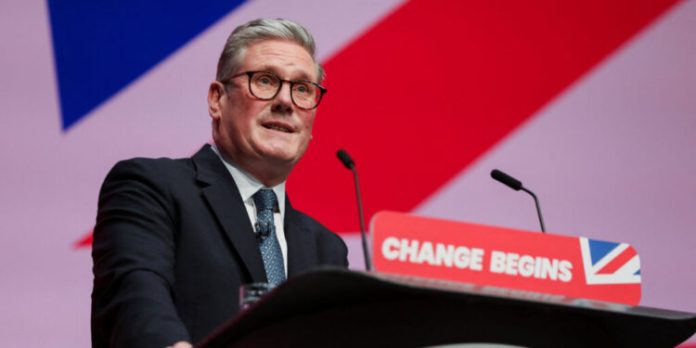
The proposed system, dubbed the BritCard, will serve as proof of the right to live and work in the UK. Unlike existing documents, the digital ID will be linked to a central government database, enabling more secure verification of individuals’ status. Prime Minister Sir Keir Starmer is expected to announce the scheme formally in the coming days, according to Sky News.

How the BritCard Works

The BritCard will be available both as a physical card and through a smartphone application. Employers and landlords will be able to confirm a person’s legal status instantly, while citizens will have a simplified process for demonstrating their right to work and reside in the country.

The government says the system is designed to close loopholes that allow undocumented migrants to exploit the black economy. Physical documents are seen as vulnerable to forgery, whereas a centralised digital system is expected to significantly reduce illegal employment opportunities. The rollout, however, will require new legislation and public consultation before implementation.

Rationale Behind the Policy

Labour peer Harriet Harman told Sky News in July that ID cards would help shrink the black economy by making it harder for people without legal status to secure employment. French President Emmanuel Macron has also repeatedly warned that the absence of mandatory ID cards in the UK has acted as a “pull factor” for migrants attempting Channel crossings, as many believe they can still access informal work.

If implemented, the BritCard would mark one of the most significant changes to UK immigration and labour enforcement policy in decades.

Potential Concerns

While the government argues the initiative will strengthen border control and protect domestic labour markets, critics are likely to raise concerns about privacy, state surveillance, and the balance between national security and civil liberties.

Part of Wider Immigration Reform

The move comes on the heels of a major immigration White Paper unveiled by Sir Keir Starmer on May 12, 2025, which set out sweeping reforms across work, family, and student visa categories. Key measures include:

Extending the residency requirement for permanent settlement from five to ten years.

Raising the skills threshold for work visas to degree-level qualifications.

Requiring companies to demonstrate investment in domestic skills before hiring foreign workers.

Reducing the post-study Graduate Route visa from two years to 18 months.

Introducing stricter family visa rules, including English language requirements for dependents.

Together, the reforms signal a decisive shift in Britain’s immigration framework, with the BritCard expected to play a central role in reshaping how the country enforces migration and labour policies.

Ethereum Slides Below $4,000 As Traders Exit Risk Assets

Ethereum, the second-largest cryptocurrency by market capitalization, slipped below the $4,000 threshold on Thursday morning as heavy liquidation and profit-taking weighed on digital assets. This marks the first time since early August that the altcoin has dipped under the psychological $4K mark.

Over the last seven days, Ethereum has dropped more than 12%, with another 3.77% decline recorded in the past 24 hours alone. At press time, ETH was trading near $3,980, down roughly 20% from its record high.

The selloff follows aggressive portfolio rebalancing triggered by the U.S. Federal Reserve’s recent interest rate cut. With gold emerging as a preferred safe-haven alternative, investors have shifted funds away from riskier crypto assets.

Ethereum’s market capitalization now stands at approximately $484 billion, with daily trading volume reaching $42.05 billion. Analysts note that cascading liquidations across derivatives markets exacerbated the decline, with more than $1.7 billion in altcoin positions wiped out—$212.9 million of which were Ethereum contracts.

The broader crypto market has mirrored ETH’s downtrend. Bitcoin, which briefly soared above $120,000 following the Fed’s decision, has since pulled back into a consolidation range between $110,000 and $115,000. Solana, another top altcoin, tumbled to $204.45, losing nearly 17% in a week.

“Ethereum’s breakdown below $4K was driven by a combination of macro uncertainty, technical weakness, and large-scale liquidations,” explained Rachael Lucas, a crypto strategist at BTC Markets.

Although the Fed’s 25 basis point rate cut in September initially sparked bullish expectations, Fed Chair Jerome Powell’s remarks that further cuts may not come soon dampened investor sentiment. As a result, cryptocurrencies remain under pressure despite broader optimism around alternative assets.

Euro Retreats After Weak German Economic Data

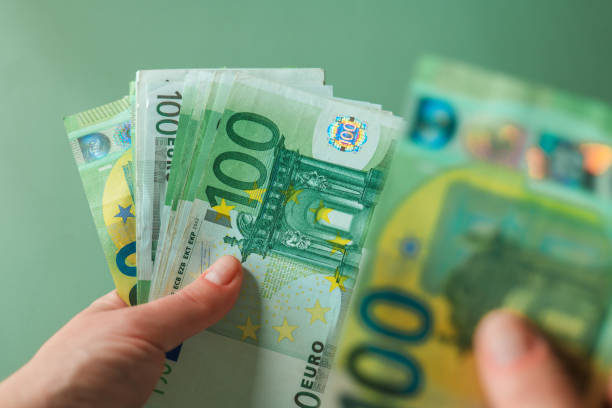
salary of a woman. euro banknotes in hands on a green background. Income of women in European countries

The euro edged lower on Thursday, sliding to around $1.178 against the U.S. dollar after lackluster German business data cast doubts on the Eurozone’s recovery momentum. The single currency had previously climbed to a four-year peak of $1.192 last week but has since lost ground.

Germany’s Ifo Business Climate Index fell to 87.8 in September from 88.9, signaling deteriorating sentiment among companies. Both the Current Situation Index (85.7) and Expectations Index (89.7) declined, with the institute warning that hopes for a swift recovery have been dealt a setback.

Weakness was evident across multiple sectors. Manufacturing confidence slid further on the back of weaker orders and reduced optimism from capital goods producers. Services sentiment plunged to -3.0, its lowest level since February, while the trade sector also turned negative. Only construction showed mild improvement.

This downbeat reading followed a mixed HCOB PMI report showing that while services activity in the Eurozone grew faster than expected, manufacturing continued to contract.

At the same time, markets assessed comments from Federal Reserve Chair Jerome Powell, who reiterated caution over the pace of monetary easing, citing inflationary risks tied to tariffs and labor market pressures. Powell described September’s rate cut as a “risk management” measure rather than the beginning of a broader easing cycle.

Investors now see a 90% probability of another Fed rate cut in October, with Friday’s U.S. PCE inflation report in focus. Meanwhile, the European Central Bank has signaled it may pause rate reductions, citing lingering inflation risks from services, food, and fiscal spending.

Elsewhere, the Chinese yuan recovered some ground after the People’s Bank of China set a stronger-than-expected reference rate at 7.1118 per dollar. The move, coupled with signs of easing U.S.-China trade tensions, helped boost investor confidence even as markets await clarity on future policy directions.

Offshore Investors Boost Holdings In Nigerian Eurobonds

DMO Set To Auction N150bn Bond On FG's Behalf

Nigeria’s sovereign Eurobonds saw renewed investor demand this week as offshore participants increased exposure amid expectations of global monetary easing and firmer oil prices.

The rally comes on the heels of the U.S. Federal Reserve’s recent rate cut, which encouraged global investors to reassess allocations across emerging markets. Analysts say African issuers, including Nigeria, have benefited from portfolio realignments as foreign players seek higher yields.

Nigeria’s central bank has also mirrored the Fed’s easing stance, reducing its benchmark rate in response to slowing inflation and currency stability. Market observers believe this has improved the country’s attractiveness in the international debt market.

Trading data showed mixed performance across the African Eurobond curve on Wednesday. While shorter-term bonds experienced mild price declines, mid-to-long-term maturities posted gains, lifting overall investor sentiment. As a result, Nigeria’s average Eurobond yields eased by three basis points to 7.89%, according to Cowry Asset Limited.

Energy markets further supported Nigeria’s outlook, with Brent crude climbing 3.24% to $69.14 per barrel and WTI crude advancing 2.22% to $64.82. The gains followed a surprise drop in U.S. crude stockpiles and supply disruptions in Iraq, Venezuela, and Russia.

Investment managers, including AIICO Capital, suggest that Nigeria’s Eurobond performance could remain positive if oil maintains upward momentum. However, gold prices pulled back as the dollar strengthened, with spot gold down 1.23% at $3,717.97/oz and U.S. futures retreating 1.21% to $3,750.15/oz.

“Offshore appetite for Nigerian Eurobonds is being driven by a favorable mix of oil price strength, monetary easing, and relatively attractive yields,” said one Lagos-based market analyst.

Tinubu Honours Ogoni Four, Orders Talks On Oil Production Resumption

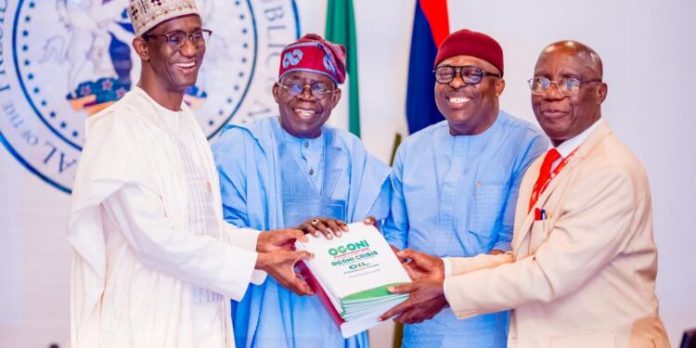
President Bola Tinubu on Wednesday posthumously conferred the national honour of Commander of the Order of the Niger (CON) on four late Ogoni leaders, decades after their execution during the military era.

The recipients, Albert Badey, Edward Kobani, Theophilus Orage, and Samuel Orage, are collectively remembered as the Ogoni Four. Their recognition comes months after the President honoured Ken Saro-Wiwa and eight other Ogoni activists killed under the Abacha regime.

The announcement was made at the State House, Abuja, during the presentation of the report of the Ogoni Consultations Committee, chaired by Professor Don Baridam. Rivers State Governor Siminalayi Fubara led the Ogoni delegation to the ceremony, according to a statement by the President’s Special Adviser on Information and Strategy, Bayo Onanuga.

Tinubu directed the National Security Adviser (NSA), Mallam Nuhu Ribadu, to commence immediate engagements with the Nigerian National Petroleum Company Limited (NNPCL), Ogoni communities, and other stakeholders to finalise modalities for the resumption of oil production in Ogoniland.

“We are not, as a government, taking lightly the years of pain endured in Ogoniland,” Tinubu said. “The Federal Government truly acknowledges the long suffering of the Ogoni people, and today we declare with conviction that hope is here and back with us.”

The President stressed that reconciliation was not an erasure of history but a commitment to building a new chapter of peace and development. He urged Ogoni communities to unite and embrace dialogue, assuring that government resources would be deployed to achieve shared prosperity.

Governor Fubara commended the President for measures that had already fostered confidence, including progress on the East-West Road and the establishment of the Federal University of Environment and Technology.

Ribadu, in his remarks, explained that early confidence-building steps approved by the President had enabled stakeholders to put aside differences and engage in constructive dialogue. He noted that all parties had now expressed readiness for oil production to resume on the principles of fairness, equity, and environmental responsibility, alongside a repositioned Hydrocarbon Pollution Remediation Project (HYPREP).

Committee chairman Baridam praised Tinubu for his “unwavering commitment” to the Ogoni cause, noting that the inclusive consultation process had restored trust and rekindled hope among the people.

The Federal Government has pledged to integrate environmental remediation, community benefits, and equity participation into the planned oil production framework in Ogoniland.

PenCom, TUC Strengthen Collaboration to Deepen Pension Compliance

The National Pension Commission (PenCom) has reaffirmed its commitment to closer collaboration with the Trade Union Congress of Nigeria (TUC) to strengthen the Contributory Pension Scheme (CPS) and ensure greater compliance by employers.

PenCom Director-General, Ms. Omolola Oloworaran, gave the assurance during a courtesy visit to the TUC President, Comrade Festus Osifo, in Abuja on 24 September 2025. She was accompanied by the Acting Commissioner, Technical, Hon. Hafiz Kawu Ibrahim, and other senior management staff of the Commission.

Acknowledging the TUC’s invaluable role as a member of the PenCom Governing Board, Oloworaran stressed the need for more structured stakeholder engagements between the two organisations to safeguard workers’ retirement benefits.

She reminded employers that under the Pension Reform Act (PRA) 2014, they are legally obliged to remit pension contributions for their employees. She urged the TUC to support PenCom in enforcing compliance, noting that timely remittances were crucial to securing workers’ financial stability in retirement.

On ongoing reforms, the PenCom chief disclosed that the Commission is addressing value erosion in pension savings by finalising a revised Investment Regulation, which will expand opportunities in alternative assets and improve real returns. She further revealed that PenCom is collaborating with the Central Bank of Nigeria (CBN) and the Federal Ministry of Finance on mechanisms to allow pension investments in naira while generating returns in dollars.

Oloworaran also announced plans to introduce a minimum pension for all retirees under the CPS, enabled by President Bola Tinubu’s approval of a N758 billion bond to fund the Pension Protection Fund (PPF). The initiative, she said, would guarantee retirees a more dignified standard of living.

In his response, Comrade Osifo commended PenCom for its professionalism, integrity, and effectiveness, describing it as one of Nigeria’s best-performing institutions. He pledged TUC’s continued support in driving employer compliance, while condemning the practice of deducting pension contributions without remittance—a trend he said undermines savings and often sparks industrial disputes.

Osifo also advocated a review of the PRA 2014 to introduce greater flexibility in pension fund investments, thereby protecting contributors’ savings against inflation and exchange rate volatility.

Both organisations agreed to work more closely

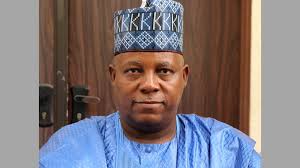
UNGA 80: Shettima to Deliver Tinubu’s National Statement Today

Vice President Kashim Shettima, standing in for President Bola Ahmed Tinubu, will today (Wednesday) present Nigeria’s national statement at the 80th Session of the United Nations General Assembly (UNGA) in New York.

The address, scheduled between 3:00 p.m. and 9:00 p.m. local time, will spotlight Nigeria’s positions on multilateralism, United Nations reform, climate action, and global financial restructuring.

At last year’s Assembly, President Tinubu pressed for Africa to be granted permanent seats on the UN Security Council, a demand that is now under review by the global body.

On Tuesday, Shettima joined other world leaders at the UNGA opening session, where U.S. President Donald Trump formally welcomed delegates in his keynote address.

Later in the day, the Vice President met with Namibian President Netumbo Nandi-Ndaitwah, who assumed office on 21 March 2025. The Namibian leader praised Nigeria’s longstanding diplomatic support for her country and pledged to undertake an official visit to President Tinubu in Abuja.

“All the Nigerian diplomats were basically Namibians, helping in so many ways,” Nandi-Ndaitwah said, while reaffirming her commitment to strengthening bilateral ties.

In his response, Shettima stressed Nigeria’s determination to deepen cooperation with Namibia. “We are all Africans, and the Nigeria-Namibia relationship should be taken to the next level, beyond where it is now,” he said.

The meeting was attended by senior officials from both countries, including Nigeria’s Minister of Foreign Affairs, Yusuf Tuggar; Minister of Women Affairs, Hajiya Imaan Sulaiman-Ibrahim; and Minister of Education, Dr. Tunji Alausa.

In a separate engagement, Shettima held talks with a delegation from the Bill & Melinda Gates Foundation led by its CEO, Mark Suzman. The Vice President commended the Foundation’s contributions to Nigeria’s healthcare, agriculture, and financial inclusion sectors, while calling for expanded investment.

“In the Gates Foundation, we have a partner we trust and believe in. If all high-net-worth individuals made even half the investment Bill Gates has made, the world would be a better place. Kindly convey the highest regards of my boss, President Bola Ahmed Tinubu, to Mr. Gates,” Shettima said.

Reaffirming Nigeria’s economic goals, he added: “Our target over the next few years is to achieve annual growth rates of no less than seven per cent, anchored on macroeconomic stability, productivity, and strategic investment in infrastructure, healthcare, agriculture, and education.”

Education Minister Alausa also urged the Foundation to increase its focus on Nigeria’s education sector, particularly in technology, artificial intelligence, and machine learning. “Support for foundational learning remains inadequate, and I am seeking stronger collaboration to bolster this critical area,” he noted.

Responding, Suzman pledged the Foundation’s continued support for human capital development, education, and healthcare, while highlighting progress in Nigeria’s digital identity and financial inclusion initiatives. He confirmed that new grants had been signed with the Central Bank of Nigeria to advance related programmes.

“Nigeria is really one of our strongest partnerships on the African continent,” Suzman said. “I look forward to hearing where and how we might be more helpful, while assuring you of our commitment to remain a trusted partner.”

Other Gates Foundation officials present included Mr. Rodger Voorhies, President of the Global Growth and Opportunity Division; Mr. Uche Amaonwu, Country Director, Nigeria Office; and Dr. Paulin Basinga, Director for Africa.

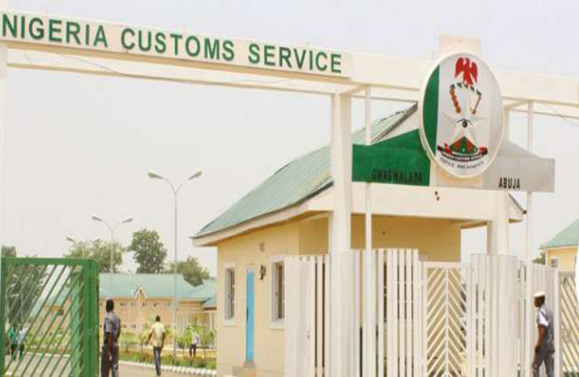
NCS Reforms Clearance Process And Raises Overtime Window

Nigeria Customs Service

The Nigeria Customs Service (NCS) has introduced a new automated overtime e-clearance system designed to decongest the nation’s ports and improve trade facilitation through digital processes.

The initiative, announced on the Service’s official X account on Wednesday, is aimed at processing long-standing overtime cargo more efficiently by cutting delays, reducing manual interference, and curbing opportunities for corruption.

Speaking at a sensitization exercise in Lagos, Comptroller-General of Customs Adewale Adeniyi explained that the platform enables consignees to submit and track applications remotely, eliminating repeated visits to customs offices. He emphasized that the measure will help lower costs and shorten clearance times for cargo owners.

“We are more interested in removing these cargoes from our ports rather than managing them as overtime. If we had a choice, we would rather get all of them out of the ports. Everything we have tried to do is to ensure that our processes are more efficient, so that the cost and time it takes to clear these cargoes from the ports will be reduced,” Adeniyi said.

He, however, cautioned against abuse of the process, noting that some importers deliberately abandon cargo to evade duties. He cited a 15-year-old overtime cargo case still under investigation as an example of the loopholes the Service intends to close. According to him, tougher sanctions will apply to cases of deliberate abandonment, with intelligence units monitoring misuse.

Adeniyi directed the Zone A Coordinator to hold further engagement sessions with terminal operators and shipping companies to ensure seamless implementation of the system. Senior officials, including ACJ Mohamed Babandede, described the innovation as a step toward transparency, accountability, efficiency, and effectiveness.

Terminal operators and shipping lines present at the event pledged their cooperation, stressing that the new platform would help reduce congestion and improve turnaround times at Nigerian ports.

Previously, overtime cargoes were required to be cleared within 30 days at airports and 90 days at seaports. Under the new reform, the clearance window has been extended to 120 days, after which unclaimed goods will be disposed of, while perishable and inflammable items may be auctioned immediately.

Overtime cargoes have  left uncleared beyond stipulated timelines which have long posed challenges for Nigeria’s ports, contributing to congestion, higher storage costs, and delays in cargo handling. While customs traditionally relied on auctions to dispose of such goods, the process had faced criticism over transparency and favoritism.

To address these concerns, the NCS launched an upgraded e-auction portal in January 2024, requiring bidders to present a valid Tax Identification Number (TIN) verified on the FIRS TaxPro Max platform, along with an active email address for registration.

By combining automation with the extended clearance window, the NCS says it is confident that the reforms will reduce abandoned consignments, strengthen transparency, and boost efficiency across ports and border commands.

Rising Visa Fees Set To Drive More Nigerians Into Remote Jobs

Rising visa fees by major foreign missions are expected to push more Nigerians toward remote and offshore work, creating fresh opportunities to earn foreign exchange without leaving the country.

Last week, US President Donald Trump signed an executive order imposing a $100,000 fee on applicants for the H-1B visa programme for skilled foreign workers. Starting in 2026, Nigerians and citizens of other African nations, including South Africa, Kenya, Egypt, Morocco, and Ethiopia, will face higher visa costs, stricter documentation requirements, and longer processing times under the new US travel visa regime.

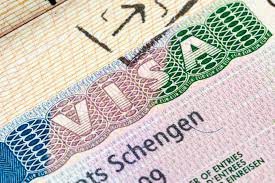
Visa hikes are not limited to the United States. In April 2025, the United Kingdom raised the cost of its 10-year visitor visa from £963 to £1,059, while student visas rose by seven percent to £524. Short-term visitor visas for six months increased from £115 to £127. The European Union had earlier raised its Schengen visa fee in 2024 to €90 from €80, and the United Arab Emirates has also adjusted its visa charges upward.

Analysts believe these rising costs will accelerate a shift among Nigerians toward remote work arrangements. Akintunde Opawole, founder of Danval Technologies, said the H-1B fee hike could help Nigeria expand its market share in the global information technology and business process management (IT-BPM) sector.

“What this means is that not only are remote jobs going to be offered to talents all over the world, it will also lead to outsourcing businesses and processes to our start-up companies too. Fortunately for Nigerians, we have all that is required to take advantage of this policy and market,” Opawole said.

He pointed to Nigeria’s favorable time zone and youthful workforce as natural advantages. With an average age of 17 years, Nigeria’s talent pool is far younger than that of the United States, Europe, or Japan. He also noted that ICT already contributes 18 percent to Nigeria’s GDP, underscoring the sector’s potential for job creation.

Ike Ibeabuchi, an emerging markets analyst, added that visa restrictions make remote work an increasingly viable alternative. “Several Nigerians no longer need to travel to the US or Europe in search of jobs as they can sit at home and deliver the same value. With visa restrictions and higher fees, more employees will stay online,” he said.

Experts project that more roles in software development, data analysis, design, and customer support will be filled remotely by Nigerian professionals. Nubi Achebo, director of academic planning at the Nigerian University of Technology and Management (NUTM), said the $100,000 H-1B fee could reshape US hiring patterns, encouraging employers to opt for remote arrangements or regional offices in lower-cost countries, including Nigeria.

However, not all analysts agree. Olamide Adeyeye, country head of Programmes at Jobberman Nigeria, argued that visa hikes may not directly drive the shift to remote jobs. “Migration is influenced by a lot of social and economic reasons, such as how safe people feel, the enabling environment, and the quality of relationships they get exposed to. Remote jobs are already growing on their own, and relocation is not always an economic decision,” she said.

Adeyeye noted that foreign organisations are increasingly open to hiring talent on the continent because it is cheaper and more sustainable than relocating workers abroad.

Meanwhile, travel experts warn that the US visa changes will significantly affect African travellers. According to Travel and Tour World, thousands of Nigerians and other African nationals seeking entry to the US for tourism, work, study, or exchange programmes will face higher barriers. While South Africans currently benefit from the US Visa Waiver Program, other categories such as the B1/B2 tourist visa, H-1B work visa, and F, M, and J student or exchange visas will all be subject to the new regime.

The revised policy, US officials say, reflects rising visa demand across Africa and growing security concerns.

Timi Dakolo Launches School Fee Support For Families In Need

Timi Dakolo
Timi Dakolo Raises Alarm over Threat to His Family Members' Lives

Nigerian singer Timi Dakolo has announced plans to support parents struggling to pay their children’s school fees as the 2025/2026 academic session begins.

In a post on his official X handle on Wednesday, Dakolo acknowledged the financial strain many families experience at the start of every term. “I know it’s school fee season, it’s not always easy. I know this first-hand. So, let me help lessen that burden a little bit,” he wrote.

The singer directed parents and guardians to send their children’s school bills via Instagram to the handle @TheOyindaOlu, noting that receipts of payments made to schools would be sent back as confirmation. “Just DM the school bill to @TheOyindaOlu on IG. We would DM you the receipt of what we sent to the school,” Dakolo added.

The announcement has sparked wide reactions online, with many fans commending the gesture at a time when households are grappling with rising costs. Reports earlier highlighted that as schools reopen for the new session, the usual excitement of children in freshly ironed uniforms has been tempered by parents’ growing concerns over soaring tuition, levies, and textbook prices.

Dakolo, widely recognized for his family-centered songs and community-driven messages, has previously spoken out on issues related to education and welfare. His latest initiative adds to a growing trend of Nigerian celebrities stepping in to provide financial relief to fans during difficult times.

Euro Declines Amidst German Weak Economic Data

salary of a woman. euro banknotes in hands on a green background. Income of women in European countries

The euro slipped toward $1.178 on Thursday, retreating from last week’s four-year high of $1.192, as weaker-than-expected German business sentiment dampened optimism about Europe’s economic recovery.

Germany’s Ifo Business Climate Index fell to 87.8 in September from 88.9, with both the Current Situation Index and Expectations Index declining. The institute noted that prospects for recovery had “suffered a setback,” reflecting broad-based weakness across industries.

Manufacturing sentiment continued to soften, with companies citing weaker orders and reduced optimism among capital goods producers. The services sector posted the sharpest decline, dropping to -3.0, its lowest level since February, while trade sentiment also worsened. Construction was the only sector to show modest improvement.

The Ifo release followed a mixed HCOB PMI survey, which showed the Eurozone private sector expanding in September on the back of stronger services activity, even as manufacturing slipped back into contraction.

Market focus also turned to the United States, where investors weighed comments from Federal Reserve Chair Jerome Powell. Powell reiterated a cautious approach to future interest rate decisions, calling recent adjustments a “risk management” move rather than the start of a full easing cycle. Money markets now price in a more than 90 percent chance of a Fed rate cut in October, with investors awaiting Friday’s US PCE price index for further direction.

Ahead of these developments, the euro had hovered near last week’s highs as traders awaited signals from both European Central Bank and Federal Reserve officials. The ECB has indicated that its rate-cutting cycle may be complete, with policymakers warning of persistent inflation pressures tied to tariffs, food and services costs, and fiscal measures.

In Asia, the offshore yuan strengthened to around 7.13 per dollar, recovering from the previous session’s losses after the People’s Bank of China set a firmer-than-expected daily reference rate of 7.1118, compared with a Reuters estimate of 7.1293.

Sentiment toward the Chinese currency was also buoyed by signs of easing US-China trade tensions, though US Ambassador to China David Perdue suggested a meeting between President Donald Trump and President Xi Jinping is now more likely to take place next year rather than this fall.

NPA, WACT Seal $60m Pact To Drive Decarbonisation In Nigeria’s Transport Sector

The Nigerian Ports Authority (NPA) and APM Terminals’ West African Container Terminal (WACT) in Onne have signed a $60 million partnership agreement aimed at accelerating the decarbonisation of Nigeria’s port and transport ecosystem.

The Memorandum of Understanding (MoU), signed in Lagos, sets out a roadmap for the electrification of containerised freight in line with the Federal Ministry of Marine and Blue Economy’s sustainability agenda.

Speaking at the ceremony, the Managing Director of NPA, Dr. Abubakar Dantsoho, said the initiative would position Onne Port as the country’s first green port and a continental leader in sustainable port operations.

“This agreement will not only drive Nigeria’s decarbonisation efforts but also set a benchmark that other African countries can emulate,” he stated.

Also speaking, the Chief Executive Officer of APM Terminals Nigeria, Mr. Frederik Klinke, noted that Nigeria’s size and position as Africa’s largest economy and trade hub made it well-placed to spearhead the region’s transition to low-carbon logistics.

“Our research shows that Nigeria can leapfrog fossil-fuel infrastructure and adopt proven electric technologies. We are optimistic about developing a phased roadmap towards an electrified future for container logistics,” Klinke said.

The Managing Director of WACT, Mr. Jeethu Jose, stressed the importance of collaboration in achieving sustainable growth. “Our investments are for a shared future and for the people of the region. We are committed to driving this transition alongside stakeholders in the port industry,” he added.

The partnership builds on a study presented by APM Terminals at the Decarbonising Infrastructure in Nigeria Summit in Abuja in July 2025, which revealed that shifting from fossil fuels to electrified container freight could attract private capital, create skilled jobs, and strengthen energy reliability. The report, however, underscored the need for strong cross-sectoral coordination and closer collaboration between government and private operators to realise these benefits.

FG Reaffirms Commitment To Ending Torture, Promoting Human Rights

The Federal Government has restated its commitment to eradicating torture and safeguarding human rights in detention and law enforcement institutions across the country.

Speaking in Abuja yesterday at a sensitisation workshop for law enforcement agencies, the Solicitor-General of the Federation and Permanent Secretary, Federal Ministry of Justice, Mrs B.E. Jedy-Agba, stressed the urgency of institutional reforms to address torture and inhumane treatment in custody facilities.

“This gathering is not merely a formality; it is a testament to our collective resolve to build a more just, humane, and rights-respecting society,” she said, urging participants to deepen their understanding of anti-torture obligations under the Optional Protocol to the Convention Against Torture (OPCAT).

Jedy-Agba reminded stakeholders that torture is a criminal offence under the Anti-Torture Act of 2017, which requires state actors to prevent, investigate and prosecute all cases. She added that Nigeria’s obligations extend beyond domestic laws, pointing to its ratification of the United Nations Convention Against Torture (UNCAT) and its Optional Protocol.

Referencing the September 2024 visit of the UN Subcommittee on Prevention of Torture (SPT), the Solicitor-General noted that preliminary findings had highlighted poor detention conditions, lack of cooperation by authorities and a climate of hostility. She called for urgent corrective measures to ensure full compliance with international human rights standards.

She further underscored the importance of the National Preventive Mechanism (NPM), coordinated by the National Human Rights Commission, in conducting regular inspections of detention facilities. According to her, the mechanism is designed not to indict, but to recommend improvements and protect the rights of detainees.

“You are the vanguards of this change,” she told the agencies in attendance. “Let us see this sensitisation not as a burden but as an opportunity to reinforce our commitment to excellence, uphold the rule of law and foster a culture of respect for human rights.”

Jedy-Agba also assured participants of the Ministry of Justice’s continued support in aligning Nigeria’s justice system with both domestic legislation and international best practices.

Stanbic IBTC, LBS Partner For Sustainable Finance Summit 2.0

…Experts Urge Governance, Accountability in Tackling Climate Funding Gaps

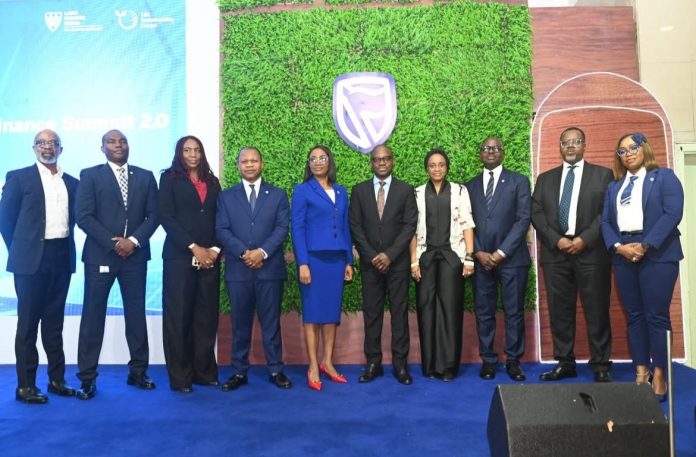
Stakeholders at the 2025 Sustainable Finance Summit 2.0 have stressed the need for stronger governance, accountability, and trust in digital platforms to close Africa’s widening climate finance gap.

The summit, held on Tuesday at the Civic Centre, Victoria Island, Lagos, was convened by Stanbic IBTC Holdings Plc in partnership with the Lagos Business School (LBS) Sustainability Centre. With the theme “Financing Resilience: Digital Innovation and AI for Climate-Smart Communities,” the event brought together experts from finance, technology, and sustainability to examine how digital innovation and artificial intelligence can drive climate-smart development.

A panel session featuring Dr. Babs Omotowa, Independent Non-Executive Director at Stanbic IBTC Holdings; Emmanuel Etaderhi, Executive Secretary, Financial Centre for Sustainability (FC4S), FMDQ Group; Chidi Amudo, Co-founder and Group Chief Executive, Mudozangl; Babajide Oluwase, Chief Executive, Ecotutu; and Babajide Duroshola, General Manager (Nigeria), M-Kopa, highlighted the urgent need for effective deployment of resources.

While acknowledging the continent’s demand for more capital, the panelists argued that the greater challenge lies in how funds are utilised. They warned that technology alone cannot solve Africa’s climate finance problems without transparent governance structures and leadership.

Etaderhi observed that the effectiveness of digital systems depends largely on the integrity of the data driving them. “You can have AI, but do you trust the data it’s giving? If the data is weak or manipulated, then the solutions will also be flawed,” he cautioned.

Omotowa, in his contribution, stressed that leadership remains at the heart of climate finance. “Technology is important, but without the right leadership, funds can still be diverted or misused. We must strengthen governance and build institutions people can trust,” he said.

The session also identified corruption and weak institutions as major threats to climate finance. Panellists urged the adoption of stronger monitoring, auditing, and regulatory safeguards, citing Nigeria’s Data Protection Act as an example of how legal frameworks can enhance confidence in digital platforms.

They further noted that everyday tools such as smartphones could empower underserved communities to track climate funds, report outcomes, and hold institutions accountable.

The summit concluded that although Africa’s climate finance challenges are daunting, the intersection of finance, technology, and regulation provides an opportunity to reshape how the continent mobilises resources for a sustainable and climate-resilient future.

Infrastructure Decay, Operational Lapses Behind Abuja-Kaduna Train Derailment – NSIB

The Nigerian Safety Investigation Bureau (NSIB) has attributed the Abuja-Kaduna train derailment of August 26, 2025, to neglected infrastructure and operational failings within the nation’s rail system.

The Bureau’s preliminary findings, released on Wednesday, contrast with the Nigeria Railway Corporation’s (NRC) earlier explanation, which had blamed human error and excessive speed.

According to the report, 21 passengers sustained varying degrees of injury, not 20 as initially stated by the NRC. No fatalities were recorded. The injured were treated on site before being evacuated to hospitals.

The derailment involved NRC’s train number AK1, powered by locomotive CDD5c2 2701, which came off the tracks at the Asham section of the corridor around 11:00 a.m. Eyewitnesses described scenes of panic as coaches overturned, with many fearing a terrorist attack before it became clear that the incident was an accident.

The NSIB investigation linked the crash to neglected infrastructure, including a broken point clip and a defective automatic switch mechanism at Asham Station. With the switch inoperative, staff resorted to manual operations, which the Bureau described as “a risky procedure that set the stage for disaster.” The derailment damaged more than 300 sleepers, destroyed hundreds of fasteners and inflicted severe harm on the signalling system.

The report further revealed that the same section had experienced a derailment just 13 months earlier, after which only superficial repairs were carried out. “Some sleepers damaged in the previous incident were only patched, rather than being properly replaced,” the Bureau stated.

Beyond infrastructure concerns, the NSIB highlighted weaknesses in NRC operations, noting that personnel had received only initial training with no refresher courses. It also cited the absence or disrepair of essential safety and communication equipment, including CCTV cameras, clocks, and original spare parts.

The Bureau warned that inadequate training and poor infrastructure had left staff unable to manage risks effectively. On the day of the incident, the shunter manually cleared the train to proceed despite the faulty switch, triggering the derailment.

Although lives were spared, the NSIB said the injuries sustained underscored the cost of systemic neglect. “Official records confirmed 21 passengers sustained minor to major injuries, with some evacuated without recourse to local health facilities,” the report noted.

In its immediate safety recommendations, the Bureau called for the urgent replacement of all damaged sleepers and point switches at Asham Station with OEM-standard parts, rectification of caution zones along the corridor, refresher training for NRC staff, and restoration of defective monitoring and communication systems.

Director of Public Affairs and Family Assistance at NSIB, Bimbo Oladeji, said the findings were preliminary and subject to further analysis. “The final report will present detailed conclusions and additional recommendations to enhance rail safety in Nigeria,” he explained.

The derailment has once again cast a spotlight on the Abuja-Kaduna rail line, one of Nigeria’s busiest passenger routes, which in recent years has suffered terrorist attacks, vandalism, and growing safety concerns.

Industry analysts warn that unless urgent reforms are implemented, the NRC risks eroding public trust in rail transport. They stressed that systemic reforms – from proper maintenance to enhanced staff training – are critical if Nigeria is to expand its rail network and ensure passenger safety.

While the NSIB’s final report is expected in the coming months, its preliminary findings underscore a pressing need for reforms that align Nigeria’s rail operations with international safety standards.

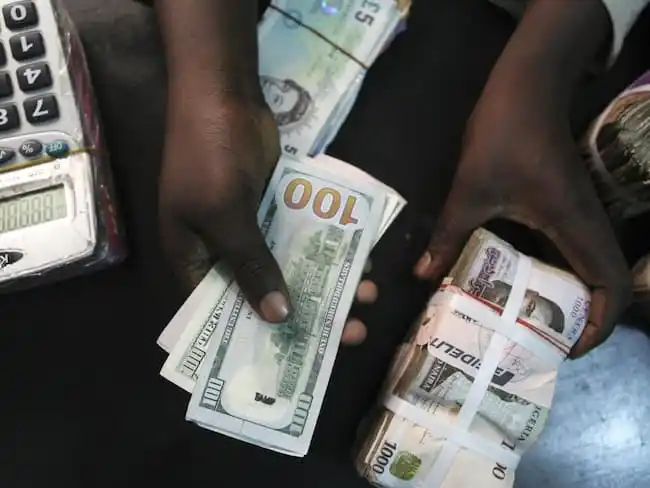
Dollar To Naira Exchange Rate For 25th September 2025

Dollar To Naira Exchange Rate For 8th Dec 2023

The exchange rate between the Naira and the US dollar, according to the data released on the FMDQ Security Exchange, the official forex trading portal, showed that the naira closed at 1515.00 per $1 on Thursday, September 25th , 2025. The naira traded as high as 1482.00 to the dollar at the investors and exporters (I&E) window on Wednesday.

How much is a dollar to naira today in the black market?

Dollar to naira exchange rate today black market (Aboki dollar rate):

The exchange rate for a dollar to naira at Lagos Parallel Market (Black Market) players buy a dollar for ₦1520 and sell at ₦1515 on Wednesday 24th September, 2025, according to sources at Bureau De Change (BDC).

Please note that the Central Bank of Nigeria (CBN) does not recognize the parallel market (black market), as it has directed individuals who want to engage in Forex to approach their respective banks.

Dollar to Naira Black Market Rate Today

Dollar to Naira (USD to NGN)Black Market Exchange Rate Today
Buying Rate₦1520
Selling Rate₦1515

Dollar to Naira CBN Rate Today

Dollar to Naira (USD to NGN)CBN Rate Today
Highest Rate₦1495
Lowest Rate₦1482

Please note that the rates you buy or sell forex may be different from what is captured in this article because prices vary.

Natasha Akpoti-Uduaghan Resumes At Senate, Labels Akpabio “Dictator”

Senator Natasha Akpoti-Uduaghan, representing Kogi Central, returned to the National Assembly on Tuesday after a lengthy suspension, accusing Senate President Godswill Akpabio of dictatorial leadership.

Her resumption followed the unsealing of her office in Suite 2.05 of the Senate Wing by the Deputy Director of the Sergeant-at-Arms, Alabi Adedeji. A video circulating online showed Adedeji removing the seal and declaring the office officially reopened.

Speaking to journalists shortly after, Senator Natasha reaffirmed her stance, stating she had “no apology to tender.” She reflected on her suspension, describing it as unjust and politically motivated.

“In the last six months, we endured suspension, recall attempts, and smear campaigns. But we survived it all. My gratitude goes to the people of Kogi Central, Nigerians at large, and my husband, whose support has been unwavering,” she said.

She further criticised Senate President Akpabio, insisting that the Senate should not be controlled by what she described as authoritarian tendencies. “Senator Akpabio is not more Nigerian than I am. He is not the governor of the Senate, yet he treated me like a servant in his household. It is disgraceful that our National Assembly is run by such a dictator,” she added.

Akpoti-Uduaghan was suspended on March 6, 2025, following a protest against the reassignment of her seat during plenary on February 20. Her six-month suspension formally ended in September, but legal hurdles delayed her return. On July 4, the Federal High Court in Abuja declared the suspension unconstitutional and excessive.

Despite the court ruling, her attempts to resume were resisted by Senate leadership until this week. It remains uncertain, however, whether her full legislative privileges will be restored when plenary reconvenes on October 7.

Meanwhile, the Senate leadership has shifted its resumption date from September 23 to October 7, 2025. An internal memo signed by Chinedu Akubueze, Chief of Staff to the Senate President, cited the need to adjust schedules around the Independence Day celebrations.

The change extends the chamber’s annual recess by two additional weeks, delaying pending legislative debates, including oversight matters and executive confirmations.

FG Announces Theme And Lineup Of Events For Nigeria’s 65th Independence Day

The Federal Government has officially revealed the theme and scheduled activities for Nigeria’s 65th Independence Anniversary, which will hold on October 1, 2025.

The theme, “Nigeria @ 65: All Hands on Deck for a Greater Nation,” was disclosed in a statement signed by the Director of Information and Public Relations at the Office of the Secretary to the Government of the Federation, Segun Imohiosen, and posted on X on Wednesday.

According to the statement, the anniversary theme highlights the importance of unity, patriotism, and collective action in shaping a country that thrives on sustainable peace, prosperity, and development.

Activities to mark the national celebration will commence on Friday, September 26, with Juma’at prayers at 1 p.m. This will be followed by an inter-denominational Christian service on Sunday, September 28, at 10 a.m., while a World Press Conference has been scheduled for Monday, September 29, at 10 a.m.

Imohiosen explained that the carefully curated events were designed to reflect the official theme, ensuring that the spirit of the anniversary aligns with the government’s “Renewed Hope Agenda.”

Independence Day, observed annually on October 1, is a public holiday in Nigeria, commemorating the country’s freedom from British colonial rule in 1960. It is typically celebrated with military parades, cultural displays, official state functions, and nationwide festivities.

Nigerian Stock Market Falls By 0.15% Amid Profit Taking

Stock Market Maintains Downward slope, Investors Lose N20 Billion

The Nigerian equities market ended in the red on Wednesday as profit-taking activities in mid and large-cap stocks dragged the market performance indices lower by 0.15 per cent.

Data from the Nigerian Exchange (NGX) showed that the market capitalisation declined by N135 billion, settling at N89.063 trillion compared with Tuesday’s N89.198 trillion. Similarly, the All-Share Index dropped by 213.50 points to close at 140,716.10.

The day’s trading session recorded 29 losers against 23 gainers, reflecting a negative market breadth. Top decliners included Deap Capital Management, which dipped 9.42 per cent to close at N1.73; Legend Internet, which lost 9.26 per cent to end at N4.90; and RT Briscoe, which shed 8.16 per cent to close at N3.60. WAPIC Insurance and May & Baker also recorded losses of 8.75 per cent and 7.14 per cent, closing at N2.92 and N16.25 per share, respectively.

On the other hand, Dangote Sugar topped the gainers’ chart, appreciating by 10 per cent to N59.40 per share. Mecure Industries rose by 9.95 per cent to N23.75, while Cornerstone Insurance gained 8 per cent to close at N6.48. Secure Electronic Technology and UPDC also advanced by 8 per cent and 5 per cent, finishing at 81k and N7.35 per share, respectively.

Market activity analysis showed declines in deals, volume, and value. A total of 442.6 million shares worth N16.9 billion were exchanged in 21,684 transactions, compared with 759.1 million shares valued at N25.7 billion traded in 23,657 deals on Tuesday.

Zenith Bank dominated both volume and value with 68.9 million shares worth N4.8 billion. Access Corporation followed with 47.3 million shares valued at N1.2 billion, while FirstHoldCo recorded 46.1 million shares worth N1.4 billion. Fidelity Bank traded 42.3 million shares valued at N868 million, while GTCO transacted 22.9 million shares worth N2.1 billion.

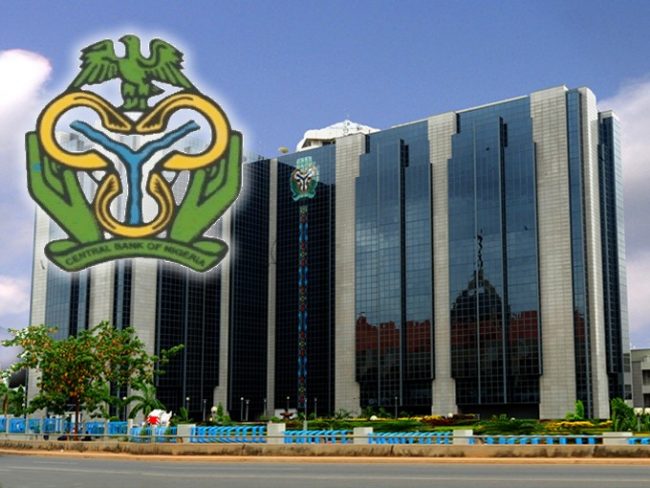
CBN Injects $52m Into Banks To Stabilize Naira Exchange Rate

CBN Lifts Ban On Aboki FX, 439 Other Accounts

The Central Bank of Nigeria (CBN) has intervened in the foreign exchange (FX) market with a sale of $52 million to authorized dealer banks in a bid to strengthen naira stability and improve dollar liquidity.

Fresh spot FX data revealed that the local currency gained ground following the intervention, as increased supply of the U.S. dollar helped ease market pressure. Analysts at AIICO Capital Limited confirmed that the $52 million injection was executed between ₦1,482.55/$ and ₦1,486.10/$ during Wednesday’s trading session.

The naira appreciated by eight basis points, closing at ₦1,487.3651 to the dollar, supported by lower demand and additional inflows from export proceeds. The exchange rate fluctuated between ₦1,482.55 and ₦1,495.00 within the trading window.

Official figures from the CBN also showed that Nigeria’s foreign reserves climbed to $42.14 billion as of September 22, 2025, reflecting an increase of $104.11 million from the previous day’s level.

Analysts believe the naira is likely to maintain its current levels in the short term, citing the strength of external reserves as a key support factor.

Meanwhile, global commodity markets saw a positive shift as oil prices climbed more than $1 per barrel following stalled talks over resuming oil exports from Iraq’s Kurdistan region. Brent crude surged by $1.88 or 2.85% to settle at $67.85 per barrel, while U.S. WTI crude rose by $1.34 or 2.15% to $63.62.

Gold also rallied to a new all-time high as investors sought safe-haven assets amid geopolitical tensions and expectations of additional rate cuts from the U.S. Federal Reserve. Spot gold gained 0.44% to trade at $3,764.29 per ounce, while December gold futures closed 0.38% higher at $3,782.15.

Market watchers predict oil prices could remain under pressure in the coming weeks as the anticipated restart of the Iraq–KRG pipeline adds fresh supply into the global market.

BizWatchNigeria.Ng
Privacy Overview

This website uses cookies so that we can provide you with the best user experience possible. Cookie information is stored in your browser and performs functions such as recognising you when you return to our website and helping our team to understand which sections of the website you find most interesting and useful.