The Federal Government has announced that about 98% of Nigerian workers will be exempted from paying Pay-As-You-Earn (PAYE) tax under the country’s new fiscal and tax reform laws, scheduled to take effect from January 2026.
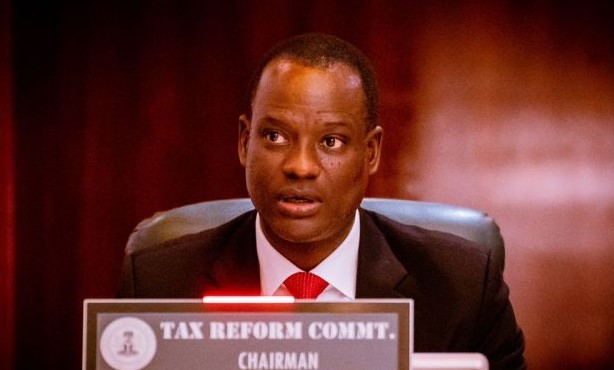
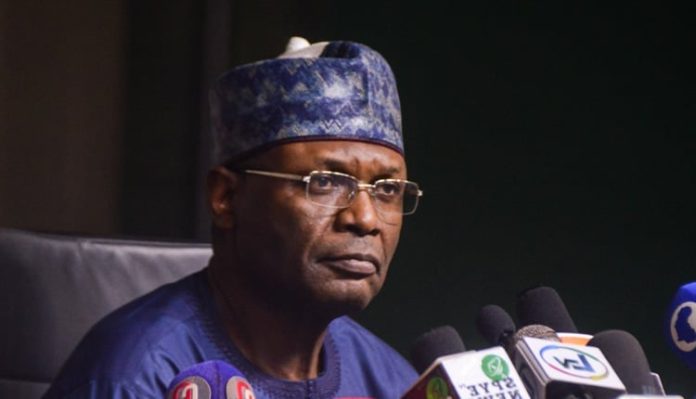
The Chairman of the Presidential Fiscal Policy and Tax Reforms Committee, Mr Taiwo Oyedele, made this disclosure during the 31st Nigerian Economic Summit (NES31) held in Abuja on Tuesday.
According to Oyedele, the new tax framework is designed to protect low-income earners and improve fairness and efficiency in the tax system. The reforms aim to reduce inequality while strengthening fiscal governance, accountability, and sustainable revenue generation.
He stated that the government recorded significant tax revenue growth in 2024 and is working to lower corporate income tax rates from 30% to 25%, in line with the administration’s broader fiscal reform agenda.
“When inequality widens, it creates an economic time bomb. These reforms will help Nigeria strengthen fiscal stability, improve accountability, and ensure that tax revenues are well utilized,” Oyedele said.
He emphasized that the reforms would also enhance Nigeria’s sovereign credit rating, reduce borrowing costs for both the government and private sector, and encourage domestic and foreign investment.
Oyedele explained that the reform process was inclusive and participatory, involving consultations with stakeholders across all sectors, including farmers, persons with disabilities, and Nigerians in the diaspora.
“We made sure no group was left behind. Every state participated in the reform discussions, and we co-created practical solutions,” he added.
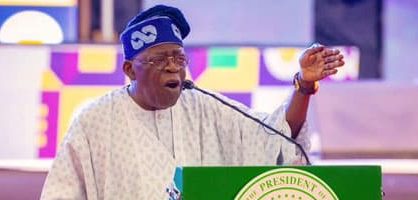
He commended President Bola Tinubu for supporting an implementation-driven approach, allowing the committee not only to design but also to execute the reforms.
“This committee is unique because we’re part of the implementation process, not just policy drafting. Our next focus is on public sensitization, capacity building, and effective rollout of the new tax laws,” he said.
Oyedele further stated that the new system will broaden Nigeria’s tax base, improve compliance, and promote fairness by ensuring that those with the ability to pay contribute equitably, while shielding the most vulnerable groups from excessive taxation.
The Nigerian National Petroleum Company Limited (NNPCL) has submitted formal responses to 19 audit queries raised by the Senate Committee on Public Accounts, addressing issues surrounding the alleged N210 trillion unaccounted funds between 2017 and 2023.
The committee’s chairman, Senator Aliyu Wadada, confirmed in Abuja that NNPCL had provided comprehensive written responses to the questions raised in the audit reports covering the seven-year period. He stated that while the documents had been received, the committee had yet to review them thoroughly.
Wadada explained that NNPCL had earlier requested an extension of three weeks to compile the necessary documentation after the committee’s July 29 deadline. The extension, he said, was granted to ensure that the company could offer detailed and evidence-based answers to the queries.
“NNPCL has now submitted all responses to the 19 audit questions. However, the committee has not yet deliberated on the content,” the senator said. “As chairman, I will refrain from public commentary until the findings are presented before members for official consideration.”
He assured Nigerians that the committee would conduct an objective and transparent review of NNPCL’s responses before making its findings public.
Wadada also noted that the committee’s investigation had expanded beyond financial audits to include other operational issues, particularly production sharing contracts (PSCs) between Nigeria, NNPCL, and international oil companies (IOCs).
“We must clarify how production costs are shared — what goes to NNPCL, to the IOCs, and what returns to the government,” Wadada explained. “Transparency in these contracts is critical to public accountability.”
He further revealed that NNPCL Retail, the company’s downstream subsidiary, reportedly declared a financial loss, a matter the committee intends to probe further.
“It’s difficult to understand how NNPCL Retail could post a loss, given its operations. We will seek clarifications when the company appears before us,” he added.
According to the Senate, Nigerians will be informed of the committee’s conclusions once deliberations are complete, with full transparency on which of NNPCL’s explanations hold merit.
Portuguese football superstar Cristiano Ronaldo has officially entered the billionaires’ club, becoming the first active player in football history to achieve this milestone, according to the latest Bloomberg Billionaires Index.
Bloomberg valued the 40-year-old Al-Nassr forward at an estimated $1.4 billion, based on his lifetime earnings, lucrative brand endorsements, and diversified investments. The report highlighted Ronaldo’s tax-free contract in Saudi Arabia and endorsement deals with Nike and Armani as key contributors to his immense wealth.
The publication’s latest index update, reported this week by BBC Sport and ESPN, confirms that Ronaldo’s wealth continues to rise following his two-year contract extension with Saudi club Al-Nassr, said to be worth more than $400 million. The new deal keeps the five-time Ballon d’Or winner in the Saudi Pro League until after his 42nd birthday.
Speaking to Canal 11, Ronaldo dismissed suggestions of retirement, despite family pressure to call time on his record-breaking career.
“People, especially my family, say: ‘It’s time for you to stop. You’ve done everything.’ But I still feel capable of achieving more,” he said. “I’m proud of what I’ve accomplished, but I’m not done yet. I still enjoy playing, contributing to my team, and competing at the highest level.”
Ronaldo, who holds the world record for most international goals with 141 strikes in 223 appearances, added that he remains motivated by competition and the desire to inspire younger players.
He also received the Prestige Award at the Portugal Football Globes on Tuesday.
“This isn’t a career-end award,” Ronaldo stated. “It’s recognition of many years of commitment and ambition. Competing with the younger generation excites me. I still have the same hunger to win.”
Bloomberg’s assessment cements Ronaldo not just as one of the greatest footballers in history, but also as one of the most successful athletes-turned-entrepreneurs globally, crossing the billion-dollar threshold while still active on the pitch.
The World Bank has warned that despite Nigeria’s recent economic stabilisation measures, an estimated 139 million Nigerians now live in poverty, underscoring the urgent need to ensure that ongoing reforms translate into tangible improvements in citizens’ welfare.
The Country Director for Nigeria, Mr Mathew Verghis, made this known on Wednesday in Abuja during the launch of the October 2025 edition of the Nigeria Development Update (NDU) themed “From Policy to People: Bringing the Reform Gains Home.” The biannual report assesses Nigeria’s economic performance, policy outcomes, and development challenges.
Verghis, who assumed office three months ago, lauded Nigeria’s bold policy actions, particularly the removal of petrol subsidies and the unification of the exchange rate, describing them as “foundational reforms” capable of reshaping the nation’s long-term economic prospects.
“Over the last two years, Nigeria has commendably implemented bold reforms, notably around the exchange rate and the petrol subsidy. These are the foundations on which the country can transform its economic trajectory,” he said, drawing parallels between Nigeria’s reform moment and India’s landmark policy shifts of the early 1990s.
According to him, the reforms have already produced encouraging results — stronger revenue performance, stabilised foreign exchange markets, rising reserves, and gradual moderation of inflation. “These are big achievements, and many countries would envy them,” he noted.
However, Verghis cautioned that these macroeconomic gains have yet to improve living standards for millions of Nigerians. “Despite these stabilisation gains, many households are still struggling with eroded purchasing power. In 2025, we estimate that 139 million Nigerians live in poverty,” he said.
The figure marks a steep rise from 129 million in April 2025 and 87 million in 2023, highlighting the deepening hardship facing many households despite reform progress.
The report identifies three urgent priorities to ensure reform gains reach ordinary Nigerians: reducing inflation, using public resources more effectively, and expanding social protection for the poor and vulnerable.
Verghis stressed that addressing food inflation should be central to Nigeria’s policy response. “Persistent differences between Nigeria’s inflation rate and those of its trading partners will pressure the exchange rate and create a vicious cycle. Lower inflation will also allow interest rates to come down and support growth,” he said.
While acknowledging the Central Bank of Nigeria’s tight monetary stance and the government’s fiscal restraint, the World Bank noted that these measures alone were insufficient to curb inflation rapidly. It called for structural reforms to tackle inefficiencies in food production, distribution, and markets.
The Bank also urged the Nigerian government to strengthen public financial management and ensure that every naira spent delivers measurable development outcomes. Expanding social safety nets, it said, was essential to shield the poorest citizens from the impact of economic adjustments.
“The challenge is clear: to translate the gains from stabilisation reforms into better living standards for all. These are not abstract ideas but practical steps that can turn macro stability into better livelihoods,” Verghis concluded.
The event brought together senior government officials, private sector leaders, development partners, and civil society representatives for discussions on Nigeria’s economic outlook. The World Bank reaffirmed its commitment to supporting Nigeria’s reform agenda through technical assistance, policy advice, and financing, emphasising that sustained political will remains vital to achieving inclusive growth.
Chairman of the Presidential Fiscal Policy and Tax Reforms Committee, Taiwo Oyedele, has announced that over 90 per cent of Nigerian workers will be exempted from paying the Pay-As-You-Earn (PAYE) tax under the new tax laws taking effect from January 2026.
Speaking during a session at the ongoing 31st Nigerian Economic Summit (NES#31) in Abuja, Oyedele said the reform is designed to protect low-income earners and those living below the poverty line.
“We cannot tax poverty. About 97 to 98 per cent of Nigerians will no longer pay PAYE, while the top two per cent of high-income earners will pay more,” he stated.
Oyedele emphasised that the reforms are not aimed at increasing taxes but at reducing business risks and simplifying the tax environment.
“The new laws are not about imposing higher taxes. Rather, they are about creating a more predictable and business-friendly environment. For example, some companies are currently taxed on their capital base — a practice the new laws seek to correct,” he explained.
He also urged informal sector operators to formalise their businesses to enjoy the benefits of the new laws, adding that the reforms would make formalisation more attractive.
“We are reducing the corporate tax rate from 30 to 25 per cent and capping personal income tax at 25 per cent, which is still lower than 35 per cent in Ghana and Kenya, and 45 per cent in South Africa,” he added.
Meanwhile, new data released by the National Bureau of Statistics (NBS) in collaboration with the Federal Inland Revenue Service (FIRS) revealed that Nigeria’s 36 states and the Federal Capital Territory (FCT) generated a combined N3.63 trillion in Internally Generated Revenue (IGR) in 2024 — the highest in four years.
Lagos State accounted for over one-third of the total, generating N1.26 trillion, followed by Rivers (N317.3 billion), the FCT (N282.36 billion), and Ogun (N194.93 billion).
The report shows that IGR across the states rose cumulatively to N10.88 trillion between 2021 and 2024, driven largely by tax revenues, which contributed about 73 per cent of total collections. In 2024 alone, tax revenue stood at N2.66 trillion, while other sources such as fees, licences, and income from state-owned enterprises contributed N968 billion.
Despite the impressive growth, analysts have warned that the concentration of fiscal capacity in a few economically vibrant states poses a threat to balanced national development. They urged low-performing states to diversify revenue through agriculture, mining, and services to strengthen fiscal federalism and ensure inclusive growth.
The Minister of Innovation, Science, and Technology, Geoffrey Uche Nnaji, has resigned from his position following allegations of certificate forgery.
Nnaji tendered his resignation on Tuesday, 7 October 2025, after reports surfaced accusing him of presenting a fake degree from the University of Nigeria, Nsukka (UNN). The institution has publicly denied that he was ever a student.
An online newspaper had earlier published findings that questioned the authenticity of his academic qualifications, prompting widespread calls for his resignation.
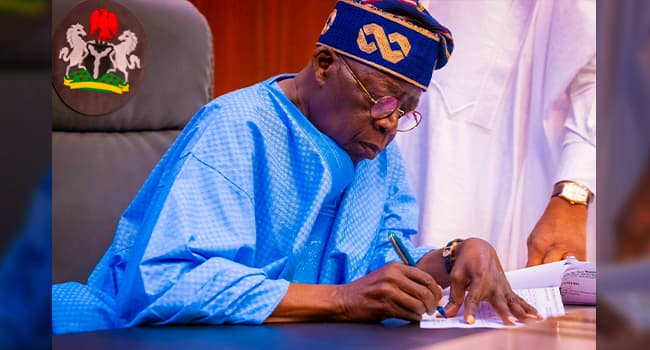
President Bola Ahmed Tinubu has accepted Nnaji’s resignation, thanking him for his service and wishing him success in his future endeavours.
In his resignation letter, Nnaji expressed gratitude to the President for the opportunity to serve the country, while describing the allegations as a smear campaign orchestrated by political adversaries.
Nnaji, who was appointed in August 2023, served for just over a year before the controversy forced his exit from the Federal Executive Council.
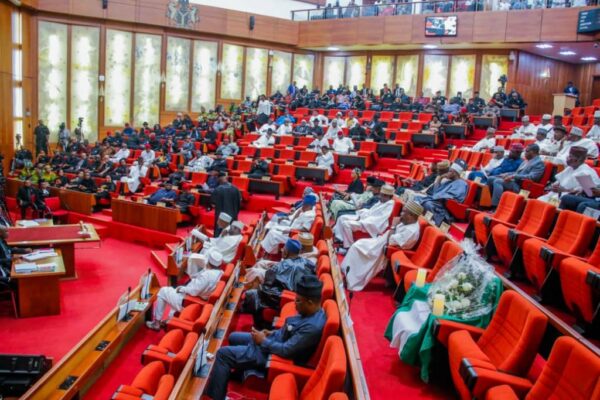
The Nigerian Senate has advanced a bill seeking to impose a 10-year travel document ban on Nigerians convicted or deported from foreign countries, in a move aimed at deterring criminal activities abroad and restoring global confidence in the nation’s passport.
The proposal, sponsored by Senator Bello Sani Abubakar (APC, Niger North), scaled its second reading on Tuesday. The bill seeks to amend the Passport (Miscellaneous Provisions) Act, Cap P343, Laws of the Federation of Nigeria, 2004.
Presenting the bill, Senator Mohammed Onawo said the amendment was necessary to protect Nigeria’s image internationally. “If a Nigerian is convicted abroad, his passport should be withdrawn for 10 years. This will serve as a deterrent and a signal that Nigeria will not condone criminal conduct that tarnishes her reputation,” he said.
Onawo lamented that crimes committed by Nigerians overseas had led to harsher visa regimes and discrimination against law-abiding citizens. “The green passport has lost respect globally. Its sovereign pride has been severely diminished — that is a national emergency,” he warned.
Senators expressed strong support for the bill. Senator Babangida Hussaini (Jigawa North-West) urged greater vigilance to prevent foreigners from fraudulently obtaining Nigerian passports, while Senate President Godswill Akpabio described the bill as “a bold corrective step,” recalling cases where criminals in Dubai carried Nigerian passports but were later discovered to be non-Nigerians.
The bill has been referred to the Senate Committee on Interior for further legislative action and a public hearing. If enacted, Nigeria would join a small group of countries that penalise citizens domestically for crimes committed abroad.
Meanwhile, the Senate confirmed that the Nigerian National Petroleum Company Limited (NNPCL) had responded to 19 audit queries amounting to ₦210 trillion, covering its financial records between 2017 and 2023. Chairman of the Senate Committee on Public Accounts, Senator Aliyu Wadada (Nasarawa West), said the responses were under review. “NNPCL requested an extension during our recess to compile its data and respond comprehensively. They have now replied to all 19 queries, and we are examining the submissions,” Wadada told journalists.
In another development, President Bola Tinubu has declined assent to two recently passed bills — the Nigerian Institute of Transport Technology Establishment Bill, 2025 and the National Library Trust Fund (Amendment) Bill, 2025 — citing provisions that he said could undermine fiscal discipline and conflict with existing laws.
In separate letters read by Senate President Akpabio, Tinubu said the Transport Technology Bill introduced unauthorised levies on trade and allowed borrowing and investment powers that could create unregulated revenue streams outside the national budget. He described such provisions as “fiscally dangerous” and inconsistent with the principles of good governance.
On the National Library Bill, the President raised concerns about potential overlaps with existing laws and excessive fiscal obligations on the federal government.
In another correspondence to the House of Representatives, Tinubu sought legislative approval to secure a $2.35 billion external loan. The request includes $1.23 billion to fund the 2025 budget deficit, $1.12 billion to refinance maturing Eurobonds, and a debut $500 million Sovereign Sukuk to diversify Nigeria’s investor base and finance infrastructure projects.
The President explained that the loan, to be raised through Eurobond issuance, syndicated borrowing, or multilateral facilities, was crucial to bridging revenue shortfalls and maintaining macroeconomic stability.
Meanwhile, Speaker of the House of Representatives, Dr Tajudeen Abbas, has announced that the House will vote on 87 proposals as part of the ongoing constitutional amendment process, focusing on devolution of powers, judicial reform, local government autonomy, and socio-economic rights.
Abbas, who resumed plenary on Tuesday after the legislative recess, reaffirmed the House’s commitment to electoral reforms ahead of the 2027 general elections. “Our goal is to make elections less contentious and more inclusive, to ensure that electoral disputes are resolved swiftly, and that violence is minimised,” he said.
The Speaker also emphasised the need for legislative action on state policing, renewable energy, and the implementation of the Start-up Act to drive economic growth and improve citizens’ welfare.
In a recent Financial Times article, a curious fact popped up: there are now more exchange-traded funds (ETFs) — 4,370 of them — than individual stocks listed on U.S. exchanges (about 4,172).
Replicate that across global markets, and investing starts to feel like you’re standing in a Lagos traffic jam, staring at ten different routes but not knowing which one will actually move. With thousands of stocks, bonds, and funds to pick from — and every “expert” throwing around intimidating words like alpha, beta, or volatility index — it’s no wonder so many people quietly step back and stick their money in a savings account.
But investing doesn’t have to feel like rocket science. What if we just… simplified it? At its core, investing is about one thing: getting cash to flow back to you. That’s it. Whether it’s a dividend from a company’s profit or interest from a government bond, it’s all money flowing in your direction. Once you understand that, the whole game changes.
The real problem isn’t the market — it’s us. Humans panic when prices drop, get greedy when they rise, and often buy or sell at exactly the wrong time. We’re emotional creatures trying to survive in a logical system.
The traditional advice has always been “buy and hold.” Sounds noble, right? But let’s be honest — it’s hard to “hold” when your portfolio looks like it’s on life support. It’s like being told to stand still while an angry okada rider is speeding toward you.
So, what’s the smarter move?
It’s to stop fighting human nature. Instead, let’s build investment strategies that work with our psychology — not against it. Let’s design cashflows that make us feel safe, calm, and in control. When done right, investing stops being a stressful gamble and starts feeling like the reliable profit of an ice block seller on a sunny Lagos afternoon.
The Problem: If you’re the type who checks your account, sees a 5% drop, and instantly feels your stomach twist, you’re not alone. The fear of losing money is primal — it triggers the same panic you’d feel seeing smoke in your kitchen.
The Simple Fix: Build a Safety Net. Just like you insure your car or a container shipment coming through Apapa port, you can “insure” your portfolio. That means setting up strategies that protect your investments from catastrophic losses.
You can use part of your gains to create a floor — a level below which your portfolio won’t fall. Think of it as shock absorbers for your financial journey.
The Result: You still get two kinds of cashflows — one from your investments and another from your peace of mind. That second one, the “cashflow of calm,” is priceless. It helps you sleep better and stay invested longer, which ironically is what leads to better returns anyway.
2. The Impatient Investor (“Show Me the Money Now”)
The Problem: Some people can’t stand waiting a full year for a dividend. The silence drives them mad. They want regular proof that their plan is working — a little “thank you” from their portfolio every few weeks.
The Simple Fix: Create a Steady Drip of Income. You can structure your investments to pay you more frequently — quarterly, or even monthly. For instance, bond ladders (where different bonds mature at staggered times) can ensure a predictable, rhythmic flow of income.
The Result: Each payment becomes like a soft tap on the shoulder saying, “Relax, you’re on track.” It transforms the marathon of investing into a series of shorter, achievable walks — from one bus stop to the next. Every deposit is tangible proof that your strategy works.
3. The Investor Who Hates Surprises (“I Don’t Want to Hear Stories”)
The Problem: For some, uncertainty is unbearable. It’s not the risk they hate — it’s the not knowing. Watching the market swing feels like watching a Nollywood drama where you can’t tell who’s the villain anymore.
The Simple Fix: Define the Rules of the Game. You can design a “defined outcome” portfolio where both potential gains and losses are clearly spelled out upfront. Maybe it’s structured so you get 90% of the market’s growth but are protected from the first 10% of losses.
The Result: You’re no longer guessing. You know the rules. You’re buying a ticket that says exactly what ride you’re on. That sense of clarity and control can calm even the most anxious investor’s nerves — and keeps them steady through market storms.
4. The Retiree Who Can’t Stand “Spending Savings”
The Problem: Many retirees struggle to shift from saving mode to spending mode. Selling investments to fund living expenses feels like eating your seed yam — emotionally wrong, even if it’s logical.
The Simple Fix: Reframe the Income. Instead of “selling assets,” think of it as a Portfolio Paycheque. A well-managed “total return” portfolio can automatically sell a tiny percentage of holdings each quarter — providing a steady income stream without the emotional weight of “spending savings.”
The Result: Psychologically, it feels different. You’re not eating into your future; you’re drawing a well-deserved salary from years of discipline. It’s steady, dignified, and sustainable — much like earning rent from a Lekki duplex without ever lifting a paintbrush.
Investing isn’t just about charts or market timing — it’s about human behavior. When you design cashflows that soothe our deepest fears — losing money, waiting too long, facing uncertainty, or running out — you build more than wealth. You build resilience.
And that, ultimately, is the truest return on investment: the freedom to close your laptop, share a meal with family, and live with the quiet confidence that your financial plan is working for you. Because sure, a cashflow is a cashflow — but the right one? That’s peace of mind.
The Senior Staff Association of Nigerian Universities (SSANU) and the Non-Academic Staff Union of Educational and Associated Institutions (NASU) have declared a one-day nationwide protest for Thursday to press the Federal Government over unresolved labour issues.
Operating under the Joint Action Committee (JAC), the unions have directed all branches to convene emergency meetings on Wednesday to mobilise members for the protest. Activities will include campus marches, placard displays, and press briefings.
The decision followed a JAC meeting on October 6, where members reviewed the government’s response to their long-standing demands after multiple ultimatums expired without resolution. Among the key grievances are the alleged inequitable sharing of the ₦50 billion earned allowances, delays in renegotiating the 2009 FGN/NASU/SSANU agreements, non-payment of two months’ outstanding salaries, unpaid arrears of 25% and 35% salary increments, and the non-remittance of third-party deductions for May and June 2022.
JAC had earlier issued a seven-day ultimatum to the government on September 15, which was later extended by 14 days, expiring on Monday, October 6.
In a circular dated October 6 and titled “Commencement of Protest Actions,” signed by NASU General Secretary, Prince Peters Adeyemi, and SSANU National President, Comrade Mohammed Ibrahim, the unions instructed full participation from all branches. The memo partly read:
“Following the inauguration of the Joint Consultative Committee by the Honourable Minister of Education to look into the demands of JAC of NASU and SSANU, the committee met twice — on September 19 and October 6, 2025 — with little progress, as our demands remain unresolved despite the extension of the ultimatum.
In light of this, the National JAC directs branch leadership in universities and inter-university centres nationwide to convene a joint congress on Wednesday, October 8, to mobilise for a massive one-day protest on Thursday, October 9, 2025.”
The circular emphasised that all members in both federal and state universities “must strictly comply with this directive,” stressing unity and total participation.
SSANU President Mohammed Ibrahim accused the government of insincerity, warning that the unions could escalate their action if the issues remain unresolved.
“Ours will not be the mother of all strikes; it will be the grandfather of all strikes,” he said. “When SSANU or NASU strikes, you know what it means. We must take our destinies in our hands.”
Ibrahim also lamented the poor welfare of non-academic staff, describing them as “the worst hit financially, economically, and psychologically.”
Both SSANU and NASU have repeatedly clashed with the Federal Government over welfare and funding issues, similar to the long-running disputes involving the Academic Staff Union of Universities (ASUU).
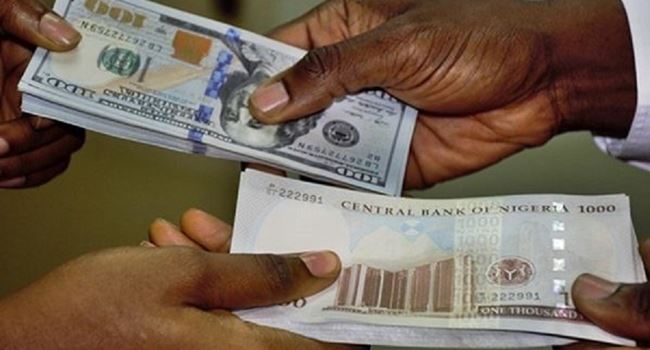
The exchange rate between the Naira and the US dollar, according to the data released on the FMDQ Security Exchange, the official forex trading portal, showed that the naira closed at 1455.00 per $1 on Wednesday, October 8th , 2025. The naira traded as high as 1467.00 to the dollar at the investors and exporters (I&E) window on Tuesday
Dollar to naira exchange rate today black market (Aboki dollar rate):
The exchange rate for a dollar to naira at Lagos Parallel Market (Black Market) players sell a dollar for ₦1470 and buy at ₦1455 on Tuesday 7th October, 2025, according to sources at Bureau De Change (BDC).
Please note that the Central Bank of Nigeria (CBN) does not recognize the parallel market (black market), as it has directed individuals who want to engage in Forex to approach their respective banks.
Dollar to Naira Black Market Rate Today
Dollar to Naira (USD to NGN)
Black Market Exchange Rate Today
Selling Rate
₦1470
Buying Rate
₦1455
Dollar to Naira CBN Rate Today
Dollar to Naira (USD to NGN)
CBN Rate Today
Highest Rate
₦1477
Lowest Rate
₦1467
Please note that the rates you buy or sell forex may be different from what is captured in this article because prices vary.
The Central Bank of Nigeria (CBN) on Tuesday conducted another round of Open Market Operation (OMO) auctions as part of efforts to mop up excess liquidity in the financial system. The auction drew strong interest from both foreign portfolio investors (FPIs) and deposit money banks (DMBs), following two consecutive under-allotments by the apex bank since Friday.
According to market reports, the CBN offered OMO bills worth N600 billion for subscription on Tuesday, amid rising liquidity levels in the banking sector, estimated to have exceeded N6 trillion following previous settlements.
Tuesday’s auction marked the third OMO exercise by the CBN since resuming liquidity management operations last week after a period of inactivity. The offer attracted robust participation, with total subscriptions hitting N4.4 trillion, surpassing demand recorded in the previous auctions on Friday and Monday.
Out of the total bids, the CBN allotted N3 trillion, with stop rates set at 19.45% and 19.49% for the 168-day and 196-day tenors, respectively.
A day earlier, on Monday, investors submitted bids totaling N3.32 trillion, from which the CBN allotted N998.1 billion. At last week’s auction, the bank raised N98 billion, rejecting about 97% of total bids received.
Market analysts said the surge in demand reflects renewed appetite for naira-denominated assets, buoyed by attractive yields and the apex bank’s sustained liquidity-tightening measures.
The Central Bank of Nigeria (CBN) is gearing up to launch its final treasury bills auction for the year this Wednesday, according to the recently released auction calendar. In this round, the bank will make ₦570 billion worth of treasury bills available to investors across its usual maturities.
Analysts expect the auction to be heavily oversubscribed, as investor appetite for naira-denominated assets remains strong amid a favorable monetary backdrop. The pattern of strong demand and potential rejection rates will be closely watched, offering insight into market sentiment, say fixed-income strategists.
The offered ₦570 billion is divided across three maturities:
₦100 billion in 91-day bills
₦120 billion in 182-day bills
₦350 billion in 364-day bills
While demand is expected to exceed supply, many analysts foresee a decline in stop rates (i.e. yields) across the tenors, in light of recent monetary easing signals.
For context, in the September auction the CBN floated ₦290 billion in treasury bills. Total subscription came in at ₦1.479 trillion, but the allotment was pegged at ₦345.1 billion. That auction saw cuts in stop rates: the 91-day paper priced at 15 percent (down from 15.32 percent), the 182-day at 15.30 percent (from 15.50 percent), and the 364-day maturity at 16.78 percent (previously 17.69 percent).
Market watchers say that the CBN’s return to open market operations (OMO) — after a month’s absence — sparked notable compression in yields. With rates already moderating in secondary markets, the expectation is for further downward pressure, especially on the one-year paper.
Gold prices surged to an unprecedented US$4,000 per ounce, a new all-time high as investors flocked to safe havens amid heightened geopolitical tensions and a growing trend of de-dollarization globally. The spike is being linked to multiple macro pressures, especially political gridlock in the U.S. that forced a partial government shutdown.
Since the start of the year, gold has climbed nearly 50 percent, propelled by safe-haven demand even as U.S. federal operations grind to a halt. ING analysts point to global economic uncertainty as a prime driver, with the U.S. shutdown compounding investor jitters.
Dilin Wu, research strategist at Pepperstone, emphasized that market participants will be watching closely for developments on government funding and central bank communications in the coming days.
The shutdown has delayed key data releases — including payroll figures — complicating the outlook for monetary policy. Traders have turned to alternative indicators to gauge momentum, while the Fed faces difficulty in navigating policy decisions with limited data flow.
Many market watchers expect the Fed to deliver a 0.25 percentage point rate cut this month, which would further amplify gold’s appeal (since gold carries no yield). Policy uncertainty and rising bets on easing have bolstered demand for non-interest-bearing assets like gold.
Institutional flows into gold ETFs surged. Last week, gold-backed exchange-traded funds expanded further, pushing total ETF holdings to their highest level since September 2022. There is speculative room for further inflows, as they remain below peaks seen in 2020.
The current rally has been dramatic: gold has more than doubled in under two years, driven by central bank purchases (as countries diversify away from the dollar), aggressive U.S. trade policies under former President Trump, and ongoing conflicts in the Middle East and Ukraine.
Looking forward, central banks remain active buyers. For instance, the People’s Bank of China extended its gold-purchasing streak for an 11th consecutive month in September, even as prices hit record highs.
Broader risk dynamics continue to favor gold. Persistent trade disputes, NATO–Russia tension, and other geopolitical flashpoints support higher defensive allocations. These “risk premia” make it challenging for investors to reduce exposure to safe-haven assets, even if macro data temporarily favors risk.
Analysts remain bullish on gold’s medium-term outlook, albeit with caution toward short-term retracements. Having set new records, the market may enter a consolidation phase. Still, structural tailwinds—central bank demand, ETF accumulation, and supply constraints—suggest further upside remains possible.
For the third consecutive trading session, the Nigerian naira has depreciated against the U.S. dollar, as foreign exchange supply dwindles and pressures mount on the currency market. According to the latest CBN FX data, the spot rate slid to ₦1,471.0892/US$, underscoring a widening gap between dollar demand and available supply.
At the start of October, the official rate was ₦1,455.2373, but in recent days the naira has steadily declined in the absence of significant FX intervention. On Tuesday, the intraday high touched ₦1,477/US$, reinforcing the demand pressure when compared to the ₦1,475 posted earlier in the week.
FX inflows into the market have dropped sharply. Coronation Merchant Bank’s research unit noted that inflows fell to US$835.60 million, down from US$1.18 billion in the previous week.
In September, the naira had remained relatively stable, buoyed by stronger inflows and active CBN intervention. Trading was largely confined to the ₦1,531–₦1,522/USD range, with support from exporters, foreign portfolio investors, and central bank sales.
In a bid to stem weakness, the CBN injected US$150 million into the FX market. This strategic intervention is viewed as part of an effort to defend the naira and reinforce external reserves.
On the production front, domestic crude output averaged 1.6 million barrels per day (mbpd) in August, slightly above Nigeria’s OPEC quota of 1.5 mbpd. The increase was driven by lower incidents of theft and pipeline vandalism.
The Nigerian Upstream Petroleum Regulatory Commission (NUPRC) reported that daily crude losses fell dramatically to 9,600 bpd, a sharp decline from 102,900 bpd in 2021. This improved security performance helped stabilize export volumes and reserve inflows.
Bonny Light crude traded at an average of US$73.18 per barrel in August — marginally lower than the prior month’s US$73.50, but notably higher than US$65.90 seen in May. Exports held near 1.06 mbpd in June and July (versus 1.00 mbpd in May), providing steady foreign exchange inflow. Nigeria’s foreign reserves climbed to US$42.544 billion as of Monday, up from US$42.353 billion at end-September 2025.
The Nigerian Exchange (NGX) sustained its bullish trend on Tuesday as the market capitalisation soared past the ₦92 trillion mark, with investors gaining approximately ₦109.47 billion.
Renewed bargain hunting in blue-chip and mid-cap stocks such as MTN Nigeria, Lafarge Africa (WAPCO), CONHALLPLC, and CHAMS Plc drove the uptrend, reflecting improved investor sentiment and growing confidence in the domestic market.
At the close of trading, the All-Share Index advanced by 0.12%, adding 172.65 basis points to close at 144,995.26, while market capitalisation increased to ₦92.03 trillion. Market data showed a slight dip in total trading volume by 2.41%, though the total value of transactions surged by 66.96%, signalling renewed institutional activity.
Analysts at Atlass Portfolio Limited reported that a total of 507.41 million units of shares valued at ₦24.28 billion were exchanged in 30,681 deals. ACCESSCORP led trading by volume, representing 9.11% of total market turnover, followed by ELLAHLAKES (7.84%), CHAMS (6.12%), SOVRENINS (5.52%), and ARADEL (4.48%).
By value, ARADEL dominated trading, accounting for 54.28% of total market value. On the gainers’ chart, CORNERST led with a 9.92% price appreciation, followed by CONHALLPLC (+9.52%), CHAMS (+9.22%), VFDGROUP (+9.17%), and INTENEGINS (+8.82%).
Conversely, LIVINGTRUST topped the losers’ table, shedding 10.00%, trailed by LIVESTOCK (-7.50%), NEIMETH (-4.48%), FIDELITYBK (-4.30%), and GTCO (-4.04%).
Sectoral performance was mixed — the banking index declined by 1.33%, oil & gas by 0.87%, and commodities by 0.31%. In contrast, insurance rose 1.98%, consumer goods gained 0.26%, and industrial goods advanced 0.69%.
Despite subdued activity levels, analysts believe moderating interest rates and improving macroeconomic conditions continue to redirect liquidity into equities, keeping the market on a growth trajectory.
Big Brother Naija Season 10 winner, Imisi Ayanwale, has officially received her grand prize package — a combination of ₦80 million in cash and a brand-new Innoson SUV — during the show’s official prize presentation ceremony held in Lagos on Tuesday.
The event, which took place at Ilupeju, saw representatives from Innoson Motors hand over the keys of the SUV to the reality TV star, marking the culmination of her BBNaija journey.
Imisi clinched the Season 10 crown on Sunday, October 5, after amassing 42.8% of the total votes, triumphing over other top contenders including Dede, Koyin, and Sultana.
Her total reward package, estimated at ₦150 million, comprises the ₦80 million cash prize, an Innoson SUV, and various perks from the show’s sponsors.
Imisi’s win places her among the elite list of female BBNaija champions such as Mercy Eke, Phyna, and Ilebaye, reinforcing the strong representation of women in the reality show’s history.
Fans and celebrities across social media platforms have celebrated her victory, describing it as “inspiring and well-deserved.”
Industry observers note that Imisi’s success could pave the way for new brand partnerships, media endorsements, and entertainment projects, further cementing her place in Nigeria’s entertainment scene.
President Bola Ahmed Tinubu has withheld his assent to two recently passed National Assembly bills, citing major inconsistencies and constitutional defects. The affected legislations are the Nigerian Institute of Transport Technology (NITT) Establishment Bill 2025 and the National Library Trust Fund (Establishment) Amendment Bill 2025.
The President communicated his decision in two separate letters to the Senate President, Godswill Akpabio, which were read during plenary on Tuesday.
In his correspondence regarding the NITT Bill, President Tinubu described the proposed law as “tainted with fundamental defects” and inconsistent with existing fiscal and administrative structures.
He noted that Section 18 of the bill unlawfully expands the institute’s funding source to include “one percent of freight charges on all imports and exports from Nigeria,” a provision that lacks necessary authorisation and could conflict with federal revenue laws.
Furthermore, the President expressed concern over Section 21(2), which permits the institute to obtain loans or overdrafts without presidential consent unless exceeding ₦50 million — a departure from the current legal requirement for executive approval on all borrowings.
“The removal of the President’s approval clause has neither been justified nor explained,” Tinubu wrote, warning that such a clause could lead to “serious financial abuses and violations of responsibility.”
He also pointed out contradictions in Sections 18 and 23, where the bill simultaneously restricts and authorises the investment of institute funds. “This inconsistency could enable diversion of funds meant for core operational purposes,” Tinubu stated.
On the National Library Trust Fund Amendment Bill 2025, the President cited several ambiguities and contradictions with existing laws governing taxation, remuneration of public servants, and tenure policies.
According to Tinubu, enacting the bill in its current state “would set an unsustainable precedent contrary to the public interest.”
Responding to the President’s correspondence, Senate President Godswill Akpabio commended the executive for its thorough scrutiny of all legislative proposals, assuring that lawmakers would “do justice to all the observations” raised.
If you’ve been watching the Nigerian stock market lately, you’d know Q3 2025 was anything but dull. The All-Share Index climbed nearly 19%, and the big boys—the trillion-naira club, known fondly as SWOOTs (Stocks Worth Over One Trillion Naira)—did most of the heavy lifting.
These are not your run-of-the-mill stocks. When they move, the market listens. And this past quarter, they moved in style. Out of 22 SWOOTs, 17 ended in the green, many delivering double-digit returns. From banking to cement, from food to fuel, the heavyweights showed muscle—and investors couldn’t be happier.
Oil and gas didn’t exactly have the best quarter, but Aradel refused to blend in with the gloom. The stock climbed 19.53% to close Q3 at ₦615, boasting a market capitalization of ₦2.67 trillion.
Revenue for H1 2025 jumped 37%, reaching ₦368 billion—mostly from crude and refined product sales. Even with administrative costs biting into profit, Aradel managed a ₦191 billion pre-tax profit. It’s a quiet reminder that while oil may have lost some shine, a well-run player still finds its rhythm.
9. FBN Holdings (Up 21.15%) — The Old Guard Isn’t Done Yet
FBN Holdings, one of Nigeria’s oldest financial names, proved that experience still counts. Its 21.15% gain in Q3 came on the back of impressive trading volumes and renewed investor confidence.
Interest income jumped a massive 61.9% to ₦812 billion, offsetting a small drop in pre-tax profit. And let’s be real—considering the turbulence in the financial sector earlier in the year, that’s a solid comeback.
8. Zenith Bank (Up 21.16%) — Consistency Is Its Trademark
Zenith Bank continues to do what Zenith does best—deliver. The stock gained 21.16% in Q3, pushing its year-to-date return above 52%. That’s serious momentum. With ₦625.6 billion in pre-tax profit and gross earnings of ₦2.5 trillion, the bank flexed its financial muscle. It even bumped up its interim dividend by 25%, because why not reward loyal shareholders?
7. UBA (Up 22%) — Africa’s Bank Keeps Beating Expectations
UBA isn’t just playing local—it’s going continental, and it shows. The stock climbed 22% in Q3 after a blistering July rally. Its pre-tax profit might’ve dipped slightly year-on-year, but ₦388 billion isn’t something to scoff at. With interest income topping ₦1.3 trillion, UBA remains the most agile of the Tier-1 banks. And honestly, when a Nigerian bank is growing across 20 African markets, you pay attention.
6. Nigerian Breweries (Up 23.73%) — Cheers to a Comeback
Now, here’s one that tells a story of recovery. Nigerian Breweries turned a ₦85 billion loss in H1 2024 into an ₦88 billion profit in 2025. Investors took notice—pushing the stock up 23.7% in Q3. Revenue soared 54% year-on-year to ₦738 billion, thanks to strong local demand and brand loyalty. You could say Nigerians never lost their taste for a cold one; the company just needed to get its cost structure right.
5. Stanbic IBTC (Up 28.24%) — Quietly Dominating the Banking Scene
Stanbic has this habit of flying under the radar until—boom—it tops the charts. With a 28.24% gain in Q3, it’s now among the top-performing banks this year.
Its pre-tax profit surged 65.8% to ₦243 billion, driven by strong interest income and efficient risk management. Plus, it crossed the ₦100 mark per share, a psychological milestone investors love.
4. Nestlé Nigeria (Up 28.97%) — A Sweet Turnaround
After a rough 2024, Nestlé came roaring back with a 28.97% rise in Q3. That’s what happens when your H1 profit swings from a ₦252 billion loss to an ₦88 billion gain.
Revenue grew 43%, and domestic demand stayed solid—proof that Nigerians still reach for familiar brands even when the economy’s tight. It’s a masterclass in resilience and pricing power.
3. BUA Foods (Up 37.19%) — Feeding Growth and Profits
Here’s where it gets interesting. BUA Foods, with a jaw-dropping ₦11.3 trillion market cap, surged 37.19% in Q3. It’s now the largest company on the Nigerian Exchange—and it’s behaving like one. Revenue hit ₦912 billion, while pre-tax profit climbed to ₦276 billion. For a food producer, that’s world-class efficiency. It’s not just growth—it’s dominance.
2. Lafarge Africa (Up 43.46%) — Building Momentum, Literally
Cement might sound boring, but not when you’re Lafarge. The stock jumped 43.46%, powered by higher cement sales and strong Q2 earnings. Pre-tax profit skyrocketed to ₦199 billion—up from just ₦46 billion a year ago. With ₦210 billion in cash and equivalents, Lafarge’s liquidity position looks rock-solid. Infrastructure spending is rising, and Lafarge is clearly riding that wave.
1. BUA Cement (Up 67.71%) — The Undisputed Champion
And at the top—BUA Cement, the juggernaut of the quarter. A whopping 67.71% surge made it the best-performing trillion-naira stock in Q3. Revenue hit ₦580 billion, while pre-tax profit leapt fivefold to ₦214.8 billion. By September, the stock had blown past ₦150, closing at ₦160—an investor’s dream run. It’s not just luck; BUA Cement has been expanding production capacity aggressively. Every new plant, every efficiency tweak—it all compounds.
Final Thoughts — When the Giants Dance
The Q3 rally wasn’t random. It reflected real growth in earnings, investor confidence, and a market rediscovering its energy after months of uncertainty. These SWOOTs aren’t just numbers on a chart—they’re the heartbeat of Nigeria’s corporate landscape. When they rise, portfolios smile, and the broader market finds its rhythm.
So, as we move into Q4, one question lingers: can they sustain this momentum? If history is any guide, Nigeria’s trillion-naira titans still have plenty of fire left.
President Bola Tinubu is expected to announce a new Chairman for the Independent National Electoral Commission (INEC) this week, following the expiration of Professor Mahmood Yakubu’s second and final tenure.
Yakubu officially handed over to INEC National Commissioner, May Agbamuche-Mbu, on Tuesday, marking the end of his decade-long leadership. Agbamuche-Mbu, a legal practitioner with over three decades of experience, now serves as acting chairman pending the appointment of a substantive successor.
A statement issued by the Special Adviser to the President on Information and Strategy, Bayo Onanuga, confirmed that President Tinubu formally accepted Yakubu’s departure and conferred upon him the national honour of Commander of the Order of the Niger (CON) in recognition of his service.
“President Tinubu thanked Professor Yakubu for his contributions to strengthening Nigeria’s democracy, particularly through the organisation of free and fair elections during his two terms,” the statement read. “He has directed that May Agbamuche-Mbu take charge in an acting capacity until a new chairman is appointed.”
The President is expected to present the list of nominees for the INEC chairmanship at the Council of State meeting in Abuja on Thursday, where former Presidents Olusegun Obasanjo and Goodluck Jonathan, state governors, and other council members will offer advisory input.
Yakubu’s Legacy and Reforms
Appointed in November 2015 by former President Muhammadu Buhari and reappointed in 2020, Professor Yakubu oversaw the 2019 and 2023 general elections as well as numerous off-cycle polls. His tenure was marked by technological innovations, including the introduction of the Bimodal Voter Accreditation System (BVAS) and the INEC Results Viewing Portal (IReV), aimed at enhancing transparency in the electoral process.
Under his leadership, INEC expanded polling units nationwide, improved access for persons with disabilities, and institutionalised continuous voter registration. He also established the Election Monitoring and Support Centre to track real-time election performance.
Despite these achievements, Yakubu’s era was not without controversy. The 2023 general elections witnessed technical glitches, delays in result transmission, and accusations of bias, leading to widespread criticism from political actors and civil society.
In his farewell address at INEC headquarters, Yakubu expressed gratitude to his colleagues, stakeholders, and Nigerians, noting that “criticisms encouraged rather than discouraged us to persevere.” He also presented two publications chronicling INEC’s innovations between 2015 and 2025.
Debate Over Appointment Process
Yakubu’s departure has reignited debate over who should appoint the next INEC chairman. Senior Advocate of Nigeria (SAN) Ifedayo Adedipe dismissed concerns over presidential appointments, describing them as distractions from more critical electoral reforms.
“Was it not Jonathan that appointed Professor Jega, who went on to conduct the election Jonathan lost in 2015?” Adedipe queried. “We should focus on addressing vote-buying and political behaviour rather than who appoints whom.”
Another legal expert, Adedayo Adedeji, SAN, maintained that the Constitution empowers the President to appoint the INEC chairman, subject to Senate confirmation. He, however, called for wider consultation and transparent screening to ensure the credibility of the process.
Similarly, Wale Balogun, SAN, emphasised that while existing checks and balances are adequate, the system must be strengthened to ensure the appointment of an independent and credible electoral umpire.
Preparing for 2027 Elections
In his parting remarks, Yakubu disclosed that INEC had commenced early preparations for the 2027 general elections and several off-cycle polls, including the upcoming Anambra, Ekiti, and Osun governorship elections.
He said the Commission was working to clean up the voter register, review polling unit locations, and improve frameworks for internally displaced persons’ participation.
Yakubu expressed hope that his successor would consolidate the Commission’s progress, stating, “I pray that God will continue to bless our country and our democracy.”
Meanwhile, Speaker of the House of Representatives, Tajudeen Abbas, has reaffirmed the National Assembly’s commitment to electoral reforms ahead of 2027. Addressing lawmakers after resumption from recess, Abbas said the proposed Electoral Act Amendment Bill seeks to “strengthen measures against violence, improve access for persons with disabilities, and establish clearer timelines for resolving disputes.”
He added that the reforms aim to make elections “less contentious and more transparent” while promoting inclusivity and reducing litigation.
As Nigeria begins its countdown to 2027, the appointment of a new INEC chairman is set to shape the next phase of the nation’s electoral and democratic journey.
President Bola Ahmed Tinubu has formally requested the House of Representatives to approve a plan for the Federal Government to secure a total of $2.34 billion in external financing to support Nigeria’s 2025 budget and refinance maturing Eurobond obligations.
The request, which was read by Speaker of the House, Rt. Hon. Abba Tajudeen, during Tuesday’s plenary session, also includes approval for a $500 million debut sovereign Sukuk to be issued in the international capital market.
In his letter to the legislature, President Tinubu explained that the proposed borrowing is in line with the provisions of Sections 21(1) and 27(1) of the Debt Management Office (DMO) Establishment Act, 2003. He noted that the total amount of $2.347 billion comprises $1.229 billion in new external loans as provided for in the 2025 Appropriation Act, and an additional $1.118 billion for refinancing Eurobonds due in November.
The President outlined that the government intends to source the funds through a mix of Eurobond issuances, syndicated loans, bridge financing, and borrowings from international financial institutions, depending on prevailing market conditions.
According to Tinubu, the initiative aligns with the government’s fiscal strategy to finance infrastructure projects, manage debt sustainability, and boost investor confidence in Nigeria’s credit market. He stressed that the proposed Sukuk issuance would not only diversify Nigeria’s funding base but also attract ethical investors and complement the domestic Sukuk program, which has already generated over N1.39 trillion for key infrastructure projects since 2017.
“The proposed $500 million sovereign Sukuk may be issued with or without a credit guarantee from the Islamic Corporation for the Insurance of Investment and Export Credit (ICIEC), a member of the Islamic Development Bank Group,” Tinubu stated. “Up to 25% of the proceeds may be used to refinance high-cost debts, while the remainder will fund critical infrastructure projects.”
The President emphasized that refinancing maturing Eurobonds is a globally accepted debt management strategy aimed at preventing default and maintaining Nigeria’s credit credibility. He assured lawmakers that the Ministry of Finance and the DMO would work closely with transaction advisers to secure the most favorable market terms.
Analysts believe the move signals the administration’s commitment to fiscal discipline while leveraging international capital markets to strengthen Nigeria’s economic stability and infrastructural expansion.