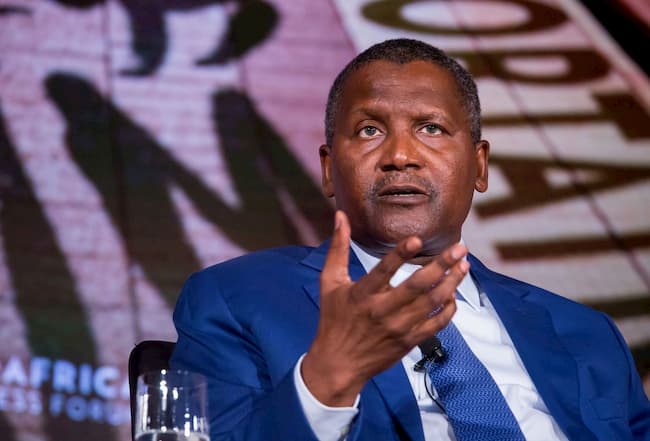
Africa’s richest man, Aliko Dangote, has revealed plans to expand the capacity of the Dangote Refinery from its current 650,000 barrels per day (bpd) to 1.4 million bpd, positioning it as the largest oil refining facility in the world.
In an interview with S&P Global, Dangote disclosed that the refinery aims to scale up production to 700,000 bpd by the end of this year, as part of broader efforts to enhance Africa’s energy independence and reduce reliance on imported fuel.
S&P Global reported that Dangote is pursuing Middle Eastern investment partnerships to support the expansion, which could make the Lagos-based refinery the world’s largest — surpassing India’s Jamnagar Refinery, currently at 1.36 million bpd.
The Dangote Refinery has already transformed Nigeria’s energy landscape, making the nation a net exporter of diesel and jet fuel, with large volumes of petrol now being produced locally.
Dangote acknowledged that building the refinery had been a “herculean task,” noting that duplicating such infrastructure elsewhere would be far more expensive. Engineers at the Lekki complex confirmed that the site was originally designed for expansion, with available space for an additional refining system.
Plans also include new projects in linear alkylbenzene and base oil production, alongside efforts to boost polypropylene capacity from 1 million metric tonnes to 1.5 million metric tonnes in the coming years.
Despite projections by the International Energy Agency (IEA) that the world will have excess refining capacity by 2030, Dangote remains firm on his vision to make Africa energy self-sufficient. He warned that without massive private sector investment, the continent risks deepening its dependence on imported petroleum products.
The refinery’s Vice President, Devakumar Edwin, confirmed that the facility’s residue fluid catalytic cracker (RFCC), which went offline in September after scheduled maintenance, resumed operations in early October and is expected to return to full capacity soon.
Dangote also announced plans to list 5–10% of the refinery’s shares on the Nigerian Stock Exchange within the next year as part of efforts to attract investors and diversify ownership. He noted that while the NNPC Limited currently holds a 7.2% stake, further discussions on additional equity participation would take place after the next growth phase.
“We want to demonstrate the refinery’s potential before expanding ownership,” Dangote stated, adding that the next maintenance shutdown will be carefully scheduled to avoid the year-end demand surge.
The Nigerian Education Loan Fund (NELFUND) has officially announced the commencement of its student loan application process for the 2025/2026 academic year, giving Nigerian students an opportunity to access interest-free financial support for their tertiary education.
The Nigerian Education Loan Fund (NELFUND) was established under the Student Loans (Access to Higher Education) Act, 2024, as a federal initiative to provide interest-free student loans to indigent students in public tertiary institutions across Nigeria.
The programme aims to make higher education more accessible by covering tuition fees and, in some cases, providing upkeep allowances to support living expenses.
Eligibility Requirements
To qualify for the NELFUND student loan, applicants must meet the following criteria:
Be a Nigerian citizen.
Be enrolled in a public university, polytechnic, or college of education.
Possess a valid National Identification Number (NIN) and Bank Verification Number (BVN).
Attend an institution recognised and approved by NELFUND.
Have a verifiable admission and academic record as recognised by the Joint Admissions and Matriculation Board (JAMB).
How to Apply for the NELFUND Student Loan in 2025
Below is a detailed, step-by-step guide on how to successfully apply and get approved for the NELFUND student loan:
Step 1: Visit the Official NELFUND Portal
Go to the official website at www.nelf.gov.ng and click on “Apply Now.” It is crucial to ensure that you are on the genuine NELFUND site, as several fraudulent pages have emerged online. Always verify the URL before entering any personal information.
Step 2: Register or Create a New Account
Click on “Get Started,” enter your email address, create a password, and confirm your nationality as Nigerian. After completing registration, verify your email address by clicking on the confirmation link sent to your inbox.
Note: Use an active email account to ensure you receive important updates regarding your loan application.
Step 3: Confirm Eligibility and Provide Personal Details
Input your full name, NIN, BVN, date of birth, phone number, and address. Ensure all information matches your official records. Any inconsistencies may delay or invalidate your application.
Step 4: Provide Educational Details
Before proceeding, confirm that your school has uploaded your student records to the NELFUND database. Once verified, select your institution from the approved list, input your matriculation number, JAMB registration number, and upload your admission letter.
Step 5: Select Loan Type and Amount
Choose the type of loan you wish to apply for — whether it’s tuition-only or includes an upkeep allowance to support your daily living expenses. Applicants are advised to request only what they genuinely need, as excessive or unjustified requests may affect approval.
Step 6: Upload Required Documents
Attach clear and legible copies of all necessary documents, including your admission letter, school ID card, tuition invoice, and a valid means of identification.
Step 7: Review and Submit Application
Carefully review your application details before submission. You will be required to agree to the Global Standing Instruction (GSI), which authorises repayment once you begin earning income. Ensure accuracy before submission to prevent disqualification.
Step 8: Monitor Application Progress
After submission, log into your NELFUND dashboard regularly to track the status of your loan under the “Loans” or “Status” tab. If your application is rejected, review the reason provided, correct the issue, and reapply promptly.
Step 9: Loan Disbursement
Upon approval, NELFUND will pay tuition fees directly to your institution, while upkeep allowances (if applicable) will be sent to your personal bank account during the academic year. Disbursements may occasionally be delayed due to verification procedures involving your school and NELFUND.
What the Loan Covers
Tuition Fees: Paid directly to the student’s institution.
Upkeep Allowance: Optional financial support for accommodation, feeding, and transportation expenses during academic sessions.
Note: Upkeep funds are disbursed only during active academic periods to prevent duplicate or fraudulent payments.
Loan Repayment Terms
Repayment begins two years after completing the National Youth Service Corps (NYSC) or after graduation (if NYSC does not apply).
The loan is interest-free but must be repaid in full.
Repayments are typically made through Pay-As-You-Earn (PAYE) deductions or other self-employment arrangements.
Frequently Asked Questions (FAQs)
1. Can students in private universities apply? No. The NELFUND loan is currently available only to students in public tertiary institutions.
2. How long does approval take? There is no fixed timeline. The duration largely depends on how quickly your institution and NELFUND verify your submitted details.
3. What if I don’t get a job immediately after graduation? You will not be required to begin repayment until you start earning income.
4. Can I reapply if my first application is rejected? Yes. You can reapply after correcting the issues stated on your rejection notice, such as missing or incorrect details.
5. What is the deadline for 2025 applications? The NELFUND 2025 application window is open from Thursday, October 23, 2025, to Saturday, January 31, 2026.
Final Thoughts
The NELFUND 2025 Student Loan Scheme offers a lifeline to thousands of Nigerian students struggling to finance their education. By providing interest-free financial aid, the government is bridging the gap between academic potential and economic hardship, ensuring that every eligible Nigerian has access to quality higher education without financial limitations.
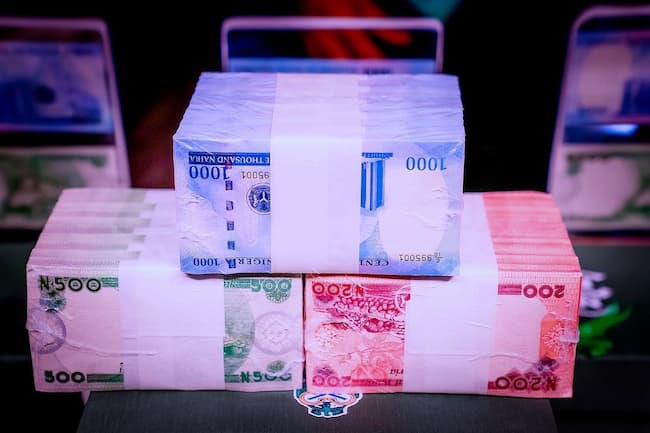
The Nigerian naira appreciated further against the US dollar on Tuesday, trading at ₦1,463 per dollar at the official foreign exchange (FX) market amid a steady rise in the country’s external reserves.
According to data from the Central Bank of Nigeria (CBN), the local currency recorded an intraday high of ₦1,466/$1, up from ₦1,470/$1 in the previous session, reflecting improved liquidity and reduced demand pressure in the market.
The CBN’s official FX bulletin showed that the spot rate closed at ₦1,463.4520/$1, indicating a stronger position for the naira amid sustained supply from exporters and oil firms. Analysts attributed the stability to robust inflows from international oil companies (IOCs) and growing participation from foreign portfolio investors, which have helped ease dollar scarcity.
Nigeria’s foreign reserves continued their upward trajectory, climbing to $42.792 billion from $42.695 billion, supported by inflows from hydrocarbon exports and diaspora remittances.
Market analysts expect the local currency to hover around the ₦1,470/$1 range in the near term, with some investment banks projecting a potential appreciation to ₦1,400/$1 by 2025, citing increased FX inflows and improving investor confidence.
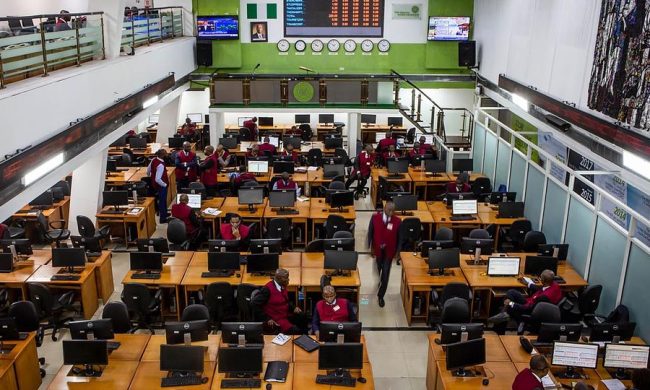
The Nigerian Exchange (NGX) continued its bullish momentum on Tuesday as the total market capitalisation crossed the ₦96 trillion threshold, following renewed investor interest that lifted equities by over ₦961 billion. This surge has pushed the year-to-date return to an impressive 47.2%.
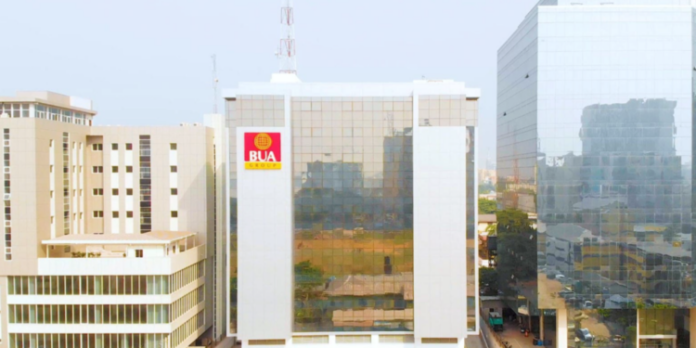
The sustained positive performance was largely fuelled by bargain-hunting in key medium- and large-cap stocks, including BUA Foods, Vitafoam, Aradel Holdings, and Cadbury Nigeria Plc, among others. Investor sentiment has strengthened in recent sessions, supported by expectations of robust corporate earnings from listed firms.
At the close of trading, the NGX All-Share Index (ASI) advanced by 1,516.10 basis points, closing at a new all-time high of 151,456.91 points, reflecting a 1.01% daily gain. Market capitalisation also appreciated by ₦962.31 billion to settle at ₦96.13 trillion.
Market activity presented a mixed picture, with trading volume rising by 34.95%, while the total traded value dipped by 23.04%. According to data from Atlass Portfolio Limited, about 551.92 million shares worth ₦20.54 billion were exchanged across 27,518 deals during the session.
Fidelity Bank Plc dominated the activity chart by volume, accounting for 10.73% of total trades, followed by VFD Group (7.13%), Japaul Gold (6.85%), Access Holdings (6.78%), and GTCO (5.69%). In terms of trade value, GTCO led the pack, representing 14.22% of total turnover on the Exchange.
On the gainers’ chart, SCOA Nigeria Plc topped with a 7.74% increase, followed closely by Omatek (+7.48%), Consolidated Hallmark Holdings (+6.70%), BUA Foods (+6.54%), Vitafoam (+5.92%), and Legend Interiors (+5.13%), among others.
Meanwhile, thirty equities declined in value. LivingTrust Mortgage Bank emerged as the top loser with a -9.91% drop, followed by Conoil (-5.83%), Sovereign Insurance (-3.95%), Japaul Gold (-2.31%), AccessCorp (-1.77%), and FTN Cocoa (-1.38%).
The market breadth closed negative with 27 gainers and 30 losers. The Consumer Goods Index led sectoral performance with a 3.53% rise, buoyed by price rallies in BUA Foods and Vitafoam. Other sectors such as Oil & Gas (+2.02%), Commodities (+0.97%), Insurance (+0.38%), Banking (+0.21%), and Industrial Goods (+0.16%) also ended the session on a positive note, supported by strong performances in Aradel, Cornerstone Insurance, FBN Holdings, and WAPCO.
The Nigerian Education Loan Fund (NELFUND) has announced the approval of an additional 22 state-owned tertiary institutions for inclusion in its student loan programme, expanding access to financial support for students across the country.
In a statement released via its official handle on X (formerly Twitter), NELFUND confirmed that the newly cleared institutions were approved after a comprehensive review by the committee overseeing the Student Verification System (SVS).
According to the Fund, students enrolled in these newly accredited institutions can now proceed to apply for loans through the official NELFUND portal at nelf.gov.ng.
The latest development follows the earlier clearance of 86 institutions, bringing the total number of approved state-owned institutions to 108 nationwide.
Below is the complete list of newly approved and previously cleared institutions eligible for the student loan scheme.
Newly Cleared Institutions
Abia State University, Uturu
College of Education, Nsugbe
Chukwuemeka Odumegwu Ojukwu University
Delta State University, Abraka
Delta State Polytechnic, Otefe-Oghara, Delta State
Ekiti State Polytechnic, Isan-Ekiti
Kogi State University, Kabba, Kogi State
Prince Abubakar Audu University
Kwara State University
Kwara State College of Health Technology
Abdulkadir Kure University, Minna
Ogun State College of Health Technology, Ilese-Ijebu
Moshood Abiola Polytechnic
Emmanuel Alayande University of Education, Oyo
The Polytechnic, Ibadan
The Oke Ogun Polytechnic, Saki
Rivers State University, Port Harcourt
Kenule Beeson Saro-Wiwa Polytechnic
Shehu Sule College of Nursing and Midwifery, Damaturu
College of Administration, Management and Technology, Potiskum, Yobe State
College of Agriculture, Science & Technology, Gujba
College of Education Legal Studies, Nguru
Previously Cleared Institutions
Abia State Polytechnic
Adamawa State University, Mubi
Adamawa State Polytechnic, Yola
College of Education, Afaha Nsit
Akwa Ibom State University
Akwa Ibom State Polytechnic
Aminu Saleh College of Education, Azare
Niger Delta University
Benue State University, Makurdi
Borno State University
College of Education, Waka-Biu
Mohammet Lawan College of Agriculture
Ramat Polytechnic, Maiduguri
Cross River State University
Delta State Polytechnic, Ogwashi-Uku
Delta State University of Science and Technology
Dennis Osadebay University, Asaba
University of Delta, Agbor
Ebonyi State University, Abakaliki
Edo State University, Uzairue
Ekiti State University, Ado Ekiti
Bamidele Olumilua University of Education, Science and Technology
University of Medical and Applied Sciences, Enugu State
Gombe State University
Imo State University of Agriculture and Environmental Sciences, Umuagwo
Kingsley Ozumba Mbadiwe University
Benjamin Uwajumogu State College of Education, Ihitte-Uboma
Imo State Polytechnic, Omuma
Sule Lamido University, Kafin Hausa, Jigawa State
Nuhu Bamalli Polytechnic, Zaria
Kaduna State College of Education, Gidan Waya
Kaduna State University
Aliko Dangote University of Science and Technology, Wudil
Yusuf Maitama Sule University
Katsina State Institute of Technology and Management
Umar Musa Yar’Adua University, Katsina
Kebbi State University of Science and Technology, Aliero
Confluence University of Science and Technology
Prince Abubakar Audu University, Anyigba
Kwara Polytechnic
Kwara State College of Education, Oro
Lagos State University of Education
Lagos State University of Science and Technology
Lagos State University
Isa Mustapha Agwai Polytechnic, Lafia
Nasarawa State University, Keffi
Ibrahim Badamasi Babangida University, Lapai
Niger State Polytechnic, Zungeru
Abraham Adesanya Polytechnic
Olabisi Onabanjo University
Tai Solarin University of Education
Ogun State Institute of Technology, Igbesa
D.S. Adegbenro ICT Polytechnic, Itori-Ewekoro
Gateway ICT Polytechnic, Saapade
University of Medical Sciences, Ondo
Adekunle Ajasin University, Akungba-Akoko, Ondo State
Government Technical College, Ile-Ife
GTC, Ara, Osun State
GTC, Gbongan, Osun State
GTC, Ijebu-Jesa
GTC, Ile-Ife, Osun State
GTC, Inisa, Osun State
GTC, Iwo, Osun State
GTC, Otan Ayegbaju, Osun State
GTC, Osu, Osun State
Osun State College of Education, Ila-Orangun
Osun State College of Technology
Osun State University
University of Ilesa, Osun State
Osun State Polytechnic, Iree
Oyo State College of Agriculture and Technology, Igboora
Oyo State College of Health Science and Technology, Eleyele, Ibadan
Adeseun Ogundoyin Polytechnic, Eruwa, Oyo State
Ladoke Akintola University of Technology, Oyo State
Oyo State College of Nursing Sciences, Eleyele
First Technical University, Ibadan
Plateau State University, Bokkos
Port Harcourt Polytechnic
Ignatius Ajuru University of Education, Port Harcourt
Taraba State Polytechnic
Taraba State University, Jalingo
Taraba State College of Nursing Sciences, Jalingo
Umar Suleiman College of Education, Gashua, Yobe State
Yobe State University
Mai Idris Alooma Polytechnic, Geidam, Yobe State
Zamfara State University, Talata Mafara
NELFUND continues to expand its student loan coverage across Nigeria, reinforcing its mission to make higher education more affordable and accessible for all Nigerians.
Man, the UEFA Champions League never fails to deliver that heart-pounding drama, does it? Here we are, just a few matchdays into the 2025-26 season, and already the table’s looking like a wild rollercoaster. As of October 22, 2025, with most teams having played two or three games, we’ve got powerhouses flexing their muscles, underdogs barking loud, and a few big names scratching their heads. If you’re a die-hard fan glued to every fixture—or even if you’re just dipping in for the highlights—this early snapshot tells a story of goals galore, defensive masterclasses, and those nail-biting draws that keep us coming back.
(Note: All teams are in the play-offs qualification phase, and “Not played” fills out the last five where applicable. Ties in rank, like at 14 and 29, are based on identical points and GD.)
The Untouchables: PSG, Inter, and Arsenal Leading the Charge
At the summit, it’s a three-way tie with nine points each, and not a single loss among them. Paris Saint-Germain tops the list on goal difference, having smashed in 13 goals while conceding just three. Remember that thrashing they gave to some poor souls early on? It’s like they’re channeling their inner Messi era all over again, even without him. Their attack is firing on all cylinders—think fluid passes, clinical finishes, and a midfield that’s bossing possession like it’s nobody’s business.
Right behind, Inter Milan hasn’t let a single ball past their keepers yet. Zero goals against in three games? That’s not just solid defending; it’s a statement. They’ve got that Italian grit mixed with some flashy South American flair up front. And Arsenal—wow, the Gunners are back with a vengeance. Eight goals scored, none conceded. Mikel Arteta’s crew looks hungrier than ever, pressing high and turning turnovers into treasures. You have to wonder: can these three keep this pace? Or will the fixture congestion bite them later, like it did to so many in past seasons?
Shifting gears a bit, it’s fascinating how these top spots echo broader trends in European football. With the expanded format this year—more teams, more matches—it’s rewarding squads with depth. PSG’s bench, for instance, could start for half the league. But here’s a mild curveball: Arsenal’s perfect run includes some easier draws, right? Not knocking them, but facing stiffer tests soon could shake things up.
The Hunters: Dortmund and Man City Nipping at Heels
Dropping to seven points, Borussia Dortmund sits pretty with a draw and two wins, boasting a +5 goal difference. They’ve netted 12 times already—talk about fireworks at the Westfalenstadion. Their yellow wall of fans must be electric right now. Then there’s Manchester City, also on seven, with that trademark Pep Guardiola control. Six goals for, two against; they’ve drawn once but look unbreakable otherwise. It’s like watching a well-oiled machine—precise, relentless, and always one step ahead.
What gets me is how City adapts. Remember last season’s injury woes? This year, they’re rotating like pros, keeping fresh legs for the long haul. Dortmund, on the other hand, thrives on chaos; their counter-attacks are lethal, slicing through defenses like a hot knife through butter. If you’re betting on dark horses for the title, these two deserve a nod. But let’s be real— a slip-up against a mid-table fighter could flip the script overnight.
Bayern’s Quiet Storm and Newcastle’s Gritty Rise
Bayern Munich, with six points from two wins, hasn’t played as many games yet, but eight goals in two outings? That’s vintage Bayern—dominating possession and punishing mistakes. They’re sitting comfortably, goal difference at +6, and you know they’ll ramp up as the group stage deepens. Newcastle United, though—now that’s a story. Six points from three games, including a loss but two solid wins, and a +6 GD. The Magpies are punching above their weight, blending Premier League physicality with smart European tactics. Eddie Howe’s got them organized, and their fans are dreaming big.
It’s reminiscent of those underdog runs we love, like Porto back in the day. Newcastle’s rise ties into the Saudi investment wave, sure, but on the pitch, it’s all about heart. Can they sustain it against the big boys? That’s the million-euro question. And Bayern—well, they’re Bayern. Expect them to cruise into the play-offs without breaking a sweat.
Royalty in Form: Real Madrid and Barcelona’s Mixed Bags
Real Madrid, another six-pointer with two wins and a whopping +6 GD. They’ve only played two, but seven goals scored speaks volumes. Los Blancos are eternal favorites, aren’t they? That aura of inevitability, even when the squad’s in transition. Barcelona, also on six but from three games with a win-loss-win pattern. Nine goals for, four against—entertaining stuff, but that loss highlights vulnerabilities in defense.
Here’s the thing: Barca’s flair is unmatched, but consistency? Not quite there yet. Real, meanwhile, seems more balanced. It’s like comparing a flashy sports car to a reliable SUV—both get you there, but one might leave you stranded. With El Clasico vibes spilling into Europe, these Spanish giants add that extra spice.
The Surprise Packages: Qarabag and PSV Making Waves
Qarabag FK at 10th with six points from two wins? Who saw that coming? Five goals scored, two against— they’re the Azerbaijani outfit turning heads, proving the Champions League’s global appeal. It’s like that Leicester miracle, but on a continental scale. PSV Eindhoven, on four points, has a loss, draw, and win; their +2 GD shows resilience. Dutch football’s technical edge shines through here.
These stories warm the heart, don’t they? In a tournament dominated by moneybags clubs, seeing smaller teams scrap for play-off spots reminds us why we watch. But reality check: tougher fixtures await, and survival mode kicks in soon.
Mid-Table Mayhem: From Marseille to Atalanta
This is where it gets crowded. Marseille, Club Brugge, Sporting—all on three points, mixing wins and losses. Eintracht Frankfurt’s got six goals each way for a zero GD; Liverpool’s three points from a win and loss, looking for rhythm. Atlético Madrid’s on three but with two losses already—Simeone’s boys need to tighten up.
Chelsea, Galatasaray, Atalanta, Napoli, Union Saint-Gilloise—all hovering around three points, each with tales of glory and woe. Napoli’s -5 GD after three games? Ouch. It’s a reminder that early stumbles can haunt you. Liverpool, though— that loss hurts, but a win shows potential. You know, Klopp’s legacy lingers, but the new era’s still settling.
The Draw Kings and the Strugglers
Juventus and Bodø/Glimt, both on two points from draws— no wins, no losses. It’s steady, but in this format, you need victories to climb. Pafos, Leverkusen on two as well, with draws and a loss each. Monaco, Villarreal, Slavia Praha on one point—mostly draws amid defeats.
Then the bottom: Copenhagen, Olympiacos, Kairat on one, all fighting relegation vibes early. Benfica, Athletic Club, Ajax rock bottom with zero points. Benfica’s three losses, -5 GD— heartbreaking for such a storied club. Ajax’s -6 GD from two losses? Dutch giants in crisis mode.
It’s tough watching legends falter, but football’s cyclical. Remember United’s rough patches? These teams could bounce back with a key signing or tactical tweak. Or not— that’s the beauty and brutality.
Wrapping Up: Predictions and What to Watch Next
So, there you have it—the 2025-26 Champions League table dissected, from PSG’s rampage to Ajax’s woes. Early days, sure, but patterns emerge: goal-fests up top, defensive lapses down low. If I had to predict, expect PSG and Arsenal to stay hot, Newcastle to surprise, and Benfica to claw back. But hey, that’s football—one upset changes everything.
Keep an eye on upcoming matchdays; with the play-off spots up for grabs, every point counts. Whether you’re cheering from the stands or your couch, this season’s shaping up to be a belter.
The Nigerian Exchange (NGX) sustained its bullish momentum on Tuesday as the All-Share Index (ASI) surged past the historic 150,000-point threshold, setting a new all-time high of 151,456.91 points.
The index gained 1,516 points, or 1.01%, from 149,940.8 recorded on Monday, driven largely by strong performances from BUA Foods, Aradel Holdings, and First Bank Holdings (FBNH).
Market capitalisation climbed to ₦96.13 trillion, edging closer to the ₦100 trillion milestone, while trading volume rose sharply to 551.9 million shares across 27,518 deals, compared to 415 million shares traded the previous day.
The market’s year-to-date return now stands at an impressive +47.15%, reflecting renewed investor confidence as third-quarter corporate results continue to roll in.
Top Gainers
Leading the pack was SCOA Nigeria Plc, which appreciated 7.74% to close at ₦7.10. Omatek Ventures followed with a 7.48% gain to ₦1.58, while Consolidated Hallmark Holdings Plc (CONHALLPLC) advanced 6.70% to ₦4.78.
BUA Foods gained 6.54% to close at ₦692.50, and Vitafoam Nigeria Plc rose 5.92% to ₦94.00 per share.
The day’s worst performer was LivingTrust Mortgage Bank, which dipped 9.91% to ₦4.00. Conoil Plc followed, declining 5.83% to ₦190.70, while African Prudential Plc (AFRIPUD) fell 5.69% to ₦14.10.
Other laggards included Sovereign Trust Insurance, down 3.95% to ₦3.65, and NPF Microfinance Bank, which slipped 3.75% to ₦3.08.
Fidelity Bank led the activity chart by volume, trading 59.1 million shares, followed by VFD Group with 39.3 million shares. Japaul Gold ranked third with 37.7 million shares, while Access Holdings (ACCESSCORP) and GTCO recorded 37.3 million and 31.3 million shares, respectively.
In terms of value, GTCO topped the chart with transactions worth ₦2.9 billion, trailed by Dangote Cement (DANGCEM) with ₦2.07 billion, Aradel Holdings with ₦1.64 billion, MTN Nigeria (MTNN) at ₦1.20 billion, and Fidelity Bank with ₦1.1 billion.
Performance of Major Stocks
Stocks Worth Over One Trillion Naira (SWOOTs) closed largely positive:
BUA Foods gained 6.54%
Aradel Holdings rose 4.94%
Lafarge Africa added 1.1%
Nigerian Breweries edged up 0.07%
Among the FUGAZ banking stocks, performance was mixed:
First Bank Holdings (FBNH) climbed 4.46%
UBA remained unchanged
Access Holdings shed 1.77%
GTCO fell 0.32%
Zenith Bank dipped 0.15%
With the ASI now firmly above the 150,000-point mark, analysts expect continued bullish sentiment, particularly if upcoming Q3 earnings reports from major firms meet or exceed investor expectations.
Market watchers predict further upside potential, led by large-cap stocks, as liquidity levels and investor optimism remain strong heading into the final quarter of 2025.
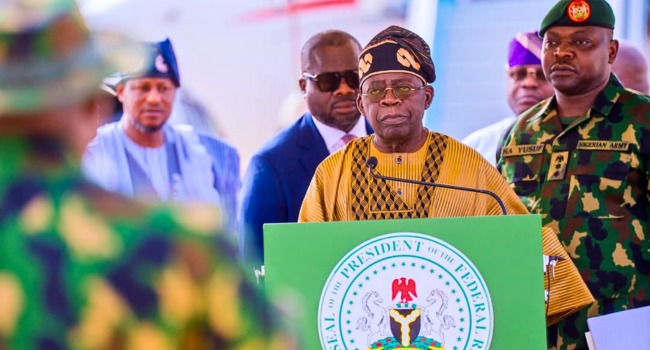
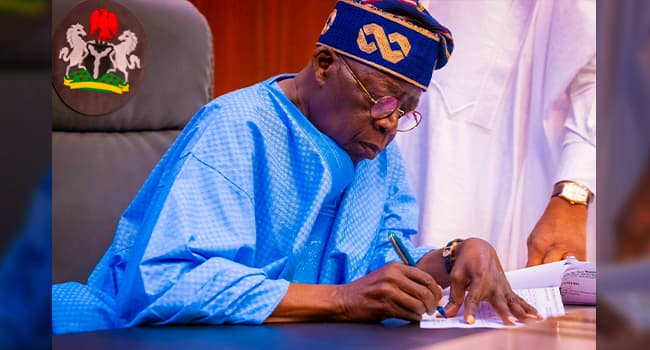
President Bola Ahmed Tinubu has nominated Bernard Doro from Plateau State as a Minister of the Federal Republic of Nigeria, signalling what appears to be an impending cabinet reshuffle.
In a letter transmitted to the Senate for confirmation, President Tinubu requested legislative approval for Doro’s appointment. Though the communication did not specify the portfolio, sources within the Presidency told BusinessDay that Doro is likely to be deployed to the Ministry of Humanitarian Affairs and Poverty Reduction, replacing Nentawe Yilwatda, who was recently elected National Chairman of the All Progressives Congress (APC).
Confirming the nomination, the President’s Special Adviser on Information and Strategy, Bayo Onanuga, said in a statement that Doro’s appointment follows Yilwatda’s transition from the federal cabinet to party leadership.
“President Tinubu has forwarded the name of Bernard Doro from Plateau State to the Senate for confirmation as Minister. His nomination follows the election of Nentawe Yilwatda as APC National Chairman in July,” Onanuga said.
Born on January 23, 1969, in Kwall, Bassa Local Government Area of Plateau State, Bernard Doro brings over two decades of multidisciplinary experience spanning clinical practice, pharmaceutical management, strategic leadership, and community engagement in both Nigeria and the United Kingdom.
He holds degrees in Pharmacy and Law, alongside an MBA with a specialisation in IT-driven business strategy, and a Master’s degree in Advanced Clinical Practice.
A registered Independent Prescriber and Advanced Clinical Practitioner, Doro has extensive frontline experience with the UK’s National Health Service (NHS), where he served across urgent care units, walk-in centres, general practice clinics, and hospital settings.
Beyond his professional career, Doro is known for his youth mentorship and social impact initiatives, which have supported several diaspora and local community development projects.
If confirmed, his appointment is expected to strengthen the administration’s drive to reposition the Ministry of Humanitarian Affairs and Poverty Reduction for greater efficiency and transparency.
The Minister of State for Petroleum Resources (Oil), Senator Heineken Lokpobiri, has announced that Nigeria will request an upward review of its oil production quota at the next meeting of the Organization of the Petroleum Exporting Countries (OPEC), scheduled for November.
Lokpobiri, who spoke in Abuja during an interview with the media team of the Nigerian Upstream Petroleum Regulatory Commission (NUPRC), said Nigeria’s current OPEC quota of about 1.5 million barrels per day (bpd) no longer reflects the country’s true production capacity.
According to him, Nigeria is now producing around 1.7 million barrels per day, including condensates, and has the capacity to produce above two million barrels daily.
“The OPEC quota is subject to periodic review, and by November, when we attend the annual meeting, we will make a strong case for Nigeria’s quota to be reviewed to two million barrels and above,” Lokpobiri said.
He expressed optimism that Nigeria’s recent production recovery, strengthened infrastructure, and renewed investments in the oil and gas sector have positioned the country to justify a higher allocation within the OPEC framework.
The minister explained that part of Nigeria’s current production includes condensates — a light, high-value form of crude not counted under OPEC’s production limits — which gives the country room to increase output without breaching its quota.
“Condensate is not part of OPEC’s production quota, yet it sells at a higher price. If we produce 1.5 million barrels of crude and one million barrels of condensate, we remain compliant. We are also conducting an assessment to verify our capacity, and we believe it will confirm that Nigeria can produce well over two million barrels per day,” he stated.
Lokpobiri said verifiable production data, evidence of domestic crude supply obligations under the Petroleum Industry Act (PIA), and proof of renewed capacity would form part of Nigeria’s submission at the upcoming OPEC meeting.
He attributed the rebound in production to improved security across the Niger Delta and restored pipeline integrity, noting that oil companies now deliver their full output to export terminals.
“Before now, companies were reluctant to produce because crude pumped into pipelines rarely reached the terminal. Today, we get 100 per cent of what is pumped,” he said.
According to the minister, Nigeria’s rig count — a key indicator of upstream activity — has risen sharply from around 14 to nearly 50, reflecting renewed confidence and expanded exploration activity.
He also highlighted the positive impact of recent divestments by international oil majors, including Shell, TotalEnergies, and ExxonMobil, which have opened the space for indigenous operators.
“Our local producers are doing excellently. Renaissance has increased output by over 60,000 barrels per day since acquiring Shell’s assets, while Seplat has added around 40,000 barrels from the ExxonMobil portfolio,” Lokpobiri said.
Commending the NUPRC under its Chief Executive, Engr. Gbenga Komolafe, Lokpobiri said the Commission has restored investor confidence through consistent enforcement of the PIA and improved regulatory transparency.
He further noted that Nigeria’s regulatory expertise had made it a continental reference point, citing the creation of the African Petroleum Regulatory Forum (AFRIPERF) under NUPRC’s coordination as evidence of Nigeria’s growing leadership in regional energy governance.
“The forum aims to unify Africa’s voice in global energy policy and promote equitable investment and energy access,” he said.
The minister credited President Bola Tinubu’s executive orders for helping reduce production costs and make Nigeria’s oil industry more globally competitive.
“When I took office, production was around one million barrels per day. Today, it stands between 1.7 and 1.8 million barrels. That’s progress, but we’re not stopping there,” he said.
Lokpobiri acknowledged that Nigeria’s cost of production remains higher than the global average but said ongoing reforms were addressing the issue.
“Saudi Arabia produces at about $8 per barrel, while the global average is around $12. Ours is higher, but we are taking deliberate steps to make our production cost-competitive,” he noted.
On the global energy transition, the minister stressed that oil and gas would remain critical to Africa’s development for decades, arguing that the continent must define its own transition path based on energy access realities.
“Africa contributes less than three per cent of global emissions. We cannot industrialise without reliable energy. For us, the transition means ensuring access before abandoning hydrocarbons,” he said.
He added that Africa must use its natural resources to finance its own energy mix, rejecting what he described as “Western hypocrisy” in the transition debate.
“It is the right time for AFRIPERF to advocate Africa’s case. The same countries telling us to cut production are ramping up theirs — the U.S. produces over 20 million barrels a day. Why should we stop?” Lokpobiri queried.
Lokpobiri reaffirmed that Nigeria’s target of producing 2.06 million barrels per day by 2025 remains achievable, backed by improved infrastructure, new investments, and policy stability.
The Federal Government has launched a fresh probe into the financial operations of Ministries, Departments, and Agencies (MDAs) over alleged violations of the Treasury Single Account (TSA) policy.
In a directive issued through the Office of the Accountant-General of the Federation (OAGF), all MDAs have been ordered to submit statements of their accounts in commercial banks within days, as part of renewed efforts to enforce financial discipline and curb revenue leakages.
The order, contained in a memo signed by the Accountant-General of the Federation, Shamseldeen Ogunjimi, and obtained by our correspondent on Tuesday, expressed displeasure over the continued retention of government funds in commercial banks — a practice that contravenes existing circulars and the TSA operational framework.
“It has been observed with dismay that funds belonging to the Federal Government are still domiciled in several accounts held with commercial banks, contrary to Federal Government circulars and the operational framework of the Treasury Single Account,” Ogunjimi stated.
He emphasised that the TSA, domiciled with the Central Bank of Nigeria (CBN), remains the only authorised account for the consolidation of all federal revenues and receipts.
The Accountant-General further directed all Directors and Heads of Finance and Accounts in MDAs and government-owned enterprises to submit comprehensive statements of all bank accounts — active, dormant, or closed — maintained in commercial banks over the past six months.
The statement must include details such as account names, numbers, bank branches, and current balances.
“This directive takes immediate effect and must be treated with utmost urgency as part of the ongoing efforts to strengthen fiscal discipline and uphold the integrity of the Treasury Single Account framework,” the memo read.
The renewed enforcement follows an earlier circular issued in February, in which the Federal Government warned MDAs to discontinue the use of commercial banks, describing such practices as inconsistent with the TSA policy.
At the time, the OAGF reaffirmed the government’s commitment to full implementation of the TSA, directing Federal Pay Officers across the states to ensure strict compliance and prevent any circumvention of the policy.
The TSA, introduced in 2015, was designed to consolidate all government revenues into a single account at the CBN, eliminating multiple accounts across commercial banks—a system long criticized for promoting inefficiency and corruption.
However, recent audits by the OAGF reportedly revealed that several MDAs continue to maintain unauthorised accounts in commercial banks, prompting the latest clampdown.
The Senate has approved life imprisonment for anyone convicted of defiling a minor, marking a significant escalation from the current five-year jail term prescribed under Nigeria’s criminal code.
This development came as the House of Representatives opened an investigation into the utilisation of $4.6 billion in grants received from the Global Fund and the United States Agency for International Development (USAID) for programmes addressing HIV/AIDS, tuberculosis, malaria, and polio between 2021 and 2025.
Lawmakers in the lower chamber also engaged in heated debate over a motion seeking to protect the Dangote Refinery and other strategic private investments from what was described as “unlawful and adversarial” labour union actions.
The Senate’s decision followed the consideration of the Criminal Code (Amendment) Bill, 2025, which aims to impose stiffer penalties for sexual offences and related crimes. Lawmakers described the defilement of minors as a “heinous act capable of destroying a child’s life forever,” insisting that the punishment must reflect the severity of the offence.
“Any defilement of a minor in Nigeria henceforth attracts life imprisonment without an option of fine,” Senate President Godswill Akpabio declared after a unanimous voice vote.
The bill, earlier passed by the House of Representatives and transmitted to the Senate for concurrence, received overwhelming bipartisan support.
Under the amended provisions, the Senate also strengthened the punishment for rape, prescribing a minimum of 10 years’ imprisonment for any act of forced sexual intercourse involving a boy, girl, man, or woman — up from the previous five-year term.
Former Kebbi State Governor, Senator Adamu Aliero, had pushed for life imprisonment for rapists, but the chamber agreed on 10 years as the minimum, allowing judges discretion to impose stiffer sentences in aggravated cases. The amendment also broadened the definition of victims to include both male and female survivors, following observations by former labour leader Senator Adams Oshiomhole.
However, debate became contentious when the clause addressing abortion and pregnancy termination was introduced. While the existing law criminalises abortion, several lawmakers warned that ambiguous language could criminalise medical professionals acting in emergencies.
Senator Abdul Ningi (Bauchi Central) cautioned that such vagueness might expose doctors to prosecution even when saving lives. In response, Akpabio directed the Committee on Judiciary, Human Rights, and Legal Matters to review the provisions and present recommendations within two weeks.
Meanwhile, the House of Representatives adopted a motion by Philip Agbese (APC, Benue) to probe the utilisation of the Global Fund and USAID grants. The motion, adopted during a plenary presided over by Deputy Speaker Benjamin Kalu, mandated the Committee on HIV/AIDS, Tuberculosis and Malaria Control to conduct a comprehensive investigation and report back within four weeks.
Agbese noted that Nigeria also received over $6 billion in health assistance from the U.S. President’s Emergency Plan for AIDS Relief (PEPFAR) within the same period, yet continues to rank among countries with the highest global burden of HIV/AIDS, TB, and malaria. The House also directed the Minister of Health and Social Welfare to provide details of implementation plans and National Assembly-approved expenditure records of the grants.
In a related development, a motion jointly sponsored by Alhassan Ado Doguwa (APC, Kano) and Abdulssamad Dasuki (PDP, Sokoto) sought to protect the $20 billion Dangote Refinery and other critical investments from disruptions by labour unions. The motion stemmed from the recent face-off between the Petroleum and Natural Gas Senior Staff Association of Nigeria (PENGASSAN) and the refinery, which reportedly caused production losses of about 200,000 barrels of crude oil per day for three days.
Doguwa described the refinery as a “strategic national asset” vital to Nigeria’s energy security and economic stability, warning that recurrent disruptions could deter investors and erode confidence in the economy.
Dasuki cited Section 18(5) of the NEPZA Act, which prohibits strikes or lockouts within free trade zones for the first ten years of operation, as justification for shielding the facility.
However, Minority Leader Kingsley Chinda (PDP, Rivers) urged caution, proposing that the House first investigate the dispute before enforcing any provisions. Deputy Speaker Kalu supported the motion for a more measured approach, invoking the legislature’s constitutional powers to conduct inquiries before taking a definitive stance.
Amid rising tensions, Ahmadu Jaha (APC, Borno) moved an amendment urging the House leadership, led by Speaker Tajudeen Abbas, to mediate directly between the Dangote Group and PENGASSAN through alternative dispute resolution mechanisms. His proposal received overwhelming support, and the House consequently dropped clauses compelling ministries to act immediately under the NEPZA Act.
The House resolved that its leadership should urgently engage both parties to broker peace and ensure uninterrupted operations at the refinery through dialogue and mutual understanding.
The Nigerian National Petroleum Company (NNPC) Limited has reported a sharp decline in its profitability, with its Profit After Tax (PAT) plunging to ₦216 billion in September 2025 , a staggering 71 per cent drop from the ₦748 billion recorded in April.
An analysis of the company’s financial performance from April to September 2025 revealed a consistent downward trend, signalling a major reversal for the state-owned oil giant and raising concerns about its fiscal contributions amid growing volatility in the global oil market.
According to NNPC’s monthly financial summaries, the firm had posted a PAT of ₦748 billion in April, which rose to ₦1.05 trillion in May before dropping to ₦905 billion in June. The decline worsened in July, when profit fell to ₦185 billion, slightly rebounding to ₦539 billion in August before plunging again to ₦216 billion in September.
The report noted that the September figure included adjustments related to cost of sales and income tax.
The slump has been largely attributed to a fall in crude oil output during the period, following a three-day industrial action by the Petroleum and Natural Gas Senior Staff Association of Nigeria (PENGASSAN).
Group Chief Executive Officer of NNPC, Bayo Ojulari, confirmed that Nigeria lost about 200,000 barrels per day of crude oil production due to the strike, amounting to over 600,000 barrels over the three-day disruption.
“It was unfortunate that the Dangote and PENGASSAN issue led to a strike. When critical staff are unavailable to manage essential operations, optimum production becomes impossible,” Ojulari said. “In this particular case, we lost significant crude production, as well as deferred gas output and power generation of about 1.2 megawatts.”
The Nigerian Upstream Petroleum Regulatory Commission (NUPRC) corroborated the decline, disclosing that Nigeria’s crude oil production dropped to 1.39 million barrels per day (mbpd) in September, compared to 1.43 mbpd in August.
Meanwhile, NNPC’s total revenue for September stood at ₦4.27 trillion, down from ₦4.66 trillion in August. The company clarified that the reported revenue represented aggregate groupwide income, including intercompany transactions, and remained subject to reconciliation with relevant stakeholders.
NNPC added that production during the period was temporarily constrained by scheduled maintenance activities — notably at the Nigeria Liquefied Natural Gas (NLNG) plant — as well as delays in the commencement of operations at Oil Mining Leases (OMLs) 71 and 72, and the gradual recovery of previously shut-in assets.
President Bola Ahmed Tinubu has approved a ₦250,000 non-repayable grant for each outstanding Micro, Small, and Medium Enterprise (MSME) participating in the Expanded National MSME Clinic held in Katsina State.
Vice President Kashim Shettima made the announcement on Tuesday during the inauguration of the ninth edition of the clinic — a federal initiative designed to support small-scale enterprises and enhance local economic productivity.
According to Shettima, the programme aims to bring government agencies closer to entrepreneurs, promote innovation, and expand access to finance, business registration, and regulatory support.
“MSMEs form the foundation of our national economic vision,” Shettima said. “The Tinubu administration is fully committed to easing the economic pressure on citizens by empowering small businesses.”
Through the MSME Clinic platform, entrepreneurs can directly engage with agencies such as the Corporate Affairs Commission (CAC), National Agency for Food and Drug Administration and Control (NAFDAC), Small and Medium Enterprises Development Agency of Nigeria (SMEDAN), and financial institutions like the Bank of Industry (BOI).
Highlighting the federal government’s broader intervention efforts, the Vice President revealed that Tinubu also approved a ₦75 billion MSME Intervention Fund, offering loans of up to ₦5 million at a 9% annual interest rate to 75,000 enterprises nationwide.
In addition, the ₦50 billion Presidential Conditional Grant Scheme is extending ₦50,000 grants to one million nano businesses across Nigeria’s 774 local councils, prioritising vulnerable entrepreneurs.
Another initiative, the ₦75 billion Manufacturers Fund, provides up to ₦1 billion in loans to support local manufacturers with high production and logistics costs.
In Katsina State alone, Shettima disclosed that over 39,000 MSMEs have benefited from federal programmes, receiving ₦2.5 billion in combined grants and loans to boost productivity and job creation.
Under the RAPID programme, 23 rural-based MSMEs in the state have accessed ₦112 million to expand their operations, while the newly established ₦5 billion Katsina State MSME Growth Fund—a partnership between the state and federal governments—has already disbursed ₦576 million to 237 local businesses.
Shettima commended Governor Dikko Radda for launching the Katsina State Enterprise Development Agency (KASEDA), describing it as a vital step toward transforming small businesses into global players.
“With over 1.7 million MSMEs, Katsina is becoming a hub for agriculture, crafts, services, and digital entrepreneurship,” Shettima said, while applauding the inclusion of women and youth in enterprise development initiatives.
Liquidity levels in Nigeria’s money market tightened significantly following the settlement of the Central Bank of Nigeria’s (CBN) Open Market Operations (OMO) bills auction, leading to a shift in short-term interest rates.
Analysts noted that the settlement, amounting to ₦2.12 trillion, was concluded after the CBN’s primary market operation on Friday, a move expected to push market rates higher this week.
According to a market report from Meristem Securities Limited, system liquidity settled at around ₦1 trillion, up from a deficit of ₦0.32 trillion recorded previously, as market conditions normalised after the OMO issuance.
The Nigerian Interbank Offered Rate (NIBOR) opened the new trading week on a positive tone, with declines across all tenors indicating continued strength in liquidity across the banking system.
However, placements at the CBN’s Standing Deposit Facility (SDF) declined further, reflecting the apex bank’s intensified liquidity mop-up strategy in recent weeks.
Data showed that total placements at the SDF averaged ₦1.54 trillion, representing a 171% decline from ₦4.18 trillion the prior week. Despite this contraction, system liquidity remained in surplus, though it dropped 47% to ₦1.80 trillion by Friday’s close.
Money market funding rates displayed mixed trends on Monday, as the Overnight Rate (ON) held steady at 24.50%, while the Open Repo (OPR) rate increased marginally by 2 basis points to 24.86%.
In the Treasury Bills (T-Bills) secondary market, yields moved unevenly across maturities. The 3-month and 12-month Nigerian Treasury Bill (NTB) yields climbed by 9 bps and 5 bps, respectively, while the 1-month tenor remained unchanged, and the 6-month yield dropped 8 bps, according to Cowry Asset Management Limited.
Despite the mixed yield performance, the firm noted that the average NTB yield fell slightly by 3 bps to 17.35%, reflecting continued bullish investor sentiment and sustained demand within the secondary market.
Oil prices recorded modest gains on Tuesday as renewed optimism over trade relations between the United States and China lifted global market sentiment. However, concerns over weak demand projections limited further upward movement.
Brent crude futures traded at $61.06 per barrel, a 0.4% increase from Monday’s close of $60.80. Similarly, West Texas Intermediate (WTI), the U.S. benchmark, rose 0.5% to $57.18, compared with $56.92 in the prior session.
The market upturn followed encouraging signals from both Washington and Beijing, suggesting a possible softening of tone in their upcoming trade discussions scheduled to hold in South Korea.
U.S. President Donald Trump expressed optimism on Monday, stating his expectation for a “very fair and strong trade deal” with Chinese President Xi Jinping during the meeting.
Despite the renewed optimism, oil prices were tempered by a subdued global demand outlook detailed in the International Energy Agency (IEA) Oil Market Report released last week.
According to the IEA, global oil demand growth for 2025 has been revised downward by 35,000 barrels per day (bpd). Demand is now expected to rise by 710,000 bpd to 103.84 million bpd, down from an earlier estimate of 740,000 bpd.
Looking ahead to 2026, the agency projects a smaller annual increase of 700,000 bpd, bringing total demand to 104.54 million bpd — a slowdown attributed mainly to weaker consumption across advanced economies.
Market analysts say sustained oil price gains will depend largely on the outcome of the U.S.-China negotiations and whether demand recovery across Asian economies strengthens in the months ahead.
President Bola Ahmed Tinubu has urged Nigeria’s judiciary to deepen its understanding of blockchain technology, cryptocurrency, and emerging digital systems to effectively address the rising sophistication of financial crimes.
Speaking at the Economic and Financial Crimes Commission (EFCC)–National Judicial Institute (NJI) Workshop for Justices and Judges in Abuja, President Tinubu—represented by Vice President Kashim Shettima—stressed that the evolving nature of corruption requires new judicial tools and digital competence.
“The digital age demands that justice delivery must move beyond traditional methods,” he said. “How does one do justice in a cryptocurrency fraud case except one is grounded in such matters? Learning and relearning are no longer buzzwords but essential undertakings for continued relevance in this era.”
According to a statement by Stanley Nkwocha, Senior Special Assistant to the Vice President on Media and Communications, the President noted that financial crimes have become more complex, driven by technological innovation, and must be countered with equal digital intelligence.
Judiciary Must Uphold Integrity and Independence
Tinubu also cautioned judicial officers against compromise, describing integrity as the moral backbone of Nigeria’s justice system.
“The moral foundation of our nation rests squarely on the integrity of its judiciary. We draw our moral distinction as a people from the courts, and we owe them the reverence and autonomy to remain the last sanctuary of our collective conscience,” he said.
Reaffirming his administration’s commitment to judicial independence, Tinubu disclosed that judges’ remuneration had recently been reviewed as part of ongoing institutional reforms aimed at strengthening the judiciary.
Adapting to a Changing Financial Landscape
Addressing the delay in corruption trials, the President acknowledged public frustration over the slow pace of high-profile cases compared to the swift resolution of minor cybercrime matters.
“The theme of this year’s workshop—Enhancing Justice in the Fight Against Economic and Financial Crimes—is timely,” he stated. “Many Nigerians are angered by delayed adjudication in serious corruption cases. The judiciary must therefore embrace technology-driven learning to expedite justice and outpace sophisticated financial networks that exploit digital literacy gaps.”
He further warned judicial officers that corruption spares no one, regardless of position. “Your vantage position on the Bench does not insulate you from the consequences of corruption. There are no special roads, hospitals, or communities for judges. A Nigeria free of corruption is possible if we all commit to doing what is right,” he added.
CJN Calls for Judicial Diligence
In her remarks, the Chief Justice of Nigeria (CJN), Justice Kudirat Kekere-Ekun, emphasised that the judiciary’s strength lies in public trust, which must be earned through impartiality and efficiency.
“The strength of the judiciary lies in the trust reposed in judges by the Nigerian people. We must ensure that justice is neither delayed nor partial,” she said.
Earlier this month, the Speaker of the House of Representatives, Abbas Tajudeen, inaugurated an ad hoc committee to review the economic, regulatory, and security implications of cryptocurrency adoption and Point-of-Sale (POS) operations in Nigeria.
He explained that the move followed growing concerns over fraud, cybercrime, and consumer exploitation in the nation’s digital financial ecosystem.
Power generation companies (GenCos) have refuted claims by the Federal Government that an agreement has been reached on the settlement of the ₦4 trillion legacy debt in the power sector, stating that discussions are still ongoing.
The Chief Executive Officer of the Association of Power Generation Companies (APGC), Dr Joy Ogaji, confirmed in an interview with The PUNCH that although GenCos have held meetings with top government officials to discuss modalities for payment, no concrete agreement has yet been finalised.
“Yes, the chairmen were invited to discuss modalities. I know that discussions are still ongoing. Nothing has been finalised or concretised. I can’t confirm it,” Ogaji said.
Her remarks come days after the Special Adviser to the President on Energy, Olu Verheijen, announced that the implementation framework for the Presidential Power Sector Debt Reduction Plan had been concluded. Verheijen described the initiative as a landmark step by President Bola Tinubu to address structural challenges in the electricity market and restore investor confidence.
According to her, the plan—approved by the Federal Executive Council in August 2025—authorises the issuance of up to ₦4 trillion in government-backed bonds to clear verified arrears owed to power generation companies and gas suppliers.
Despite the government’s assurances, GenCos maintain that they have not been fully carried along in the process. In September, Ogaji wrote to the Nigerian Bulk Electricity Trading Company (NBET) seeking clarification on the verification procedures and reasons for the lack of consultation with operators.
Ogaji also revealed that while operators continue to supply electricity out of patriotic commitment, mounting debts and unpaid invoices have made sustained power generation increasingly difficult.
“Gas suppliers have already started reducing supply. There are critical maintenance works on our machines, spares to purchase, and other creditors who are no longer willing to wait for payments,” she explained.
According to her, the GenCos issue monthly invoices of about ₦270 billion, but receive payments of only ₦70 billion, leaving an average shortfall of ₦200 billion every month. She also criticised the ₦900 billion allocation to the power sector in the 2025 federal budget as inadequate and lacking cash backing.
In a statement last week, Verheijen said that on October 7, she met with the Minister of Finance and Coordinating Minister of the Economy, Wale Edun, and the Minister of Power, Adebayo Adelabu, alongside senior GenCo executives to review settlement modalities for the outstanding debt.
The meeting reportedly ended with a consensus to conduct bilateral negotiations aimed at reaching final settlement agreements that balance fiscal realities with the financial constraints of the operators.
Industry leaders, including Tony Elumelu, Chairman of Heirs Holdings and Transcorp Power, and Owen Omogiafo, Group Chief Executive Officer of Transcorp Plc, have commended the initiative, describing it as a credible step toward addressing the sector’s liquidity crisis.
The Presidential Power Sector Debt Reduction Plan, jointly implemented by the Ministries of Finance and Power in collaboration with NBET and the Office of the Special Adviser on Energy, is expected to be the largest financial intervention in Nigeria’s power sector in more than a decade.
However, operators remain cautious, saying they are awaiting detailed timelines, verification procedures, and payment structures before confirming any binding agreement.
For GenCos, the lingering debt continues to undermine investment, threaten generation sustainability, and erode confidence in Nigeria’s electricity market.
The Nigerian Education Loan Fund (NELFUND) has announced the official opening of its student loan application portal for the 2025/2026 academic session, providing eligible students across tertiary institutions in the country with access to financial assistance.
According to a statement issued on Tuesday by NELFUND’s Director of Strategic Communications, Oseyemi Oluwatuyi, the application window will open on Thursday, October 23, 2025, and close on Saturday, January 31, 2026.
The agency advised fresh students to complete their applications using their Admission Number or JAMB Registration Number in place of a matriculation number, noting that this adjustment was designed to accommodate students who have not yet been formally matriculated.
NELFUND also appealed to tertiary institutions to show flexibility with registration and fee payment deadlines for students whose loan applications are still being processed.
“Institutions are encouraged to demonstrate understanding and flexibility in enforcing registration and fee payment deadlines for students awaiting loan disbursement,” the statement read in part.
It further directed institutions that have not yet commenced their 2025/2026 academic session to formally notify NELFUND of their approved academic calendars to allow for proper scheduling and coordination.
“NELFUND appeals to all institutions to consider temporary registration measures for students whose loan applications are being processed, to ensure that no student loses access to education due to financial constraints,” the statement added.
The initiative is part of the Federal Government’s broader commitment to improving access to higher education and reducing financial barriers for Nigerian students through the student loan scheme launched earlier this year.
Coca-Cola Hellenic Bottling Company (Coca-Cola HBC) has announced plans to acquire a 75 per cent majority stake in Coca-Cola Beverages Africa (CCBA) in a landmark $2.6 billion deal, a move set to make it the second-largest Coca-Cola bottling partner globally by volume.
The transaction, expected to be completed by the end of 2026, will significantly expand Coca-Cola HBC’s footprint across the African continent, positioning the company as a leading force in the region’s rapidly growing beverage industry.
Under the terms of the agreement, Coca-Cola HBC — which already has a strong presence in Nigeria, Egypt, and other parts of Africa — will assume control of operations in 14 additional markets, including South Africa, Kenya, Ethiopia, and Tanzania. Upon completion, the company will oversee nearly two-thirds of the Coca-Cola system’s total volume in Africa, serving over half of the continent’s population, according to a statement issued on Tuesday.
Strategic Importance
The acquisition aligns with Coca-Cola HBC’s long-term strategy to strengthen its presence in high-growth emerging markets. With Africa’s population projected to exceed 1.5 billion by 2030, rising disposable incomes and an expanding middle class are fuelling demand for non-alcoholic beverages across the continent.
To further demonstrate its commitment to Africa, Coca-Cola HBC also announced plans to seek a secondary listing on the Johannesburg Stock Exchange (JSE) once the acquisition is concluded. The company noted that this move would deepen investor participation in South Africa and underscore its confidence in the continent’s long-term economic prospects.
“The acquisition of CCBA represents a transformational milestone for Coca-Cola HBC, combining two robust operations and unlocking significant value through scale, efficiency, and growth opportunities,” the company said in a statement.
About Coca-Cola Beverages Africa
Headquartered in Johannesburg, CCBA is the largest Coca-Cola bottler in Africa and ranks among the top ten globally. Formed in 2016 through the merger of several regional bottlers, the company manages production and distribution across key African markets.
Following the acquisition, Coca-Cola HBC will become one of The Coca-Cola Company’s most strategic global partners, second only to Coca-Cola Europacific Partners by production volume.
Background
In 2021, The Coca-Cola Company announced a $1 billion, five-year investment plan to expand operations and strengthen its supply chain in Nigeria. However, the initiative was later suspended due to what the company described as a “challenging business environment” and increased excise taxes that disrupted its operational forecasts.
Despite this, Bayo Onanuga, Special Adviser to the President on Information and Strategy, clarified that Coca-Cola and its local bottling partner, the Nigerian Bottling Company (NBC), have invested $1.5 billion in Nigeria over the past decade — reaffirming the company’s long-term commitment to the Nigerian market.
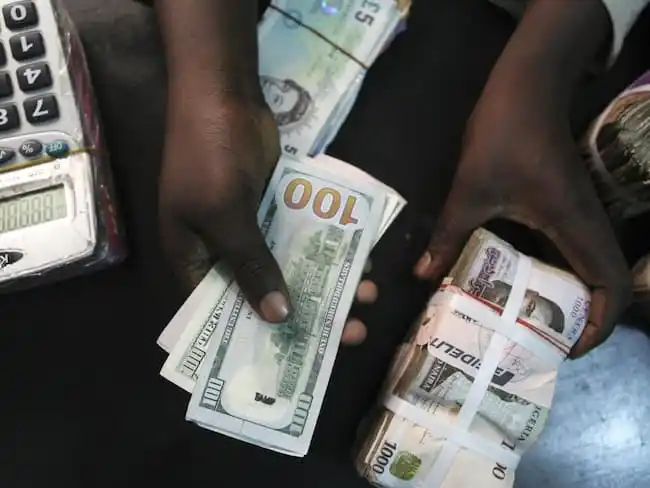
The exchange rate between the Naira and the US dollar, according to the data released on the FMDQ Security Exchange, the official forex trading portal, showed that the naira closed at 1480.00 per $1 on Tuesday, October 21st , 2025. The naira traded as high as 1464.00 to the dollar at the investors and exporters (I&E) window on Monday.
Dollar to naira exchange rate today black market (Aboki dollar rate):
The exchange rate for a dollar to naira at Lagos Parallel Market (Black Market) players sell a dollar for ₦1500 and buy at ₦1480 on Monday 20th October, 2025, according to sources at Bureau De Change (BDC).
Please note that the Central Bank of Nigeria (CBN) does not recognize the parallel market (black market), as it has directed individuals who want to engage in Forex to approach their respective banks.
Dollar to Naira Black Market Rate Today
Dollar to Naira (USD to NGN)
Black Market Exchange Rate Today
Selling Rate
₦1500
Buying Rate
₦1480
Dollar to Naira CBN Rate Today
Dollar to Naira (USD to NGN)
CBN Rate Today
Highest Rate
₦1470
Lowest Rate
₦1464
Please note that the rates you buy or sell forex may be different from what is captured in this article because prices vary.