Transactions on the floor of the Nigerian Stock Exchange, NSE, ended on a positive note on Thursday, March 24, as the All-Share Index which opened at 25,736.92 jumped by 162.99 points or 0.63 per cent to close at 25,899.91.
Week-on-week, the Index soared by 0.86%, while Year-To-Date (YTD), the NSE ASI depreciated by 9.57%.
The appreciation recorded in the share prices of UBA, PZ Cussons, Zenith Bank, Nigerian Breweries and Access Bank were mainly responsible for the gain recorded in the Index.
The total value of stocks traded on the floors of The NSE today was N3.28bn, up by 23.91% from N2.65bn yesterday. The total volume of stocks traded was 397.05mn in 3,742 deals.
The three most actively traded stocks were: Zenith Bank (89.38mn), GT Bank (79.89mn) and Transcorp (49.42mn). The most actively traded sectors were: Financial Services (333.02mn), Conglomerates (49.56mn) and Consumer Goods (8.82mn).
Overnight interbank lending rates leap to double digit on Thursday, March 25, as the Central Bank of Nigeria recalled about N400 billion from the banking system to meet the new CRR on deposits.
Traders said the open buy-back (OBB) and overnight rate were quoted by banks at 20 per cent compared with 6.75 per cent and 7.33 percent at the close on Wednesday due to banks scrambling for funds.
By the close of trading yesterday, overnight Nigeria Inter Bank Offer Rate (NIBOR) stood at 13.63 per cent up from 7.4258 per cent which it had risen to on Wednesday. One month rate also rose to 10.2818 while 3- and 6-months rates soon at 11.8876 and 13.0042 per cents respectively.
On Tuesday, the MPC raised benchmark interest rate from 11 to 12 percent, and the cash reserve ratio for commercial banks to 22.5 percent from 20 percent, to try to curb rising inflation.
“We have had major funds placers in the market quoting between 20 and 25 per cent for overnight placement, while takers are quoting between 7 and 10 percent,” one dealer said, adding that no deals had yet been done on the rates being quoted.
Traders said there was additional cash outflow for premium payments to the Nigerian Deposit Insurance Corporation (NDIC), which further put pressure on liquidity in the system and forced lending rates up.
Nigerian Stock Exchange, NSE, trading on Thursday, March 24, closed in the Green Zone for the Easter celebrations on a with market capitalization soaring by N56 billion.
The market capitalization improved by N56 billion or 0.63 per cent to close at N8.909 trillion compared with N8.853 trillion achieved on Wednesday, March 23.
An analysis of the price movement table indicated that Nigerian Breweries led the gainers’ table, growing by N4.09 to close at N117.70 per share.
International Breweries followed with N1.74 to close at N18.80, while Mobil Oil gained N1.09 to close at N156 per share.
PZ Industries appreciated by N1.08 to close at N22.79 and Ecobank Transnational garnered 49k to close at N14.74 per share.
On the other hand, Seplat topped the losers’ chart, dropping by N8 to close at N300 per share.
Total came second with N2.45 to close at N140.01 and Cadbury lost 76k to close at N14.77 per share.
Nestle lost 55k to close at N700 and National Salt Company of Nigeria shed 34k to close at N6.52 per share.
Zenith Bank drove the volume of shares traded, accounting for 89.39 million shares worth N1.13 billion.
GT Bank followed with an exchange of 79.89 million shares valued at N1.28 billion and Transcorp traded 49.43 million shares worth N60.31 million.
FCMB Group sold 34.94 million shares valued at N26.76 million and United Capital traded 28.01 million shares worth N56.39 million.
NAN reports that a total of 397.05 million shares valued at N3.28 billion were exchanged by investors in 3,742 deals.
This was against the 398.28 million shares worth N2.65 billion transacted in 3,581 deals on Wednesday.
NAN also reports that the market will remain closed till March 29 due to public holidays declared by the Federal Government to mark Good Friday and Easter Monday. (NAN)
It’s shaping up as the next big thing –“cloud computing.” Until recently, we’d stored our information on hard drives and collaborated with colleagues via attachments and a confusing array of edits, highlights and multiple versions of the same document. In contrast, cloud computing moves all of that information – emails, documents, presentations, photos, spreadsheets and so on – onto the Internet where it exists in a virtual space which we refer to as ‘the cloud’.
By having all this information reside online, you instantly become more flexible, more productive and more collaborative in the way you do things. No servers to manage in-house or client software to be installed. Available anytime, anywhere, from any device connecting to the Internet. Businesses call it “Software as a Service,” or “SaaS”. For most people, it’s just the web. Whatever you want to call it, a multiplicity of factors have converged to mean that cloud computing’s time has come.
What has changed? Well, broadband is reaching the point of ubiquity and the cost of storage has plummeted. But it’s the economic downturn which has made more businesses wake up to the promise of cloud computing. With the recession hitting home, every part of every business is under pressure to cut costs and the IT department is no exception.
The cloud has the potential to deliver big savings, improve asset utilisation and dramatically reduce up-front spend on traditional desktop software, servers, maintenance and support. Instead of running these in-house, you ‘rent’ applications from a third party, turning capital expenditure into operational expenditure. One of our customers calculated that Google cloud services cost them $70 per year per user as opposed to $300 for a traditional desktop offering.
It also transfers the responsibility for ‘keeping the lights on’ – an all too familiar headache for CIOs – to the cloud computing provider. Then there’s the pace of innovation that the cloud makes possible – last year, we brought over 140 new features and applications to Google Apps. Cloud computing presents us with the opportunity to build a new generation of applications which deliver a much faster innovation cycle for IT and integrate information in a way which simply wasn’t possible before.
However, drivers beyond cost are behind the revolutionary move to an online world. The nature of the workplace is changing. In general, workforces are more mobile and more geographically dispersed than ever before and IT has to respond to that. Web-based applications make for powerful collaboration in real time: accessing the same documents, communicating online, ending the need for numerous email attachments and version control issues… addressing a dozen small pain points that add up to many wasted work hours for each and every member of staff.
We sometimes get asked why Google, a consumer-focused company, is involved in bringing the potential of the cloud to the business world. The answer is straightforward: consumer applications are evolving much faster than business software. It used to be that you got the best technology at work. Now the tools we have in our personal lives are much better – think of the iPhone, or your 7 GB Gmail inbox compared to your 500 MB inbox at work where you’re constantly deleting emails to free up space. Employees are consumers too, and they now expect – and in many cases demand – the same ease of use at work and flexibility of access as they have with applications in their personal lives.
Inevitably, some people have reservations about the cloud. The biggest challenge to the cloud is the resistance to change – anything which represents a fundamental shift in the way things are done is going to take time to understand. Indeed, there remains some notable misconceptions out there about the risks, like system security and reliability. Software security should always be a concern when discussing critical business data, wherever it’s kept. In many ways, cloud computing can be more secure than hosting data yourself. For example, it generally takes 30-60 days for businesses to patch a vulnerability in their own computer systems. During that time, the corporation’s IT infrastructure is at risk. With the scale of cloud computing, we can fix everything quickly and ensure their infrastructure is safe.
As with many revolutions, the economics of cloud computing are driving the shift away from the old order and may ensure the most enduring change. Each day, more and more companies entrust their data to the cloud. Robert Kennedy once said that “… if our times are difficult and perplexing, so are they challenging and filled with opportunity.” The opportunity for cloud computing is now – it simply makes good economic and business sense. IT departments can either batten down the hatches or they can innovate and set themselves up for when things start to improve. For IT decision-makers under pressure to deliver cost savings and focus on increasing revenues now is the time to consider how the cloud can help.
Naira rises at the parallel market to 320 to the dollar on Thursday, March 24, compared with 326 last week, spurred by tight liquidity and increased dollar supply.
The naira is expected to strengthen slightly against the dollar next week on the parallel market, while several other African currencies are expected to hold steady.
The local currency is seen appreciating slightly against the dollar on the parallel market next week, although the official rate will remain steady around the 197.50 level.
“We see the tightening of liquidity by the central bank curbing speculations on the forex market and reduce pressure on the naira,” Aminu Gwadabe, head of Nigeria association of bureaux de change said.
A report by the World Travel and Tourism Council,WTTC, revealed that tourism industry contributed over 7.2 trillion in Gross Domestic Product, GDP, to the global economy.
WTTC President David Scowsill in a statement said tourism added 7.2 million jobs to the global economy.
Scowsill, in the report, titled: ‘The economic impact report,’ which is WTTC’s flagship yearly research, stated that the document provided economic data on the contribution of the tourism sector on a global level.
The report said: “In spite of uncertainty in the global economy and specific challenges to tourism in 2015, the sector grew by 3.7 per cent, contributing a total of 9.8 per cent to the global GDP.’’
Travel supported 284 million jobs last year, an increase of 7.2 million, one in 11 jobs on the planet.
The WTTC chief said though terror attacks, disease outbreaks, currency fluctuations and geopolitical challenges have impacted the sector at a country or regional level, tourism at the global level continues to produce another robust performance.
He said travel contribution to GDP outpaced overall GDP country growth in 127 of the 184 countries covered by the research.
He listed the countries where tourism most markedly outperformed the wider economy last year to include Iceland, Japan, Mexico, New Zealand, Qatar, Saudi Arabia, Thailand and Uganda.
According to Scowsill, the sector’s growth was stimulated by a worldwide increase in middle-class income households, an ageing population, which tended to travel more, making travel more accessible and affordable.
The report however, said all regions of the world showed growth in total tourism contribution to GDP in 2015, adding that South-East Asia was the fastest growing region with growth of 7.9 per cent followed by South Asia, which grew 7.4 per cent.
Transcorp Hotel Plc has posted N3.49billion profit after tax in the 2015 annual report submitted to the Nigerian Stocks Exchange.
The annual statement indicated an increase of N270m when compared to the profit of 2014.
The gross for the group was N10.62billion in 2015 lower than the N11.59 declared in 2014, the result showed, while the profit before tax was N5.37billion above the 2014 figure of N4.54billion.
Total revenue for 2015 stood at N13.97billion compared to 15.10 billion . the report signed by the company secretary, Helen Iwuchukwu and sent to the bourse said the company maintains controlling interest in Transcorp Hotel, Calabar, Limited, Transcorp Hotel, Port Harcourt, Limited and Transcorp Hotel Ikoyi, beside the Abuja Hotel.
The report said the profit has been transferred to retained earnings.
Unilever Nigeria Plc has posted a steep fall of N1.220 billion accounting for 50.58 per cent of what it made as profit after tax in 2014 financial.
The company in its annual report for the year ended 31 December, 2015 released to the Nigerian Stock Exchange yesterday in Lagos showed that it made N1.192 billion after tax during 2015 financial year as against N2.412 billion it made during the same period of 2014.
Its profit before tax in 2015 stood at N1.771 billion from N2.873 billion it made during the same period of 2014, profit before tax dropped by N1.102 billion, represented 38.36 per cent.
The Bayelsa State government has received N1.24billion as bailout fund from the federal government.
The Deputy Governor of the state, Gboribiogha John Jonah, made this known on Thursday, March 24, in Yenagoa at the government’s Transparency Briefing for the month of January 2016.
He said the fund will be used to clear the backlog of salaries owed by the eight local government councils.
He said the money was ready for collection before the December 2015 governorship election but added that the APC-led federal government refused to release it.
“Yes, the money (N1.24b) has been transferred to us now.
He said the money was given to Bayelsa based on the requirements of the councils, adding that it was for this reason that all councils would not receive the same amount.
The products destroyed included expired products which were said to have been voluntarily handed over by compliant companies in the country.
Other products destroyed were fake and counterfeit drugs, prohibited substandard and expired food products, cosmetics and other regulated products.
These were impounded by the Investigation and Enforcement Directorate of NAFDAC in Lagos State and environs from manufacturers and importers as well as distributors.
The Director, Investigation and Enforcement Directorate,Kingsley Ejiofor, who represented the Acting Director-General of the Agency, Yetunde Oni, decried the activities of drug counterfeiters.
Ejiofor, who addressed newsmen at the Sagamu local government dumpsite in Ogun State, said drug counterfeiting could be regarded as an act of economic sabotage and terrorism against public health.
He called on Nigerians to be vigilant over the drugs, foods and other regulated products that they purchased and tasked members of the public to report suspicious activities within their environment to the nearest NAFDAC office.
Central Bank of Nigeria’s new monetary policies announced on Tuesday has created lots of bubble and excitement among the bankers, as interest rates closed higher on Thursday, the official last working day of the week before the Easter holiday.
The apex increase of the benchmark interest rate from 11 to 12 percent, and the cash reserve ratio for commercial banks to 22.5 percent from 20 percent has tightened the available cash liquidity within the financial system.
Overnight lending rates went up 20 percent after the central bank recalled about 400 billion naira ($2 billion) from the banking system to meet the new cash reserves ratio (CRR) on deposits, a banker said.
Bankers were unanimous that scramble for funds led to rise of both the open buy-back (OBB) and overnight money to 20 percent as against the closing rate of 6.75 percent and 7.33 percent respectively on Wednesday.
“We have had major funds placers in the market quoting between 20 and 25 percent for overnight placement, while takers are quoting between 7 and 10 percent,” a dealer said, adding that no deals had yet been done on the rates being quoted.”
Traders said an additional cash outflow for premium payments to the Nigerian Deposit Insurance Corporation (NDIC), further tightened the noose available liquidity in the system.
Meanwhile, yields on Nigeria’s benchmark 20-year bond rose 55 basis points to 12.7 percent on Wednesday after the CBN unexpectedly tightened monetary policy.
The total commercial lenders’ credit balance with the central bank stood at 320.9 billion naira on Thursday, up from 217 billion naira last week.
However, traders said the level of cash in banks’ vaults would have dropped significantly due to cash withdrawals to meet the new CRR and premium payments on customer deposits.
The WaterAid Country Director, Michael Ojo, has stated that Nigeria needs an annual investment of N400 billion to achieve Sustainable Development Goal on water for all by the year 2030.
He bemoaned the paltry 0.7percent allocated to the sector in the 2016 budgetary provision, saying that the budget was far lower than the 2.5 percent commitment that government signed to during electioneering campaign.
Ojo also lamented the misdirection of the allotted funds, as most of the funds are channeled into provision of infrastructures rather than service delivery, and most of the infrastructures are underutilized and not delivering service to people.
He said there was the need for a dramatic improvement in water, sanitation and hygiene as the government need to be investing between N400-600 billion every year for the next 15 years to achieve universal water coverage by the year 2030.
He said “there is chronic lack of investment in the provision of water services in Nigeria, money that needs to go into the sector to expand the sector is not going in. For instance in this year’s budget government earmarked N44 billion for the Federal Ministry of Water Resources, though it has doubled the N23 billion allocation for the sector in 2015, however it represent a paltry sum of what is required to increase access to water, sanitation and hygiene services in the country.”
Federal Airports Authority of Nigeria (FAAN) has tightened security measures in and around the nations airports after Tuesday’s attack on Brussels Airport and its subways system by a terrorist group that killed at least 31 people and 270 others reported injured..
According to the General Manager, Corporate Communications, Mr Yakubu Dati, he reported, that in a working alliance with Nigerian Police, sniffer dogs have been deployed to all major airports to avoid the same Brussels incident in the country.
The General Manager disclosed that nothing would be left undone to ensure maximum security around the nation’s airports, especially during this Easter celebration.
He expressed shocked over the dastardly act carried out at the Brussels airport, while advising those without business at the airport not to constitute nuisance because a special task force from the Independent Corrupt Practices would be on ground to arrest touts.
All Body scanners and Close Circuit Television gadgets are operational and peoples’ activities at the airports would be closely monitored.
He appealed to air travelers not to leave their luggage(s) behind as such item would be taken away and destroyed.
The FAAN spokesman stated that the expansion and modernization of all the airports terminals in the country now provide better environment for passenger facilitation and commercial offerings.
However, he concluded by urging travelers to leave early on their travel dates, in order to complete their boarding facilities in good time.
L-R: Representative of the Minister of Health, Dr Adebimpe Adebiyi; Consultant Orthodontist Abuja Teaching Hospital, Dr Abdulhakim Olatunji and Brand Manager Oral B, Aliza Leferink, during the Oral B World Oral Health Day celebration held in Abuja.
The Oral-Care brand of Procter & Gamble, Oral-B, commemorated World Oral Health Day on Tuesday the 22nd of March, in its continued commitment to improve oral health in the county and making great dental care easily accessible to more Nigerians. With the theme of the World Oral Health Day titled “Healthy Mouth, Healthy Body”, Oral B is set to take oral hygiene in Nigeria to a new level and substantially increase the overall public awareness of oral health.
Attendees at the event were also given a demonstration of the Oral B Mobile Dental Clinic. The program serves both as a platform for quick education as well as immediate dental care. Oral-B’s mission remains: helping all Nigerians have stronger and healthier teeth, hence its promise of: “Healthier, Stronger Teeth in One Week”.
Positioned as the National Oral Health Ambassador since 2014, Oral B has taken a bold step to reintroduce the mobile dental clinic program in order to be proactive and also fill a crucial gap in the Nigerian health care sector and especially in the aspect of dental care. The breakthrough trial program of the Oral B Mobile Dental Clinic will be of great benefit to millions of Nigerians.
According to P&G’s Oral Care Brand Manager for Sub Sahara Africa, Aliza Leferink, the general focus of the World Oral Health Day 2016 is on prevention to help Nigerians achieve significantly healthier lives starting from oral care. She emphasized that “this is very apt as the focal point of this year’s World Oral Health Day celebration is Healthy Mouth, Healthy Body. The Mobile Dental Clinic initiative is meant to underline this need as well as give Nigerian consumers a fast track to effective and long lasting dental care.
“The Mobile Dental Clinic Program provides free oral care education and dental health checks to patients who lack the means or dental insurance or any realistic way to pay for dental treatment. In addition, we aim at educating Nigerians to have stronger and healthier teeth through the campaign ‘Healthier, Stronger Teeth in One Week’. We feel strongly that a more proactive way of amplifying an improved health care is through the Mobile Dental Clinic Program”.
Representing the Honourable Minister of Health, Dr Adebimpe Adebiyi, Head, Dentistry Division of the Federal Ministry of Health commented that it was noteworthy that development partners like Procter & Gamble are not leaving the awareness task to the Federal Government alone but actually leading the task to create awareness for oral health because prevention is not only better but cheaper than cure.
She also said, “Healthy teeth and gums are fundamental to overall health and well-being. And the federal ministry of health has a strong desire for Nigerians to stay healthy in mouth and body. This comes from forming a great daily care habit, consistency and the right toothpaste use.
“Maintaining healthy teeth can be achieved by following a number of simple principles, and Oral-B wants to help Nigerians on their way to better oral-care-routines.”
Oral B toothpaste combines three powerful ingredients, stannous chloride, sodium fluoride and a specific Polychelation Technology which address the seven areas dentist check most to help people achieve healthy, beautiful teeth. Through its new advanced toothpaste formulation Oral-B tooth paste creates a protective shield around the teeth and gums. During brushing the paste distributes key ingredients throughout the mouth.
The Oral-B brand is a worldwide leader in both the toothpaste and tooth brushing market. It continuously strives to work closely with the dental professionals to deliver high quality products. Oral-B Toothpaste was developed by dentists and helps to protect the eight most common oral health problems at the same time – Tooth holes, bad breath, gum problems, tooth sensitivity, stains, bacteria deposits, tartar, and enamel erosion.
Over the last few weeks, Nigerians all over the country have been faced with the question; Whatisthe737? From billboards to hash tags and radio hypes.
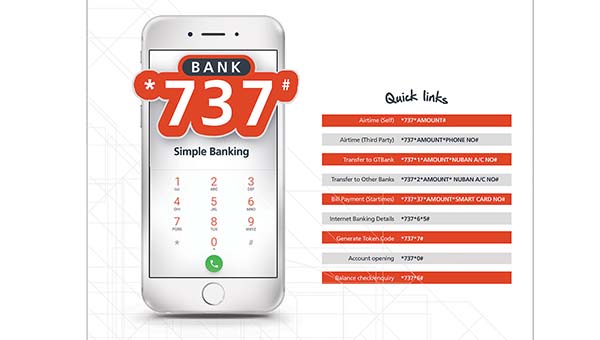
Introduced by Guaranty Trust Bank plc, Bank 737 is more than just well rhyming numbers; it’s a simple, smart, and safe way to bank anytime, anywhere and on any device. Imagine if opening an account was as simple as dialing a number from your mobile phone or transferring funds was as easy as sending a text message, or paying bills could be done at any time of the day, even long after banking hours. Imagine if you need to make an urgent transfer online and your data just ran out and you don’t have your hardware token to complete the transaction. Truth is, at some point or the other we have all experienced those moments when we wished banking could be as simple as ABC’s and 123’s. Well, in this case, GTBank has made it as simple as 737.
In recent years, mobile phones have made life easier! You can now shop online, watch movies, surf the internet, play games, chat with loved ones, share and download information with the simple push of a button. While mobile penetration has witnessed an impressive growth in Nigeria, Internet proliferation hasn’t experienced similar success, owing largely to the cost of data. Built on a USSD interface, GTBank’s 737 banking is phone agnostic and works on any type of mobile phone and does not require internet access or registration protocols. With GTBank’s Bank 737, your mobile phone is now a service channel for all your banking needs. Users simply have to dial the short USSD *737# code on any mobile device to experience a new world of simple banking.
With Bank 737, GTBank customers can perform banking functions such as transfers to all Banks in Nigeria, check account balance, open a GTBank account, buy airtime, pay bills, BVN linking, token code generation, card less withdrawals and lots more from their mobile phones.
Commenting on the launch of the product, Segun Agbaje, the Managing Director and Chief Executive Officer of Guaranty Trust Bank plc said; “The launch of this product marks another milestone in our quest to make banking truly simple for our customers. We remain firm on our objective to deliver banking products and services tailored to meet the diverse needs of our ever-growing customer base by leveraging technology to make banking faster, safer and more accessible for all our customers.”
GTBank is regarded by industry watchers as one of the best run financial institutions in Nigeria and across its subsidiary countries. The bank is renowned for its innovative financial solutions, superior financial performance, world class corporate governance standards and excellent service delivery. The bank’s latest E-payment service, known as the 737 banking, is considered a veritable alternative to in-branch banking as it offers a faster, safer and more convenient way to perform financial transactions.
The Standards Organisation of Nigeria (SON), Nigerian Building and Road Research Institute (NBRRI), the Nigerian Institute of Town Planners and Lifemate Furniture Company, have endorsed the Lagos Housing Fair. By this, they have become the official partners of the fair.
The specialized fair has attracted over 180, 000 persons since its debut in 2001. The fifteenth edition holds between April 25 and 30, 2016.
It will have in attendance, key players in the Nigerian Housing Industry. Over 60 organisations, cutting across the public and private sectors are participating in the fair. It has as its theme: “INDIGENOUS MATERIALS IN HOUSING DELIVERY”
Experts from within and outside the country are expected to take the opportunity to be provided by the Technical Sessions at the event to discuss matters relating to the usage/application of indigenous materials in the housing sector.
A Federal High Court Presided over by Justice Sule Hassan has ordered University of Lagos to reinstate some thirty one medical students back to their faculty of choice.
This order was made as a result of the suit filed by before the court by the student that hoping to continue their medical studies on to confronted with an order to resume the new semester in a different department by the school’s authority.
They had their 100 level in the faculty of medicine, but were denied the opportunity to proceed to 200 level of the same course.
In the suit filed on the behalf, Mr. Jiti Ogunye, at the Federal High Court, they student challenged, what they called, ”the senate’s arbitrary decision.”
They demanded among other things, that the court should order the school’s senate to reverse the alleged arbitrary upward review of requirement for 100 level medical students to proceed to the next level of their course of choice and allow them to proceed with their programs.
The university had blocked some of the 2014/2015 medical students from proceeding to the College of Medicine, after introducing the new academic qualifications in the middle of the school’s academic calendar.
Based on the new rules, the school placed the students in departments other than the ones where they had studied in their first year.
Justice Hassan, sitting in Lagos in an interim judgement, ordered the Unilag’s senate to reinstate the students back into the Faculty of Medicine.
He also ordered that the university should maintain the state of affairs before the dispute, pending when the substantive suit would be heard on April 1, 2016.
The student had earlier alleged that the school authorities wanted to get rid of them to accommodate the diploma students, from whom the sum of five hundred thousand naira (N500,000) were collected.
UAE ranks second while five out of six Gulf Cooperation Council states among the top ten OIC destinations in the GMTI 2016
South Africa is number four on the list for non-OIC countries, preceded by Singapore, Thailand and the UK
In 2015, the estimated total Muslim visitor arrivals were 117 million, representing 10 percent of the entire travel economy. This is expected to grow to 168 million travelers in 2020, spending over US$200 billion.
Asia and Europe are the two leading regions attracting Muslim visitors, accounting for 87 percent of the entire Muslim travel market
Eight countries from the Middle East & Africa (MEA) region have ranked among the top ten destinations in the global Muslim travel market, according to the most comprehensive research focusing on this fast-growing sector.
The MasterCard-CrescentRating Global Muslim Travel Index (GMTI) 2016, which covers 130 destinations, saw the UAE moving up one spot to second place on the list of Organisation of Islamic Cooperation (OIC) destinations, with five out of the other six Gulf Cooperation Council (GCC) states, including Qatar, Saudi Arabia, Oman and Bahrain, also being placed among the top ten destinations. Malaysia retained its number one position on the list.
South Africa has taken the fourth spot while Singapore has retained its pole position for the non-OIC destinations, with Thailand, United Kingdom and Hong Kong making up the top five.
The study also revealed that in 2015, there were an estimated 117 million Muslim visitor arrivals globally, representing close to 10 percent of the entire travel market. This is forecasted to grow to 168 million visitors by 2020 representing 11 percent of the market segment with a market value spend projected to exceed US$200 billion.
Asia and Europe were the two leading regions in the world for attracting Muslim visitors – accounting for 87 percent of the entire market.
“We are pleased to see eight countries from the Middle East and Africa (MEA) region occupying top places in the MasterCard-CrescentRating Global Muslim Travel Index 2016. These rankings highlight the MEA region’s strong focus on consistently answering the needs of the fast-growing Muslim travel market, especially since this is one of the key sectors driving greater economic development across the region and is expected to contribute significantly to the long-term tourism growth strategies of these countries,” said Raghu Malhotra, President, Middle East and Africa, MasterCard.
“The MasterCard-CrescentRating Global Muslim Travel Index 2016 has now become the number one tool fordestinations around the world to realign their strategies to reach out to the Muslim consumer.One of the biggest trends we are seeing is non-OIC destinations making a concerted effort to attract the Muslim tourist and they now represent over 63 percent of the destinations covered in the GMTI. For example, Japan and Philippines have taken some major steps over the last few months to diversify their visitor arrivals and boost their economy in the process,”said Fazal Bahardeen, CEO of CrescentRating & HalalTrip.
The GMTI 2016 is the most comprehensive research available on one of the fastest-growing tourism sectors in the world, which represents 10 percent of the entire travel economy.
The GMTI looks at in-depth data covering 130 destinations, up from 100 covered in the 2015 index. This is the first time such thorough insights have been provided on one of the world’s fastest-growing tourism sectors.
The Index helps destinations, travel services and investors to track the health and growth of this travel segment while benchmarking their individual progress in reaching out to this growing market.
All 130 destinations in the GMTI have been scored against a backdrop of criteria including suitability as a family holiday destination, the level of services and facilities provided, accommodation options, marketing initiatives as well as visitor arrivals.
Each criterion was then weighted to make up the overall index score. This year, two new criteria – air connectivity and visa restrictions – were added to further enhance the Index.
Malaysia has an Index score of 81.9, followed by UAE at 74.7 and Turkey at 73.9. The highest scoring non-OIC destination were Singapore which scored 68.4 followed by Thailand at 59.5.
Taiwan and Japan have continued to improve their overall rankings. The overall average GMTI score for the complete 130 destinations currently stands at 43.7. From a regional perspective, Asia Pacific destinations lead with an average GMTI score of 56.5.
First launched in 2015, the GMTI has now become the premier source in benchmarking destinations across the world on how they are engaging with one of the fastest-growing tourism sectors in the world – the Muslim travel market.
While the GMTI 2015 covered 100 destinations, the 2016 Index has been expanded to include 130 destinations from across the world. The GMTI is not only of assistance to Muslim travelers but also helps the travel industry and investors to understand and keep track of the growth potential each destination has to offer.
All 130 destinations in the GMTI were scored against a backdrop of criteria which included suitability as a family holiday destination, the level of services and facilities provided, accommodation options, marketing initiatives, air connectivity, as well as visitor arrivals. Each criteria was then weighted to make up the overall index score.
The Accountant General of the Federation, Ahmed Idris, urged Nigerians to exercise more patience in their quest to know the amount of money the federal government had so far recovered from treasury looters.
Idris said: “Yes, the federal government is making recoveries and relevant agencies are also making recoveries. When I say relevant agencies, we all know them. People who are alleged to have defrauded the nation or taken Nigerian money, they are under litigation.”
Meanwhile, the Permanent Secretary, Federal Ministry of Finance, Dr. Mahmud Isa-Dutse, gave details on the February allocation saying, the gross statutory revenue of N270.499 billion received for the month was lower than the N290.961 billion received in the previous month by N20.462 billion.
He said the distributable statutory revenue was N270.499 billion, adding that the sum of N6.330 billion was refunded b the NNPC to the federal government.
“Also, there is an exchange gain of N3.485 billion which is proposed. The total distributable for the current month, including CAT is N345.085 billion,” he said.
The federal government got N127.2 billion, stares N64.518 billion and local governments N49.7 billion while 13 per cent Derivation is N22.78 billion. AT is N64.781 billion while the Excess Crude Account (ECA) stands at $2.259 billion.
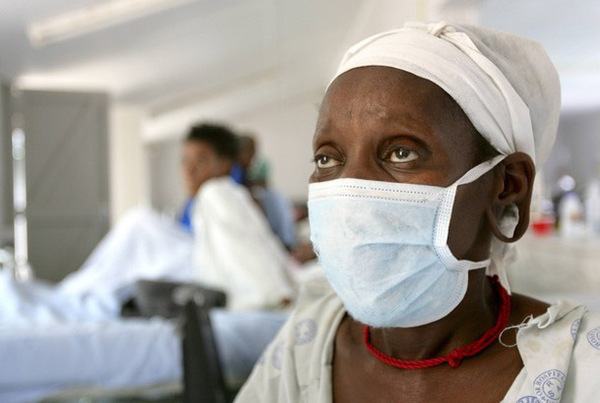
The National Agency for AIDS (NACA) has revealed that Nigeria has the third highest tuberculosis (TB) burden in the world with 574,600 cases or 338 per 100,000 of the country’s 170 million population. About 22 per cent of the patients also have Human Immuno-deficiency Virus (HIV) that causes Acquired Immune Deficiency Syndrome (AIDS).
NACA stated: “According to the current national statistics on HIV, an estimated 3.5 million persons are HIV positive, while close to one million are on treatment.
“So far, Nigeria occupies the unenviable global position in terms of the disease burden for both diseases. Nigeria is the second amongst the highest HIV-burdened countries in the world and the third among the highest TB-burdened globally. Added to this burden is the fact that of the number of cases identified with TB, 22 per cent were found to also have HIV as well, thus compounding the existing disease burden.”
The World Health Organisation (WHO) lists Nigeria among the 20 countries with the highest absolute burden of disease, the others being Bangladesh, Brazil, China, Democratic People’s Republic of Korea, Democratic Republic of Congo, Ethiopia, India, Indonesia, Kenya, Mozambique, Myanmar, Pakistan, Papua New Guinea, Philippines, Russian Federation, South Africa, Thailand, the United Republic of Tanzania, and Viet Nam.