By Boluwatife Oshadiya | September 2, 2026
KEY POINTS
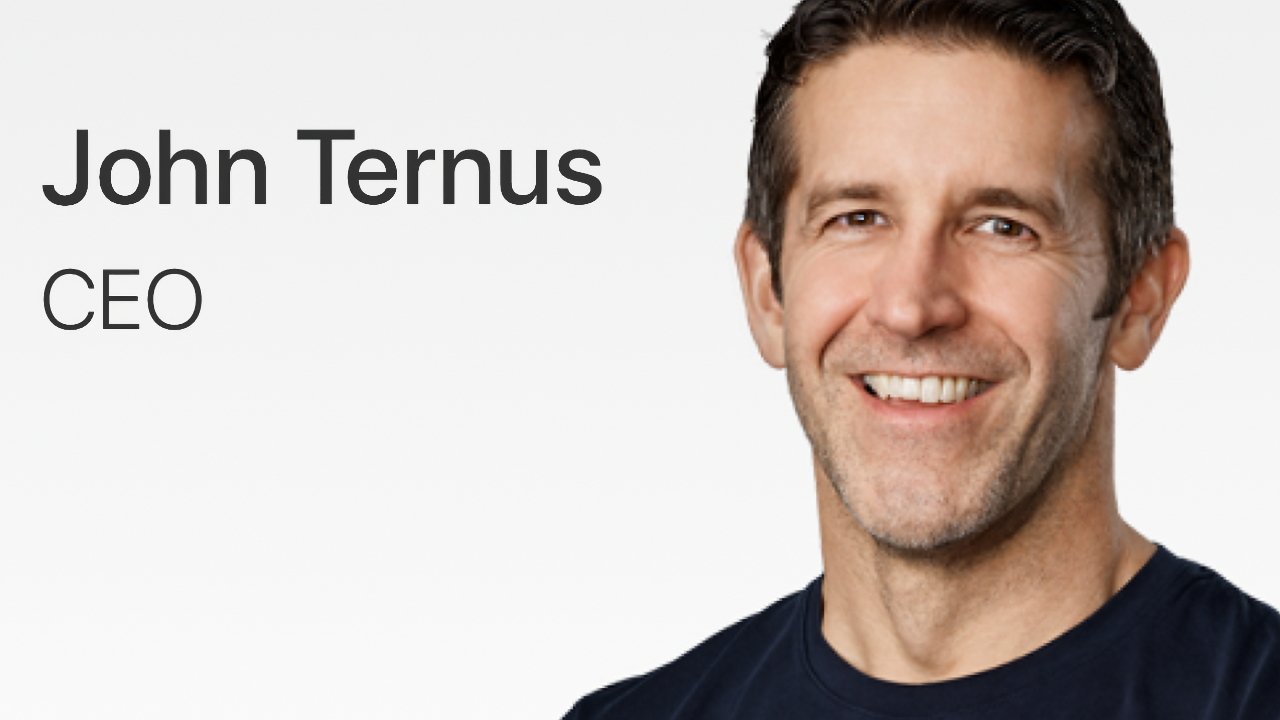
- John Ternus, 51, became Apple’s CEO on September 1, 2026, succeeding Tim Cook after spending 25 years climbing from junior engineer to the world’s most watched technology job
- He is the first Apple CEO in over three decades with a pure hardware engineering background — a deliberate choice by Apple’s board at a moment when product innovation, not operations, is the company’s most urgent need
- His tenure will be defined by five tests: artificial intelligence, the next iPhone form factor, Vision Pro’s commercial viability, talent retention, and navigating a geopolitically fractured supply chain
MAIN STORY
On the morning of September 1, 2026, John Patrick Ternus sat down at the desk that Tim Cook had occupied for fifteen years and became the most powerful person in the world’s most valuable company. Apple — worth roughly $4.5 trillion — had a new chief executive. He was not a finance man. He was not a supply-chain man. He was, first and last, an engineer.
That fact alone is the central plot of one of technology’s more unusual succession stories. Ternus, 51, had spent a quarter-century at Apple turning invisible screws and impossible tolerances into products that hundreds of millions of people use every day. He did it without a public persona, without a social media following, and without a single major personal scandal attached to his name. Then, on April 20, 2026, Apple announced that he would succeed Cook. And on the morning of September 1, he sent his first memo to Apple’s global workforce.
“We have a huge launch next week that’s going to be phenomenal,” Ternus wrote, per a memo obtained by Bloomberg and 9to5Mac. “I’m just as excited about what lies beyond that, including the incredible products already in the works and the ones we haven’t even imagined yet that we’ll dream up and create together.”
Cook, in his own final message to staff, said he took “enormous comfort” in passing leadership to “someone as brilliant and wonderful and capable as John.” Cook has not disappeared — he moves to executive chairman, with Apple noting he will continue “engaging with policymakers around the world.” That arrangement is deliberately strategic. Ternus is the engineer. Cook remains the diplomat.
What follows is the definitive guide to understanding the man now running the world’s most valuable company: where he came from, what he built, what he got wrong, and what he is being asked to solve.
THE ISSUES
Apple’s board did not choose Ternus by accident, and they did not choose him for sentiment. They chose him because the company they have built — an organisation whose genius lies in the physical quality and tight integration of its products — faces a specific set of challenges that require a specific kind of leader.
The iPhone, which remains Apple’s economic engine, is approaching the limits of its current form. Artificial intelligence has exposed a gap between Apple and its rivals that the market is watching closely. The geopolitical fault lines between China and the United States run directly through Apple’s supply chain. And regulators in Washington, Brussels, and New Delhi are circling Apple’s App Store business with increasing appetite.
Against this backdrop, the board chose not a dealmaker, not a lobbyist, and not a financial engineer. They chose the man who has spent 25 years building the products at the centre of everything Apple is. The logic is clear, even if the execution remains entirely unproven.
15 THINGS YOU NEED TO KNOW ABOUT JOHN TERNUS
1. He Was Born in California in 1975 — And Almost Nobody Knows Anything Else About His Childhood
John Patrick Ternus was born in California in May 1975. Fortune has placed his origins in the Los Angeles area. Beyond that, reliable public information is almost nonexistent. His parents, his childhood home, his secondary school, his religion, his upbringing — none of it has been confirmed by credible reporting. Multiple outlets have noted this gap and confirmed it is a gap, not a spin operation. Several tabloid-adjacent sites have attempted to fill in the blanks; editorial caution demands those claims be treated as unverified.
What the absence itself tells you is significant. Ternus spent 25 years becoming one of the most powerful people in technology without constructing a public origin story. He is, in that sense, the anti-celebrity CEO — a figure whose biography begins, for practical purposes, when his engineering career does.
2. He Studied Mechanical Engineering at Penn — and Nearly Destroyed a Machine Worth More Than His Degree
Ternus entered the University of Pennsylvania in 1993 and graduated in 1997 with a Bachelor of Science in Engineering in Mechanical Engineering and Applied Mechanics, with a minor in Psychology. He was also a varsity swimmer — an all-time letterwinner on Penn’s men’s team who won the 50-metre freestyle and 200-metre individual medley against Swarthmore as a freshman in 1994. Former teammates described him as personable, competitive, and calm.
But the story that has followed Ternus through his career is the one he told himself, at Penn’s 2024 Engineering commencement, about the CNC milling machine. During his senior year, he very nearly destroyed the university’s first computer numerical control milling machine. The incident earned him a nickname that stuck with him through Apple: “Crash.”
“The care that you put into your work, it really matters,” he told Penn graduates in 2024, according to reporting by Deadline. He was not speaking abstractly. He was speaking from experience — including the experience of spectacularly failing.
3. His Senior Project Was a Feeding Arm for People With Quadriplegia — and It Tells You Who He Is
Before the iPhone, before the Mac, before any of it, Ternus’s most important engineering project was a mechanical feeding arm that people with quadriplegia could control using head movements. He built it as his senior project at Penn.
The detail matters because it reveals the philosophy of the engineer before any corporation had shaped him. He was not building something theoretically clever. He was building something that would give a person with severe mobility limitations the ability to feed themselves. He was, from the beginning, designing for human beings — not for specifications, not for awards, not for investors.
That instinct — design for the person holding the product, not the product itself — runs like a thread through everything Ternus later did at Apple.
4. His First Job Was in Virtual Reality — Before VR Was Anything
When Ternus graduated from Penn in 1997, he did not go to a large corporation. He went to Virtual Research Systems, a small California company building early virtual reality headsets and head-mounted displays. He stayed there from 1997 until 2001, working as a mechanical engineer. Reporting has linked him to work on the V8, a high-end VR headset used heavily for military flight simulation and other specialised applications.
Palmer Luckey, the founder of Oculus, reportedly examined one of the old V8 units and indicated that Ternus appeared to have been the lead mechanical engineer associated with it. The appropriate journalistic standard here is careful: Ternus is believed to have worked on the V8, not that he invented it.
The biographical irony is not subtle. The man who later oversaw the Apple Vision Pro — Apple’s $3,499 bet on spatial computing — spent his formative engineering years building early VR hardware before the consumer market for it even existed.
5. He Joined Apple in 2001 as an Engineer — Not as an Executive
Ternus joined Apple’s product design team in 2001. He was not hired as a manager. He was not hired as a strategist. He came in as an engineer, and he started at the bottom of one of the most demanding product organisations in the world.
His first major project was the Apple Cinema Display — a large desktop monitor with a clear plastic enclosure secured by screws at the back. It was a relatively unglamorous assignment by Apple’s standards. What happened during that assignment became, decades later, one of the most revealing stories of his career.
6. He Once Argued With a Supplier — at Night — Over the Number of Grooves on a Screw Nobody Would Ever See
The Cinema Display screws were made of stainless steel and required a specific pattern of concentric grooves in the head. Apple had specified 25 grooves. The supplier had produced screws with a different number. Ternus became involved in the argument over the difference — late at night, at the supplier’s facility — over a detail that almost no customer would ever see.
He later reflected on the moment: after questioning why he was doing it, he concluded that if something is worth making, the invisible details matter too.
“If you are going to spend that much time on something, you should put in your very best effort,” he told Penn graduates in 2024, recounting the episode, per Deadline.
It is probably the most useful single story for understanding Ternus. His worldview is not that the customer sees every detail. His worldview is that the details matter whether the customer sees them or not. That philosophy is very close to the one Steve Jobs brought to Apple — and it is almost certainly why Apple’s board considered Ternus the right person to lead the company.
7. He Rose Through iPad, iPhone, Mac, AirPods, and Apple Watch — Essentially the Entire Hardware Portfolio
By the time Ternus became Apple’s Senior Vice President of Hardware Engineering in 2021, he had accumulated a hardware résumé that was nearly unique within the company. He had been involved in the development of every generation of iPad. He had taken on iPhone hardware responsibility from Dan Riccio around 2020. He had overseen Mac hardware through the most significant architectural transition in decades. He had contributed to AirPods, which grew from a product widely mocked at launch to one of Apple’s most successful new lines of the Cook era. He later added Apple Watch hardware responsibility.
This breadth matters. It means Ternus understands Apple not as a collection of individual product lines but as an integrated ecosystem — a company where the chip in the iPhone relates to the chip in the Mac, where the sensors in Apple Watch inform the health capabilities in AirPods, where the manufacturing expertise from one product feeds directly into the next.
8. He Led Apple’s Most Important Technical Transition in a Decade — The Move to Apple Silicon
If there is one professional achievement that made the case for Ternus as CEO more than any other, it is Apple’s transition from Intel processors to its own Apple Silicon chips.
The transition, which Ternus oversaw as hardware chief working alongside chip architect Johny Srouji, was not simply a product upgrade. It was a strategic reorganisation of Apple’s entire technological identity. By designing its own processors — the M-series chips that now power the Mac — Apple gained control over performance, power efficiency, thermal management, and the integration between hardware and software in ways it could never achieve as a customer of Intel’s roadmap.
The transition is widely regarded as one of the most technically complex and commercially successful platform shifts in Apple’s modern history. It revitalised Mac sales and fundamentally repositioned the computer as an Apple product rather than an Intel product with Apple packaging.
For Ternus, it is the strongest argument that he understands Apple’s greatest competitive advantage: the company controls the whole stack.
9. He Was Behind the Touch Bar — and That Is a Mark Against Him
A serious profile of John Ternus cannot ignore what went wrong.
Bloomberg reporting, cited by 9to5Mac, identified Ternus as instrumental in pushing Apple’s Touch Bar into the 2016 MacBook Pro. The Touch Bar — a dynamic touchscreen strip that replaced the traditional function keys on the keyboard — was marketed as a new paradigm for interacting with applications. It was never embraced by users, attracted consistent criticism from professionals who relied on physical function keys, and was eventually abandoned. Apple returned to physical keys.
The Touch Bar was not a minor product stumble. It was the defining hardware feature of Apple’s flagship notebook for several years, and it failed.
10. He Was Also Part of the Butterfly Keyboard Era — Another Controversy He Owns
The butterfly keyboard mechanism, which Apple adopted across its MacBook line to achieve thinner designs, became one of the most sustained product controversies in the company’s recent history. Users reported failures caused by dust, debris, and keystroke reliability issues. Repair costs were high. Class action litigation was filed against Apple. Customer frustration was significant and prolonged.
Ternus held significant Mac hardware responsibility during this era. The butterfly keyboard was not his decision alone — Apple is a company that makes collective product choices — but a serious profile must acknowledge that the hardware decisions of his era include some that Apple ultimately reversed under public and user pressure.
His record, in short, is not spotless. The person taking over the CEO role has made major product decisions that did not hold up.
11. Vision Pro: Technically Magnificent, Commercially Complicated
The Apple Vision Pro, which launched in early 2024 at $3,499, is perhaps the most complex hardware Apple has ever built. It is also, by commercial measures, among the most challenging product launches the company has attempted.
Ternus oversaw hardware engineering during the Vision Pro’s development and launch. The product’s size, weight, price point, and limited mass-market application made it a difficult proposition for broad consumer adoption. Reporting has suggested Ternus himself had reservations about Vision Pro’s ability to become a mass-market product — which, if accurate, creates a genuinely interesting contradiction: the engineer most associated with VR hardware from his earliest career may be among the people most clear-eyed about the limitations of Apple’s current VR strategy.
What happens to Vision Pro under Ternus’s CEO tenure — whether it becomes the foundation of a spatial computing platform or a cautionary chapter in Apple’s innovation story — will be one of the early measures of his leadership.
12. His Management Style: Calm, Technical, Low-Ego — and Deliberately Accessible
One of the most consistent threads in reporting about Ternus is how unlike the traditional Silicon Valley power executive he is. He is repeatedly described by colleagues as calm, detail-oriented, approachable, and genuinely collaborative. Deadline reported that a non-Apple industry executive described him as paying attention, being willing to take in new ideas, innovative and technically very strong.
A former Apple boss described him as something of a “man of the people.” He reportedly declined to move into a private executive office, preferring to work in proximity to his team. His 2024 Penn commencement address articulated a leadership philosophy that has clearly shaped how he operates: assume you are as smart as everyone else in the room, but never assume you know as much as they do about their specific subject.
That philosophy — confidence without arrogance, deep curiosity, respect for specialists — is arguably why Ternus was able to operate effectively inside Apple’s intensely specialised engineering culture for 25 years without generating significant internal opposition.
13. His Relationship With Tim Cook — And Why Cook’s Continued Presence Is Both an Asset and a Question
When Apple announced the succession in April, Ternus said he had been fortunate to work under Steve Jobs and to have Tim Cook as his mentor. Cook praised Ternus’s engineering ability and leadership qualities. The board structured the transition with Cook remaining nearby as executive chairman — specifically to handle government and policy relationships.
That arrangement tells you something important. Apple’s board trusts Ternus to run the company. They also believe Cook’s political and diplomatic capital — particularly the relationships he built with the Trump administration and with Beijing — is too valuable to simply set aside. Cook will remain Apple’s primary interface with policymakers around the world.
The arrangement creates an advantage: Ternus gets access to one of the most experienced corporate diplomats in technology. It also creates a potential dynamic that Ternus will need to manage carefully. He must demonstrate, over time, that he is running Apple — not merely the operational half of a leadership duo.
14. His Biggest Challenge Is Artificial Intelligence
Apple has been criticised, with increasing directness, for falling behind OpenAI, Google, Microsoft, and Meta in the AI race. The company’s own Siri overhaul has reportedly been built on Google’s Gemini technology — a dependency that sits uncomfortably with Apple’s historical pride in controlling the technologies underlying its products.
Ternus has articulated Apple’s philosophy on AI as putting technology into useful experiences rather than launching AI products for their own sake. That is an authentically Apple-like position. The question is whether it is sufficient in a market where competitors are moving at a pace Apple has not matched.
The fundamental strategic question facing Ternus in his first years as CEO is whether Apple builds its own world-class AI capability, acquires it, partners for it, or continues integrating third-party models. That decision will define the Ternus era more than any individual product launch.
15. His Compensation Is $3 Million in Salary — and Up to $55 Million in Equity
Per Apple’s SEC filing, Ternus’s compensation as CEO includes an annual base salary of $3 million. His 2026 prorated equity award carries a target value of $2.5 million. His 2027 annual equity award carries a target value of $55 million — of which 75 per cent is performance-based restricted stock units tied to Apple’s total shareholder return relative to the S&P 500, and 25 per cent is time-based.
The structure tells you something about how Apple’s board has aligned Ternus’s interests with shareholders. He will become significantly wealthier if Apple performs. He will not if it does not. His estimated net worth, built from Apple equity accumulated over 25 years, is commonly placed in the range of $40 million to $150 million, depending on assumptions about how much equity he has retained — with estimates frequently citing a figure around $75 million. No official disclosure exists.
WHAT’S BEING SAID
“If you want to make an iPhone every year, Ternus is your guy,” a former Apple product and software engineering manager told the New York Times, as reported by PhillyVoice.
Leander Kahney of Cult of Mac told Fox Business that he sees a throughline from Jobs to Cook to Ternus in terms of product focus, describing Ternus as “a product guy in the Jobs mold.”
A non-Apple technology industry executive who spoke to Deadline said Ternus “gets good reviews from colleagues personally” and that his appointment “signified a desire to break things open with new products” — adding that the appointment reflected Apple’s identity as a device company at its core.
Some Apple analysts told Fortune that Ternus’s product background is exactly the expertise Apple needs at this moment, noting that the board chose him for a reason: his ability to navigate a secretive and demanding corporate environment while delivering products that sell extraordinarily well.
Apple did not respond to BizWatch Nigeria’s request for comment by press time.
WHAT’S NEXT
- September 9, 2026: Apple’s annual iPhone event — internally called “Surprise and Shine” — will be Ternus’s first as CEO. The event is widely expected to include Apple’s first foldable iPhone and a broader rollout of Apple’s revamped Siri AI platform. It will be the first major public test of the Ternus era.
- Fiscal Year 2027: Ternus’s first full fiscal year as CEO will trigger his $55 million target-value annual equity award, with three-quarters of it tied directly to Apple’s stock performance relative to the S&P 500.
- U.S. Department of Justice antitrust case: Apple faces an ongoing antitrust action from the U.S. government over its smartphone ecosystem. Ternus inherits the case and will need to navigate both the litigation and the political relationships it involves.
- China supply chain: The ongoing reconfiguration of Apple’s manufacturing base toward India, Vietnam, and the United States — a multi-year project — will continue to require strategic decisions from Apple’s new leadership.
BOTTOM LINE
The Bottom Line: John Ternus is not Apple’s next Steve Jobs, and he is not Tim Cook 2.0 — he is something the company has not had in more than three decades: an engineer at the top, tasked with answering whether the discipline that built Apple’s last generation of products is the same discipline that can imagine the next one. His record is substantial, his failures are real, his challenges are generational in scale, and the company he has inherited is, by every financial measure, the most valuable in human history. Whether a man who spent 25 years perfecting the inside of objects other people hold can now define what those objects should become is the question the entire technology industry will spend the next decade watching him answer.