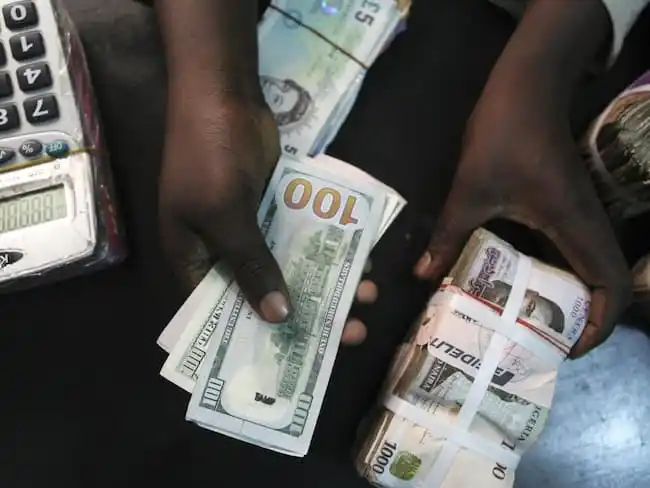
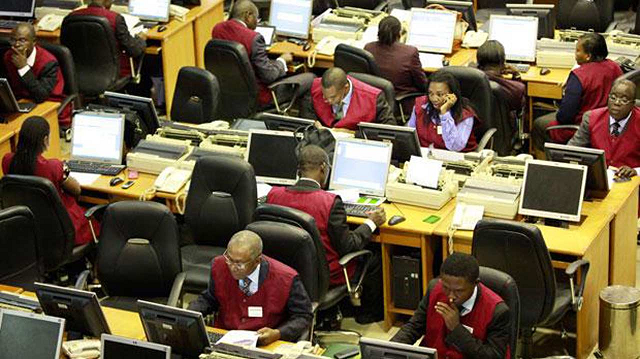
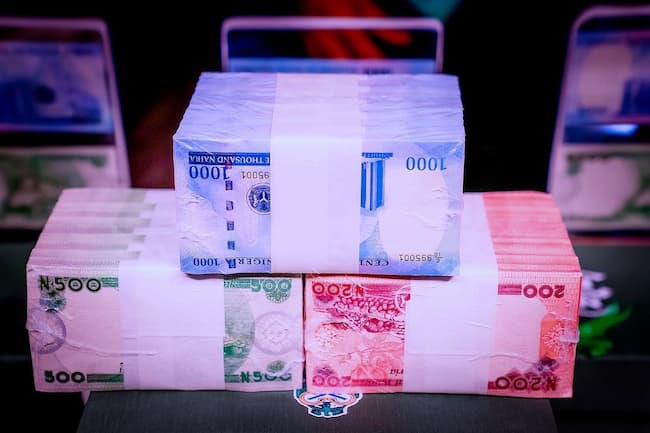
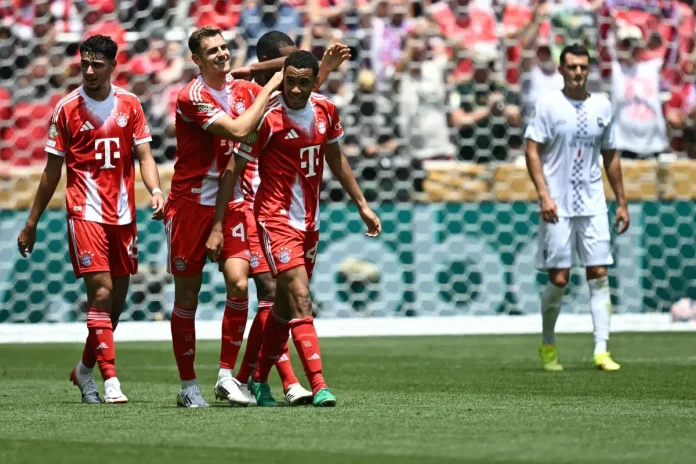
The exchange rate between the Naira and the US dollar, according to the data released on the FMDQ Security Exchange, the official forex trading portal, showed that the naira closed at 1586.00 per $1 on Monday, June 16th, 2025. The naira traded as high as 1537.00 to the dollar at the investors and exporters (I&E) window on Sunday.
Dollar to naira exchange rate today, black market (Aboki dollar rate):
The exchange rate for a dollar to naira at Lagos Parallel Market (Black Market) players buy a dollar for ₦1579 and sell at ₦1586 on Sunday, 15th June, 2025, according to sources at Bureau De Change (BDC).
Please note that the Central Bank of Nigeria (CBN) does not recognize the parallel market (black market), as it has directed individuals who want to engage in Forex to approach their respective banks.
Dollar to Naira Black Market Rate Today
Dollar to Naira (USD to NGN)
Black Market Exchange Rate Today
Buying Rate
₦1579
Selling Rate
₦1586
Dollar to Naira CBN Rate Today
Dollar to Naira (USD to NGN)
CBN Rate Today
Highest Rate
₦1570
Lowest Rate
₦1537
Please note that the rates you buy or sell forex at may be different from what is captured in this article because prices vary.
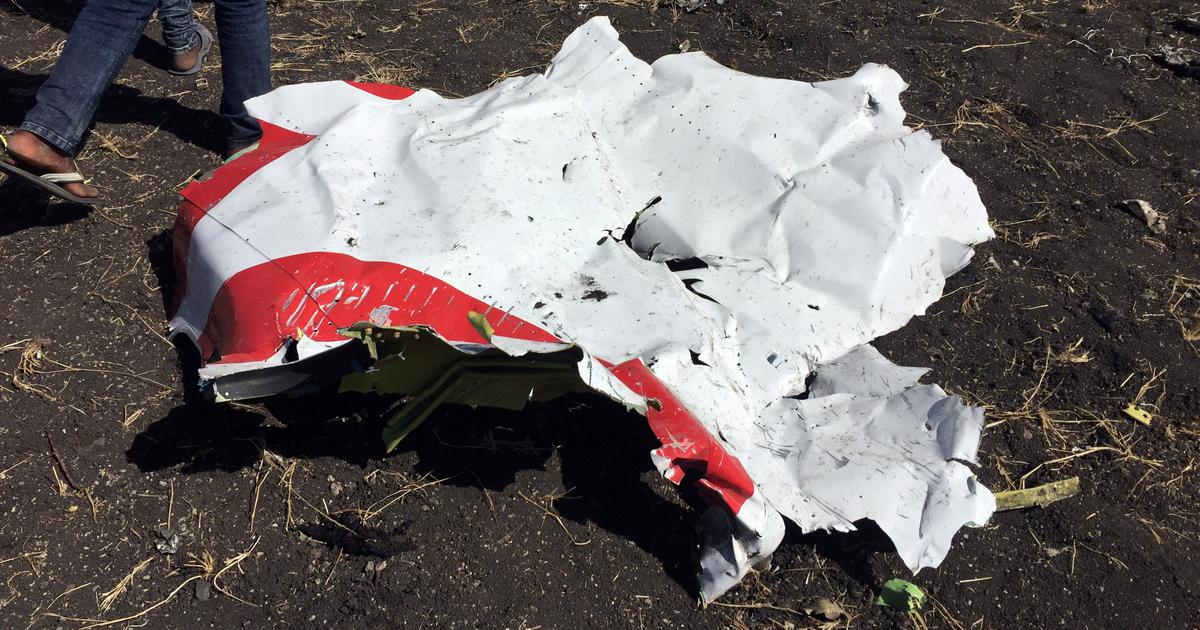
People walk past a part of the wreckage at the scene of the Flight ET 302 plane crash on Sunday
It’s one thing to fear flying—it’s another to live through the chilling news updates that remind us how real those fears can be. The truth is, commercial aviation remains one of the safest modes of transportation.
Statistically, you’re far more likely to get into a car accident than a plane crash. But when air disasters do happen, they don’t just dominate headlines—they leave behind emotional wreckage that can span continents.
So, what exactly makes a plane crash “one of the biggest”? Death tolls, yes. But also, impact. The emotional, political, and technological ripples that follow. From malfunctioning systems to military errors, here are the most devastating air disasters in recent memory—and why they still matter today.
1. The 2025 Air India Catastrophe—A Tragic Turn After Takeoff
Date: June 12, 2025
Location: Ahmedabad, India
Fatalities: Over 240
Just minutes after lifting off from Ahmedabad en route to London, the Air India flight carrying 242 people nose-dived into a crowded suburb. Authorities are still combing through black box data, but early reports suggest a catastrophic engine failure—compounded by possible human error. For India, this marked the deadliest aviation disaster in a decade, with questions still swirling around aircraft maintenance standards and air traffic control protocols.
It’s the kind of incident that shakes confidence—not just in the airline, but in the entire infrastructure supporting modern flight.
2. U.S. Army Helicopter Collision—When Civil Meets Combat
Date: January 29, 2025
Location: Potomac River, U.S.A
Fatalities: 60+
It was the stuff of nightmares. An American Airlines regional jet, moments from departure, collided mid-air with a U.S. Army Black Hawk. The resulting fireball crashed into the icy Potomac River, triggering one of the most chaotic rescue efforts in recent aviation history.
You’d expect military and civilian aviation to operate in tightly coordinated airspace, right? Apparently not. This crash exposed gaps in communication between federal agencies—gaps that turned deadly. It wasn’t just a crash—it was a wake-up call for national aviation protocols.
3. South Korea’s Worst: Jeju Air’s Final Flight
Date: December 29, 2024
Location: Muan International Airport
Fatalities: 179
Jeju Air 7C2216 was expected to be a routine international flight. Instead, it became the deadliest air disaster in South Korea’s history. As the plane approached Muan, visibility dropped to near zero. But instead of delaying, the flight pushed through—right into a failed landing and a catastrophic fire.
Some pointed fingers at pilot decision-making. Others blamed faulty airport equipment. Either way, South Korea’s aviation safety authority has been under immense scrutiny ever since.
4. Kazakhstan: When Politics Enter the Cockpit
Date: December 25, 2024
Fatalities: 38
Airline: Azerbaijan Airlines Flight J2-8243
At first, it looked like a diversion gone wrong. The Embraer jet had rerouted from Russia to Kazakhstan due to weather, but what followed wasn’t turbulence—it was tragedy. Azerbaijan’s president claimed the aircraft was mistakenly shot at from the ground in Russia. Moscow, of course, has yet to confirm anything.
It’s a modern-day Cold War twist: a commercial flight caught in geopolitical crossfire. And it raises the unsettling question—can air travel ever really stay neutral?
5. Tokyo’s Burning A350—A Near-Miracle With a Fatal Price
Date: January 2, 2024
Location: Haneda Airport, Tokyo
Fatalities: 5 (crew of the Coast Guard aircraft)
Here’s one of those stories that could’ve been so much worse. A Japan Airlines Airbus A350 collided with a much smaller Coast Guard plane on the runway. The jet burst into flames, but somehow, all 379 passengers onboard escaped. Unfortunately, five of the six crew members in the smaller aircraft didn’t make it.
It was a close call. And it reignited concerns over tarmac traffic control, especially at mega-airports where every second—and every square meter—counts.
6. China Eastern Flight MU5735—A Sudden Plunge Into Silence
Date: March 21, 2022
Fatalities: 132
Location: Guangxi region, China
No distress call. No survivors. Just a sudden, steep descent from cruising altitude—followed by silence. Investigators struggled for months to understand what caused this China Eastern Boeing 737-800 to nosedive into mountainous terrain. Some say it was a mechanical issue. Others still whisper about possible pilot action.
It was China’s deadliest air disaster in nearly three decades, and the aftermath sent shockwaves through both the aviation industry and public consciousness. In a country where airline disasters are rare, the incident became a national trauma.
7. Iran’s Accidental Tragedy—The Shot That Should Never Have Happened
Date: January 8, 2020
Fatalities: 176
Airline: Ukraine International Airlines
Moments after taking off from Tehran, UIA Flight 752 was downed—not by mechanical failure or pilot error—but by an Iranian missile. The government called it a mistake caused by a misaligned radar system and a miscommunication during military tension with the U.S.
It was, plainly, a preventable disaster. The global aviation community reeled at the thought: a commercial plane mistaken for a threat? This wasn’t just a tragedy. It was a diplomatic powder keg.
8. The Boeing 737 MAX Saga Begins: Lion Air Flight 610
Date: October 29, 2018
Fatalities: 189
Location: Java Sea, Indonesia
This was the beginning of Boeing’s nightmare. A Lion Air flight crashed minutes after takeoff, plunging into the Java Sea. The culprit? A flawed sensor system that forced the plane’s nose downward—again and again—despite the pilot’s attempts to correct it.
This was the first of two crashes (the other being Ethiopian Airlines in 2019) that led to a worldwide grounding of Boeing’s 737 MAX fleet. Trust in one of the world’s biggest aircraft manufacturers hit rock bottom.
9. MH17 and MH370—Malaysia’s Dual Aviation Nightmares
Dates: July 17 & March 8, 2014
Fatalities: 298 and 239, respectively
Two disasters in one year—both unspeakably tragic, both surrounded by mystery. MH17 was shot down over Ukraine during a violent regional conflict. MH370 simply vanished. To this day, pieces of wreckage have washed ashore, but the full aircraft—and its passengers—remain missing.
For Malaysia Airlines, the brand took a devastating hit. But for the world? These incidents became symbols of aviation’s limits. No matter how advanced our tech gets, some answers still remain out of reach.
What These Crashes Taught Us
Here’s the thing—each of these crashes forced the aviation world to stop and reassess. New regulations were written. Planes were grounded. Systems were rebuilt. And still, the human cost echoes long after the wreckage is cleared.
If there’s one silver lining—if we can call it that—it’s that each tragedy brought about hard-earned lessons. Better safety protocols. Improved training. More transparency. But let’s not sugarcoat it: these disasters remind us that no system, no matter how advanced, is infallible.
And maybe that’s why stories like these matter. Not to stir fear, but to stir reflection. Because every name on those passenger lists was someone’s child, partner, colleague, or friend. And remembering them—well, that’s how we make sure they didn’t board those flights in vain.
Stanbic IBTC Capital, a subsidiary of Stanbic IBTC Holdings, has sponsored the 16th Honours Nite of the Nigerian Institution of Estate Surveyors and Valuers (NIESV), Lagos State Branch. The prestigious event held at the Lagos Continental Hotel featured the theme “Inspiring Excellence, Shaping the Future.”
This year’s Honors Nighthttps://bizwatchnigeria.ng/del-york-tribeca-partner-to-showcase-african-cinema-on-global-stage/ served as a platform to recognize and celebrate exceptional achievements in the real estate and development ecosystem, bringing together industry leaders, corporate partners, and public sector decision-makers. Stanbic IBTC Capital’s commitment to fostering innovation and excellence was evident through the Stanbic IBTC Residential Development of the Period Award, which honored projects demonstrating significant market influence and superior execution. Biufort Homes Limited’s Greenwich Gardens (Ketu) won the Silver Award, while UPDC Plc’s The Hampshire earned the Gold Award for its outstanding design, execution, and strategic contribution to the premium residential landscape.
In his opening remarks, Gbenga Ismail, Chairman of the NIESV Lagos State Branch, emphasized the importance of value-driven service: “Honors Night gives us the chance to highlight the excellence and integrity inherent in our profession. While we celebrate today’s achievers, we set a precedent for a future that embraces innovation.”
The NIESV Lagos Branch plays a crucial role in promoting best practices and enhancing the real estate profession throughout Nigeria. The 16th Honours Nite not only acknowledged achievements but also reaffirmed NIESV’s mission to cultivate a built environment characterized by excellence, ethics, and service to society.
Commenting on the event, Oladele Sotubo, Chief Executive, Stanbic IBTC Capital, stated, “At Stanbic IBTC Capital, we believe that excellence in the real estate sector is necessary for sustainable growth and community development. By supporting events like the NIESV Honours Nite, we underscore our commitment to recognizing and empowering the professionals who shape our built environment. Together, we can inspire innovation and uphold the highest standards, ensuring a future where quality housing and ethical practices thrive in Nigeria.”
Tola Akinhanmi, Head ofof Real Estate Finance, West Africa,, at Stanbic IBTC Capital, expressed pride in supporting professionals and developers dedicated to providing high-quality housing solutions. He said, “These awards recognize projects that meet significant market demands and symbolize the progressive vision for the future of real estate in Nigeria.”
The collaboration between Stanbic IBTC Capital and the Nigerian Institution of Estate Surveyors and Valuers highlights the importance of excellence in the real estate sector. It sets a foundation for future innovations and advancements, especially in underweight asset classes such as the residential sector, which will help to catalyze developments and further bridge the housing supply gap in Nigeria. This further underpins Stanbic IBTC’s value proposition and support to stimulate home ownership and acquisition via our end-to-end product offering, including construction/development finance, insurance, and various home loan packages, which creates effective demand.
Stanbic IBTC Bank, a subsidiary of Stanbic IBTC Holdings, this June, invites women across Nigeria to experience a celebration like no other, Bloom Weekend 2025, a dynamic, immersive, and transformational event designed to empower women to break barriers, build legacies, and scale new heights. The event is scheduled to take place from Friday, 20 June, to Saturday, 21 June 2025.
Rooted in the spirit of the Stanbic IBTC Blue Blossom Community, Bloom Weekend is more than a gathering; it’s a movement dedicated to accelerating women’s leadership, financial independence, and entrepreneurial success. This year’s theme, “Bloom Into More,” sets the stage for what promises to be a weekend packed with innovative ideas, vibrant networking, and real-world opportunities.
Attendees would immerse themselves in a lineup of high-impact sessions, where Nigeria’s trailblazing female executives, business moguls, and entrepreneurs will share their journeys and lessons learned. This year’s event will commence with an SME Entrepreneurship Summit anchored by the Enterprise Development Centre of Pan Atlantic University. The training is set to equip participants with practical strategies on how to structure and grow their businesses. Featuring a robust curriculum curated by the Enterprise Data Center, participants would be awarded Certificates of Participation at the end of the session. For many, this would be the opportunity that would help transform their passions into profitable, sustainable enterprises.
Another highlight of the weekend is the LADIES AT THE TABLE EMPOWERMENT SERIES (LATTES) panel, an engaging live event featuring inspiring women leaders. The keynote address will be delivered by Patience Torlowei, founder of Torlowei. Confirmed panelists include Eunice Showunmi, Aderinsola Adeyemi, Olayide Odediran, Hawa Magaji, and Oler Oladele, each poised to share their expertise and insights on the theme.
The Bloom Hub will feature a lively marketplace of women-led businesses, offering attendees a chance to discover and support innovative brands. Simultaneously, there would be masterclasses hosted by CEO of Arami Essentials, Ore Lawani, and founder of DictionwithDerin, Aderinsola Adeyemi, while Stanbic IBTC’s advisory teams would be available onsite, providing personalized financial consultations to guide attendees on how to achieve their financial dreams.
“Our vision for Bloom Weekend 2025 goes beyond inspiration,” said Olajumoke Bello, Head, Enterprise Business, Stanbic IBTC Bank. “We are committed to action, real mentorship, real funding opportunities, and real partnerships. We are building a community where every woman can find the tools, connections, and confidence to achieve more.”
In addition to the main sessions, participants would enjoy vibrant experiential activations and get the opportunity to sign up to the Blue Blossom online community of female business owners. From wellness activities like yoga and massages to games and a vibrant kiddies corner, the 2025 Bloom Weekend is guaranteed to be a wholesome 360-degree experience for all who would be in attendance.
The Bloom Weekend is open to all women, including established and emerging entrepreneurs, corporate leaders, innovators in tech, young professionals, and all women ready to invest in their future.
Registration is open; click here to secure your spot!
Stanbic IBTC Holdings PLC has once again set the benchmark for financial excellence in Nigeria, with Fitch Ratings reaffirming its ‘AAA(nga)’ rating and Stable Outlook, the highest rating on the national scale. This marks over ten consecutive years of maintaining this top-tier rating, underscoring the group’s financial strength and commitment to Nigeria’s economic development.
Fitch’s latest rating action reflects the strength of Stanbic IBTC’s operating model, the group’s prudent risk management practices, and its strategic importance to its parent company, Standard Bank Group (SBG) of South Africa, which holds a 67.55% shareholding in Stanbic IBTC.
This remarkable achievement underscores Stanbic IBTC’s unwavering commitment to financial stability and excellence. The report highlights Stanbic IBTC’s strong corporate and investment banking franchise, diversified income streams, robust capital generation, and comfortable liquidity coverage. The bank’s strong earnings are supported by high non-interest income and a wide net interest margin.
Fitch also noted the group’s effective handling of credit risk, with its impaired loans ratio remaining below regulatory standards at 4.4% and a high 88% specific loan loss coverage. Liquidity levels remain comfortable across both local and foreign currencies, and the bank continues to maintain a reasonable balance between deposits and loan disbursements.
Commenting on the achievement, Adekunle Adedeji, Acting Chief Executive, Stanbic IBTC Holdings, stated, “This milestone speaks to our legacy of excellence, consistency, and long-term focus. Being affirmed at ‘AAA(nga)’ for over a decade by a global rating agency like Fitch speaks volumes about our corporate governance structures, risk controls, and commitment to supporting the Nigerian economy. We are proud of what this means, not just for Stanbic IBTC, but also for our clients, shareholders, and partners.”
Wole Adeniyi, Chief Executive, Stanbic IBTC Bank, added, “SBG’s strong integration with Stanbic IBTC, shared branding, and Pan-African strategy significantly contribute to our consistent top ratings. Stanbic IBTC Bank also retained its National Short-Term Rating of ‘F1+(nga),’ reflecting our exceptional capacity for timely financial commitments.”
This reaffirmation further validates Stanbic IBTC’s position as a trusted provider of integrated banking, asset management, pension, stockbroking, fintech, trusteeship insurance, and investment solutions across Nigeria.
As we continue to drive sustainable value creation, we invite our clients, shareholders, and partners to join us in shaping the future of financial services in Nigeria.
Interswitch, one of Africa’s leading technology companies focused on creating solutions that enable individuals, businesses and communities prosper, has officially launched Interswitch PensionRemit, a fully automated platform designed to help employers comply with the recently introduced Pension Contribution Remittance System (PCRS).
The new system, mandated by the National Pension Commission (PenCom) and the Pension Fund Operators Association of Nigeria (PenOp), took effect on June 1, 2025.
Fully compliant with the PCRS framework, Interswitch PensionRemit is an approved Payment Solution Service Provider (PSSP) authorized to operate under the new system. Designed for ease and efficiency, the platform enables employers to upload contribution schedules, validate Retirement Savings Account Personal Identification Numbers (RSA PINs) and Pension Fund Administrator (PFAs) in real time, and complete secure payments, all in one seamless flow.
Speaking on the launch, Muyiwa Asagba, Managing Director, Commercial Inclusion (Interswitch Inclusio), said that Interswitch remains focused on enabling business growth through innovation:
“Our focus has always been on removing friction and unlocking growth for businesses. With Interswitch PensionRemit, we are delivering a digital infrastructure that empowers employers to meet their pension obligations effortlessly and at no cost. This is in line with our mission to drive inclusive financial participation through innovation.”
Osasere Atohengbe, Vice President, Sales and Account Management, Interswitch, added that the product was developed with both vision and practicality in mind:
“We built Interswitch PensionRemit with employers and the future in mind, to boost our drive to address long-standing pain points in the pension remittance process. The platform equips both large organisations and small businesses with the tools they need to comply with PenCom’s new mandate in the most efficient way possible.”
Built to meet the evolving needs of large enterprises, corporates, micro, small, and medium-sized businesses (MSMEs), and service providers across Nigeria, PensionRemit offers a suite of benefits designed to eliminate friction and boost compliance. These benefits include a streamlined remittance process aligned with PCRS guidelines, real-time delivery, tracking and confirmation of schedules, automated audit trails with instant receipts, zero platform fees for employers, and a reduced compliance and reporting burden.
The platform also serves a broader ecosystem, including payroll service providers, human resource software and enterprise resource planning vendors, offering seamless integration of pension compliance into financial and administrative workflows.
The launch of PensionRemit underscores Interswitch’s commitment to delivering technology-driven solutions that enable transparency, efficiency, and trust in Nigeria’s financial ecosystem. Employers and service providers ready to transition to PCRS-compliant processes can now explore the platform, access support resources, and get started at www.interswitchgroup.com/pensions.
The Nigerian stock market witnessed a significant surge last week, as investors’ total portfolio value expanded by over ₦512 billion, buoyed by renewed interest in large-cap and mid-tier stocks.
Despite a reduced trading window, the Nigerian Exchange (NGX) ended the week in positive territory. The All-Share Index climbed 0.71% to a new record of 115,429.54 points, while market capitalization also soared, closing at ₦72.79 trillion.
Market analysts linked the upswing to strong investor sentiment, driven by expectations of positive macroeconomic developments. Cowry Asset Management noted that the year-to-date return has now reached 12.15%, reinforcing the Nigerian stock market’s status as an attractive investment alternative compared to fixed-income instruments.
The week recorded a bullish breadth of 1.41x, with 55 stocks gaining compared to 39 that declined. Analysts indicated that demand was skewed toward fundamentally sound companies and those with recent corporate events catalyzing interest.
Trading volume and value dipped by 35.77% and 32.31%, respectively, totaling 2.05 billion shares worth ₦50.68 billion. However, deal count rose by 1.47% to 64,702, signaling increased investor participation in small-to-mid-cap counters ahead of key economic indicators.
The performance across sectors was mixed. The oil and gas segment declined by 1.22%, largely due to profit-taking in CONOIL and ARADEL, while the insurance index shed 0.11%, impacted by selloffs in WAPIC and CORNERSTONE.
Conversely, the industrial and consumer goods sectors gained ground. Stocks like BERGER Paints, MAYBAKER, HONEYFLOUR, and DANGOTE SUGAR attracted buying interest. BUACEMENT in particular served as a pillar of strength for the industrial index, underscoring investor confidence in blue-chip stocks.
Meanwhile, the banking sector remained largely flat. Losses recorded in tier-1 institutions such as ETI, ACCESSCORP, ZENITH, and FBNH neutralized gains observed in tier-2 banks, as investors treaded cautiously ahead of inflation data and anticipated changes in monetary policy.
In terms of individual stock performance, Legend Internet emerged as the week’s top gainer, appreciating by 32.8%, followed by BERGER Paints at 30.7% and ELLAHLAKES at 27.4%. OANDO and Fidson Healthcare also posted notable gains due to heightened speculative interest.
On the downside, stocks like John Holt, IMG, RT Briscoe, NNFM, and CONOIL led the losers’ list, reflecting investor rotation and profit-taking.
Cowry Asset Limited forecasts a mildly bullish outlook for the coming week, contingent on favorable inflation figures. A lower-than-expected inflation print could further dampen interest in fixed-income products and push more capital into equities.
However, the firm also warned of intermittent selloffs as investors continue to reassess valuations post-rally. It recommended accumulating stocks with strong earnings records and consistent dividend payouts to optimize long-term portfolio value.
The Central Bank of Nigeria (CBN) is beginning to withdraw its pandemic-era regulatory forbearance initiatives—a move that signals a return to monetary policy normalcy and presents both challenges and opportunities for financial institutions and investors.
Initially introduced at the height of the COVID-19 crisis, these policies allowed Nigerian banks to restructure loans and grant moratoriums without reclassifying the affected loans as non-performing. These leniencies supported financial system stability during a time of global uncertainty, particularly cushioning sectors like oil & gas.
Now, with macroeconomic conditions showing signs of resilience, the apex bank has disclosed plans to phase out the forbearance support in stages, starting with the power sector. Agriculture is slated to follow, while oil & gas—which remains heavily exposed—will be the last to exit the relief measures.
While the phase-out is designed to be gradual, banks will need to adjust their risk frameworks. Analysts caution that increased provisioning may be necessary, which could impact capital adequacy ratios. Current data reveals that seven major Nigerian banks—ACCESS, FBNH, FCMB, FIDELITY, GTCO, UBA, and ZENITH—collectively hold over $4 billion in forbearance-linked loans. Individual exposure ranges from $60 million to as high as $910 million.
A modest 10% provisioning could reduce CARs by 17 to 394 basis points, though the impact will vary by institution. Notably, banks like GTCO and ZENITH have already begun provisioning proactively, reducing future risks. Even so, if forced to reclassify all affected loans, some institutions—particularly ACCESS—could see their NPL ratios breach the 5% regulatory cap.
Despite these concerns, many banks remain well-capitalized and equipped to handle this transition, with sufficient risk buffers in place. Still, investors should monitor how these changes affect liquidity and actual income performance, since forbearance loans often overstate revenue by accruing interest without cash inflows.
Under IFRS 9 regulations, such loans also necessitate lifetime credit loss recognition, potentially dragging down net asset valuations. Even after accounting for these risks—such as a 10% reduction in book value—Nigerian banks generally appear undervalued, though much will hinge on provisioning strategies and actual recovery rates.
CBN’s move is seen as part of a broader effort to normalize monetary policy and bolster financial discipline. While it may cause temporary headwinds, especially in oil & gas, well-prepared banks with robust provisioning and capital strength are expected to navigate the changes successfully and could become more attractive to investors in the medium to long term.
The Nigerian naira posted notable gains against the US dollar last week, defying expectations in the absence of direct intervention from the Central Bank of Nigeria (CBN). Official market data showed the naira closing at ₦1,549.35 per dollar, up from ₦1,553 at the start of the trading week.
This appreciation occurred amid heightened demand for foreign exchange, which outpaced the available USD liquidity for intraday settlements. Despite these pressures, the local currency strengthened, even touching an intraday low of ₦1,537 and a high of ₦1,570 during trading.
Simultaneously, Nigeria’s foreign reserves declined for the fourth week in a row, falling by $232.05 million to settle at $38.05 billion. Nevertheless, forward market contracts for the naira saw positive movements, reflecting sustained investor optimism.
According to Cordros Capital Limited, forward rates rose significantly: the 1-month contract appreciated by 1.4% to ₦1,583.16/USD, the 3-month climbed 2.0% to ₦1,642.65/USD, the 6-month advanced 3.0% to ₦1,724.76/USD, and the 1-year jumped 4.8% to ₦1,887.05/USD.
Cordros attributed this performance to renewed inflows from Foreign Portfolio Investors (FPIs), citing increased market confidence despite external risks such as escalating geopolitical tensions in the Middle East.
Looking ahead, analysts project that the CBN will continue to adopt a reactive approach—intervening only when necessary to curb volatility. Zedcrest Research forecasted a tight range of ₦1,600 to the dollar through the second half of 2025 but warned that FX interventions could become less frequent as reserves remain under pressure.
Zedcrest also warned that unmet FX demand—especially in sectors like fuel importation, manufacturing, and financial services—could widen the spread between official and parallel market rates. Premiums in the black market could exceed 5% if these demands persist.
On the fiscal side, Nigeria’s revenue outlook remains constrained by falling oil prices, which are expected to average $60–$65 per barrel, well below the $75 budget benchmark. Even with government efforts to boost security in oil-rich regions and increase crude output to 1.6–1.7 million barrels per day, production levels remain far from the official target of 2.06 million barrels daily.
The expected revenue shortfall—estimated at over $10 billion or 30% of projected government earnings—adds another layer of complexity to the CBN’s strategy to stabilize the naira.
To bridge this gap and defend the currency, experts argue that comprehensive reforms in FX governance and oil revenue management are urgently required. Only then can Nigeria ensure sustainable external balance and long-term currency stability.
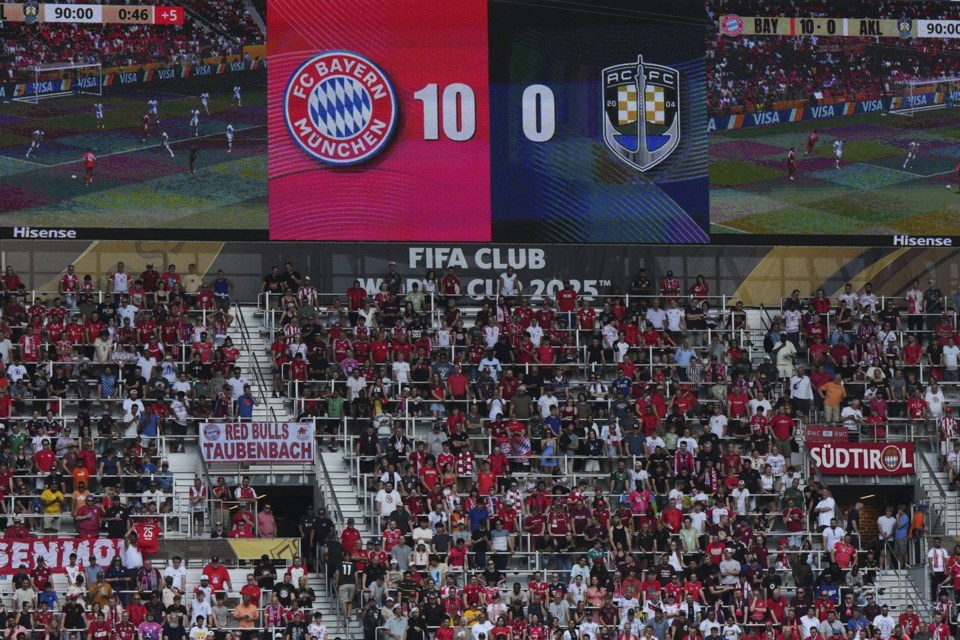
Bayern Munich opened their 2025 FIFA Club World Cup campaign with an overwhelming 10-0 demolition of amateur side Auckland City, as Jamal Musiala starred with a second-half hat-trick in a dominant Group C encounter.
Under the searing midday sun at Cincinnati’s main stadium, Bayern barely broke a sweat as they dismantled the New Zealand champions in a one-sided affair that left little to the imagination about the gulf in class.
Kingsley Coman, Michael Olise, and Thomas Müller each struck twice, while Sacha Boey also added his name to the scoresheet. Harry Kane featured from the start but was unable to get among the goals, exiting just after the hour mark to make way for Musiala.
Speaking post-match, Bayern head coach Vincent Kompany said, “We stayed professional and didn’t underestimate our opponent. This was about setting the tone, and we did exactly that.”
Coman opened the scoring just six minutes in, registering the first goal of the tournament after Saturday’s goalless stalemate between Inter Miami and Al Ahly. He doubled his tally in the 21st minute, either side of goals from Boey and Olise.
The French trio’s early fireworks paved the way for a five-star first-half performance. Müller added the fifth and Olise struck again in stoppage time with a sensational curling effort from the right flank, making it 6-0 by halftime.
Auckland City, who had to take unpaid leave from day jobs to participate in the competition, offered brave resistance in the second half but couldn’t keep Bayern at bay for long.
Musiala, introduced in the 61st minute, put on a clinical display with three goals in just 18 minutes, including a penalty he earned himself. The youngster’s impact ensured Bayern extended their lead to double digits.
Müller, playing his final tournament with Bayern, capped the evening with his 250th goal for the club in the 89th minute, sealing the 10-0 win.
The sheer magnitude of the defeat underscored the vast gap between elite European football and amateur-level sides. Despite the loss, Auckland interim coach Ivan Vicelich remained positive: “It’s a dream for our players to compete on this stage. We gave our all, even though the challenge was immense.”
The Bavarian giants, who previously lifted the Club World Cup in 2013 and 2020, now prepare for a stiffer test as they face Argentina’s Boca Juniors in Miami on Friday.
Auckland City will attempt to salvage pride when they face Benfica on the same day in Orlando.
Paris Saint-Germain began their FIFA Club World Cup campaign in emphatic fashion, thrashing Spanish side Atletico Madrid 4-0 in a blazing Group B opener at the Rose Bowl in Pasadena.
In front of a lively crowd of 80,619 spectators, the reigning European champions picked up right where they left off in the UEFA Champions League final, delivering a stylish attacking masterclass under the scorching Californian sun.
Fabian Ruiz, Vitinha, Senny Mayulu, and Lee Kang-In all found the net for the Ligue 1 champions, showcasing a level of fluidity and precision that left Atletico unable to respond.
PSG seized control from the outset, with Goncalo Ramos and Khvicha Kvaratskhelia testing Atletico goalkeeper Jan Oblak within the opening 20 minutes. The Spanish shot-stopper made early saves, but could do nothing to prevent PSG from drawing first blood.
A sharp, multi-pass move down the right led to Kvaratskhelia supplying a perfectly weighted layoff for Ruiz, who drilled home a low effort in the 19th minute to give PSG the lead.
Atletico’s frustrations mounted quickly. Defender Clement Lenglet received a yellow card for a clumsy foul on Achraf Hakimi, followed minutes later by another booking for Robin Le Normand, who brought down Ruiz during a counterattack.
PSG continued to apply relentless pressure. Although Atletico managed their first real effort just before half-time through Antoine Griezmann, whose strike forced a smart save from Gianluigi Donnarumma, the French side responded immediately.
Another explosive PSG move saw Kvaratskhelia break away and slide a pass to Vitinha, who calmly slotted past Oblak for a 2-0 advantage at the break.
Atletico briefly thought they had clawed back into the contest in the second half when Julian Alvarez fired a crisp shot into the net. However, VAR intervened, disallowing the goal after identifying a foul by Rodrigo De Paul in the build-up.
Despite increased intensity, Atletico failed to produce a single shot on target for the remainder of the game. Their evening worsened when Lenglet received a second yellow and subsequent red card in the 78th minute.
Moments later, substitute Alexander Sorloth missed a golden opportunity to reduce the deficit, skying his shot over the bar despite facing an open goal.
PSG took full advantage, with youngster Senny Mayulu capitalizing on a defensive mix-up to score the third in the 87th minute. The final nail came in stoppage time, when Lee Kang-In confidently converted from the penalty spot after a handball by Le Normand.
Next up, PSG will face Brazil’s Botafogo on Thursday in their second Group B fixture, before taking on MLS side Seattle Sounders on June 23.
In response to the renewed wave of violence in Benue State, the Nigerian military on Sunday deployed aerial surveillance across Makurdi and surrounding areas, including Guma and Gwer West Local Government Areas, following deadly attacks on Yelwata and Daudu communities.
Surveillance aircraft were observed hovering over the capital and nearby regions, as security agencies intensified efforts to contain the situation. A military source, speaking anonymously, confirmed the deployment aimed to monitor the area for swift tactical responses. “Residents should remain calm; the military is fully in control,” the officer assured.
This development coincided with the intervention of the Inspector General of Police (IGP), Kayode Egbetokun, who assumed direct oversight of the state’s security architecture. According to the Benue State Commissioner of Police, Emenari Ifeanyi, Special Forces have been deployed to strategic locations including Naka, Apa, Agatu, Daudu, and Yelwata.
“The IGP has sent Special Forces to Benue, with more expected. These are elite intelligence teams tasked with locating and neutralising the perpetrators,” Ifeanyi disclosed. He also noted that arrests had been made and emphasised the unified stance of all security agencies in restoring order.
Tragically, over 100 individuals were reportedly killed on Saturday when armed groups stormed the aforementioned communities, leaving many others injured. The attacks triggered widespread outrage and spontaneous protests in Makurdi on Sunday.
At the Wurukum Roundabout, protesters demanded urgent federal intervention and accountability. However, attempts by Deputy Governor Sam Ode and the Commissioner of Police to address the crowd were rebuffed, prompting the police to disperse them using teargas.
Explaining the situation, Ifeanyi linked the Yelwata attack to intensified operations in other flashpoints. “We’ve taken over Apa and Gwer West. The attackers are retaliating, but they are not in control, we are,” he asserted, highlighting ongoing tactical deployments even in remote bushes.
Meanwhile, President Bola Ahmed Tinubu has directed security chiefs to intensify operations in the state and restore peace. In a statement by his Special Adviser on Information and Strategy, Bayo Onanuga, the President called on Governor Hyacinth Alia to lead reconciliation efforts.
“This is the time for Governor Alia to act as a statesman and initiate peace-building dialogue. Our people must live in harmony. Leaders must unite and address grievances with justice and fairness,” the statement read.
President Tinubu described the killings as “inhuman and anti-progress,” urging political and community leaders to refrain from incendiary remarks that could escalate tensions. “Enough is enough. I have ordered decisive action to arrest and prosecute all perpetrators regardless of affiliations,” he affirmed.
Joining voices of condemnation, Labour Party presidential candidate Peter Obi described the massacre as a national disgrace and a failure of leadership. “Every life lost is irreplaceable. We must rise above excuses and deliver security for all Nigerians,” he stated via his official X handle.
Pope Leo also offered prayers for the victims, describing the violence as a “terrible massacre” that targeted over 200 internally displaced persons sheltering at a Catholic mission in Yelwata. Speaking during the Sunday Angelus prayer, the Pope expressed concern for Nigeria’s worsening security climate and urged for the protection of rural Christian communities.
“I pray that justice, peace, and security will prevail in Nigeria, especially for the vulnerable communities of Benue,” the pontiff said, while also remembering victims of violence in Sudan, Myanmar, Ukraine, and the Middle East.
As Sunday, June 15, 2025, draws near, families across Nigeria and around the world are preparing to honor the men who quietly shape our lives—fathers. Celebrated on the third Sunday of June each year, Father’s Day 2025 is not just another holiday; it is a moment to reflect on the strength, warmth, and sacrifices of dads, stepfathers, grandfathers, and father figures.
While Mother’s Day often captures much of the spotlight, Father’s Day deserves equal recognition for its celebration of the pillars of strength within many households. This day provides a rare chance to express gratitude to the men who fix broken furniture, offer late-night care, teach life’s earliest lessons, and provide unwavering support—even if they do so without fanfare or flourish.
Why Father’s Day Deserves Celebration
Too often, the efforts of fathers go unnoticed. They work long hours, miss personal indulgences, and quietly bear the burden of providing a better life for their families. From choosing family outings over personal plans to offering wisdom without seeking validation, fathers play a deeply impactful role that deserves acknowledgment.
Contrary to outdated stereotypes of strict, distant parenting, today’s fathers are emotionally involved, nurturing, and engaged. They are present in school drop-offs, late-night study sessions, bedtime stories, and Sunday family meals. Father’s Day is a perfect occasion to celebrate these unsung heroes and reconnect with them in meaningful ways.
Expressing Gratitude Through Words
If you’re looking for the perfect way to express your appreciation this Father’s Day, here are touching messages and wishes that can warm even the most stoic of hearts:
“To the man whose strength and kindness guide our family, Happy Father’s Day. Your love means everything.”
“Dad, your courage inspires me. You’ve shown me what resilience looks like. I’m proud to be your child.”
“Happy Father’s Day to the man who’s always been my rock. Your presence brings peace and joy to our lives.”
“Your advice, your hugs, and your belief in me have shaped who I am. Thank you, Dad.”
“Dear papa, even without a cape, you’re the superhero of my story. Happy Father’s Day.”
These sentiments serve as gentle reminders of the impact fathers have had—from riding lessons to financial advice, from bedtime talks to career guidance. Some messages also reflect on personal growth and gratitude:
“Now that I’m a father, I understand the effort and love you poured into raising me. Thank you, Dad.”
“Your strict words taught me discipline, your silence taught me patience, and your love taught me strength.”
“Papa, every sacrifice you made laid the foundation for my dreams. I’m grateful beyond words.”
For the Tech-Savvy Dads
In this digital age, many fathers are the family’s biggest cheerleaders online—forwarding inspirational messages, sending good morning greetings, or sharing funny memes in the family WhatsApp group. If your dad fits this description, here are a few messages you can text or share with a personalized GIF:
“Good morning, Dad! Wishing you a wonderful Father’s Day filled with love and laughter. I love you.”
“Dear papa, we may not say ‘I love you’ out loud, but everything you do speaks volumes. Thank you.”
“You never asked for thanks, but you deserve it every single day. Happy Father’s Day, Dad.”
“Your humor, strength, and guidance shaped my life—and I can only hope to pass that on. Happy Father’s Day!”
Celebrating More Than a Day
Father’s Day is more than just a date on the calendar. It is an opportunity to heal distant bonds, express unspoken appreciation, and acknowledge the emotional presence and life lessons that fathers generously provide.
This year, as families across the country mark Father’s Day 2025, remember to go beyond material gifts. Share a moment, a message, or a memory. Whether you write a card, send a GIF, make a phone call, or simply say “thank you,” what matters is the recognition of love that fathers so richly deserve.
The highly anticipated 2025 FIFA Club World Cup will make its expanded debut in the United States this summer, ushering in a new era for global club football. This 21st edition of the tournament has been significantly restructured to include 32 elite teams from across the globe competing in 63 high-stakes matches across 29 days of football, culminating on July 15.
This tournament marks the first time the Club World Cup will follow a World Cup-style format, replacing the previous six-to-eight-team setup. Under the updated structure, the 32 qualified clubs have been divided into eight groups of four. Each team will play three group stage matches, with the top two from each group advancing to the knockout rounds, including the round of 16, quarter-finals, semi-finals, and ultimately, the final showdown.
Qualification Breakdown by Confederation
Qualification for this expanded edition was based on club performances from 2021 through 2024 in their respective continental competitions. Europe (UEFA) has 12 representatives, while South America’s CONMEBOL contributes six. The African (CAF), Asian (AFC), and North American (CONCACAF) confederations each have four qualifying clubs, and the Oceania Football Confederation (OFC) sends one. One additional slot is allocated to a club from the host nation, the United States.
In instances where a club claimed its continental crown more than once during the qualifying cycle, the extra slot reverted to the next highest-ranked club in that confederation. For example, Real Madrid’s two UEFA Champions League titles within this window opened the door for another European club to join the roster.
Inter Miami, led by Lionel Messi, secured the host nation’s slot. Their record-breaking 2024 Major League Soccer campaign earned them the Supporters’ Shield and a place in the tournament.
UEFA employed its club coefficient system to finalize its entries, while other federations relied on FIFA’s four-year points model. This metric awards three points per win, one for a draw, and additional points for each advancement in tournament rounds.
Due to their dominance in recent CONMEBOL Libertadores tournaments, Brazil will field four teams—more than any other nation. Generally, a maximum of two clubs per country is allowed, with Brazil being the only exception.
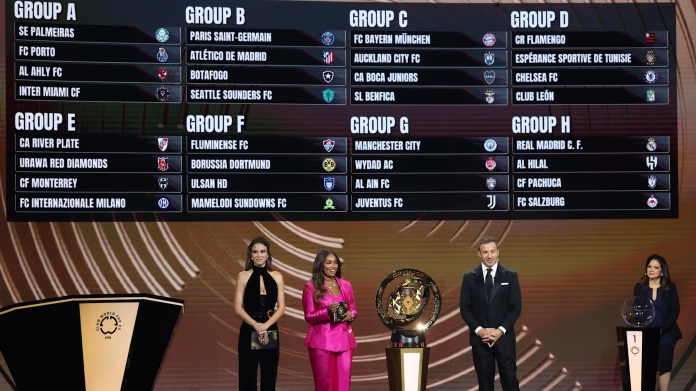
Full Group Stage Line-up
Group A: Al Ahly (Egypt), FC Porto (Portugal), Palmeiras (Brazil), Inter Miami (USA)
Group B: Paris Saint-Germain (France), Atlético Madrid (Spain), Botafogo (Brazil), Seattle Sounders (USA)
Group C: Bayern Munich (Germany), Auckland City (New Zealand), Boca Juniors (Argentina), Benfica (Portugal)
Group D: Flamengo (Brazil), Espérance de Tunis (Tunisia), Chelsea (England), LAFC (USA)
Group E: River Plate (Argentina), Urawa Red Diamonds (Japan), Monterrey (Mexico), Inter Milan (Italy)
Group F: Fluminense (Brazil), Borussia Dortmund (Germany), Ulsan HD (South Korea), Mamelodi Sundowns (South Africa)
Group G: Manchester City (England), Wydad Casablanca (Morocco), Al Ain (UAE), Juventus (Italy)
Group H: Real Madrid (Spain), Al-Hilal (Saudi Arabia), Pachuca (Mexico), Red Bull Salzburg (Austria)
Confirmed Match Venues
Twelve world-class stadiums across 11 cities in the U.S. will host the matches:
Hard Rock Stadium (Miami, FL)
MetLife Stadium (East Rutherford, NJ)
Lumen Field (Seattle, WA)
Mercedes-Benz Stadium (Atlanta, GA)
Bank of America Stadium (Charlotte, NC)
TQL Stadium (Cincinnati, OH)
Rose Bowl (Los Angeles, CA)
GEODIS Park (Nashville, TN)
Camping World Stadium (Orlando, FL)
Inter&Co Stadium (Orlando, FL)
Lincoln Financial Field (Philadelphia, PA)
Audi Field (Washington, D.C.)
Complete Group Stage and Knockout Schedule
(All times in Indian Standard Time—IST)
Opening Fixtures—June 15
Al Ahly vs Inter Miami – 5:30 AM (Group A)
Bayern Munich vs Auckland City PM (Group C)
June 16
PSG vs Atlético Madrid AM (Group B)
Palmeiras vs Porto – 3:30 AM (Group A)
Botafogo vs Seattle Sounders—7:30 AM (Group B)
June 17
Chelsea vs LAFC – 12:30 AM (Group D)
Boca Juniors vs Benfica – 3:30 AM (Group C)
Flamengo vs Espérance – 6:30 AM (Group D)
Fluminense vs Borussia Dortmund PM (Group F)
Wednesday, June 18
Group E: River Plate vs Urawa Red Diamonds—12:30 AM
Group F: Ulsan HD vs Mamelodi Sundowns—3:30 AM
Group E: Monterrey vs Inter Milan—6:30 AM
Group G: Manchester City vs Wydad AC—9:30 PM
Thursday, June 19
Group H: Real Madrid vs Al-Hilal—12:30 AM
Group H: Pachuca vs Red Bull Salzburg—3:30 AM
Group G: Al Ain vs. Juventus—6:30 AM
Group A: Palmeiras vs Al Ahly
Friday, June 20
Group A: Inter Miami vs Porto – 12:30 AM
Group B: Seattle Sounders vs Atlético Madrid—3:30 AM
Group B: Paris Saint-Germain vs. Botafogo—6:30 AM
Group C: Benfica vs Auckland City—9:30 PM
Group D: Flamengo vs. Chelsea—11:30 PM
Saturday, June 21
Group D: LAFC vs Espérance Sportive de Tunis – 3:30 AM
Group C: Bayern Munich vs Boca Juniors—6:30 AM
Group F: Mamelodi Sundowns vs Borussia Dortmund—9:30 PM
Sunday, June 22
Group E: Inter Milan vs Urawa Red Diamonds—12:30 AM
Group F: Fluminense vs Ulsan HD – 3:30 AM
Group E: River Plate vs. Monterrey—6:30 AM
Group G: Juventus vs Wydad AC—9:30 PM
Monday, June 23
Group H: Real Madrid vs. Pachuca—12:30 AM
Group H: Red Bull Salzburg vs Al-Hilal—3:30 AM
Group G: Manchester City vs Al Ain—6:30 AM
Tuesday, June 24
Group B: Seattle Sounders vs Paris Saint-Germain—12:30 AM
Group B: Atlético Madrid vs. Botafogo—12:30 AM
Group A: Inter Miami vs. Palmeiras—6:30 AM
Group A: Porto vs Al Ahly—6:30 AM
Wednesday, June 25
Group C: Auckland City vs Boca Juniors—12:30 AM
Group C: Benfica vs Bayern Munich—12:30 AM
Group D: LAFC vs. Flamengo—6:30 AM
Group D: Espérance Sportive de Tunis vs. Chelsea—6:30 AM
Thursday, June 26
Group F: Borussia Dortmund vs Ulsan HD—12:30 AM
Group F: Mamelodi Sundowns vs. Fluminense—12:30 AM
Group E: Inter Milan vs River Plate—6:30 AM
Group E: Urawa Red Diamonds vs. Monterrey—6:30 AM
Friday, June 27
Group G: Juventus vs Manchester City—12:30 AM
Group G: Wydad AC vs Al Ain—12:30 AM
Group H: Al-Hilal vs. Pachuca—6:30 AM
Group H: Red Bull Salzburg vs Real Madrid—6:30 AM
Knockout stage
Saturday, June 28
Winner of Group A vs Runner-up Group B—9:30 PM
Sunday, June 29
Winner of Group C vs Runner-up Group D—1:30 AM
Winner of Group E vs Runner-up Group F—9:30 PM
Monday, June 30
Winner Group G vs Runner-up Group H—1:30 AM
Tuesday, July 1
Winner Group B vs Runner-up Group A—12:30 AM
Winner Group D vs Runner-up Group C—6:30 AM
Wednesday, July 2
Winner Group F vs Runner-up Group E—12:30 AM
Winner Group H vs Runner-up Group G—6:30 AM
Saturday, July 5
Quarter-final 1 – 12:30 AM
Quarter-final 2—6:30 AM
Quarter-final 3 – 9:30 PM
Sunday, July 6
Quarter-final 4—1:30 AM
Wednesday, July 9
Semi-final 1—12:30 AM
Thursday, July 10
Semi-final 1—12:30 AM
Monday, July 14
Club World Cup Final—12:30 AM
Knockout Round Overview
The top two teams from each group will face off in a knockout bracket starting on June 28. The round of 16 matches continues until July 2, followed by quarter-finals from July 5 to July 6. The semi-final clashes are scheduled for July 9 and 10, setting the stage for the grand finale on July 14.
Tournament Legacy and Favorites
The last Club World Cup in 2023 saw Manchester City claim the title in a seven-team contest. Real Madrid enters this edition as the most decorated team in the competition’s history with five titles. All eyes will be on whether the Spanish giants can extend their dominance or if new champions will emerge under the expanded format.
As global attention turns to the U.S. this summer, the 2025 FIFA Club World Cup promises to deliver world-class competition, thrilling moments, and a redefining chapter in club football history.
In a strategic move set to reshape the Nigerian energy landscape, the Dangote Petroleum Refinery has revealed plans to commence full-scale distribution of petrol and diesel across the country beginning August 15, 2025.
This development marks a significant milestone in Nigeria’s downstream sector as the Lagos-based $20 billion refinery gets set to roll out 4,000 new compressed natural gas (CNG)-powered tankers. The move is aimed at accelerating fuel supply nationwide and addressing the logistical challenges that have long plagued product distribution.
According to a statement issued on Sunday, the fuel supply initiative is open to a wide range of industry players, including independent and major marketers, petrol station operators, manufacturers, telecom companies, aviation businesses, and other large-volume fuel consumers.
In addition to the CNG tanker fleet, Dangote Refinery announced plans to establish a nationwide chain of daughter booster CNG stations, supported by over 100 gas-powered trucks dedicated to enhancing last-mile delivery capabilities.
The refinery emphasized that this logistics support would include free delivery of petroleum products to partners, with the goal of eliminating systemic supply delays, slashing distribution costs, and ensuring consistent product availability across urban and rural areas.
“We are proud to unveil a game-changing distribution program that will commence across Nigeria on August 15, 2025,” the statement read. “This initiative, targeted at marketers, large-scale industrial fuel users, and key sectors of the economy, is designed to provide cost-free, efficient logistics while supporting national energy infrastructure and growth.”
The move is part of Dangote Group’s larger vision to reform Nigeria’s petroleum distribution architecture, with sustainability and economic revitalization as core drivers. According to the refinery, the rollout is a central piece of its broader strategy to reduce logistical bottlenecks and enhance energy security for businesses and consumers alike.
In a recent media interaction, Alhaji Aliko Dangote, president of the Dangote Group, hinted at an impending “major shake-up” in Nigeria’s downstream sector—not centered on price slashing, but on comprehensive structural reforms that will redefine how fuel is delivered and consumed.
This revelation follows President Bola Tinubu’s recent inspection of the refinery facility in Lekki, Lagos, which Dangote described as a symbolic moment in Nigeria’s industrial evolution.
The timing of this announcement is also significant, as it comes amid threats of strike action by tanker operators in Lagos. The drivers have vowed to suspend fuel loading operations starting Monday over the alleged N12,500 charge per truck imposed for the E-Call Up system implemented along the Lekki-Epe corridor.
To further strengthen fuel supply chains, Dangote Refinery has also unveiled a credit scheme for bulk buyers purchasing volumes from 500,000 liters and above. The program is expected to rejuvenate inactive fuel stations, spur small business activities, ease inflationary pressure, and align with the Tinubu administration’s broader economic recovery plan.
Additional details about the rollout and regional coverage of the fuel distribution network are expected to be released in the coming weeks.
As anticipation builds for the most expansive 2026 FIFA World Cup in history, co-hosted by the United States, Mexico, and Canada, several nations have already punched their tickets to the landmark 48‑team tournament.
Six Asian nations have secured automatic qualification: Japan, Iran, South Korea, Jordan, Australia, and Uzbekistan. Their qualification was confirmed through the rigorous third-round group stage in AFC qualifying.
🇺🇸 North, Central America & Caribbean (CONCACAF)
Host countries United States, Canada, and Mexico automatically receive three of the region’s six allocated slots for 2026 .
🇳🇿 Oceania (OFC)
New Zealand made history as the sole Oceania qualifier, earning the federations’ first-ever guaranteed berth via a third‑round playoff win over New Caledonia on March 24, 2025 .
🇸🇦 South America (CONMEBOL)
The continent’s heavy hitters Argentina, Brazil, and Ecuador have all secured direct slots. Argentina topped the standings in March; Brazil clinched qualification with a 1–0 win over Paraguay on June 10, and Ecuador gained their spot via a 0–0 draw with Peru.
🇦🇫 Africa (CAF) & 🇪🇺 Europe (UEFA)
To date, no teams from Africa or Europe have officially qualified. Their qualification processes will continue through late 2025, with UEFA concluding in November and CAF’s stages running until October.
What’s Next on the Qualification Calendar
CONMEBOL continues its double-round robin format, with six direct slots available and a seventh for the inter‑continental playoff.
UEFA and CAF will see their final group stages conclude in the fall of 2025.
The Inter‑confederation playoffs, featuring six teams from various federations, are scheduled for March 2026 to determine the final two World Cup spots.
The full lineup of 48 teams is expected to be finalized no later than March 31, 2026.
The Del-York Group has entered into a landmark partnership with the Tribeca Film Festival to host the 2025 African Film Spotlight, a major initiative aimed at showcasing African storytelling and creativity on a global stage.
In a statement, Del-York described the collaboration as “a landmark initiative created to elevate African storytelling and celebrate the continent’s creative excellence on a global platform.”
Themed “Cross-Continental Collaboration & The Power of Partnership,” the African Film Spotlight will feature curated screenings by African filmmakers, highlight emerging talent, and facilitate conversations around innovation and collaboration within the global film industry.
President of Del-York Group, Linus Idahosa, said, “The African Film Spotlight is set to bring curated African stories, filmmakers, and emerging talents to the forefront of global conversations.”
The 2025 edition of the Tribeca Film Festival will host feature film screenings, industry panels, and networking sessions designed to connect African creatives with international stakeholders.
According to Del-York, the partnership reflects its commitment to promoting cultural diplomacy and building long-term structures within Africa’s creative ecosystem. “It also reinforces the company’s broader vision of positioning Africa as a powerhouse of innovation, storytelling, and talent export,” the statement read.
The initiative is expected to attract global media attention, deepen international creative ties, and open new opportunities for African filmmakers on the world stage.
Del-York, a key player in Africa’s creative economy, is also behind the Kebulania Lagos Film City, a major studio project being developed in partnership with the Lagos State Government.
Founded by actor Robert De Niro, the Tribeca Film Festival is one of the world’s most respected cultural showcases, drawing top creatives, industry executives, and global audiences each year.
The Nigerian National Petroleum Company Limited (NNPC Ltd.) has reported a revenue of ₦5.89 trillion and a Profit After Tax (PAT) of ₦748 billion for the month of April 2025. The figures were disclosed in NNPC Ltd.’s Monthly Report Summary for April, released on Thursday.
The report highlights key performance indicators, including crude oil and condensate output, gas production, revenue, PAT, and updates on major projects and reforms.
According to the report, crude oil and condensate production averaged 1.606 million barrels per day (bpd), while natural gas output stood at 7.354 million standard cubic feet per day. These figures reflect only NNPC Ltd.’s operations and do not include production data from independent operators, as reported by the Nigerian Upstream Petroleum Regulatory Commission (NUPRC).
Petrol availability across NNPC Ltd.’s retail stations was at 54 percent for the month, while upstream pipeline reliability was recorded at 97 percent.
In terms of financial commitments, the company made statutory payments totaling ₦4.22 billion between January and March.
The report also detailed progress on strategic initiatives, including collaboration with venture partners to boost sustainable production. NNPC Ltd. noted it had completed the implementation of relevant presidential directives and executive orders in its upstream operations.
On infrastructure projects, the company recorded significant progress on two critical gas pipeline projects. The Obiafu-Obrikom-Oben (OB3) gas pipeline reached 95 percent completion, while the Ajaokuta-Kaduna-Kano (AKK) pipeline was 70 percent complete. Technical interventions were also carried out to resolve challenges related to River Niger crossings on these projects.
Turnaround maintenance (TAM) was completed during the period on several Oil Mining Leases (OMLs), including OMLs 18, 58, 118, and 133.
The status of the nation’s refineries—Port Harcourt Refining Company (PHRC), Warri Refining and Petrochemical Company, and Kaduna Refining and Petrochemical Company—is currently under review, the report stated.
NNPC Ltd. clarified that all operational and financial data presented are provisional and unaudited and apply to the month of April unless otherwise stated.
The National Insurance Commission (NAICOM) has announced plans to issue supplementary guidelines for the annuity business in Nigeria, as part of ongoing efforts to strengthen regulation and protect annuitants. The development was disclosed during the 18th meeting of the Insurers Committee on Wednesday by Mr. Moruf Apampa, Vice Chairman of the committee’s Subcommittee on Communication and Stakeholder Engagement.
Earlier this year, NAICOM introduced revised regulations for annuity operations, which took effect on February 1, 2025. The new supplementary guidelines aim to further stabilise the sector and address gaps observed in recent months.
Apampa noted that the additional regulations are intended to safeguard the interests of annuitants and enhance confidence in the insurance industry. According to him, the move is also designed to prevent operational failures among insurers involved in annuity contracts.
Providing further context, another member of the subcommittee and NAICOM spokesperson, Abba Inuwa, explained that the supplementary guidelines are a proactive response to evolving conditions in the insurance landscape. He stressed that regulatory frameworks must adapt to close loopholes and ensure the sustained integrity of the annuity market.
An annuity is a financial contract between an individual and an insurance company, where the insurer agrees to make periodic payments to the insured, either immediately or at a future date, in exchange for a lump sum or series of instalments. The arrangement typically guarantees a fixed income for life.
NAICOM’s earlier guideline mandated all insurance firms engaged in annuity business to appoint at least one qualified actuary responsible for asset-liability matching (ALM). In cases where insurers lack in-house actuaries, the guideline allows for outsourcing to an external actuarial firm for a maximum of two years, subject to extension with the commission’s approval. Actuaries, whether internal or external, must be approved by NAICOM and are required to sign off on all ALM reports in accordance with the Prudential Guidelines.
In addition to annuity-focused regulation, the commission is working on other strategic guidelines to support broader economic and technological shifts. Apampa revealed that new frameworks for InsurTech operations and cyber risk insurance are underway. He said the insurance industry must align with the rise of technology-driven firms and provide adequate coverage for emerging digital risks.
The issue of claims payment also featured prominently in the committee’s discussions. Apampa highlighted NAICOM’s continued monitoring of outstanding claims and noted that the Commissioner for Insurance, Mr. Olusegun Omosehin, had commended the industry for recent improvements in claims settlement performance. Efforts are also being made to streamline the claims process for third-party motor insurance, as part of NAICOM’s broader consumer protection agenda.
For most Nigerians, the phrase “government job” conjures up images of tired civil servants pushing paper in dusty offices, waiting for delayed salaries and praying for pension. But that’s only one side of the story.
If you zoom out a little—or better still, look up the ladder—you’ll find a different reality. A handful of government roles pay not just well, but jaw-droppingly well. We’re talking tens of millions monthly, international travel allowances, plush offices, and perks that rival top private-sector gigs.
So, if you’ve been dismissing government work as a dead end, maybe it’s time to adjust the lens.
Here are seven of the highest-paying government jobs in Nigeria—and what it really takes to land them.
1. President of Nigeria
Let’s not kid ourselves—the President isn’t just the most powerful individual in Nigeria; he’s also the most pampered. Officially, the salary sits around ₦1.17 million per month. Sounds modest, right? Now add the security vote (which can run into billions annually), housing, feeding, estacode, domestic staff, and the not-so-small matter of lifetime benefits.
And that’s not even touching Aso Rock—the presidential palace that makes Banana Island mansions look like guest houses.
How do you get the job?
Well, you’d have to win a national election. With millions of votes. And no, JAMB and WAEC results won’t help you here.
2. Supreme Court Justices
These folks don’t just interpret the law—they shape the soul of the nation. From election disputes to landmark judgments, their words carry weight that echo across decades.
The Chief Justice earns about ₦1.2 million monthly. Now throw in generous allowances, official residences, diplomatic passports, and access to international conferences, and suddenly, law school doesn’t seem like a bad idea.
How do you get there?
Start as a lawyer. Build your way up—Magistrate, High Court, Appeal Court—and hope your name rings loud in legal circles. Oh, and be ready to dedicate 25+ years to the bench.
3. Permanent Secretaries
Ministers make the headlines, but Permanent Secretaries run the show. Quietly. Strategically. Permanently.
Their base salary can exceed ₦6.9 million monthly (yes, that’s not a typo), but what really fattens the account is travel allowances. If you’re on the Finance Ministry’s international delegation, you could pocket up to $2,000 per day while abroad. Now imagine five trips a year.
Hot ministries include:
Petroleum Resources
Foreign Affairs
Finance
How do you rise?
It’s a long climb through the civil service. You’ll need experience, loyalty, and—let’s be honest—a few strategic handshakes.
4. CBN Executives
Running Nigeria’s apex bank isn’t a regular 9-to-5 gig. It’s more like steering a ship through an economic storm—every day. From inflation control to interest rates, the Central Bank of Nigeria (CBN) calls the shots that affect every wallet in the country.
The Governor reportedly earned over ₦2 million monthly, with directors and deputy governors pulling close behind. But the real attraction? Influence. You’re literally shaping the nation’s financial DNA.
How to get in?
You’ll need deep expertise in economics, finance, or banking. It also helps if your name shows up favorably on the President’s shortlist.
5. NNPC Top Executives
The Nigerian National Petroleum Company (NNPC) is the crown jewel of Nigeria’s oil economy—and its executive offices are dripping in both power and cash.
Entry-level salaries hover between ₦180,000–₦350,000 monthly. But climb high enough, and you’re looking at ₦1 million to ₦5 million+, especially for roles like Group Managing Director, Chief Petroleum Engineer, or Head of Global Crude Sales.
In some boom years, bonuses tied to oil price performance have made execs very rich.
What’s the path?
Start in the oil sector. Study petroleum engineering, business, or energy economics. Or…well, be connected.
6. University Professors – Academia’s Quiet Millionaires
This one always surprises people.
Professors at federal universities under the CONUASS 7 pay structure can earn over ₦2 million monthly. Especially in fields like Medicine, Engineering, Law, and Business. And that’s just their official salary—many double that figure through consulting, external exams, and research grants.
They also get perks like:
Research funding
Sabbatical leaves abroad
Conference sponsorships
Want to become one?
Get a PhD, spend years lecturing, publish your brains out, and defend your work like your life depends on it. Because sometimes… it does.
7. Directors in Revenue Agencies
Whether it’s FIRS, Customs, or NIMASA, these are the agencies that collect for the country—and they get a juicy cut of the action.
Directors here take home ₦800,000–₦1.5 million monthly. But when revenue performance comes into play, bonuses can spike that figure. Some even get a small percentage of funds recovered. That’s right—hit your target, and the government says “thank you” in cold hard cash.
The job?
Oversight of major audits, maritime security, enforcement ops, and billion-naira collections. It’s stressful, but lucrative.
Entry path?
Start with accounting, auditing, or economics. Climb through the ranks. Pass internal service exams. And yes—again—connections matter.
A Few Hard Truths…
Before you start Googling “How to become a Supreme Court Justice,” a quick reality check: Most of these roles require decades of experience. Many need political appointments or insider access. And competition is beyond fierce.
But here’s the thing: they also require competence. Nobody puts a clueless person in charge of crude exports or monetary policy. So if you’re strategic, patient, and genuinely good at what you do, the door may just open someday.
Final Word
You might be asking: “Are these jobs worth it?” Well, for the pay, security, and prestige—yes. For the politics, bureaucracy, and years of waiting—not always.
But if you’re playing the long game and you know how to position yourself, a high-paying government role could be your ticket to financial freedom with a side of national impact.