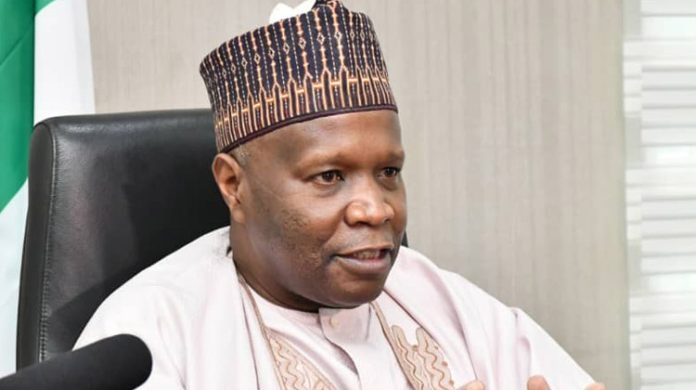
The Gombe State Government, in partnership with several Local Government Areas, has approved projects worth over N2 billion to boost rural infrastructure, agriculture, and economic growth. The projects include the installation of solar-powered streetlights and upgrades to key facilities across the state.
Announcing the development on Tuesday after the State’s Joint Project Council meeting, Mr. Mahmood Yusuf, Director-General of the Gombe State Joint Project Development Agency, said the projects aim to improve security, promote economic activities, and strengthen the agricultural sector.
He disclosed that additional works have been approved for the National Agricultural Land Development Agency (NALDA) in Yamaltu Deba LGA to provide greater support for farmers and agribusinesses in the area.
Yusuf also revealed that the ongoing Kaltoma market project in Billiri would be upgraded to a one-storey building at a revised cost of N213 million. In addition, six communities in Nafada LGA will benefit from solar streetlight installations valued at N681.4 million, while newly constructed roads in Tumfure, Akko LGA, will also be illuminated with solar streetlights at a cost of N1.143 billion.
“These projects are designed not only to improve infrastructure but also to enhance security, encourage night-time business operations, and drive agricultural productivity across the state,” Yusuf emphasized.
Health workers in Ekiti State have expressed strong commendation for Governor Biodun Oyebanji, applauding him for implementing what they described as impactful and people-focused policies that have significantly transformed and revitalised the state’s health sector.
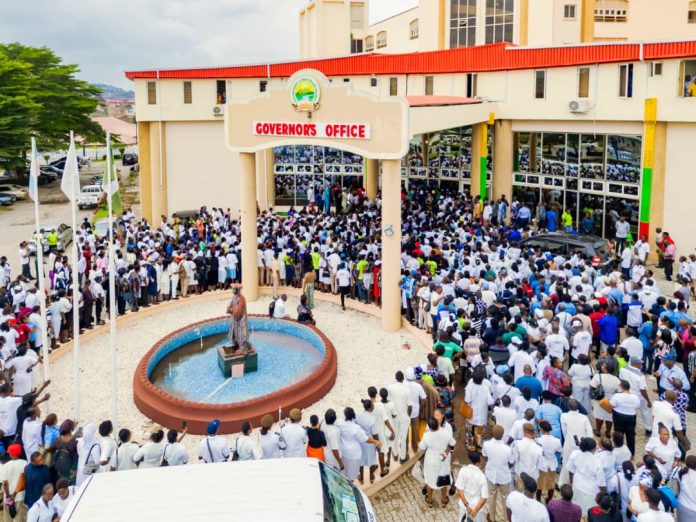
Doctors, nurses, pharmacists, midwives, laboratory scientists, community health officers, and environmental health professionals lauded the governor for improved infrastructure, prompt salary payments, and enhanced working conditions. They held a solidarity walk from Fajuyi Pavilion to the Governor’s Office in Ado Ekiti, where they presented a plaque titled “Health Sector Appreciates His Excellency Biodun Oyebanji” and pledged support for his re-election.
The Nigeria Labour Congress (NLC) Chairman in Ekiti, Olatunde Kolapo, praised Oyebanji for prioritising workers’ welfare, including clearing arrears owed to local and state government workers as well as retirees. Kolapo noted that the governor had twice increased subventions to tertiary institutions and approved the swift implementation of the new N70,000 minimum wage. He expressed confidence that Oyebanji would deliver even greater achievements in his second term.
Ekiti State Commissioner for Health, Dr Oyebanji Filani, described the current administration as ushering in a “golden era” for the health sector. He highlighted key achievements such as the timely implementation of hazard allowances, salary adjustments, pay parity for doctors, settlement of over a decade’s worth of pension arrears, and improved security for retirees.
Filani also listed the recruitment of more than 250 health workers, rehabilitation of 11 general hospitals, renovation of 103 primary healthcare centres and staff quarters, as well as investments in ICT, solar power, and water supply. He praised the establishment of 16 emergency operation centres across local government areas and the Ulerawa Scheme, which guarantees defined healthcare services for all residents. Upgrades at the Ekiti State University Teaching Hospital and the elevation of Ikole Specialist Hospital to a Federal Medical Centre were described as outcomes of visionary leadership.
Governor Oyebanji, represented by the Secretary to the State Government, Prof. Habibat Adubiaro, thanked the health workers for their show of support and promised further improvements in both healthcare facilities and staff welfare. Adubiaro noted that the workers’ endorsement for a second term was a testament to the progress recorded under Oyebanji’s leadership and assured them that the administration would continue to deliver on its promises.
A new National Chairman of the All Progressives Congress (APC) is expected to emerge today as the party’s National Executive Committee (NEC) holds a crucial meeting in Abuja. The NEC session, scheduled for 10 am at the party’s national secretariat, will appoint a substantive replacement for Abdullahi Ganduje, who recently resigned due to health reasons.
In the build-up to today’s meeting, the APC National Working Committee (NWC), the party’s top administrative organ, held a closed-door session on Monday to finalize the NEC agenda. According to party insiders, the discussions primarily focused on selecting a new national chairman and approving a timetable for the party’s congresses ahead of its 2026 national convention.
Key preparations have been underway since Monday, including high-level strategy meetings between APC directors, state chairmen, and governors. Acting National Chairman, Ali Bukar Dalori, met with APC state chairmen on Tuesday at the party secretariat to secure their backing for the proposed timetable. Later that day, APC governors convened with the NWC in Asokoro, Abuja, in what was described as a show of unity ahead of the leadership transition.
“All arrangements have been made for a smooth NEC meeting,” an NWC member confirmed. “Mr. President, the Vice President, party governors, and other NEC members have been invited, and we are confident the meeting will produce a substantive National Chairman to replace Dr. Abdullahi Ganduje.”
The NEC meeting is expected to focus on finalizing the appointment of the new party chairman while also addressing other strategic matters, including the roadmap for upcoming congresses.
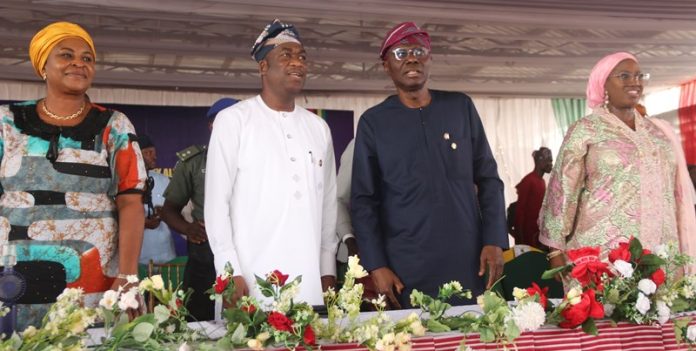
Lagos State Governor Babajide Sanwo-Olu on Tuesday took a major step toward addressing gender inequality and promoting inclusive economic growth with the launch of the Women Economic Empowerment (WEE) Policy Roadmap at Shell Hall, MUSON Centre, Onikan.
Developed by the Ministry of Women Affairs and Poverty Alleviation (WAPA), the roadmap provides a strategic framework designed to eliminate systemic barriers faced by women in key sectors such as agriculture, entrepreneurship, education, and emerging industries like technology.
“This initiative reflects our administration’s unwavering commitment to gender equity and inclusive economic growth,” Governor Sanwo-Olu stated during his keynote address. “Women constitute nearly half of our population, yet they continue to face substantial barriers in education, skill acquisition, access to finance, and participation in both traditional and emerging industries.”
The WEE Roadmap is anchored on five critical pillars — Agriculture, Entrepreneurship, Traditional Labour Market, Emerging Industries, and Education and Skill Acquisition. It sets out interventions such as improved access to finance, digital inclusion, enhanced working conditions, and gender-responsive policies grounded in data-driven strategies.
“In agriculture, we aim to increase women’s access to digital tools, e-commerce platforms, and targeted financing to grow agribusinesses and connect them to broader markets,” Sanwo-Olu explained. “In entrepreneurship, the roadmap recommends designing gender-friendly financial services and strengthening mentorship networks.”
The governor highlighted that the policy was shaped through extensive stakeholder engagement, involving government ministries, private sector leaders, NGOs, community representatives, and women’s groups, including persons with disabilities. “This participatory approach helped shape a contextual and inclusive understanding of who a woman is in Lagos State. Her aspirations and challenges, from youth to old age, must be central to the policies we design,” he said.
Acknowledging challenges such as cultural biases against girls’ education, underrepresentation in STEM, and legal and infrastructural gaps in the labour market, Sanwo-Olu stressed that the roadmap is a strategic instrument for unlocking women’s full potential. “Empowering women economically does not only lift individual households, it strengthens our communities and grows our economy,” he added.
The governor called on all stakeholders to ensure full implementation of the roadmap, urging them to see it “not just as a policy on paper, but as a living instrument that transforms lives across Lagos.”
Commissioner for Women Affairs and Poverty Alleviation, Bolaji Dada, described the roadmap as a practical strategy to address systemic economic barriers. “At WAPA, we see this roadmap as a launchpad to expand our vocational training programmes, strengthen micro-enterprise support, foster public-private partnerships, and drive policy advocacy for women in the informal sector,” she said.
“When we empower a woman, we uplift a household, strengthen the economy, and build a more prosperous Lagos. Women’s empowerment is not a women’s issue, it is a Lagos issue, a development issue, and a moral imperative,” Dada concluded.
The African Democratic Congress (ADC) has criticized the Tinubu administration for what it described as a “misleading celebration” of Nigeria’s recently rebased Gross Domestic Product (GDP), calling the announcement a “public relations stunt” that fails to address the country’s deep economic challenges.
In a strongly worded statement issued by its National Publicity Secretary, Mallam Bolaji Abdullahi, the party dismissed the fanfare around the new GDP figures as “economic cosmetics,” arguing that the rebasing exercise does nothing to improve the quality of life for ordinary Nigerians. The ADC stressed that millions of citizens continue to grapple with soaring food prices, worsening poverty levels, and failing infrastructure, despite government claims of economic progress.
The opposition party noted that while GDP rebasing is a neutral statistical exercise, the government’s handling of it has only “exposed the economic decay and leadership failure of the All Progressives Congress (APC) over the past decade.” It pointed out that Nigeria’s GDP, which stood at $509 billion in 2014 after a previous rebasing, has now fallen to $244 billion, dropping the country from Africa’s largest economy to fourth place behind South Africa, Egypt, and Algeria.
“The nominal GDP may have risen in naira terms, but it is a hollow figure, driven by currency devaluation that has stripped Nigerians of their purchasing power,” the statement read. “GDP per capita has collapsed from $3,223 in 2014 to barely $1,000 today. This government is manipulating numbers to justify more borrowing, but over 90 percent of revenue still goes to servicing existing debt, while key sectors like agriculture, manufacturing, health care, and education remain stagnant or in decline.”
The ADC concluded by accusing the Tinubu administration of prioritizing propaganda over meaningful policy reforms. “Rebasing GDP is not economic reform, it is simply counting the same broken economy differently,” the party declared. “True economic growth must uplift people, create jobs, and improve living standards. This rebasing exercise is not a triumph, but a damning verdict on a lost decade of squandered potential, hollow leadership, and broken promises.”
Week 4 pool results 2025: Football pools results, live football pool result today, pool result today saturday matches, pool results for this week, british and aussie pool result, football pools results and fixtures, pools panel results today, pool panel results and live score pool result today. We publish half-time results first of its kind.
Week 4 Pool Results: Football pools results for this week 4 2025 are published on this website immediately after full-time confirmation of live score results. We also publish the outcome of postponed matches by the football pools panel at half-time as decided by the football pools. This week’s Week 4 Pool Results are made available in partnership with Bizwatch Nigeria. Stay tuned for reliable and accurate updates throughout the week.
President Bola Tinubu has directed the National Single Window Steering Committee to ensure that the digital trade facilitation platform becomes fully operational by the first quarter of 2026. The directive was conveyed on Tuesday during the fifth steering committee meeting at the State House, Abuja, where the President was represented by his Chief of Staff, Femi Gbajabiamila.
In a statement following the meeting, Special Adviser to the President on Information and Strategy, Bayo Onanuga, said the President emphasised the urgency of accelerating reforms to support Nigeria’s ambition of becoming a $1 trillion economy. Tinubu noted that the recently signed Tax Reform Acts underscored the need for financial and trade efficiency to drive national economic transformation.
Gbajabiamila highlighted the National Single Window (NSW) as a key initiative to streamline Nigeria’s import and export processes, enhance transparency, and improve trade revenues, noting that the platform would strengthen the country’s global business credibility.
“It is important that we stay focused on this project so we can meet our timelines and deliver the results the President expects,” Gbajabiamila said, urging agencies to refine their targets and key performance indicators to meet the Phase 1 rollout deadline.
The Minister of Finance and Coordinating Minister of the Economy, Wale Edun, described the project as “complex but transformational,” calling for a shift from planning to execution to meet the Q1 2026 launch target.
Similarly, Minister of Trade and Investment, Jumoke Oduwole, charged the committee to ensure diligent work towards meeting the deadline, while the Executive Chairman of the Federal Inland Revenue Service, Zacch Adedeji, thanked the President for his consistent support of the initiative.
“The reward for hard work is more work,” Adedeji said, urging committee members to remain focused as the project moves towards implementation.
The Director of the National Single Window Project, Tola Fakolade, reported that all key milestones for Q2 2025 had been achieved, with customisation of the platform now underway. Fakolade assured the committee that the timeline for the project’s rollout would be met.
Launched in April 2024, the National Single Window project aims to consolidate all trade-related agencies onto a unified electronic platform to simplify import and export processes, reduce costs, cut delays, and enhance efficiency at Nigerian ports.
Committee members include representatives from the Ministry of Finance, Ministry of Trade and Investment, FIRS, and the Nigeria Customs Service.
Now you can find the Week 6 pool fixtures 2025: pool fixtures for this week, this week pool fixtures, football pools results and fixtures, pool fixtures this week, classic pool fixtures, Aussie pool fixtures, UK pool fixtures, advance pool fixtures, Australia pool fixtures, pool panel results, pool result today Saturday, pool results and fixtures this week, fortune soccer pool fixtures.
Find all the Week 6 pool fixtures on Bizwatchnigeria.ng as soon as they are released by the FPA (Football Pools Authority).
Pool Fixtures For This Week: 6; SEASON: UK 2025/2026
Now you can find the Week 7 pool fixtures 2025: pool fixtures for this week, this week pool fixtures, football pools results and fixtures, pool fixtures this week, classic pool fixtures, Aussie pool fixtures, UK pool fixtures, advance pool fixtures, Australia pool fixtures, pool panel results, pool result today Saturday, pool results and fixtures this week, fortune soccer pool fixtures.
Find all the Week 7 pool fixtures on Bizwatchnigeria.ng as soon as they are released by the FPA (Football Pools Authority).
Pool Fixtures For This Week: 7; SEASON: UK 2025/2026
The Nigerian National Petroleum Company Limited (NNPCL) has highlighted key achievements under the leadership of its Group Chief Executive Officer, Bashir Ojulari, as he marks his first 100 days in office. Ojulari, who assumed office on April 2 following his appointment by President Bola Tinubu, succeeded Mele Kyari as part of a broader shake-up of the company’s leadership.
In a performance update shared across its platforms on Wednesday, NNPCL described the period as one of “steadfast commitment and forward movement,” noting progress across upstream partnerships, infrastructure development, refinery rehabilitation, energy transition, and corporate governance.
The company reported strengthened collaboration with upstream partners, growth in oil and gas production, and 100 per cent pipeline availability, which it described as critical for revenue stability. It added that timely cash call payments had improved operational efficiency and partner confidence.
Taking a firm stance on eliminating waste and inefficiencies, NNPCL stated it is focused on cutting costs and addressing underperforming operations to reposition the company for profitability. “Every Naira must count,” the report noted.
To support its transformation into a commercially driven entity, the company said it has opened new funding channels and pursued strategic investments in upstream and midstream infrastructure.
On refinery rehabilitation, NNPCL said technical and commercial reviews are ongoing, emphasising the need for value-driven, long-term solutions to revive Nigeria’s refining capacity. While acknowledging the complexity of the process, Ojulari said all options, including potential sales of refineries, remain under consideration pending the outcome of the reviews.
In clean energy initiatives, NNPCL highlighted the donation of 35 compressed natural gas (CNG) buses to the Presidential Initiative on CNG as part of its push for affordable and sustainable energy solutions.
The company also announced the completion of the River Niger crossing segment of the Ajaokuta–Kaduna–Kano (AKK) gas pipeline project, describing it as a symbol of NNPCL’s renewed focus and determination.
After years of dormancy, NNPCL resumed the publication of its monthly financial and operational reports, last consistently released in 2021. The company reported remitting N6.96 trillion to the Federation Account in the first five months of 2025. It also posted a Profit After Tax of N905 billion for June, down from N1.054 trillion in May.
Internally, NNPCL said it is prioritising employee welfare and fostering a performance-driven culture, reinforcing its commitment to becoming an employer of choice while aligning with the Petroleum Industry Act.
“These first 100 days reflect our drive to reposition NNPCL as a transparent, profitable, and forward-looking energy company,” the statement concluded.
Former Lagos State Governor and ex-Minister of Works and Housing, Babatunde Raji Fashola, SAN, has been appointed to the Board of Directors of Resolve to Save Lives Nigeria (RTSL Nigeria), a leading international public health organization focused on preventing cardiovascular diseases and epidemics.
The appointment, announced on Friday by RTSL Nigeria, underscores the organization’s commitment to leveraging experienced leadership in tackling some of the world’s deadliest health threats. RTSL Nigeria, which opened its Abuja office in 2022, partners with governments and communities to strengthen public health systems and enhance epidemic preparedness.
Welcoming Fashola to the board, Dr. Tom Frieden, President and CEO of Resolve to Save Lives, praised his record of public service. “We are thrilled to welcome Mr. Fashola to the RTSL Nigeria Board of Directors. He has demonstrated a commitment to improving lives and livelihoods in Nigeria through more than two decades of public service,” Frieden said.
Fashola, a Senior Advocate of Nigeria, previously served as Minister of Power, Works and Housing under President Muhammadu Buhari and was Lagos State Governor from 2007 to 2015. He gained international recognition for his leadership during Nigeria’s successful response to the 2014 Ebola outbreak, which earned him the prestigious Stephen J. Solarz Award from the International Crisis Group.
In his acceptance remarks, Fashola expressed gratitude and pledged to contribute to RTSL Nigeria’s mission. “I look forward to helping continue the progress in stopping preventable deaths from cardiovascular diseases and infectious disease outbreaks,” he said.
Professor Ibrahim Abubakar, fellow board member and Dean of the University College London Faculty of Population Health Sciences, described Fashola’s inclusion as a valuable asset, citing his governance experience and proven leadership during public health emergencies.
Jigawa State Governor, Umar Namadi, has signed into law the Hisbah Board Bill, officially establishing the Hisbah Board as a statutory body with a mandate to promote moral guidance, social order, and community well-being across the state. The new law empowers the board to operate with full authority in enforcing its objectives of moral discipline and social justice.
The bill, which was passed by the Jigawa State House of Assembly last week, marks a major milestone in the state’s efforts to strengthen social governance and maintain moral standards. Speaking during a brief ceremony at the Government House in Dutse on Tuesday, held alongside the State Executive Council Meeting, Governor Namadi described the signing as a “remarkable achievement,” concluding over eight months of legislative and administrative efforts.
“With the signing of this law, the Hisbah Board is now fully empowered to operate across Jigawa State in line with its mandate to promote moral guidance, social justice, and community well-being,” Namadi stated. “The establishment of the Hisbah Board as a statutory body will undoubtedly enhance its effectiveness in promoting moral values and shaping the state’s social fabric.”
The governor commended the Hisbah Board Establishment Committee for its dedication and hard work, noting that their efforts were instrumental in bringing the bill to fruition. He called on Hisbah personnel to carry out their duties with fairness, integrity, and fear of God, stressing that this would ensure that the board’s operations positively impact the community.
“As the Hisbah Board begins its work, it is essential for its personnel to act with integrity and fairness to guarantee that its operations are beneficial to all,” he added.
Deloitte has cautioned that the European Union’s current sustainable aviation fuel (SAF) policies, particularly the ReFuelEU mandate, risk weakening the competitiveness of European airlines while potentially slowing progress toward decarbonisation.
In a new study for Airlines for Europe, Deloitte warned that ReFuelEU, which requires airlines to steadily increase SAF usage, could drive passengers to non-EU carriers and hubs that are not bound by similar regulations. This shift may lead to carbon and business leakage, undermining both climate objectives and market fairness. The report estimates that cost disparities could rise by up to 15 percent on key EU–Asia routes by 2030.
To address this, Deloitte proposed a SAF Book and Claim Accounting Mechanism (SAF-BAM), which would help maintain competitive balance without inflating ticket prices. The study also highlighted how current policies might push passengers to non-EU hubs like Istanbul or Dubai, opt for indirect non-EU routes, or even choose holiday destinations outside the EU to avoid extra costs.
The report noted that while the EU already employs a Carbon Border Adjustment Mechanism (CBAM) for sectors like steel and cement, extending CBAM to aviation is neither legally nor practically feasible. Instead, it recommended a tailored SAF-BAM system that integrates passenger and flight operations data to track SAF usage, with revenue from SAF-BAM certificates channelled into green transition projects for the aviation sector.
The Gambia has declared an mpox outbreak after detecting a single case, its Ministry of Health announced, as neighbouring West African countries continue to record rising infections. Health officials said the case was identified last Friday through routine surveillance. Although only one case has been confirmed, the ministry explained that in a country where mpox is not circulating, a single detection requires an immediate outbreak response.
Efforts are underway to trace contacts and engage communities to curb further spread. Authorities are also sequencing the virus to determine its subtype.
Mpox, caused by a virus related to smallpox, spreads through close physical contact or from infected animals. Symptoms include fever, muscle aches, and boil-like skin lesions, and the disease can be fatal in severe cases.
The World Health Organisation continues to classify mpox as an international health emergency, highlighting rising cases across West Africa. This year, Sierra Leone has recorded over 3,300 cases with 16 deaths, Liberia reported 71 active cases in June, and Guinea has logged over 200 cases since last September. Thousands of cases have also been reported in the Democratic Republic of Congo, Uganda, and Burundi.
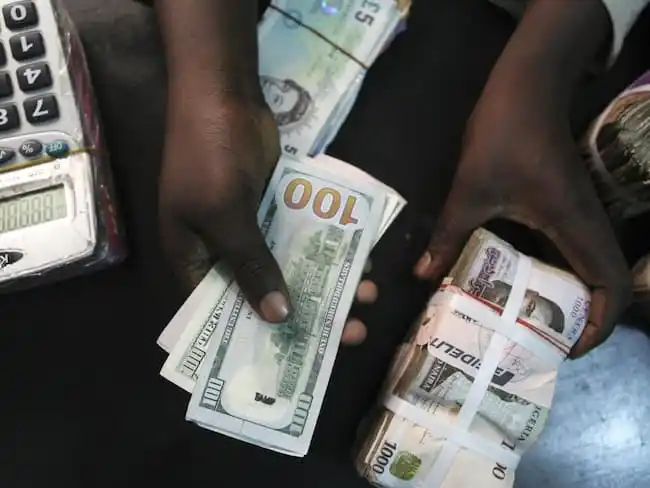
The exchange rate between the Naira and the US dollar, according to the data released on the FMDQ Security Exchange, the official forex trading portal, showed that the naira closed at 1540.00 per $1 on Wednesday, July 23rd, 2025. The naira traded as high as 1534.00 to the dollar at the investors and exporters (I&E) window on Tuesday.
Dollar to naira exchange rate today black market (Aboki dollar rate):
The exchange rate for a dollar to naira at Lagos Parallel Market (Black Market) players buy a dollar for ₦1535 and sell at ₦1540 on Tuesday 22nd July, 2025, according to sources at Bureau De Change (BDC).
Please note that the Central Bank of Nigeria (CBN) does not recognize the parallel market (black market), as it has directed individuals who want to engage in Forex to approach their respective banks.
Dollar to Naira Black Market Rate Today
Dollar to Naira (USD to NGN)
Black Market Exchange Rate Today
Buying Rate
₦1535
Selling Rate
₦1540
Dollar to Naira CBN Rate Today
Dollar to Naira (USD to NGN)
CBN Rate Today
Highest Rate
₦1537
Lowest Rate
₦1534
Please note that the rates you buy or sell forex may be different from what is captured in this article because prices vary.
The Dangote Petroleum Refinery has successfully exported over 1.3 billion litres of Premium Motor Spirit (PMS), marking a significant milestone in Nigeria’s evolving energy sector. This development was disclosed by Africa’s richest man and President of the Dangote Group, Alhaji Aliko Dangote, at the Global Commodity Insights Conference on West African Refined Fuel Markets.
The high-profile event, organized by the Nigerian Midstream and Downstream Petroleum Regulatory Authority (NMDPRA) in collaboration with S&P Global Commodity Insights, served as a platform for discussing the region’s fuel trade dynamics.
Addressing delegates at the conference, Dangote revealed that between June and mid-July 2025, his refinery had exported about 1 million metric tonnes of petrol, which translates to nearly 1.35 billion litres.
“Today, Nigeria stands as a net exporter of refined petroleum products. Within just 50 days, we have exported around one million metric tonnes of PMS,” Dangote announced.
Despite this achievement, Nigeria continues to heavily depend on imported fuel. According to the NMDPRA, West African countries—Nigeria included—still rely on foreign suppliers for nearly 69% of their gasoline needs.
Speaking at the same event, the Chief Executive of NMDPRA, Farouk Ahmed, stated that the region currently trades about 2.05 million metric tonnes of gasoline monthly, with 69% of this coming from overseas markets.
In fact, data obtained from the Nigerian Ports Authority’s recent Shipping Position Daily confirms that within just eight days, Nigeria received a total of 231.88 million litres of imported PMS. These shipments, totaling 172,917 metric tonnes, arrived through major Nigerian ports in Apapa, Tincan, and Calabar.
Meanwhile, Dangote has responded to criticisms regarding market dominance, stating that his refinery is not aiming to monopolize the downstream sector.
“There is no plan for monopoly. The narrative being pushed is misleading. Instead of investing locally, many critics prefer to sit on the sidelines and move their wealth abroad,” Dangote asserted.
President Bola Tinubu also addressed the broader issue of Africa’s economic positioning in global energy markets. In a post on his official X (formerly Twitter) handle, Tinubu emphasized the need for Africa to redefine its role as more than just a passive participant in global pricing mechanisms.
“Africa must stop being a price taker. It’s time we establish transparent pricing benchmarks that represent our production realities,” Tinubu wrote.
According to the president, Nigeria is working with regional allies to create a unified energy market that would enhance energy security, encourage intra-African trade, and stimulate economic growth across borders.
“In refining, regulation, and data transparency, we are developing a market that not only secures energy for our people but also fosters prosperity throughout West Africa,” Tinubu added.
Furthering this agenda, the NMDPRA has commenced work on establishing a regional pricing benchmark for refined products. Ahmed confirmed that the authority is partnering with S&P Global to develop pricing indices for PMS, Automotive Gasoil (AGO), Aviation Turbine Kerosene (ATK), and Liquefied Petroleum Gas (LPG).
The initiative aims to bolster investment, enhance market trust, and provide real-time pricing transparency for stakeholders across the fuel value chain.
“We are laying the foundation for a competitive, data-informed fuel market that truly reflects regional supply and demand dynamics,” Ahmed concluded.
The Nigerian Senate has formally approved President Bola Ahmed Tinubu’s expansive external borrowing plan totaling over $21 billion, solidifying the financial groundwork for the full execution of the 2025 Appropriation Act.
This extensive funding framework incorporates $21.19 billion in external loans, €4 billion in Euro-denominated funding, ¥15 billion from the Asian market, a $65 million grant facility, and domestic borrowing via government-backed bonds worth roughly ₦757 billion. Additionally, lawmakers granted approval for a $2 billion foreign currency instrument to be raised locally.
The endorsement followed the presentation of a detailed report by Senator Aliyu Wamakko, Chairman of the Senate Committee on Local and Foreign Debts. He noted that the initial request, submitted on May 27, experienced delays due to documentation issues from the Debt Management Office (DMO) and the legislative recess.
Chairman of the Senate Committee on Appropriations, Senator Olamilekan Adeola, explained that the proposed borrowings had already been integrated into the Medium-Term Expenditure Framework (MTEF) and the national budget for 2025.
“With today’s approval, we now have all financial inflows—both internally generated and borrowed—in place to fund the 2025 budget in its entirety,” Adeola emphasized.
Despite general support for the proposal, some senators raised issues about the plan’s transparency and long-term implications.
Senator Sani Musa clarified that the disbursement of the approved loans would be spread over a six-year period, not confined to the 2025 fiscal year. He defended the borrowing strategy, saying it aligned with internationally accepted economic models.
“No progressive economy can thrive without strategic borrowing. What we are doing is consistent with best practices globally,” Musa noted.
Senator Adetokunbo Abiru, Chair of the Senate Committee on Banking, Insurance and Other Financial Institutions, added that the loans adhere to existing financial legislation including the Fiscal Responsibility Act and Debt Management Act.
“These are concessional loans with maturity periods ranging from 20 to 35 years. Importantly, they are earmarked for key sectors such as capital development and human empowerment,” Abiru stated.
However, Senator Abdul Ningi of Bauchi Central expressed concern about transparency, urging that Nigerians deserve full disclosure on how these loans will be utilized.
“Our constituents must know how much is being borrowed in their names, and what exactly the funds are earmarked for,” Ningi argued.
Key sectors prioritized in the borrowing blueprint include infrastructure, agriculture, power, security, digital connectivity, and housing. Among the most significant allocations is a $3 billion provision for the Eastern Rail Corridor revitalization project, which spans from Port Harcourt to Maiduguri.
Senator Victor Umeh of Anambra Central hailed the rail project as a historic investment, stating, “This is the first time I’ve seen such a large financial commitment—$3 billion—toward rebuilding the eastern rail line. It deserves our full support.”
Deputy Senate President Jibrin Barau praised the loan committee for its thoroughness and noted that the plan underscores national inclusivity under Tinubu’s administration.
“This borrowing framework shows that the Renewed Hope Agenda is not just a slogan. Every region is being carried along,” Barau declared.
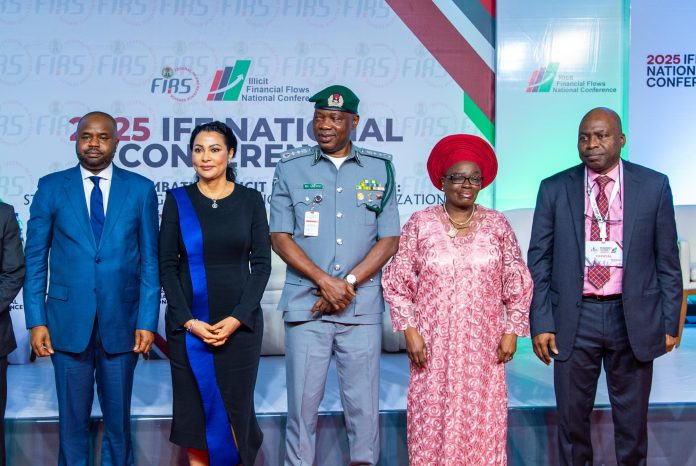
Chairman, Federal Inland Revenue Service (FIRS), Zacch Adedeji (left); Minister of State for Finance, Dr Doris Anite-Uzoka; Comptroller-General of the Nigeria Customs Service, Bashir Adeniyi; Member of Thabo Mbeki Panel on Illicit Financial Flows (IFFs), Honourable Irene Ovonji-Odida; and FIRS Coordinating Director, Proceeds of Crime Management and IFF, Prof. Bolaji Owasanoye; at the opening of a two-day national conference on IFFs, held at Transcorp Hilton in Abuja, yesterday. Photo credit: FIRS
….SPPG Alumnus Warns of Quiet Fiscal Power Shift from Tax Reform
Nigeria is losing an estimated $18 billion annually to profit-shifting, aggressive tax avoidance, and other illicit financial practices by multinational corporations operating within its borders, the Minister of State for Finance, Dr Doris Uzoka-Anite, revealed on Tuesday.
Speaking at the National Conference on Illicit Financial Flows in Abuja, Dr Uzoka-Anite described the growing scale of financial outflows as a “hydra-headed monster” that not only undermines national revenue but also fuels illicit activities, including terrorism financing.
“It is estimated that Nigeria loses about $18 billion every year due to profit shifting and aggressive tax avoidance, particularly by multinational corporations. These funds, instead of supporting critical sectors such as health, education, and infrastructure, are illegally funnelled out of the country,” the minister said.
She emphasised that the Federal Government, under the leadership of President Bola Tinubu, is intensifying its efforts to tackle the scourge of illicit financial flows and implement strategic fiscal reforms that will reduce dependency on oil revenues and foreign aid.
“We are transitioning towards a more resilient and self-reliant economy—one driven by revenue generation rather than borrowing or grants. Diversifying our revenue base is no longer optional; it’s a necessity,” she added.
The Tinubu administration’s reform agenda, she noted, is shifting the economic focus from volatile oil earnings to more stable non-oil revenue sources, especially taxation.
Also addressing the gathering, Executive Chairman of the Federal Inland Revenue Service (FIRS), Dr Zacch Adedeji, echoed the minister’s concerns, warning that illicit financial flows pose a significant threat to Nigeria’s fiscal health.
“Multinationals continue to exploit global tax arrangements to shift profits away from Nigeria, undermining our ability to generate adequate revenue. FIRS is responding by simplifying the tax system and encouraging voluntary compliance through taxpayer education,” Adedeji said
Meanwhile, Dr Samson Abanni, an alumnus of the School of Politics, Policy and Governance (SPPG), offered a deeper political analysis of Nigeria’s recent tax legislation. Speaking to The Guardian, Abanni described the newly signed tax reforms as a transformative development—one he believes could have long-term implications as far-reaching as a general election.
“This tax reform is akin to heart surgery on the nation’s economy,” he said. “It quietly shifts fiscal power dynamics between the Federal Government, the states, and established revenue-generating agencies.”
“Because it didn’t come cloaked in the drama of traditional politics, many governors underestimated its impact. It’s only now becoming clear how deeply this reform will reshape their fiscal autonomy,” he said.
Experts say Nigeria’s battle against illicit financial flows requires more than just policy enforcement—it demands global cooperation, strong institutions, and political will. As multinationals continue to operate across multiple jurisdictions, tax transparency and accountability will remain central to reclaiming the billions lost annually.
For Nigeria, the challenge is as much about curbing economic sabotage as it is about funding a sustainable future.
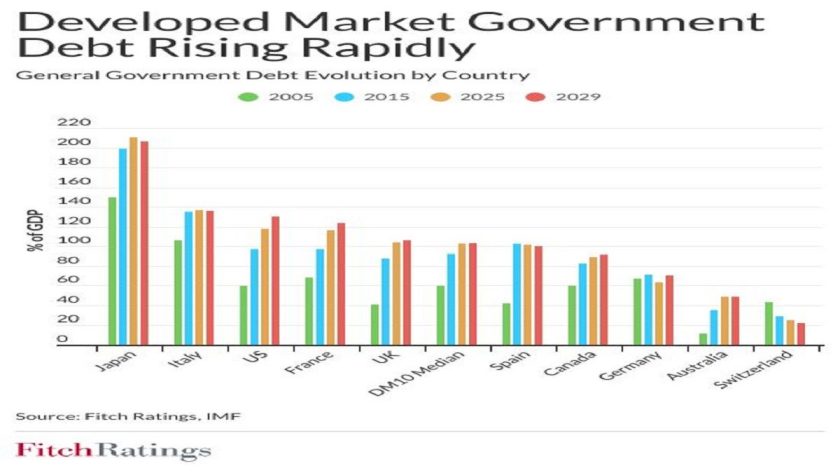
The collective government debt of the world’s ten most advanced economies is projected to climb past $64 trillion by the end of 2025, representing 115% of their combined GDP, according to the latest Developed Market Sovereigns Debt Sustainability Monitor published by Fitch Ratings.
This steep rise in sovereign liabilities marks a significant jump from the $25 trillion, or 72% of GDP, recorded in 2007. Fitch attributes over two-thirds of the debt expansion to the United States, which continues to be the driving force behind the surge.
Central to this development is the newly passed One Big Beautiful Bill Act, a sweeping fiscal policy that locks in sizeable budget deficits over the mid-term. The legislation not only extends major tax breaks first introduced in 2017 but also enhances deductions for state and local taxes and introduces new income tax exemptions. These revenue-losing measures are only partially offset by cuts to Medicaid and reductions in green energy subsidies.
Despite the legislative changes, Fitch does not expect a material change in its fiscal outlook for the U.S., maintaining its government deficit projections at 7.1% of GDP in 2025 and 7.8% in 2026.
Meanwhile, in Europe, new fiscal strains are emerging as NATO pushes its member states toward higher defense spending targets. Although this move may not independently trigger credit rating adjustments, Fitch warns it could amplify existing fiscal vulnerabilities, particularly in nations already grappling with high public debt and budget deficits.
The United Kingdom is also facing mounting fiscal pressures. A recent government decision to cancel previously announced welfare cuts has left limited room for budgetary flexibility. The reversal, which underscores the political challenges of fiscal consolidation, is expected to result in a UK budget deficit of 5.2% of GDP for 2025, according to Fitch.
“Government debt-to-GDP ratios are forecast to rise this year in Canada, France, Germany, Italy, the UK, and the US, while Australia, Japan, Spain, and Switzerland are expected to see a decline,” Fitch stated in its report.
The agency highlighted that a mix of sluggish economic growth, escalating interest rates, and increasing public spending will sustain pressure on debt sustainability across developed markets well beyond the near term.
As nations navigate the post-pandemic recovery and contend with geopolitical and economic uncertainties, Fitch warns that high debt levels are likely to remain a persistent structural challenge for advanced economies.
The Central Bank of Nigeria (CBN) has announced that eight commercial banks have met the new recapitalisation threshold, with one securing substantial funding from the London Stock Exchange (LSE), signalling international confidence in Nigeria’s banking sector.
This development was disclosed by CBN Governor, Olayemi Cardoso, after the 301st Monetary Policy Committee (MPC) meeting held in Abuja on Tuesday. The MPC opted to maintain all key monetary policy parameters, citing persistent inflationary pressures and the need to sustain economic stability.
In a significant policy decision, the committee retained the Monetary Policy Rate (MPR) at 27.5%, left the Cash Reserve Ratio (CRR) unchanged at 50% for deposit money banks and 16% for merchant banks, and maintained the liquidity ratio at 30%. The asymmetric corridor around the MPR also remained at +500/-100 basis points.
“The committee decided to maintain the current monetary policy stance and hold all policy parameters,” Cardoso stated. “This decision is aimed at sustaining the momentum of disinflation and adequately addressing existing and emerging price pressures.”
Cardoso reaffirmed the apex bank’s unwavering commitment to its core mandate of price stability, noting that the MPC would continue to undertake rigorous assessments of the economic landscape and inflationary trends to guide future decisions.
Highlighting progress in the banking sector, the CBN Governor revealed that eight banks had already surpassed the revised capital base requirements set by the apex bank as part of ongoing reforms to strengthen the financial system.
“Eight banks have surpassed the new minimum capital requirement,” he said. “In fact, one of them has raised a significant amount of funds on the London Stock Exchange. This reflects growing confidence from the international investor community in our financial institutions.”
Cardoso emphasised that the CBN will continue its strong regulatory oversight to ensure the resilience, soundness, and integrity of the banking system.
“We must maintain the discipline, buffers, and resilience we’ve built into the financial system. Regardless of the challenges faced in recent years, Nigeria is increasingly seen as investment-ready,” he added.
The MPC acknowledged the third consecutive decline in headline inflation, which eased slightly above 22% in June 2025. The committee attributed this trend to a combination of stabilising energy prices and a more stable foreign exchange environment. However, Cardoso noted that month-on-month inflation still indicated persistent underlying price pressures, prompting the MPC to adopt a cautious stance.
“Despite the recent disinflation trend, members noted the uptick in monthly headline inflation, which suggests that price pressures remain. It is therefore prudent to maintain the current monetary policy stance,” he warned.
In its post-meeting communiqué, the MPC urged the Federal Government to intensify support for the agriculture sector by ensuring timely access to high-yielding seedlings, fertilisers, and other essential inputs during the current farming season. The committee stressed that improved agricultural productivity remains critical to achieving food security and mitigating inflation.
The MPC also acknowledged the continued stability in the foreign exchange market, underpinned by increased crude oil production, rising non-oil exports, improved capital inflows, and a notable reduction in aggregate imports.
As Nigeria navigates a complex economic terrain marked by global uncertainties and domestic challenges, the CBN affirmed its readiness to respond swiftly and decisively to safeguard macroeconomic stability.
“We remain focused on strengthening the economy, restoring investor confidence, and ensuring that our financial institutions remain robust and resilient,” Cardoso concluded.
The MPC will reconvene in the coming months to review progress and recalibrate policy directions in line with evolving economic realities.