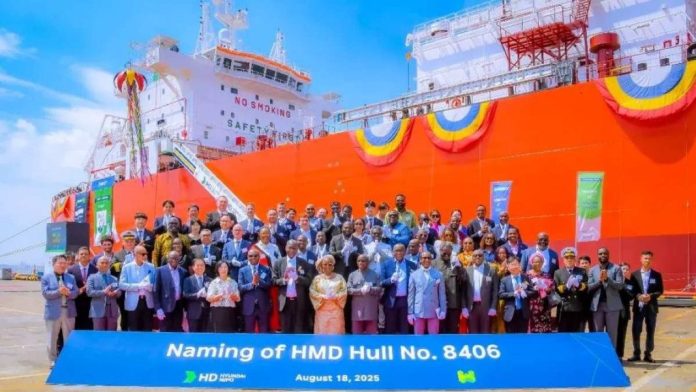
President Bola Tinubu has commissioned a 40,000-cubic-meter Liquefied Petroleum Gas (LPG) vessel, MT Iyaloja (Lagos), in Ulsan, South Korea, as part of efforts to boost LPG availability and affordability in Nigeria and across Africa.
The vessel, owned by WAGL Energy Limited — a joint venture between NNPC Ltd. and Sahara Group — is a dual-fuel, fully refrigerated LPG carrier. With this addition, WAGL’s fleet capacity now stands at 162,000 CBM, comprising MT Africa Gas, MT Sahara Gas, MT BaruMK, and MT Sapet.
Speaking at the commissioning on Monday through the Minister of State for Petroleum Resources (Gas), Ekperikpe Ekpo, President Tinubu said Nigeria was committed to delivering clean, sustainable energy solutions domestically and regionally. He commended NNPC Ltd. and Sahara Group for their “strategic foresight, technical excellence, and dedication to expanding Africa’s role in the global clean energy value chain.”
Group Chief Executive Officer of NNPC Ltd., Mr. Bashir Ojulari, represented by the Executive Vice President, Gas, Power and New Energy, Mr. Olalekan Ogunleye, described the new vessel as a significant addition to Nigeria’s gas development drive. He noted that WAGL’s growing fleet has already delivered over six million metric tonnes of LPG across West Africa in the last five years.
WAGL’s Chairman and Sahara Group Executive Director, Mr. Temitope Shonubi, said the commissioning of MT Iyaloja (Lagos) reflects the company’s vision to bridge Africa’s critical energy infrastructure gap. “This vessel embodies the spirit of progress and empowerment championed by the iconic Alhaja Abibatu Mogaji, whose legacy we honour,” he said.
WAGL’s Managing Director, Mr. Mohammed Bello, added that the company plans to further expand its fleet within the next two years with the addition of a Small Gas Carrier and a Very Large Gas Carrier (VLGC).
The ribbon-cutting ceremony for MT Iyaloja (Lagos), named in honour of the late Alhaja Abibatu Mogaji — mother of President Tinubu — was performed by her granddaughter, the Iyaloja-General of Nigeria, Alhaja Folasade Tinubu-Ojo.
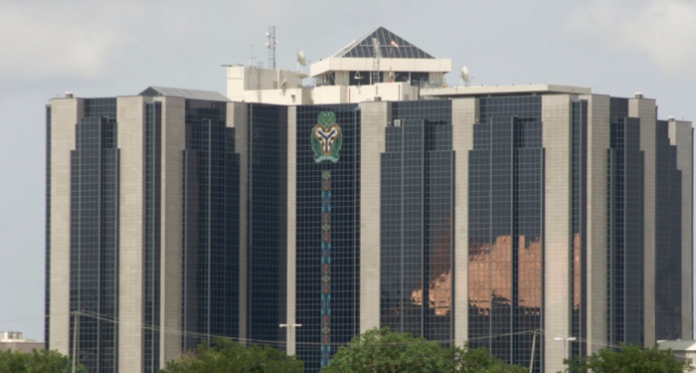
The Nigerian naira weakened on Monday as heightened demand for the U.S. dollar outweighed available supply, despite the Central Bank of Nigeria’s (CBN) market intervention late last week.
Official FX data showed the naira closed at ₦1,533.67/$ at the start of the week, slipping slightly from ₦1,532.51/$ recorded at Friday’s close. The currency touched an intraday high of ₦1,535/$ and a low of ₦1,532/$, reflecting early-week pressure on the market.
To ease dollar scarcity, the CBN injected $166 million into the market last week through authorised dealer banks, equivalent to about ₦153 billion. The nation’s external reserves also rose modestly to $40.72 billion, supported by steady daily accretions.
Coronation Merchant Bank data showed total FX inflows climbed to $787.5 million last week, up from $732.8 million in the prior week. Non-bank corporates led inflows at $227.4 million, followed by exporters ($179.6 million), the CBN ($171.2 million), and foreign portfolio investors ($167.4 million). Individuals contributed $37.3 million, while other sources accounted for just 0.57%.
Analysts at Coronation expect the naira to trade within a stable range in the near term, citing sustained inflows from corporates, exporters, and portfolio investors alongside stronger reserves. However, they warned that exchange rate movements remain highly sensitive to oil prices, foreign investor sentiment, and CBN policy direction.
Oil Market Update
Global crude prices extended losses as supply concerns overshadowed demand prospects. Brent crude fell 1.11% week-on-week to $65.85/bbl, raising its year-to-date decline to 11.78%. In contrast, Nigeria’s Bonny Light crude edged up 0.59% to $70.25/bbl.
The slide in oil prices followed weak Chinese economic data—marking the slowest factory output in eight months and softest retail sales since December—fueling demand concerns in the world’s second-largest crude consumer.
Markets are also closely watching U.S.–Russia talks, where President Donald Trump appeared to align with President Vladimir Putin on peace deal parameters. Analysts warn that potential easing of sanctions on Russian oil could further tilt supply dynamics, deepening expectations of a global surplus.
Meanwhile, the outcome of the scheduled U.S.–Ukraine meeting is expected to influence market sentiment, with traders bracing for increased supply pressures from both Russia and OPEC+.
Pan-African lender United Bank for Africa (UBA) Plc has confirmed that its board has approved the audited financial statement for the half year ended June 30, 2025, and has submitted the accounts to the Central Bank of Nigeria (CBN) for regulatory clearance.
In a regulatory filing, the bank disclosed that the board also approved an interim dividend for shareholders, subject to CBN’s approval. The announcement aligns with market expectations that UBA will sustain its tradition of interim payouts, unaffected by the regulator’s recent suspension of dividend payments for lenders under forbearance or in breach of single obligor limits.
“The Board of United Bank for Africa Plc, at its meeting held on Thursday, August 14, 2025, considered and approved the 2025 Half-Year Audited Accounts and Financial Statements. The Board approved an interim dividend for the period, subject to the approval of the Central Bank of Nigeria,” the bank said.
UBA added that its results will be made public immediately after the CBN gives clearance. In line with regulatory requirements, directors and other connected persons are restricted from trading in the bank’s shares until 24 hours after the release of the financial statement on the Nigerian Exchange.
The Central Bank of Nigeria (CBN), through the Debt Management Office (DMO), will on Wednesday offer Nigerian Treasury Bills (NTBs) worth N230 billion at the primary market auction. The offer will be spread across the standard tenors of 91-day, 182-day, and 364-day instruments.
Analysts expect stop rates to moderate further, citing sustained disinflation, improved system liquidity, and steady investor appetite for short-term government securities. Traders noted that positive real interest rates—currently at 5.6%—continue to attract market participation, although yields on shorter-dated papers have trended below headline inflation.
Last week, the NTB secondary market traded with a bearish bias as average yields rose on mild sell-offs, despite a late recovery in sentiment following the release of inflation data, which slowed to 21.88% in July. Average benchmark yields closed the week higher, expanding by four basis points to 18.0% in the NTB segment, while yields in the OMO segment dipped slightly to 24.6%.
Market watchers believe the new auction will see cautious bidding, with liquidity from maturing instruments likely to boost demand and exert downward pressure on stop rates. The planned issuance is primarily to refinance N230 billion in maturing obligations.
The Lagos State Police Command has arrested a notorious “one-chance” kingpin and two of his accomplices during a swift operation in Ikeja.
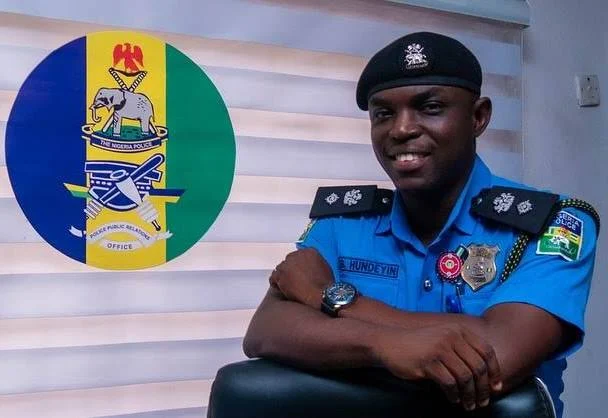
In a statement signed on Monday, 18 August 2025, by the Command’s spokesperson, Chief Superintendent of Police, Benjamin Hundeyin, the suspects, 53-year-old Bode Oludayisin, 22-year-old Michael Sowunmi, and 20-year-old David Olawaye, were intercepted on Agege Motor Road following a distress call.
The suspects, who were operating in an unregistered commercial minibus, were reportedly in the middle of dispossessing a passenger when police operatives on routine patrol moved in.
Items recovered from the gang include a Tecno Spark 20 smartphone, an axe, two concrete interlock bricks, several heavy stones allegedly used to intimidate and assault victims, and a broken bottle. Police have registered the exhibits.
Preliminary findings revealed that the syndicate operated by posing as regular commuters in “Korope” minibuses. They lured unsuspecting passengers from Oshodi and other busy bus stops before diverting to deserted routes, where victims were attacked and robbed.
Oludayisin, identified as the leader of the gang, is said to have been on the Command’s wanted list for multiple violent robberies across Lagos.
The Commissioner of Police, CP Olohundare Jimoh, praised the operatives for the arrest and confirmed that the case has been handed over to the Special Squad 1 for further investigation and the pursuit of fleeing members of the gang.
He also advised residents to be vigilant when boarding commercial vehicles, particularly unmarked minibuses, and to report suspicious activity promptly.
MediaCraft Associates, which stands as a beacon of innovation and resilience, was founded in September 2003 by visionary Chief Executive Officer John Ehiguese. The firm has evolved from a modest startup into one of Nigeria’s premier Public Relations and integrated brand communications consultancies.
With a team of over 50 dedicated professionals, MediaCraft has not only weathered economic storms but thrived, clinching accolades that highlight its dominance in the industry.
From its inception, MediaCraft set out to redefine PR in Nigeria, focusing on reputation management, crisis communication, and digital storytelling. Over the past two decades, the firm has built an impressive portfolio, partnering with blue-chip clients like Stanbic IBTC Group, Interswitch, Olam Agri, and Russel Smith. Its achievements are a testament to strategic growth.
In 2023, MediaCraft celebrated its 20th anniversary while bagging the Iconic PR Agency of the Year at the Brand Communicator Awards and the PR/Media Agency of the Year at the Nigerian Business Leadership Awards. The momentum continued into 2024, with wins for Best Marketing and Communications Professional of the Year and Most Iconic PR Agency of the Year at the Global Business & Finance Magazine Awards. These achievements aren’t just trophies; they reflect a commitment to excellence that has positioned MediaCraft as a leader in a competitive market.
Though one thing that truly sets MediaCraft apart is its forward-thinking approach. To establish its status as Nigeria’s top PR firm, there is a need to introduce artificial intelligence (AI) and other technological advancements to aid efficiency and productivity.
Globally, PR agencies are already leveraging AI for predictive analytics to forecast trends and optimise resource allocation, allowing teams to anticipate media shifts before they happen. Sentiment analysis tools monitor public opinion in real-time, spotting potential crises early and enabling swift, data-driven responses to protect client reputations. For MediaCraft, adopting AI could mean automating routine tasks with AI like ‘Otter.ai’, ‘Descript’, ‘Fireflies.ai’, and ‘ChatGPT’. It could also mean drafting press releases with AI like ‘SuperAGI Press Agent’, ‘PressGPT Pro’, ‘NewsForge AI’; transcribing interviews, or summarizing media coverage, freeing creatives to focus on high-impact strategies. Imagine AI-powered tools like ‘Mentions’, ‘Brand24’ ‘YouScan’, and ‘Awario’ scanning vast digital landscapes for brand mentions across social media, news outlets, and forums, providing deeper insights into audience engagement. In Nigeria’s dynamic market, where cultural narratives evolve rapidly, such tech could enhance personalized campaigns, linking earned medi directly to sales outcomes through advanced analytics. By pioneering these integrations, perhaps through partnerships with local tech startups, MediaCraft could outpace rivals, offering clients immersive experiences like virtual reality press kits or AI-driven influencer matching, ultimately revolutionizing how stories are told in Africa’s largest economy.
Another underappreciated edge for MediaCraft is its openness to student interns, a rarity in the PR world where many agencies prioritize seasoned talent over fresh faces. This policy isn’t just altruistic; it’s a strategic advantage.
For students, internships provide hands-on exposure to real-world PR, from crafting narratives to managing crises, building resumes, and networks that classroom theory alone can’t offer. They gain unique skills in media relations and digital strategy, preparing them for careers with less on-the-job training needed later. For the organization, interns inject fresh ideas and energy, handling tasks that free up senior staff while potentially identifying future staff. It also fosters university partnerships, boosting MediaCraft’s visibility on campuses and ensuring a pipeline of innovative talent. In an industry where adaptability is key, this symbiotic relationship strengthens both parties, positioning MediaCraft as a nurturing leader.
Reflecting on a recent excursion to MediaCraft’s offices on June 3, 2025, as part of Caleb University’s internship program, the experience was eye-opening. Welcomed by Media Manager Amina Omoike, we delved into the firm’s operations, from the media department’s press release mastery to the ICT hub’s gadget-driven innovations and BizWatch’s sharp business news analysis. Partnerships with entities like Stanbic IBTC Bank, Interswitch, and Olam Agri highlighted the financial savvy underpinning their success.
In a digital age, embracing AI could propel them further, while their intern-friendly ethos ensures a legacy of growth.
The United States Mission in Nigeria has announced new requirements for visa applicants, mandating the disclosure of all social media usernames and handles used over the past five years.
In a statement released Monday via its official X account, the Mission explained that the measure aligns with the U.S. Department of State’s broader efforts to strengthen national security through enhanced screening.
Applicants are now required to provide a complete record of their social media profiles on the DS-160 visa application form. The Mission emphasized that failure to comply—either by omission or inaccurate reporting—could result in visa denial and future ineligibility.
“Visa applicants are required to list all social media usernames or handles of every platform they have used from the last five years on the DS-160 visa application form,” the statement read. “Applicants certify that the information in their visa application is true and correct before they sign and submit. Omitting social media information could lead to visa denial and ineligibility for future visas.”
The directive underscores Washington’s increasing reliance on digital footprints as part of global security and vetting protocols.
Nigeria has restated its commitment to strengthening bilateral relations with the Republic of the Congo through deeper cooperation in trade, peace, and cultural exchange, describing the partnership as vital to regional stability and shared prosperity.
The Minister of Foreign Affairs, Yusuf Tuggar, gave the assurance in a statement issued Friday by the ministry’s spokesperson, Kimiebi Ebienfa, to mark Congo’s Independence Day.
In his congratulatory message to Congolese Foreign Minister Jean-Claude Gakosso, Tuggar commended the resilience of the Congolese people, noting that their pursuit of sovereignty and development continues to inspire Africa.
He recalled the cordial relations between both countries, underscoring collaboration in trade, cultural exchange, maritime affairs, and regional peace initiatives. According to him, these engagements have reinforced mutual trust and created opportunities to address Africa’s common challenges.
“On this special occasion, Nigeria reiterates its readiness to deepen these valued ties, expand areas of mutual benefit, and continue working with the Republic of the Congo to advance peace, stability, and development,” he said.
Tuggar extended warm wishes to the government and people of Congo, expressing optimism for sustained harmony, economic growth, and enduring partnership between the two nations.
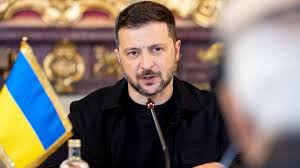
Ukrainian President Volodymyr Zelensky has reiterated that ending the war rests on Russia, as he prepares for high-level talks with US President Donald Trump and European leaders in Washington on Monday.
Trump, who last week met Russian President Vladimir Putin in Alaska without securing a ceasefire, has pressed Kyiv to cede Crimea and abandon its NATO aspirations. He said on Sunday that Zelensky could end the three-and-a-half-year conflict “almost immediately, if he wants to.”
In response, Zelensky insisted Russia must halt its aggression. “Ukrainians are fighting for their land, their independence. I believe our strength, together with America and our European friends, will force Russia into a real peace,” he said.
The Washington talks are expected to include Trump, Zelensky, NATO chief Mark Rutte, EU Commission President Ursula von der Leyen, and leaders of Britain, France, Germany, Italy, and Finland. China has also called for all parties to commit to peace “as soon as possible.”
The meeting comes amid renewed Russian strikes, with Ukrainian officials reporting at least 140 drones and four ballistic missiles launched overnight. A drone attack in Kharkiv killed at least seven people, while Moscow-backed authorities said Ukrainian shelling in occupied Kherson and Donetsk killed two.
Trump has floated the idea of US-backed security guarantees for Ukraine outside NATO, while his envoys have hinted at possible Russian concessions over occupied territories in Donetsk. Zelensky, however, maintains that Ukraine’s constitution forbids ceding land.
Russia annexed Crimea in 2014 and four more regions in 2022, though it does not fully control them. A source told AFP that Trump indicated to European leaders he might support a deal granting Moscow parts of Donbas it has yet to capture, in exchange for freezing the front lines in Kherson and Zaporizhzhia.
In an economy marked by rising costs, volatile markets, and increasing exposure to risks, insurance remains one of the most effective financial tools for wealth protection. Yet, despite its importance, insurance penetration in Nigeria remains below 1% of GDP—significantly lower than the African average—leaving millions of households and businesses vulnerable to financial shocks.
Low awareness, mistrust of operators, and the perception that insurance is only for the wealthy have contributed to Nigeria’s underdeveloped insurance culture. Many individuals and businesses continue to bear risks directly, often with devastating financial consequences.
The federal government is seeking to reverse this trend through sweeping reforms. President Bola Tinubu recently signed the Nigerian Insurance Industry Reform Act (NIIRA) 2025 into law. The Act introduces:
Higher capital requirements for insurers to strengthen solvency.
Enforcement of compulsory insurance classes such as motor, group life, and public liability.
Digital integration of insurance processes to improve access.
Stricter timelines for claims settlement.
Establishment of a policyholder protection fund to safeguard consumers.
Analysts believe these reforms could boost confidence, expand coverage, and accelerate financial inclusion.
Why Insurance Matters for Wealth Protection
Insurance provides a structured safety net across critical areas of life and business:
Health Insurance – Prevents catastrophic out-of-pocket spending on medical bills.
Motor Insurance – Protects against accidents, theft, and fire, reducing personal financial exposure.
Property & Building Insurance – Shields assets from risks such as fire, floods, and structural damage.
Business Insurance – Safeguards entrepreneurs and corporations against liabilities, losses, and operational risks.
Life Insurance – Provides income security for dependents in the event of the breadwinner’s death.
Income Protection Insurance – Offers financial continuity during periods of illness or injury.
Travel Insurance – Ensures coverage for medical emergencies, lost baggage, and cancellations when abroad.
Building a Culture of Insurance
For Nigeria’s working and middle class, integrating insurance into financial planning is key to long-term wealth preservation. Analysts recommend prioritising essential coverage—health, motor, and life—while leveraging employer-sponsored plans where available. Bundled policies, annual premium payments, and regular reviews can also help maximise value.
Ultimately, the role of insurance goes beyond compliance with regulation. It is a core pillar of financial security, reducing exposure to risks that can erase years of economic progress. With regulatory reforms now in place, improved adoption of insurance could strengthen household resilience, protect businesses, and support sustainable economic growth.
First Holdco Plc is facing a challenging earnings outlook for 2025, with analysts warning that rising credit impairment charges from unwinding forbearance exposures could weigh heavily on profits.
CardinalStone Securities Limited, in its latest equity note, projected that the group’s net profit will fall by 18.6% year-on-year to N540.2 billion, even as gross earnings grow by just 4.7% to N3.4 trillion. The firm also revised its 12-month target price for First Holdco shares upward to N35.31 from N28.21, implying a potential upside of 7.5% from the stock’s N32.85 reference price on the Nigerian Exchange.
The financial services group, which has already raised N147 billion through a rights issue as part of a planned N500 billion recapitalisation programme, is expected to launch the next phase by raising N350 billion via private placement of shares. CardinalStone said the move will strengthen capital buffers and support dividend prospects.
Analysts noted that First Holdco’s asset quality has deteriorated, with its non-performing loan ratio climbing to 12.9% in H1 2025, up from 10.2% in 2024, following the reclassification of two major exposures. Net impairment charges surged by 99.4% year-on-year to N185.4 billion in the same period, pushing the NPL coverage ratio down to 38.8%.
Despite a forecast 20.2% rise in interest income to N2.9 trillion, CardinalStone warned that modest growth in interest-earning assets and weakness in non-interest revenue could limit earnings momentum. The group’s pre-tax profit is projected to decline by 15.2% to N675.2 billion in 2025.
The report stressed that First Holdco’s 2025 performance will depend on its ability to manage provisioning costs while benefiting from resilient core banking income.
The 2025/26 Nigeria Premier Football League (NPFL) season is set to begin on Friday, August 22, 2025, with 20 teams vying for glory in the nation’s top-flight football competition.
This season marks the 54th edition of the NPFL and the 36th since its professionalisation, promising fans an exciting campaign under the league’s current branding.
Defending champions Remo Stars FC will open the season against Rivers United FC at the Remo Stars Stadium, with kick-off scheduled for 4:00 pm.
Notably, the new campaign will feature four privately owned clubs—the highest since 2019. These include Remo Stars, Ikorodu City, Barau FC, and Kun Khalifat.
Private sector borrowing grew by 4% year-on-year to N76.14 trillion in June 2025, up from N73.19 trillion in the same period of 2024, according to the Central Bank of Nigeria’s (CBN) latest report.
The increase in credit to the private sector was attributed to the stabilisation of the naira and the apex bank’s tight monetary policy stance, which reduced the impact of currency depreciation on banks’ foreign-denominated assets, analysts at Cordros Capital Limited said.
In contrast, government borrowing declined by 0.9% year-on-year to N23.72 trillion in June, compared to N23.93 trillion in the corresponding period of 2024. Analysts linked the decline to improved fiscal performance supported by ongoing economic reforms, which reduced the need for domestic deficit financing.
Meanwhile, broad money supply (M3) expanded by 15.8% year-on-year to N117.50 trillion, driven by increases in both quasi and narrow money. Quasi money rose by 20% in the 12-month period, while narrow money advanced by 8.5%.
On a monthly basis, private sector credit fell by 2.2% in June to N76.14 trillion from N77.83 trillion in May, extending a 0.3% decline recorded in the previous month as firms scaled back borrowing.
“We expect CPS growth to remain subdued in the near term due to the CBN’s tight monetary policy stance. However, a possible shift toward monetary easing later in the year could support a gradual recovery in credit expansion over the medium term,” Cordros Capital analysts noted.
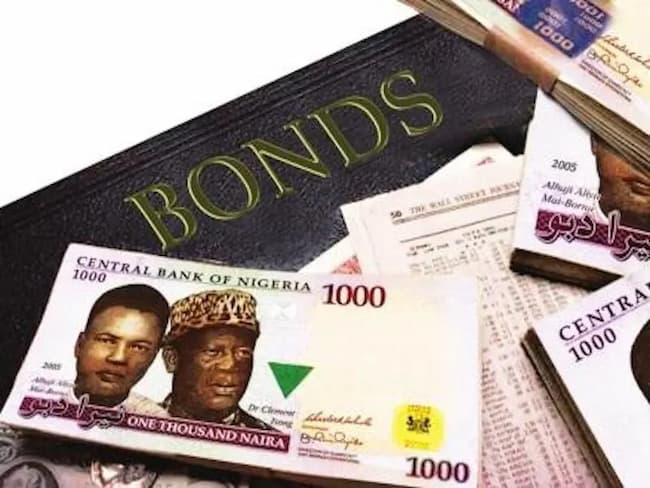
Trading in the secondary market for Federal Government of Nigeria (FGN) bonds ended on a mixed note last week, tilting bearish as the Debt Management Office (DMO) signaled a sharp increase in supply.
The DMO announced plans to double the size of bond offers to ₦80 billion each for new and reopening instruments at next week’s auction, reversing its recent pattern of ₦40 billion offers. At the July auction, the debt office had already exceeded initial targets by allotting more securities to investors.
In the secondary market, sentiment turned cautious amid tight system liquidity, resulting in a 16-basis-point rise in average yield to 16.62%. Short- and mid-dated maturities attracted modest demand, while longer-tenor bonds came under selling pressure. Yields on the FGN 2037 and 2038 rose 52 bps and 19 bps to 16.09% and 15.87% respectively, partly offset by a 35-bps drop in the 14.55% FGN 2029 to 16.42%, according to Cowry Asset Management.
Analysts noted that the DMO’s larger-than-expected issuance size and the unveiling of a new 5-year NIGB AUG 2030 bond further pressured mid-curve yields.
Meanwhile, Nigeria’s Eurobond market recorded a mild rally, with broad-based demand driving average yields down by 2 bps to 7.96% week-on-week. Analysts expect the local bond market to remain subdued in the near term, with cautious trading likely to dominate until liquidity improves and new supply enters the system.
Oil prices edged lower on Friday following a meeting between U.S. President Donald Trump and Russian President Vladimir Putin, with uncertainty over progress on Ukraine weighing on market sentiment.
Brent crude eased 0.03% to $65.75 a barrel, while U.S. West Texas Intermediate (WTI) dipped 0.03% to $62.30.
At a joint press conference, Trump said “significant progress” had been made but no final agreement was reached. Putin expressed optimism that the talks could help advance peace efforts in Ukraine, ahead of Trump’s scheduled meeting with Ukrainian President Volodymyr Zelensky in Washington later today.
Analysts noted that markets remain doubtful the discussions will deliver a breakthrough. However, any progress could raise the likelihood of additional Russian supply hitting the market, putting further pressure on prices. Trump is also seen as unlikely, for now, to impose secondary sanctions on importers of Russian crude, particularly China.
Investors are also watching remarks from Federal Reserve Chair Jerome Powell at the Jackson Hole symposium for fresh signals on the pace of U.S. interest rate cuts, which could influence energy market sentiment.
Sokoto State Government says it is working towards fully digitalising its basic and primary education in the next two years. The Commissioner for Basic and Secondary Education, Prof. Ahmed Ala, stated this in an interview with the News Agency of Nigeria on Monday in Abuja.
Ala said that a fully digitialised education system would aid the quality of teaching and learning in the state.
According to him, this will also make it easier for the government to supervise workers in the system, particularly teachers, as well as keep track of policy implementation in the education sector.
“We want to fully digitise the information system in basic and secondary education in Sokoto State. This will help us to assess teachers’ and principals’ performance on key performance indicators, including teaching and regularity in classes. It will also help us to track how they carry out other functions and keep administrative records,” he said.
Ala said that so far, the digital platform had enabled the state government to rank basic and secondary schools in the state.
According to him, those with 14 points and above are ranked as very good schools, while the ones with six points and below are ranked as poor schools.
He said that the initiative, Education Management Information System (EMIS), would provide a very effective platform for infrastructure, ICT, libraries, and all other relevant information at the fingertips.
“The digitisation will also provide ready information to development partners on our weaknesses and strengths. This will help in planning, execution, and policy implementation,’’ the commissioner told NAN.
He said while EMIS would come in handy in the above-mentioned areas, the Teachers Management Information System would be used for a similar purpose for the academic staff members.
Ala further told NAN that the state government was determined to improve the quality of teachers in recognition of their importance in achieving a truly literate society.
“We are also radically and vigorously undertaking teacher training because we found out that so many teachers do not have the necessary knowledge, skills, experience, and competence to teach in secondary schools. So far, we have done two sets of training, and we have been able to train 2,500 teachers,” he said.
The Independent National Electoral Commission has said that the Nationwide Continuous Voter Registration exercise will commence today. According to a post via its official X handle on Monday, the electoral umpire said it had started with the online pre-registration phase today, Monday, August 18, 2025.
The commission stated that eligible Nigerians can commence their registration online via the portal www.cvr.inecnigeria.org, ahead of the physical registration exercise scheduled to begin on August 25, 2025.
It said, “In-person registration will take place at all its 37 state offices and 774 local government area (LGA) offices nationwide, to ensure easy access for prospective voters.
“The CVR exercise is open to new voters aged 18 and above, those who wish to collect or transfer their Permanent Voter Cards (PVCs), and individuals who need to replace lost or damaged PVCs.”
The commission, however, cautioned against multiple registrations, warning that violators risk penalties. INEC also urged Nigerians to take advantage of the opportunity, noting that voter registration is critical to ensuring inclusive participation in the nation’s democratic process.
The commission advised the public to reach out via its call centre on 0700-CALL-INEC (0700-2255-4632) or through its short code 4632.
INEC reiterated its commitment to consolidating democracy, assuring that every eligible voter would have the opportunity to register ahead of upcoming elections.
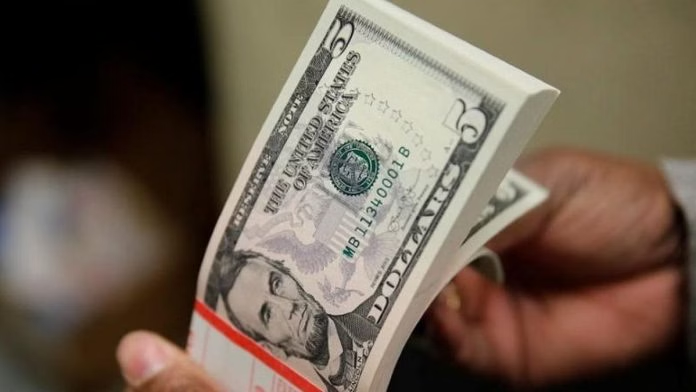
The U.S. dollar weakened against major currencies on Friday, retreating after recent gains as disappointing economic data and comments from Treasury Secretary Scott Bessent fueled speculation about deeper Federal Reserve rate cuts.
The greenback lost ground across the board, with the euro climbing 0.53% to $1.1705 and the British pound strengthening 0.77% to $1.3555, marking a second consecutive week of gains. The Dollar Index (DXY) slid 0.41%, pressured by a weaker-than-expected U.S. consumer sentiment report.
The dollar’s decline was compounded by investor unease over potential political influence on U.S. monetary policy following Bessent’s remarks earlier in the week.
Fresh data underscored rising price pressures, with U.S. producer prices posting the largest increase in three years amid higher goods and services costs, signaling stronger inflation momentum. This followed earlier reports of rising consumer prices. Meanwhile, retail sales came in slightly below expectations, though upward revisions to June figures softened the disappointment.
Industrial production fell 0.1% month-on-month in July versus expectations for no change, while June’s reading was revised higher to 0.4% from 0.3%. Manufacturing output was flat in July but saw an upward revision for June to 0.3% from 0.1%.
Market attention has now shifted to the Federal Reserve’s September policy meeting. Bessent said the Fed’s benchmark rate should be 150–175 basis points lower, suggesting a 50bp cut next month. However, analysts at ING noted that markets currently price in no more than a 25bp move, adding that a larger cut would only gain traction if Jackson Hole or August jobs data signal sharper economic weakness.
In currency markets, USD/JPY was the most notable mover, falling 0.6% below 147.00 after Japan’s better-than-expected Q2 GDP reinforced speculation that the Bank of Japan could tighten policy sooner than expected. The yen also gained broadly against other G-10 and Asian currencies.
Bessent, commenting on Japan, said the BOJ is “falling behind the curve” in tackling inflation—a view echoed by analysts at Commerzbank Research.
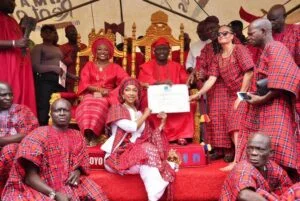
The United Nations Educational, Scientific and Cultural Organisation (UNESCO) has officially inscribed the Sango Festival on its Representative List of the Intangible Cultural Heritage of Humanity, placing the centuries-old Yoruba tradition on the global cultural stage.
The Minister of Art, Culture, Tourism, and the Creative Economy, Hannatu Musawa, presented UNESCO’s certificate of inscription to the Alaafin of Oyo, Oba Abimbola Owoade I, at the grand finale of the 2025 World Sango Festival held over the weekend in Oyo State.
Describing the recognition as a landmark in Nigeria’s cultural journey, Musawa said the inscription underscores the Federal Government’s commitment to safeguarding indigenous heritage while harnessing it as a tool for diplomacy, tourism, and sustainable development.
“The Sango Festival has now attained global recognition with its inscription by UNESCO on the Representative List of the Intangible Cultural Heritage of Humanity,” the minister said. “This milestone firmly places Sango’s rich heritage on the world stage and underscores its importance as a shared global heritage.”
Musawa commended the collaborative efforts between her ministry and the Oyo community, stressing that the recognition is a testament to the Renewed Hope Agenda of President Bola Tinubu, particularly in using cultural assets to drive employment, wealth creation, and community empowerment.
In his remarks, the Alaafin of Oyo expressed gratitude to the federal government and reaffirmed the kingdom’s readiness to continue working with the Ministry of Art, Culture, Tourism and the Creative Economy to expand Nigeria’s cultural influence globally.
The 2025 Sango Festival, which attracted dignitaries from within and outside the country, provided the backdrop for the historic presentation. Organisers said the recognition not only cements the festival’s status as a cultural treasure but also reinforces its role in promoting Nigeria’s identity and heritage worldwide.
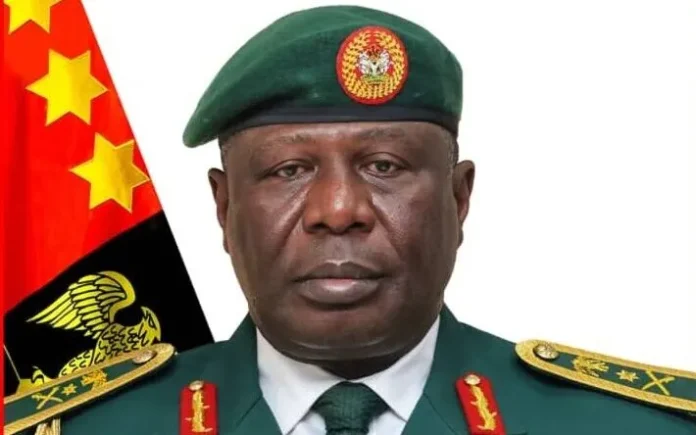
The Chief of Army Staff (COAS), Lt.-Gen. Olufemi Oluyede has approved the redeployment and appointment of senior officers into key command, instructional, and staff positions across formations and units of the Nigerian Army, in what is seen as a strategic effort to strengthen leadership and enhance operational effectiveness.
Acting Director of Army Public Relations, Lt.-Col. Appolonia Anele disclosed this in a statement on Sunday. The reshuffle affects several Principal Staff Officers (PSOs) at Army Headquarters, two General Officers Commanding (GOCs), Corps Commanders, Commandants of training institutions, and Brigade Commanders, among others, occupying critical operational and administrative roles.
While charging the newly appointed officers, the COAS urged them to redouble their commitment to duty in sustaining ongoing counter-terrorism and counter-insurgency operations as well as tackling other threats to national security.
Meanwhile, the Nigerian Air Force (NAF) has completed the training of the first batch of officers in a five-day Civilian Harm Mitigation (CHM) in Air Operations Course. The programme, according to the Air Force, is designed to reduce collateral damage and improve precision in the conduct of air missions.
In a related development, a northern group, Arewa Think Tank, has commended the National Security Adviser (NSA), Mallam Nuhu Ribadu, for his role in the arrest of the leader of the Mahmuda terrorist group, which had been terrorising communities in Borgu, Niger State.
Convener of the group, Muhammad Yakubu, described the development as “an enormous achievement in recent times,” noting that Ribadu’s collaboration with the armed forces and intelligence agencies has delivered one of Nigeria’s significant counter-terrorism successes.