Week 8 pool results 2025: Football pools results, live football pool result today, pool result today saturday matches, pool results for this week, british and aussie pool result, football pools results and fixtures, pools panel results today, pool panel results and live score pool result today. We publish half-time results first of its kind.
Week 8 Pool Results: Football pools results for this week 8 2025 are published on this website immediately after full-time confirmation of live score results. We also publish the outcome of postponed matches by the football pools panel at half-time as decided by the football pools. This week’s Week 8 Pool Results are made available in partnership with Bizwatch Nigeria. Stay tuned for reliable and accurate updates throughout the week.
WEEK: 8; SEASON: UK 2025/2026; DATE: 23-August-2025
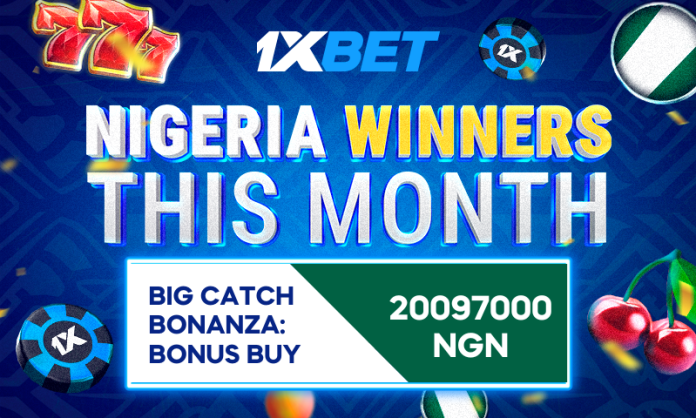
A Nigerian customer of sports betting and gaming platform 1xBet has won over ₦20 million while playing an online slot game.
According to the company, the player struck the jackpot on Big Catch Bonanza: Bonus Buy, a slot that offers multiple payout opportunities. The win totalled ₦20,097,000 (approximately $12,480).
This is the latest in a series of high-value payouts by the platform. In 2023, another Nigerian user reportedly won $113,374.45 after correctly predicting all six events on an accumulator bet with odds of 25.932.
Online casino games, which rely more on chance than traditional sports betting, have continued to gain popularity among Nigerian players. 1xBet says Big Catch Bonanza remains one of its most played titles due to its frequent smaller wins and potential to multiply bets by up to 12,000 times.
Other games attracting attention on the platform include Aviatrix, Cash Fishin’, 1xGolden Dragon Inferno, and 1x Fruit.
While the industry has seen growing interest, regulators have continued to caution players about the risks of gambling and its potential social consequences.
Kiev, Ukraine - October 17, 2012 - A logotype collection of well-known social media brand's printed on paper. Include Facebook, YouTube, Twitter, Google Plus, Instagram, Vimeo, Flickr, Myspace, Tumblr, Livejournal, Foursquare and more other logos.
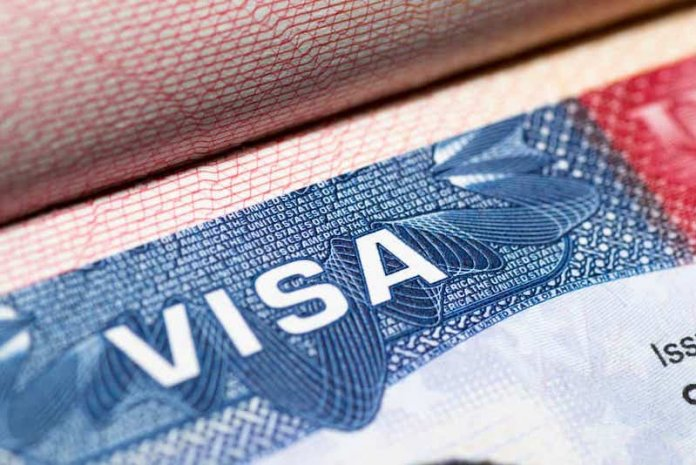
When Nigerians talk about “the visa wahala,” they usually mean the endless paperwork, interviews, and proof of funds. But now, there’s something new on the table. The United States has rolled out a visa rule that requires applicants to submit their entire social media history from the last five years. Yes, every username, handle, and platform you’ve ever used—whether it was Facebook during your undergraduate days, Instagram for your travel pictures, or that forgotten Twitter handle you abandoned in 2020.
The rule, introduced as part of stricter screening measures, has stirred debate among Nigerian students, professionals, and even government officials. And honestly, it’s not just about filling out forms anymore; it’s about how your online presence could directly impact your chances of stepping foot in the U.S.
What Exactly Is This New Rule?
The U.S. Mission in Nigeria recently clarified the directive: all visa applicants must list every social media username or handle they’ve used within the past five years on the DS-160 application form. This includes not just your main accounts but any secondary usernames or accounts created on the same platform.
Applicants also need to provide email addresses and telephone numbers used in that timeframe. Leaving out this information—whether intentionally or by mistake—could mean a visa denial or even long-term ineligibility for U.S. entry.
It sounds straightforward, but the implications are far-reaching. Think about it: five years is a long time online. That’s countless status updates, heated Twitter debates, late-night memes, maybe even a rant or two you don’t exactly stand by today. All of that now falls under the scrutiny of consular officers.
Why Is the U.S. Doing This?
The official explanation is national security. U.S. authorities argue that online activity offers insight into who applicants are beyond just documents and interviews. They want to know whether someone’s digital footprint suggests associations with extremist ideologies, criminal tendencies, or simply behavior inconsistent with U.S. laws and norms.
This isn’t happening in isolation. The Trump administration—under which the policy was first introduced—also tightened citizenship requirements with what’s called the “Good Moral Character” policy. Immigration officers are now expected to look at how applicants live, work, and contribute to their communities, not just whether they’ve stayed out of prison.
So, your social media history isn’t just about pictures of birthdays and weddings. It’s part of a bigger picture where your day-to-day choices and public expressions can decide whether you qualify for a visa, green card, or even citizenship.
How Does This Affect Nigerians Specifically?
For Nigerian students planning to do their master’s in the U.S., or young professionals hoping to land that H-1B work visa, the timing feels rough. Already, Nigerians face some of the toughest visa hurdles. In recent years, U.S. authorities have:
Limited non-immigrant visas to single-entry with a three-month validity.
Revoked thousands of student visas for overstays or legal violations.
Threatened re-entry bans for visa overstays.
Now, with this five-year social media rule, the level of scrutiny is even higher. And it’s not just theoretical. The U.S. State Department has already revoked over 6,000 student visas since Secretary of State Marco Rubio took office, citing everything from criminal violations to foreign policy concerns.
The Nigerian government hasn’t taken the development lightly. The Ministry of Foreign Affairs has said Nigeria will respond with reciprocal measures for Americans applying to visit. In other words, “what you ask our citizens to do, we’ll ask yours to do too.” It’s a tit-for-tat stance, though whether it actually balances the scales is debatable.
What Applicants Should Actually Do
Let’s be practical. If you’re applying for a U.S. visa anytime soon, here are a few things to keep in mind:
Gather Your Accounts Early
Go back five years and make a list of every social media account you’ve used. Don’t assume you can leave out that old Tumblr account or a handle you used for only a year. Consular officers take omissions seriously.
Be Honest and Consistent
The U.S. Embassy has made it clear: you certify that all your information is true before submitting. Lying or “forgetting” can do more damage than admitting you once had a silly meme account.
Check Your Public Content
While you can’t rewrite history, review your profiles. Content that promotes violence, hate speech, or even controversial political activism might raise red flags. Deleting old posts now won’t necessarily help because embassies may already have ways to access archived content, but it’s still smart to know what’s visible.
Understand the Bigger Picture
This isn’t just about social media. U.S. immigration policy is shifting toward evaluating people’s lifestyles, community contributions, and behavior. That means holding a legal job, paying taxes on time, and avoiding overstays matter just as much as your Instagram captions.
But Isn’t This a Privacy Concern?
Absolutely. Critics argue that the rule overreaches by intruding into personal expression and silencing free speech. Imagine someone being denied a visa because of an old post criticizing U.S. foreign policy. It raises questions about fairness and freedom of expression—especially since non-U.S. citizens don’t have constitutional protections.
Still, the U.S. government holds firm: entering the country is a privilege, not a right. And privileges come with conditions. Whether or not you agree, the rule is here, and for now, compliance is the only path forward.
The Human Side of All This
Let’s pause for a second. It’s easy to get caught up in the policy jargon and forget the human element. For thousands of Nigerians, studying or working in the U.S. isn’t just about prestige; it’s about opportunity. It’s about a chance to study at Yale or Stanford, to intern in Silicon Valley, to send money back home, or to build a future with international exposure.
And yet, the process keeps getting more complicated. From the endless forms to the hefty application fees and now the digital microscope on your online life—it’s a lot. Many applicants say it feels like you’re guilty until proven innocent.
But here’s the irony: the very platforms now being scrutinized—Facebook, Twitter, Instagram—are also where applicants often build the networks and portfolios that make them attractive candidates. A young Nigerian applying for a tech program might have a GitHub or LinkedIn full of impressive projects. A journalist might showcase their work on Twitter. The same spaces that can disqualify you are also the ones that can strengthen your case.
Final Thoughts
The U.S.’s five-year social media visa rule may sound intimidating, but it doesn’t mean the door is closed. It just means applicants need to be more deliberate, more careful, and—most importantly—more truthful in presenting their digital lives.
Yes, it raises privacy concerns. Yes, it adds another hurdle to an already tough process. But it’s also a reminder that visas today aren’t just about documents and interviews—they’re about identity, lifestyle, and even the digital footprints we leave behind.
So, if you’re preparing to apply, take the rule seriously. Review your online presence, be honest on your forms, and remember that the embassy isn’t just checking who you are on paper—they’re checking who you’ve been online for the past half-decade. Because in the age of digital transparency, your visa story begins long before you walk into that consular office.
If you’ve ever applied for a U.S. visa, you know the process can feel like running a marathon with paperwork in hand. Now, with the U.S. introducing its five-year social media history requirement, the race just got more complicated. Nigerians hoping to study, work, or even visit the U.S. must now disclose all their social media usernames, handles, emails, and phone numbers used in the last five years.
This new rule has sparked confusion and worry: What if I deleted an account? Do I need to hand over my passwords? Will a controversial tweet from 2019 ruin my chances? To help clear the air, here are the most frequently asked questions (and their answers) about the new rule.
Frequently Asked Questions (FAQs) About the U.S. Five-Year Social Media Visa Rule
Do I need to provide my social media passwords?
No—absolutely not. The U.S. government isn’t asking for access to your accounts. They only want identifiers such as usernames, handles, email addresses, and phone numbers. In other words, they want to know who you were online, not log into your profiles.
Think of it as the difference between telling someone your Instagram handle versus giving them the keys to your account. The former is required; the latter is private and protected.
What if I deleted an account years ago?
Here’s the tricky part: if you remember the handle or username, you should list it, even if the account no longer exists. Deleting an account doesn’t erase the fact that it once belonged to you.
But if you genuinely don’t remember, don’t panic. Applicants aren’t expected to perform digital archaeology. Just be truthful—because omitting information intentionally could be treated as dishonesty, and that’s a bigger problem than forgetting an old profile.
What if I used multiple usernames on the same platform?
You’ll need to list every username you’ve used in the last five years. For example, if you had a personal Twitter handle and later created a professional one, both must be included.
It might feel tedious, but remember: consistency matters. A mismatch between your application and what consular officers find online could cause delays—or worse, denial.
Does this rule apply to all types of U.S. visas?
Yes. Whether you’re applying for:
a student visa (F-1),
a work visa (H-1B),
a tourist visa (B-1/B-2), or
even an immigrant visa,
…the five-year social media disclosure applies across the board. So whether you’re a Nigerian undergraduate chasing a master’s degree in Boston or a businessperson attending a conference in New York, the rule affects you.
How far back do I need to go?
The rule is clear: five years only.
For example:
If you opened a Facebook account in 2010 but haven’t used it since 2016, you don’t need to list it.
But if you posted, liked, or logged in any time in the last five years, it must go on your form.
It’s about activity within the last five years, not the entire lifespan of your online presence.
Can I make my profiles private before applying?
Yes—you’re free to adjust your privacy settings. But here’s the catch: privacy doesn’t equal invisibility. Even if your account is private, you still have to list the username. Consular officers don’t need full access to check if the account exists and to evaluate what they can. So don’t think switching everything to “private” means you can skip disclosure.
Will my posts or opinions affect my visa chances?
This is where many applicants feel nervous. The U.S. government says they’re primarily looking for red flags such as:
links to terrorism or extremist groups
content promoting violence or hate speech
evidence of illegal activity
But let’s be honest: controversial posts, especially about politics or foreign policy, could also raise eyebrows. A fiery tweet from 2020 may not automatically disqualify you, but it could prompt further scrutiny. The safest approach? Be consistent, be truthful, and avoid anything that could look like a security risk.
What does this mean for Nigerians applying for U.S. visas?
For many Nigerians, social media isn’t just about entertainment. It’s where people build their personal brands, share business ventures, and connect with study or job opportunities abroad. The irony is that the same platforms boosting your career can now affect your visa prospects.
That’s why it’s important to prepare ahead:
Make a list of your accounts.
Review what’s public.
Be ready to explain any changes or inactive profiles.
Final Word
The five-year social media visa rule may feel intrusive, but it’s part of the reality of today’s U.S. immigration system. Think of it as another layer in the already long process—like financial proof or interview questions. So, while it might seem daunting, it’s manageable. Gather your accounts, be honest, and remember: the goal isn’t to punish applicants for harmless posts—it’s to weed out security risks.
And if you’re still anxious? Just imagine the alternative: showing up at the embassy, fumbling when asked about your online life, and watching your visa slip away because of an account you “forgot” about. Better safe than sorry.
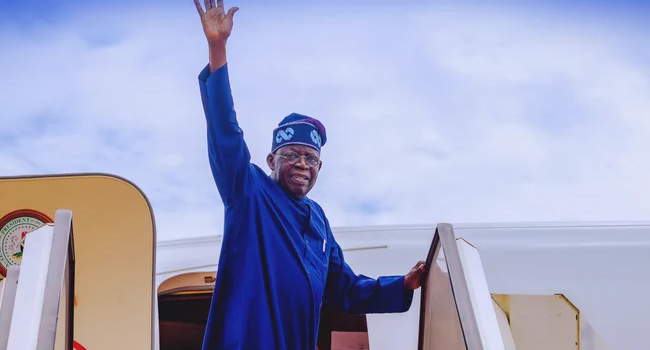
President Bola Tinubu has arrived in Tokyo, Japan, for the Ninth Tokyo International Conference on African Development (TICAD 9), where he is expected to court investors and deepen Nigeria’s economic and diplomatic ties with Japan and other global partners.
Tinubu’s aircraft, Nigeria Air Force One, touched down at Haneda International Airport at 12:55 a.m. local time and was received by Hideo Matsubara, Japan’s Ambassador in charge of TICAD. The trip marks the President’s first official visit to Japan since assuming office on May 29, 2023.
The three-day summit, which opens on Wednesday in Yokohama, is themed “Co-create Innovative Solutions with Africa.” Tinubu is expected to participate in plenary sessions, hold bilateral meetings with world leaders, and engage Japanese business executives to position Nigeria as a leading investment destination.
According to the Presidency, Tinubu will highlight opportunities in key sectors including energy, technology, infrastructure, and manufacturing, while underscoring Nigeria’s role as a driver of economic integration and industrialisation in Africa.
TICAD, launched in 1993, is Japan’s flagship diplomatic and economic forum for Africa, jointly organised with the United Nations, the African Union Commission, the UN Development Programme, and the World Bank. The platform is designed to strengthen international partnerships, promote sustainable development, and advance peace and human security across Africa.
This year’s edition will focus on economic transformation, private sector-led growth, and institutional development. It will also provide a platform for African leaders, Japanese corporations, and multilateral partners to forge new trade corridors and collaborative initiatives.
The Yokohama summit, running from August 20–22, comes three years after TICAD 8 was hosted in Tunisia in 2022.
The National Pension Commission (PenCom) has barred seven Primary Mortgage Banks (PMBs) from processing equity contribution applications for residential mortgages, citing their failure to comply with regulatory guidelines.
In a circular dated August 11, 2025, and signed by the Head of Benefits and Insurance Department, Obiora Ibeziako, PenCom directed Pension Fund Administrators (PFAs), including Closed Pension Fund Administrators, and Pension Fund Custodians (PFCs) to immediately cease accepting applications routed through the affected institutions.
The blacklisted mortgage banks are Jigawa Savings & Loans Limited, FHA Mortgage Bank Limited, Delta Trust Mortgage Bank Limited, AG Mortgage Bank Limited, Infinity Trust Mortgage Bank Plc, First Trust Mortgage Bank Limited, and Mutual Alliance Mortgage Bank Limited.
“Following the cited letter, the commission instructs that Pension Fund Administrators, including Closed Pension Fund Administrators and Pension Fund Custodians, immediately stop accepting or processing equity contribution applications submitted by the following Primary Mortgage Banks… Please be guided,” the circular read in part.
PenCom’s spokesperson, Ibrahim Buwai, told The PUNCH that the sanction followed the inability of the affected banks to generate the mortgages for which Retirement Savings Account (RSA) holders had secured approval.
“When you have policies like these, there are rules and guidelines. The whole purpose of giving access to RSA holders is to enable them to own houses through mortgages,” he explained.
“So, it was discovered that some of the primary mortgage institutions were not generating mortgages. That means they were not complying with the regulations, and that is the reason for their blacklisting.”
The equity contribution initiative for residential mortgages was introduced by PenCom in September 2022, allowing RSA holders to withdraw up to 25 per cent of their account balances to meet the equity requirements for housing loans.
As of the end of the first quarter of 2025, about 24,582 RSA holders had benefitted from the scheme, accessing a total of ₦149.84 billion to facilitate home ownership.
The Joint Admissions and Matriculation Board (JAMB) has directed all Nigerian public universities to conclude their 2025 admission processes by October 31, 2025.
In a bulletin released on Monday, the board also set November 30, 2025, as the deadline for private universities, while all other tertiary institutions — both public and private — must complete admissions by December 31, 2025.
JAMB explained that the directive aligns with the resolutions of the 2025 Policy Meeting on admissions chaired by the Minister of Education. The move, it said, is designed to stabilise the academic calendar and guarantee fair access to admission slots across tertiary institutions.
“Following the directives issued at the 2025 Policy Meeting chaired by the Honourable Minister of Education, all tertiary institutions have been instructed to conclude their admission processes by the end of 2025 according to the schedule,” JAMB stated.
The board further urged institutions to wrap up admissions ahead of the deadlines, noting that even schools not immediately commencing a new academic session should conduct and archive admissions as required.
It added that universities and other institutions conducting post-UTME screenings must complete the exercises on time to meet the 2025 admission schedule.
The United States government has introduced a new visa policy requiring Nigerian applicants to disclose their social media profiles and activities from the past five years. According to the US Mission in Nigeria, failure to comply could result in visa denial and even future ineligibility.
In a statement shared on its official X handle, the Mission explained that applicants must list all usernames, handles, email addresses, and telephone numbers linked to their online presence during the specified period. The policy, which forms part of broader immigration tightening measures, is aimed at strengthening national security.
“Applicants are required to provide details of all social media platforms they have used within the last five years on the DS-160 visa application form. Omitting this information could lead to visa denial and affect eligibility for future US visas,” the Mission stated.
The US Citizenship and Immigration Services has also updated its naturalisation guidelines through a new “Good Moral Character” policy. Under the rules, immigration officers are expected to assess not only criminal history but also an applicant’s community involvement, day-to-day conduct, education, employment status, and tax compliance.
Meanwhile, the US State Department confirmed that over 6,000 student visas have been revoked in recent months, citing violations such as overstays, criminal offences, and alleged support for terrorism. Officials said the majority of cases involved students from countries considered to pose foreign policy concerns.
Responding to the development, Nigeria’s Ministry of Foreign Affairs said the Federal Government will reciprocate the US visa measures. Ministry spokesman Kimiebi Ebienfa noted that the decision is consistent with global visa reciprocity practices.
“We are aware of the new directive, and the government will respond in kind. US citizens applying for Nigerian visas will be subjected to similar requirements. Visa issues are reciprocal — what is applied to our citizens will also apply to theirs,” he said.
He added that an inter-agency meeting involving the Ministry of Foreign Affairs, the Ministry of Interior, and the National Intelligence Agency will be convened to determine Nigeria’s coordinated response.
The latest US restrictions come on the heels of previous visa curbs affecting Nigerians, including a limitation of most non-diplomatic visas to single entry with three-month validity. The US authorities maintain that these measures are designed to safeguard the integrity of their immigration system.
The father of Kogi State Governor, Alhaji Ahmed Usman Ododo, has passed away at the age of 83.
The Commissioner for Information and Communication, Kingsley Fanwo, confirmed the development in a statement issued on Monday in Lokoja.
According to Fanwo, the late patriarch, Alhaji Ahmed Momohsani Ododo, died a few hours before the official announcement.
“Inna Lillahi Wa Inna Ilayhi Raji’un,” the commissioner said, adding that the Janazah (funeral prayer) would be held and the deceased laid to rest in accordance with Islamic rites.
“We pray to Allah (SWT) to forgive his shortcomings, accept his good deeds, and grant him Al-Jannah Firdaus,” Fanwo added. He also prayed for divine strength for the governor, his family, and the Ododo household to bear the loss.
The United States government has revoked more than 6,000 student visas for overstaying, legal violations, and alleged support for terrorism, a State Department official confirmed on Monday.
The measure, first reported by Fox Digital, underscores the Trump administration’s hard-line stance on immigration and student visas. In recent months, Washington has tightened social media vetting, expanded screening, and instructed diplomats abroad to closely scrutinise applicants with histories of political activism or ties deemed hostile to US interests, according to Reuters.
Of the revoked visas, around 4,000 were linked to legal infractions—most commonly assault—while others involved offences such as driving under the influence and burglary, the official said. An additional 200 to 300 visas were cancelled on grounds of terrorism, citing provisions in the State Department’s Foreign Affairs Manual that list ineligibility for “engaging in terrorist activities” or maintaining links to designated groups. The official did not specify which organisations were involved.
The crackdown comes amid escalating tensions between President Donald Trump and top US universities, some of which he has accused of fostering antisemitism following widespread student demonstrations in support of Palestinian rights during the Gaza war. Trump has threatened to strip Harvard University of its tax-exempt status and frozen federal funding for related investigations. In response, several European nations have reportedly boosted research grants to attract affected scholars.
US Secretary of State Marco Rubio said hundreds, and possibly thousands, of students have had visas revoked over activities Washington considers contrary to American foreign policy, particularly pro-Palestinian advocacy. Administration officials argue that support for Palestinians and criticism of Israel’s military actions in Gaza amount to endorsement of Hamas and pose a threat to US interests.
The visa actions have already drawn controversy. A Turkish student at Tufts University was recently detained for more than six weeks in a Louisiana immigration facility after co-authoring an opinion piece criticising her school’s response to the war in Gaza. She was released only after a federal judge granted her bail.
Critics accuse the administration of weaponising immigration laws to silence dissent, calling the mass visa revocations an assault on free speech protections under the First Amendment.
Nigeria’s interbank money market rates stayed elevated as a liquidity shortfall persisted in the banking system, weighed down by the Central Bank of Nigeria’s aggressive liquidity mop-up operations.
The CBN’s open market operations (OMO) and Treasury bill issuances drained significant liquidity, while no fresh inflows from maturing instruments came in to ease pressure on the system.
As a result, commercial banks increasingly tapped the CBN’s standing lending facility after a ₦153 billion debit for foreign exchange intervention further squeezed liquidity. The system opened the week with a ₦95 billion deficit, which analysts expect could worsen until inflows of about ₦1 trillion from OMO and T-bill maturities arrive later this week.
Funding costs remained high, with the Open Repo Rate (OPR) climbing by 30 basis points to 32.40%, while the Overnight Lending Rate (OVN) increased to 32.70%. Analysts believe the rates will remain at double-digit highs in the absence of significant inflows.
Data from last week also showed the overnight rate spiking from 27% to 32.40%, while the OPR rose from 26.50% to 32.10%, underlining the strain caused by tight system liquidity.
Market watchers anticipate that only substantial maturities or fiscal injections could ease current funding pressures.
The Nigerian Exchange (NGX) opened the new week on a positive note, with equity investors gaining approximately ₦65 billion as the market reversed losses recorded in the previous week.
The All-Share Index advanced by 94.27 basis points or 0.07%, closing at 144,722.47 points. The market capitalisation also improved to ₦91.56 trillion, reflecting bullish investor sentiment in key stocks such as AIICO, Dangote Sugar, Unilever, and Wema Bank, among 39 others.
Trading data showed a mixed performance. While total trade volume dropped by 16.12%, the total value of transactions increased by 17.55%. About 1.15 billion shares valued at ₦16.17 billion were traded in 38,160 deals.
UNIVINSURE led the volume chart, accounting for 19.35% of total trades, followed by LINKASSURE (7.45%), LASACO (6.35%), MBENEFIT (5.53%), and VERITASKAP (5.10%). GTCO topped the value chart, contributing 6.96% of the market’s total turnover.
Gainers were led by UPDC and AIICO, which both appreciated by 10%, while Cornerstone (+9.99%), Custodian (+9.93%), and WAPIC (+9.92%) also closed strong. On the other hand, 26 equities declined, with STANBIC losing -9.99% to top the laggards’ chart, followed by PZ (-7.89%) and Chams (-5.26%).
Sectoral performance was largely positive, with insurance (+5.26%), industrials (+1.75%), and consumer goods (+1.15%) all advancing. Conversely, banking (-1.51%) and oil & gas (-0.28%) ended in the red.
Overall, the market breadth closed positive with 43 gainers against 26 losers, signalling renewed investor confidence.
President Bola Tinubu has approved a significant subsidy on the cost of kidney dialysis in federal hospitals, reducing the price of each session from ₦50,000 to ₦12,000—a 76 per cent cut.
The development was announced on Monday in a statement by Tinubu’s Special Adviser on Policy Communication, Daniel Bwala, who described the policy as a major relief for Nigerians battling kidney-related ailments.
“President Bola Ahmed Tinubu has approved a landmark subsidy to ease the cost of kidney dialysis for Nigerians. With this intervention, the price of each dialysis session has been reduced from ₦50,000 to just ₦12,000,” Bwala said.
According to him, the reduced pricing has already taken effect in ten major federal medical centres and teaching hospitals nationwide. The government also plans to extend the subsidy to additional facilities before the end of the year.
The hospitals currently implementing the new pricing include:
Federal Medical Centre (FMC), Ebute-Metta, Lagos
Federal Medical Centre (FMC), Jabi, Abuja
University College Hospital (UCH), Ibadan
Federal Medical Centre (FMC), Owerri
University of Maiduguri Teaching Hospital (UMTH), Maiduguri
Federal Medical Centre (FMC), Abeokuta
Lagos University Teaching Hospital (LUTH), Lagos
Federal Medical Centre (FMC), Azare
University of Benin Teaching Hospital (UBTH), Benin
University of Calabar Teaching Hospital (UCTH), Calabar
Kidney failure remains one of the most expensive medical conditions to manage in Nigeria, with many patients unable to afford regular dialysis. The presidency says the subsidy is part of ongoing efforts to ease healthcare costs and improve access for citizens.
Nigeria’s Eurobond yields rose on Monday as foreign portfolio investors trimmed positions across African sovereign debt amid renewed risk-off sentiment in global markets.
Papers from Ghana, Angola, and Egypt also came under selling pressure, with prices falling and yields climbing as investors reassessed risks against a backdrop of international uncertainties. Analysts, however, noted that trading could reverse later in the week as new macroeconomic data emerge.
The move came despite expectations of stronger demand for Nigerian Eurobonds following a 34-basis-point moderation in headline inflation to 21.88% year-on-year in July, marking the fourth consecutive month of disinflation driven largely by base effects.
Still, Nigeria’s dollar-denominated bonds remained under pressure, with notable selloffs in the NOV-2027 note, which lifted average yields by four basis points to 8.00%. The broader African Eurobond market has struggled to shake off bearish momentum, despite higher oil prices, as investor optimism over a September U.S. Fed rate cut has faded.
AIICO Capital Limited, in a market note, said yields are likely to remain elevated, given weaker-than-expected macroeconomic indicators.
Last week, African Eurobonds traded mixed. Markets opened on a positive tone, buoyed by a 25-basis-point interest rate cut by the Bank of England and expectations of a Fed easing cycle. But sentiment soured midweek after U.S. inflation data—July CPI holding at 2.7% and stronger-than-expected PPI—dampened Treasuries and sparked a selloff across sovereign bonds.
By the weekend, Nigerian Eurobonds still managed to post gains, with average mid-yields falling 20 basis points to 7.84%. Strong demand supported the Mar-2029 note, where yields fell 25 bps to 7.12%, and the Feb-2030, down 24 bps to 7.42%.
Investors are expected to trade cautiously this week while monitoring geopolitical developments, including the anticipated meeting between U.S. President Donald Trump and Russian President Vladimir Putin.
Oil prices slipped on Tuesday as progress in Ukraine peace negotiations eased concerns over supply disruptions, while fresh U.S. tariffs on Indian imports added uncertainty to global trade.
Brent crude fell 0.77% to $65.63 per barrel, down from $66.14 at Monday’s close. U.S. benchmark West Texas Intermediate (WTI) dropped 0.79% to $62.11 from $62.61 in the previous session.
The decline followed remarks by U.S. President Donald Trump and Ukrainian President Volodymyr Zelenskyy, who signaled momentum toward peace talks with Russia. Trump said preparations were underway for a trilateral summit with Russian President Vladimir Putin and Zelenskyy, while the Ukrainian leader confirmed his readiness for direct talks with Putin, followed by a broader round involving the U.S. and European leaders.
German Chancellor Friedrich Merz added that a Zelenskyy-Putin meeting could take place within two weeks, easing market fears over supply risks. Analysts noted that while a ceasefire is not yet imminent, signs of progress have reduced geopolitical tension in energy markets.
At the same time, traders weighed the impact of U.S. trade measures against India after Washington announced a 25% penalty tariff on Indian goods in response to New Delhi’s rising purchases of Russian crude. The levy, effective August 27, will lift tariffs on many Indian imports to as high as 50% and has frozen bilateral trade talks.
White House trade adviser Peter Navarro criticized India’s growing reliance on Russian oil, calling it “opportunistic and corrosive” to global sanctions efforts. He accused Indian refiners of funding Russia’s war economy, noting the country’s imports of Russian crude had surged from just 1% to more than 30% since the Ukraine conflict began in 2022.
New Delhi dismissed the U.S. tariffs as “unfair and unjust” and is expected to continue sourcing discounted Russian crude as long as it remains economically viable. Analysts said upcoming U.S.-India talks later this month could prove critical in shaping market sentiment.
Meanwhile, investors are also turning attention to the U.S. Federal Reserve’s annual Jackson Hole symposium from August 21–23, where Chair Jerome Powell is expected to provide signals on the outlook for interest rate cuts.
The international footballers’ union, FIFPRO, has urged Indian football authorities to take urgent steps to revive the country’s top-flight competition, warning that prolonged uncertainty is threatening the livelihoods of thousands of players and staff.
The Indian Super League (ISL), traditionally held between September and April, has been left in limbo following the expiration of a rights agreement between the All India Football Federation (AIFF) and Football Sports Development Limited (FSDL), the league’s operator. The deal expired on December 8 and has yet to be renewed, paralysing the competition and putting more than 5,000 players, coaches, and other workers at risk.
In a statement released on Tuesday, FIFPRO Asia/Oceania expressed “deep concern” over the ongoing crisis, noting that it is having a “significant impact on the livelihoods, careers, and well-being” of those employed in the league.
“Players have been subjected to unilateral and unlawful suspensions of their employment contracts until further notice,” the union said, pressing the AIFF, FSDL, and club owners to confirm the ISL schedule and outline a roadmap for the season to begin.
Talks to renew the long-standing agreement, first signed in 2010, collapsed after India’s Supreme Court directed the AIFF to suspend negotiations pending a separate case involving the federation’s new constitution.
The uncertainty has already sparked unrest within clubs. Top side Mohun Bagan recently refused to release players for India’s training camp ahead of the CAFA Nations Cup, accusing the AIFF of “negligence” towards player welfare. Three clubs, including former champions Bengaluru FC, have reportedly stopped paying salaries, citing the unclear future of the league.
FIFPRO, working alongside the Football Players’ Association of India, has escalated the matter to FIFA and the Asian Football Confederation.
Meanwhile, the national team continues to struggle on the pitch. India, now ranked 133rd in the world—their lowest position in nearly a decade—appointed former midfielder Khalid Jamil as head coach earlier this month.
The Federal Government generated about N21.22tn in revenue from five key agencies in the first half of 2025, according to official reports. The performance highlights intensified revenue mobilisation through stricter enforcement, wider tax coverage, and stronger customs and oil earnings. But despite the six-month windfall, government borrowing from foreign lenders has continued unabated, raising fresh concerns about Nigeria’s rising debt burden.
Data submitted to the Federation Accounts Allocation Committee (FAAC) showed that the Federal Inland Revenue Service (FIRS) collected a record N13.76tn, followed by the Nigerian Upstream Petroleum Regulatory Commission (NUPRC) with N5.21tn from oil royalties and related receipts.
The Nigeria Customs Service (NCS) contributed N2.02tn, while the Ministry of Mines and Steel Development generated N32.39bn. The Nigerian National Petroleum Company Limited (NNPC Ltd.) reported commercial earnings of N197.8bn, although it disclosed separate statutory remittances of N6.96tn within the same period.
Altogether, the agencies have achieved about 42% of their collective N50.2tn target and 58% of the Federal Government’s N36.35tn full-year projection. Analysts say if the momentum is sustained, 2025 revenue performance could surpass projections under the N54.2tn “Budget of Restoration.”
Debt pressures mount
Despite the revenue boost, Nigeria’s public debt rose to N149.39tn as of March 31, 2025—up 22.8% year-on-year from N121.67tn. Debt to the World Bank alone climbed to $18.23bn, accounting for 81% of Nigeria’s total multilateral debt and nearly 40% of external obligations.
Fresh borrowing plans approved by the National Assembly could add another N38.24tn by 2026, potentially pushing total public debt above N182tn. The new pipeline includes $21.54bn, €2.19bn, and ¥15bn in facilities, with additional World Bank loans and grants expected before year-end.
Already in 2025, Nigeria has secured about $1.08bn in fresh loans, alongside over $122m in grants, to fund education, health, nutrition, and resilience projects.
Experts divided
Economists remain split on the implications.
Aliyu Ilias, CEO of CSA Advisory, criticised the borrowing spree, noting that revenue surpluses from FIRS and Customs should reduce reliance on external debt. He warned that debt servicing was crowding out spending on capital projects, fuelling inflation, and worsening foreign exchange instability.
Adewale Abimbola, however, argued that concessionary loans tied to growth projects could be beneficial if well utilised. “Borrowing isn’t bad; what matters is utilisation,” he said.
Dr Muda Yusuf, CEO of the Centre for the Promotion of Private Enterprise, praised the strong revenue inflows as a sign of economic recovery and ongoing reforms. He noted that improved revenues could reduce the scale of borrowing required to fund the deficit.
The outlook
With H1 earnings already exceeding half of the annual revenue target, Nigeria’s fiscal prospects look stronger than in recent years. However, experts stress that without tighter debt management and prudent deployment of new loans, the benefits of higher revenues may be overshadowed by mounting debt obligations.
The Federal Inland Revenue Service (FIRS) has officially accredited Interswitch, one of Africa’s leading integrated payments and digital commerce companies, as an Access Point Provider and System Integrator for Nigeria’s mandatory e-invoicing system under the Monitoring, Billing, and Settlement (MBS) platform.
The FIRS launched the MBS platform to combat tax evasion, improve transaction transparency, and boost revenue collection. Serving as the central hub for real-time or near-real-time invoice validation, the platform captures essential transaction details, from buyer and supplier information to quantities, prices, and taxes, replacing paper or traditional electronic documents such as invoices, credit notes, and debit notes.
With this development, Interswitch Group is now supporting the roll-out of ambitious national e-invoicing network projects across Nigeria and Kenya, two of the continent’s largest economies, following Interswitch’s selection by the Kenya Revenue Authority in 2024 as a technology partner, providing solutions for businesses to comply with the eTIMS requirements, including hardware and software.
The FIRSMBS initiative in Nigeria went live on August 1, 2025, starting with large taxpayers with annual turnover above ₦5 billion, after a pilot phase that began in November 2024. Following industry feedback, the FIRS extended the onboarding deadline to November 1, 2025, to allow businesses more time for integration and testing.
Following this accreditation, Interswitch will provide a fully compliant e-invoicing solution that connects directly and securely to the FIRS platform, helping businesses meet regulatory requirements while modernizing their financial operations. The solution supports both corporates and SMEs, enabling them to automate invoicing workflows, reduce manual errors, and access real-time reporting for faster, more accurate tax submissions.
Highlighting the significance of the recognition, Muyiwa Asagba, Managing Director for Commercial Inclusion (Interswitch Inclusio) at Interswitch Group, said the accreditation underscores the company’s mission to equip businesses with tools that deliver both compliance and operational value. He said:
“We are pleased to be recognised by FIRS as a trusted Access Point Provider. This accreditation reaffirms Interswitch’s commitment to delivering innovative, business-centric solutions that not only meet compliance requirements but also create operational value for our customers. Our e-invoicing solution has been built to integrate seamlessly with existing enterprise systems, ensuring security, accuracy, and efficiency at every step.”
“The e-invoicing directive is not just about compliance, it is an opportunity for Nigerian businesses to modernize their operations, enhance transparency, and embrace efficiency. We are here to make that transition seamless.”
With this milestone, Interswitch is cementing its role as a trusted technology partner to Nigerian businesses navigating a new era of tax compliance. Backed by enterprise-grade security architecture, the Interswitch e-invoicing platform safeguards sensitive financial data while ensuring a smooth onboarding experience to the FIRS system.
By combining innovation, security, and deep market expertise, the company is enabling organizations to not only comply with the mandate but also unlock greater efficiency, transparency, and competitiveness in an increasingly digital economy.
The National Pension Commission (PenCom) has barred seven Primary Mortgage Banks (PMBs) from processing pension-backed equity contributions for residential mortgages, citing their failure to comply with regulatory guidelines.
In a circular dated August 11, 2025, and signed by Obiora Ibeziako, Head of the Benefits and Insurance Department, PenCom directed Pension Fund Administrators (PFAs) and Pension Fund Custodians (PFCs) to immediately stop accepting or processing equity contribution applications submitted by the affected banks.
The blacklisted institutions include Jigawa Savings & Loans Limited, FHA Mortgage Bank Limited, Delta Trust Mortgage Bank Limited, AG Mortgage Bank Limited, Infinity Trust Mortgage Bank Plc, First Trust Mortgage Bank Limited, and Mutual Alliance Mortgage Bank Limited.
PenCom’s spokesperson, Ibrahim Buwai, told The PUNCH that the sanction followed the failure of the institutions to generate the mortgage loans for which pension-backed equity contributions had already been approved.
“When you have policies like these, you will have rules and guidelines. The purpose of granting access to RSA holders is to help them own homes through mortgages. It was discovered that some of these mortgage institutions were not generating the required loans, which means they were not complying with regulations. That is why they were blacklisted,” Buwai explained.
The equity contribution window, introduced by PenCom in September 2022, allows Retirement Savings Account (RSA) holders to apply up to 25 percent of their RSA balance towards the equity requirement for a residential mortgage.
As of the end of the first quarter of 2025, about 24,582 RSA holders had benefited from the scheme, accessing a total of N149.84 billion.
Nigeria will host global gas investors, policymakers, and top industry leaders this October at the 2025 edition of the Gas Investment Forum (GIF) in Lagos, as preparations intensify for the two-day international event. President Bola Tinubu’s Special Adviser on Energy, Olu Verheijen, will headline the forum as Chief Host and deliver the keynote address.
Confirming the development in Abuja on Monday, Event Director Osaze Isesele said the forum has grown into a leading platform for unlocking investment in Nigeria’s gas value chain. This year’s edition, themed “Charting New Opportunities for Investment, Growth & Industrialisation,” will focus on strategies to accelerate gas monetisation and strengthen West Africa’s energy security.
Among confirmed speakers are Ed Ubong, Coordinating Director of the Decade of Gas Secretariat; NJ Ayuk, Executive Chairman of the African Energy Chamber; Akachukwu Nwokedi, President of the Nigeria Gas Association; and Wole Ogunsanya, Chairman of the Petroleum Technology Association of Nigeria.
The international lineup includes Andrea Stegher, President of the International Gas Union; David Oluseyi Ige, Non-Executive Director at NNPC Ltd and CEO of GasInvest Ltd; Abiodun Ogunjobi, Group Chief Technical Officer of Panocean Newcross Group; Eyono Fatayi-Williams, President of the Women in Energy Network; Damilola Owolabi-Osinusi, CEO of Selai Gas Station Ltd; and Oga Adejo-Ogiri, Executive Secretary of the Association of Local Distributors of Gas.
Isesele said the forum, now in its third edition, is endorsed by the Federal Ministry of Petroleum Resources and co-hosted by the Nigerian Upstream Petroleum Regulatory Commission (NUPRC), underscoring strong government and private sector collaboration.
“The Gas Investment Forum has become a central platform for dialogue between policymakers and industry players. It is where opportunities are identified, partnerships are built, and innovation is showcased in support of Nigeria’s Decade of Gas policy,” he noted.
The 2025 edition will also feature a trade exhibition, offering local and international firms the chance to present technologies, solutions, and investment-ready projects to global energy stakeholders. Organisers said the event will advance West Africa’s ambition to leverage natural gas for sustainable development, industrialisation, and regional integration.
Projections from the Forum indicate that Nigeria and Sub-Saharan Africa will account for 92 percent of the continent’s gas demand growth by 2050, with Nigeria alone expected to add over 75 billion cubic meters of gas between 2023 and 2050. Growth will be driven by gas-fired power generation, industrial expansion, and increased petrochemical and fertiliser production.