






By Boluwatife Oshadiya | March 13, 2026
Key Points
- Nigeria’s economic reforms helped avert a looming macroeconomic crisis caused by FX distortions and unsustainable subsidies, according to the Central Bank of Nigeria
- CBN says it cleared $4.5 billion of a $7 billion foreign exchange backlog inherited in 2023 to restore investor confidence
- Net external reserves have rebounded while inflation and food prices have begun moderating after nearly two years of reforms
Main Story
Nigeria’s sweeping economic reforms have helped the country avoid a looming macroeconomic crisis while gradually restoring investor confidence, the Central Bank of Nigeria (CBN) said on Thursday.
Speaking at the Agora Policy Stakeholders’ Dialogue on Nigeria’s Economic Reforms in Abuja, Dr. Muhammad Abdullahi, Deputy Governor for Economic Policy at the CBN, said the Nigerian economy faced severe distortions before reforms began in 2023.
Those distortions included a fragmented foreign exchange market, large fuel subsidy payments and a backlog of unmet foreign exchange obligations that eroded confidence among businesses and international investors.
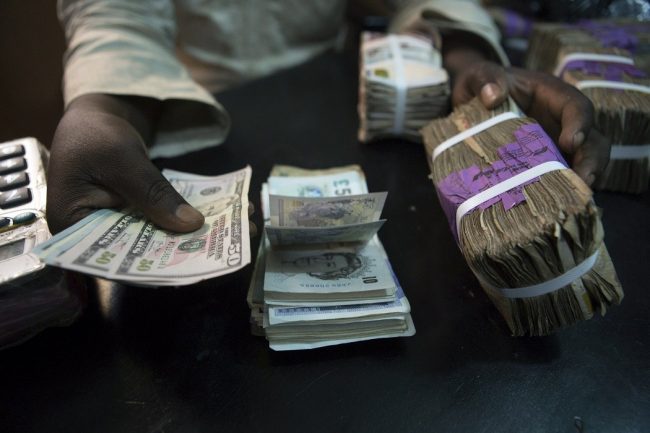
According to Abdullahi, Nigeria previously operated multiple exchange rate systems that allowed some individuals and firms to obtain dollars at artificially low official rates before reselling them in the parallel market. The system allowed privileged actors to buy dollars between ₦400 and ₦450 per dollar, far below prevailing market prices. He said the practice created significant economic losses and discouraged productive investment.
“This distortion alone cost the country about three per cent of its Gross Domestic Product and discouraged foreign investment,” Abdullahi said.
He added that the policy environment encouraged arbitrage and rent-seeking rather than investment in manufacturing, infrastructure or export sectors. At the same time, Nigeria was spending heavily on petroleum subsidies, which the CBN estimated consumed roughly six per cent of the country’s GDP before they were removed.
“These subsidies were simply not sustainable and had brought the economy to the brink,” Abdullahi said.
The crisis deepened as foreign portfolio investment declined and Nigeria accumulated an estimated $7 billion backlog of foreign exchange obligations owed to companies that had already deposited naira with the central bank. Many businesses reportedly waited more than a year to access foreign currency to complete transactions.
“When we assumed office in October 2023, we met a backlog of seven billion dollars. This severely damaged the credibility of the economy,” Abdullahi said.
The CBN subsequently hired a global auditing firm to verify the claims. The audit found that $4.5 billion of the obligations were legitimate and were paid, while approximately $2.5 billion were rejected due to procedural irregularities.
Clearing the verified backlog was critical to rebuilding Nigeria’s financial credibility, Abdullahi said. The central bank also coordinated with fiscal authorities to address structural weaknesses such as declining oil revenues and weak foreign direct investment inflows.
Nigeria’s oil export earnings have declined significantly over the past decade due to production challenges, pipeline vandalism and underinvestment. According to Abdullahi, Nigeria earned $92 billion from oil exports in 2012 but generated less than $2 billion in 2023 in net revenue due to falling production and rising operational costs.
“This shows the magnitude of the challenges we faced when we began the reform process,” he said.
He added that allowing the naira to adjust to market realities was necessary to attract foreign exchange inflows and stabilise the economy.
Abdullahi revealed that when the current administration assumed office, Nigeria’s net external reserves were around $800 million, far below what gross reserves suggested once swaps and liabilities were accounted for. Today, he said, gross reserves have recovered to roughly $32 billion.
The reforms are also beginning to reflect in macroeconomic indicators. According to the CBN, inflation has declined steadily in recent months while food inflation has reached its lowest level in over a decade. Nigeria is targeting single-digit inflation as part of its long-term macroeconomic stabilisation strategy.
Abdullahi also said non-oil exports are improving, with Nigeria generating about $6 billion in 2025 and aiming to double that figure in the coming years. The country’s Purchasing Managers’ Index (PMI) also indicates expanding business activity, recording its strongest expansion in roughly a decade.
“We did not really have the luxury of choice at that time. The economy was at a breaking point and decisive action was required,” Abdullahi said.
However, he acknowledged that reforms have come with short-term economic pain, particularly for households facing higher living costs.
“We are not yet where we want to be, but the economy has turned the corner and is now on a stronger footing,” he said.
The Issues
Nigeria’s economic reforms represent one of the most significant policy shifts in the country’s macroeconomic management in decades. The reforms include the removal of petrol subsidies, the unification of exchange rates, tighter monetary policy and structural changes in fiscal coordination between government institutions. For years, economists had warned that Nigeria’s dual exchange rate system created inefficiencies that encouraged speculative trading rather than productive investment.
Businesses often struggled to obtain foreign currency through official channels, forcing many firms to rely on the parallel market at significantly higher rates. The removal of fuel subsidies in 2023 also exposed long-standing structural weaknesses in Nigeria’s fiscal framework. Subsidy payments had consumed trillions of naira annually, crowding out spending on infrastructure, healthcare and education.
However, the reforms have also created political and social challenges. Higher fuel prices and currency depreciation contributed to rising inflation and declining purchasing power for many households in the short term. Analysts say sustaining reform momentum will require balancing macroeconomic stability with policies that cushion the social impact of adjustment.
What’s Being Said
“Economic reforms required coordination between fiscal and monetary authorities. This administration remains focused on restoring fiscal stability while laying the foundation for inclusive and sustainable growth,” said Sanyade Okoli, Special Assistant to the President on Finance and the Economy.
Okoli said President Bola Tinubu’s Renewed Hope Agenda prioritises investment attraction and long-term economic expansion.
“Attracting investment is critical because government alone cannot provide the resources needed for large-scale economic development,” she said.
Earlier, Ojobo Atuluku, Board Chair of Agora Policy, said continued dialogue was essential to ensure reforms remain effective.
“Economic policy must never be a one-off event. It should be a constant conversation between those who design reforms, those who implement them and those who are impacted by them,” Atuluku said.
She added that Agora Policy’s programme focuses on research, policy dialogue and actionable recommendations to support Nigeria’s economic transformation. The dialogue was organised with support from the Nigeria Economic Stability and Transformation (NEST) programme, backed by the UK’s Foreign, Commonwealth and Development Office (FCDO).
What’s Next
Nigeria’s economic reform programme is expected to continue through 2026 as policymakers attempt to stabilise inflation and strengthen fiscal sustainability.
Key developments to watch include:
- The next Central Bank Monetary Policy Committee meeting, where interest rate decisions will signal the direction of inflation management
- Federal Government initiatives aimed at expanding non-oil exports and foreign direct investment inflows
- Ongoing efforts to improve oil production levels, which remain below Nigeria’s OPEC quota due to infrastructure and security challenges
Economists say the pace of reforms and the government’s ability to maintain policy consistency will determine whether investor confidence continues to recover.
Bottom Line
The Bottom Line: Nigeria’s economic reforms have stabilised key macroeconomic indicators and prevented what could have become a full-scale financial crisis. However, sustaining investor confidence will depend on maintaining policy consistency while addressing the social impact of reform-driven economic adjustments.