









Key Points
- Ember projects Nigeria will install 1.7GW of solar capacity in 2026.
- The projected addition is about 40% of the electricity available from the grid in April.
- Solar companies and panel manufacturing capacity are expanding rapidly in Nigeria.
Main Story
Nigeria is projected to install 1.7 gigawatts (GW) of solar power in 2026, placing it among six African countries expected to add at least 1GW of new solar capacity during the year.
The projection is contained in a new report by Ember, an energy think tank, titled The take-off in African solar that official statistics can’t yet see, released on Aug. 27.
Ember estimates that Africa will add a record 17GW of solar capacity in 2026, representing a 45 per cent increase from 2025.
Nigeria’s projected 1.7GW addition is expected to be matched by the Democratic Republic of Congo, while South Africa is projected to install 3.3GW, Egypt 2GW, Algeria 1.4GW and Morocco 1GW.
For Nigeria, the projected addition is equivalent to about 40 per cent of the electricity currently available from the country’s grid-connected power plants.
The Nigerian Electricity Regulatory Commission (NERC) reported that an average of 4,286 megawatts (MW) was available for dispatch from the country’s 13,625MW installed grid capacity in April 2026.
Ember said the rapid expansion was being driven largely by distributed solar systems, with about 75 per cent of solar capacity added across Africa between 2023 and 2025 coming from distributed installations.
These systems, which include solar deployed by households and businesses, are also contributing to a gap between actual solar growth and what is reflected in official electricity statistics.
Ember estimated that Africa installed 12GW of solar capacity in 2025, almost twice the 6.2GW estimated by the International Energy Agency (IEA) and the 4.6GW estimated by the International Renewable Energy Agency (IRENA).
The think tank attributed part of the discrepancy to the difficulty of tracking distributed systems outside conventional electricity networks.
Nigeria’s domestic solar industry is also expanding. Ember said 370 new solar companies were registered in the country in 2025, compared with 56 in 2019.
The report also projected that Nigeria’s solar-panel manufacturing output would triple in 2026 compared with 2024.
National solar-panel manufacturing capacity has risen to about 300MW from 120MW two years earlier, according to Ember.
The projected growth comes as households and businesses increasingly turn to distributed energy systems, while the country continues to face limitations in its conventional grid system.
Ember said the 17GW of new solar capacity expected across Africa in 2026 could generate about 23 terawatt-hours of electricity annually.
The additional generation would be slightly higher than Africa’s historical annual electricity-demand growth of 2.2 per cent recorded between 2014 and 2024.
The Issues
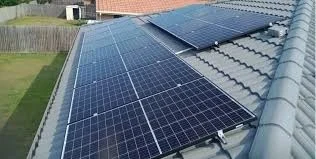
Nigeria’s projected 1.7GW solar addition represents a significant expansion outside the conventional grid system. The scale of distributed solar also means that conventional electricity statistics may not fully reflect the amount of power being generated and consumed across the country.
The growth of local solar companies and manufacturing capacity points to an expanding domestic ecosystem around the technology, although Ember noted that Africa remains heavily dependent on imported equipment.
About 94 per cent of solar panels installed across Africa are imported from China, highlighting the continent’s reliance on external manufacturing despite the rapid growth in demand.
What’s Being Said
“Countries are already leapfrogging into faster, more secure, cleaner energy growth, and the governments that get ahead of it stand to gain all the benefits,” Dave Jones, Chief Analyst at Ember, said.
“Africa’s solar revolution is no longer something we’re waiting for – it’s happening right now. What’s particularly significant is that this is no longer just a South African story,” Mohamed Adow, Director of Power Shift Africa, said.
“Across Africa, distributed energy resources are rapidly expanding, and in many cases, overtaking grid capacity,” Joel Nana, Research Director at African Tech Futures Lab, said.
What’s Next
Ember said governments and international financial institutions would need to support the expansion with affordable finance, stronger electricity grids and battery storage.
The rapid growth of distributed energy is also raising questions over whether such systems should remain largely separate from national grids or become integrated into wider electricity systems.
Bottom Line
Ember projects Nigeria will add 1.7GW of solar capacity in 2026, reflecting the rapid growth of distributed energy alongside expansion in the domestic solar industry. The projection also highlights a wider shift in Africa’s electricity market that is increasingly taking place outside traditional grid infrastructure.





 of solar power in 2026, placing it among six African countries expected to add at ...)