





By Emmanuella Opara | November 18th, 2026
KEY POINTS
- The Nigerian Correctional Service urges governments, businesses and communities to support the reintegration of released inmates.
- Nearly 33 ex-offenders received vocational starter packs under the 2026 aftercare programme.
- The initiative covers seven trades, including tailoring, laundry, hairdressing, carpentry and welding.
- The NCoS says employment opportunities and social acceptance are essential to reducing reoffending.
MAIN STORY
The Nigerian Correctional Service has warned that unemployment, economic hardship and social stigma could undermine the rehabilitation of released inmates and increase their chances of returning to crime.
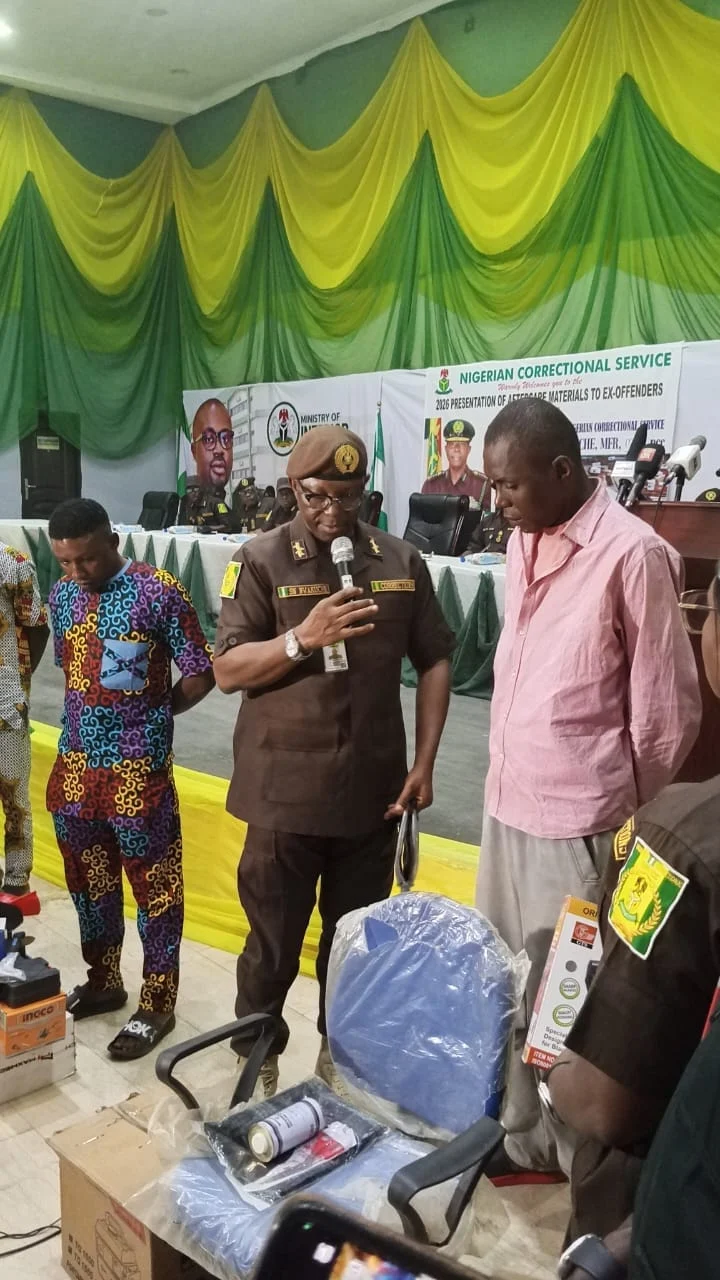
The Controller-General of Corrections, Sylvester Nwakuche, made the appeal during the presentation of 2026 aftercare vocational starter packs to discharged inmates in Abuja, urging governments, private organisations, religious institutions and communities to support their reintegration.
Nwakuche said the service had provided starter packs to nearly 33 ex-offenders to help them establish businesses using vocational skills acquired while in correctional facilities.
He explained that the aftercare programme was designed to bridge the gap between rehabilitation during incarceration and successful reintegration into society.
“For many inmates, the journey back into society is often confronted by stigma, unemployment, economic hardship, and rejection. Without adequate support, these challenges may undermine the gains of rehabilitation and increase the risk of reoffending,” Sylvester Nwakuche, Controller-General of Corrections, said.
The starter packs cover seven vocational areas: laundry, barbing, tailoring and fashion design, hairdressing, carpentry, masonry, and welding and metal fabrication.
According to Nwakuche, the trades were selected to provide beneficiaries with opportunities for self-employment, entrepreneurship and financial independence.
He described the materials as more than vocational tools, saying they represented an opportunity for discharged inmates to rebuild their lives and contribute productively to society.
The corrections chief also linked the programme to public safety, noting that successful reintegration could help reduce repeat offending and promote safer communities.
He urged beneficiaries to use the materials effectively, resist negative influences and establish sustainable businesses.
Nwakuche further called on employers and other stakeholders to look beyond the past mistakes of former inmates and give them opportunities to rebuild their lives.
Earlier, the Director of Health and Welfare, Abdullahi Aldo, said the aftercare programme was intended to ensure that discharged inmates received support after regaining their freedom.
He explained that the initiative provided starter packs, vocational assistance and mentorship to help beneficiaries return to their families and communities.
Aldo urged the beneficiaries to use the materials as a foundation for a new beginning and demonstrate positive change in their communities.
The latest intervention follows a similar exercise in November 2025, when the service distributed vocational starter packs to 24 inmates to support their financial independence after release.
THE ISSUES
Rehabilitation does not necessarily guarantee successful reintegration into society. Former inmates often face difficulties securing employment and acceptance because of their criminal records and the stigma associated with incarceration.
Without access to income-generating opportunities, some may struggle to meet basic needs, making reintegration more difficult and potentially increasing the risk of reoffending.
The NCoS initiative seeks to address part of this challenge by providing vocational equipment and mentorship. However, the long-term impact will depend on whether beneficiaries can establish sustainable businesses, secure customers and maintain their livelihoods.
The appeal to employers, communities and private organisations also highlights the need for support beyond correctional facilities, particularly in creating opportunities for people who have completed their sentences.
WHAT’S BEING SAID
“These starter packs represent much more than tools of trade. They are instruments of empowerment, they are symbols of renewed confidence, and seeds of economic independence.” Sylvester Nwakuche, Controller-General of Corrections, said.
“The true value of these starter packs will not be measured by what we hand over today, but by the businesses you establish, the families you support, the opportunities you create, and the positive lives you touch tomorrow.” Sylvester Nwakuche, Controller-General of Corrections, said.
“Governments, private organisations, religious institutions, community leaders, families, and individuals must all play their part in dismantling the walls of stigma and creating an environment where reformed persons can strive.” Sylvester Nwakuche, Controller-General of Corrections, said.
“The aftercare programme is designed to ensure that no ex-offender is abandoned at the gate of freedom.” Abdullahi Aldo, Director of Health and Welfare, said.
WHAT’S NEXT
The success of the programme will depend on the beneficiaries’ ability to establish sustainable businesses and the willingness of employers, communities and other stakeholders to support their reintegration.
BOTTOM LINE
The NCoS is seeking to make rehabilitation meaningful beyond prison walls by equipping discharged inmates with vocational tools. However, access to employment, business opportunities and social acceptance will remain essential to preventing reoffending.