





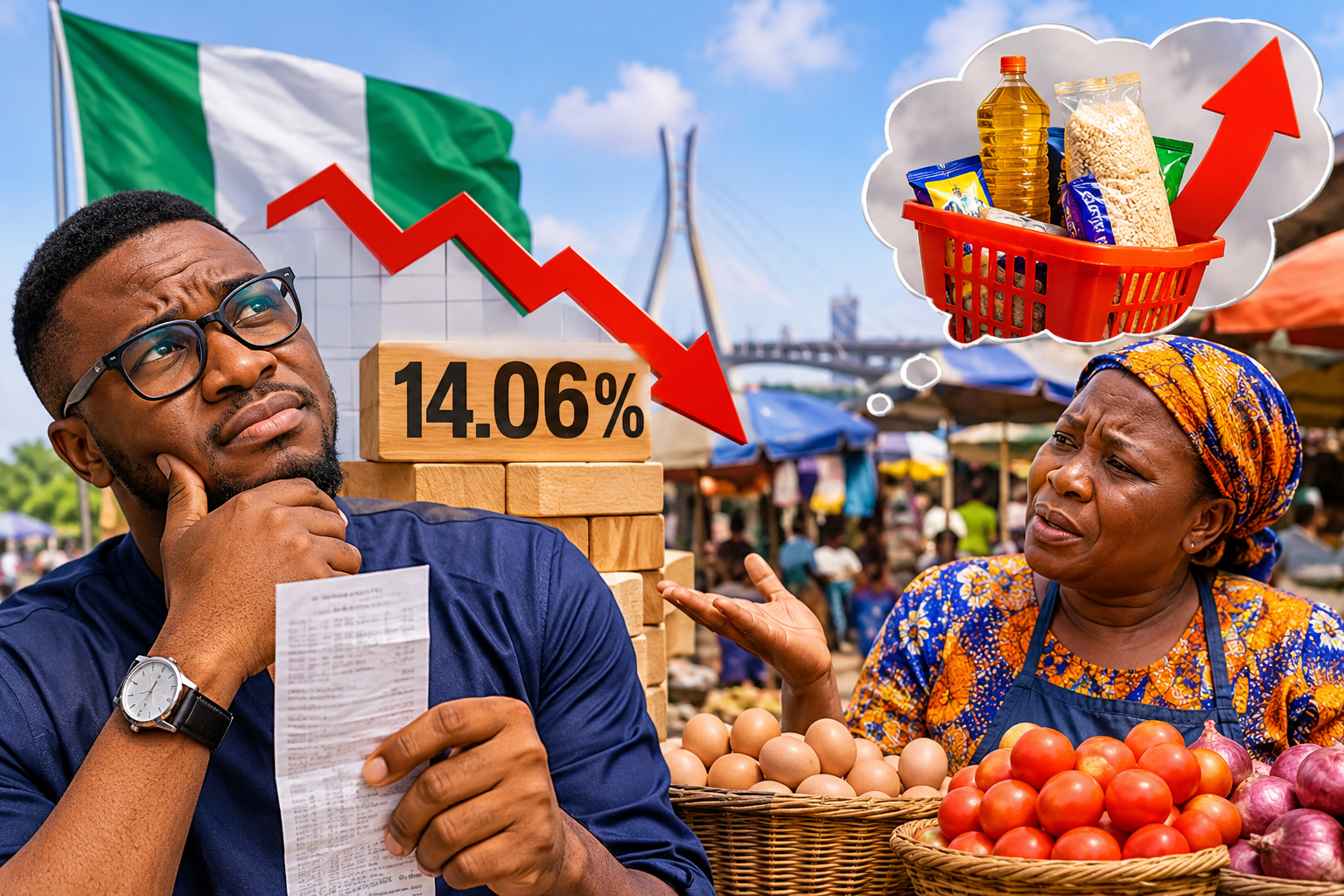
Hello, my fellow Supermarket-Receipt Forensics, Inflation-Rate Skeptics, and Tomato-Basket Economists. Welcome back to our weekly sanctuary! Today is Thursday, November 19, 2026. If you woke up this week, saw the breaking news headlines celebrating that Nigeria’s headline inflation rate has officially dropped to 14.06%, and immediately walked to your neighborhood market expecting to buy a crate of eggs and a painter of garri with loose change—only to be met with a stare from Mama Nkechi that nearly froze your banking app—pull up an ergonomic plastic chair. You are in the safest, most empathetic room on the internet.
Forget double-standard relationship audits, El Niño heatwaves, or badagry synthetic juice panics; today, we are placing our urban survival magnifying glass over the single most confusing, hilarious, and universally debated economic magic trick currently sweeping across Nigeria: The Great “Falling Inflation” vs. “Stubborn Market Prices” Showdown!
Earlier this week, the National Bureau of Statistics (NBS) released its October 2026 Consumer Price Index (CPI) report showing that headline inflation eased to 14.06% (down from 14.63% in September). Shortly after, the Minister of Finance, Taiwo Oyedele, stepped forward to address the elephant in every Nigerian kitchen: why food prices remain stubbornly high in the markets despite falling inflation figures and bumper harvests.
Let’s break down the explicit economic physics, hilarious street commentary, and consumer survival strategies behind why statistics on paper and prices at Mile 12 refuse to speak the same language.
To understand why urban Nigerians nearly choked on their morning tea when they heard “inflation is dropping,” you first have to decode what economists actually mean when they say disinflation.
In plain English for a 15-year-old student or a busy executive: Falling inflation does NOT mean prices are going down. It simply means prices are going up slightly slower than they did last month!
Think of it like a commercial bus speeding down the Third Mainland Bridge at 120 km/h. If the driver eases off the gas and slows down to 105 km/h, the bus is still moving forward rapidly—it just isn’t accelerating as violently as before. Telling a passenger in that bus that “speed is dropping” feels like a joke when the wind is still slapping their face!
When Finance Minister Taiwo Oyedele explained why prices refuse to drop despite falling inflation metrics, he hit on a profound psychological truth: Traders and consumers have severe inflation trust issues.
In Nigerian market-square economics, pricing isn’t just calculated using current costs—it is priced using anticipated fear:
The “Anticipation Tax”: Because market women, importers, and transport operators have spent years watching costs jump overnight, they no longer trust temporary dips. When fuel drops by ₦40 at the depot, a trader keeps their prices high just in case next week brings a fresh shock.
The Supply Chain Bottleneck: Even when farmers celebrate a record harvest in the North, getting that bag of beans or basket of tomatoes safely to Lagos, Port Harcourt, or Enugu requires surviving interstate haulage levies, bad road delays, and diesel costs. By the time the food arrives at your junction, the “bumper harvest” discount has been eaten alive by logistics!
The “Old Stock” Shield: Every Nigerian shopkeeper possesses an eternal inventory of “old stock.” Whenever costs go up, every item in the shop immediately transforms into “new stock bought with high exchange rate.” Whenever costs drop, every item magically reverts to “old stock I must finish selling first.”
Because official charts and kitchen budgets are living in different universes, everyday Nigerians have invented elite survival tactics to balance their monthly cashflow:
The Micro-Portion Era: Walking into a neighborhood store in 2026 feels like visiting a museum of miniature artifacts. Everything—from detergent and cooking oil to bread loaves—now comes in “trial sizes” designed specifically to survive until Friday payday.
The Group Chat Economist Guild: Every family and office WhatsApp group now has at least two self-appointed financial analysts who forward screenshots of CBN liquidity reports and crude oil charts at 6:00 AM, followed immediately by someone asking, “Abeg, who knows where they sell cheap Titus fish around Ikeja?”
While policymakers work on bridging the gap between macro-economic stability and street-level relief, everyday citizens have to protect their wallets with practical discipline:
1. Buy Directly From Source Hubs: Skip the three layers of neighborhood retail markups by pooling funds with colleagues, neighbors, or family members to buy staples directly from wholesale markets or farm-gate aggregators.
2. Separate Headline News from Household Budgets: Don’t alter your spending habits just because an economic indicator turns green. Keep running a lean, intentional budget until you physically see prices soften at your local store.
3. Audit Your Daily Convenience Taxes: Small, repeated charges—POS operator fees, surge ride-hailing fares, and daily impulse snacks—quietly drain more monthly income than headline inflation ever will.
Lessons to Carry into the Weekend
Understand the Vocabulary: Knowing the difference between deflation (prices actually falling) and disinflation (prices rising more slowly) saves you from unnecessary arguments at the market gate.
Shop With Community Power: Bulk-sharing with friends or co-workers remains the single fastest way to force prices down in your own personal economy.
Guard Your Peace of Mind: Economic cycles shift, policies take time to trickle down, and market psychology heals slowly. Focus on what you can control—your skills, your savings habits, and your sanity.
Stay safe out there, keep your shopping lists tight, verify your POS receipts, and don’t let macroeconomic jargon humble your weekend joy. See you next Thursday!