








Key points
- National Boundary Commission (NBC) seeks stronger border security through technology, stakeholder collaboration and community engagement.
- Defence stakeholders advocate proactive measures, including drone surveillance and early warning systems.
- Traditional institutions, security agencies and border communities are identified as critical partners in managing transnational threats.
Main story
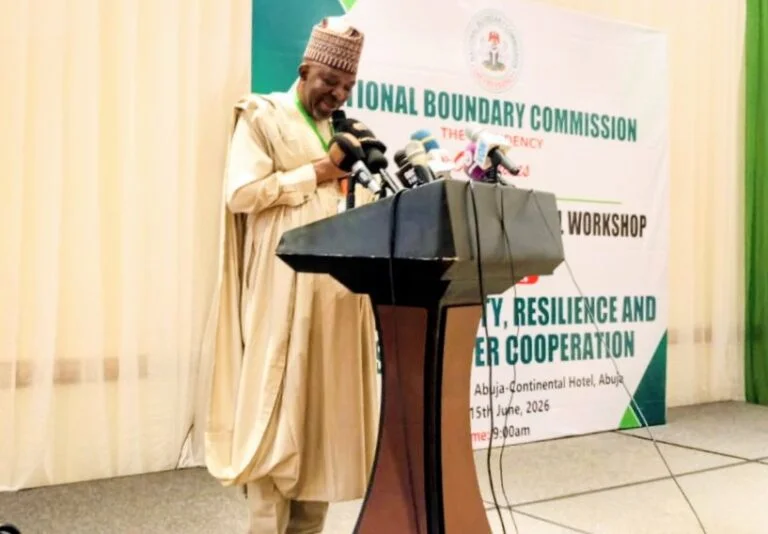
The National Boundary Commission (NBC) has intensified efforts to strengthen Nigeria’s border security architecture through the development of practical strategies aimed at enhancing resilience, improving cross-border cooperation, and addressing emerging security threats.
Speaking at a one-day high-level workshop on border security in Abuja on Monday, the Director-General of the NBC, Mr Adamu Adaji, said the initiative was designed to define and establish borders that are secure, resilient and beneficial to the communities they serve.
Adaji noted that Nigeria’s border regions continue to face growing challenges, including transnational crimes, irregular migration, smuggling, climate-induced pressures and economic disruptions, requiring a coordinated and forward-looking response.
He stressed that borders should not merely be viewed as lines of separation but as strategic frontiers for cooperation, stability and economic prosperity.
According to him, the Commission has established platforms across Nigeria’s international borders to facilitate sustained engagement among border communities, traditional institutions, local government authorities, security agencies and civil society organisations, alongside their counterparts in neighbouring countries.
The initiative, he said, aligns with the provisions of the African Union Convention on Cross-Border Cooperation, which promotes community participation and local-level collaboration in border governance.
The workshop brought together key stakeholders, including state governments, security and intelligence agencies, as well as Ministries, Departments and Agencies (MDAs), to deliberate on strategies for strengthening border management and national security.
“We must move beyond reactive measures and embrace coordinated, forward-looking approaches that integrate security, governance and socio-economic inclusion,” Adaji said.
He added that effectively managed borders can serve as gateways for trade, cultural exchange and regional integration while safeguarding national interests.
The issues
Nigeria’s vast land and maritime borders continue to present significant security and development challenges.
Persistent issues such as arms trafficking, smuggling, irregular migration, insurgent movements, and cross-border criminal activities have raised concerns among security experts and policymakers.
Additionally, climate change, economic hardship and weak infrastructure in border communities have increased vulnerabilities, making comprehensive border governance a national priority.
Experts argue that traditional security approaches alone may no longer be sufficient to address increasingly sophisticated transnational threats.
What’s being said
The Minister of Defence, Gen. Christopher Musa (Rtd), represented by his Special Adviser, Rear Adm. Olusanya Bankole (Rtd), emphasised that effective border management requires clearly demarcated boundaries, strong institutional coordination and sustained cooperation with neighbouring countries.
He highlighted the importance of adopting technology-driven solutions, including drone surveillance and smart border management systems, to improve situational awareness and operational effectiveness.
“The emphasis on early warning and early response mechanisms is critically important because it enables us to anticipate threats before they escalate,” he said.
Similarly, the Commandant of the National Defence College, Rear Adm. Abdullahi Ahmed, stressed that no country can effectively manage border challenges in isolation, calling for stronger regional cooperation and community resilience.
Representing traditional rulers, the Emir of Machina in Yobe State, Alhaji Bashir Bukar, underscored the strategic role of traditional institutions, describing them as vital communication channels capable of fostering trust and facilitating information sharing within border communities.
What’s next
Stakeholders are expected to develop actionable recommendations from the workshop to strengthen border governance frameworks across Nigeria.
The NBC is also expected to deepen collaboration with security agencies, state governments, traditional institutions and neighbouring countries while expanding the deployment of technology-driven surveillance systems.
Experts believe that sustained investment in border infrastructure, community engagement and intelligence-sharing mechanisms will be critical to achieving long-term security and economic resilience.
Bottom line
As security threats become increasingly transnational and complex, Nigeria is shifting towards a more integrated approach to border management that combines technology, community participation and regional cooperation. Stakeholders believe that strengthening border governance will not only enhance national security but also unlock economic opportunities and promote stability across border communities.












 has intensified efforts to strengthen Nigeria's border security architecture through the ...)