Key points
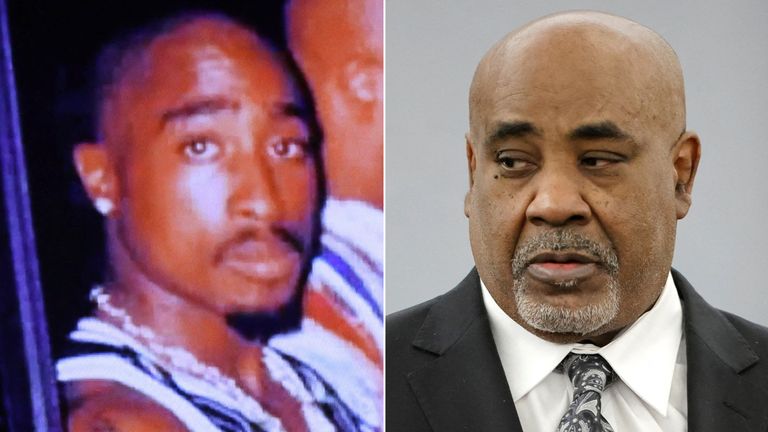
- A Las Vegas jury has found Duane Keith Davis guilty of murdering rapper Tupac Shakur in 1996.
- Prosecutors relied heavily on Davis’ own accounts of the shooting, including statements in his 2019 memoir.
- Davis is due to be sentenced on Oct. 13 and has said he plans to appeal the verdict.
Main story
A Las Vegas jury has convicted former South Side Compton Crips gang leader Duane Keith Davis over the 1996 murder of American rapper Tupac Shakur.
The jury reached the guilty verdict after about three hours of deliberation, bringing an end to a case that remained unresolved for nearly three decades.
Davis, 63, was accused of organising the shooting but not personally firing the weapon.
The prosecution’s case relied substantially on statements Davis made over several years in interviews and other recordings, as well as his 2019 memoir, Compton Street Legend.
Prosecutors played about eight hours of recordings from four separate events in which Davis described his involvement in the events surrounding Shakur’s killing.
According to the prosecution’s account, the shooting was motivated by an earlier confrontation at the MGM Grand in Las Vegas.
Shakur and Marion “Suge” Knight had attended a Mike Tyson boxing match at the casino when members of Shakur’s entourage became involved in an altercation with Orlando “Baby Lane” Anderson, Davis’ nephew and a member of a rival Compton gang.
Later that night, Shakur and Knight were travelling towards an after-party when a white Cadillac pulled alongside their vehicle at a red light.
A person inside the Cadillac opened fire, striking Shakur four times.
Shakur was taken to hospital but died several days later at the age of 25.
Davis had previously acknowledged being in the vehicle used in the shooting. In his memoir, he also described bringing a .40-calibre Glock with him.
The defence, led by attorney Michael Sanft, argued that Davis had exaggerated his involvement to profit from the enormous public interest surrounding Shakur’s unsolved murder.
Prosecutors, however, presented Davis’ repeated accounts as evidence of his direct involvement in the planning of the killing.
The trial featured 25 prosecution witnesses, including some who were ordered by the court to testify after initially being reluctant to participate.
The case has attracted intense public interest for years, generating numerous theories about Shakur’s death and criticism over the length of the investigation.
Shakur, born in 1971 in East Harlem, New York, became one of the most influential rappers of the 1990s. His music frequently addressed racism, police brutality, social inequality and the experiences of marginalised communities.
His death continued to generate global interest long after his career was cut short.
The issues
The conviction brings a major development to a murder investigation that remained open for almost 30 years.
A central feature of the case was the lack of physical evidence and the difficulty investigators faced in securing cooperation from potential witnesses.
Some witnesses were reluctant to participate, while another potential witness who claimed to be able to identify the shooters died in a separate shooting weeks later.
A 2015 review by the Los Angeles Times also highlighted alleged investigative failures, including authorities’ handling of information about the earlier confrontation between Anderson and members of Shakur’s entourage.
The case consequently became part of wider discussions about racial inequality and confidence in the criminal justice system.
For Shakur’s family, the conviction also represents an opportunity to gain greater clarity about the circumstances surrounding his death.
What’s Being Said
“It was kinda hard for me to feel so happy at the same time knowing someone is going to jail for so long.” — Jessica Martin, Tupac Shakur fan
“We’ve been waiting 30 years to grieve properly.” — Zayd Akinyela, Shakur’s cousin
“Had he decided to never write the book, he would not, probably, have ever been prosecuted for the crime.” — Marc DiGiacomo, Clark County District Attorney
“Them jumping on my nephew gave us the green light to want to do something to their ass.” — Duane Keith Davis, from his 2019 memoir
“Pac chose the wrong game to play.” — Duane Keith Davis, from his 2019 memoir
What’s next
Davis is scheduled to appear for sentencing on Oct. 13.
First-degree murder in Nevada carries a sentence ranging from 20 years to life imprisonment.
Prosecutors did not seek the death penalty and dropped their efforts to add a gang enhancement to Davis’ conviction after the verdict.
Davis has indicated that he plans to appeal the conviction.
Bottom line
The conviction of Duane Davis closes the trial phase of one of the most closely followed unsolved celebrity murder cases in the United States.
Nearly 30 years after Tupac Shakur was shot in Las Vegas, the jury has accepted the prosecution’s case that Davis was responsible for orchestrating the killing.
The next stage will be Davis’ sentencing and any appeal against the conviction.