








Keypoints
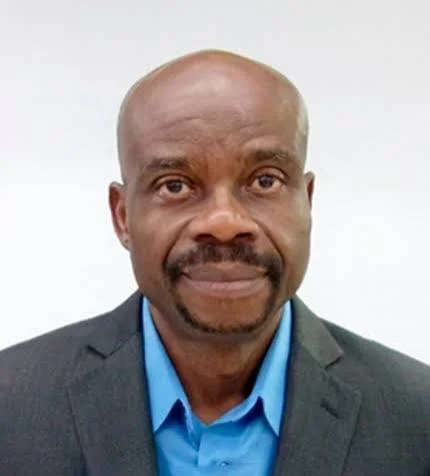
- Chris Onyekwere, Executive Director of WEAFRI Well Services, stated that persistent contracting delays continue to hinder growth despite reform efforts.
- He noted that the projected six-month contracting cycle has not been fully realized by operators and service providers on the ground.
- WEAFRI has introduced Helicoid Sleeve technology, a diver-less system for repairing offshore risers and conductors directly from platforms.
- The company, which has been in operation for 38 years, has expanded its services to Uganda, India, and Kuwait.
- Onyekwere called for sustained reforms to align official policy timelines with actual operational timelines to attract investment.
Main Story
Speaking at the 2026 Offshore Technology Conference (OTC) in Houston, Texas, Chris Onyekwere of WEAFRI Well Services highlighted a disconnect between government reform projections and industry realities.
While the Nigerian Content Development and Monitoring Board (NCDMB) has targeted a six-month window for contract approvals, Onyekwere argued that these efficiencies have not yet materialized for most indigenous service providers.
He emphasized that these bureaucratic bottlenecks remain a significant barrier to maximizing local participation and securing new investments in the sector.
On the technical side, the company is leveraging its 38-year tenure to introduce specialized offshore solutions. Through a partnership with a Malaysian firm, WEAFRI has deployed Helicoid Sleeve technology.
This innovation allows operators to refurbish and protect offshore risers without the high cost and safety risks associated with deploying underwater divers.
Beyond Nigeria, the company is actively exporting its expertise in well intervention and construction, establishing a physical presence in East Africa and the Middle East to service growing demand in Uganda, Kuwait, and India.
The Issues
- The gap between regulatory targets (6-month cycle) and field execution remains a primary hurdle for small and medium indigenous service companies.
- Prolonged approval phases can lead to increased operational overhead and the loss of readiness for technical equipment and specialized personnel.
- Expanding internationally requires local firms to maintain high technical standards while navigating varying regulatory environments in countries like Kuwait and Uganda.
What’s Being Said
- “The reforms are ongoing and some progress have been made, but the six-month contracting cycle being projected has not been fully achieved,” said Chris Onyekwere.
- “What is being announced is not exactly what is happening on the ground,” he added regarding the disparity between policy and practice.
- Regarding new tech, he noted: “The [Helicoid Sleeve] technology helps to refurbish and protect offshore facilities more efficiently while extending the lifespan of critical infrastructure.”
What’s Next
- WEAFRI is expected to further promote its diver-less repair technologies to offshore operators looking to reduce maintenance costs.
- Regulators may face increased pressure to provide transparent, real-time tracking of contract approval stages to close the implementation gap.
- The company will continue to scale its operations in its new international hubs in India and Kuwait.
Bottom Line
WEAFRI Well Services is pushing for regulatory efficiency to match its technical expansion, arguing that Nigeria’s oil and gas growth depends as much on administrative speed as it does on advanced engineering.









 in Houston, Texas, Chris Onyekwere of WEAFRI Well Services highlighted ...)